Bass Fishing in the Palmetto State: Every Species Explained
When you hear "bass fishing" in South Carolina, most folks immediately picture a big ol' bucketmouth largemouth, thrashing in the lily pads. And while that image is certainly iconic and a huge part of our angling heritage, it's just one piece of a much larger, more exciting puzzle! The truth is, the Palmetto State is home to several distinct bass species, each with its own preferred habitats, unique behaviors, and specific tricks to catching them. This guide is going to peel back the layers and introduce you to every kind of bass you can realistically target here, so you can expand your horizons and become a more versatile, successful angler across all our incredible waters.
Largemouth Bass: The Undisputed King of South Carolina Lakes
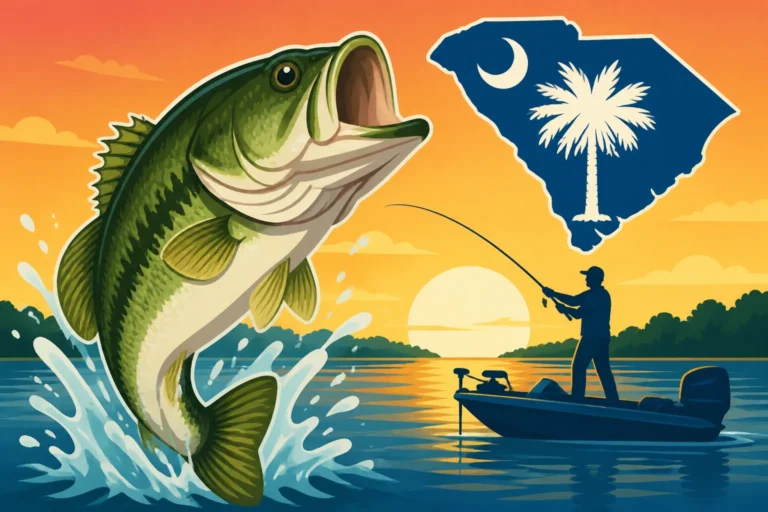
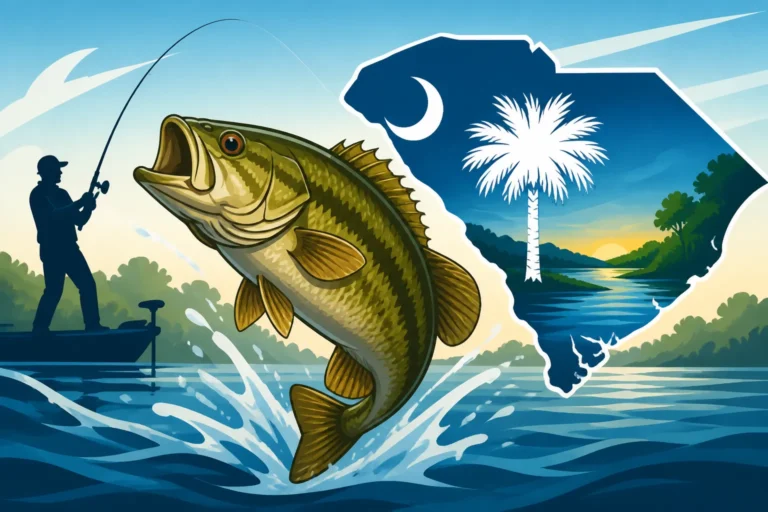
Let's be real, the largemouth bass ( Micropterus salmoides) is what most of us think of when we talk about bass fishing. It's the champion of tournaments, the focus of countless fishing shows, and often the first "big" fish many young anglers remember catching. Here in South Carolina, our lakes are absolutely legendary for their largemouth populations, offering some of the best fishing opportunities in the country.
Identification and Size Expectations for Largemouth
Identifying a largemouth bass is usually pretty straightforward once you know what to look for. The most obvious characteristic is its mouth: when closed, the upper jaw (maxillary) extends well past the back of its eye. They also typically have a prominent, dark, irregular horizontal stripe or blotches along their sides. The dorsal fin is deeply notched, almost appearing as two separate fins. These are powerful fish, built for ambush.
In South Carolina, while catching a 1-3 pound largemouth is common, our waters are renowned for producing true giants. We're talking fish pushing into the double digits, especially in our major reservoirs. Reaching trophy size takes years, so these big fish are often seasoned veterans of their watery homes. Knowing their typical growth rate can help you appreciate the lunkers when they come along. Largemouth Bass Growth Rate From Fingerling to Trophy
Prime South Carolina Habitats for Bucketmouths
Largemouth bass are masters of cover and structure. They thrive in warmer, often stained or murky waters, and they love to hide in places where they can ambush unsuspecting prey. Think dense vegetation like hydrilla, lily pads, and coontail. Submerged timber, stump fields, boat docks, brush piles, and rock piles are all prime real estate for a hungry largemouth.
Lakes like Lake Murray, the Santee Cooper system (Marion and Moultrie), and Lake Hartwell are famous for their largemouth fisheries. But don't overlook smaller ponds, slow-moving rivers like the Edisto, and even brackish tidal creeks along the coast. These fish are adaptable, finding comfort and feeding opportunities wherever good cover and a healthy forage base exist. Understanding where these bass choose to live is half the battle in figuring out how to catch them consistently. Best Largemouth Bass Spots on Lake Murray, South Carolina
Top Techniques and Lures for South Carolina Largemouth
When it comes to techniques, largemouth bass respond to a huge array of presentations. For fishing around heavy cover, Texas-rigged or Carolina-rigged soft plastics like worms, creature baits, and senkos are incredibly effective. Flipping and pitching these baits into dense vegetation or under docks can draw explosive strikes. Crankbaits, both shallow and deep divers, excel at covering water and imitating baitfish, especially around points and ledges.
Spinnerbaits and chatterbaits are fantastic for fishing through grass or around wood, creating flash and vibration that infuriates bass. And who can forget the thrill of topwater fishing? Poppers, walk-the-dog baits, and frogs fished over matted vegetation provide some of the most exciting bites you can experience. Experimenting with a variety of these baits is crucial, and you can always find a wide selection of proven largemouth lures on Amazon to stock your tackle box. For a deeper dive, consider our guide on Best Bait for Largemouth Bass in South Carolina Lakes.
Smallmouth Bass: The Mountain Stream Fighter
While not as widespread as their largemouth cousins in South Carolina, smallmouth bass ( Micropterus dolomieu) offer a unique and exhilarating challenge for anglers willing to seek them out. These feisty fish are known for their acrobatic fights and their preference for cooler, clearer, flowing water, a stark contrast to the largemouth's preferred muddy haunts.
Where to Find Them in South Carolina
Smallmouth bass in South Carolina are primarily confined to the cooler, rocky waters of the Blue Ridge Mountains and certain clear reservoirs in the extreme Upstate. These aren't fish you'll typically find in the vast, warm impoundments of the Midlands or Lowcountry. Instead, think of swift-flowing rivers, cool creeks, and the upper reaches of lakes that feed directly from these mountain streams.
The Tugaloo River arm of Lake Hartwell, for example, is one area where you might encounter them, especially in the more riverine sections. Exploring the mountain drainages is key, as they prefer waters with good current, plenty of rocks, and gravel bottoms. It’s a different kind of bass fishing adventure altogether, trading the slow, patient hunt of the largemouth for a more active pursuit in pristine environments. Best Smallmouth Bass Lakes in South Carolina
Key Identification Characteristics of Smallmouth Bass
Distinguishing a smallmouth from a largemouth is relatively easy. As the name suggests, the smallmouth has a smaller mouth; when its mouth is closed, the upper jaw does not extend past the middle of its eye. They also tend to have a more uniform bronze, brown, or olive coloration, often with vertical bars or mottling along their sides rather than a distinct horizontal stripe.
Another key difference is their body shape: smallmouths are typically more streamlined and muscular, built for navigating currents. Their eyes are often reddish, and their dorsal fins are not as deeply separated as the largemouth's. If you catch a smallmouth in South Carolina, you've found a special fish, a testament to the diverse ecosystems within our state. How to Identify a Redeye Bass
Preferred Baits and Tactics for Mountain Smallmouth
Smallmouth bass are opportunistic feeders and will strike a variety of baits, but they often prefer smaller, more subtle presentations in their clear water environments. Small crankbaits, especially those mimicking crawfish or minnows, are highly effective when fished near rocky drops and current breaks. Jigs, tube baits, and grub jigs are also fantastic choices, worked slowly along the bottom.
Topwater poppers and walking baits can be incredibly exciting when smallmouths are actively feeding on the surface, especially during early morning or late evening. Fly fishing with small streamers or poppers is also a highly rewarding way to target these fish in their river habitats. The key is often light tackle and a stealthy approach, as these fish can be more wary in their clear, shallow homes.
Spotted Bass: The Hybrid Challenge
Often mistaken for either largemouth or smallmouth, the spotted bass ( Micropterus punctulatus) is a distinct species that provides an exciting fishing challenge in its own right. These bass are known for their aggressive nature and their tendency to school, making for fast-paced action once you find a willing group.
Identifying South Carolina Spotted Bass
Identifying a spotted bass requires a keen eye for detail, as they share characteristics with both largemouth and smallmouth. The most defining feature is the presence of small, dark spots arranged in rows below the lateral line, particularly on their lower sides, giving them a "spotted" appearance. Unlike the largemouth, their upper jaw typically extends only to the middle or slightly beyond the back of the eye, similar to a smallmouth.
Another key differentiator is the connection between their two dorsal fins; in spotted bass, these fins are noticeably more connected than the deeply notched dorsal of a largemouth. Also, if you run your finger along their tongue, you'll often feel a rough patch of teeth, which is usually absent in largemouths. This combination of features helps distinguish them from their cousins. Spotted Bass Identification and Where to Find Them in South Carolina
Typical Lake Systems and Structures for Spotted Bass
Spotted bass prefer clearer water than largemouths, but they can tolerate warmer temperatures than smallmouths, putting them in a unique niche. In South Carolina, you'll find them in many of the same major reservoirs that hold largemouth, but often in different areas of those lakes. They tend to gravitate towards rocky points, deep ledges, humps, and areas with good current, often suspending over open water or relating to deeper structure.
Lakes like Hartwell and Keowee are known for their spotted bass populations. They love clear water and hard bottom structures, often schooling up in deeper sections where they can chase baitfish like shad. Don't be surprised to find them sharing habitat with largemouths, but typically in different depth ranges.
Effective Lures and Presentations for Spotted Bass
Spotted bass are aggressive and will readily hit a variety of lures. Because they often school and hold deeper, finesse techniques are incredibly effective. Drop shots, shaky head jigs, and small football jigs worked slowly along the bottom can be deadly when you find a school. Small crankbaits and jerkbaits are also excellent for covering water and triggering strikes, especially those with baitfish patterns.
When they are actively chasing bait on the surface, topwater baits can create incredible excitement. Spoons, particularly jigging spoons, are also highly effective when spotted bass are suspended over deep structure. Their aggressive nature means that once you find a school, the action can be non-stop. For fishing deep structure, How to Fish Deep Structure for Bass in Summer offers excellent insights that apply well to spotted bass.
Striped Bass: The Freshwater Powerhouse
South Carolina holds a special place in the history of striped bass ( Morone saxatilis) fishing, particularly for landlocked populations. While natively an anadromous species that migrates between saltwater and freshwater to spawn, our state boasts incredible reservoir fisheries where these powerful fish thrive, offering a truly epic angling experience.
South Carolina's Lake Giants
The Santee Cooper Lakes (Lake Marion and Lake Moultrie) are widely recognized as the birthplace of landlocked striped bass fishing, and they remain premier destinations for chasing these giants. Lake Murray is another world-class striped bass fishery, famous for its massive schools and trophy potential. These lakes provide the ideal habitat for stripers, with vast open waters, abundant forage (primarily blueback herring and shad), and deep, cool water refuges during the hot summer months.
These landlocked populations are self-sustaining in some systems, while others rely on stocking programs to maintain their numbers. Regardless, they represent an incredible conservation success story, allowing freshwater anglers to experience the sheer power of a fish typically associated with the ocean. Our state even recognizes the importance of this fish, making it the official state fish. Striped Bass: South Carolina's Official State Fish
Seasonal Movements and Behavior of Stripers
Striped bass are highly migratory within their lake systems, constantly following schools of baitfish. In cooler months (fall, winter, and spring), they are often found shallower, chasing bait in creek arms, main lake points, and even on the surface. This is when topwater blow-ups and shallow-running presentations can be incredibly effective.
As water temperatures rise in summer, stripers seek out cooler, deeper water, often suspending over the old river channels or congregating around thermal refuges where cool, oxygenated water is available. This deep-water pattern requires different tactics, often involving downriggers or heavy jigs. Why Lake Murray Stripers Move Deeper as Water Warms is a great resource for understanding these seasonal shifts.
Trolling, Live Bait, and Topwater for Stripers
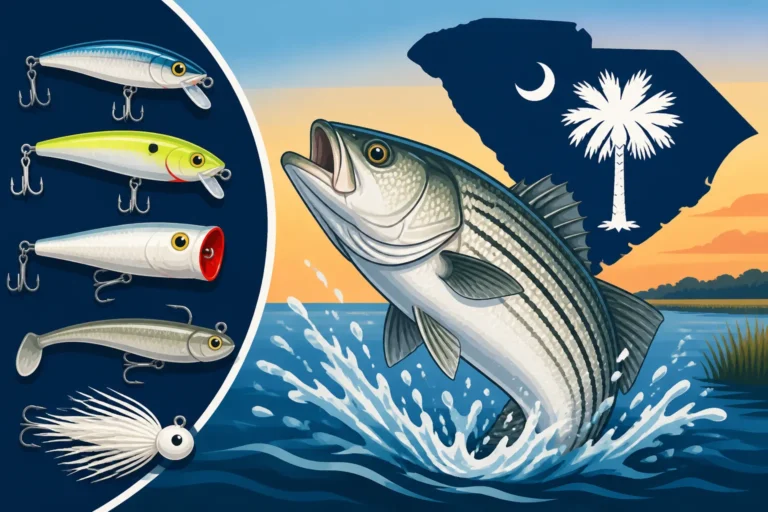
Tactics for striped bass are as varied as their movements. Trolling is a hugely popular and effective method, especially for covering large areas of water to locate schools. Umbrella rigs, deep-diving crankbaits, and bucktail jigs are trolled at varying depths. Live bait, particularly blueback herring or gizzard shad, drifted or slow-trolled, is often the most productive method for trophy stripers, especially when they are holding deep.
When stripers are feeding on the surface, busting schools of bait, nothing beats the excitement of throwing a large topwater plug into the melee. Big poppers, walking baits, and even large swimbait can draw violent strikes. Jigging spoons or heavy bucktails are also effective when you mark schools on your electronics in deeper water. Best Lures for Striped Bass in South Carolina and Best Bait for Striped Bass in Freshwater Lakes offer further details.
Hybrid Striped Bass: A Man-Made Marvel
For anglers seeking aggressive fights and abundant action, the hybrid striped bass ( Morone saxatilis x Morone chrysops) is an absolute game-changer. These fish are a cross between a striped bass and a white bass, created through hatchery programs to provide a fantastic sport fishery in waters that might not support pure stripers. They offer a unique blend of their parents' traits, delivering hard-hitting battles.
Identifying Hybrid Stripers from Pure Stripers
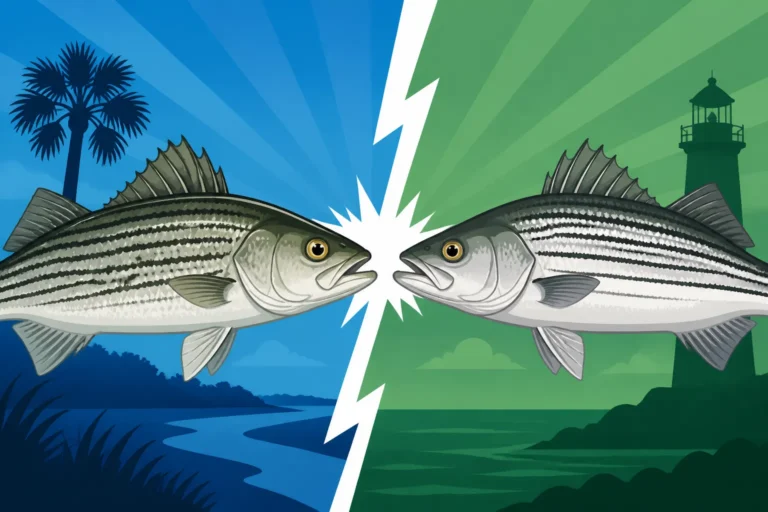
Distinguishing a hybrid striper from a pure striped bass requires looking at their stripe patterns. While both have distinct horizontal stripes, the stripes on a hybrid are typically more broken, interrupted, or uneven, especially below the lateral line. On a pure striper, the stripes are usually solid and continuous from head to tail. Hybrids also tend to have a deeper body profile than pure stripers of comparable length.
Hybrids generally don't grow as large as pure striped bass, but they are incredibly strong for their size and mature faster. Their scientific name ( Morone saxatilis x Morone chrysops) explicitly states their parentage, a key detail to remember. Once you learn to spot the broken lines, it becomes much easier to tell them apart on the water.
Stocked Waters and Aggressive Feeding Habits
Hybrid striped bass are almost exclusively found in waters where they have been actively stocked by fisheries management agencies. Lakes and rivers that might be too warm or lack the deep-water habitat for pure stripers can often support thriving hybrid populations. These fish are voracious feeders, growing rapidly by preying on abundant baitfish like shad and herring.
They are known for schooling tightly and aggressively chasing bait, often creating explosive surface boils that are visible from a distance. This makes them a highly popular target, as finding one often means finding many. Their presence in a lake is a direct testament to thoughtful fisheries management aimed at enhancing angling opportunities. Hybrid Striped Bass Fishing Spots in South Carolina are definitely worth exploring.
Aggressive Tactics for Hybrids
Because of their aggressive and schooling nature, hybrid stripers respond exceptionally well to tactics that mimic fleeing baitfish. Casting chrome or white spoons, inline spinners, and topwater lures into active boils or over humps where they are marked on electronics can lead to continuous hook-ups. Fast-retrieved crankbaits and jerkbaits are also highly effective.
Live bait, particularly shad or shiners, can also be deadly when fished under a bobber or free-lined near schools. Jigging vertically with heavy bucktail jigs or spoons when they are holding deeper is another proven method. Many anglers find their go-to hybrid lures, like a certain brand of spoon or swimbait, by browsing the wide selection available on Amazon. The key is often to react quickly when you spot schooling activity, as these windows can be short but incredibly intense.
Redeye Bass: The Elusive Upstate Gem
The redeye bass ( Micropterus coosae), sometimes called the shoal bass or flint River bass, is another native South Carolina species, albeit one with a much more localized range. These beautiful fish are a true prize for anglers who appreciate wild, pristine environments and a unique challenge. They're often found in the kinds of clear, fast-flowing streams that just make your soul happy.
Their Unique Riverine Habitat
In South Carolina, redeye bass are primarily found in the cool, clear, and relatively small to medium-sized rivers and streams of the upper Piedmont and Blue Ridge Mountain regions. They thrive in environments with good current, rocky substrates, and a mix of riffles, runs, and pools. These aren't lake fish; they are true river dwellers, perfectly adapted to their flowing homes.
They relate strongly to current breaks, submerged rocks, fallen timber, and undercut banks, using these features to ambush prey. Their habitat is often characterized by high water quality and healthy populations of aquatic insects and small baitfish. Finding redeye often means hiking into less-traveled areas, making the reward of catching one even sweeter. Where to Catch Redeye Bass in South Carolina's Mountain Streams provides good starting points.
Subtle Identification Differences for Redeye Bass
The redeye bass shares some visual similarities with other Micropterus species but has distinct features. The most prominent, and the source of its name, is the reddish-orange tint to its eyes, which is often quite noticeable. They have a generally olive-green to brownish coloration, sometimes with dark blotches or vertical bars that are not as pronounced as a largemouth's lateral stripe.
Their body shape is robust and stream-lined, suited for current. When you examine their jaw, it typically extends only to the middle of the eye or just slightly past, similar to a smallmouth. They also possess a small patch of teeth on their tongue, which is a key diagnostic feature separating them from largemouths. They generally don't grow very large, with most catches being in the 8-15 inch range, though larger specimens exist.
Fly Fishing and Light Tackle Approach
Targeting redeye bass often calls for a more subtle and finessed approach, largely due to their smaller size and the clear, often shallow waters they inhabit. Fly fishing is an incredibly popular and effective method for redeye. Small poppers, foam terrestrials (like crickets or grasshoppers), and various small streamers or nymphs are excellent choices, mimicking the insects and baitfish they feed on.
For spin anglers, ultralight or light spinning gear with small jigs (1/16 to 1/8 ounce), micro crankbaits, or small inline spinners are highly productive. Focus on casting upstream and allowing your lure to drift naturally with the current through likely holding spots. Stealth is crucial in these clear waters; approach quietly and make accurate casts. It's a highly rewarding form of bass fishing that emphasizes skill over brute force.
Understanding Bass Habitats and Behaviors in South Carolina
Successfully targeting any bass species in South Carolina goes beyond just knowing what they look like; it requires understanding their preferred environments and how their behavior changes throughout the year. The Palmetto State's diverse geography, from mountainous streams to coastal estuaries, means bass here adapt to a wide range of conditions.
Freshwater vs. Brackish Water Dynamics for Bass
Most of the bass species we've discussed – largemouth, smallmouth, spotted, redeye, striped, and hybrid striped – are primarily freshwater inhabitants. However, it's worth noting that largemouth bass, especially in the tidal rivers of the Lowcountry, can tolerate and even thrive in slightly brackish water. These are areas where freshwater rivers meet the saltwater influence of the ocean, creating a mix. You won't find smallmouth or redeye in these conditions, but largemouth bass can definitely be present in tidal creeks and estuaries where the salinity is low.
Striped bass, being anadromous by nature, famously migrate between saltwater and freshwater, and even our landlocked populations require access to fresh water for spawning. Understanding these nuances helps you decide which waters to explore based on your target species and ensures you're fishing in the right place.
Seasonal Patterns and Feeding Triggers
Bass behavior is heavily dictated by water temperature and seasonal changes. In spring, as waters warm, bass move shallower for the pre-spawn and spawning periods, making them more accessible and aggressive. During the hot summer months, many bass species, especially largemouth and stripers, will move to deeper, cooler water, or become more active during dawn and dusk. South Carolina Bass Fishing Techniques by Season provides an excellent overview.
Fall sees water temperatures cooling again, triggering bass to feed heavily in preparation for winter. They often become very active and can be found shallower, chasing bait. Winter fishing often means slowing down your presentations and targeting deeper structure, as bass become more lethargic in cold water. Knowing these patterns helps you predict where the fish will be and how they'll be feeding. Winter Fishing Techniques in South Carolina Lakes offers additional advice for the colder months.
The Importance of the Forage Base
A healthy forage base is absolutely critical to a thriving bass population. In South Carolina, bass primarily feed on various types of baitfish, including gizzard shad, threadfin shad, blueback herring (especially for stripers), and various smaller sunfish species like bluegill and bream. They also consume crayfish, frogs, and a variety of insects and aquatic invertebrates.
The presence and abundance of these food sources directly influence where bass will congregate. If you can locate schools of baitfish, you're often not far from predatory bass. Using lures that mimic the local forage in terms of size, color, and action is a highly effective strategy, often more so than trying to use a "universal" lure. Observe what the fish are eating, and "match the hatch" as much as possible.
Essential Gear and Techniques for South Carolina Bass
Getting into bass fishing in South Carolina can feel a little overwhelming with all the different species and techniques. But honestly, it boils down to having the right tools for the job and understanding some fundamental principles. You don't need to break the bank to get started, but investing in quality gear tailored to your target species will certainly enhance your experience.
Rods, Reels, and Line Choices for Every Bass Type
For largemouth bass, especially when fishing heavy cover or throwing larger lures, a medium-heavy to heavy power baitcasting rod (6'6" to 7'6") paired with a high-quality baitcasting reel is the go-to. Spool up with 15-20 lb fluorocarbon or monofilament, or 30-65 lb braided line if you're battling dense weeds or thick cover. How to Rig a Texas-Rig Worm for Bass is a great start for understanding heavy cover techniques.
For smallmouth and spotted bass, particularly in clearer water or when using finesse techniques, a medium to medium-light power spinning rod (6'6" to 7'0") with a matching spinning reel is ideal. Use 6-10 lb fluorocarbon or braid with a fluorocarbon leader for sensitivity and stealth.
Striped and hybrid striped bass demand stout gear. A medium-heavy to heavy power conventional or baitcasting rod (7'0" to 7'6") with a robust reel capable of handling heavy drag is essential. Spool with 20-30 lb monofilament or 50-80 lb braid, especially for trolling or fighting large fish in current.
For redeye bass, light or ultralight spinning gear (5'6" to 6'6") with 4-6 lb monofilament or fluorocarbon is perfect, complementing their smaller size and riverine habitat. Fly rods in 3-5 weight are also excellent choices for these mountain gems.
Lure and Bait Selection (with Amazon mention)
The world of bass lures is vast, but having a core selection that covers different scenarios is key. For largemouth, stock up on soft plastic worms (like the Senko or curly tail worms), creature baits, jigs, crankbaits, spinnerbaits, and topwater frogs. Topwater Bass Fishing Techniques for Early Morning can get you started.
For smallmouth and spotted bass, focus on smaller jigs, tube baits, Ned rigs, small crankbaits, and finesse worms. For stripers and hybrids, think larger bucktail jigs, umbrella rigs, spoons, large swimbaits, and live bait like shad or herring. Redeye bass will respond well to small inline spinners, micro jigs, and dry flies or small streamers.
It's a good idea to keep your tackle box organized and replenish your favorites regularly. You might find a fantastic deal on a new tackle box or a bulk pack of your favorite soft plastics on Amazon before your next trip, ensuring you're always prepared for whatever the bass are biting. Lure Color Choices for Stained Water Fishing offers good advice on making smart selections.
Best Times of Day and Year to Target Bass
Generally, bass fishing is often best during periods of low light – early morning, late evening, or even at night for certain species like catfish or large bass in summer. Is Fishing Better at Sunrise or Sunset? breaks down these prime times. Overcast days can extend these windows, making for excellent all-day fishing.
Seasonally, spring (pre-spawn and spawn) and fall (feeding frenzy) are often considered the prime times for many bass species due to their shallower locations and aggressive feeding. Summer can be excellent, but often requires targeting deeper water or fishing during cooler parts of the day. Winter fishing can be tough but can yield some of the biggest fish if you adapt your approach and slow down your presentation considerably. Always consult our Best Time of Year to Fish in South Carolina guide for more detailed seasonal strategies.
South Carolina Bass Species Comparison
To help you keep track of all the incredible bass species we have here in South Carolina, here’s a quick comparison table outlining their key characteristics, habitats, and common baits. This should give you a handy reference next time you're planning an outing!
| Species | Key Identification Feature | Typical Habitat in SC | Common Baits/Lures |
|---|---|---|---|
| Largemouth Bass | Jaw extends past eye; distinct lateral stripe; deeply notched dorsal | Warm, vegetated lakes, ponds, slow rivers; can tolerate brackish | Soft plastics, crankbaits, spinnerbaits, topwater frogs |
| Smallmouth Bass | Jaw not past eye; vertical bars; no lateral stripe | Cool, clear mountain streams & Upstate reservoirs; rocky, current | Small crankbaits, tubes, jigs, topwater poppers |
| Spotted Bass | Jaw to middle of eye; distinct spots below lateral line; rough tongue patch | Clear, deep reservoirs; rocky points, ledges, humps | Drop shots, shaky heads, small jigs, crankbaits, spoons |
| Striped Bass | Jaw to middle of eye; solid, unbroken horizontal stripes | Large, deep reservoirs (Murray, Santee Cooper); follow baitfish | Live bait (herring/shad), bucktail jigs, umbrella rigs, topwater |
| Hybrid Striped Bass | Jaw to middle of eye; broken/interrupted horizontal stripes | Stocked reservoirs; often open water schooling | Spoons, inline spinners, fast-retrieved crankbaits, live bait |
| Redeye Bass | Reddish eyes; jaw to middle of eye; smaller size; often indistinct spots | Clear, rocky, flowing mountain streams; current breaks | Small jigs, micro crankbaits, small spinners, flies |
Disclaimer
This article is for general informational purposes only and does not constitute professional advice. Laws, prices and regulations vary by location and change over time. Consult a qualified professional for guidance on your specific situation.