Where to Catch Redeye Bass in South Carolina’s Mountain Streams
Oh, the redeye bass! If you're anything like me, you've probably spent countless hours dreaming of those beautiful, feisty fish that lurk in the cool, clear waters of our South Carolina mountain streams. It's a real challenge to pinpoint exactly where these elusive gems hang out, especially when you’re used to chasing largemouth in the bigger lakes. This guide is dedicated to helping you unlock the secrets of South Carolina’s mountain streams, showing you precisely where to cast your line for redeye bass and what you'll need to succeed.
The Elusive Redeye Bass: Understanding Their Mountain Stream Domain
Before we dive into specific locations, let's take a moment to really understand the redeye bass. These aren't your typical pond bass; they're a unique species, often overlooked, that thrives in very particular environments. Many anglers get them confused with other bass species, so knowing how to identify them is key. For more on distinguishing these fish, you might find Redeye Bass vs Largemouth Bass: How to Tell Them Apart helpful, or even Redeye Bass vs Spotted Bass: Key Differences.
What Makes a Stream Ideal for Redeye Bass?
Redeye bass, also sometimes called shoal bass in other regions, are truly creatures of the current. They absolutely adore pristine, fast-flowing waterways that are cool and highly oxygenated. Think bubbling rapids, deep pockets behind large boulders, and areas where swift water tumbles into calmer pools. These fish are masters of using current to their advantage, often tucking themselves behind structure to ambush prey.
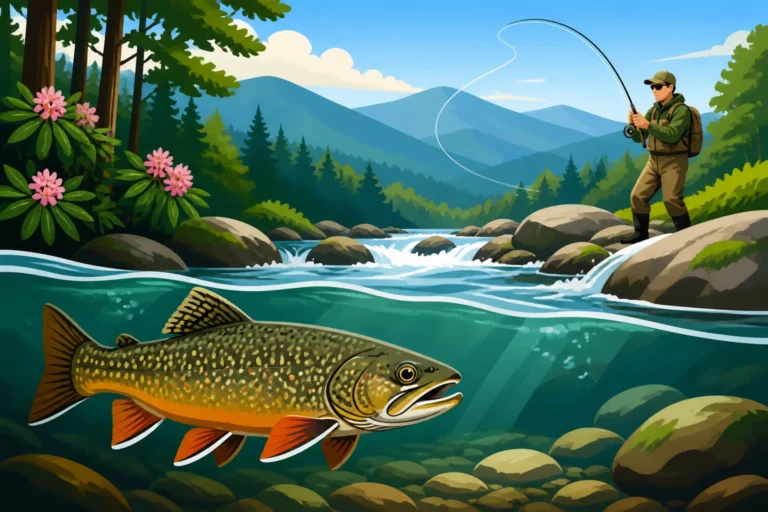
Their preferred habitat usually features a rocky or gravel bottom, not the silty beds you might find in lowland rivers. Overhead cover is also a huge draw—anything that provides shade and protection from predators, like overhanging trees, dense rhododendron thickets, or even submerged logs. The mountain streams in South Carolina offer exactly these kinds of conditions, which is why they're such a perfect haven for redeye. They're part of a delicate ecosystem, often sharing their waters with species like the native brook trout, which you can learn more about in South Carolina's Native Brook Trout: A Blue Ridge Mountain Original.
Redeye Bass vs. Other Stream Bass
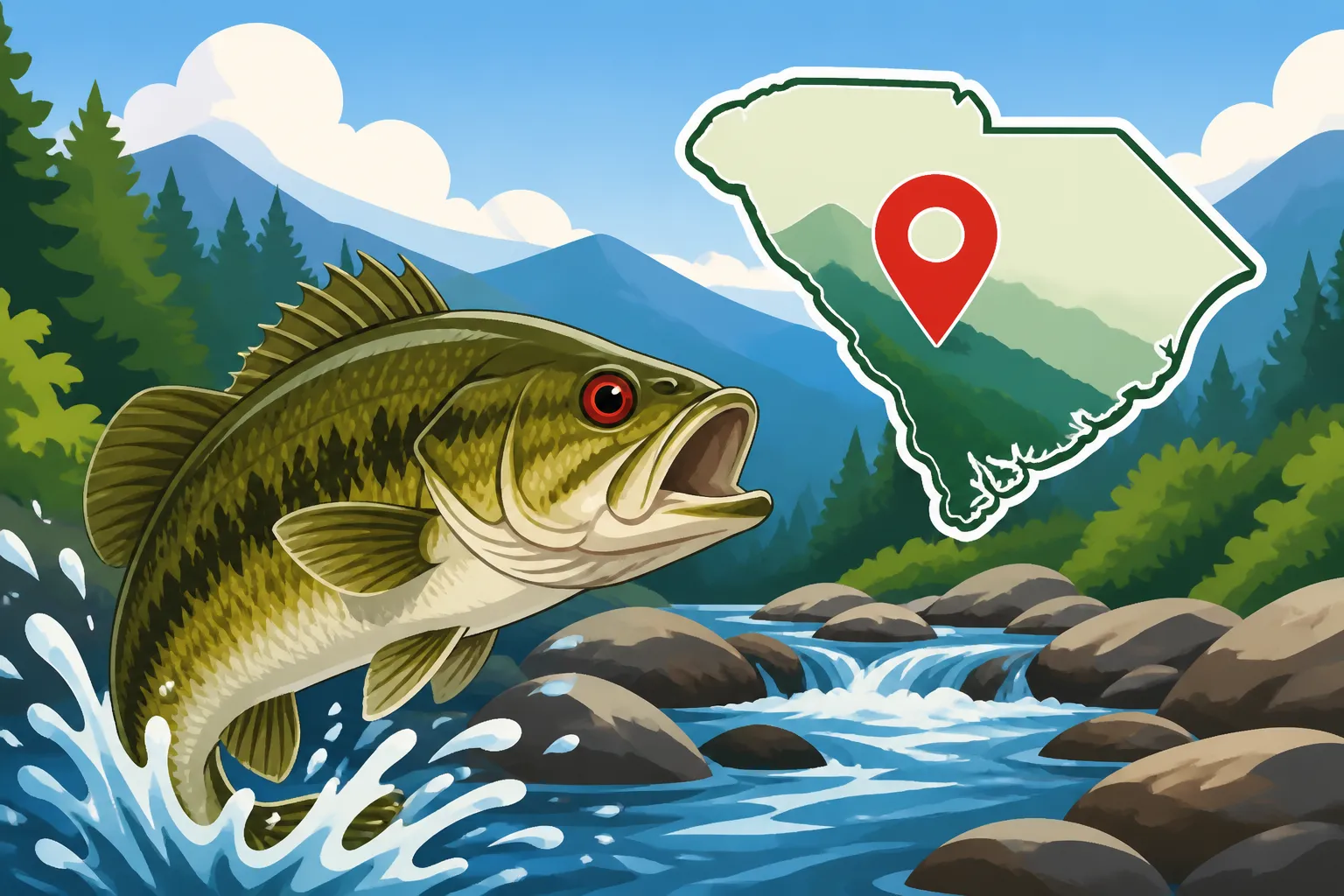
It’s easy to get excited when you hook a bass in a mountain stream, but identifying a true redeye can be a bit tricky for the untrained eye. Unlike the robust largemouth, redeye bass are generally smaller and more streamlined, built for battling currents. Their most distinctive feature is often their reddish eye, which gives them their name, though this isn't always intensely pronounced. They typically have a more uniform coloration, often olive green to brownish-bronze on their backs, fading to lighter sides and bellies, with subtle vertical barring or diamond-shaped patterns that are less distinct than, say, a smallmouth.
They also lack the distinct lateral line of a largemouth bass, which is often broken or irregular. In South Carolina, you might also encounter smallmouth bass in some of the same mountain regions. Smallmouths tend to have more prominent vertical bars and a darker overall coloration. Knowing these subtle differences will help you appreciate the specific catch and understand the unique ecology of these special waters. If you're curious about detailed identification, checking out How to Identify a Redeye Bass can be incredibly useful.
Uncovering South Carolina's Prime Redeye Bass Streams
Now for the exciting part—where exactly do you find these fantastic fish in the Palmetto State? While South Carolina might be better known for its vast lakes and coastal fishing, our Upstate region, particularly within the Blue Ridge Mountains and their foothills, offers fantastic opportunities for redeye bass.
Notable Upstate Waterways
The key to finding redeye bass is focusing on the cooler, higher elevation streams that feed into larger rivers. Many of these are within or bordering the Sumter National Forest, where the landscape provides the necessary conditions.
- The Chattooga River System: This legendary river, forming part of the border with Georgia, is a prime destination. While famous for its wild trout, its headwaters and many of its tributaries, particularly those that aren't exclusively designated trout waters, can hold excellent populations of redeye bass. Look for areas with good flow, clear water, and plenty of rocky structure. Access can be a hike, but the rewards are often worth the effort.
- The Chauga River: A significant tributary of the Tugaloo River, the Chauga offers similar conditions to the Chattooga. It boasts numerous feeder creeks and stretches of river that are perfect redeye habitat. These waters demand a bit of exploration, and often require bushwhacking or navigating smaller trails. Remember, the clearer and colder the water, and the more oxygenated by riffles and small waterfalls, the better your chances are.
- The Saluda River Headwaters: Up in the mountains, the forks of the Saluda River system, particularly the North Saluda and Middle Saluda, provide cool, clean flows. While some sections are managed for trout, many of the smaller, less-pressured stretches and tributaries are excellent for redeye. These areas are often tucked away in beautiful, rugged terrain, perfect for a peaceful day of fishing.
- Smaller Tributaries and Feeder Creeks: Don't overlook the myriad of smaller, unnamed creeks that crisscross the Upstate wilderness. Often, these hidden gems hold untouched populations of redeye. They might not be on every map, but with a good topographic map and a sense of adventure, you can discover your own secret spots. Keep in mind that many of these streams also contain Native Brook Trout Streams in South Carolina's Blue Ridge Mountains, so understanding the different species in the area is crucial.
Accessing Remote Stream Sections
Reaching these prime redeye bass spots often means leaving the paved roads behind. Many of the best locations require hiking through national forest lands. You'll want to consult detailed topographic maps or use GPS apps on your phone to identify access points, trails, and contour lines that might indicate promising stretches of water.
Remember to always respect private property boundaries and adhere to all national forest regulations. Sometimes, reaching a truly untouched section means parking your vehicle and hiking a mile or two along the stream bank, or even wading upstream. This adds an element of adventure, but it also means you'll need to be prepared with the right gear and know your physical limits. Early mornings are often best, not just for the bite, but also to beat any potential crowds, though in these remote areas, crowds are rarely an issue! For other great river fishing spots in the region, take a look at Best River Fishing Spots in the South Carolina Upstate.
Mastering the Art of Redeye Bass Angling: Techniques and Tackle
Catching redeye bass in these mountain streams isn't like power fishing a large reservoir. It requires a more finessed approach, a bit of stealth, and an understanding of how these fish behave in moving water.
Recommended Baits and Lures
Redeye bass are opportunistic feeders, but they prefer smaller presentations that mimic the natural forage in their stream environment. Think about what a small bass would eat in a clear, rocky stream: small baitfish, insects, and crawfish.
- Spinning Gear:
- Small Inline Spinners: Lures like a Mepps Aglia or Rooster Tail in sizes #0 to #2 are absolute killers. Their flash and vibration in the current are irresistible. Work them upstream and let the current bring them back down, or cast across and retrieve with a slight twitch.
- Small Crankbaits: Micro-crankbaits or small minnow-imitating lures (1-2 inches) can be incredibly effective, especially in deeper pools or slower stretches. Choose natural colors like crawfish or silver/black.
- Soft Plastics: Tiny grubs (1-2 inches) on a light jig head (1/32 to 1/16 ounce) are fantastic. Creature baits or small worms also work well, fished slowly along the bottom, mimicking a crawfish or a worm washed downstream. These can be easily found on Amazon.
- Live Bait: If permitted, small worms or crickets can be deadly, especially when fished under a bobber in calmer pools or drifted naturally through current seams.
- Fly Fishing Gear:
- Dry Flies: During insect hatches, smaller dry flies that imitate mayflies, caddis, or stoneflies can draw aggressive topwater strikes.
- Wet Flies and Nymphs: Bead-head nymphs and soft hackles, drifted naturally through runs and riffles, are often the most consistent producers.
- Streamers: Small streamers (e.g., Woolly Buggers) that imitate baitfish or crawfish can provoke strong strikes, especially when swung through deeper pockets.
Regardless of your chosen method, think small, subtle, and natural. Long casts aren't always necessary; often, a short, accurate pitch to a prime piece of structure is all it takes. For similar tactics, you might want to look at Fly Fishing Basics for Stocked Trout.
Essential Gear for Stream Fishing
When you're wading through rocky streams, your gear choices become even more critical. Comfort, durability, and practicality are paramount.
| Gear Item | Key Features for Redeye Fishing | Why It's Important |
|---|---|---|
| Rod | Ultralight to Light action, 5' to 6'6" length | Provides sensitivity for light bites, maneuverability in tight spaces |
| Reel | Small spinning reel (500-1000 size) or 3-5 wt fly reel | Balances with the ultralight rod, smooth drag for fighting fish |
| Line | 4-6 lb test monofilament or fluorocarbon (spinning); matching fly line | Low visibility, good knot strength, casts light lures/flies effectively |
| Waders/Wading Boots | Breathable chest waders, sturdy wading boots with felt/rubber soles | Keeps you dry and comfortable, provides grip on slick rocks (safety first!) |
| Tackle/Fly Box | Small, compact, waterproof for essential lures/flies | Easy to carry, protects tackle from water and bumps |
| Pliers/Hemostats | Small, sharp cutters for line, tool for hook removal | Essential for safe hook removal, especially from smaller fish; saves your fingers |
| Small Backpack | Hydration compatible, comfortable, carries essentials | Holds water, snacks, extra layers, camera; keeps hands free |
A comfortable, lightweight setup is your best friend. An ultralight spinning rod around 5 to 6 feet long, paired with a small spinning reel spooled with 4-pound test line, is ideal. If you're a fly angler, a 3- or 4-weight fly rod will give you plenty of sport with these fish. A good pair of wading boots or shoes with excellent grip is non-negotiable for safety on slippery rocks. Don't forget a small, waterproof tackle box to carry your essentials—you can find a great selection of ultralight spinning rods on Amazon, and picking up a multi-compartment tackle box on Amazon is always a good idea. Also, investing in some quality wading boots from Amazon before your trip can make a huge difference in comfort and safety.
Preparing for Your Mountain Stream Adventure: Permits and Practical Tips
A successful redeye bass trip isn't just about finding the right stream and having the right lure; it's also about being prepared and respectful of the environment.
Understanding South Carolina Fishing Regulations
Before you even tie a knot, make sure you're properly licensed. In South Carolina, a valid freshwater fishing license is required for anyone 16 years of age or older. While redeye bass are often found in waters also inhabited by trout, they typically fall under general freshwater regulations. However, always double-check the specific regulations for the stream you plan to fish, as some areas may have special restrictions, especially if they are designated trout waters. South Carolina Fishing License Guide is an excellent resource for all your licensing needs, and you can also check out Fishing License Requirements in South Carolina.
It's also important to understand bag limits and size restrictions for all species you might encounter. While redeye bass don't typically have specific, unique limits in South Carolina, they fall under general bass regulations. Always verify the current rules before heading out.
Respecting the Environment and Fellow Anglers
Mountain streams are fragile ecosystems. Practice "Leave No Trace" principles: pack out everything you pack in, and leave the area cleaner than you found it. Avoid wading unnecessarily through prime fish habitat, and be mindful of spawning areas, particularly in spring.
If you encounter other anglers, give them plenty of space. These streams are often narrow, and courtesy goes a long way. Consider catch-and-release for redeye bass, especially the larger ones, to help maintain healthy populations for future generations of anglers. These fish are a precious resource, and preserving their habitat ensures we can continue to enjoy them.
Safety and Preparedness for Remote Fishing
Fishing in remote mountain streams comes with its own set of challenges. Always tell someone where you're going and when you expect to return. Be aware of weather changes; mountain weather can be unpredictable, and a sudden downpour can quickly raise water levels, making streams dangerous to cross.
Carry plenty of water, some snacks, a basic first-aid kit, and a whistle. A small, lightweight rain jacket is also a good idea, even on sunny days. Cell service can be spotty or nonexistent in these areas, so don't rely on your phone for navigation or emergencies alone. Being prepared ensures your redeye bass adventure is not only successful but also safe and enjoyable.
Redeye Bass Stream Essentials
:South Carolina's mountain streams are hidden gems, offering a unique angling experience that contrasts sharply with the state's popular coastal fisheries. If you're tired of battling for space on crowded lakes or dealing with the unpredictability of saltwater tides, these clear, cold headwaters present a tranquil alternative. But finding that perfect stream section for redeye bass can feel like searching for a needle in a haystack – it’s not as simple as pulling up to a boat ramp and launching. This guide will help you pinpoint the best locations in the Palmetto State where these spirited fish thrive, giving you the upper hand in your next fishing adventure.
Understanding the Redeye Bass and Their Preferred Habitat
The redeye bass, often referred to as a "shoal bass" in other parts of its range, is a distinct species perfectly adapted to life in moving water. Unlike their more common cousins, the largemouth bass, redeye bass are built for agility and leverage in strong currents. To successfully target them, you first need to understand the unique environments they call home in South Carolina.
Characteristics of Ideal Redeye Bass Streams
Redeye bass crave cool, clean, and highly oxygenated water. This immediately points us towards the higher elevations and swift-flowing sections of our mountain river systems. They thrive where the water maintains a consistently cool temperature, which is why shaded canopies and spring-fed tributaries are so crucial. Think about the kind of stream where you might also find trout, though redeye tend to prefer slightly warmer water than brook trout. For more on what makes these streams special, consider reading South Carolina's Native Brook Trout: A Blue Ridge Mountain Original.
Their ideal stream features a substrate dominated by rock, gravel, and sand, rather than silt or mud. Look for stretches with an abundance of natural structure: large boulders that break the current, submerged logs, undercut banks, and fallen trees. These features provide ambush points for feeding and protection from predators. The redeye bass will often position itself just out of the main current, in an eddy or behind a rock, darting out to snatch unsuspecting prey as it drifts by.
Differentiating Redeye Bass from Other Stream Dwelling Bass
In South Carolina's mountain waters, you might encounter several types of bass. It's important to be able to tell a redeye apart, not just for bragging rights, but to appreciate the specific ecology of your catch. Redeye bass typically have a slender, torpedo-like body, a relatively small mouth that doesn't extend past the eye, and, as their name suggests, often a reddish tint to their eyes. Their coloration is usually dark olive to bronze on the back, fading to lighter sides, with faint, irregular vertical bars. They lack the prominent dark lateral line found on largemouth bass.
You might also hook a smallmouth bass or even a spotted bass in some of these same systems. Smallmouths generally have more distinct vertical barring and a more bronze appearance, while spotted bass have a rough patch on their tongue and often more defined rows of spots on their lower sides. If you’re unsure, a quick consult of How to Identify a Redeye Bass can be incredibly helpful. Understanding these subtle differences enhances the fishing experience and deepens your connection to the unique species we have here.
Prime South Carolina Mountain Stream Locations for Redeye Bass
South Carolina's redeye bass populations are concentrated in the northwestern corner of the state, in the foothills and mountains of the Blue Ridge. Access to these areas often requires a bit of effort, which helps keep them pristine and less pressured.
The Chattooga River and Its Tributaries
Perhaps the most iconic waterway for mountain fishing in South Carolina, the Chattooga River offers some of the best redeye bass fishing opportunities. Famed as a wild and scenic river, its clear, cold waters and rocky runs are perfect habitat. While sections are managed for trout, many of its tributaries and less-pressured stretches hold thriving redeye populations.
- Focus Areas: Look for the Chattooga's headwaters and smaller feeder creeks, especially those outside of designated "trout only" sections. The areas around Walhalla and Long Creek in Oconee County provide good starting points for exploration. The stretches downstream from major rapids often create deep pools and strong current breaks where redeye will congregate. Access points can be limited and may require hiking through dense forest, so be prepared for a bit of a trek.
- Tactical Advice: Concentrate your efforts on areas with fast-flowing water emptying into deeper pools, around large boulders, and near any structure that provides a current break. Stealth is key here; redeye are wary fish in clear water. For general advice on river fishing in the region, Best River Fishing Spots in the South Carolina Upstate could be a good starting point.
The Chauga River System
A significant tributary to the Tugaloo River, the Chauga River system, also in Oconee County, is another excellent destination. It shares many characteristics with the Chattooga, offering plenty of rocky runs, clear water, and ample cover for redeye bass.
- Key Sections: The Chauga River and its numerous branches flow through rugged terrain. Areas within the Sumter National Forest boundaries are typically accessible, though unimproved roads and hiking may be involved. Seek out sections with consistent gradient and plenty of riffles and small waterfalls, as these areas provide the high oxygen levels redeye prefer.
- Why It's Good: The Chauga’s wild nature means less human interference and often healthier fish populations. It's an ideal spot for anglers looking to escape the crowds and enjoy a truly immersive wilderness fishing experience. Exploring these waters might even lead you to Native Brook Trout Streams in South Carolina's Blue Ridge Mountains, giving you a chance to chase another unique mountain species.
The Saluda River Headwaters (North and Middle Saluda)
Further east, in Greenville and Pickens counties, the headwaters of the Saluda River, particularly the North Saluda and Middle Saluda, offer fantastic redeye bass opportunities. These rivers cascade down from the mountains, creating dynamic habitats.
- Prime Locations: Focus on the higher elevations and less developed sections of these rivers before they widen and slow down. Again, areas within or adjacent to the Sumter National Forest provide the best conditions. Public access points can be found, but often the best fishing requires some legwork to get away from easily reachable spots.
- What to Expect: These rivers are scenic and offer a diverse fishery. While trout are prevalent in some areas, the redeye bass thrive in the transitional zones between pure trout water and warmer lowland sections. Look for stream sections with a good mix of shallow riffles and deeper, current-swept pools.
Essential Gear and Techniques for Catching Redeye Bass
Successfully catching redeye bass in their fast-moving, clear water environment requires a specific approach to gear and technique. Forget the heavy bass tackle; precision and finesse are your allies here.
Recommended Tackle for Mountain Stream Fishing
Your tackle needs to be light, sensitive, and capable of handling a strong current while protecting delicate lines.
| Category | Item | Description |
|---|---|---|
| Rod & Reel | Ultralight Spinning | 5' to 6'6" ultralight action rod with a 500-1000 size reel. |
| Fly Rod | 3-5 weight fly rod, 7'6" to 8'6" length. | |
| Line | Spinning Line | 4-6 lb test monofilament or fluorocarbon. |
| Fly Line | Weight-forward floating fly line matched to your rod weight. | |
| Lures & Bait | Spinners | Small inline spinners (e.g., Mepps, Rooster Tail #0-#2) in silver, gold, black. |
| Crankbaits | Micro-crankbaits (1-2 inches) in crawfish, natural baitfish colors. | |
| Soft Plastics | Tiny grubs, creature baits, or worms on 1/32-1/16 oz jig heads. | |
| Flies | Small streamers (Woolly Buggers), nymphs, dry flies (caddis, mayfly imitations). | |
| Natural Bait | Crickets, small worms (check regulations before using). | |
| Wading Gear | Waders | Lightweight, breathable chest waders. |
| Wading Boots | Sturdy boots with felt or sticky rubber soles for grip. | |
| Accessories | Pliers/Hemostats | For hook removal and cutting line. |
| Small Backpack | To carry water, snacks, first-aid, extra layers. | |
| Polarized Sunglasses | Essential for spotting fish and structure in clear water. |
An ultralight spinning combo allows for accurate casts of small lures and offers excellent sensitivity for subtle bites. Many anglers also find fly fishing to be incredibly effective for redeye bass, especially with small streamers, nymphs, and dry flies. You can find a fantastic selection of ultralight rods and reels on Amazon that are perfectly suited for this kind of fishing. Don't forget to grab some extra fishing line and a reliable pair of polarized sunglasses, also readily available on Amazon, to help you spot those wary fish in the clear water.
Effective Techniques for Targeting Redeye Bass
- Upstream Casting: This is a highly effective method. Cast your lure or fly upstream and let it drift naturally downstream with the current, mimicking natural forage. Maintain a slightly slack line to allow for a natural drift but be ready to set the hook quickly.
- Targeting Structure: Redeye bass are ambush predators. Cast to the edges of current seams, behind large boulders, into deep pools below rapids, and under any overhanging vegetation. Work your lure slowly and deliberately through these high-percentage areas.
- Stealth and Presentation: Because the water is often crystal clear, redeye bass can be easily spooked. Approach potential fishing spots quietly, stay low, and make accurate casts. Minimize splashing and avoid heavy footsteps on the bank.
- Matching the Hatch (Fly Fishing): For fly anglers, observing what insects are active on or near the water can lead to choosing the right fly pattern. Otherwise, nymphs and small streamers are generally reliable producers. For spinning gear, natural colors that mimic crawfish or small baitfish are usually best.
- Patience and Persistence: Redeye bass fishing isn't always about catching dozens of fish, but rather the quality of the experience and the fight of these strong, streamlined bass. Be patient, explore different sections of the stream, and experiment with various lures and techniques until you find what works on a given day. While the focus here is redeye, many of these techniques are transferable to other species, so you might also be interested in Best Bait for Smallmouth Bass in Cold Water.
Planning Your Redeye Bass Adventure: Rules and Readiness
A successful and enjoyable redeye bass fishing trip involves more than just knowing where to go and what to throw. It's about being prepared, safe, and respectful of South Carolina's natural resources.
Navigating South Carolina Fishing Regulations
Before embarking on your trip, ensure you have a current South Carolina freshwater fishing license. These are mandatory for most anglers aged 16 and older. While redeye bass don't typically have species-specific regulations like trout in some areas, they fall under general bass rules. However, always double-check the South Carolina Department of Natural Resources (SCDNR) website for the most up-to-date information and any special regulations for specific streams or national forest areas you plan to visit. Resources like South Carolina Fishing License Guide or South Carolina Fishing License Requirements in South Carolina can provide comprehensive details.
Also, be aware of any catch limits or size restrictions that might apply to bass in general, or to other species like trout that you might inadvertently catch. Catch-and-release is strongly encouraged for redeye bass to help sustain healthy populations, especially in these more fragile stream ecosystems.
Safety and Preparedness for Remote Streams
Fishing in remote mountain streams means being self-sufficient. Cell phone service is often non-existent, so you can't rely on it for navigation or emergencies.
- Inform Others: Always tell someone your planned itinerary, including where you'll be fishing and when you expect to return.
- Weather Awareness: Mountain weather can change rapidly. A sunny morning can turn into a torrential downpour, leading to dangerous flash floods and rapidly rising water levels. Pack lightweight rain gear and always check the forecast before you go.
- First Aid and Essentials: Carry a small first-aid kit, plenty of water, high-energy snacks, a headlamp (even for day trips), and a small knife.
- Navigation: A physical map and compass, or a downloaded map on your GPS device or phone (that doesn't require cell service), are crucial for navigating trails and stream sections.
- Wading Safety: Wading in swift, rocky streams can be treacherous. Use a wading staff for stability, especially when crossing deeper or faster sections. Always test the depth and current before stepping. Your sturdy wading boots, perhaps picked up from Amazon, are truly your best friend here.
Practicing Responsible Angling
These pristine mountain streams are a treasure, and it's our responsibility as anglers to protect them.
- Leave No Trace: Pack out everything you pack in, including all trash, fishing line, and any other litter.
- Respect Wildlife: Observe wildlife from a distance and avoid disturbing natural habitats.
- Stream Etiquette: If you encounter other anglers, maintain a respectful distance. Don't crowd another angler's spot, and if you're moving upstream or downstream, be mindful of where others are fishing.
- Handle Fish Carefully: If you practice catch-and-release, handle fish as little as possible with wet hands, and release them quickly and gently to ensure their survival.
By following these guidelines, you'll not only increase your chances of finding and catching redeye bass but also contribute to the conservation of these magnificent fish and their beautiful South Carolina mountain habitats.
Disclaimer
This article is for general informational purposes only and does not constitute professional advice. Laws, prices and regulations vary by location and change over time. Consult a qualified professional for guidance on your specific situation.