Winter Fishing Techniques in South Carolina Lakes
The chilly bite of winter in South Carolina often makes many anglers pack away their rods, assuming the fishing simply shuts down until spring. But nothing could be further from the truth! While fish certainly behave differently when the water cools, understanding these changes and adapting your approach can lead to some incredibly rewarding days on the lake. This comprehensive guide will walk you through the precise techniques, gear, and strategies you need to keep catching fish throughout the colder months in South Carolina's beautiful freshwater lakes.
Understanding Winter Fish Behavior in South Carolina Lakes
When the air turns crisp and the water temperatures plummet, fish in South Carolina's lakes don't just disappear; they undergo significant physiological and behavioral shifts. Knowing why they do what they do is the first step to successfully targeting them in winter. It’s all about energy conservation and finding comfort.
The Impact of Water Temperature on Fish Metabolism
Fish are cold-blooded creatures, which means their body temperature is largely dictated by the surrounding water. As the water cools down, their metabolic rate slows dramatically. Think of it like a car idling – it's running, but not expending much fuel. This reduced metabolism means they don't need to eat as often, and when they do, they're looking for an easy meal that requires minimal effort to catch. They become sluggish, less aggressive, and their movements are far more deliberate than in warmer months.
This metabolic slowdown directly influences how aggressively they'll strike a lure or bait. A fast-moving retrieve that might trigger a reaction bite in summer will often be ignored in winter. Instead, they prefer slow-moving, subtle presentations that mimic easy prey. It’s not that they’re not eating; they’re just being incredibly picky and energy-conscious. Their digestive systems also work slower, so they take longer to process food, further reducing their feeding frequency.
Where Fish Go When the Waters Get Cold
One of the biggest mysteries for winter anglers is figuring out where the fish have gone. They certainly aren't in the shallow coves and weed beds they inhabited during summer. As water cools, South Carolina's larger lakes and reservoirs often experience what's called "thermal stratification turnover" in late fall, followed by a more consistent cold temperature throughout the water column. However, even in winter, fish are constantly seeking the most stable and comfortable water temperatures. This often means moving to deeper water, where temperatures tend to be more consistent and sometimes slightly warmer than the shallows.
Deep water structures like humps, ledges, submerged roadbeds, creek channels, and even standing timber become prime real estate. Fish will often suspend in the water column at specific depths or hug tight to the bottom, holding near cover that offers protection and a slight thermal advantage. On sunny days, you might find them migrating to south-facing banks or shallower dark bottom areas that warm up slightly, but they rarely stay there for long, especially after a cold night. Understanding these migration patterns is crucial for locating them.
Feeding Patterns and Preferred Forage in Winter
With their slowed metabolism, fish feed less frequently but still need nutrition. Their diet often shifts to smaller, more concentrated meals that are easy to ambush. In many South Carolina lakes, this means focusing on schools of baitfish like shad or herring, which also seek deeper, more stable waters during winter. Larger predatory fish like bass and stripers will follow these baitfish schools.
Crappie, on the other hand, might still be found around brush piles and vertical cover, but they'll be much tighter to the structure. Catfish will also move to deep holes and channel swings, often grouping in large numbers. The key is to match the hatch, so to speak, but with a slower, more deliberate presentation. Live bait, like minnows or shiners, becomes incredibly effective because it offers a natural, slow-moving meal that fish can't resist expending minimal energy to eat. Artificial baits must be worked with extreme patience, mimicking a vulnerable or dying baitfish rather than an energetic chase.
Essential Gear and Tackle for Cold Weather Angling
Winter fishing success in South Carolina lakes isn't just about knowing where the fish are; it's also about having the right tools for the job. From sensitive rods to specialized lures and, most importantly, appropriate clothing, your gear setup needs to be optimized for chilly conditions and subtle bites.
Rods, Reels, and Lines for Sensitive Winter Bites
When fish are lethargic, their bites can be incredibly faint—a mere tap, a slight weight, or even just your line going slack. This is where sensitive gear truly shines. For most freshwater species like bass and crappie, a medium-light to medium power spinning rod with a fast or extra-fast action is ideal. The fast action allows you to feel those subtle takes and set the hook effectively. Look for rods made of high-modulus graphite, which transmits vibrations exceptionally well. Brands like St. Croix or Ugly Stik offer excellent sensitivity for their price points, and you can find a good selection on online retailers like Amazon.
Pair your sensitive rod with a lightweight spinning reel spooled with light line. Six to ten-pound test fluorocarbon is often the preferred choice for its low stretch, high sensitivity, and near invisibility underwater. Fluorocarbon also sinks, which can be advantageous when presenting baits slowly in deeper water. If you prefer braided line, consider using a high-visibility braid like 10-15 lb test, but always add a fluorocarbon leader of 6-10 feet. This combination gives you the best of both worlds: casting distance and sensitivity from the braid, and stealth from the fluorocarbon. Remember, every little advantage counts when the bite is tough.
Lures and Baits That Shine in Chilly Conditions
Forget the fast-moving topwater plugs and buzzing spinnerbaits of summer. Winter calls for a completely different arsenal of lures and baits. The name of the game is slow, subtle, and natural. Jerkbaits are a perennial favorite for bass in winter, particularly suspending models that can be paused for extended periods, hanging tantalizingly in the fish's strike zone. Work them with long pauses, letting the fish decide to commit. Blade baits, like those from Johnson or other reputable brands, are also excellent for vertical jigging over deep structure, creating a lot of flash and vibration with minimal movement.
For crappie, tiny jigs (1/32 to 1/16 ounce) tipped with small soft plastics or live minnows are deadly. Slow-trolling with multiple rods at different depths (spider rigging) is a highly effective tactic on larger lakes such as the Santee Cooper lakes. For striped bass, live bait such as shad or herring, either downlined or freeline, is often the most productive. If you're using artificials for stripers, consider spoons or soft plastics on heavy jig heads, mimicking baitfish dying or struggling near the bottom. Always have a variety of colors, but natural hues like shad, silver, and dull greens often outperform brighter colors in clear winter waters.
Dressing for Success: Staying Warm on the Water
This might sound obvious, but staying warm and comfortable is absolutely critical for enjoying winter fishing and maintaining the focus needed for subtle bites. Layering is key. Start with a moisture-wicking base layer (merino wool or synthetic, avoid cotton). Add an insulating middle layer like a fleece or down vest. Your outer layer should be waterproof and windproof – a good quality fishing jacket and bibs are invaluable. Brands like Columbia or Simms are popular among anglers, but even budget-friendly options can be found on Amazon that provide adequate protection.
Don't forget your extremities. A warm hat that covers your ears is essential, as a significant amount of body heat escapes through your head. Insulated, waterproof gloves are a must for handling cold lines and fish. Chemical hand warmers can be a game-changer, tucked into gloves or pockets. Warm, waterproof boots and thick wool socks will keep your feet from freezing. Remember, if you're shivering uncontrollably, your concentration will suffer, and you'll miss those faint bites. Being prepared for the cold will allow you to stay out longer and be more effective.
Top Freshwater Species and Their Winter Tactics
South Carolina's lakes are teeming with fantastic freshwater fishing opportunities, even when the temperatures drop. Targeting specific species with tailored techniques will significantly increase your chances of success during the winter months. Each fish has its own preferred hangouts and feeding habits when the water is cold.
Cracking the Code for Winter Largemouth Bass
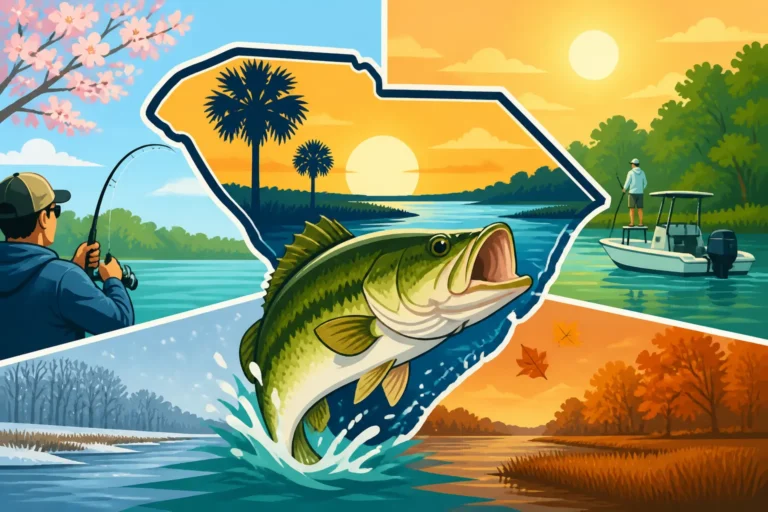
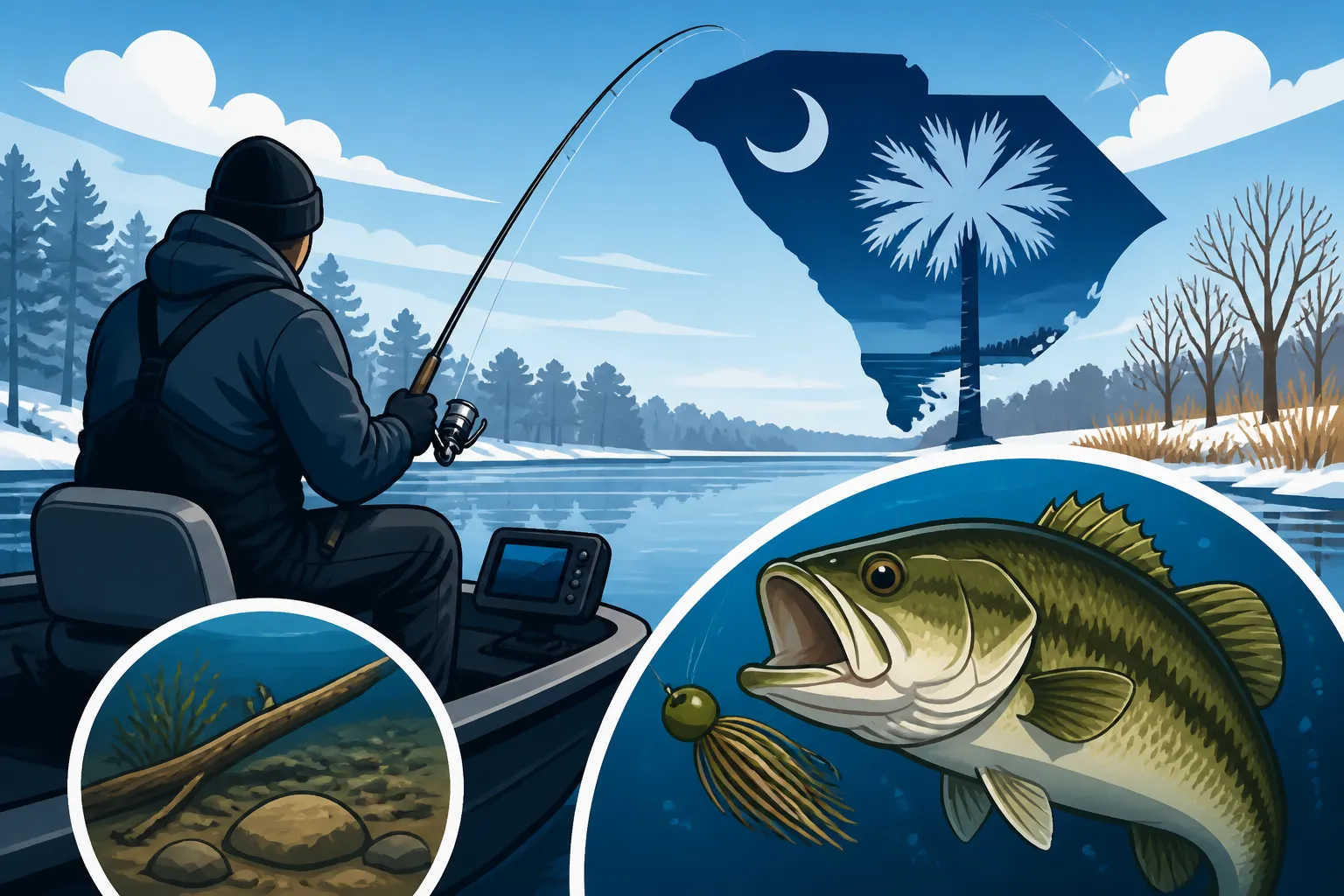
Largemouth bass in South Carolina don't hibernate, but they certainly slow down. They'll often group up in deeper water, typically around structure like channel bends, submerged points, humps, or deep brush piles. The key to catching them is a slow, methodical approach. One of the most effective techniques is deep cranking with lipless crankbaits or deep-diving crankbaits. Fan-cast these lures across deep points and channel edges, slowly grinding them along the bottom or bumping into submerged timber. The idea is to make contact with the cover, then pause, allowing the lure to slowly float or suspend, mimicking a disoriented baitfish.
Another incredibly productive method is fishing jigs. A bulky football jig or a finesse jig tipped with a soft plastic trailer can be slowly dragged, hopped, or shaken on deep ledges and brush. The slower retrieve allows the bass to inspect the bait and commit. Many anglers also find success with a shaky head rig or a Carolina rig, presenting a plastic worm or lizard slowly across the bottom. Remember, patience is paramount; you might only get a few bites all day, but they often come from larger, healthier bass. Check out our guide on Largemouth Bass Fishing in South Carolina: The Complete Guide for more in-depth seasonal strategies.
Seeking Out Slab Crappie in Cold Waters
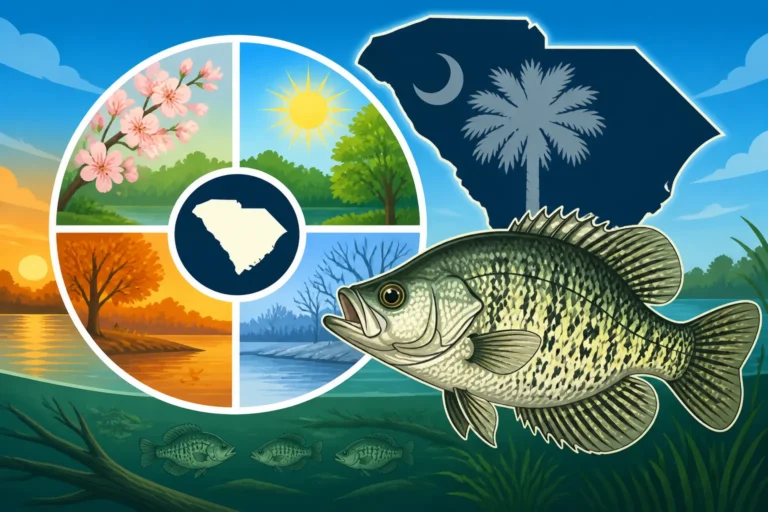
Winter is arguably one of the best times to catch "slab" crappie in South Carolina. Like bass, crappie will school up and seek deeper, stable water, often congregating around sunken brush piles, standing timber, or bridge pilings. They'll be tightly grouped and can be quite concentrated, meaning if you find one, you've likely found a whole school.
Vertical jigging is a highly effective technique. Using a sensitive spinning rod, drop a tiny 1/32 or 1/16-ounce jig (tipped with a minnow or small soft plastic like a Bobby Garland Baby Shad) directly into the cover. Let it sink to the desired depth, then subtly twitch or "dead stick" it, allowing the bait to sit almost motionless. Crappie Jigging Techniques for Beginners offers more specific tips on this approach. Spider rigging, where multiple rods are deployed from the front of the boat with jigs or minnows at varying depths, is also very popular on lakes like Lake Moultrie. This allows you to cover more water and depths simultaneously until you find the fish's preferred zone. A good fish finder is invaluable for locating these schools and submerged cover.
Hooking Up with Hard-Fighting Winter Striped Bass
South Carolina's striped bass population provides incredible action year-round, and winter is no exception, especially on lakes like Lake Murray or Lake Hartwell. Stripers are cold-water tolerant and remain active, often schooling heavily in open water following baitfish. The most popular and effective winter technique is "downlining" live bait. Anglers use heavy weights to present live shad or herring at specific depths where stripers are marked on sonar. Once a school is located, it’s a matter of dropping baits right into them.
Trolling is another excellent strategy, particularly on larger bodies of water. Umbrella rigs, bucktail jigs, or deep-diving crankbaits can be trolled at slow speeds, imitating schools of baitfish. Many anglers pay close attention to the Best Time of Year to Fish in South Carolina charts, as winter often brings the biggest and most aggressive striped bass into the feeding zones. The fish finder is your best friend when chasing winter stripers, as they are constantly on the move. Once you locate a school, mark its depth and try to stay on top of them. For more details on this majestic species, check out our guide on Striped Bass: South Carolina's Official State Fish.
Finding Feisty Catfish in South Carolina's Lakes
Catfish, particularly blue catfish and channel catfish, are incredibly active in South Carolina's lakes throughout the winter. They are less sensitive to cold water than some other species and often congregate in large numbers in deep holes, river channels, and near submerged humps. This makes them a reliable target when other species are sluggish.
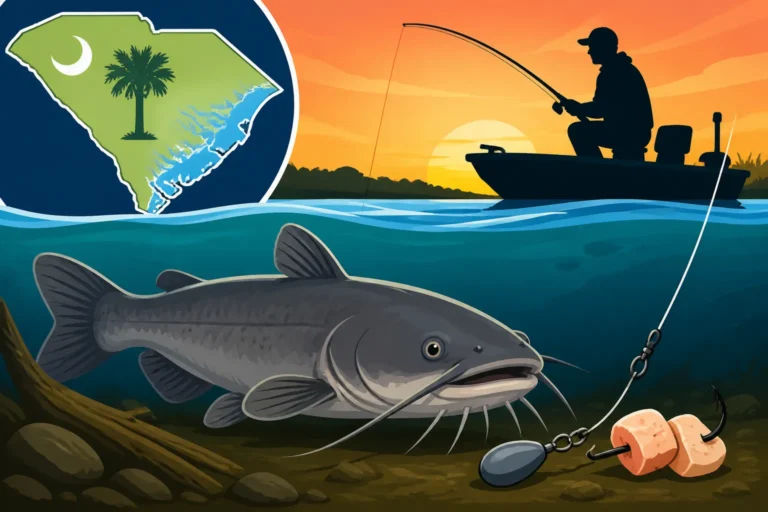
Bottom fishing is the primary technique for winter catfish. Use a heavy lead sinker (often a slip sinker rig) to keep your bait on the bottom, where catfish feed. Cut bait, such as fresh shad, herring, or even chicken liver, is incredibly effective. The scent trail from the cut bait attracts catfish from a distance. Look for deep channel bends, depressions, or areas with current flow in larger rivers that feed into lakes like Lake Marion. Often, if you find one catfish in a deep hole, you’ll find many more. Our guide on Catfish Bottom Fishing Basics provides more details on setting up effective rigs for these winter warriors. Patience is key, but the reward of a big winter blue cat is well worth the wait.
Strategic Winter Fishing Locations in South Carolina Lakes
Finding fish in winter isn't just about the technique; it's crucially about where you fish. Fish gravitate towards specific types of locations when the water cools down, seeking thermal stability, cover, and readily available food. Knowing these hotspots will greatly narrow down your search and maximize your time on the water. South Carolina boasts some fantastic winter fishing destinations.
Targeting Deep Water Structures and Drop-offs
In winter, the most consistent place to find fish is often in deeper water, particularly around pronounced underwater structures. Look for areas where the depth changes abruptly—sharp drop-offs, underwater ledges, and the edges of old creek or river channels. These features provide a transition zone where fish can move up and down in the water column to find their preferred temperature and ambush prey. Points that extend into deep water are especially productive, as baitfish often funnel around them, and predators lie in wait.
On lakes like Lake Murray, focus on areas like the large humps and points near the main lake channel. On the Santee Cooper system, particularly Lake Marion and Lake Moultrie, the old river channels and their associated bends are prime catfish and crappie real estate. Bass will often hold on the deeper side of ledges, especially those with some form of cover like stumps or rock piles. A good topographical map of the lake combined with a reliable fish finder will be your best friend in identifying and effectively fishing these deep-water structures. For a broader overview of places to cast your line, check out our article on the Best Fishing Spots in South Carolina.
Exploiting Thermal Refuges and Warm Water Discharges
While most of the lake cools down, certain areas can offer slightly warmer water, acting as natural thermal refuges for fish. These can include spring-fed coves or, more commonly, the discharge areas from power plants. Lakes that have power generation facilities, such as Lake Wylie or parts of the Santee Cooper system, often have warm water discharges that attract huge numbers of baitfish and, consequently, large predatory fish like bass and striped bass. The slightly elevated temperature makes fish more active, and they'll feed more aggressively than fish in colder parts of the lake.
Fishing these warm water areas requires a different approach. While still slower than summer, presentations can be a bit more aggressive. The key is to find the seam where the warm water mixes with the colder lake water, as fish will often stage along this transition zone. Be mindful of any specific regulations or access restrictions around power plant facilities, as these areas are sometimes restricted. These unique "hot spots" can provide exceptional action when the rest of the lake is slow.
Understanding the Role of Cover: Brush Piles and Standing Timber
Even in deep water, fish seek out cover. Submerged brush piles, standing timber (especially in older reservoirs), and even rock piles offer vital protection from predators and current, as well as a place to ambush prey. In winter, fish will often tuck themselves tightly into these cover elements, conserving energy. When targeting crappie, specifically, finding a good brush pile in 15-30 feet of water is often the key to a successful day. They will suspend within the branches, almost invisible without good electronics.
For bass, a solitary stump or a small patch of timber on a deep point can hold a monster. Presenting your bait or jig as close to this cover as possible without getting snagged is crucial. Sometimes, a slight bump of your lure into the cover is exactly what it takes to trigger a reaction strike from a lethargic winter fish. Electronics with side imaging or down imaging are incredibly helpful for pinpointing these submerged cover elements and understanding how fish are positioned within them. Many of South Carolina's larger lakes, like Lake Hartwell, are known for their extensive standing timber, offering endless opportunities for winter anglers willing to explore.
| Species | Preferred Winter Depth | Key Structures & Cover | Effective Lures/Baits | Presentation Style |
|---|---|---|---|---|
| Largemouth Bass | 15-40 feet | Deep points, ledges, channel bends, submerged brush | Jerkbaits, Football Jigs, Blade Baits, Shaky Heads | Slow retrieve, long pauses, bottom contact |
| Crappie | 15-30 feet | Brush piles, standing timber, bridge pilings | Small Jigs (1/32-1/16 oz), Live Minnows | Vertical jigging, dead stick, spider rigging |
| Striped Bass | 20-60 feet (or deeper) | Open water schools, main lake channels, humps | Live Shad/Herring, Umbrella Rigs, Spoons | Downlining, slow trolling, vertical jigging |
| Catfish | 25-50 feet | Deep holes, river channels, channel bends, depressions | Cut Bait (Shad, Herring), Chicken Liver, Worms | Bottom fishing (slip sinker rig), stationary |
Advanced Tips for Maximizing Your Winter Catch
Winter fishing demands a higher degree of finesse, observation, and patience than other seasons. While the basics of gear and location are covered, there are several advanced strategies that can truly set you apart and lead to more consistent success on South Carolina's chilly lakes.
The Importance of Slow Presentation and Patience
This can’t be stressed enough: slow down. Fish are not chasing anything aggressively in winter. They are conserving energy, and any meal needs to be an easy one. Your lure presentation should reflect this. If you think you're reeling slowly, try reeling even slower. If you're pausing your jerkbait for five seconds, try ten or even fifteen. Often, the strike will come on the pause. This deliberate pace allows fish ample time to approach, inspect, and finally commit to the bait. Rushing your retrieve will likely result in missed opportunities.
Consider how a sick or dying baitfish would behave. It wouldn't be darting around erratically. It would be struggling, slowly sinking, or barely moving. Mimic that vulnerability. For jigs, this means subtle lifts and drops, or just dragging them along the bottom. For live bait, ensure it's presented naturally, allowing it to swim freely with minimal resistance. This patient approach is often mentally challenging for anglers accustomed to faster-paced fishing, but it is the single most important factor for winter success.
Using Electronics to Locate Fish and Structure
Modern fish finders are an absolute game-changer for winter fishing. Without them, you're essentially fishing blind in deep water. High-quality sonar units with down imaging and side imaging capabilities allow you to pinpoint subtle depth changes, identify submerged structures like brush piles or standing timber, and most importantly, mark schools of baitfish and the predators holding near them. Being able to "see" a school of crappie suspended in a brush pile 25 feet down, or a group of bass hugging a deep ledge, allows for incredibly precise presentations.
Don't just drive around aimlessly; use your electronics to systematically scan areas you suspect hold fish. Pay attention to water temperature readings, as even a one-degree difference can concentrate fish. Once you mark fish, observe their depth and how they relate to the structure. Are they on top, to the side, or suspended above it? This information will help you adjust your bait depth and presentation. Brands like Humminbird and Lowrance offer excellent features, many of which are available at various price points, making advanced electronics accessible for many anglers, including through Amazon. Knowing exactly where to drop your bait is half the battle won.
Adapting to Changing Weather and Water Conditions
Winter weather in South Carolina can be fickle, and successful anglers learn to adapt. A clear, sunny day following a cold front might seem ideal, but often a bluebird sky means tough fishing due to high pressure. Overcast, stable conditions, even with a light drizzle, can sometimes be more productive as fish feel less exposed and are more willing to roam slightly shallower. Pay attention to sudden changes in air temperature, barometric pressure, and wind direction. A sharp cold front will often push fish even deeper and make them more lethargic, requiring an even slower presentation.
Similarly, water clarity plays a role. In clear water, fish are more reliant on sight, so natural bait colors and fluorocarbon leaders are crucial. In stained or slightly murky water, a lure with more vibration or a bit of flash might be more effective, and scents can give you an edge. The South Carolina Department of Natural Resources (SCDNR) often provides helpful information on local conditions, and staying informed can help you make informed decisions about your tackle and tactics. By paying close attention to these subtle environmental cues, you can make real-time adjustments that translate into more fish in your boat. Our South Carolina Freshwater Fishing Calendar can help you track seasonal trends that impact these decisions.
Disclaimer
Fishing inherently involves risks. Always prioritize safety by wearing a life vest, checking weather conditions, and informing others of your plans. Abide by all South Carolina fishing regulations, including size and creel limits. This guide is for informational purposes only and does not constitute professional advice.