How to Fish Deep Structure for Bass in Summer
Summer in South Carolina can be a tough pill to swallow for bass anglers. When those relentless sunbeams beat down and the surface water starts feeling like bathwater, it often feels like the largemouth just vanish into thin air. But trust me, they haven't disappeared; they've simply retreated to the cool, dark sanctuaries of deep structure. This comprehensive guide will pull back the curtain on how to effectively locate and entice those summertime lunkers from the depths.
Understanding Bass Behavior in South Carolina Summer Heat
It’s easy to get discouraged when the shallow bite shuts down, but understanding why bass move deep is the first step to unlocking summer success. They’re not just being contrary; they’re responding to fundamental environmental changes.
Why Bass Go Deep
As the South Carolina summer cranks up, two major factors push bass into deeper waters: temperature and oxygen. Our lakes, like Lake Murray or the Santee Cooper Lakes, experience what’s called thermal stratification. This means the water column divides into distinct layers: a warm, oxygen-rich surface layer (epilimnion), a transition zone where temperature changes rapidly (thermocline), and a cooler, often oxygen-depleted bottom layer (hypolimnion). Bass, being cold-blooded, seek out the cooler, more stable temperatures of the thermocline where oxygen levels are still adequate. This is often where their primary forage, like baitfish, also congregates, creating a buffet line in the cooler depths.
Beyond just comfort, this deeper water also offers more consistent food sources and protection from direct sunlight and predators, including us anglers! When you're dealing with scorching 90-degree days, a bass knows that hunkering down near a cool, dark ledge 20 feet below the surface is a much better place to be than baking in a shallow cove. It’s all about efficiency and survival, and those deep havens offer both in spades.
Identifying Deep Structure
So, what exactly is "deep structure"? It’s more than just a flat bottom; it's anything down there that provides bass with a distinct change, cover, or ambush point. Think about what a bass needs: somewhere to hide, somewhere to ambush prey, and somewhere to feel safe. This could be a dramatic depth change like a submerged creek channel or a long, tapering point that extends far into the lake. It might be an underwater hump that tops out at 15 feet surrounded by 40 feet of water, or a sharp drop-off along a main river channel.
Other prime examples include old roadbeds that cut across submerged timber, brush piles placed by anglers or created naturally by fallen trees, or even vast rock piles and submerged foundations. On a lake like Lake Hartwell, you might find old bridge pilings or even entire flooded communities. The key is that these structures create current breaks, ambush points, and concentration areas for baitfish, making them irresistible to bass seeking refuge. Using your electronics effectively is paramount to finding these hidden gems.
Essential Gear and Electronics for Deep Structure Bass Fishing
Trying to fish deep structure without the right tools is like trying to find a needle in a haystack blindfolded. Modern fishing technology, coupled with appropriate tackle, makes all the difference when you're targeting fish that aren't visible to the naked eye.
Rods, Reels, and Line
When you're pulling a deep-diving crankbait through 20 feet of water or setting the hook on a bass clinging to a submerged brush pile, your gear needs to be up to the task. For deep cranking, a longer, moderate-heavy action rod, around 7 to 7.5 feet, is ideal. The softer tip helps the fish inhale the bait, while the backbone provides the power to drive the hooks home and control a strong fish. Pair this with a lower gear ratio baitcasting reel (around 5.1:1 to 6.3:1) to reduce fatigue and provide more torque for cranking those big-lipped lures. For line, fluorocarbon in 10-15 lb test is a popular choice because its low stretch offers excellent sensitivity and its density helps crankbaits dive deeper.
For more vertical presentations, like Carolina rigging, Texas rigging, or drop shotting, a sensitive, heavy-action graphite rod in the 7-foot range is crucial. You need to feel every subtle bite and every change in bottom composition. High-speed baitcasting reels (7.1:1 or higher) are excellent for quickly taking up slack and moving to your next target. For Carolina rigs, a 15-20 lb fluorocarbon main line with a 12-17 lb fluorocarbon leader is common. For Texas rigs and drop shots, 10-15 lb fluorocarbon works well. You can find a fantastic selection of these specialized rods, reels, and lines on Amazon, often with reviews that help you narrow down the best choice for your budget and specific techniques.
Sonar and Mapping Systems
If you're serious about deep structure bass fishing, investing in quality electronics is non-negotiable. Modern sonar units from brands like Humminbird, Garmin, and Lowrance are your eyes underwater. 2D sonar is great for identifying fish arches and dense structure directly beneath your boat. Down Imaging (or DownVu/ClearVü) provides a picture-like view directly below, making it easier to discern between a rock pile and a brush pile. Side Imaging (or SideVu/SideScan) is a game-changer, allowing you to scan wide swaths of water on either side of your boat, revealing structure and even individual fish that you might otherwise drive right over.
Combining these sonar technologies with detailed mapping systems (like LakeMaster, Navionics, or Garmin's Quickdraw Contours) allows you to overlay your sonar readings onto high-definition lake maps. This means you can easily identify creek channels, ledges, and humps before you even cast a line. Learning to interpret these screens takes practice, but it's an investment that pays huge dividends, helping you pinpoint those exact sweet spots where the bass are holding. For instance, being able to mark a specific submerged stump on a major creek channel on Lake Wateree can be the difference between a blank day and a limit of quality bass. Knowing how to fish deep structure for bass in summer starts with truly seeing what’s beneath the boat.
Top Techniques for Targeting Deep Structure Bass
Once you've located that promising deep structure, the next step is presenting your lure in a way that tempts those often-finicky summer bass. A versatile approach using a few key techniques will maximize your chances.
Deep Cranking and Trolling
Deep cranking is often the most aggressive and efficient way to cover vast amounts of deep structure quickly. The goal is to get your deep-diving crankbait down to the depth where the bass are holding, ideally making contact with the structure itself. Lures like the Strike King 6XD or the Rapala DT-16 are designed to reach depths of 15-25 feet or more. The "thump" of the crankbait hitting a submerged log or rock pile often triggers an aggressive reaction strike. Experiment with different retrieve speeds, sometimes a steady retrieve is best, other times a stop-and-go or a deflection off structure is what the bass are looking for.
For truly deep or expansive areas, slow trolling can be an effective way to present crankbaits or even heavy jigs to suspended bass or those along deep contour lines. This technique allows you to keep your lure in the strike zone for an extended period, especially useful on large bodies of water like Lake Murray where bass might be scattered. Pay close attention to your electronics while trolling; when you see bait or bass on the screen, that's your cue to slow down or make a turn. Different retrieves and colors, from natural baitfish patterns to chartreuse, can make all the difference, and you'll find a wide variety of these lures available on Amazon. For specific color guidance, checking out a guide on best lures for largemouth bass in muddy water might offer some crossover insights, even if you’re fishing clear water.
Carolina Rigging and Texas Rigging
When bass are glued tight to structure or in areas with thick cover, the more subtle presentations of the Carolina rig and Texas rig shine. The Carolina rig, often called "the ball and chain," involves a heavy lead or tungsten weight (1/2 oz to 1 oz) followed by a bead, a swivel, and a leader (typically 18-36 inches) tied to your hook and soft plastic bait. This setup allows the weight to drag along the bottom, creating a commotion that attracts attention, while the bait floats or suspends enticingly a short distance behind. It's incredibly effective for dragging over points, humps, and ledges, giving the bait a natural, independent action.
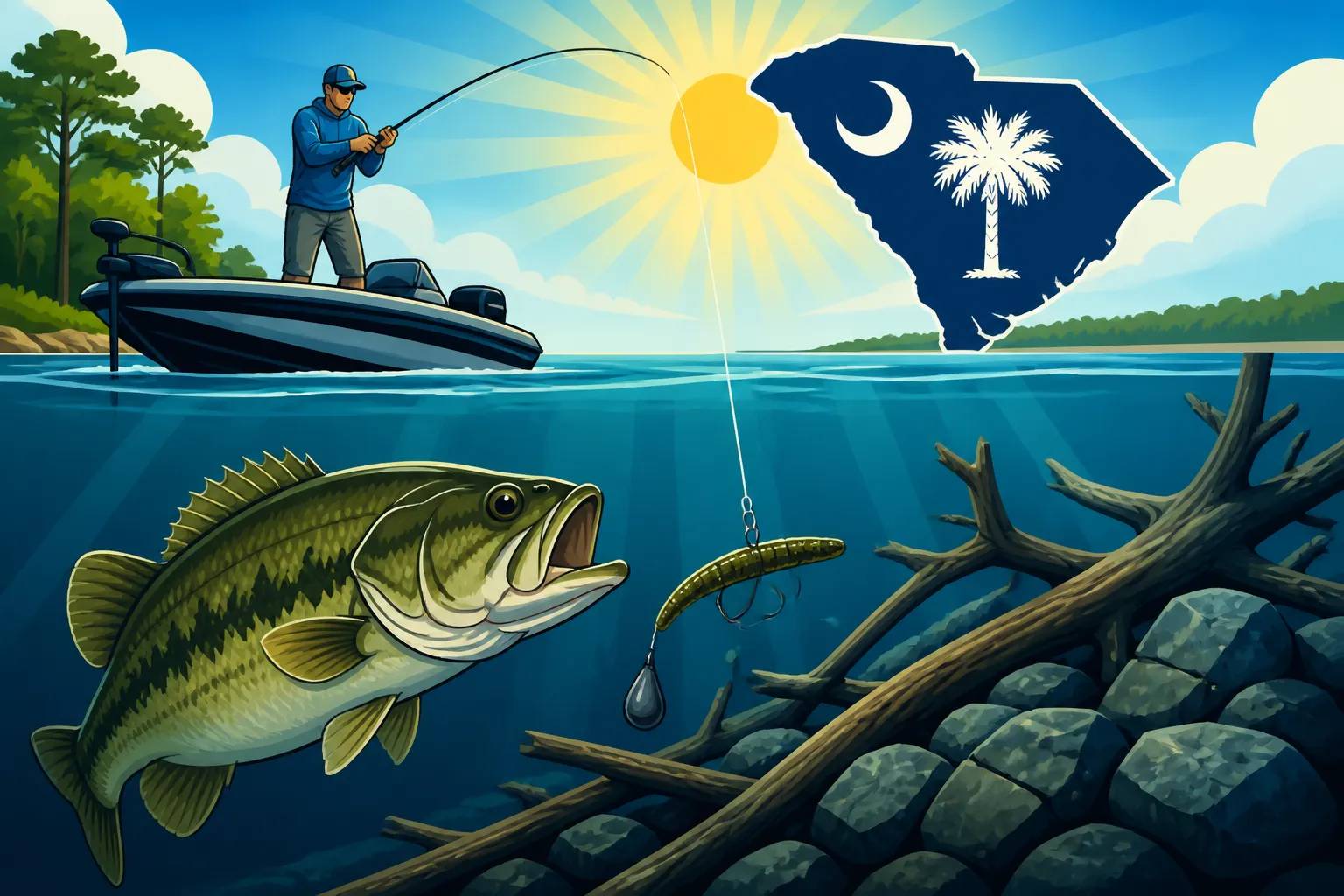
The Texas rig, on the other hand, is designed for penetrating heavy cover. It uses a worm weight slid directly onto the line, followed by a hook that's Texas-rigged into a soft plastic bait, making it weedless. This setup is perfect for pitching into submerged timber, brush piles, or dense hydrilla beds without snagging. A common tactic is to let the bait fall naturally into the cover, then slowly work it through with subtle twitches. Creature baits, large worms, and crawfish imitations are excellent choices for both of these rigs. If you're wondering how to rig a Texas-rig worm for bass, you're on the right track for effective deep structure presentations.
Drop Shot and Jigging Spoons
For finesse presentations or when bass are suspended, lethargic, or under intense fishing pressure, the drop shot and jigging spoon can be absolute lifesavers. The drop shot rig allows you to present a small soft plastic bait at a specific depth above a weight, keeping it perfectly horizontal and in the strike zone. It's incredibly effective for targeting suspended bass you see on your electronics or those that are finicky and won't chase a moving bait. Simply drop the rig down to the desired depth, engage your reel, and gently shake the rod tip to impart action to the bait. This technique is particularly deadly around vertical structures like bridge pilings or steep bluffs found on lakes like Keowee.
Jigging spoons, on the other hand, are fantastic for vertical presentations over bait balls or schooling fish in open water or along deep ledges. A heavy spoon, like a P-Line Laser Minnow or a Hopkins Shorty, can be dropped quickly to the depth where fish are congregating. The action is usually a lift-and-fall, mimicking a dying baitfish. The flutter on the fall and the flash on the lift can trigger powerful strikes. These are also great for quickly checking a deep spot for active fish before committing to a slower presentation. Mastering these techniques will significantly improve your chances of success, especially when combined with knowledge from sources like South Carolina Bass Fishing Techniques by Season.
Advanced Tips and Seasonal Adjustments
Successfully fishing deep structure isn't just about knowing the techniques; it's about continuously learning, adapting, and leveraging every tool at your disposal.
Reading the Water and Adjusting Presentations
Even in summer, no two days are exactly alike on the water. Factors like current, wind, and cloud cover can drastically influence how and where bass position themselves. A strong current can push bass out of direct flow into eddies or behind cover, and you'll need to present your lure accordingly. The thermocline, that sweet spot where temperature and oxygen levels are ideal, can also fluctuate in depth, so continually checking your electronics to verify fish depth is key. If you're finding that bass are suspended slightly above a ledge, a crankbait that dives to that exact depth or a perfectly placed drop shot will outperform a bait dragging on the bottom.
Pay close attention to baitfish presence. If your sonar shows schools of shad or bream around a deep hump, you can bet that bass are nearby. Mimicking the size and color of that forage will increase your bites. Sometimes, bass are aggressive and will chase down a fast-moving crankbait. Other times, after a cold front or with intense heat, they might be lethargic, requiring a slower, more deliberate presentation like a Texas-rigged worm barely crawling over the bottom. Adaptability is your biggest asset. Understanding how water temperature affects fish feeding is crucial for making these real-time adjustments.
Leveraging Technology and Community Knowledge
Modern bass boats are essentially floating computers, and smart anglers use every feature available. Mark successful spots with GPS waypoints, noting the depth, structure type, and even the lure and retrieve that worked. Over time, this data will build a powerful personal library of productive deep spots. Many fish finders also allow you to create your own detailed contour maps (like Garmin's Quickdraw Contours), which can reveal hidden features not present on standard maps.
Beyond your own boat, don't shy away from community knowledge. Online fishing forums, local bait shops, and even informal conversations at the boat ramp can provide valuable insights into current patterns or productive areas. Just remember to verify information with your own electronics and fishing experience. Platforms like YouTube offer countless tutorials on interpreting sonar screens or mastering specific deep structure techniques. Knowing what time of day do bass bite best can also be augmented by community reports and localized insights.
Here's a quick comparison of popular deep-diving lures for summer bass:
| Lure Type | Typical Depth Range | Ideal Structure | Key Features | Best Use Cases |
|---|---|---|---|---|
| Deep-Diving Crankbait | 10-25+ feet | Ledges, humps, points | Aggressive wobble, deflects off cover | Covering water quickly, triggering reaction strikes |
| Football Jig | 15-40 feet | Rocks, hard bottoms, ledges | Stands up on bottom, mimics crawfish | Slow, methodical presentation on hard structure |
| Carolina Rig | 10-50+ feet | Points, humps, creek channels | Weight drags bottom, bait suspends above | Subtle presentation over varied bottom, scattered fish |
| Texas Rigged Worm | 5-40 feet | Brush piles, timber, grass | Weedless, penetrates heavy cover | Pitching into heavy cover, precise targeting |
| Drop Shot Rig | 5-40 feet (or more) | Suspended fish, vertical cover | Horizontal bait presentation, finesse | Finicky bass, precise depth targeting, vertical jigging |
| Jigging Spoon | 15-60+ feet | Bait balls, deep ledges, open water | Mimics dying baitfish on the fall, flash on the lift | Schooling fish, quick checks, vertical presentation |
Remember, fishing deep structure during the summer in South Carolina is a rewarding challenge. It requires patience, attention to detail, and a willingness to learn from every cast. From the broad expanse of the Santee Cooper lakes to the deep, clear waters of Lake Keowee, applying these techniques will help you stay on the fish, even when the heat is on. For instance, specific knowledge about areas like Lake Murray Summer Striped Bass Techniques in South Carolina can sometimes overlap, as both bass and stripers will seek deeper, cooler waters during the hottest months. Don't be afraid to experiment with different baits and presentations; sometimes the smallest tweak makes the biggest difference. You might also want to explore articles like Lake Hartwell Spring and Fall Bass Fishing Patterns in South Carolina to understand how bass behavior shifts with the seasons, making your summer adjustments even more intuitive.
Disclaimer
Fishing laws and regulations, including those concerning licenses, seasons, and bag limits in South Carolina, are subject to change. Always consult the latest official South Carolina Department of Natural Resources (SCDNR) guidelines before heading out on the water. This article is intended for informational purposes only and does not constitute legal advice or an endorsement of specific products or brands.