Lure Color Choices for Stained Water Fishing
Oh, the dreaded stained water! We've all been there, standing on the bank of Lake Murray or out on a boat in the Santee Cooper lakes after a good rain, looking at that chocolate milk or murky tea-colored water and wondering if anything will bite. It can be incredibly frustrating to know fish are there but feel like you're casting into a void. This guide is all about helping you cut through that murk by choosing the right lure colors, so you can turn those challenging days into productive ones.
Understanding Stained Water and Its Challenges
Fishing in clear water is one thing; you can see the bottom, maybe even spot a fish or two, and you feel like you have a good handle on what's going on. But stained water throws a real wrench in that plan. Suddenly, your visual cues are gone, and it feels like you're fishing blind. It’s a common challenge here in South Carolina, especially after a big storm or during certain times of the year.
What Exactly is Stained Water?
When we talk about "stained water," we're generally referring to water that has reduced clarity due to suspended particles or dissolved organic matter. It's not necessarily "dirty" in a polluted sense, but rather, something is making it difficult for light to penetrate and for fish (and us!) to see very far. This can be anything from fine silt and clay particles kicked up by rain, to decaying leaves and vegetation that release tannins, giving the water a tea-like tint. The key takeaway is that visibility is significantly compromised, and that changes everything about how fish perceive their environment and how they hunt.
It's a common misconception that all stained water is the same. Some might be heavily muddy, like what you see in runoff after a huge downpour. Others might have that dark, almost black coffee look from tannins leaching out of cypress swamps and decaying organic matter, which is common in many of our blackwater rivers and lower-lying lakes. Then there's the subtly cloudy water that might not look "muddy" but still has enough suspended particles to limit visibility to just a few feet. Each type presents its own set of challenges, and understanding the nuances can help you fine-tune your approach.
Common Causes of Stained Water in South Carolina
In the Palmetto State, we see stained water for a variety of reasons. One of the most frequent culprits is heavy rainfall. When we get those intense summer thunderstorms or prolonged periods of wet weather, runoff from fields, construction sites, and even suburban lawns carries soil, silt, and decaying plant matter into our rivers, creeks, and lakes. This creates that classic "muddy" appearance, especially in the shallower sections and coves of our reservoirs. If you've ever tried fishing the Congaree River after a significant rain, you know exactly what I'm talking about. It can go from a decent greenish tint to a dark brown soup in a matter of hours.
Another major contributor, particularly in our coastal plains and swampy areas, is tannin. Tannins are organic compounds released from decaying vegetation like cypress trees, pine needles, and other plant matter. These leach into the water, giving it a dark, tea-stained or coffee-colored appearance. Think of the Edisto River or many of the smaller creeks winding through the Lowcountry marshes – they often have this characteristic stain, even on a perfectly sunny day. This type of stain typically has a different impact on light penetration and fish behavior than muddy water, which we’ll dive into more later. It’s important to acknowledge that the conditions can change quickly, so being flexible with your lure choices is key. It's why I always recommend keeping an eye on the weather and water conditions when you're planning your trip; it’s just as important as knowing the South Carolina Freshwater Fishing Calendar.
The Science Behind Lure Color in Stained Water
When visibility drops, fish rely less on sight and more on their other senses. However, they do still use their eyes, even if the light is poor. Our goal as anglers is to present a lure that stands out enough for them to detect visually, even in dim conditions, while also appealing to those other senses. It’s a delicate balance, and it’s why just throwing any old lure won’t cut it in stained water.
How Light Behaves in Murky Conditions
Think about shining a flashlight into a fog. The light scatters, bounces off all the tiny water droplets, and quickly loses its intensity. The same thing happens with sunlight in stained water. The suspended particles – whether they’re clay, silt, or tannins – absorb and scatter light waves. Red light, for instance, has a longer wavelength and is absorbed very quickly in water, especially murky water. That means if you’re using a red lure in stained conditions, it might appear dark brown or even black to a fish just a few feet away. Blues and greens penetrate deeper in clear water, but in heavily stained conditions, even these colors lose their vibrancy and visibility pretty quickly.
What does this mean for us? It means we need to consider how much light is actually making it to our lure and how that light is being reflected (or not reflected) back to the fish's eye. We're not just picking a color; we're picking a color that will look like something distinct under poor light. This is why certain bright, unnatural colors often shine in stained water, as they reflect the limited available light in a way that creates a stark contrast, grabbing a fish's attention when it might otherwise be missed. It’s also why understanding What Time of Day Do Bass Bite Best? can be crucial, as changing light conditions impact lure visibility.
Fish Vision in Low Visibility
Fish, especially predatory fish like bass, crappie, and even redfish, have evolved to hunt in various light conditions, but their vision is adapted to their environment. In low light or stained water, their eyes are more sensitive to contrast and movement rather than fine details and vibrant hues. They're looking for silhouettes, changes in light intensity, and flashes. Imagine trying to find something in a dimly lit room; you're not focusing on the specific shade of blue, but rather on the outline and how it stands out against the background.
Some fish species have more rods in their eyes, which aid in low-light vision, while others might have more cones, which help with color perception in brighter conditions. In our South Carolina waters, many of the popular game fish, like largemouth bass, are excellent ambush predators who rely on detecting prey even in compromised visibility. This means our lure color choices aren't about mimicking natural prey perfectly, but rather about presenting an obvious target. We're trying to create a "hot spot" in a visually dull environment, something that screams "eat me!" even if the fish can only get a blurry image. For a deeper dive into the species you might encounter, check out South Carolina Fish Species: A Complete Guide to What's in the Water.
Top Lure Color Choices for Stained Water
So, knowing that fish rely on contrast and that light penetration is poor, what colors should we be reaching for? It's often counterintuitive for anglers used to "matching the hatch" in clear water. Forget subtle realism; in stained water, you want your lure to be seen and felt.
Bold & Bright: Chartreuse and Orange
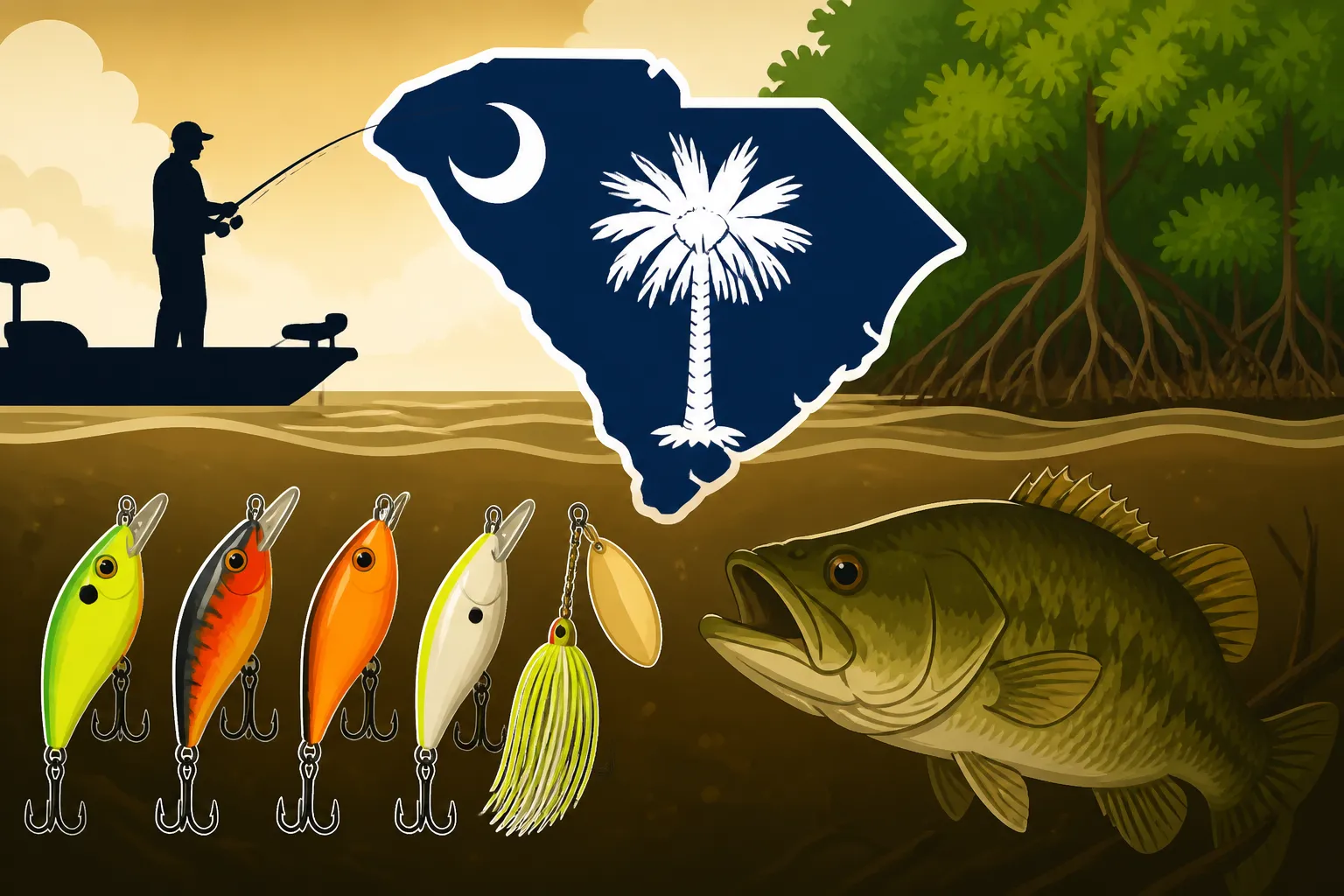
These are the go-to colors for a reason when the water is murky. Chartreuse, that vibrant fluorescent yellow-green, and bright orange are fantastic at reflecting what little light is available, making them highly visible. They create a strong contrast against the dark background of stained water. Think about how a safety vest stands out in dim light – that's the effect we're going for.
Many seasoned anglers will tell you stories of days when nothing else would work, but a chartreuse spinnerbait or an orange crankbait pulled fish after fish out of muddy water. These colors don't necessarily mimic anything natural, but they scream "I'm here!" to a fish trying to locate prey by sight. Whether you're targeting bass after a heavy rain or crappie hunkered down in a muddy creek, having a selection of lures in these bright, almost glowing colors is essential. You can find a huge variety of these in different lure types on Amazon, from jigs to soft plastics.
Dark Silhouettes: Black and Blue Combinations
This might seem contradictory to the "bright and bold" advice, but hear me out. In extremely dark or heavily stained water, where even bright colors struggle to reflect light, dark colors excel at creating a distinct silhouette. Imagine a predator looking up towards the surface from murky depths; a dark object passing overhead creates a stark outline against the faint light filtering down. This is the "contrast" principle at its best.
Black and blue is a classic combination, particularly for jigs and plastic worms used for bass fishing in stained water. The black provides the strong silhouette, while a touch of blue (which can appear as a dark grey in very low light) adds a subtle differentiation that some believe fish can still detect. This combo is incredibly effective for jigging around structure or slowly working plastic baits on the bottom. It often works when the fish are holding tight to cover, and you need something that doesn't just attract attention but also looks like a substantial meal. When you're fishing conditions that demand heavy tackle and bold presentations, such as Bass Fishing Techniques for Muddy Water After Rain, this color combination really shines.
Natural but Contrasting: White and Pearl
Sometimes, even in stained water, fish want something that looks a bit more "natural" while still offering high visibility. That's where white and pearl come in. These colors are excellent because they reflect light very well, creating a bright flash or a visible profile even in moderate stain. They don't have the same fluorescent pop as chartreuse, but they often appear as a more subtle, natural baitfish imitation in less opaque water.
Think about a white spinnerbait blade flashing through dingy water or a pearl swimbait being retrieved. The bright white material reflects ambient light, making it noticeable without being overtly "unnatural" to a fish. This can be particularly effective in water that is cloudy but not completely opaque, or in situations where fish are slightly more wary. Having a few white or pearl soft plastics or spinnerbaits in your tackle box is a smart move for those in-between stained water conditions. You can stock up on versatile options like these from Amazon.
Matching Lure Color to Stained Water Type
It's not just about knowing which colors work; it's about understanding when to use them. As we discussed earlier, not all stained water is the same. The type of stain – whether it's muddy, tannic, or just generally cloudy – can influence which colors will be most effective.
Heavily Muddy Waters
When the water looks like chocolate milk, often after a massive downpour or significant runoff, visibility is at its absolute worst. In these conditions, you need maximum contrast and vibration. This is where those bold, bright colors like chartreuse and orange truly excel. Their ability to reflect even the slightest amount of available light makes them stand out like a beacon. Pairing these colors with lures that create a lot of vibration, like spinnerbaits with large thumping blades or lipless crankbaits, will help fish locate your bait even if they can only get a blurry visual.
Another excellent choice for heavily muddy water, especially for slower presentations, is the black and blue combination. The strong silhouette it creates against the minimal light filtering down from the surface can be just what a fish needs to key in on your offering. Many anglers will opt for a black and blue jig with a matching trailer when fishing dense cover or fishing slow and deep in muddy conditions. Don't be afraid to go big and loud with your lures here; subtlety is rarely rewarded when the visibility is practically zero. For more tips on adapting your gear, check out Best Lures for Largemouth Bass in Muddy Water.
Tannic or "Tea-Stained" Waters
Tannic water, common in blackwater rivers and swamps like those found throughout the Lowcountry, presents a different challenge. While it's dark, it often has a clearer quality than muddy water; light might penetrate a bit further, but everything takes on a brownish or reddish hue. In these conditions, colors that maintain their integrity or even glow under low light can be very effective.
Chartreuse is still a strong contender here because of its inherent brightness. However, orange and red can also be surprisingly effective, especially if there's enough light to allow their wavelengths to be seen. Think about how many crawfish are reddish-brown – a common forage in these environments. A dark red or orange crankbait can often draw strikes. Another excellent choice is purple. Some anglers swear by purple worms and jigs in tannic water, believing the color provides a unique contrast that fish detect well. Consider a purple worm, perhaps with a little glitter, on a Texas rig; it's a staple for bass in these waters. If you're experimenting with different setups, learning How to Rig a Texas-Rig Worm for Bass can be very beneficial.
Cloudy or Murky but Not Muddy
This is that in-between water, often a greenish-gray tint, where visibility might be a few feet rather than just inches. It's not clear, but it's not a complete washout either. In these conditions, you have a bit more flexibility, and sometimes a slightly more natural presentation can still work if it offers good contrast.
White and pearl lures become very effective here because they provide excellent light reflection without being as "shocking" as chartreuse. A white spinnerbait, a pearl swimbait, or even a white jig can mimic baitfish that are common in these slightly turbid conditions. The bright, reflective quality of white helps it stand out, but it still has a more subdued, natural look than neon green. Silver can also work well if it's got enough flash, especially if there's a good amount of overcast sky where a bright, metallic glint might catch a fish's eye. Sometimes even a subtle green pumpkin with a chartreuse tail can be the ticket if fish are being a bit finicky but still need something visible.
Beyond Color: Other Factors for Stained Water Success
While lure color is critical, it's not the only thing that matters when you're facing stained water. Fish have other senses, and a truly effective presentation will engage as many of them as possible. You need to compensate for the lack of visibility by making your lure easier to detect in other ways.
Vibration and Sound: Making Noise When Fish Can't See
When a fish can't see, it relies heavily on its lateral line system – a sensory organ that detects vibrations and pressure changes in the water. This is why lures that create a lot of commotion are so effective in stained conditions. Think about how you might listen more intently in a dark room; fish do the same with their lateral line.
- Rattles: Many crankbaits, jigs, and even some soft plastics come equipped with internal rattles. These create audible sound waves that travel well through water, calling attention to your lure.
- Thumping Blades: Spinnerbaits with large, Colorado-style blades create a significant "thump" as they move through the water. This strong vibration can be felt by fish from a distance, drawing them in even before they can get a visual.
- Wobble and Action: Lures with an aggressive wobble, like wide-lipped crankbaits or chatterbaits, push a lot of water. This displacement creates strong pressure waves that fish can detect and home in on.
- Jigging and Popping: Actively working a jig or popping a cork with a shrimp can generate enough sound and vibration to get attention. This is especially true when fishing for crappie, where jigging motions are key, and a brightly colored jig is often paired with a subtle, yet effective, vibration pattern. For more on this, check out Best Jig Colors for Crappie Fishing.
So, when choosing your lures for stained water, don't just consider the color; think about how much noise and vibration it will make. If you're fishing a quiet soft plastic, consider adding a glass rattle insert to give it an extra edge.
Scent is Your Secret Weapon
If fish can't see your lure well, and they're not quite picking up on the vibration, their sense of smell and taste can be the deciding factor. Many fish species have an incredible sense of smell, allowing them to detect food items from surprising distances, especially in murky water where chemicals disperse more slowly.
- Scented Baits: Many soft plastics come pre-impregnated with fish attractants like garlic, anise, or various fish oils. Brands like Berkley PowerBait and Gulp! are famous for their effectiveness due to their built-in scent.
- Add-on Scents: You can purchase liquid or gel scents and apply them directly to your lures. This is a fantastic way to enhance any bait, especially when fishing conditions are tough. Simply squirt or smear a generous amount on your jigs, worms, or even crankbaits before each cast. The scent trail can guide a fish directly to your lure, giving it that final incentive to bite.
- Live Bait: Of course, nothing beats the natural scent of live bait like worms, minnows, or shrimp. If you're really struggling in heavily stained water, reverting to live bait can often produce strikes when artificials fail. You can buy quality live bait from many tackle shops or even order some fishing supplies from Amazon for pickup.
Scent adds an entirely new dimension to your presentation, giving fish one more reason to investigate and commit to your lure. It's particularly useful for slow, bottom-oriented presentations where fish have more time to investigate. It can also be very effective for species like catfish, where a strong scent is often paramount. Many anglers who swear by Is Night Fishing Better for Catfish? also heavily rely on strong scents to attract fish in low-light conditions.
Lure Profile and Presentation
Finally, don't forget the importance of lure profile and how you present your bait. Even with the perfect color, vibration, and scent, a poor presentation can still lead to an empty livewell.
- Larger Profile: In heavily stained water, a bigger lure often presents a more substantial target. A fish might only see a vague blob, but a larger blob is easier to notice than a small one. Don't be afraid to upsize your baits slightly in very murky conditions.
- Slower Retrieve: While some vibrating lures demand a faster retrieve, many presentations in stained water benefit from a slower, more deliberate approach. This gives the fish more time to locate your lure by vibration and scent and more time to get a good look (or feel) before deciding to strike.
- Targeting Structure: Fish in stained water often relate very tightly to cover and structure. They might be hugging submerged logs, rock piles, dock pilings, or grass lines because these areas offer ambush points and a sense of security. Make sure your casts are precise and that you're working your lure right through these high-percentage areas.
- Confidence: Last but not least, have confidence in your chosen setup. If you've picked a chartreuse crankbait because the water is muddy, fish it with conviction! The more casts you make with confidence, the higher your chances of success. Sometimes just sticking with a plan, even when it feels tough, can lead to that breakthrough bite. For general guidance on seasonal strategies, consider exploring South Carolina Bass Fishing Techniques by Season.
To give you a quick overview, here's a table summarizing common stained water types and the best lure color approaches:
| Stained Water Type | Visibility Level | Best Lure Colors | Supporting Factors | Example Lure Types |
|---|---|---|---|---|
| Heavily Muddy (Chocolate Milk) | Extremely Low | Chartreuse, Orange, Black/Blue | Heavy Vibration, Strong Scent | Spinnerbaits (Colorado blades), Lipless Crankbaits, Jigs, Soft Plastics with Rattles |
| Tannic (Tea-Stained) | Low to Moderate | Chartreuse, Orange, Red, Purple | Moderate Vibration, Scent | Crankbaits, Jigs, Plastic Worms, Bladed Jigs |
| Cloudy/Murky (Greenish-Gray) | Moderate | White, Pearl, Chartreuse, Silver | Moderate Vibration, Scent | Spinnerbaits (Willowleaf), Swimbaits, Flukes, Jigs |
Ultimately, fishing in stained water is about making your lure as obvious and appealing as possible to a fish that can't rely solely on its eyes. By choosing the right colors, adding vibration and scent, and presenting your bait effectively, you can turn a challenging day into a rewarding one on the water. Keep experimenting, and you'll find what works best for your favorite South Carolina fishing spots!
Disclaimer
This article is for general informational purposes only and does not constitute professional advice. Laws, prices and regulations vary by location and change over time. Consult a qualified professional for guidance on your specific situation.