Why Sturgeon Are a Protected Species
Imagine you're out on a peaceful South Carolina river, casting your line, hoping for a big catfish or a lively bass. Suddenly, you feel a massive tug, and after an exhilarating fight, you bring in a fish unlike any you've seen – long, prehistoric-looking, with bony plates instead of scales. Your heart races, but then reality sets in: you know some fish are off-limits. This guide is here to explain why the magnificent sturgeon, those ancient river giants, are a protected species in South Carolina, and why anglers must treat them with the utmost care.
The Decline of a River Giant: Why Sturgeon Faced Near Extinction
It's hard to believe that creatures so resilient, having survived for millions of years, could be pushed to the brink by human activity. Yet, the story of the sturgeon in South Carolina, much like in many other parts of the world, is a sobering tale of abundance turned to scarcity. Understanding this history is key to appreciating why they are so fiercely protected today.
Historical Abundance and Value
Generations ago, sturgeon were a common sight in the coastal rivers of South Carolina, including the Santee, Edisto, and Savannah. Imagine these massive fish, some growing to impressive lengths and weights, migrating upriver to spawn. They were so plentiful that they supported thriving commercial fisheries. Locals would catch them not just for their meat, which was highly prized, but especially for their roe – the coveted caviar. This "black gold" was incredibly valuable, driving a significant industry that, unfortunately, gave little thought to the future.
The sheer volume of sturgeon being harvested was unsustainable, even if people didn't realize it at the time. There was a sense that the supply was endless, an easy assumption when you saw rivers teeming with life. But sturgeon have a unique life history that makes them particularly vulnerable to overfishing, something we'd learn the hard way as populations began to dwindle rapidly.
The Impact of Human Activity
The decline of sturgeon wasn't solely due to overfishing, though that certainly played a major role. As South Carolina developed, so did the demands on its rivers. One of the most devastating impacts came from the construction of dams. These monolithic structures, while providing power and flood control, effectively blocked the sturgeon's migratory routes to their ancestral spawning grounds. A fish that needs to travel hundreds of miles upstream to reproduce simply couldn't get there anymore. Think of it like a highway suddenly being cut off – there's no way for them to reach their destination.
Pollution from industrial activities and agricultural runoff also took a heavy toll. Contaminants in the water affected sturgeon health, reduced their reproductive success, and damaged the delicate ecosystems they relied on for food and shelter. Habitat degradation, like dredging and shoreline development, further eroded the places where young sturgeon could grow and thrive. This multi-pronged assault created a perfect storm, pushing these incredible fish closer and closer to the brink.
The Slow Growth, Late Maturity Challenge
What makes sturgeon particularly susceptible to these pressures is their unique life cycle. Unlike many fish that reproduce quickly and in large numbers, sturgeon are slow growers and late bloomers. It can take them many years, sometimes even a decade or more, to reach sexual maturity. A female Atlantic sturgeon might not spawn until she's 10 to 20 years old! And even then, they don't spawn every year, often taking several years between reproductive cycles.
This means that if a population is heavily fished, or if their spawning grounds are blocked, it takes an incredibly long time for that population to recover, if it can recover at all. Removing a mature female sturgeon from the population means losing decades of potential egg production. This biological reality, combined with intense pressure from commercial fishing and habitat loss, made their decline almost inevitable without significant intervention. It's a stark reminder that some species need a much longer leash when it comes to human interaction.
Federal and State Protection: A Collaborative Effort
Recognizing the severe threat to sturgeon populations, both federal and state agencies stepped in to implement rigorous protections. This wasn't a quick fix, but a concerted, long-term effort to halt their decline and, hopefully, aid in their recovery.
The Endangered Species Act (ESA) and Its Role
The federal Endangered Species Act (ESA) is one of the most powerful conservation laws in the world, and it has been crucial for sturgeon. Both the Atlantic sturgeon and the Shortnose sturgeon found in South Carolina are listed under the ESA as endangered or threatened. This designation means they receive comprehensive protection, making it illegal to harass, harm, pursue, hunt, shoot, wound, kill, trap, capture, or collect them. It also means that federal agencies must ensure their actions do not jeopardize the continued existence of these species or destroy their critical habitat.
This federal umbrella is incredibly important because sturgeon are migratory. They don't just stay in one river or one state; they move between different waters and even into the ocean. The ESA provides a consistent level of protection across their entire range, ensuring that conservation efforts in South Carolina aren't undermined by lack of protection elsewhere. If you're curious about identifying these fish, you might be interested in Shortnose Sturgeon: South Carolina's Protected River Giant and Atlantic Sturgeon in South Carolina: A Rare Catch.
South Carolina's Conservation Laws and Agencies
Here in South Carolina, the Department of Natural Resources (SCDNR) plays a vital role in complementing federal protections. The SCDNR enforces state laws that prohibit the harvest, possession, purchase, or sale of any sturgeon. They conduct regular surveys to monitor sturgeon populations, study their movements, and identify critical habitats. South Carolina's Freshwater Fishing Regulations detail many of these protective measures for various species, but for sturgeon, the rules are essentially universal: leave them alone.
SCDNR also works on habitat restoration projects, such as improving river flows, managing water quality, and removing or modifying barriers that impede migration. They collaborate with federal agencies and other states to ensure a coordinated approach to sturgeon recovery. If you accidentally catch a sturgeon, it's critical to know the proper South Carolina Fishing License Requirements in South Carolina or rules to immediately release it unharmed, as even accidental possession can lead to serious Penalties for Fishing Without a License in South Carolina.
Identifying the Protected Species
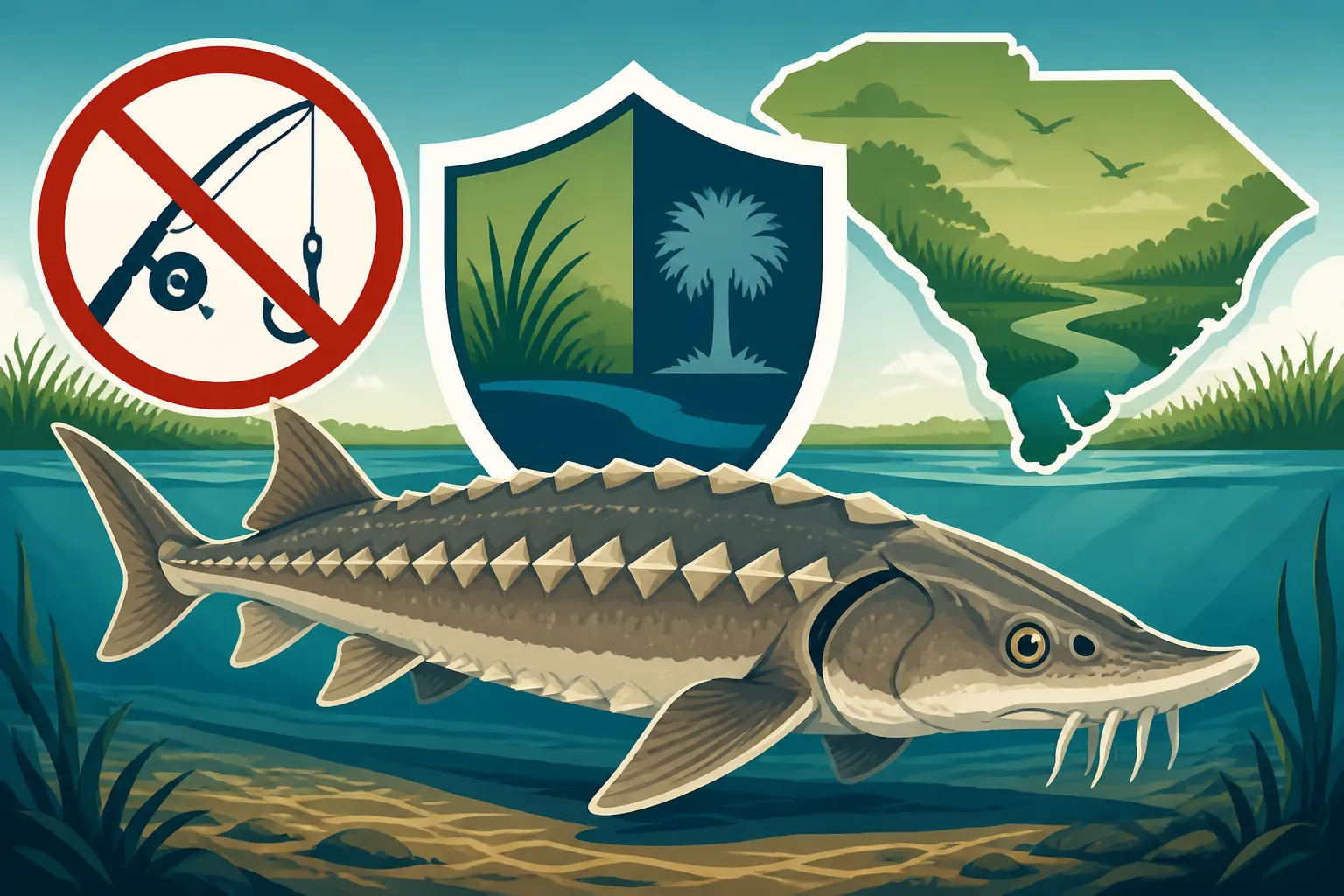
As an angler, it's absolutely crucial to be able to identify a sturgeon if you ever happen to hook one. They are truly unique, with a shark-like tail, five rows of bony plates (called scutes) along their body, and a distinctive snout with barbels underneath, used for foraging on the bottom.
In South Carolina, you're most likely to encounter two species:
- Shortnose Sturgeon: Generally smaller, usually topping out around 3-4 feet long. Their snout is indeed shorter and more blunt. They are primarily freshwater and estuarine residents, typically not venturing far into saltwater.
- Atlantic Sturgeon: These are the true giants, capable of reaching lengths of 8-14 feet and living for decades. Their snout is more conical. They spend a good portion of their lives in marine waters but migrate into rivers to spawn.
Telling them apart can be tricky, but the most important thing is simply recognizing it's a sturgeon. If you catch one, you must release it immediately and with as little stress as possible. Even handling them for too long or pulling them out of the water can cause harm. Knowing Is It Legal to Catch Sturgeon in South Carolina? is vital – the answer is a resounding no when it comes to keeping them.
| Feature | Shortnose Sturgeon | Atlantic Sturgeon |
|---|---|---|
| Max Size | Typically 3-4 feet | Up to 14 feet |
| Snout Shape | Shorter, more blunt/rounded | Longer, more conical |
| Coloration | Darker, often olive to brown on back, lighter belly | Grayish-brown to bluish-black on back, white belly |
| Habitat Focus | Primarily freshwater and estuaries | Anadromous (ocean-dwelling, spawns in rivers) |
| Life Span | Up to 30 years | Up to 60 years or more |
| ESA Status | Endangered | Endangered (distinct population segments) |
Remember, these fish are rare. If you manage to catch one, it's a special moment, but it's not a trophy to take home. Gently release it so it can continue its journey. The chance of catching one is slim; How Rare Is a Sturgeon Catch in South Carolina? indeed highlights their scarcity.
Conservation Successes and Ongoing Challenges
While the road to recovery is long, there have been some glimmers of hope and tangible successes in sturgeon conservation efforts across South Carolina. These achievements underscore the importance of continued protection and vigilance.
Evidence of Recovery
Thanks to decades of protection, research, and habitat work, scientists have observed signs of recovery in certain sturgeon populations. For example, in some of South Carolina's major river systems, researchers have noted an increase in juvenile sturgeon and even some adults returning to spawn. This is incredibly encouraging, suggesting that if given the chance, these resilient fish can rebound.
The improved water quality in some areas, coupled with efforts to restore migratory access (even if partial), has created better conditions for sturgeon to survive and reproduce. While we're still a long way from their historical numbers, these small victories demonstrate that our collective efforts are making a difference. It’s a testament to the power of conservation when serious commitments are made.
Threats That Still Linger
Despite these positive signs, sturgeon still face significant threats. Habitat degradation continues to be a major concern. Development along coastal rivers, altered water flows due to human activity, and persistent pollution all impact the health of sturgeon populations and their ability to thrive. These aren't just isolated issues; they are ongoing challenges that require continuous monitoring and proactive management.
Another pressing issue is incidental catch, or bycatch. Sturgeon often get accidentally caught by anglers targeting other species, or in commercial fishing gear, even when those fisheries are regulated. While the intent might not be to harm sturgeon, the stress of being caught, handled, and released can still impact their survival. This is why proper catch-and-release techniques are so vital when encountering one of these protected fish. Anglers fishing rivers like the Congaree River Fishing Spots Near Columbia, South Carolina or Fishing the Savannah River Border With a Georgia or South Carolina License need to be especially mindful of potential sturgeon encounters.
How Anglers Can Help
As anglers, we have a critical role to play in the continued recovery of sturgeon. The number one rule: if you catch a sturgeon, release it immediately and unharmed. Here are a few tips:
- Minimize Fight Time: Bring the fish in as quickly as possible to reduce stress.
- Keep it in the Water: Avoid removing the fish from the water entirely. If you need to photograph it (quickly!), keep it submerged as much as possible.
- Handle Gently: Support its body horizontally. Do not hold it by the tail or gills.
- Remove Hook Quickly: Use long-nosed pliers or a dehooking tool to remove the hook. If it's deeply hooked, cut the line as close to the hook as possible; the hook may eventually rust out.
- Report Sightings: Consider reporting your sturgeon encounter to the SCDNR. This data helps scientists track populations and understand their movements. While not a direct internal link, the idea of reporting is vital for South Carolina's Sturgeon: The State's Rarest River Giants.
By following these simple guidelines, you become a partner in conservation, giving these ancient fish the best chance to survive and contribute to future generations. We all love our South Carolina waters, and ensuring the health of all its inhabitants, even those we can't intentionally target, is part of being a responsible angler.
The Future of Sturgeon in South Carolina's Waters
The journey to full recovery for sturgeon is a marathon, not a sprint. It will require ongoing dedication, scientific research, and the cooperation of everyone who values South Carolina's natural heritage.
Long-Term Monitoring and Research
For sturgeon populations to truly thrive, continuous long-term monitoring and research are absolutely essential. Scientists need to track population numbers, understand migration patterns, identify spawning locations, and assess how environmental changes impact these fish. Techniques like acoustic tagging, where a small transmitter is surgically implanted, allow researchers to follow individual sturgeon for years, providing invaluable data on their movements through systems like the Santee and Cooper rivers, or along the coast.
This sustained scientific effort helps conservationists adapt their strategies, identify new threats, and measure the effectiveness of current protection measures. It's a never-ending process of learning and adapting, all aimed at ensuring these remarkable fish have a place in our waters for centuries to come. You can find out more about where these fish reside in articles like Best River Fishing Spots in South Carolina.
The Hope for Reintroduction
In some areas where sturgeon populations were extirpated (locally extinct), there's hope for reintroduction programs. This involves carefully breeding sturgeon in hatcheries and then releasing them into suitable habitats. These programs are incredibly complex and expensive, requiring extensive planning and habitat preparation to ensure the reintroduced fish have a real chance of survival and reproduction.
While South Carolina has some remnant populations, reintroduction might be a strategy considered for areas where they were historically present but are now completely gone. It represents a bold step towards not just protecting, but actively rebuilding, lost biodiversity.
Why Every Effort Matters
Sturgeon are often called "living fossils" because they have changed so little over millions of years. Their continued existence is a powerful indicator of the health of our river and estuarine ecosystems. When sturgeon populations are healthy, it often means the entire aquatic environment is functioning well. They play a vital role in the food web and the overall balance of these habitats.
Protecting sturgeon isn't just about saving one species; it's about preserving the rich biodiversity of South Carolina and ensuring that future generations can witness the majesty of these ancient river giants. It's about remembering that we share these waters with incredible creatures, and we have a responsibility to be good stewards. Every effort, from federal legislation to an individual angler's careful release, contributes to a more vibrant and resilient natural world for all of us.
Disclaimer
This article is for general informational purposes only and does not constitute professional advice. Laws, prices and regulations vary by location and change over time. Consult a qualified professional for guidance on your specific situation.