South Carolina Sunfish and Panfish: A Beginner’s Guide
If you've ever felt a little intimidated by the sheer variety of fish swimming in South Carolina's waters, especially when you're just looking for some easy, family-friendly fun, you're absolutely not alone. It can feel like there are endless species, each with its own special rules and techniques. But let me tell you, when it comes to getting started or simply enjoying a relaxing day by the water, the world of sunfish and other panfish is where the real joy begins. This guide is here to cut through the confusion and give you all the down-to-earth, practical information you need to identify, find, and catch these delightful little fighters, making your next South Carolina fishing trip a smashing success.
Understanding the World of South Carolina Panfish
When we talk about "panfish" in South Carolina, we're really talking about a fantastic group of smaller freshwater fish that are perfect for just about anyone. They're called "panfish" for a good reason – they're generally small enough to fit comfortably in a frying pan, making them a delicious option for a fresh meal after a day on the lake or river. But beyond their culinary appeal, they're incredibly accessible, often abundant, and put up a surprisingly spirited fight for their size, which makes them incredibly rewarding to catch.
What Exactly is a "Panfish"?
Technically speaking, "panfish" isn't a scientific classification. It's a common term that refers to a variety of smaller freshwater fish species, most of which belong to the sunfish family (Centrarchidae). In South Carolina, this umbrella term includes popular species like bluegill, redbreast sunfish, redear sunfish (often called shellcrackers), crappie (both black and white), and sometimes even smaller perch species. What unites them is their relatively small size, their widespread distribution across many different water bodies, and their willingness to bite, making them ideal targets for anglers of all ages and skill levels. They're the backbone of many a childhood fishing memory, and for good reason!
Why Panfish are Perfect for Beginners and Families
There's a reason why so many of us got our start fishing for bluegill and crappie. First off, they are incredibly abundant. You don't need a fancy boat or expensive electronics to find them; they're often right there near the bank, under docks, or in relatively shallow water. This accessibility dramatically reduces the frustration factor, especially when you're trying to keep a youngster engaged. Secondly, panfish are generally not picky eaters. A simple hook, a bobber, and a piece of worm, corn, or a small artificial lure are often all it takes to entice a bite. This simplicity in tackle and bait means you don't have to break the bank on gear. You can find excellent starter kits, often including a basic rod, reel, and tackle box, on sites like Amazon, making it easy to get everything you need without a fuss. Finally, their eagerness to bite means more action, and more action means more smiles and a greater chance for new anglers to feel that thrilling tug on the line, building confidence and a lifelong love for the sport. For tips on taking kids, check out Fishing License Rules for Kids in South Carolina.
General Panfish Habitats in South Carolina
South Carolina is blessed with an incredible diversity of freshwater habitats, and panfish thrive in almost all of them. From the sprawling lakes like Murray, Wateree, and the Santee Cooper system, to the slow-moving blackwater rivers of the Lowcountry, and the clear mountain streams of the Upstate, you'll find these feisty little fish. Generally, panfish prefer areas with some sort of cover – think submerged logs, brush piles, lily pads, docks, or overhanging trees. These structures provide shade, ambush points for feeding, and protection from larger predators. You'll often find them congregating in relatively shallow waters, especially during the warmer months when they are actively feeding or spawning. Understanding these preferences is half the battle; the other half is just getting out there and casting a line! Many South Carolina state parks offer fantastic, easy-access spots perfect for panfishing.
The Prolific Bluegill: South Carolina's Everywhere Fish
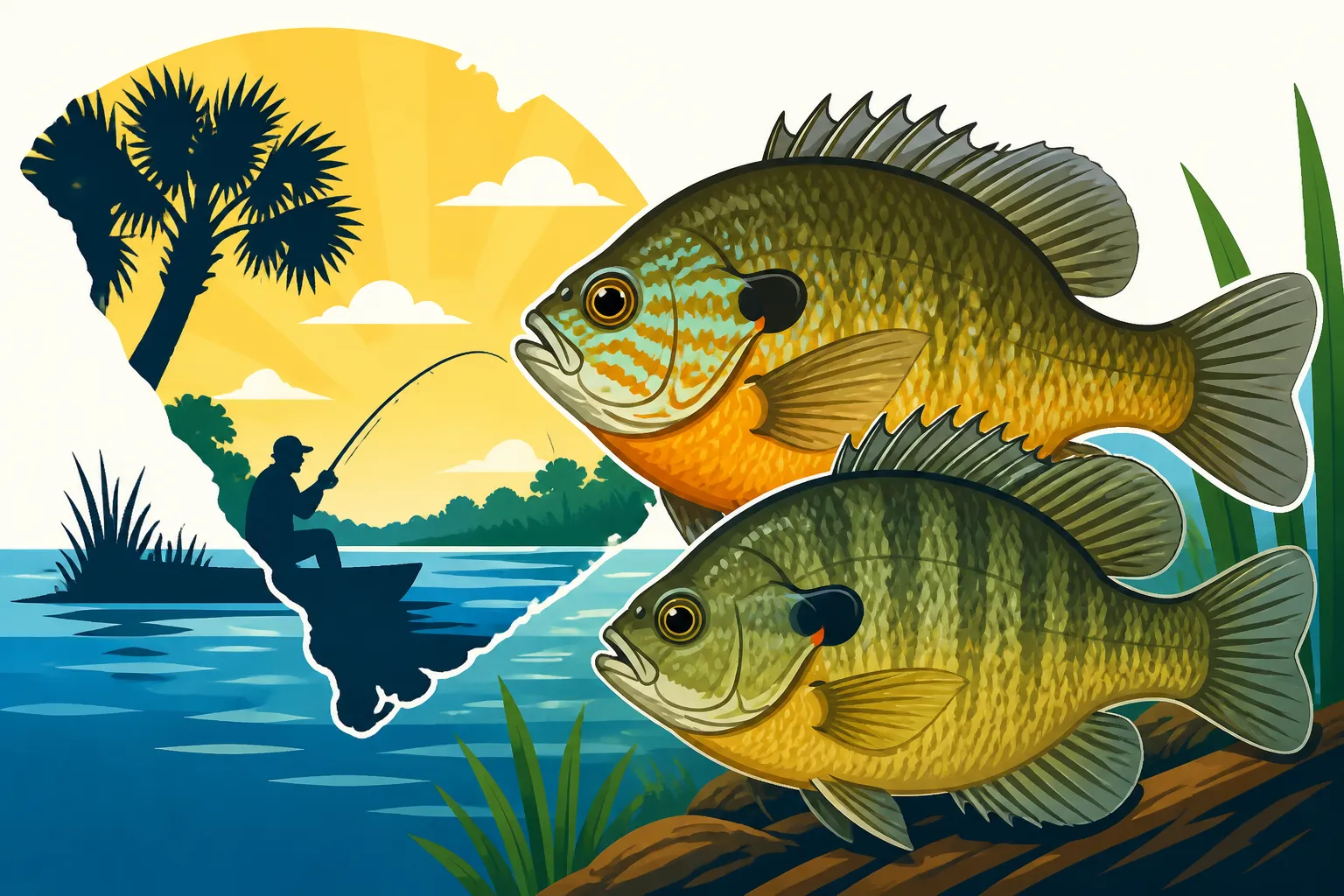
If there's one fish that epitomizes the South Carolina panfish experience, it's the bluegill. They are arguably the most common and recognizable sunfish in the state, inhabiting nearly every pond, lake, and slow-moving river imaginable. Their abundance and willingness to bite make them an absolute dream for beginners, kids, or anyone just looking to bend a rod and enjoy the simple pleasure of fishing. You could spend an entire afternoon catching bluegill after bluegill, and many people do, making them a true state treasure for recreational anglers.
Identifying a Bluegill: Key Features
Bluegill are quite distinctive, though sometimes confused with other sunfish by novices. Their bodies are typically deep and compressed, almost disc-shaped. Coloration can vary widely depending on the water clarity and habitat, but they usually have an olive-green back that fades to a lighter yellow or orange on their belly. The most defining feature, and where they get their name, is the dark blue or black "ear flap" (the opercular flap) on the gill cover, usually with a dark spot at the base of the dorsal fin. They also have distinctive vertical bars or stripes, especially when young or stressed. Their small mouth is another clue, indicating a diet of smaller insects and larvae. A good identification guide is always handy, and many excellent, waterproof fish ID cards can be found on Amazon to keep in your tackle box.
Bluegill Behavior and Preferred Habitats
Bluegill are generally social fish, often found in schools, which means if you catch one, there are likely many more nearby! They love structure and cover, so look for them around fallen trees, docks, lily pad fields, or dense aquatic vegetation. During the spring and early summer, they become highly visible as they move into shallow waters to spawn. They're notorious for creating "beds" – circular depressions in the substrate where they lay their eggs. These beds are often clustered together, forming what looks like a honeycombed area of the lake bottom. If you find a bluegill bed, you've hit the jackpot for action! They're active feeders during the day, particularly during morning and late afternoon hours, making them perfect for a casual outing. For more specific advice, check out Bluegill Fishing Tips for South Carolina Ponds.
Simple Techniques for Catching Bluegill
Catching bluegill couldn't be simpler, which is why they're such a great target for new anglers. A lightweight spinning rod or even a cane pole is ideal. The classic setup involves a small hook (size 8 or 10 is usually perfect), a split shot weight a few inches above the hook, and a small bobber to indicate bites. Live bait is king for bluegill: small pieces of earthworm, crickets, or even corn kernels are irresistible to them. Cast near cover or over those spawning beds, let your bait sink, and watch the bobber. When it dips, tug, or goes completely under, set the hook with a gentle flick of the wrist. Artificial lures like tiny jigs, flies (if you're fly fishing), or micro-spinners can also be effective, especially if you're trying to cover more water or prefer not to deal with live bait. Consistency and patience are more important than fancy techniques. Don't be afraid to experiment with depth and location until you find where they're biting. For more basic tips, see Simple Bream Fishing Techniques for Kids.
Redbreast Sunfish: The Riverine Beauty
While bluegill might be the most common panfish in South Carolina, the redbreast sunfish holds a special place in the hearts of many river anglers. Known for their striking colors and strong fight, these fish prefer moving water habitats more than their rounder cousins. Catching a vibrantly colored redbreast from a South Carolina river, especially one with that characteristic long ear flap, is a truly satisfying experience that connects you with the wilder side of the state's waterways.
Spotting a Redbreast: Distinctive Colors
Redbreast sunfish are easily identifiable by their elongated, almost torpedo-shaped body compared to the rounder bluegill. Their coloration is usually a beautiful iridescent olive-green to bronze on the back, fading to bright orange or red on the belly and chest—hence their name. They often have subtle horizontal rows of spots or streaks along their sides. The most distinctive feature is their long, black opercular flap (the "ear flap"), which lacks any kind of colored margin like you might see on other sunfish. This long, slender flap is a dead giveaway. They also possess a relatively large mouth for a sunfish, hinting at their preference for slightly larger prey in river currents. When you pull one of these beauties out of a cool, clear river, their colors truly pop, making them a visual treat.
Where to Find Redbreast Sunfish in South Carolina
Unlike bluegill, which thrive in stagnant ponds and lakes, redbreast sunfish are primarily river dwellers. They absolutely love moderate to slow-moving currents, especially in areas with sandy or rocky bottoms. You'll find them congregated around various structures within these river systems, such as submerged logs, root wads, cypress knees, and undercut banks. These features provide shelter from the current and ambush points for their prey. Look for them in the Edisto, Congaree, Broad, and Santee Rivers, as well as many smaller blackwater creeks across the state. They are particularly active where the main current meets calmer eddies or backwaters. A great spot to start exploring for these fantastic fish is often beneath bridges or around any significant natural cover in a river. You can find more specific locations in Redbreast Sunfish Fishing Spots in South Carolina.
Effective Baits and Lures for Redbreasts
Redbreast sunfish, with their slightly larger mouths and riverine diet, tend to be a bit more opportunistic feeders than bluegill. While small pieces of earthworm are always a reliable choice, they also readily take crickets, grasshoppers, and small minnows. Artificial lures can be incredibly effective for redbreasts, especially if you're casting around structure in moving water. Tiny spinners, like those found on Amazon from brands known for ultralight tackle, or small jigs tipped with a grub or a piece of soft plastic, are excellent. Cast these lures upstream and let them drift naturally with the current past potential hiding spots. A light setup is crucial to feel the bite and enjoy the fight. Focus on presenting your bait or lure as naturally as possible, letting the current do some of the work to carry it into their feeding zones.
Warmouth and Green Sunfish: The More Aggressive Cousins
Beyond the classic bluegill and redbreast, South Carolina waters are home to a couple of other sunfish that, while less commonly targeted specifically, offer a unique and often more aggressive fishing experience. The warmouth and green sunfish are rugged, opportunistic, and can provide some exciting action, particularly in areas where other panfish might be less abundant. They might not be as vibrant as a redbreast, but what they lack in flash, they make up for in feistiness.
Warmouth: The Mean Little Eater
The warmouth (sometimes called "goggle-eye" due to its large eyes) is a stocky, heavy-bodied sunfish that looks like a cross between a bluegill and a rock bass. They typically have a mottled olive-brown coloration, with dark bars radiating from their large, bass-like mouth, and often a reddish spot near the opercular flap, though not as distinct as the redbreast. Their key identifier is usually the three to five dark, teardrop-shaped streaks radiating back from the eye across the cheek. They have a rough patch of teeth on their tongue, which is unusual for a sunfish. Warmouth prefer slow, murky waters with abundant vegetation, often found deeper within thick cover than bluegill. They are true ambush predators, lurking in dense weeds or around heavy structure, waiting for an unsuspecting insect or small fish to swim by. This predatory nature makes them a bit more aggressive on the bite.
Green Sunfish: Tough and Territorial
Green sunfish are another hardy panfish, known for their ability to thrive in less-than-ideal conditions where other fish might struggle. They have an elongated body, similar to a small bass, with a large mouth that extends back to beneath the eye. Their color is typically dark green to olive on the back, fading to a lighter yellow-green on the belly, often with iridescent blue-green spots on their sides. A distinctive feature is the dark spot on the rear of the dorsal fin, often ringed in a lighter color, and the bright orange margin on the opercular flap. Green sunfish are incredibly adaptable, found in a wide range of habitats from clear streams to muddy ponds, but they especially love small creeks, ditches, and the edges of larger lakes. They are highly territorial and surprisingly aggressive for their size, often chasing off larger fish from their preferred spots. Their robust nature makes them a fun, albeit often smaller, catch.
Fishing for These Feisty Fighters
Because warmouth and green sunfish are more predatory and territorial, they respond well to slightly different tactics than bluegill. While small worms still work, they are more likely to strike at small crankbaits, spinnerbaits, or jigs that imitate minnows or crawfish. For warmouth, focus on presenting your bait or lure deep within heavy cover—think dense lily pads, thick brush piles, or tangled root wads. You might need a slightly heavier line to pull them out of the snags. Green sunfish, on the other hand, can be found almost anywhere. Target them around rocks, fallen timber, or culverts in smaller streams. Both species have surprisingly strong bites and put up a decent fight on ultralight tackle. Don't be surprised if they hit your lure with a jarring thump; they don't mess around! They're fantastic sport, especially on days when other panfish seem shy.
Shellcracker (Redear Sunfish): The Bottom Feeder
Among South Carolina's diverse sunfish, the redear sunfish, affectionately known as the "shellcracker," stands out for its unique diet and often impressive size. While many sunfish nibble on insects, shellcrackers specialize in a diet that gives them a distinct advantage and a different approach to angling. If you're looking to diversify your panfish catch and potentially land a larger, harder-fighting specimen, the shellcracker is a fantastic target.
Recognizing the Redear Sunfish
Redear sunfish get their common name "shellcracker" from their specialized pharyngeal teeth, which are located in their throat and are perfectly adapted for crushing the shells of snails, their primary food source. Visually, they resemble a bluegill but with a few key differences. Their body is generally a bit flatter and more elongated, with a darker olive-green back and yellowish sides. The most obvious distinguishing mark is the bright red or orange spot on the edge of their opercular flap (the "ear"), which is how they get their formal name, "redear." This spot is typically more vibrant in males. They also have a slightly downturned mouth, again, adapted for foraging along the bottom. Unlike bluegill, they usually lack the distinct vertical barring. Their eyes are often a bit larger and higher set.
Targeting Shellcrackers: Habitat and Diet
As their name and mouth structure suggest, shellcrackers are bottom feeders. They cruise the lake and pond bottoms, actively searching for snails, mussels, and other invertebrates. Because of this feeding habit, you'll find them in different types of habitats than bluegill, though there can be some overlap. Shellcrackers prefer cleaner, harder bottoms—think sand, gravel, or even shell beds—often near drops-offs, points, or the edges of aquatic vegetation. They're less likely to be found suspended in thick cover and more likely to be hugging the bottom. They also tend to grow larger than bluegill, often reaching impressive sizes for a panfish. During their spawning season in late spring to early summer, they will create beds similar to bluegill, but typically in slightly deeper water and on harder bottoms.
Baiting Strategies for Shellcrackers
Given their dietary preference, the best baits for shellcrackers mimic their natural food sources. Small pieces of earthworm or redworms are incredibly effective, as are grubs, crickets, and even tiny pieces of shrimp. The key is to present your bait right on the bottom. Forget the bobber for a moment, or at least use one that's designed to float your bait just off the bottom. A simple Carolina rig with a small egg sinker above a swivel, a short leader, and a small hook (size 6 or 8) is a fantastic setup. You can also use a tightline approach, casting your bait out with just enough weight to hold it on the bottom, and watching your rod tip for the subtle "thump" of a bite. Fishing around structures known to hold snails, like old docks or rocky shorelines, can also be particularly productive. Patience is key, as shellcracker bites can sometimes be very gentle. For more info on optimal times, check out Best Time of Year to Catch Panfish.
Crappie: The Delicious Panfish Delights
Moving beyond the true sunfish family, we enter the realm of crappie, which are arguably the most sought-after panfish in South Carolina, and for good reason. Both black and white crappie are delicious table fare, grow to impressive sizes for panfish, and provide exciting action, often schooling in large numbers. Anglers across the state chase these silvery beauties with passion, making crappie fishing a major component of the South Carolina freshwater scene.
Black Crappie vs. White Crappie: Key Differences
South Carolina is home to both black crappie and white crappie, and while they share many similarities, there are distinct ways to tell them apart.
- Black Crappie ( Pomoxis nigromaculatus): These generally have a more "speckled" appearance with irregular black spots scattered across their silvery-green bodies. The most reliable identifier is their dorsal fin, which typically has 7 or 8 dorsal spines. Black crappie prefer clearer, cooler water with abundant vegetation and structure. They tend to be found in lakes and ponds with good water quality.
- White Crappie ( Pomoxis annularis): White crappie usually have distinct vertical bars or stripes along their sides, giving them a "zebra" like pattern, though sometimes these can be faint. Their dorsal fin almost always has 6 dorsal spines. White crappie are more tolerant of turbid (murky) water and often thrive in large reservoirs and rivers with more current.
Both species can grow quite large, often exceeding a pound, and put up a fantastic fight on light tackle. Knowing the difference can sometimes help you target specific habitats or feeding patterns.
Finding Crappie Schools in South Carolina Lakes
Crappie are notorious for schooling, which means if you find one, you've likely found a whole pile of them! They are highly attracted to vertical structure and submerged cover. In lakes, look for them around:
- Brush piles and sunken trees: These are crappie magnets, especially during the colder months when they seek refuge and food.
- Dock pilings and bridge supports: Crappie will suspend around these structures, especially if there's shade or current.
- Standing timber: In many of South Carolina's larger reservoirs, old standing trees that were submerged when the lakes were formed are prime crappie habitat.
- Creek channels and humps: Crappie will often relate to these underwater contours, particularly during seasonal migrations.
- Deep weed lines: The edges of submerged aquatic vegetation can hold crappie, especially in clearer lakes.
Using a good fish finder can be a game-changer for locating these schools, but even without one, knowing where to look for visible structure is a great start. Many anglers spend hours mapping out these hotspots. For more localized advice, check out Crappie Fishing Tips for South Carolina Lakes.
Popular Crappie Fishing Techniques
Crappie fishing is an art form for many South Carolina anglers, with a few classic techniques standing out:
- Jigging: This is perhaps the most popular method. Small jigs (1/32 to 1/8 ounce) tipped with soft plastic grubs, tubes, or hair jigs are bounced vertically or cast near structure. The key is a slow, methodical retrieve with subtle twitches. Different colors work on different days, so having a variety of options, perhaps a multi-pack from Amazon, is always a good idea.
- Minnows under a bobber: A classic and highly effective method. A live minnow hooked lightly through the lip or back, suspended under a small float, is hard for a crappie to resist. Adjust your depth until you find where the fish are holding.
- Spider rigging/Trolling: For those in a boat, "spider rigging" involves deploying multiple rods (sometimes 6-10!) out from the front of the boat, each with a minnow or jig, and slowly trolling or drifting over crappie hotspots. This allows you to cover a lot of water and present baits at various depths simultaneously.
- Tightlining: Simply using a sinker to get your bait to the desired depth, with no bobber, and feeling for the bite through your line. This is particularly effective in deeper water or when crappie are finicky.
Regardless of the technique, light line (4-6 lb test monofilament or fluorocarbon) and sensitive rods are crucial to detect their often subtle bites. Crappie tend to be more active during cooler periods, like early spring and late fall, or during low-light conditions.
Perch and Other Notable Panfish Species
While the sunfish and crappie are the main panfish stars in South Carolina, the state's diverse waters occasionally offer up other delightful smaller species that fall under the panfish umbrella. These might not be as widely distributed or targeted, but they add to the richness of the fishing experience and can be a pleasant surprise on your line. Knowing a little about them can enhance your understanding of the aquatic ecosystems you're fishing.
Yellow Perch: The Stripey Delicacy
Yellow perch are not as abundant or widespread in South Carolina as they are in more northern states, but they do exist in certain colder-water reservoirs and interconnected river systems, particularly in the upstate. They are easily recognizable by their distinctive golden-yellow bodies adorned with 6-8 dark vertical stripes, and often bright orange fins. They have two dorsal fins, which is a key difference from sunfish and crappie. Yellow perch are schooling fish and prefer clear, somewhat cooler waters, often found near bottom structures like rocks, logs, or drop-offs. When you find a school, the action can be fast and furious. They are highly prized for their firm, white, flaky flesh, making them excellent table fare.
To catch yellow perch, similar tactics to crappie often work well. Small jigs tipped with minnows or wax worms, small spinners, or even just a piece of nightcrawler fished on the bottom are effective. They tend to bite more aggressively in cooler water, making them a great target for early spring or late fall fishing. If you're fishing a lake known to have yellow perch, keep an eye on your fish finder for schools suspending near the bottom in open water.
Other Less Common Panfish Species
South Carolina's waters are incredibly diverse, and while less common for anglers targeting "panfish," other smaller species can occasionally show up on your line, adding to the variety of your catch:
- Flier: These are small, disc-shaped sunfish found primarily in vegetated, slow-moving blackwater streams and ponds, particularly in the coastal plain. They have a dark spot on their dorsal fin and often reddish-orange fins. They are small but feisty.
- Chain Pickerel (when small): While adults are considered game fish, juvenile chain pickerel can sometimes be caught on panfish tackle. They have a distinctive chain-like pattern on their sides and a long, duck-bill snout full of sharp teeth. Always handle with care!
- Roanoke Bass: A less common, but interesting, black bass species found in some of the state's piedmont rivers. While a true bass, smaller ones might strike panfish offerings.
These species are typically caught incidentally while targeting bluegill or other sunfish, but they highlight the rich biodiversity of South Carolina's freshwater environments. Each one is a unique piece of the puzzle that makes our fishing so special.
Identifying Unknown Panfish
Sometimes, you'll reel in a fish and scratch your head, wondering exactly what it is. This is especially true with sunfish, as some species can hybridize, leading to confusing appearances, and colors can vary wildly by habitat. Here are some tips for identifying an unknown panfish:
- Examine the "Ear Flap" (Opercular Flap): Is it long or short? Does it have a colored spot or margin? This is often the quickest way to narrow down sunfish species.
- Count Dorsal Spines: For crappie, the number of dorsal spines (the sharp, bony rays in the front part of the dorsal fin) is a definitive identifier.
- Mouth Size and Shape: Does the mouth extend past the eye? Is it upturned or downturned? This indicates diet and predatory habits.
- Body Shape and Coloration: Is it round and deep-bodied, or more elongated? What are the predominant colors and patterns (spots, bars, streaks)?
- Use a Field Guide: Carrying a waterproof field guide for South Carolina fish species or using a reliable fishing app on your phone is invaluable. You can also take a clear photo (if regulations allow and it's safe for the fish) to identify later.
Remember, responsible angling includes knowing what you're catching, especially concerning bag limits and protected species. When in doubt, it's always best to release an unidentified fish unharmed.
Essential Gear and Techniques for Panfish Success
One of the most beautiful aspects of panfish fishing in South Carolina is that it doesn't require a huge investment in gear or years of specialized training. In fact, some of the most effective setups are also the simplest. This accessibility makes it perfect for those just dipping their toes into the fishing world or anyone wanting a relaxed, low-stress day on the water.
Simple Rods and Reels for Panfish
For panfish, you want light tackle that allows you to feel the subtle bites and fully enjoy the fight of even a small fish.
- Ultralight Spinning Combo: This is the gold standard for panfish. An ultralight spinning rod, typically 5 to 6 feet long with a fast action (meaning the tip bends easily), paired with a small spinning reel (size 500 to 1000) spooled with 4-6 lb test monofilament or fluorocarbon line, is perfect. This setup is sensitive enough to detect the faintest nibble and casts light baits with ease. You can find excellent, affordable ultralight combos on Amazon that will last for years.
- Cane Pole/Telescopic Rod: For the ultimate in simplicity and a truly nostalgic experience, a cane pole or a modern telescopic fiberglass pole is fantastic, especially for kids. These rods are usually 10-20 feet long, require no reel, and allow you to simply drop bait into tight spots near cover. It's a direct, tactile way to fish that many seasoned anglers still enjoy.
- Fly Rod: For those interested in fly fishing, a 2-4 weight fly rod with a floating line is an absolute blast for panfish. It offers a different kind of challenge and reward.
The key is light tackle. Heavier gear will overpower these fish and diminish the fun of the catch.
Best Baits and Lures for Panfish
Panfish are generally not picky, but some baits and lures consistently outperform others:
- Live Baits (King of Panfish Baits):
- Worms: Redworms, earthworms, and nightcrawlers (cut into small pieces) are universal panfish attractors.
- Crickets/Grasshoppers: Especially deadly for bluegill and redbreast sunfish, particularly in the warmer months.
- Small Minnows: Essential for crappie, especially if you're trying to target larger fish. They also work for perch and larger sunfish.
- Grubs/Wax Worms: Great for crappie and yellow perch, especially when jigging.
- Artificial Lures:
- Small Jigs: Tiny jigs (1/32 to 1/8 ounce) tipped with soft plastic bodies (grubs, tubes, tiny swimbaits) are incredibly versatile. Experiment with colors; chartreuse, white, black, and pink are often popular.
- Spinners: Small inline spinners with a single or treble hook can be highly effective for redbreast sunfish and more aggressive panfish.
- Flies: Wet flies, nymphs, and small poppers (for topwater action) are excellent for fly fishing for sunfish.
Always carry a variety of baits and lures, as fish preferences can change based on the day, water conditions, and even time of year. A tackle box stocked with a good assortment is a wise investment, and you can find great starter kits for Best Bait for Panfish in Farm Ponds.
Basic Rigging for Panfish
Keeping your rig simple is crucial for panfish. Here are the most common and effective setups:
- Bobber Rig (The Classic): This is the go-to for beginners and kids.
- Tie a small hook (size 8-10 for bluegill, 6-8 for crappie/shellcracker) to your line.
- Attach one or two small split shot weights a few inches above the hook to help the bait sink.
- Clip a bobber (slip or fixed) onto your line about 1-3 feet above the weight, depending on the depth you want to fish.
- Add your bait.
This rig suspends your bait at a desired depth and gives a clear visual indicator of a bite.
- Bottom Rig (For Shellcrackers and Deeper Fish):
- Tie a small hook (size 6-8) to your line.
- About 6-12 inches above the hook, tie a small barrel swivel.
- Above the swivel, slide on an egg sinker or slip sinker (1/8 to 1/4 ounce).
- Add a small bead between the sinker and the swivel to protect the knot.
This rig allows your bait to rest on the bottom while the line can move freely through the sinker, making it easier for fish to take the bait without feeling resistance.
- Tightline Jigging (For Crappie and Active Fish):
- Tie a small jig directly to your line.
- No bobber or additional weight needed.
Cast the jig and retrieve it with a slow, steady retrieve, adding subtle twitches or vertical jigging motions. This is a very active form of fishing that lets you feel every bump and bite.
These basic rigs will cover 90% of your panfishing needs in South Carolina. Practice tying a few basic knots like the improved clinch knot, and you'll be set!
| Panfish Species | Typical Size (SC) | Preferred Habitat | Common Baits/Lures | Key Identifier |
|---|---|---|---|---|
| Bluegill | 6-10 inches | Ponds, lakes, slow rivers (veg, docks, beds) | Worms, crickets, small jigs | Dark "ear flap," vertical bars (sometimes) |
| Redbreast Sunfish | 7-11 inches | Rivers, streams (current, logs, undercut banks) | Worms, crickets, small spinners, jigs | Long, black "ear flap," bright red/orange belly |
| Warmouth | 6-9 inches | Murky ponds, slow streams (heavy vegetation) | Worms, minnows, small crankbaits | Mottled brown, dark streaks from eye, large mouth |
| Green Sunfish | 5-8 inches | Creeks, ditches, pond edges (adaptable) | Worms, crickets, small jigs | Large mouth, iridescent spots, orange ear flap edge |
| Redear Sunfish (Shellcracker) | 8-12 inches | Lake/pond bottoms (sandy/gravel, snail beds) | Worms, grubs, tiny pieces of shrimp | Red/orange spot on "ear flap," downturned mouth |
| Black Crappie | 8-14 inches | Clearer lakes (brush piles, standing timber) | Minnows, small jigs (plastics), tube baits | Irregular spots, 7-8 dorsal spines |
| White Crappie | 8-14 inches | Turbid lakes, rivers (docks, bridge pilings) | Minnows, small jigs (plastics), tube baits | Vertical bars, 6 dorsal spines |
| Yellow Perch | 6-12 inches | Cooler lakes, some rivers (rocky bottoms, depths) | Minnows, worms, small jigs, spinners | Golden-yellow with 6-8 dark vertical stripes |
Conservation and Responsible Panfishing Practices
As anglers, we have a responsibility to protect the natural resources that bring us so much joy. Panfish might be abundant, but they are not limitless. Practicing responsible fishing ensures that future generations, including your own kids and grandkids, will have the same opportunities to experience the thrill of a bending rod and a fresh catch. It's about respecting the environment and the fish themselves.
Understanding Bag Limits and Regulations
The single most important rule to follow when panfishing in South Carolina is to understand and adhere to the state's fishing regulations. These rules are put in place by the South Carolina Department of Natural Resources (SCDNR) to manage fish populations and ensure their long-term health. Each species, or sometimes groups of species, will have a daily bag limit (how many you can keep) and sometimes a size limit (minimum or maximum length). For many common panfish, there are often generous limits, but it's crucial to check the most current regulations before you head out. Don't rely on old information or hearsay. The SCDNR website is your best friend here, or pick up a copy of the annual fishing regulations pamphlet wherever you buy your South Carolina Fishing License Guide. Remember, regulations can change, so a quick check each season is always a good idea. Penalties for not following these rules can range from fines to loss of fishing privileges.
Practicing Catch and Release for Healthy Populations
While panfish are excellent table fare, consider practicing catch and release, especially for larger specimens or if you've already caught enough for a meal. Bigger fish are often the best breeders, contributing most significantly to the overall health and population stability of a fishery. Releasing these larger fish, after a quick photo perhaps, helps maintain a robust and self-sustaining population for everyone to enjoy.
If you plan to release fish:
- Handle with care: Minimize the time the fish is out of the water.
- Wet your hands: Dry hands can remove a fish's protective slime coat, making it vulnerable to disease.
- Use appropriate tools: A pair of needle-nose pliers or a hook remover can quickly extract hooks, especially smaller ones. Consider using barbless hooks for easier removal.
- Support the fish: Hold it horizontally, supporting its belly, rather than vertically by its mouth, which can damage its jaw or internal organs.
- Revive if necessary: If a fish seems stressed, gently hold it in the water, facing into the current, until it swims away on its own.
Even if you intend to keep fish, selective harvest – keeping smaller fish and releasing the larger ones – is a fantastic practice that benefits the fishery.
Leaving No Trace: Protecting Our Waters
Beyond the fish themselves, protecting the environment they live in is paramount. "Leave No Trace" is a principle every angler should embrace.
- Pack it in, Pack it out: Whatever you bring with you – bait containers, old fishing line, snack wrappers, drink cans – make sure it all leaves with you. Don't leave trash behind. Fishing line, in particular, can be deadly to wildlife.
- Be mindful of vegetation: Try not to trample sensitive shoreline vegetation or disturb spawning beds.
- Respect private property: If fishing from shore, be aware of land ownership and always ask permission if you're unsure.
- Dispose of bait properly: Don't release unused live bait into the water, as it can introduce non-native species or diseases.
- Use designated access points: Stick to established paths and boat ramps to minimize your impact on fragile ecosystems.
By following these simple guidelines, you not only ensure great fishing for yourself but also contribute to the long-term health and beauty of South Carolina's incredible natural landscapes. So grab your ultralight rod, a handful of worms, and head out to experience the simple, yet profound, joy of panfishing in the Palmetto State!
Disclaimer
This article is for general informational purposes only and does not constitute professional advice. Laws, prices and regulations vary by location and change over time. Consult a qualified professional for guidance on your specific situation.