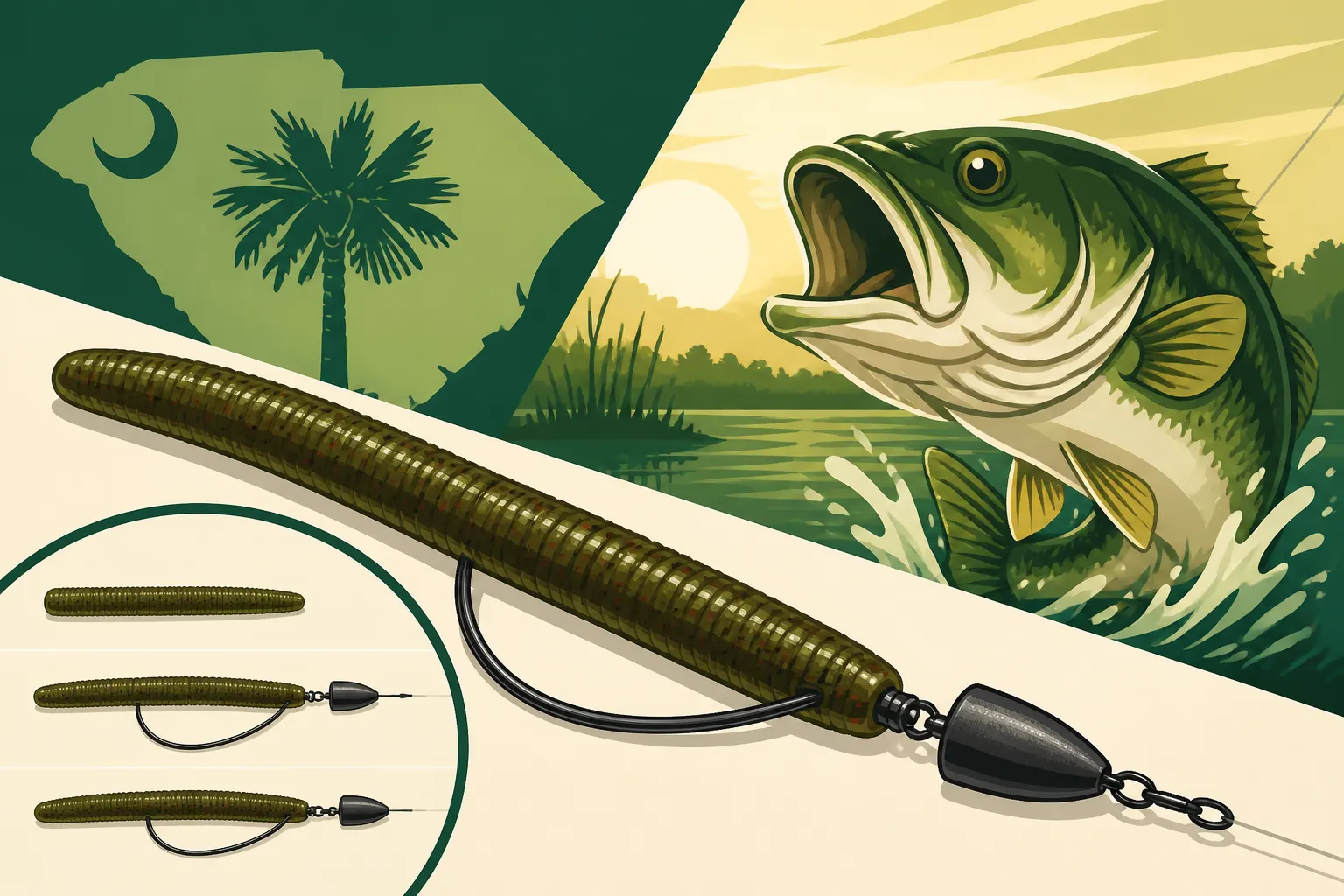
How to Rig a Texas-Rig Worm for Bass
Ever felt the frustration of casting your favorite soft plastic worm into a promising brush pile or submerged timber only to get hopelessly snagged, or worse, felt a subtle bite and set the hook into nothing but air? It's a rite of passage for every bass angler, especially here in South Carolina, where our lakes are teeming with fantastic cover. This comprehensive guide is all about mastering the Texas-rig worm, a game-changing technique that's designed to minimize snags and maximize your hook-up ratio, turning those frustrating moments into triumphant catches.
Understanding the Texas Rig's Enduring Appeal
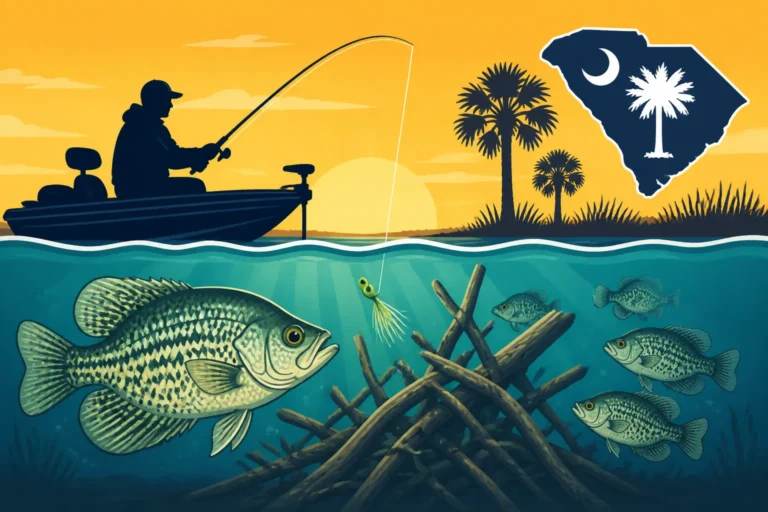
The Texas rig is more than just a way to put a hook in a worm; it's a philosophy of fishing that embraces cover, where big bass often hide. It’s about getting your bait into those thick, gnarly spots that other lures simply can't navigate without getting hung up. If you've ever found yourself admiring a dense laydown on Lake Hartwell or a cypress tree in Lake Marion, knowing it holds fish but hesitant to cast, the Texas rig is your answer.
Why the Texas Rig is a Bass Fishing Staple
The true beauty of the Texas rig lies in its unparalleled weedless design. By burying the hook point directly into the soft plastic worm, you create a streamlined, snag-resistant presentation that can glide through submerged grass, tangled branches, rock piles, and lily pads with remarkable ease. This isn't just about avoiding lost lures, which is certainly a perk for the wallet; it's about confidently putting your bait right where the bass are living, without fear.
Beyond its weedless nature, the Texas rig offers incredible versatility. You can fish it fast, slow, deep, or shallow. It allows for a wide array of soft plastic baits, from traditional worms to creature baits and even flukes, giving you endless options to match the forage or mood of the bass. This adaptability makes it a go-to technique for anglers across South Carolina, whether they're targeting largemouth bass or even the elusive smallmouth bass in the state's upstate rivers.
The natural, subtle action of a Texas-rigged worm is also a huge draw. When worked slowly along the bottom or through cover, it mimics a natural food source, enticing even the most cautious bass to strike. Unlike a hard bait that might have an aggressive, predefined action, a soft plastic on a Texas rig can be manipulated to twitch, crawl, or fall in a way that truly imitates prey, often triggering powerful reaction bites.
Common Frustrations Before Discovering the Texas Rig
Before you learn to properly rig a Texas rig, you likely face some common headaches on the water. How many times have you tied on an expensive crankbait or spinnerbait, only to watch it get fouled with weeds on the retrieve? Or worse, buried deep in a sunken log, never to be seen again? It's enough to make any angler want to stick to open water, avoiding the prime bass real estate altogether.
Then there's the heartbreak of missed fish. You feel a thud, reel down, set the hook with all your might, and…nothing. The fish either spit the bait, or the hook simply didn't find purchase. With traditional exposed hooks, short strikes or fish just nipping at the tail can lead to a lot of frustration. The Texas rig, when fished correctly, aims to solve this by presenting the hook in a way that, while hidden, is ready to be exposed and drive home when a bass commits.
Many anglers also struggle with adapting their techniques to different types of cover. What works in open water might not work in dense lily pads. What performs well on a sandy bottom will get bogged down in thick muck. The Texas rig is a master key that unlocks a multitude of these challenging scenarios, offering a consistent and effective approach across varied underwater landscapes found in places like the Santee Cooper Lakes.
Essential Components for Your Texas Rig
Building a solid Texas rig isn't complicated, but choosing the right components makes all the difference. Think of it like cooking: you can have the best recipe, but if your ingredients aren't fresh, the meal won't be as good. The same goes for your Texas rig – quality and appropriate sizing of your gear are paramount.
Choosing the Right Worms and Soft Plastics
The world of soft plastics for Texas rigging is vast and wonderful. For traditional Texas rigs, you're often looking at worm-style baits, ranging from 4-inch finesse worms all the way up to 10-inch or 12-inch magnum worms for bigger bites. Straight-tail worms, like the classic Zoom Trick Worm, offer a subtle quiver, while curly-tail worms, such as the Berkley PowerBait Power Worm, provide more action as they fall or are retrieved.
Creature baits and flukes are also excellent choices for Texas rigging. Creature baits, with their various appendages, claws, and flaps, displace a lot of water and mimic crawfish or other aquatic critters, making them irresistible to hungry bass. Examples include the Strike King Rage Craw or the Reaction Innovations Sweet Beaver. Flukes, on the other hand, imitate baitfish and have a darting, erratic action when twitched. You can find a massive selection of these on Amazon, often in multi-packs, making it easy to experiment with different sizes and colors without breaking the bank. Don't be afraid to try different colors; natural greens and browns work well in clear water, while darker blues or junebug can shine in stained conditions.
Selecting the Perfect Hook for Your Rig
For Texas rigging, the Extra Wide Gap (EWG) hook is your best friend. Its design, with a wider gap between the hook point and the shank, allows for more plastic to compress, providing a better hook set. When a bass bites down on your worm, the plastic collapses, and that extra gap ensures the hook point has plenty of room to penetrate the fish's mouth.
EWG hooks come in various sizes, typically ranging from 1/0 for smaller finesse worms up to 5/0 or even 6/0 for magnum worms or bulky creature baits. A general rule of thumb is to match the hook size to the bulk of your chosen soft plastic. For a 6-inch worm, a 3/0 EWG hook is a great starting point. For chunkier creature baits or 8-inch worms, step up to a 4/0 or 5/0. Brands like Gamakatsu, Owner, and Mustad offer excellent quality EWG hooks that you can trust to hold up to powerful bass. These hooks are designed to be strong and sharp, crucial for penetrating a bass's tough jawbone.
The Importance of Weight: Bullet Sinkers and Pegging
The bullet sinker is another critical component of the Texas rig, giving you the necessary weight to cast accurately and get your bait down into the strike zone. These sinkers are shaped like a bullet, allowing them to glide smoothly through cover. They come in lead or tungsten varieties. Tungsten sinkers are denser and smaller for their weight, offering a more compact profile and enhanced sensitivity, helping you feel subtle bites or changes in bottom composition. While often pricier, many anglers find the improved sensitivity worth the investment, and you can easily find them on Amazon.
Sinker weights typically range from 1/16 oz for very shallow, finesse presentations, up to 1 oz or even heavier for punching through dense mats of vegetation. For general-purpose fishing around moderate cover in South Carolina's lakes, 1/8 oz to 3/8 oz are common starting points. The lighter the weight, the slower the fall, which can sometimes be key for finicky fish. Heavier weights punch through cover and get down faster.
"Pegging" your sinker means securing it directly to the fishing line, just above the hook eye, using a small rubber stopper or a toothpick. This prevents the sinker from sliding freely up and down the line. Pegging is crucial when fishing in heavy cover because it keeps your weight and bait together, preventing them from separating and getting hung up independently. It also enhances the weedless nature of the rig and transmits bites more directly to your rod. Unpegged (often called a "Carolina rig," though that's a different technique in its entirety), the weight slides freely, offering a different presentation that we'll discuss later.
| Soft Plastic Type | Recommended Length | Ideal Hook Size (EWG) | Common Sinker Weight Range |
|---|---|---|---|
| Finesse Worm | 4-6 inches | 1/0 – 2/0 | 1/16 oz – 1/8 oz |
| Straight Tail Worm | 6-8 inches | 3/0 – 4/0 | 1/8 oz – 3/8 oz |
| Curly Tail Worm | 7-10 inches | 4/0 – 5/0 | 1/4 oz – 1/2 oz |
| Creature Bait | 3.5-5 inches | 3/0 – 4/0 | 1/4 oz – 1/2 oz |
| Large Creature/Fluke | 5-7 inches | 5/0 – 6/0 | 3/8 oz – 1 oz+ |
Step-by-Step Guide: How to Rig a Texas-Rig Worm
Now that you have your components, let's get down to the nitty-gritty of rigging. It might seem tricky at first, but with a little practice, you'll be rigging Texas worms like a pro in no time. This skill is fundamental for anyone looking to seriously pursue largemouth bass fishing in South Carolina.
The Initial Thread Through the Nose
First, slide your bullet sinker onto your fishing line, narrow end first, followed by your peg (if you choose to peg it, which is highly recommended for most Texas rig applications). Then, tie your EWG hook to the end of your line using a strong knot like a Palomar knot or an improved clinch knot. Ensure your knot is cinched down tightly and trim the tag end.
Next, take your soft plastic worm. Insert the point of your EWG hook directly into the very center of the worm's head, usually about a quarter to a half-inch deep. You want to go straight in, following the centerline of the worm. Push the hook point through until the barb is just inside the plastic.
Carefully pull the hook point out of the worm's "nose" where you initially inserted it. The goal is to have the eye of the hook and the knot snug against the very top of the worm, creating a seamless connection. This critical first step ensures the worm will run straight and stay secure on the hook.
Rotating and Burying the Hook Point
After threading the hook eye into the worm's nose, rotate the hook 180 degrees so that the hook point is now facing the body of the worm. Lay the hook shank flat against the side of the worm, estimating where the hook bend would naturally exit the plastic. This estimation is key to achieving a perfectly straight and weedless rig.
Once you've aligned the hook shank with the worm's body, gently push the hook point back into the soft plastic. You want to thread it through the body so that the hook point and barb are completely concealed within the plastic, but just barely protruding from the plastic itself. The goal is for the worm to lie straight along the hook, without any kinks or bends. If it's not perfectly straight, pull the hook out and re-rig it until it lays flat. A straight worm will have a much more natural action in the water.
The critical final step for weedlessness is "skin-hooking" the point. This means you gently push the hook point just beneath the surface of the plastic, so it's covered and snag-resistant, but still poised to pop out with a firm hook set. Run your finger over the plastic where the hook point is — it should feel smooth, without any exposed metal. This makes your rig truly weedless, allowing it to slip effortlessly through dense cover found in places like Lake Wateree.
Pegging Your Sinker for Ultimate Control
Pegging your sinker is a simple yet vital step, especially when fishing around heavy cover. After you've rigged your worm and before you cast, slide the small rubber peg stopper down your line until it sits snugly against the top of your bullet sinker. Alternatively, you can use a small piece of toothpick inserted into the hole of the sinker, breaking off the excess.
The main benefit of pegging is that it keeps the weight and the worm together as one unit. When fishing thick vegetation, a free-sliding sinker can separate from the worm, allowing the worm to snag while the weight pulls free. Pegging prevents this, ensuring a more efficient and snag-free presentation, which is absolutely crucial when flipping into thick cypress knees or laydowns in places like the Congaree River.
Beyond preventing snags, a pegged sinker also enhances your sensitivity. When the weight and worm are a single unit, you can feel even the most subtle tick or tap from a bass mouthing your bait. This immediate feedback helps you detect bites that you might otherwise miss with a free-sliding weight, giving you a better chance to set the hook effectively. Many anglers debating whether to buy the heavier, more sensitive tungsten weights on Amazon will find that pegging can maximize the benefits of such an investment.
Mastering the Texas Rig: Tips for South Carolina Bass Anglers
Knowing how to rig is one thing, but knowing how to fish it effectively is another. The Texas rig is incredibly versatile, and understanding when and where to deploy it, along with the right techniques, will significantly boost your success rate for South Carolina's largemouth bass.
When and Where to Use the Texas Rig in South Carolina
The Texas rig shines brightest in areas with heavy cover, precisely the kinds of places where big bass love to hide. Think about those dense weed beds in Lake Moultrie or the vast expanses of hydrilla in Lake Marion. A Texas-rigged worm can punch through these mats, getting down to where the bass are lurking in the cooler, shaded water beneath. It's also fantastic for fishing around submerged timber and brush piles, common features in many of South Carolina's best bass fishing lakes.
Consider pitching your Texas rig into blowdowns along the Edisto River or flipping it into the tight spaces around boat docks on Lake Murray. The weedless design allows it to penetrate these spots without getting hung up, presenting a tempting meal directly to the bass holding tight to structure. This technique is particularly effective during warmer months when bass seek refuge in deeper cover. Learning South Carolina Bass Fishing Techniques by Season will further highlight when the Texas rig is most effective.
It's also a great option when bass are holding tight to vertical cover, like bridge pilings or deep rock ledges. A heavier Texas rig can be dropped straight down, offering a subtle presentation that can coax bites from fish that are otherwise unresponsive to faster, more aggressive lures. This methodical approach is often key when fishing structure or targeting bass that are pressured.
Presentation and Retrieval Techniques
There are several ways to work a Texas-rigged worm, each suited for different situations. The most common technique is dragging: simply cast out, let your bait sink to the bottom, and then slowly drag it across the bottom with your rod tip, reeling in the slack. This mimics a crawfish or other bottom-dwelling prey. Another effective method is hopping: lift your rod tip a foot or two, letting the bait hop off the bottom, then let it fall back down on a slack line, reeling in as it drops. This can trigger reaction strikes.
For dense cover, pitching and flipping are essential. Pitching is a short, underhand cast used to gently place your bait into specific, tight spots without spooking fish. Flipping is even shorter, often just letting line out from the reel, swinging the bait gently with the rod, and dropping it into heavy cover like a vertical mat. When you do get a bite, don't immediately set the hook. Feel the weight, drop your rod tip slightly to give the fish a moment to fully engulf the bait, then reel down to take up slack and deliver a powerful, sweeping hook set. You can also explore specific Bass Fishing Techniques After the Spawn, which often involve slower, more deliberate presentations like the Texas rig.
When the bass are finicky or the water is clear, a subtle approach can be key. Try a lighter weight and allow the worm to sink slowly on a semi-slack line, observing for any line movement that indicates a bite. This is a great way to entice bass during post-frontal conditions when they're less active. Conversely, in muddy water, sometimes a slightly heavier weight and more erratic hops can help the bass detect the bait. For tips on how to fish for bass in these conditions, check out guides like Best Lures for Largemouth Bass in Muddy Water.
Common Mistakes to Avoid
One of the biggest mistakes anglers make with a Texas rig is improper hook placement. If the worm isn't straight, it will spin in the water, looking unnatural and potentially twisting your line. If the hook point isn't skin-hooked or is exposed too much, you'll constantly get snagged. Always take a moment to ensure your worm is perfectly straight and truly weedless before making your first cast.
Another common pitfall is using the wrong weight for the conditions. Too light of a weight in deep water or heavy current means your bait never gets to the bottom or gets swept away. Too heavy of a weight in shallow water can make the bait fall unnaturally fast and spook fish. Experiment with different weights to find the right fall rate and bottom contact. Many anglers carry a variety of tungsten sinkers they've purchased from retailers like Amazon for this exact reason.
Finally, premature hook sets are a killer with Texas rigs. Unlike crankbaits where you often set on reaction, with a soft plastic, you need to feel the fish. Often, a bass will just "tick" the line or simply apply pressure. Resist the urge to yank immediately. Instead, drop your rod tip, reel down quickly to take up any slack until you feel the weight of the fish, and then set the hook hard with a sweeping motion, often straight up or to the side. This gives the fish time to fully commit to the bait and allows the hook to properly expose itself from the plastic. Learning How to Fish Deep Structure for Bass in Summer, for example, will highlight the importance of patience and proper hook setting technique.
Texas Rig Variations and Advanced Concepts
While the basic Texas rig is incredibly effective, there are some variations and related techniques that can expand your bass fishing arsenal, helping you adapt to even more diverse conditions and fish behaviors.
The Carolina Rig vs. Texas Rig: When to Choose Which
The Carolina rig is a close cousin to the Texas rig, but it features a different setup that changes the bait's action. Instead of a pegged weight directly on the hook, a Carolina rig uses a sliding weight and a bead, followed by a swivel, and then a leader line (often 12-36 inches long) connected to a Texas-rigged soft plastic. The weight drags on the bottom, while the bait floats or suspends above it, creating a natural, sweeping presentation.
The key difference lies in presentation and sensitivity. The Texas rig is all about getting into and working through heavy cover directly. The Carolina rig, on the other hand, is designed for fishing open water, humps, points, and transition areas where bass might be scattered or slightly suspended off the bottom. It allows the bait to move more freely and subtly, making it excellent for covering water and targeting deeper fish. Think about probing long, sloping points on Lake Greenwood with a Carolina rig, compared to flipping a Texas rig into the submerged timber on Lake Hartwell.
Deciding between the two often comes down to the density of the cover and the mood of the fish. If you're constantly snagging a Carolina rig, switch to a Texas rig. If fish are scattered and not committing to a direct presentation, the wider search pattern and natural action of a Carolina rig might be the answer. Many anglers also find that when fishing Santee Cooper Bass Fishing Seasons in South Carolina, both rigs have their prime times, depending on whether bass are in dense cover or staging on open flats.
Heavy Cover Punching with a Texas Rig
When you encounter extremely dense mats of hydrilla, lily pads, or thick grass, particularly during the hot summer months, a standard Texas rig might not be enough. This is where "punching" comes in. Punching is an aggressive, heavy-duty Texas rig technique designed to break through the thickest cover and reach the bass hiding underneath.
For punching, you'll need significantly heavier bullet weights, often ranging from 3/4 oz to 2 oz or more, typically made of tungsten for their compact size. Pair these with stout, heavy-duty EWG or straight-shank flipping hooks (often 4/0 or 5/0) and superline braid (50-80 lb test) on a heavy-action rod. The worm itself is usually a smaller, compact creature bait or beaver-style bait that can easily penetrate the mat.
The technique involves literally "punching" your pegged Texas rig through the mat. You pitch the bait over the mat, let the heavy weight pull it straight through, and then let it sit on the bottom beneath the cover for a few seconds. Most bites happen on the fall or immediately after it hits the bottom. This is a power fishing technique designed to trigger aggressive strikes from trophy-sized bass that feel secure in the thickest cover. For more on targeting big fish, check out Chasing a Record Largemouth Bass in South Carolina.
The Unweighted Texas Rig: A Finesse Approach
While the Texas rig is known for its ability to get down into cover, an unweighted Texas rig offers a completely different, finesse presentation. By removing the bullet sinker entirely, you allow the soft plastic worm to fall much slower, with a more natural, gliding action. This can be incredibly effective when bass are shallow, finicky, or feeding on slow-moving prey.
An unweighted Texas rig is fantastic for fishing around sparse cover, open pockets in grass, or even just twitching over shallow flats. The slow fall can be irresistible to bass that are reluctant to chase faster-moving baits. It also works well for skipping baits under docks or overhanging trees, as the lighter rig is easier to control and doesn't make a big splash. This technique is often used with flukes or stick worms, which have an inherent shimmy on the fall.
When fishing an unweighted Texas rig, pay very close attention to your line. Bites are often subtle, sometimes just a slight twitch or simply the line moving sideways. This light presentation can be a game-changer when you've exhausted other options, especially in high-pressure situations or when bass are suspending in the water column. It's a testament to the Texas rig's incredible adaptability that it can go from a heavy punching rig to a super-finesse, unweighted setup with just a few component changes.
Disclaimer
Fishing conditions and regulations can change rapidly. Always consult the latest South Carolina Department of Natural Resources (SCDNR) guidelines before heading out on the water. This guide is for informational purposes only and should not replace official regulations or professional advice. Tight lines and stay safe out there!