Atlantic Sturgeon in South Carolina: A Rare Catch
There are some moments on the water that truly take your breath away, and for South Carolina anglers, one of the rarest gifts is an encounter with an Atlantic Sturgeon. These ancient, magnificent fish are living relics, but seeing one is like spotting a ghost – a truly rare catch that often leaves folks wondering what exactly they just saw. This guide will take you through everything you need to know about these incredible, protected species in our waters, from their unique biology to what to do if you're lucky enough to cross paths with one.
Understanding the Elusive Atlantic Sturgeon in South Carolina
Imagine a fish that has roamed our planet's waters for millions of years, an actual living fossil. That's essentially what an Atlantic Sturgeon is, and knowing that makes any potential sighting even more profound. These are not your average bass or trout; they are a testament to endurance and adaptation.
What Makes the Atlantic Sturgeon So Unique?
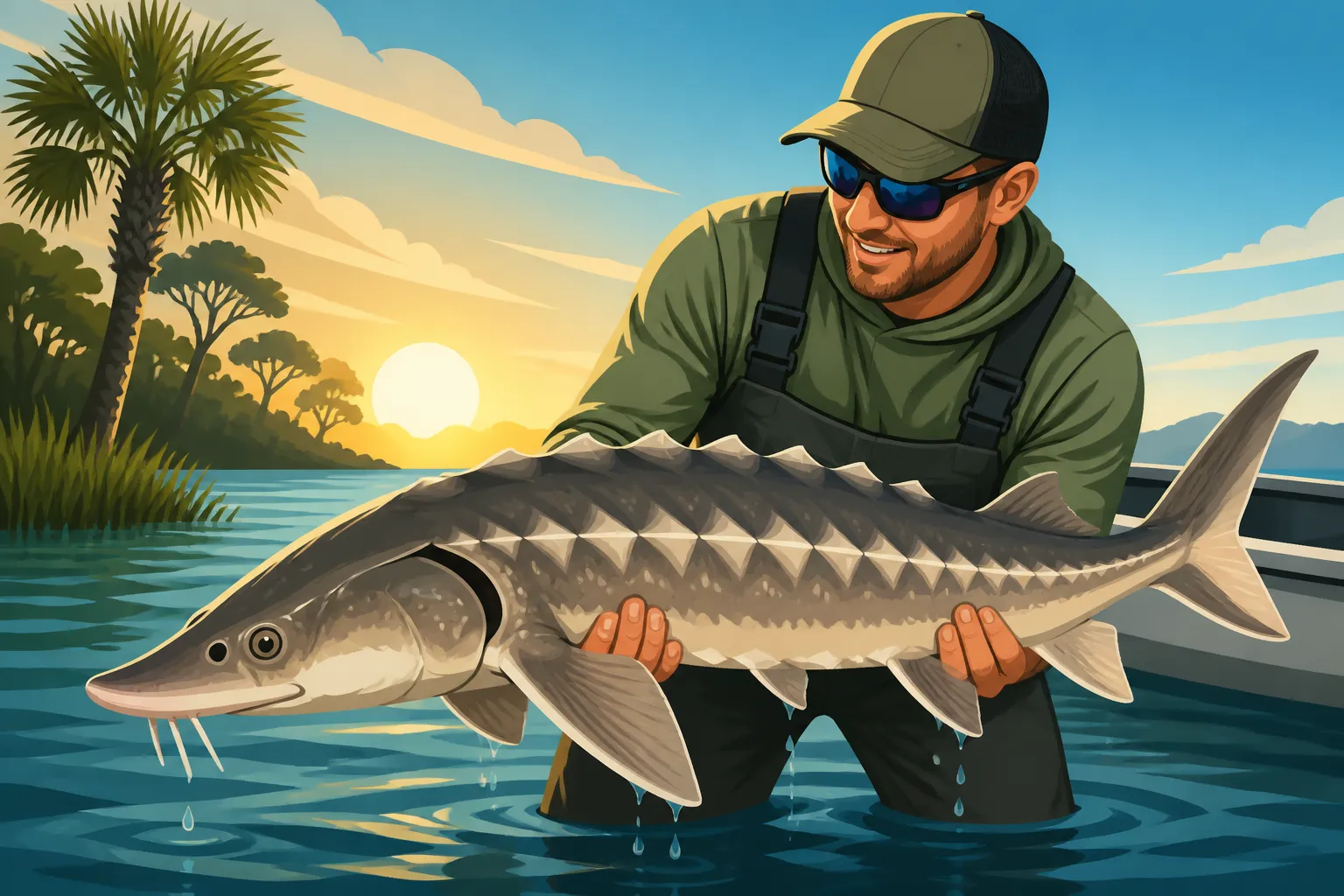
Atlantic Sturgeon are truly impressive creatures, often reaching lengths of up to 14 feet and weighing several hundred pounds. Their bodies are covered not in scales, but in five rows of bony plates called scutes, which give them an almost prehistoric, armored appearance. Their long, pointed snouts and downturned mouths, equipped with sensitive barbels for detecting food on the riverbed, are unmistakable. Unlike many fish, they don't have teeth in their adult stage, instead using their protractile mouths like a vacuum to suck up invertebrates and small fish from the bottom. They are incredibly long-lived, with some individuals surviving for over 60 years, making them one of the longest-living fish species in North America. Their sheer size, combined with their ancient lineage, sets them apart from virtually every other fish you'll encounter in South Carolina.
What’s truly fascinating is their ancient heritage. They predate dinosaurs and have changed very little over time, embodying a deep connection to the Earth's natural history. This robust design, with their protective scutes and bottom-feeding habits, allowed them to survive drastic environmental changes throughout millennia. For an angler, encountering one means glimpsing a piece of living history right in our local waters. It’s a powerful reminder of the incredible biodiversity that exists, even in places we might think we know intimately.
A Glimpse into Their Life Cycle and Habitat
Atlantic Sturgeon are anadromous fish, which means they spend the majority of their adult lives in saltwater along the coast but migrate into freshwater rivers to spawn. This incredible journey usually happens in the spring and early summer, when they travel upstream to lay their eggs in the deeper, swifter currents over hard bottoms, often rocky or gravelly areas. After spawning, the adults typically return to the ocean, while the juvenile sturgeon spend their first few years in the brackish estuaries and lower river reaches, slowly growing before heading out to the open ocean themselves.
In South Carolina, these majestic fish primarily utilize major river systems for their spawning migrations. Rivers like the Santee, Cooper, Edisto, and Savannah historically served as vital highways for these fish. The health of these river systems, particularly the quality of their freshwater stretches and their connections to the sea, is absolutely critical for the Atlantic Sturgeon's survival. They require specific conditions for successful spawning and nursery habitats, making them excellent indicators of the overall ecological health of our coastal river basins. Atlantic Sturgeon Migration Through Coastal Rivers delves deeper into these fascinating journeys.
Why Atlantic Sturgeon are a Protected Species
The rarity of spotting an Atlantic Sturgeon today isn't just because they're naturally elusive; it's a direct consequence of significant historical challenges that pushed them to the brink. Their story is a powerful lesson in conservation.
Historical Decline and Conservation Efforts
Once abundant along the Atlantic coast, including right here in South Carolina, Atlantic Sturgeon populations plummeted dramatically in the late 19th and early 20th centuries. The primary driver of this decline was intense overfishing, fueled by a booming demand for their valuable roe, which was marketed as caviar, and for their meat. Imagine fishing fleets specifically targeting these huge, slow-growing fish without any limits – it quickly took a toll on their numbers.
Compounding the impact of overfishing were significant changes to their freshwater habitats. Industrial development, pollution, and the construction of dams blocked their access to vital spawning grounds. For an anadromous species like the sturgeon, a dam effectively cuts off their ability to reproduce, severing their connection to ancestral spawning rivers. By the late 20th century, their populations were so critically low that federal and state governments recognized the urgent need for intervention. Conservation efforts have since focused on habitat restoration, dam removal or fish passage solutions, and strict protections to allow these populations to slowly recover. Why Sturgeon Are a Protected Species explains the critical need for these measures in more detail.
Legal Protections and Penalties in South Carolina
Due to their severely depleted numbers and the dire need for their recovery, Atlantic Sturgeon are federally protected under the Endangered Species Act. This means they are protected by law across their range, including all waters of South Carolina. For anglers, this protection translates into a very clear and critical rule: Atlantic Sturgeon are strictly a catch-and-release only species. There is absolutely no legal way to harvest or possess an Atlantic Sturgeon.
Getting caught possessing, harming, or failing to release an Atlantic Sturgeon can result in severe penalties. These aren't just minor infractions; they can include substantial fines and even jail time, reflecting the seriousness with which authorities view the protection of endangered species. The law is designed to deter any actions that could further jeopardize the survival of these vulnerable fish. It's imperative that every angler understands this regulation, not just to avoid penalties, but to actively contribute to the survival of this magnificent species. Ignorance of the law is never an excuse, especially when the fate of a species hangs in the balance. Understanding the Penalties for Fishing Without a License in South Carolina can give you an idea of the strict enforcement of fishing laws in our state, and these rules are even more stringent for endangered species.
Where You Might Encounter Atlantic Sturgeon (Even if it's Rare)
While Atlantic Sturgeon are indeed a rare sight, knowing their preferred haunts and migratory patterns can increase your chances, however slim, of a fleeting glimpse. It's truly a once-in-a-lifetime experience for many South Carolina anglers.
Key River Systems and Estuaries
In South Carolina, the Atlantic Sturgeon's life revolves around the connections between our major coastal rivers and the ocean. These fish are known to use several prominent river systems, which historically provided the freshwater spawning grounds they need. The Santee-Cooper system, including the Santee River Fishing Spots in South Carolina, the Cooper River, and their expansive delta, is particularly important. This vast system offers critical habitat for both adult and juvenile sturgeon. The Edisto River Fishing Spots in South Carolina, often lauded as one of the longest free-flowing blackwater rivers in North America, also serves as a vital corridor.
Further south, the Combahee, Ashepoo, and Savannah rivers contribute to the sturgeon's habitat. These rivers and their associated estuaries provide crucial nursery areas where young sturgeon can grow and find food before venturing into the Atlantic Ocean. When fishing in the deeper channels or brackish sections of these rivers, especially during migratory periods, you might be in waters where these ancient fish pass through. Anglers focused on species like catfish or striped bass in these deeper river sections might find themselves inadvertently in sturgeon territory.
Times of Year for Potential Sightings (From a Distance!)
For those hoping to catch a rare glimpse of an Atlantic Sturgeon, timing is often everything, though it still boils down to immense luck. Their most predictable movements occur during their spawning migrations. Typically, adult sturgeon begin their upstream journeys into freshwater rivers during the spring and early summer. This is when they move from their ocean foraging grounds to specific spawning sites upstream. During these months, they might be more concentrated in certain river sections as they make their way upriver.
Another period when they might be found closer to river mouths or estuaries is in the fall, as they might be moving back out to the ocean or juveniles are relocating to overwintering areas. However, these are general patterns for a species that is inherently deep-dwelling and incredibly cautious. Any sighting is usually brief – a large splash, a glimpse of their distinctive silhouette near the surface, or a powerful tug on an unsuspecting line. Observing them from a distance, perhaps during a quiet morning on a wide river like the Congaree River Fishing Spots Near Columbia, South Carolina, is more likely than a direct encounter.
The Ethics and Excitement of an Accidental Catch
It’s the dream of many anglers to catch something truly special, but when it comes to an Atlantic Sturgeon, that "catch" comes with a huge responsibility. An accidental hook-up is an extraordinary event, one that demands careful and respectful handling.
What to Do If You Hook a Sturgeon
So, you're out fishing, maybe targeting big catfish or striped bass in one of our coastal rivers, and suddenly you feel an enormous pull. You fight it, and as it gets closer, you realize it's something truly unique: an Atlantic Sturgeon. First and foremost, resist the urge to pull it fully out of the water. Keeping the fish in its natural element is absolutely critical for its survival. These fish are extremely vulnerable out of water, and removing them, even for a quick photo, can cause severe stress, injury, or even death.
If you manage to bring it alongside your boat or to a shallow bank, cut your line as close to the hook as possible. Don't try to remove the hook, especially if it's deeply set. Hooks made of carbon steel will eventually rust away. Minimize handling; try not to touch the fish if you can avoid it. If you must touch it, ensure your hands are wet to protect its delicate slime coat. If you use a net, ensure it's a large, soft, knotless landing net, the kind often recommended for larger species and easily found on platforms like Amazon. The goal is to cause the absolute minimum stress and get the fish released as quickly and safely as possible. Remember, you're interacting with an endangered species, and its well-being is paramount.
Reporting and Contributing to Conservation
An accidental encounter with an Atlantic Sturgeon is more than just a memorable fishing story; it's a valuable piece of data for scientists working to conserve this species. If you do happen to hook and release one, or even just observe one jumping, reporting your sighting to the South Carolina Department of Natural Resources (SCDNR) is a fantastic way to contribute to their recovery efforts. SCDNR uses this citizen science data to track movements, identify critical habitats, and monitor population health.
When reporting, try to provide as much detail as possible: the exact location (GPS coordinates are best), the date and time, the estimated size of the fish, and any identifying characteristics you noticed. If you can take a quick, non-harmful photo (while the fish is still in the water, of course!), that can be incredibly useful. A good camera, easily ordered from Amazon, can help you document a rare sighting without prolonged handling. This data helps researchers understand where these rare fish are, what rivers they are using, and how their populations might be changing over time. Your participation, however small, plays a role in the broader conservation strategy for South Carolina's Sturgeon: The State's Rarest River Giants.
Distinguishing Atlantic Sturgeon from Other Species
While an Atlantic Sturgeon is pretty distinct, especially with its bony scutes, it's not uncommon for anglers to briefly mistake other large, bottom-dwelling fish for them. Knowing the key identification features can help confirm your rare sighting or correctly identify what you've caught.
Key Identification Features
The Atlantic Sturgeon has several unmistakable features that differentiate it from other fish in South Carolina waters. The most striking are the five rows of prominent bony plates, or scutes, running down its body. These are very distinct, almost like armor plating. Other key identifiers include:
- Snout Shape: A long, somewhat pointed snout.
- Mouth Position: A distinct, ventral (underslung) mouth located on the underside of the head, well behind the tip of the snout. They don't have teeth as adults.
- Barbels: Four sensory barbels located in front of the mouth, which they use to forage along the riverbed.
- Tail: The upper lobe of their tail fin is typically longer than the lower lobe, giving it a somewhat shark-like appearance.
- Coloration: Their color can vary, but they are often olive-brown to bluish-black on the back, fading to white on the belly.
When you're fighting a large fish, it's easy for initial adrenaline to cloud judgment. However, if you see those bony scutes and that distinctive snout, you'll know you're dealing with a sturgeon. Books on regional fish identification, often available on Amazon, can be incredibly helpful for confirming species when you're back on solid ground.
Shortnose Sturgeon vs. Atlantic Sturgeon
South Carolina is home to two species of sturgeon: the Atlantic Sturgeon and the Shortnose Sturgeon. Both are federally protected and look similar, leading to understandable confusion. However, there are some key differences:
| Feature | Atlantic Sturgeon | Shortnose Sturgeon |
|---|---|---|
| Size | Much larger, up to 14 feet (typically 6-8 feet) | Smaller, typically 2-4 feet (rarely over 5 feet) |
| Snout Shape | Longer, more pointed, almost conical | Shorter, blunter, more shovel-like |
| Scutes | More pronounced, rougher, especially on juveniles | Smoother, less prominent, especially on adults |
| Mouth Position | Further back from the tip of the snout | Closer to the tip of the snout |
| Habitat | Primarily marine, enters rivers to spawn | Primarily freshwater/estuarine, less ocean travel |
| Rarity | Critically Endangered, very rare sighting | Endangered, slightly more common in specific rivers |
The most immediate differentiator for an angler is usually size. If you've got a truly enormous sturgeon on your line, it's almost certainly an Atlantic. If it's a smaller, but still ancient-looking fish, it might be a Shortnose. Both are protected, so the handling and release protocols remain the same. Shortnose Sturgeon: South Carolina's Protected River Giant offers more detailed insights into this unique smaller cousin. Knowing these distinctions ensures you can correctly identify what you've encountered and appreciate the specific rarity of either fish.
Supporting Sturgeon Conservation Efforts in South Carolina
The future of the Atlantic Sturgeon in our waters truly depends on collective action, and anglers have a vital role to play. Our love for fishing often translates into a deep appreciation for healthy aquatic environments, which benefits all species, especially those as vulnerable as the sturgeon.
The Role of Anglers in Protection
As anglers, we are often the eyes and ears on the water, spending countless hours in the very habitats these fish call home. Our vigilance and adherence to regulations are critical for the recovery of Atlantic Sturgeon. This means:
- Responsible Fishing Practices: Using appropriate gear that minimizes harm to bycatch. Consider sturdy, reliable fishing line that you can find on retailers like Amazon, ensuring you have the strength to land a large fish quickly if accidentally hooked, thus minimizing its stress.
- Immediate Release: As discussed, if you hook a sturgeon, release it immediately, keeping it in the water.
- Educating Others: Share your knowledge with fellow anglers about sturgeon identification and the importance of their protection. Many people simply aren't aware of these majestic creatures or their endangered status.
- Respecting Habitats: Avoiding disturbance in known spawning or nursery areas, if identifiable. This helps ensure that critical life stages of the sturgeon are not interrupted.
By adopting these practices, anglers become active participants in conservation, demonstrating a commitment not just to their sport, but to the health of South Carolina's aquatic ecosystems. This proactive approach strengthens the overall conservation fabric of our state's rich fishing heritage. Is It Legal to Catch Sturgeon in South Carolina? reinforces the legal framework that guides these protective measures.
Community Involvement and Citizen Science
Beyond individual actions, there are many ways for the broader community to get involved in sturgeon conservation. Supporting organizations dedicated to river health and aquatic habitat restoration is a direct way to contribute. These groups often work on projects like removing obsolete dams, reducing pollution, or restoring riparian buffers – all actions that directly benefit sturgeon and countless other species.
Participating in citizen science programs, like reporting sightings to SCDNR, is another powerful tool. Your observations contribute to a larger dataset that scientists use to make informed management decisions. Even advocating for stronger environmental protections at local and state levels can make a significant difference. Every voice that speaks up for clean water and healthy rivers helps to ensure that species like the Atlantic Sturgeon have a fighting chance at a full recovery. It’s about building a legacy where future generations of South Carolina anglers can also marvel at the sight of these incredible, ancient fish.
Disclaimer
This article is for general informational purposes only and does not constitute professional advice. Laws, prices and regulations vary by location and change over time. Consult a qualified professional for guidance on your specific situation.