Sauger Fishing in South Carolina: What Anglers Should Know
For many anglers in South Carolina, the sauger remains a bit of a mystery, often mistaken for its larger walleye cousin or simply overlooked in favor of more popular sport fish. This confusion can lead to missed opportunities and frustration for those hoping to add this delicious, feisty fish to their catch. This comprehensive guide aims to demystify sauger fishing, offering insights into their identification, preferred habitats, and the most effective techniques to catch them in the Palmetto State.
Understanding the Elusive Sauger in South Carolina Waters
The sauger might not be as famous as the largemouth bass or as heavily targeted as redfish, but it's a fantastic game fish that offers a unique challenge and a tasty reward. Known for their distinctly speckled bodies and preference for colder, turbid waters, sauger are a prized catch for those who know how to find them.
Sauger Identification and Distinguishing Features
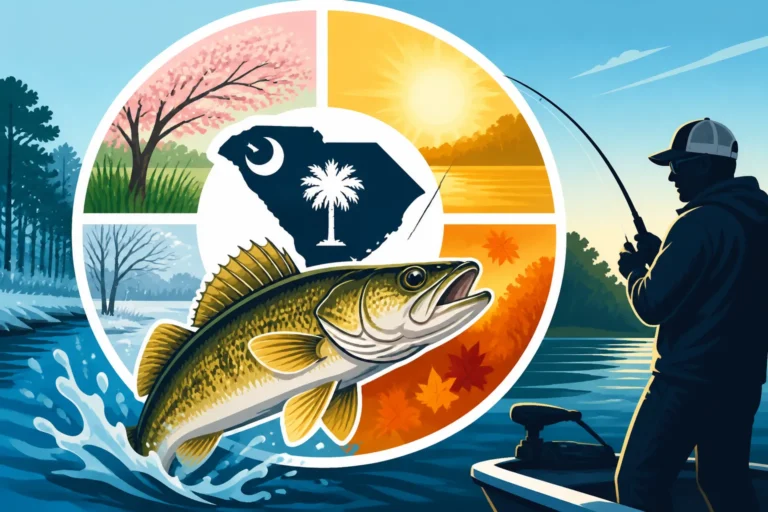
At first glance, a sauger can easily be mistaken for a walleye, especially by an inexperienced eye. Both belong to the perch family and share a similar elongated, cylindrical body shape. However, there are a few key characteristics that will help you tell them apart. Sauger typically have distinct dark spots on their dorsal fins, forming rows or bands, while walleye usually have a single large dark blotch at the base of the rear dorsal fin with no other prominent spots on the fin itself. Sauger also lack the prominent white tip on the lower caudal (tail) fin that is characteristic of walleye. Their bodies tend to be more spotted or mottled, rather than the more uniform coloration of a walleye. Understanding these subtle but important differences is crucial, not just for bragging rights, but also because regulations can sometimes differ between species. For a deeper dive, check out our guide on Walleye vs Sauger: How to Tell Them Apart.
Beyond their appearance, sauger generally don't grow as large as walleye. While a trophy walleye might tip the scales at over ten pounds, a sauger reaching three or four pounds is considered a very respectable catch in South Carolina. Their mouths are also filled with sharp, needle-like teeth, a clear indicator of their predatory nature, so always handle them with care, perhaps using a lip gripper or gloves.
Native Habitat and Preferred Environments in South Carolina
Sauger are primarily riverine fish, meaning they prefer living in rivers and large creeks rather than stagnant lakes or ponds. In South Carolina, you'll typically find them in the larger river systems, particularly those with strong currents, deep pools, and rocky or sandy bottoms. They thrive in turbid, somewhat silty water, often preferring water that isn't crystal clear. This preference for murkier conditions sets them apart from some other game fish and can make them a bit more challenging to locate, as they're not always visible.
Their preferred habitats often include areas downstream of dams, around bridge pilings, submerged timber, and deep bends in the river. They are often found lurking near current breaks, where they can ambush prey without expending too much energy fighting the main flow. Unlike many other species that seek out warm shallow water, sauger are more comfortable in deeper, cooler parts of the river, especially during warmer months. This makes certain river sections in the Upstate and Midlands regions of South Carolina prime locations for targeting them. If you're looking for general freshwater species to target, our South Carolina Freshwater Fish Species Worth Targeting guide has more information.
Sauger Behavior and Feeding Habits
Sauger are ambush predators, and their feeding habits are closely tied to their environment. They spend most of their time near the bottom, often tucked behind structure or in areas where the current provides a steady flow of unsuspecting baitfish. Their diet primarily consists of smaller fish like shad, minnows, and shiners, but they're not above consuming crayfish, insect larvae, or even small frogs if the opportunity arises.
Their activity often peaks during periods of low light, such as dawn, dusk, and even at night, though they can be caught throughout the day, particularly in overcast conditions or in deeper, darker waters. During the colder months, sauger tend to school up, making it possible to catch multiple fish once you've located a productive spot. Understanding their preference for bottom-dwelling prey and their tendency to hug structure is paramount to successful sauger fishing. They aren't typically a fish you'll find suspended high in the water column or chasing topwater lures.
Where to Find Sauger in South Carolina
Finding sauger in South Carolina requires an understanding of their specific habitat preferences. While not as widespread as largemouth bass, they can be found in several key river systems across the state, offering exciting opportunities for dedicated anglers.
Key Rivers and Riverine Systems
South Carolina's major river systems are your best bet for finding sauger. Rivers like the Savannah River, especially its upper reaches, and segments of the Santee-Cooper system (the Congaree, Wateree, and Santee Rivers) are known to hold populations of these fish. These rivers offer the deep channels, moderate to strong currents, and varied bottom structures that sauger prefer. Look for areas with significant drops, rock piles, submerged logs, and sharp bends where the current slows just enough to create an eddy.
Historical data and local fishing reports, though not always current, often point towards specific stretches that consistently produce sauger. For instance, sections of the Santee River Fishing Spots in South Carolina and Congaree River Fishing Spots Near Columbia, South Carolina can be productive, particularly in colder months. Anglers often find success near hydroelectric dams or major river junctions where baitfish congregate, and the river environment provides optimal sauger habitat. Access points can be limited on some of these river sections, so planning your trip, including identifying boat ramps or suitable bank fishing spots, is essential.
Lesser-Known Tributaries and Deep Pools
While the main river channels are productive, don't overlook some of the larger, deeper tributaries that feed into these systems. Sometimes, these lesser-known creeks and smaller rivers can hold surprisingly robust sauger populations, especially during spawning runs or when conditions in the main river are less favorable. The key is to look for tributaries that maintain good depth and current, even if they aren't as wide as the main river.
Deep pools, particularly those formed by scour at the outside bends of a river or below rapids, are classic sauger holding areas. These pools often collect structure and provide the low-light conditions sauger favor. Using a good depth finder can be invaluable here, allowing you to pinpoint these deeper pockets and any submerged structure that might be holding fish. Remember, sauger are often tight to the bottom and won't chase a lure far from their hiding spot.
Seasonal Movements and Concentrations
Sauger exhibit distinct seasonal movements, largely driven by spawning patterns and water temperature. In the colder months, from late fall through early spring, they tend to concentrate in larger schools in deeper parts of the river. This is often the prime time for targeting them, as their schooling behavior makes them easier to locate once you've found a group. They may move upstream into tributaries or shallower sections of the main river for spawning when water temperatures rise slightly in late winter or early spring.
As the water warms in late spring and summer, sauger will typically retreat to the deepest, coolest parts of the river, seeking thermal refuge. During this time, they might become more dispersed and harder to target. Therefore, understanding these seasonal shifts is crucial for planning a successful sauger fishing trip. Focusing your efforts during the cooler seasons when they are more active and schooled up will generally yield the best results. Our guide to Seasonal Fishing Techniques for South Carolina Anglers can offer broader insights into how different fish species react to seasonal changes.
Effective Techniques for Catching Sauger
Successfully catching sauger often boils down to presenting your bait or lure near the bottom, where these fish prefer to hunt. These techniques generally require patience and a good feel for what's happening beneath the surface.
Jigging and Bottom Bouncing Strategies
Jigging is arguably one of the most effective methods for sauger. Given their preference for the bottom, a jig allows you to maintain constant contact with the riverbed and impart enticing action. Heavy leadhead jigs, often tipped with a soft plastic grub, a piece of cut bait, or a live minnow, are excellent choices. The key is to use a jig heavy enough to reach and stay on the bottom in the current without getting swept away too quickly.
When jigging, make short casts upstream or slightly across the current, letting the jig sink to the bottom. Then, with a tight line, lift the rod tip sharply a foot or two, letting the jig fall back down on a semi-slack line. This mimics a wounded baitfish or a crayfish skittering along the bottom. Pay close attention to any subtle taps or changes in resistance as the jig falls; sauger often strike on the drop. Bottom bouncing, using a three-way swivel rig with a weight on a dropper line and a hook with bait on a leader, is another excellent way to keep your offering right in the strike zone while drifting. This setup can be particularly effective when fishing from a boat.
Live Bait and Cut Bait Tactics
While artificials can be very productive, live bait is often irresistible to sauger, especially when they are finicky. Live minnows, particularly shiners or shad, are top choices. You can fish them on a jig head, under a bobber in slower currents (though less common for sauger), or on a three-way swivel rig for bottom fishing. The natural movement and scent of live bait can trigger strikes when other methods fail. For specific recommendations, our article on Best Bait for Sauger in River Currents offers detailed advice.
Cut bait, such as pieces of shad or other oily fish, can also be highly effective, especially when sauger are less active or when you're trying to appeal to their sense of smell in murky water. Rig cut bait on a single hook or a snelled hook rig, again, keeping it close to the bottom. Sometimes, the added scent of cut bait can make all the difference, drawing in sauger from nearby cover. For anglers who regularly pursue species like catfish, the techniques are quite similar, as detailed in How to Bottom Fish for Catfish.
Trolling and Drifting for Sauger
From a boat, trolling or drifting can be a very efficient way to cover water and locate schools of sauger. When drifting, you let the current carry your boat while you present jigs or bottom-bouncing rigs along the riverbed. This allows you to explore different depths and structures until you find a concentration of fish. Using your electric trolling motor to subtly adjust your drift speed and direction can help you precisely cover productive areas.
Trolling with crankbaits or deep-diving plugs designed to run close to the bottom is another excellent tactic. Choose lures that mimic the local baitfish and are capable of reaching the depths where sauger are holding. The vibration and flash of a trolled crankbait can attract sauger from a distance, and the continuous movement covers a lot of ground. Experiment with different speeds and lure colors until you find what triggers bites on a given day.
Best Gear and Tackle for Sauger Fishing
Having the right equipment can significantly improve your success when targeting sauger. Their subtle bites and often strong river currents demand sensitive yet robust gear.
Rods, Reels, and Line Recommendations
For sauger fishing, a medium-light to medium-power spinning or baitcasting rod, typically 6 to 7 feet in length, with a fast action tip, is ideal. The fast action allows for quick hooksets and provides the sensitivity needed to detect those faint sauger bites, which can sometimes feel like nothing more than a slight tick or added weight. A sensitive graphite rod is a huge advantage here.
Pair your rod with a reliable spinning reel in the 2000-3000 size range or a low-profile baitcasting reel. The reel should have a smooth drag system and enough line capacity for river fishing. As for line, braided line in the 8-15 pound test range is a popular choice due to its exceptional sensitivity and strength-to-diameter ratio. Many anglers will then tie on a fluorocarbon leader (6-10 pound test) for its abrasion resistance and invisibility underwater, which can be critical in clear conditions. However, in murkier water, a monofilament main line (6-12 pound test) can also be effective, offering a bit more stretch which can sometimes help prevent hooks from pulling out of a sauger's tender mouth.
Lures, Baits, and Terminal Tackle Essentials
When it comes to lures, a diverse selection is key. As mentioned, leadhead jigs (1/4 to 1 ounce, depending on current and depth) in various colors (chartreuse, white, pumpkinseed, motor oil) are staples. Tipping them with soft plastic grubs, paddle tails, or curly tails adds action and bulk. Blade baits are also excellent, especially in current, as their vibration can draw in fish. Small crankbaits or jerkbaits that dive to appropriate depths are also effective, particularly when trolling. You can often find a great selection of these specialized lures and baits on platforms like Amazon, which makes it easy to stock up before a trip.
For terminal tackle, you'll want an assortment of hooks (jig hooks, live bait hooks, Kahle hooks), swivels (barrel and three-way), and sinkers (bell sinkers, walking sinkers, or bank sinkers) to create various rigs. Don't forget a pair of long-nose pliers or hemostats for safely removing hooks from their toothy mouths, and a good set of braid scissors or clippers.
| Item Type | Recommended Specification | Key Benefit |
|---|---|---|
| Rod | 6-7 ft, Medium-Light to Medium Power, Fast Action Graphite | Sensitivity for subtle bites, quick hooksets |
| Reel | Spinning 2000-3000 size or Low-Profile Baitcaster | Smooth drag, sufficient line capacity |
| Main Line | 8-15 lb Braided Line | High sensitivity, strong, thin diameter |
| Leader Line | 6-10 lb Fluorocarbon (18-36 inches) | Abrasion resistance, nearly invisible underwater |
| Jigs | 1/4 – 1 oz Leadhead Jigs | Reach bottom in current, versatile |
| Soft Plastics | Grubs, Paddle Tails, Curly Tails (2-4 inches) | Add action, mimic baitfish, versatile |
| Crankbaits | Deep-diving, Shad/Minnow profiles | Cover water, attract aggressive fish |
| Live/Cut Bait | Minnows (Shiners, Shad), Cut Shad | Natural appeal, scent trail |
| Terminal Tackle | Hooks (sizes 1-4), Swivels, Sinkers (1/4 – 1 oz) | Rig versatility, essential for bottom fishing |
Electronics and Boat Equipment for River Fishing
If you're fishing from a boat, marine electronics can be your secret weapon for locating sauger. A quality fish finder/depth sounder is essential for identifying deep channels, drop-offs, submerged structure, and even schools of baitfish or sauger themselves. Look for units with good down-imaging or side-imaging capabilities to get a clearer picture of the bottom contour and any fish holding tight to it. GPS functionality is also invaluable for marking productive spots, allowing you to return to them easily on future trips.
A reliable electric trolling motor with GPS Spot-Lock capabilities can be a game-changer for river fishing, allowing you to hold your boat precisely over a productive area in current, or to control your drift with precision. This precision helps you present your lure exactly where the fish are. Having a sturdy anchor is also vital for holding your position in strong currents if you prefer to sit and soak bait in a hotspot. Always ensure your boat is properly equipped with all required safety gear, including life jackets, and that you have all necessary licenses, such as your South Carolina Fishing License Guide.
Sauger Conservation and Regulations in South Carolina
Like all managed fisheries, sauger populations are subject to regulations designed to ensure their long-term health and sustainability. Being a responsible angler means understanding and adhering to these rules.
Current Size and Creel Limits
While specific numbers can change, sauger in South Carolina typically have established size limits and daily creel limits. Size limits ensure that fish have a chance to reach maturity and spawn at least once before being harvested, contributing to the next generation. Creel limits restrict the number of fish an individual angler can keep per day, preventing overfishing of localized populations. It's crucial to consult the South Carolina Department of Natural Resources (SCDNR) website or their current fishing regulations booklet before each outing to get the most up-to-date information. These regulations are designed to protect the sauger population and ensure that future generations of anglers can also enjoy the thrill of catching these unique fish. Remember that these limits apply regardless of whether you’re fishing from the bank or a boat. You should also be aware of South Carolina Fishing License Requirements in South Carolina.
These regulations are usually put in place based on scientific data about fish populations, spawning success, and angler harvest rates. They might also differ depending on the specific body of water you're fishing, so always double-check for any local exceptions.
Catch and Release Best Practices
Even when within legal limits, practicing responsible catch and release, particularly for larger sauger, can contribute greatly to conservation efforts. Sauger, especially those caught in colder water, generally have a good survival rate if handled properly.
Here are some best practices:
- Minimize handling: Try to keep the fish in the water as much as possible.
- Wet hands: Always wet your hands before touching a fish to protect its delicate slime coat.
- Quick hook removal: Use pliers or hemostats to quickly remove the hook. If the fish is deeply hooked, especially in the gills or stomach, it might be better to cut the line as close to the hook as possible rather than attempting to rip it out.
- Support the fish: If you must take the fish out of the water for a quick photo, support its body horizontally to avoid damaging its internal organs.
- Revive gently: If the fish seems stressed, hold it gently in the water, facing into the current, until it regains its strength and can swim away on its own.
By following these simple steps, you increase the chances of the released fish surviving and contributing to the overall health of the fishery.
Recognizing and Reporting Protected Species
While sauger are a game fish, other species in South Carolina's river systems are protected and cannot be harvested. It's vital for anglers to be able to identify these protected species to avoid accidental take and potential legal repercussions. For example, South Carolina's Sturgeon: The State's Rarest River Giants are critically endangered and strictly protected. If you accidentally hook a sturgeon or any other protected species, release it immediately and with as little harm as possible.
Educate yourself on the appearance of various fish species in the waters you fish. If you encounter a fish that you cannot positively identify as a legal game species, it's always best to err on the side of caution and release it. Reporting sightings of rare or protected species to the SCDNR can also provide valuable data for conservation efforts.
The Best Times to Target Sauger in South Carolina
Timing is everything when it comes to fishing, and sauger are no exception. Understanding their seasonal patterns and daily habits can significantly increase your chances of success.
Seasonal Considerations for Sauger Anglers
As touched upon earlier, the colder months generally offer the best sauger fishing opportunities in South Carolina. From late fall, typically around November, through early spring, often extending into March or early April, sauger are more active and tend to congregate in larger schools. This makes them easier to locate and target. The water temperatures during these months are more to their liking, and they are actively feeding to build up energy reserves for the winter or preparing for their spring spawn.
During the peak of winter, when river temperatures are at their lowest, sauger might become a bit less active but remain catchable, especially in deeper, stable pools. As spring approaches and water temperatures begin to slowly rise, they become very active, feeding heavily before and after their spawning period. In contrast, the heat of summer often sees sauger retreating to the deepest, coolest holes and becoming much less active during daylight hours.
Impact of Water Temperature and Clarity
Water temperature is a primary driver of sauger behavior. Their preferred temperature range typically falls between the low 40s and low 60s Fahrenheit. Outside of this range, they may become lethargic or seek thermal refuge, making them harder to entice. Monitoring water temperatures can help you predict where sauger might be holding – shallower during cooler periods, deeper during warmer spells.
Water clarity also plays a significant role. Sauger are known to prefer turbid or stained water, which provides them with cover from predators and helps them ambush prey. After heavy rains, when rivers might be muddy, sauger can often be found actively feeding. In very clear water, they might be more wary and harder to approach, often retreating to deeper, darker areas or becoming more active during low light conditions. The optimal clarity for sauger fishing is often a slightly stained or cloudy water, offering a good balance between cover and visibility for feeding.
Optimal Time of Day and Weather Conditions
Sauger are often most active during periods of low light. This means dawn and dusk are prime times to be on the water. Many dedicated sauger anglers also swear by night fishing, especially on rivers where sauger are known to feed after dark. The cover of darkness often encourages sauger to move into slightly shallower areas to feed, making them more accessible.
Overcast days are also highly productive. The reduced light penetration mimics the conditions sauger prefer and can extend their active feeding periods throughout the day. Conversely, bright, sunny days, especially in clear water, might push them into the deepest, darkest cover available, making them harder to catch. As for other weather conditions, stable weather patterns without drastic temperature swings usually lead to more consistent fishing. While sauger can be caught after a cold front, the bite might be slower. Light wind or calm conditions are generally more comfortable for anglers and allow for better lure presentation and bite detection.
Disclaimer
This article is for general informational purposes only and does not constitute professional advice. Laws, prices and regulations vary by location and change over time. Consult a qualified professional for guidance on your specific situation.