Atlantic Sturgeon Migration Through Coastal Rivers
For many anglers in South Carolina, the thought of encountering a truly ancient fish stirs a deep sense of wonder and curiosity. Yet, the Atlantic sturgeon, a magnificent species that once thrived in our coastal rivers, is now incredibly rare and strictly protected, making any interaction a delicate dance between awe and responsibility. This guide aims to shed light on the elusive world of the Atlantic sturgeon, explaining their incredible migratory journeys through our waters, why they are so vital, and how you, as a responsible angler, can contribute to their survival, even if you never directly encounter one.
Understanding the Atlantic Sturgeon: An Ancient Survivor
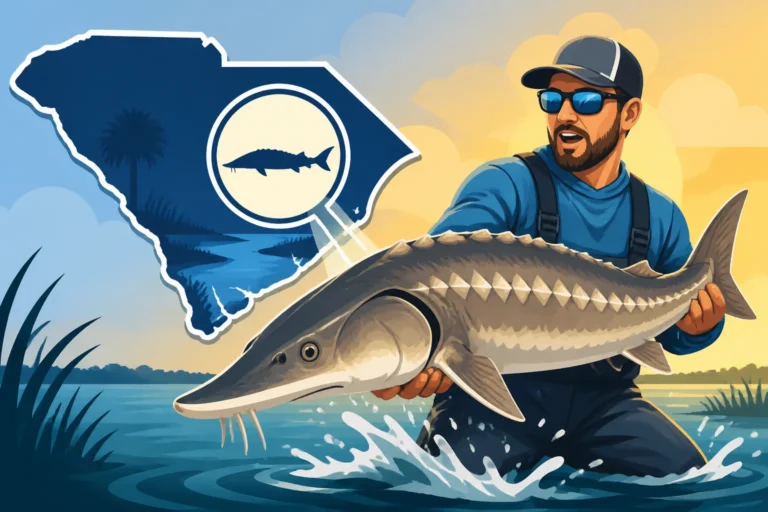
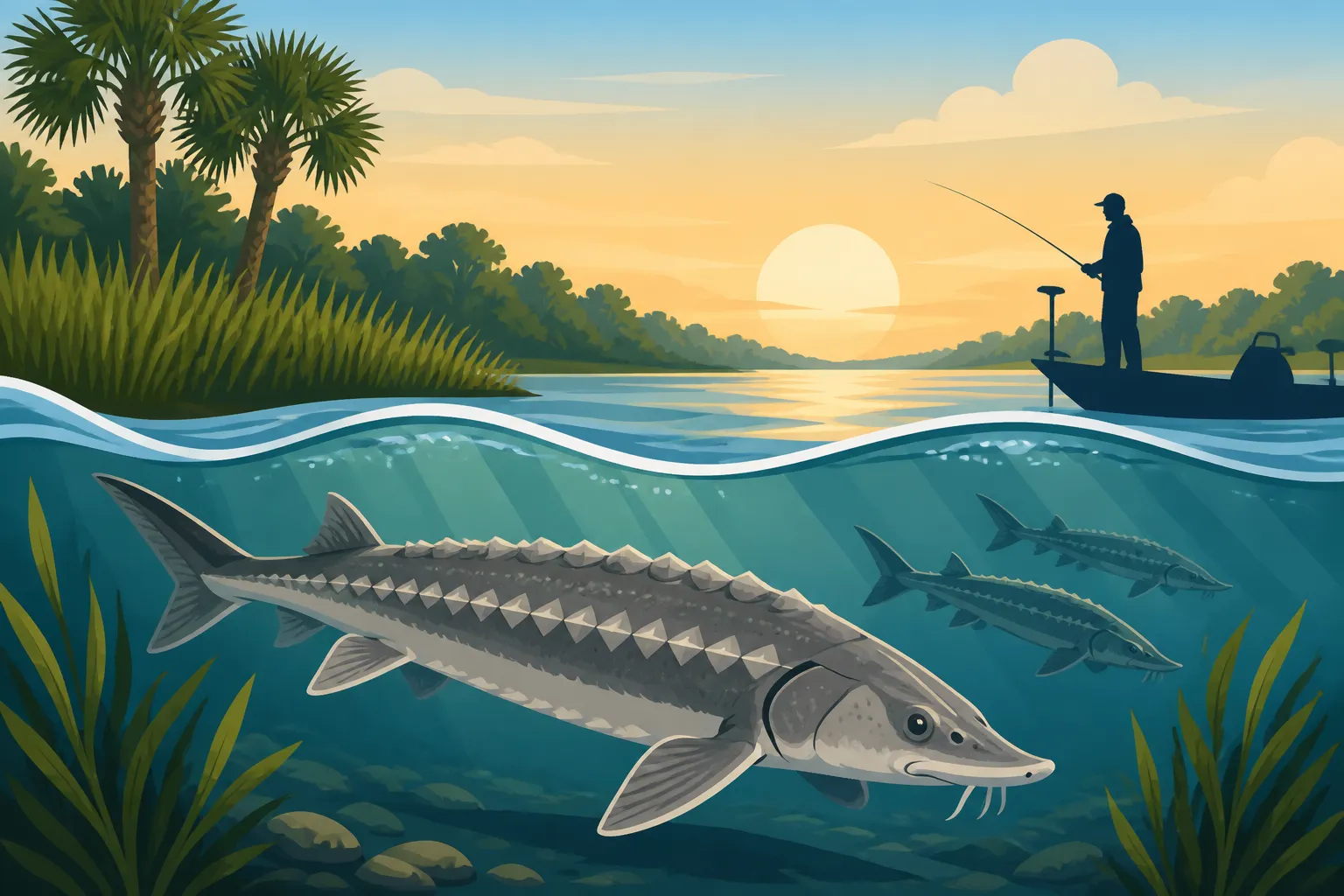
The Atlantic sturgeon is one of those prehistoric-looking fish that immediately captures your imagination. With their bony plates (called scutes) running down their bodies, shark-like tails, and shovel-like snouts, they look like relics from another era, and in many ways, they are. These fascinating creatures have been swimming in our waters for millions of years, predating many of the dinosaurs. They are anadromous, meaning they spend most of their adult lives in saltwater, often in coastal estuaries and nearshore ocean environments, but return to freshwater rivers to spawn.
Their immense size is another striking feature, with some individuals growing to be over 14 feet long and weighing hundreds of pounds. Imagine reeling in something that big! It’s a powerful testament to the sheer scale of nature. Unfortunately, their impressive size and long lifespan also made them vulnerable to overfishing in the past, prized for their meat and especially their roe (caviar). This historical pressure, combined with habitat loss and pollution, pushed their populations to the brink, leading to their current protected status.
Why Atlantic Sturgeon Are Protected in South Carolina
It’s heartbreaking to think that a species that has survived for so long could face extinction in our lifetime. The Atlantic sturgeon, along with its smaller cousin the Shortnose sturgeon, is federally protected under the Endangered Species Act, which means they are safeguarded by strict laws. This isn’t just some bureaucratic rule; it’s a critical effort to prevent a truly unique part of our natural heritage from disappearing forever. The protection means that it is illegal to harvest, harm, or even intentionally target these fish.
For anglers, this protection carries significant weight. While it's thrilling to think of seeing one, accidental catches must be handled with the utmost care, ensuring the fish is released unharmed as quickly as possible. Reporting any sightings, especially of distressed or deceased sturgeon, to the South Carolina Department of Natural Resources (SCDNR) is crucial. Every piece of information helps scientists monitor their populations and better understand their needs. Knowing Why Sturgeon Are a Protected Species can help us all be better stewards of our rivers and oceans.
Identifying an Atlantic Sturgeon
Distinguishing an Atlantic sturgeon from other species, especially if you're not used to seeing them, is incredibly important. They have a distinctive appearance that sets them apart. Look for rows of prominent bony scutes on their backs, sides, and bellies, which feel rough and armor-like. Their mouths are ventral, meaning they are on the underside of their heads, like a vacuum cleaner, which they use to suck up food from the river bottom. They also have four barbels (whisker-like sensory organs) in front of their mouths.
Compared to the Shortnose sturgeon, Atlantic sturgeon are generally much larger, often exceeding five feet in length, even as juveniles. They tend to be a darker gray or olive-brown on top, fading to a lighter belly. Familiarizing yourself with these key characteristics, perhaps by looking at fish identification guides or even posters available on platforms like Amazon, can help you quickly identify one if you happen to encounter it. It’s better to be safe than sorry and treat any large, prehistoric-looking fish in our coastal rivers as a protected species.
The Incredible Journey: Atlantic Sturgeon Migration Patterns
The life of an Atlantic sturgeon is a continuous cycle of migration. These fish are true wanderers, moving between the vastness of the ocean and the specific freshwater reaches of their birth rivers. This anadromous lifestyle is what makes their conservation so challenging, as they rely on healthy habitats across a wide range of environments. Their migrations are driven by their need to feed, grow, and, most importantly, reproduce.
Once they reach maturity, usually between 5 and 20 years old depending on gender and population, Atlantic sturgeon will undertake epic journeys back to their natal rivers. These are the same rivers where they hatched and spent their early lives. This "homing" instinct is incredibly strong, and they'll navigate vast distances, often thousands of miles along the coast, to find their way back. It’s a remarkable feat of nature, especially considering the obstacles they face.
Spawning Migrations Upriver
The most significant and studied migration for Atlantic sturgeon is their spawning run. Adult sturgeon begin to move from the ocean into freshwater rivers in the spring and early summer, typically when water temperatures and river flows are just right. In South Carolina, this usually means late March through May, though it can vary. They travel upstream, sometimes hundreds of miles, until they reach specific spawning grounds characterized by hard bottoms like rock, rubble, or coarse gravel, often in deep holes or along river bends.
Once they spawn, releasing thousands, if not millions, of eggs (which sink and stick to the river bottom), the adults will typically return to the ocean. The tiny sturgeon larvae hatch and develop in the river, spending their first few years in the freshwater or brackish portions of the estuary before eventually making their way out to sea to grow into adults. This continuous cycle highlights the critical importance of keeping our rivers clean and accessible for their passage. Many of South Carolina's river systems, such as the Savannah, Santee, Cooper, Winyah Bay system (which includes the Pee Dee, Black, and Sampit Rivers), Edisto, and Ashepoo, are historically important sturgeon habitats.
Ocean and Estuary Movements
When not spawning, Atlantic sturgeon spend their time foraging and growing in coastal marine environments. They'll frequent estuaries, sounds, and the nearshore ocean, often in depths ranging from shallow flats to deeper continental shelf waters. Their diet consists mainly of bottom-dwelling invertebrates like worms, crustaceans, and small mollusks, which they find by rooting around with their sensitive barbels and vacuuming them up.
These broader ocean movements also involve seasonal shifts. During warmer months, some sturgeon populations may move further north along the Atlantic coast, while others might stay closer to their home estuaries. In colder months, they might seek deeper, more stable water temperatures. These complex movements mean that conservation efforts need to consider not just their spawning rivers, but also the health of the entire coastal ecosystem they rely on. Any disruptions to these paths, whether from dredging, pollution, or underwater noise, can significantly impact their survival. You can often find detailed maps of historical sturgeon distribution in various marine biology texts or online resources, some of which might be found on Amazon.
Where and When You Might Encounter Atlantic Sturgeon in South Carolina
Given their protected status and natural elusiveness, encountering an Atlantic sturgeon in South Carolina is a rare and special event. It's not something you can reliably plan for, nor should you intentionally seek them out. However, understanding their habits increases your chances of an accidental sighting or catch, which then allows you to act responsibly.
The key to potentially seeing one is to be fishing in the right places during their migratory windows. You're most likely to encounter them in the larger coastal rivers that flow into the Atlantic Ocean. Think about significant waterways like the Santee River system or the Edisto. These are the arteries of our state, critical for many migratory fish, and specifically for sturgeon. Santee River Fishing Spots in South Carolina or Edisto River Fishing Spots in South Carolina are prime areas where historical sturgeon presence has been noted.
Prime River Systems for Sturgeon Presence
South Carolina is crisscrossed by several major river systems that have historically supported Atlantic sturgeon populations. These include:
- The Savannah River: Forming part of our border with Georgia, this major river has a strong historical connection to both Atlantic and Shortnose sturgeon.
- The Santee River System (including the Congaree, Wateree, and Cooper Rivers): This expansive system is incredibly important. The Congaree River, for instance, has areas where sturgeon historically spawned. Congaree River Fishing Spots Near Columbia, South Carolina could put you in a general area where sturgeon might transit.
- The Edisto River: Known as one of the longest free-flowing blackwater rivers in North America, its relatively undeveloped nature makes it a potential haven.
- Winyah Bay System: This includes the Pee Dee, Waccamaw, Black, and Sampit Rivers. These estuaries and lower river stretches are important foraging and migratory pathways.
It's important to remember that dams and other obstructions on many of these rivers have impacted sturgeon access to historical spawning grounds. Efforts are ongoing to improve fish passage, but their presence in upper river reaches is often limited compared to historical numbers. For more details on these remarkable creatures, check out South Carolina's Sturgeon: The State's Rarest River Giants and Shortnose Sturgeon: South Carolina's Protected River Giant.
Seasonal Windows for River Migrations
The most probable times to encounter Atlantic sturgeon in these rivers are during their spring and fall migration periods.
- Spring Migration (Spawning): As mentioned, late March through May is the primary window when adult sturgeon move upriver to spawn. This is when they are most actively traveling and, therefore, potentially more susceptible to incidental hook-ups. River temperatures climbing into the 50s and 60s Fahrenheit are often the trigger.
- Fall Migration (Post-Spawning/Foraging): There can also be a less pronounced movement of sturgeon, often juveniles or post-spawning adults, in the fall (typically September to November) as they move between oceanic feeding grounds and estuarine areas before the coldest winter months set in.
Outside of these windows, while sturgeon are still present in South Carolina's coastal waters and estuaries, their movements might be more dispersed, making a chance encounter even rarer. Remember, always be aware of South Carolina Freshwater Fishing Regulations and South Carolina Fishing Seasons Guide to ensure you're compliant with all rules, especially when fishing in areas where protected species might be present.
| Migration Aspect | Details | Primary Season | Key Locations (SC) |
|---|---|---|---|
| Spawning Runs | Adults move from ocean to natal freshwater rivers to reproduce. Require hard bottom. | Spring (March – May) | Savannah, Santee, Cooper, Edisto, Pee Dee, Black Rivers (lower/mid reaches) |
| Juvenile Rearing | Young sturgeon grow in brackish estuaries and lower freshwater rivers. | Year-round (early life) | Coastal estuaries, lower river sections of major river systems |
| Adult Foraging | Adults feed in coastal ocean and larger estuaries. | Year-round (non-spawning) | Nearshore ocean, major bays (e.g., Winyah Bay, Charleston Harbor) |
| Overwintering | May move to deeper holes in rivers or estuaries, or offshore to more stable temps. | Winter (Dec – Feb) | Deeper river channels, offshore shelf waters |
Respecting the Giants: Responsible Angling and Conservation
Coming across an Atlantic sturgeon while fishing is a truly humbling experience, a brief connection with a creature that has witnessed millennia of change. Because they are so rare and so vital to our ecosystem, responsible angling practices are not just good etiquette; they are legally mandated and crucial for their survival. Your actions can make a real difference.
The most important thing to remember is that if you inadvertently catch an Atlantic sturgeon, you must release it immediately and unharmed. These aren't fish to bring to the boat for a photo op, even if you mean well. Minimizing their stress and time out of water is paramount. Understanding how to properly handle and release them is a skill every angler in South Carolina should possess, especially if fishing in areas where these magnificent fish might be present.
Handling an Incidental Catch
Even with the best intentions, accidental catches happen, especially when fishing for other large bottom-dwelling species. If you find yourself with an Atlantic sturgeon on your line:
- Do NOT Land the Fish: Avoid bringing the sturgeon into your boat or onto the bank if at all possible. Keep it in the water.
- Cut the Line: If the hook is deeply ingested or difficult to remove, cut the line as close to the hook as possible. Barbless hooks can help reduce harm and make release easier.
- Minimize Handling: If you must handle the fish (e.g., to cut the line), use wet hands or gloves to protect its sensitive slime coat. Never hold it by the gills or tail. Support its body horizontally.
- Revive and Release: Gently hold the fish facing into the current (if present) until it swims away under its own power.
- Do Not Harass: Never attempt to tag, mark, or molest a sturgeon.
- Report Sightings: While not required for every incidental catch, reporting unusual sightings or distressed sturgeon to SCDNR helps with monitoring. For example, if you see Sturgeon Sightings in South Carolina Rivers becoming more frequent in a certain area, that's valuable data.
Remember, fishing without a valid South Carolina fishing license can lead to serious Penalties for Fishing Without a License in South Carolina, and these penalties would be even more severe if combined with harming a protected species. Always ensure you have your South Carolina Fishing License Guide in order.
Supporting Sturgeon Conservation
Beyond proper handling, there are broader ways to support Atlantic sturgeon conservation. Education is a huge part of it. Share what you've learned about these amazing fish with fellow anglers and outdoor enthusiasts. The more people who understand and respect their protected status, the better.
You can also support organizations dedicated to river health and aquatic conservation. These groups often work on habitat restoration, dam removal, and pollution reduction — all factors vital to sturgeon survival. Even something as simple as choosing environmentally friendly products for your boat or tackle, readily available on places like Amazon, can contribute to a healthier aquatic environment for all species. Responsible angling means being aware of the environment around you, not just the fish on your line.
Disclaimer
This article is for general informational purposes only and does not constitute professional advice. Laws, prices and regulations vary by location and change over time. Consult a qualified professional for guidance on your specific situation.