South Carolina’s Nine Native Sunfish Species Explained
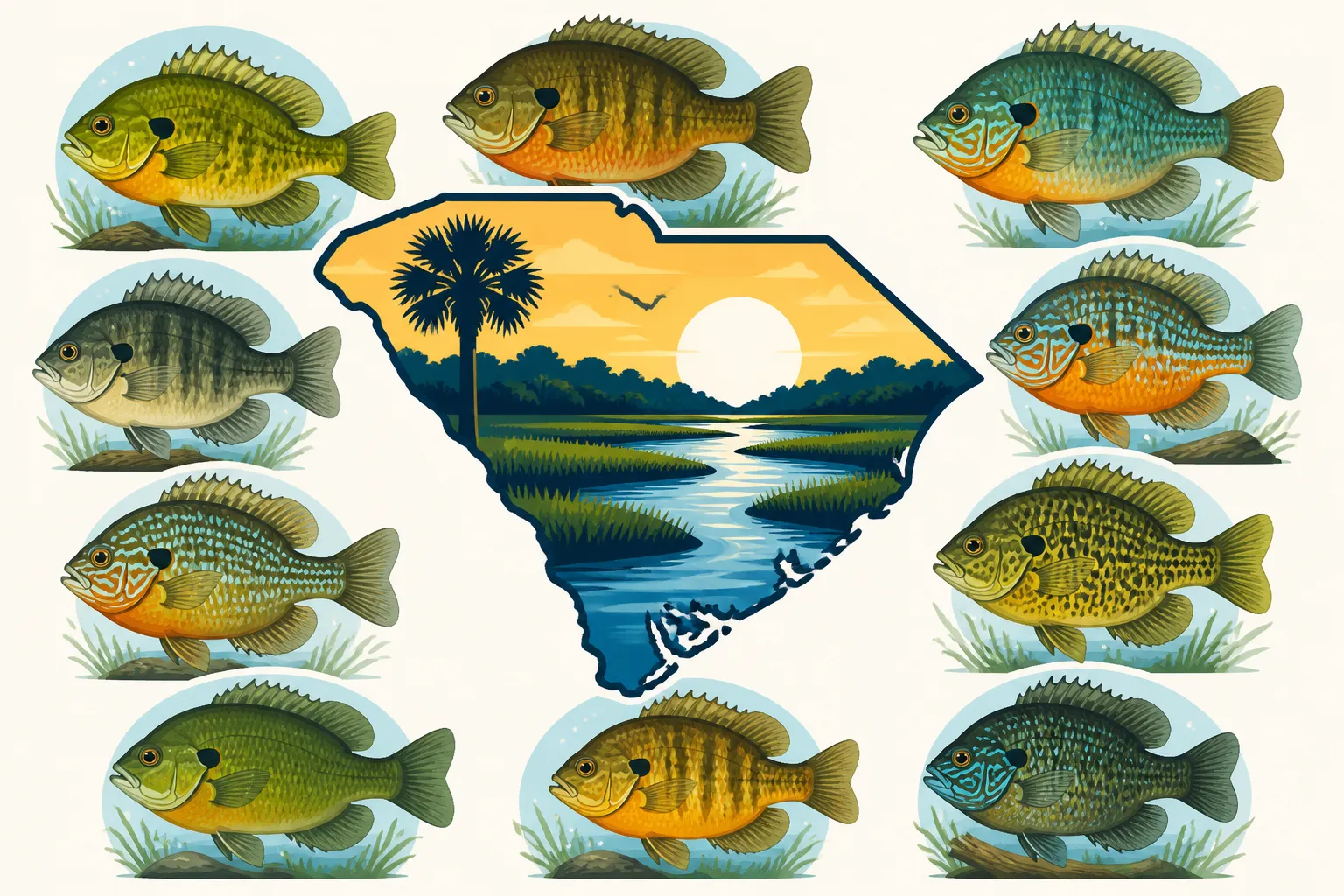
You've been out on a South Carolina lake or river, reeling in a feisty little fish, only to find yourself scratching your head. Is it a bream? A sunfish? What kind of sunfish, exactly? It can be downright confusing trying to identify all the different panfish swimming in our waters. This guide is here to untangle that mystery, giving you a detailed look at the nine native sunfish species that call the Palmetto State home, helping you understand their unique traits, habitats, and how to tell them apart.
The Sunfish Family in South Carolina: An Overview
When most folks talk about "bream" in South Carolina, they're usually referring to one of the many species in the sunfish family, particularly the genus Lepomis. These aren't just one or two fish; it's a diverse and fascinating group that provides endless hours of angling fun, especially for families and beginners. From the smallest farm pond to vast reservoirs and winding blackwater rivers, sunfish are ubiquitous, and understanding the specific species can elevate your fishing experience from merely catching fish to truly appreciating the biodiversity beneath the surface.
These fish are foundational to our aquatic ecosystems, serving as crucial prey for larger game fish like largemouth bass and striped bass, while also being popular targets for anglers. Their widespread presence means that almost anywhere you drop a line in South Carolina, you're likely to encounter one of these spirited fighters. Knowing your sunfish isn't just about showing off; it's about understanding their behavior, preferred baits, and how to contribute to healthy fish populations.
Why So Many Different Sunfish?
It might seem like an overabundance to have so many distinct sunfish species, but it's a testament to the rich and varied aquatic environments South Carolina offers. Each species has evolved to thrive in slightly different conditions, occupying unique ecological niches. Some prefer the clear, cool waters of Upstate lakes, while others are perfectly adapted to the tannin-stained, slow-moving blackwater rivers of the Lowcountry. This specialization allows multiple species to coexist without directly competing for the exact same resources, much like how different birds might feed on different parts of a tree.
Furthermore, sunfish are notorious for their ability to hybridize. When different species share similar spawning grounds and times, they can interbreed, leading to offspring that exhibit a mix of characteristics from both parents. This natural phenomenon can sometimes make identification even trickier for the casual angler, adding another layer of complexity to an already diverse family. While these hybrids often offer a more robust fighting experience, they can obscure the pure genetic lines, emphasizing the importance of understanding the distinct features of the native species.
General Characteristics of Sunfish
Despite their individual differences, all members of the Lepomis genus share some common characteristics that help define them as "sunfish." They typically have a flattened, disc-shaped body, which is excellent for maneuvering in dense vegetation or tight spaces. Their mouths are generally small to medium-sized, indicating a diet of insects, small crustaceans, and other invertebrates. They also possess sharp spines in their dorsal and anal fins, a defensive mechanism that makes them a less appealing meal for predators.
A key identifying feature across the sunfish family is the opercular flap, a fleshy extension on the gill cover. The color and size of this flap, often with a distinct spot or margin, vary significantly between species and are crucial clues for identification. Most sunfish also tend to build circular nests in shallow water during the spring and early summer, where the male guards the eggs and fry aggressively. This makes them particularly accessible targets for anglers during their spawning periods, and it’s why they’re such a favorite for family fishing trips.
The Big Three: Bluegill, Redbreast, and Redear Sunfish
When you talk about "bream" fishing in South Carolina, these are the three species that most often come to mind. They are widely distributed, frequently stocked, and provide the bulk of the panfish action across the state. Understanding the nuances between them is a great first step in becoming a more knowledgeable angler.
Bluegill (Lepomis macrochirus): The Classic Panfish
Ah, the bluegill! This is arguably the most recognized and beloved panfish in all of South Carolina, and for good reason. They are incredibly prolific, found in almost every pond, lake, and slow-moving river imaginable. Their name comes from the distinct blue-black ear flap (operculum) and the often iridescent blue-green sheen on their gill plates. You'll typically see a small, dark spot at the base of the soft dorsal fin, and often 5-9 vertical bars on their sides, though these can fade or intensify depending on the fish's mood and habitat.
Bluegill are known for their feisty fight, even on light tackle, making them an ideal target for beginners and seasoned anglers alike. They primarily feed on insects, insect larvae, and small invertebrates, which is why a simple worm or cricket, or even a tiny jig, is often irresistible to them. They thrive in vegetated areas and around submerged structures, often gathering in large schools. If you're looking for How to Catch Bluegill for Beginners or Kid-Friendly Techniques for Catching Bluegill, the bluegill is almost always the answer. Finding productive bluegill waters is rarely a challenge; they're truly the everyman's fish in South Carolina.
Redbreast Sunfish (Lepomis auritus): The River Fighter
If the bluegill is the king of the ponds, the redbreast sunfish is the prince of the rivers. While you can find them in some lakes, they truly shine in flowing water, preferring creeks and rivers, especially those with sandy or rocky bottoms. Their most striking feature, and the origin of their name, is the vibrant orange-red to yellow-orange breast and belly, which can be absolutely stunning on a healthy male. They also possess a very long, slender black ear flap that often extends far past the operculum, usually without any light-colored margin.
Redbreast are known for their aggressive strikes and powerful fights in current, often described as fighting "pound for pound" harder than bluegill. They have a slightly more elongated body shape than bluegill, and their diet is similar, though they might also be a bit more opportunistic, taking small minnows in addition to insects. Targeting them in rivers often means casting small spinners or flies near undercut banks and fallen timber. If you're venturing out to fish the Edisto or Black River, you're almost guaranteed to encounter these beautiful, hard-fighting sunfish. For a detailed comparison, check out How to Identify a Bluegill vs a Redbreast Sunfish.
Redear Sunfish (Lepomis microlophus): The Shellcracker
The redear sunfish has earned its nickname, "shellcracker," for a very good reason: they love to eat snails! Unlike their bluegill and redbreast cousins, redear have specialized pharyngeal teeth in their throats that allow them to crush the shells of snails, clams, and mussels. This unique diet preference means they play a vital role in controlling snail populations, which can host parasites, making them beneficial for overall pond health. They are often found in clear, vegetated waters of lakes and ponds.
Identifying a redear is usually quite straightforward. They have a distinct red or orange margin around the posterior edge of their opercular (ear) flap, which is where their common name "redear" originates. Their bodies are typically a brassy green to olive, with few or no vertical bars, and their overall profile is often a bit deeper and more robust than a bluegill. You won't see the dark spot on the dorsal fin that a bluegill has. Because of their preference for mollusks, traditional worm fishing on the bottom is often the most effective technique. If you're struggling to catch redear, consider reading Redear Sunfish Fishing Tips for South Carolina Anglers, as their feeding habits require a slightly different approach.
The Lesser-Known but Equally Fascinating Sunfish
Beyond the "big three," South Carolina is home to several other native sunfish species that, while perhaps not as abundant or widespread in every angler's creel, are equally important and interesting. These species often have more specific habitat preferences or are simply less commonly targeted by the average panfish angler.
Green Sunfish (Lepomis cyanellus): The Aggressive Survivor
The green sunfish is often described as the most "bass-like" of the sunfish, both in appearance and attitude. They have a larger mouth than bluegill, often extending back past the eye, and a thicker, more robust body. Their coloration is typically a dark olive to brassy green, with iridescent blue-green spots on their body and fins. A key identifying feature is the prominent opercular flap that is dark with a light, often orange-yellow, margin. They also have dark bars or spots radiating from their eye.
Green sunfish are incredibly hardy and adaptable, often found in less-than-ideal conditions where other fish might struggle. Think murky ponds, small streams, and ditches. They are aggressive feeders and territorial, often willing to strike at baits and lures almost as large as they are, making them a fun catch despite not growing to the size of bluegill or redear. They are often one of the first fish to colonize new or disturbed aquatic habitats. Their pugnacious nature means they can sometimes outcompete other sunfish species in smaller, more confined waters.
Warmouth (Lepomis gulosus): The Toothy Predator
The warmouth is another distinct member of the sunfish family, often mistaken for a bass due to its wide mouth and somewhat mottled, camouflaged appearance. Its name, "warmouth," is quite fitting as it looks like it's constantly giving you a grumpy stare. Their bodies are typically dark olive to brown, with irregular dark blotches, and they have three to five radiating lines from the eye across the cheek. Their eyes are often reddish, and they have a small patch of teeth on their tongue, which is unusual for a sunfish and hints at their more predatory nature. Their opercular flap is dark with no distinct margin.
Warmouth prefer warm, murky, and heavily vegetated waters, often in swamps, sluggish streams, and ponds. They are ambush predators, feeding on insects, crayfish, and even small fish. Because of their diet, they will readily take small live baits like minnows or worms, and even artificial lures intended for bass. They don't grow very large, but their willingness to bite and their unique appearance make them an interesting catch, especially if you're fishing in the more secluded, swampy parts of South Carolina's river systems.
Longear Sunfish (Lepomis megalotis): The Colorful Beauty
The longear sunfish is arguably one of the most strikingly beautiful members of the sunfish family, boasting a kaleidoscope of colors, especially during the spawning season. Their bodies are deep-sided and compressed, with brilliant orange, blue, and green markings, often with iridescent spots and wavy blue lines on their cheeks. The most distinctive feature, as its name suggests, is an extremely long, flexible opercular flap, typically black, often bordered with white or orange. This "ear" can be so long that it extends well past the gill cover.
Longear sunfish are generally found in clear, shallow waters of creeks and small to medium rivers, and occasionally in lakes. They prefer areas with some current and gravel or rocky bottoms. While they don't grow to be exceptionally large, their vibrant colors make them a prize for sight fishermen and those who appreciate the aesthetic beauty of freshwater fish. They're not as common in every local pond as a bluegill, so finding a longear can feel like a special treat, a small jewel pulled from the water.
The More Elusive Native Sunfish Species
Rounding out South Carolina's native sunfish contingent are three species that might be less frequently encountered by the average angler but are no less integral to the state's aquatic diversity. These fish often have more specific geographic or habitat preferences.
Pumpkinseed (Lepomis gibbosus): The Northern Migrant
The pumpkinseed sunfish is a stunning fish that, while more common in northern states, can be found in some of South Carolina's cooler, clearer waters, particularly in the northern reaches of the state. It's often mistaken for a bluegill due to its similar shape, but a closer look reveals key differences. The most defining characteristic of the pumpkinseed is the bright orange-red spot on the posterior tip of its black opercular flap. Their bodies are typically olive to gold, adorned with wavy blue-green lines on their cheeks and sides, and often speckles of orange, red, and yellow.
Pumpkinseeds generally prefer clear, cool, vegetated lakes and ponds. They feed on a variety of aquatic insects and snails, but their presence in South Carolina is often more localized. Catching a pumpkinseed here feels like a special occurrence, a hint of the northern waters within our own diverse state. They don't typically grow very large, but their vibrant coloration makes them an unmistakable and memorable catch for those lucky enough to reel one in.
Spotted Sunfish (Lepomis punctatus): The Lowcountry Gem
The spotted sunfish, as its name clearly suggests, is characterized by numerous small, dark spots scattered over its olive-green to brassy body. These spots are particularly prominent on its sides and opercular flap. They have a relatively long, dark opercular flap, usually without any distinct colored margin, similar to a warmouth but lacking the warmouth's radiating facial lines and larger mouth. Their body shape is generally more elongated than a bluegill or pumpkinseed.
These sunfish are true Lowcountry residents, thriving in the slow-moving, dark-stained waters of swamps, blackwater rivers, and brackish estuaries. They are incredibly tolerant of low oxygen conditions and can even be found in areas with slightly elevated salinity. Their diet consists primarily of aquatic insects and small crustaceans. While they don't achieve great size, they are an important part of the intricate food web in South Carolina's coastal plain waters and offer a unique angling experience for those exploring these specific habitats. You might find them while exploring the blackwater bends on the Edisto River or other similar environments.
Dollar Sunfish (Lepomis marginatus): The Coastal Plain Resident
The dollar sunfish is another species primarily found in the acidic, blackwater systems of South Carolina's coastal plain. It's often one of the smallest of the Lepomis species, typically only reaching a few inches in length, which might be why it's less frequently targeted by anglers. Its common name is said to derive from its resemblance to a silver dollar, referring to its deep, compressed body. Its coloration is generally dark olive to brown on top, fading to a lighter belly, with irregular dark blotches and sometimes subtle iridescent blue or green spots. A key feature is the black opercular flap that often has a very thin, pale margin, and it lacks the pronounced facial lines of a longear.
Dollar sunfish prefer heavily vegetated, slow-moving waters of swamps, ditches, and small streams within the coastal plain. They are quite shy and often difficult to spot due to their small size and camouflaged appearance. Their diet consists of tiny aquatic invertebrates. While not a "trophy" fish by any means, they are a fascinating and integral part of the intricate ecosystems of the lower regions of the state. Encountering a dollar sunfish means you're really immersed in the unique environment of the South Carolina Lowcountry.
Identifying Your Catch: Key Features and Common Misconceptions
With so many similar-looking fish, it's easy to get them mixed up! But with a keen eye and a few simple tricks, you can become a sunfish identification pro. Knowing what you've caught isn't just for bragging rights; it helps you appreciate the species and its habitat, and it's essential for adhering to any specific regulations, though sunfish typically have generous bag limits. For general rules, always consult South Carolina Fishing Bag Limits Explained.
Distinguishing Marks for Each Species
Let's break down the primary identifying features in an easy-to-read table. Keep in mind that coloration can vary greatly based on habitat, water clarity, and the fish's mood, so focus on structural features first.
| Feature / Species | Bluegill | Redbreast Sunfish | Redear Sunfish | Green Sunfish | Warmouth | Longear Sunfish | Pumpkinseed | Spotted Sunfish | Dollar Sunfish |
|---|---|---|---|---|---|---|---|---|---|
| Ear Flap (Operculum) | Short, black, often blue-ish sheen | Very long, slender, all black | Short, black with red/orange margin | Prominent, dark with light margin | Dark, no distinct margin | Extremely long, flexible, black with white/orange margin | Short, black with prominent red/orange spot | Long, dark, no distinct margin, spotted | Short, black with very thin pale margin |
| Body Shape | Deep, compressed | Slightly more elongated | Deep, robust | Robust, bass-like | Mottled, robust | Deep, compressed | Deep, compressed | More elongated | Deep, compressed, small |
| Mouth Size | Small | Small | Small | Medium, extends past eye | Large, wide | Small | Small | Small | Small |
| Body Markings | 5-9 faint vertical bars | Vibrant orange-red belly/breast | Brassy green, few/no bars | Iridescent blue/green spots, bars from eye | Irregular dark blotches, lines from eye | Vibrant orange/blue/green, wavy lines on cheek | Wavy blue/green lines, red/orange/yellow speckles | Numerous small dark spots | Irregular dark blotches, sometimes iridescent spots |
| Dorsal Fin Spot | Often present, dark | Absent | Absent | Absent | Absent | Absent | Absent | Absent | Absent |
| Habitat | Ponds, lakes, slow rivers | Rivers, creeks | Clear lakes, ponds | Murky ponds, ditches, streams | Murky, vegetated swamps, slow streams | Clear creeks, small rivers | Cool, clear, vegetated lakes/ponds | Blackwater rivers, swamps, brackish | Blackwater streams, swamps, heavy vegetation |
When you're out on the water, having a small field guide or even a good fishing app on your phone can be a huge help. There are many excellent resources available, and you can even find some great waterproof identification guides on sites like Amazon that you can keep in your tackle box. Always take a moment to observe the fish carefully before releasing it or putting it on your stringer.
Hybridization and Its Impact on Identification
I mentioned it earlier, but it bears repeating: hybridization is a real thing among sunfish, and it can throw a wrench into identification. Different Lepomis species can and do interbreed, especially in smaller, crowded ponds or where habitat conditions are stressed. The offspring, known as hybrids, often exhibit a mix of features from both parent species, making them difficult to place neatly into one category. For example, a bluegill-green sunfish hybrid might have a slightly larger mouth than a pure bluegill but lack the strong facial lines of a pure green sunfish.
From an angling perspective, hybrids can be quite desirable. They often grow faster and larger than either parent species and can be exceptionally aggressive, making them a thrilling catch. However, from a scientific or conservation standpoint, they can complicate population surveys and obscure the genetic purity of native species. Don't get too frustrated if you catch a fish that just doesn't seem to fit perfectly into any of the descriptions; it might just be one of these fascinating genetic blends. The key is to recognize the core characteristics of the native species as your baseline.
Best Practices for Catching and Conserving South Carolina Sunfish
Fishing for sunfish is one of the most accessible and rewarding outdoor activities in South Carolina. Whether you're introducing a child to fishing for the first time or simply enjoying a peaceful afternoon, sunfish offer consistent action. But it's also important to practice good angling ethics and contribute to the conservation of these valuable resources.
Simple Gear and Techniques for Panfish Anglers
One of the beautiful things about sunfish fishing is that you don't need a boatload of expensive gear. A simple spinning rod and reel combo, typically ultra-light to light action, is perfect. A small hook (size 6 or 8), a bobber, and a few split shot weights are usually all you need. For bait, you can't go wrong with live worms, crickets, or mealworms – they're almost universally irresistible to sunfish. If you prefer artificials, tiny jigs, spinners, or even fly fishing with small poppers and nymphs can be incredibly effective. Don't overthink it!
When it comes to technique, simplicity reigns supreme. Casting your bait near submerged cover, docks, lily pads, or brush piles is often the ticket. Sunfish are visual feeders, but also rely on scent, so Best Bait for Panfish in Farm Ponds can give you an edge. Watching that bobber dip under the surface is one of the most exciting parts of the experience, especially for younger anglers. For tips on taking kids fishing, look up Kid-Friendly Fishing Ponds Near Columbia or Family-Friendly Fishing Spots in South Carolina. Many of these spots are perfect for targeting bluegill and redear.
Respecting Regulations and Promoting Healthy Populations
Even though sunfish are plentiful, it's vital to follow South Carolina's fishing regulations. While bag limits for panfish are generally generous, they are still in place to ensure healthy populations for future generations. Always check the current regulations before you head out, as rules can sometimes change. South Carolina Fishing License Guide is an essential read before you even cast a line.
Practicing catch-and-release, especially for the larger "bream" you might catch, can help maintain a healthy population balance. If you decide to keep fish for a meal – and many sunfish, like bluegill and redear, are absolutely delicious, as discussed in Is Sunfish Good to Eat? – only keep what you plan to eat. Handling fish gently, using barbless hooks, and minimizing their time out of the water are all ways to ensure that released fish have the best chance of survival. By being responsible anglers, we can ensure that South Carolina's diverse sunfish populations continue to thrive for years to come.
Disclaimer
This article is for general informational purposes only and does not constitute professional advice. Laws, prices and regulations vary by location and change over time. Consult a qualified professional for guidance on your specific situation.