Is It Legal to Catch Sturgeon in South Carolina?
Imagine you're out on a peaceful morning, casting lines into one of South Carolina's beautiful rivers, maybe the Savannah or the Cooper. Suddenly, you feel a strong tug, and after a valiant fight, you reel in something truly magnificent – a prehistoric-looking fish with bony plates and a long snout, unlike anything you've ever seen. Your heart races, a mix of excitement and confusion. Is this a once-in-a-lifetime catch? Can you keep it? This guide is here to clear up that burning question and help you understand the critical regulations surrounding these incredible aquatic giants in the Palmetto State.
The Legal Status of Sturgeon in South Carolina Waters
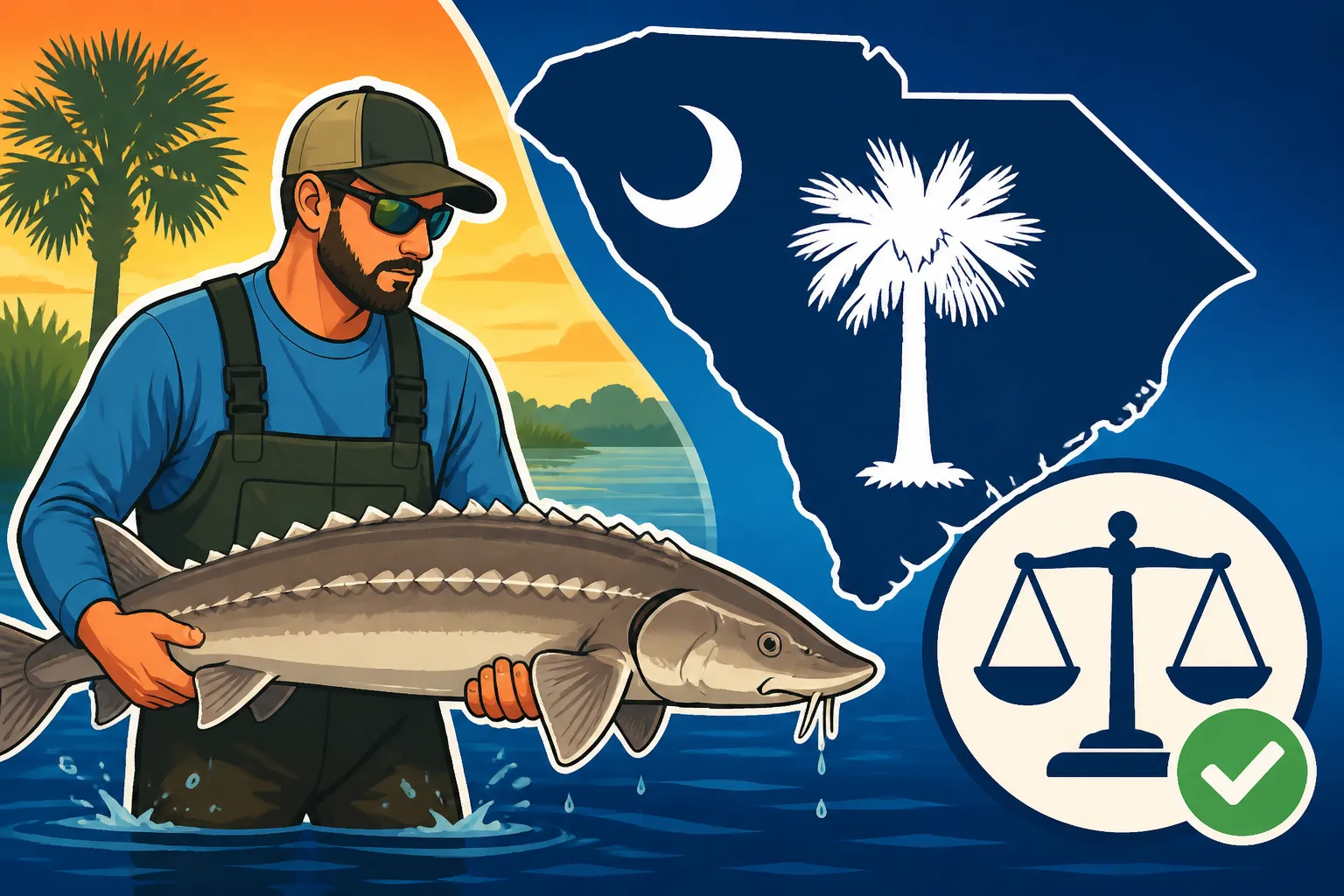
Let's cut right to the chase because this is important: it is unequivocally illegal to target, catch, or possess sturgeon in South Carolina. While the sight of one can be breathtaking, these majestic fish are heavily protected, and there are strict laws in place to ensure their survival. Many anglers are simply unaware, and that's understandable when you're caught up in the thrill of the moment. But knowing the rules beforehand prevents accidental violations and protects these vulnerable creatures.
Why Sturgeon Are Protected Species
The reason for such stringent protections for sturgeon isn't just arbitrary; it's a matter of survival for a species that has existed for millions of years. Sturgeon are often called "living fossils" because their lineage dates back to the dinosaurs. Unfortunately, they've faced immense pressure from historical overfishing, habitat destruction, and pollution. Their life cycle makes them particularly vulnerable; they mature very slowly, often not reproducing until they are 7 to 20 years old, and they don't spawn every year. This means it takes a long time for populations to rebound from declines. When you combine slow growth rates with historical exploitation, you get critically endangered populations that desperately need our help to recover. Why Sturgeon Are a Protected Species delves deeper into these conservation efforts.
Protecting sturgeon also involves recognizing their vital role in the ecosystem. As large, long-lived fish, they are indicators of river health. Their presence suggests a relatively clean and intact river system, while their decline signals trouble. Without these protections, we risk losing them forever, which would be a tragic loss for our natural heritage and the delicate balance of our aquatic environments.
Federal and State Protections
It's not just the South Carolina Department of Natural Resources (SCDNR) that protects sturgeon; these protections often come from both state and federal levels, especially for migratory species like the Atlantic Sturgeon. The Atlantic Sturgeon, for instance, is listed under the federal Endangered Species Act, which means catching one is a serious offense that can carry significant penalties, including hefty fines and even jail time, depending on the circumstances. This isn't just about a fishing ticket; it's about protecting a federally endangered animal. Shortnose Sturgeon: South Carolina's Protected River Giant and Atlantic Sturgeon in South Carolina: A Rare Catch both provide excellent context on the specific species found here.
The Shortnose Sturgeon, another species found in South Carolina, also receives federal protection, though its status might differ slightly from the Atlantic. Regardless of the specific species, the message is clear: these fish are off-limits. These comprehensive laws are in place because both species face threats across their entire range, and it takes a coordinated effort from multiple states and federal agencies to ensure their long-term survival. Understanding these layers of protection can help anglers grasp the gravity of the situation and the importance of responsible behavior on the water.
Identifying South Carolina's Sturgeon Species
One of the biggest challenges for anglers is accurately identifying a sturgeon, especially if you've never seen one before. They don't look like your typical bass or catfish, but they can be confused with other bottom dwellers. Knowing what to look for is your first line of defense against an accidental (and illegal) catch. South Carolina is home to two main species: the Atlantic Sturgeon and the Shortnose Sturgeon.
Atlantic Sturgeon
The Atlantic Sturgeon is the larger and more oceanic of the two species found in our state. These impressive fish can grow to be quite substantial, reaching lengths of up to 15 feet and living for over 60 years! They have a distinctive appearance, often a dark bluish-black or olive-brown on their back, fading to a lighter belly. The most defining feature, however, is their rows of prominent, bony plates called scutes along their body, especially noticeable on their sides and back. Their snout is relatively long and pointed, and their mouth is toothless and protractible, designed for sucking up food from the riverbed.
You're most likely to encounter Atlantic Sturgeon in the larger coastal rivers and estuaries of South Carolina, as they migrate between freshwater spawning grounds and saltwater feeding areas. Rivers like the Cooper, Santee, and Savannah have historically been important habitats. Sturgeon Sightings in South Carolina Rivers explores where these magnificent fish have been observed. If you ever hook into something that feels like a powerful, armored torpedo, with those distinct scutes, you've likely found an Atlantic Sturgeon.
Shortnose Sturgeon
The Shortnose Sturgeon, as its name suggests, is generally smaller than its Atlantic cousin, typically reaching lengths of around 3 to 4 feet. While they share many characteristics with the Atlantic Sturgeon, such as the rows of scutes and a bottom-feeding mouth, their appearance is often a bit smoother, and their snout is shorter and blunter. Their coloration tends to be more variable, ranging from olive-brown to dark gray, with a lighter underside.
These sturgeon are more estuarine-dependent, meaning they tend to spend more of their lives in brackish waters closer to the coast, though they do migrate into freshwater to spawn. They prefer the slower-moving, deeper sections of rivers and estuaries. While both species are protected, understanding the subtle differences between them can help you appreciate the diversity of South Carolina Fish Species: A Complete Guide to What's in the Water and ensure you're making the right identification. It’s critical to remember that both are protected, so the key takeaway is always to treat any sturgeon-like fish with the utmost caution.
Distinguishing Sturgeon from Other Bottom Dwellers
Anglers often confuse sturgeon with other large, bottom-dwelling fish that are legal to catch, like various species of catfish or even large suckers. However, there are clear distinctions:
- Scutes: This is the dead giveaway. No other common freshwater or estuarine fish in South Carolina has the distinct rows of bony plates (scutes) like a sturgeon. Catfish have smooth skin or small scales.
- Mouth: Sturgeon have a protractible, toothless mouth on the underside of their head, designed for vacuuming food. Catfish have wide mouths with barbels (whiskers) around them, typically on the front of their head. Suckers also have fleshy, sucker-like mouths but lack the scutes.
- Tail: Sturgeon have a unique, heterocercal tail (the upper lobe is longer than the lower lobe, like a shark's tail), though sometimes this isn't immediately obvious if the fish isn't fully out of the water. Other bottom feeders have more symmetrical tails.
- Barbels: Sturgeon possess four barbels (whiskers) located between the tip of their snout and their mouth, which they use to locate food on the bottom. While catfish also have barbels, their placement and the overall body shape are very different.
To help you visualize these differences, here's a quick comparison:
| Feature | Sturgeon | Catfish | Sucker |
|---|---|---|---|
| Body Covering | Rows of bony plates (scutes) | Smooth, scaleless skin | Scaly |
| Mouth Position | Underside of snout, protractible, toothless | Front of head, wide, often toothed | Underside of head, fleshy, sucker-like |
| Barbels | Four, between snout tip and mouth | Numerous, around mouth (whiskers) | Absent or very small, near mouth |
| Tail Shape | Heterocercal (upper lobe longer) | Forked or rounded, symmetrical | Forked or rounded, symmetrical |
| Overall Shape | Elongated, torpedo-like, often dark/gray | Robust, often brown/green, distinct head shape | Elongated, often silvery/brown, smaller head |
If you're unsure about fish identification, a good waterproof field guide can be a lifesaver. You can often find excellent options on Amazon, perfect for keeping in your tackle box or boat bag for quick reference.
What to Do If You Accidentally Catch a Sturgeon
Accidental catches happen, especially when you're targeting other species that share similar habitats. It's not uncommon to hook a sturgeon while fishing for catfish or striped bass in a river system. The most important thing is how you react. Remember, these are protected, critically endangered animals, and your actions can make a huge difference in their survival.
Prioritizing the Fish's Safety
The moment you realize you've hooked a sturgeon, your priority shifts entirely to the fish's well-being. The goal is to minimize stress and handle the fish as little as possible. If you can, try to unhook the fish without removing it from the water entirely. This reduces its exposure to air, which can be extremely stressful and damaging to its delicate gills and internal organs. Avoid dragging it onto the bank or into a boat unless absolutely necessary for safe dehooking.
If you must handle it, do so gently and quickly. Always support the entire body, especially if it's a larger fish. Never hold it by the gills or eyes. Keep your hands wet to protect its slime coat, which is a natural defense against disease. The less time it spends out of the water, the better its chances of recovery. Think of it as an emergency rescue mission – every second counts for the fish.
Safe Release Techniques
Careful dehooking is crucial for any catch-and-release scenario, but it's paramount with a protected species like a sturgeon. If the hook is easily accessible, use a dehooking tool or long-nosed pliers to remove it quickly and cleanly. Pinching down the barbs on your hooks beforehand (if targeting other fish) can make this process much easier and less damaging. For safe release, a proper pair of long-nosed pliers or a dehooking tool is essential. Again, these are readily available on platforms like Amazon, and they're a small investment for responsible angling.
What if the hook is deep, or the fish is thrashing too much to safely remove it? Your best option is to cut the line as close to the hook as possible. While leaving a hook in a fish is never ideal, a small, barbless hook will often dissolve or work its way out over time with minimal harm, especially compared to the trauma of an extended struggle or improper handling. Don't try to rip or yank the hook out, as this can cause severe internal damage. The priority is to get the sturgeon back into the water with minimal stress and injury.
Reporting the Catch
Even an accidental catch of a sturgeon should be reported to the South Carolina Department of Natural Resources (SCDNR). Why? Because every sighting and interaction provides valuable data for biologists studying these rare populations. It helps them understand migration patterns, population health, and where these fish are still present. This information is vital for ongoing conservation efforts. You won't get into trouble for an accidental catch that is promptly and properly released and reported; in fact, you'll be contributing to science and conservation.
When you report, try to note the approximate size of the fish, the location where you caught it, and the time of day. If you can, take a quick, clear photograph while the fish is still in the water without stressing it further. This helps with species verification. Carrying a quality camera or even a waterproof phone case (you can get great ones on Amazon!) means you can snap a quick photo for reporting purposes without risking your device. You can usually find contact information for the SCDNR on their official website, often under "Law Enforcement" or "Marine Resources." Reporting is a critical step in being a responsible steward of our natural resources.
Responsible Angling: Beyond Sturgeon
Being a responsible angler in South Carolina goes beyond just knowing about sturgeon. It encompasses a broader understanding of conservation, regulations, and ethical practices that ensure our fishing heritage thrives for generations to come. Every time we head out on the water, we carry a responsibility to protect it.
Understanding General Regulations
While sturgeon are a special case, the principle of knowing and following fishing regulations applies to all species. South Carolina has specific rules for everything from South Carolina's Freshwater Fishing Regulations to Saltwater Fishing Rules in South Carolina, including size limits, bag limits, and seasons for various fish. These rules are designed by biologists to ensure sustainable populations, preventing overfishing and allowing fish to reproduce. Forgetting to check these before you go can not only lead to fines (see Penalty for Fishing Without a License in South Carolina) but also harm the very resources we love to enjoy.
It's also important to have the correct South Carolina Fishing License Guide for the waters you're fishing in, whether it's fresh or saltwater. Regulations aren't just there to make things complicated; they're the bedrock of healthy fisheries. Making it a habit to review the latest guidelines from the SCDNR before each season, or even before a trip to a new area, is a mark of a truly dedicated and ethical angler.
Gear for Responsible Catch and Release
Having the right gear isn't just about catching fish; it's about handling them responsibly when you do. For catch-and-release, especially for larger species, certain tools are invaluable. A good quality, knotless rubberized landing net is far gentler on a fish's slime coat and fins than a traditional knotted net, reducing injury. Dehooking tools, as mentioned before, minimize handling time and allow for quicker, safer release.
Investing in these tools is an investment in the future of fishing. It shows respect for the fish and the environment. You might also consider using circle hooks when bait fishing, as they significantly reduce gut-hooking, making release much easier and increasing the fish's survival chances. These thoughtful choices, from your hook to your net, reflect a commitment to conservation that every angler can embrace.
Respecting All Protected Species
The lesson learned from sturgeon extends to many other protected or vulnerable species you might encounter while fishing in South Carolina. This could include sea turtles, dolphins, various bird species, or even other fish like sharks or certain rare trout species that might have special regulations. For example, some streams might have specific catch-and-release rules for native South Carolina's Native Brook Trout: A Blue Ridge Mountain Original. It’s about being aware of your surroundings and understanding that every creature has a place in the ecosystem.
If you accidentally hook an animal that isn't a fish or is clearly protected, the same principles apply: minimize stress, release quickly, and report if necessary. Sometimes, it's about knowing when to simply observe wildlife from a distance rather than interfering. Being an active participant in conservation means having a broad respect for all living things in our waterways and understanding that our actions have consequences, both good and bad. It’s about cherishing the opportunity to share these incredible environments with all their inhabitants.
Disclaimer
This article is for general informational purposes only and does not constitute professional advice. Laws, prices and regulations vary by location and change over time. Consult a qualified professional for guidance on your specific situation.