Sheepshead Fishing Tips for South Carolina’s Brackish Waters
Ah, the sheepshead. If you've ever spent a frustrating hour feeling tiny taps, setting the hook on nothing, and reeling in an empty, perfectly stripped hook, then you know the unique challenge and exasperation that comes with targeting this famously finicky fish in South Carolina's brackish waters. These striped "convict fish" are notorious bait stealers, but when you finally get one to the boat, the fight and the reward are absolutely worth it. This comprehensive guide is dedicated to helping you unravel the mysteries of sheepshead fishing, offering up all the insider tips to turn those frustrating nibbles into successful catches.
Getting to Know the Sheepshead: A Master Bait Thief's Profile
Before you can outsmart a sheepshead, you really need to understand what makes them tick. These aren't your typical aggressive bass or trout; they have a very specific lifestyle and feeding habit that dictates everything about how you should approach them. Ignoring their quirks is a surefire way to go home empty-handed and feeling like you've been robbed (which, technically, you have been).
Habitat and Preferred Haunts
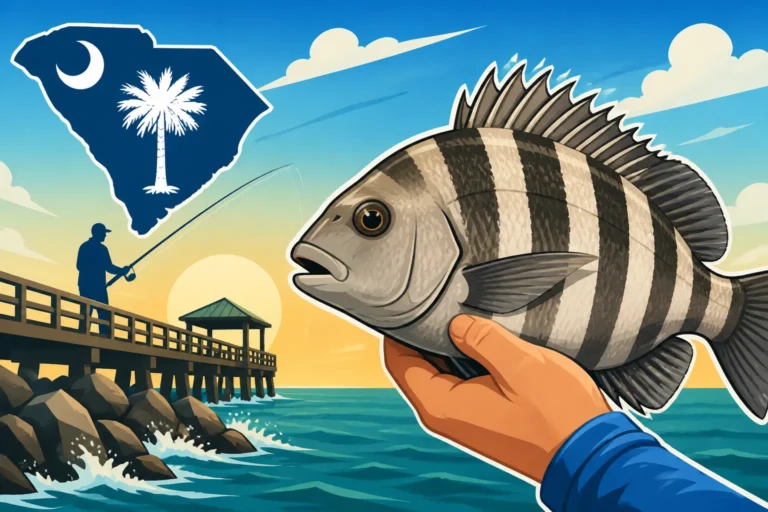
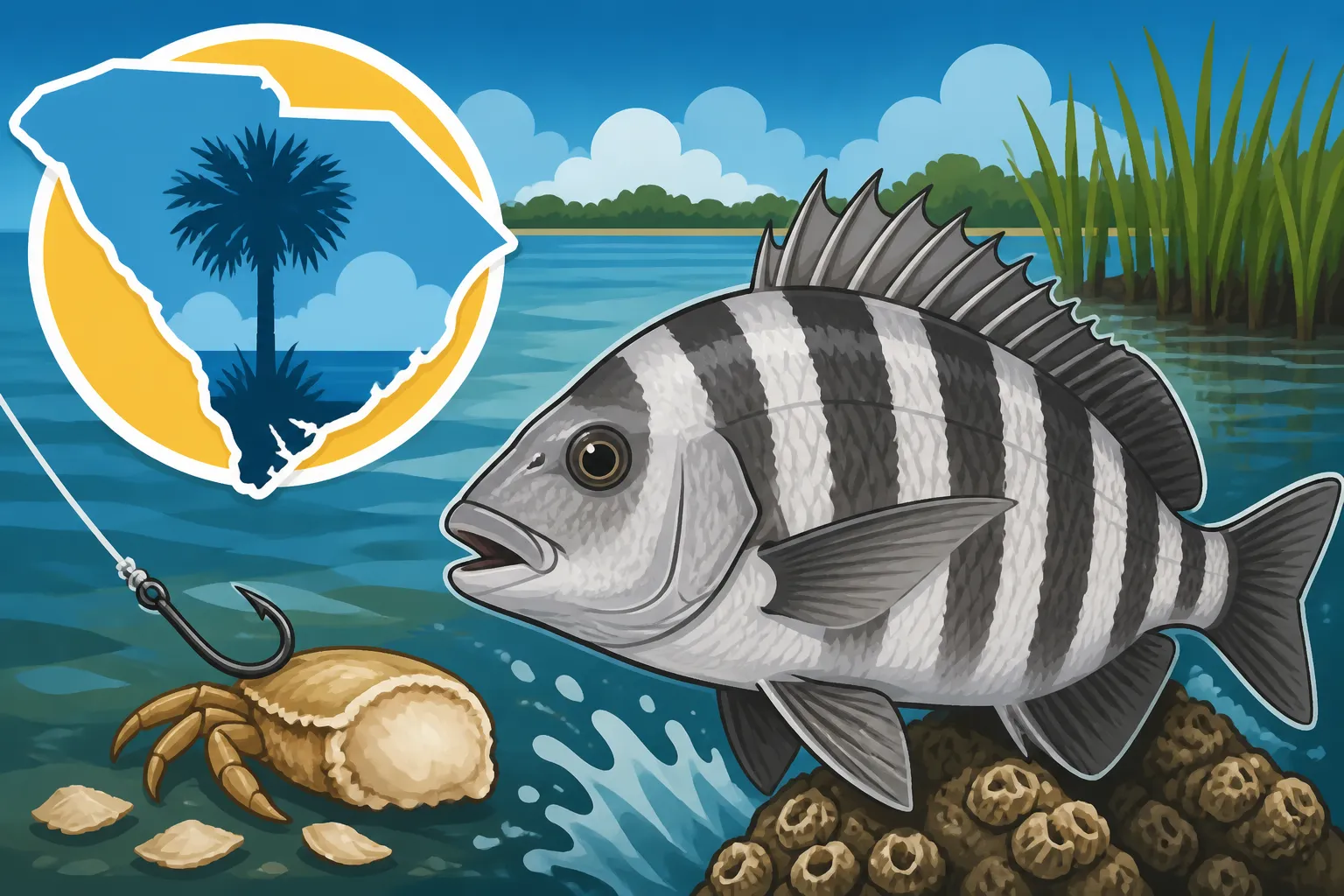
Sheepshead absolutely love structure, especially anything encrusted with barnacles, oysters, or other invertebrates. Think about it: pilings, docks, jetties, bridge columns, rock walls, and oyster beds. These aren't just cover for them; they are their grocery store. In South Carolina's brackish waters, you'll find them thriving where freshwater meets saltwater, areas like tidal creeks, estuaries, and around the mouths of rivers where they meet the coast.
They often hug these structures very tightly, sometimes just inches away from a barnacle-covered pilings or a jagged oyster rake. This is why getting your bait precisely to where they live, without getting snagged, is half the battle. They aren't usually found roaming open flats, but rather lurking in these invertebrate-rich zones, often in depths ranging from a few feet in tidal creeks to 20-30 feet around larger bridge structures.
The Sheepshead Diet and Those Famous Teeth
If you've ever seen a sheepshead's mouth, you understand why they're so good at what they do. They have incredibly human-like incisors and molars, perfectly designed for crushing shells. Their primary diet consists of barnacles, oysters, mussels, crabs (especially fiddler crabs and mud crabs), shrimp, and other small crustaceans. They literally scrape and crunch these creatures right off structures. This is a crucial detail, as it informs your choice of bait and hook.
Because of this diet, they don't strike aggressively like a predator chasing a lure. Instead, they gently mouth and crush their food, which translates to those maddeningly subtle "taps" on your line. You're not going to get a hard yank; you're feeling them nibble and crunch. Knowing How to Identify a Sheepshead by Its Teeth isn't just for identification; it's key to understanding their feeding behavior.
Behavior: Stealthy Eaters and Hard Fighters
Sheepshead are notoriously stealthy eaters. They can suck a shrimp off a hook or scrape a fiddler crab shell clean without moving the line more than a barely perceptible quiver. This is why many experienced sheepshead anglers develop a sixth sense for the bite, often setting the hook on instinct rather than a clear pull. They also have a habit of stripping the soft parts of bait, leaving the tougher bits or a bare hook.
However, once hooked, a sheepshead becomes a surprisingly powerful fighter. They use their flat, disc-like bodies to their advantage, turning sideways in the current to create immense drag. They'll also try to dive back into the structure they call home, making quick work of your line if you're not careful. Landing one often requires a delicate balance of finesse to detect the bite and brute strength to keep them away from snags.
Assembling Your Sheepshead Arsenal: Gear That Gets the Job Done
You can't bring a knife to a gunfight, and you certainly can't bring a flimsy ultralight setup to a sheepshead battle. These fish require specialized gear that can handle their subtle bites, strong crushing jaws, and their tendency to dive for cover. Having the right tools makes all the difference between a triumphant catch and a tale of another bait lost.
Rods: Sensitivity Meets Backbone
When it comes to sheepshead, your rod needs to be a contradiction in terms: incredibly sensitive at the tip, but with enough backbone to haul a stubborn fish away from barnacle-encrusted pilings. Many anglers prefer a medium-light to medium power rod, typically 6 to 7.5 feet in length. The key is a fast or extra-fast action tip. This stiff tip allows you to feel those incredibly subtle bites.
A graphite composite rod is often a good choice, offering that ideal blend of sensitivity and lifting power. You want a rod that can transmit every little bump and scrape along the structure, and most importantly, every single "tap" a sheepshead makes. A limp noodle rod will just absorb those vital signals, leaving you wondering if you're even getting a bite.
Reels: Smooth Drag and Reliable Performance
Matching your rod with the right reel is equally important. A spinning reel in the 2500-4000 series is usually perfect for sheepshead fishing. Look for a reel with a smooth, consistent drag system. This is non-negotiable, as a sheepshead will make powerful runs and sudden surges towards structure, and a sticky drag will lead to snapped lines or pulled hooks.
The reel should also have a decent retrieve rate to help you gain line quickly if a fish charges towards you or tries to make a break for it. Durability is also a factor, as you'll often be fishing around harsh saltwater environments. Many anglers find reliable and affordable options for quality spinning reels on Amazon, ensuring they have a spare or can upgrade without breaking the bank.
Line and Leader: The Invisible Connection
Your choice of fishing line is paramount for sheepshead. You need something that offers sensitivity, strength, and abrasion resistance. Braided line, in the 10-20 lb test range, is almost universally preferred for your main line. Its lack of stretch provides incredible sensitivity, allowing you to feel every single peck, and its strength-to-diameter ratio is excellent for fishing around structure.
However, braid is highly visible and not very abrasion-resistant against sharp shells and barnacles. This is where your leader comes in. You'll want to use a fluorocarbon leader, typically 15-30 lb test, attached to your main line with a strong knot like a FG knot or an Albright knot. Fluorocarbon is nearly invisible underwater, which is crucial for these wary fish, and it offers superior abrasion resistance compared to monofilament. A length of 18-36 inches for your leader is generally sufficient.
The Secret Menu: Baits and Rigs Sheepshead Can't Resist (Mostly)
Sheepshead are picky eaters, but they have their weaknesses. Understanding their natural diet is your biggest advantage in selecting the right bait. Furthermore, presenting that bait correctly, with a rig that minimizes snags and maximizes bite detection, is absolutely critical.
The Best Baits for Sheepshead
When it comes to sheepshead bait, natural is almost always better, and fresh is always best. Here are the top contenders:
- Fiddler Crabs: If there's a "king" of sheepshead baits, it's the fiddler crab. These small crabs are a natural part of the sheepshead diet, and they rarely refuse them. Hook them through the bottom shell, pushing the hook up through the top, making sure the point is exposed. You can find them scuttling around oyster banks at low tide or sometimes at local tackle shops.
- Live Shrimp: A classic inshore bait, live shrimp are also highly effective for sheepshead. Hook them either through the head (avoiding the black spot which is their brain) or through the tail. The key is to keep them lively.
- Oyster Meat: While tougher to keep on the hook, fresh oyster meat can be irresistible. A small piece, firmly hooked, can tempt even the most cautious sheepshead. This is particularly effective if you're fishing in an area with abundant oyster beds.
- Mussels and Clams: Similar to oysters, fresh pieces of mussels or clams can work wonders. The strong scent attracts sheepshead, but their soft texture makes them easy for the fish to steal.
- Sand Fleas: In certain coastal areas, sand fleas (mole crabs) are a natural food source for sheepshead, especially when they move closer to the surf zone or inlets.
You'll quickly learn that having a variety of baits can be beneficial, as what works one day might not work the next. Many dedicated sheepshead anglers will have a small cooler specifically for their bait, keeping those precious fiddler crabs lively.
Essential Sheepshead Rigs
Simplicity and stealth are the names of the game for sheepshead rigs. You want to present your bait as naturally as possible, with minimal hardware to spook the fish or create snags.
The Carolina Rig Variation
This is perhaps the most popular and effective rig for sheepshead. It consists of:
- Main Line: Your braided line from the reel.
- Sinker: A small egg sinker (1/4 oz to 1 oz, depending on current and depth) threaded directly onto your main line. The key is to use just enough weight to hold bottom without being so heavy that you can't detect the subtle bites.
- Swivel: A small, strong barrel swivel tied to the end of your main line, which stops the egg sinker. This also prevents line twist.
- Leader: Your fluorocarbon leader (18-36 inches) tied to the other end of the swivel.
- Hook: A small, sharp, strong hook. Sizes #1 to 1/0 are common. Kahle hooks, J-hooks, or specialized sheepshead hooks with a slight bend in the shank work well. The small size is critical for fitting into their mouth and presenting small baits like fiddler crabs.
The Carolina rig allows the bait to drift naturally, giving the sheepshead less resistance when they pick it up. This rig is particularly effective when fishing near the bottom around pilings, jetties, or oyster beds.
The Simple Bottom Rig (Knocker Rig)
Another effective, even simpler variation is the knocker rig. In this setup, the egg sinker is placed directly above the hook, held in place by tying the hook directly to the leader. This "knocker" action can sometimes draw a strike, and it keeps your bait and weight in very close proximity, which can be beneficial when fishing extremely tight to structure. This is often the go-to for many anglers who buy their terminal tackle on Amazon, as it requires fewer components.
Here's a comparison of common sheepshead baits:
| Bait Type | Pros | Cons | Typical Hooking Method |
|---|---|---|---|
| Fiddler Crabs | Highly effective, natural food, irresistible | Can be hard to find/keep, tough shell, easily picked clean | Through bottom shell, up through top, exposing point |
| Live Shrimp | Widely available, good scent, natural action | Easily stolen, softer body, attracts other species | Through head (avoid brain), or through tail |
| Oyster Meat | Very strong scent, highly attractive | Very soft, easily pulled off hook, less durable | Small, firm piece threaded onto hook, point exposed |
| Mussels/Clams | Good scent, natural food | Soft, similar to oyster meat, easily stolen | Small piece, firmly hooked |
| Sand Fleas | Natural food source, good for specific areas | Can be small, might require specific methods to keep on hook | Through the underside, exposing point |
Unlocking South Carolina's Sheepshead Hotspots: Where to Find Them
South Carolina's coast is a haven for sheepshead, offering a wide array of brackish water environments where these clever fish thrive. Knowing where to look is just as important as knowing how to fish for them. It’s all about finding that critical combination of structure, food sources, and ideal water conditions.
Piers, Docks, and Jetties
These are classic sheepshead hunting grounds. Public fishing piers along the coast, like the Folly Beach Pier or the Cherry Grove Pier, are magnets for sheepshead. The pilings are encrusted with barnacles and mussels, providing an endless buffet. The same goes for private docks and marinas, though you'll need permission to fish from private property. Jetties, such as those found at the mouths of harbors or inlets, also offer extensive rock structure that sheepshead adore.
When fishing these areas, focus your efforts directly on the pilings or along the rocks. Sheepshead will hug these structures tightly. The key is to drop your bait vertically, getting it as close as possible without getting snagged immediately. This often means very precise casting or careful boat positioning. Best Inshore Fishing Spots in South Carolina often highlight areas rich in these types of structures.
Bridge Pilings and Causeway Crossings
Major bridges spanning tidal creeks and rivers are prime sheepshead territory. The massive concrete pilings provide ample structure and a thriving ecosystem of invertebrates. Good examples include bridges around Charleston Harbor, the Murrells Inlet jetties, or those crossing the Intracoastal Waterway. The current around these structures can be strong, which sheepshead don't mind, as it brings food to them.
Fishing bridge pilings requires heavier sinkers to combat the current and often a boat to get into the optimal position. You'll want to position your boat upstream of the pilings and allow your bait to drift naturally down to the base of the structure. Always be mindful of boat traffic and safety when fishing these busy areas.
Oyster Rakes and Tidal Creeks
South Carolina's lowcountry is crisscrossed with tidal creeks and vast oyster beds, which are natural nurseries and feeding grounds for many inshore species, including sheepshead. These shallow, brackish environments are perfect for finding sheepshead during higher tides when they move onto the oyster rakes to feed.
Kayaks and shallow-draft boats are ideal for accessing these creeks. Look for areas with exposed oyster shells at low tide; those are the same areas where sheepshead will be feeding as the tide rises. When fishing these spots, stealth is important. Approach quietly, and cast accurately to the edges of the oyster rakes or into deeper pockets within the creeks. This is where Sheepshead Fishing Spots for Beginners often start, as the action can be closer to shore.
The Art of the Nibble: Masterful Techniques for Tricky Sheepshead
Detecting a sheepshead bite is arguably the hardest part of the entire process. They are masters of stealth, and you'll need to develop a keen sense of touch and timing. Beyond the bite, fighting these fish effectively is crucial to prevent them from breaking you off in structure.
Detecting the Subtlest Bite
This is where the legend of the sheepshead truly comes alive. Forget aggressive strikes; you're looking for a series of light taps or a slight weight difference in your line. Here's how to hone your bite detection skills:
- Feel the Weight: Instead of watching your rod tip for a bend, focus on feeling any change in weight. It often feels like your sinker has just bumped a rock, or a very light "tick-tick" against the line. It's not a pull; it's a series of gentle nudges as they crush the bait.
- Keep a Tight Line: Maintain just enough tension to feel the sinker on the bottom, but not so much that you're pulling the bait away from the fish. A slight bow in the line is fine, but slack is your enemy.
- Rod Position: Hold your rod tip low, angled towards the water. This allows you to visually detect very subtle twitches in the line where it enters the water, and gives you a direct line to the bait.
- Anticipate: Once you feel that first "tap," assume it's a sheepshead. They often don't hang around. You have a very short window. Many experienced anglers advocate for a "reactionary set" – if you feel anything out of the ordinary, set the hook immediately. Don't wait for a definitive pull.
It takes practice, patience, and often a lot of lost bait. But when you finally start connecting, it's incredibly satisfying. Remember that your braided line and sensitive rod are your best friends here.
Setting the Hook and Fighting Smart
Once you've decided to set the hook, do it with authority. A sharp, upward sweep of the rod is usually effective. Because of their hard, bony mouths and strong teeth, a gentle hookset often won't penetrate. You need to drive that small, sharp hook home.
The fight is often a test of wills. Sheepshead are strong, and their first instinct is to dive back into the structure they were feeding on. This is where your heavy-duty leader and strong rod backbone come into play.
- Pull Them Away: As soon as you set the hook, apply constant pressure and try to pull the fish away from the pilings, rocks, or oyster beds. Don't let them have an inch of line towards cover.
- Use Your Drag: Your smooth drag system is critical. Let the fish run if it needs to, but keep pressure on. Don't try to horse a big sheepshead in, or you'll likely snap your line or pull the hook.
- Stay Alert: Sheepshead will often make multiple runs back towards structure, especially when they see the boat. Be ready to adjust your rod angle and pressure.
It's an intense, short-range battle, but a sheepshead on the line is always a thrilling experience.
Staying Legal and Sustainable: Sheepshead Regulations in South Carolina
Fishing in South Carolina, especially for popular species like sheepshead, comes with a set of rules and regulations designed to protect fish populations and ensure healthy fisheries for years to come. It’s absolutely essential to be familiar with these rules before you even cast a line. Ignoring them can lead to hefty fines and a spoiled day on the water.
South Carolina Fishing Licenses
First and foremost, you need a valid South Carolina fishing license. If you're planning to fish in saltwater, you'll need a saltwater fishing license. If you're fishing in brackish areas, it’s always best to have a saltwater license, as sheepshead are a saltwater species, even if found in tidal rivers. Non-residents also need to purchase the appropriate non-resident license. You can find all the details you need in our comprehensive South Carolina Fishing License Guide and understand the specific Saltwater Fishing Rules in South Carolina.
Remember that anyone fishing from a licensed public pier might be covered by the pier's blanket license, but if you're fishing from a private dock, a boat, or wading in a tidal creek, you're responsible for having your own individual license. Always double-check the current regulations, as they can change.
Size Limits and Bag Limits
Sheepshead, like many other popular inshore species, have specific size and bag limits in South Carolina. These limits are put in place to ensure that enough fish can reach maturity and reproduce, maintaining a healthy population.
- Size Limit: Sheepshead typically have a minimum size limit. This means any fish caught that measures below a certain length must be immediately and carefully released. Measure your fish from the tip of the nose to the tip of the tail (with the tail compressed). Always use a reliable measuring device.
- Bag Limit: There will also be a daily bag limit, which dictates the maximum number of sheepshead you can keep per person, per day. These limits are designed to prevent overfishing.
It's crucial to check the latest regulations from the South Carolina Department of Natural Resources (SCDNR) before each fishing trip, as these numbers can occasionally be updated. Keep a copy of the regulations (often available on the SCDNR website or in print at tackle shops) with you. These regulations are sometimes discussed when comparing different fish species, such as Redfish Slot Limit Rules for South Carolina Anglers, to highlight similar conservation efforts.
Sustainable Practices for Anglers
Beyond simply following the rules, practicing good conservation habits ensures that future generations can enjoy sheepshead fishing as much as we do.
- Careful Handling: If you catch a fish that needs to be released, handle it gently. Minimize its time out of the water, use wet hands to avoid removing its protective slime coat, and support its body weight. If it’s a deep-hooked fish, cut the line as close to the hook as possible rather than trying to rip the hook out.
- Respect Private Property: Always be mindful of private property signs when fishing from shore or kayaking into creeks. Respecting landowners ensures continued access for all anglers.
- Leave No Trace: Pack out everything you pack in. Dispose of all trash, including discarded fishing line and bait containers, properly. Let’s keep South Carolina’s beautiful brackish waters clean for everyone.
- Report Violations: If you witness illegal fishing activity, report it to the SCDNR. Protecting our natural resources is a collective effort.
By understanding the sheepshead, gearing up correctly, mastering the bite, knowing where to find them, and respecting the regulations, you're well on your way to becoming a successful sheepshead angler in South Carolina's brackish waters. Good luck, and tight lines!
Disclaimer
This article is for general informational purposes only and does not constitute professional advice. Laws, prices and regulations vary by location and change over time. Consult a qualified professional for guidance on your specific situation.