How to Identify a Sheepshead by Its Teeth
When you're out on the brackish waters of South Carolina, maybe fishing near a dock piling or oyster bed, you're always hoping to hook into some tasty fish. But sometimes, when you pull up a catch, you find yourself staring at a creature that looks like it just borrowed a set of human-like dentures. This guide is all about helping you unmistakably identify a sheepshead by its truly unique dental structure, so you know exactly what you've got on the line and how to handle it.
The Sheepshead Smile: Unpacking Their Unique Dental Structure
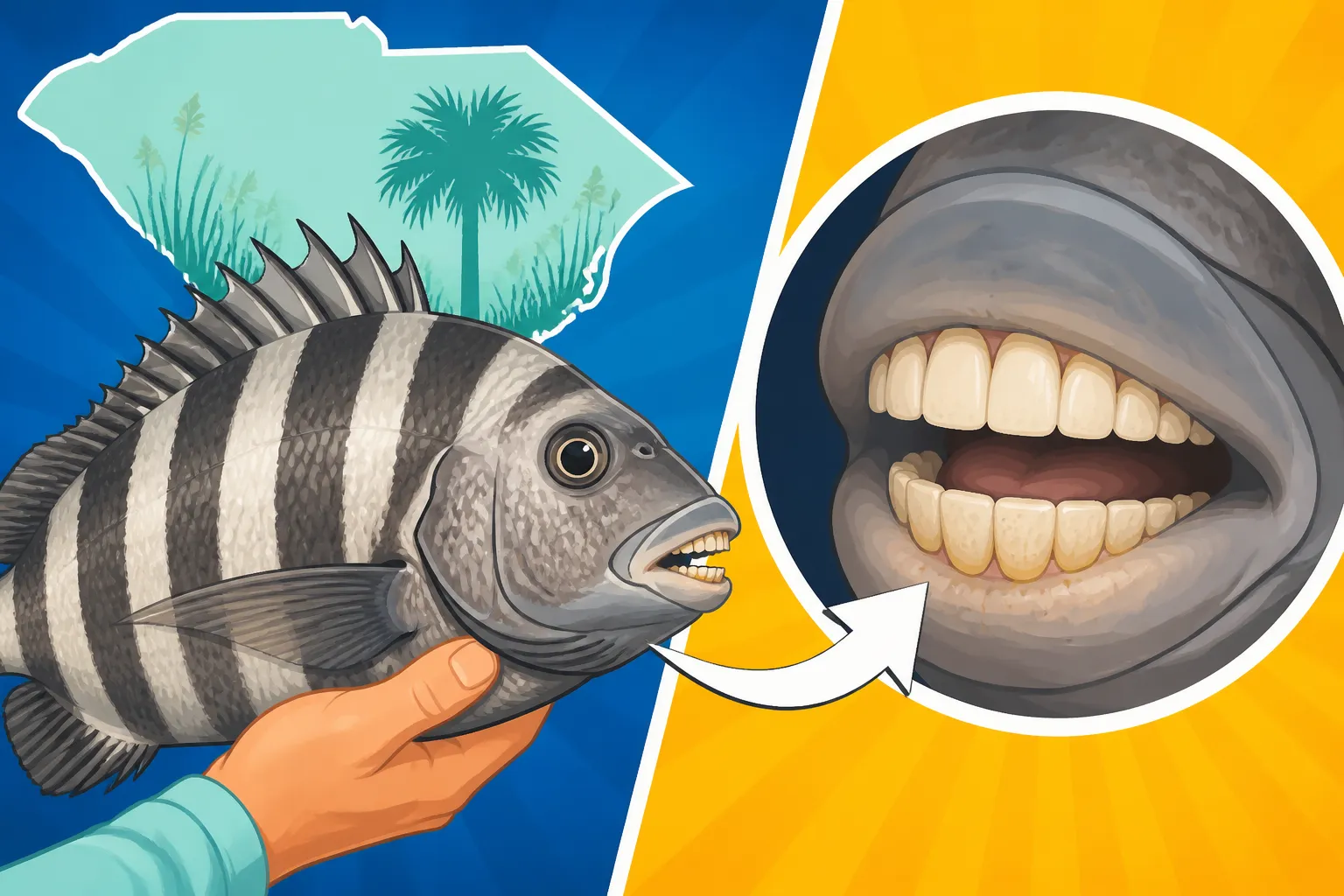
Ah, the sheepshead! Known affectionately as the "convict fish" due to its distinctive black and white stripes, this species also sports a grin that's unlike almost anything else you'll encounter in South Carolina's coastal waters. Their teeth are not just a quirky feature; they are perfectly evolved tools designed for a very specific diet, and understanding them is key to identifying these fascinating fish.
The Frontal Incisors: Nibblers and Nippers
Imagine a human mouth, and you picture those flat, broad teeth at the very front—our incisors, perfect for biting into an apple or tearing off a piece of food. Sheepshead have something remarkably similar. Right at the front of their jaws, both upper and lower, you'll find a row of these blunt, almost eerily human-like incisors. These aren't razor-sharp fangs like a barracuda or a bluefish; instead, they are designed for precision work.
These incisors are the sheepshead's primary tools for getting their meals off the rough surfaces where they live. Think about a barnacle clinging stubbornly to a pilings, or an oyster shell fused to a rock. A sheepshead will use these front teeth to nip, chisel, and pry these creatures directly off their substrate. They can even snip off crabs or small shrimp with surprising dexterity. When you get a close look, you'll see a clear resemblance to human front teeth, though perhaps a bit stouter and more densely packed. It's truly a sight to behold and one of the most immediate indicators you've got a sheepshead in hand. If you're using a fishing line with a circle hook, those incisors are often what's gnawing at your bait, making it tough to get a solid hook set.
Powerful Molars: The Crushing Powerhouse
While the incisors are for the initial attack, the real work of breaking down tough, calcified shells happens further back in the sheepshead's mouth. Just behind those human-like incisors, you'll discover a set of robust, rounded molars. And when I say molars, I mean serious crushing power. These aren't delicate teeth; they are built like small, strong grinders, perfectly adapted for pulverizing the hard shells of oysters, mussels, clams, and barnacles.
These molars line the jaws, increasing in size towards the back of the mouth, forming an incredibly efficient grinding mill. This specialized dentition allows sheepshead to exploit a food source that many other fish simply can't access, giving them a distinct advantage in their habitat. Picture them rooting around an oyster bed, using those incisors to pluck off an oyster, then shifting it back to the molars for a quick, decisive crunch. This explains why they are so adept at stealing bait that isn't perfectly presented or quickly devoured. They're not just swallowing; they're breaking down their food thoroughly before ingestion. This is a crucial detail for anyone trying to land one, as it influences everything from the type of bait you use to how you rig your hooks. Understanding this crushing power helps you appreciate why certain tough baits like fiddler crabs are so effective.
Hidden Pharyngeal Teeth: The Final Grind
Just when you thought the sheepshead's dental arsenal couldn't get any more impressive, there's another layer: pharyngeal teeth. These aren't visible when you simply look into the fish's mouth, as they are located deeper down, in the throat region. Think of them as a secondary set of grinders, ensuring that anything that makes it past the molars gets one final, thorough pulverization before heading to the stomach.
These pharyngeal teeth are typically plate-like and covered in small, cobblestone-like projections, creating another powerful crushing surface. This elaborate dental system underscores just how specialized sheepshead are for their diet of hard-shelled invertebrates. It’s a testament to nature's engineering, ensuring maximum nutrient extraction from every barnacle and oyster they consume. For the angler, this deeper set of teeth might not be directly relevant for identification, but it reinforces the species' predatory efficiency and why they are so well-adapted to habitats rich in shellfish. It also means that even small pieces of tough bait won't escape their internal grinding mechanisms. If you're trying to figure out "what that bite was," knowing about these hidden teeth can explain why your bait often comes back completely obliterated, even if you didn't feel a strong strike.
Why Understanding Sheepshead Teeth Matters for Anglers
Knowing about a sheepshead's unique teeth isn't just a cool trivia fact; it's absolutely vital for successful fishing. These dental adaptations directly influence the bait you choose, how you rig your lines, and even how you handle these fish once you've landed them. Trying to fish for sheepshead without understanding their specialized mouths is like trying to hammer a nail with a screwdriver – you might get lucky, but it's not the right tool for the job.
Mastering Bait Selection: Matching the Mouth
Given their dental setup, sheepshead aren't interested in a large, flashy lure that mimics a swimming fish. Their diet consists almost entirely of hard-shelled organisms, and your bait choice should reflect that. This is where the human-like incisors and powerful molars come into play. They need something they can nip off, crush, and grind.
Fiddler crabs are a classic sheepshead bait for a reason; their hard shells are exactly what a sheepshead is designed to eat. Oysters, mussels, clam pieces, or even shrimp (especially live shrimp with their own tougher exoskeletons) are also excellent choices. You want something relatively tough that won't just wash off the hook or get easily sucked up. Using softer baits like bloodworms or small pieces of cut fish might get you a nibble, but the sheepshead's incisors will often just strip them clean off your hook without you ever feeling a solid bite. This often leads to frustration, leaving anglers wondering why they keep getting "pecked" but never land a fish. Consider buying a variety of these baits from your local tackle shop or even online, for example, specialized soft plastics that mimic crabs can be found on Amazon.
Hooking Strategies: Getting Past the Grinders
Hooking a sheepshead can be incredibly frustrating if you don't adjust your technique to their mouth. Their incisors and molars are designed to crush, not to hold a hook. This means they can be experts at stealing bait right off the hook without getting impaled. It’s a common complaint among new sheepshead anglers: "They're eating my bait, but I can't hook 'em!"
To counteract their bait-stealing prowess, you need to use smaller, incredibly sharp hooks, often hidden entirely within the bait. A common strategy is to use a J-hook or small circle hook (sizes #1 to 1/0 are popular) with just the tip exposed or completely buried. When using a fiddler crab, for example, many experienced anglers will thread the hook through the crab's belly, ensuring the point is nestled within the tougher shell. This forces the sheepshead to commit more fully to the bait, giving the hook a chance to find purchase in the fleshy corners of their mouth, or more often, in the tough cartilage of their jaw, which is typically softer than their teeth. Timing your hookset is also crucial; often, a subtle tap-tap-tap means they're using their incisors, and you need to wait for a slightly more sustained pull before setting the hook firmly. This requires a delicate touch and a lot of patience. This approach is very different from Bass Fishing Techniques for Spring Pre-Spawn where a strong, immediate hookset is often key.
Safe Handling and Release: Protecting Your Fingers (and Their Fishy Grin)
So, you've battled a sheepshead, managed to get a good hookset, and now you're bringing it aboard. This is where understanding their teeth becomes paramount for your safety and the fish's well-being. Those human-like incisors are sharp enough to give you a nasty cut, and their powerful molars can deliver a surprising amount of pressure.
Never, ever try to lip a sheepshead like you might a largemouth bass. You’ll regret it almost instantly. Always use a pair of fish grippers or a net to secure the fish. When removing the hook, use long-nosed pliers or a dehooking tool. If you need to handle the fish by hand, grip it firmly behind the gill plates or by its sturdy body, keeping your fingers well clear of its mouth. Remember, a sheepshead's mouth is built for crunching. If you're planning on keeping your catch, knowing the South Carolina Redfish Slot Limit Rules or South Carolina Spotted Seatrout Minimum Size 14 Inches is important, but for sheepshead, the primary concern with handling is avoiding their bite. For catch and release, minimizing stress is key, and a swift, careful dehooking without getting your fingers chomped is the goal. A good pair of heavy-duty fishing gloves from Amazon can be a real lifesaver here.
Beyond the Bite: Other Key Sheepshead Identification Features
While their teeth are the most definitive way to identify a sheepshead, these fish have several other prominent features that make them recognizable. Knowing these characteristics will help you confirm your identification and distinguish them from similar species found in South Carolina's coastal and estuarine environments. It's like having multiple checkpoints to ensure you've got the right fish.
Distinctive Body Markings: The "Convict Fish" Stripes
The most immediate visual cue for a sheepshead, aside from its mouth, is its distinctive coloration and stripe pattern. These fish typically boast a silvery-gray body adorned with five to seven dark, vertical bands that run down their sides. These bands are usually quite prominent and contrast sharply with the lighter body color, giving them the "convict fish" nickname.
The stripes might fade slightly on larger, older fish or change in intensity depending on their environment and stress levels, but they are almost always present and visible. These markings serve as excellent camouflage among pilings, oyster reefs, and rocky structures where they primarily feed, helping them blend in with the shadows and broken light. If you're fishing in murky estuarine waters, these stripes can be a giveaway when you first see the fish surface or come into view. This patterning is quite different from other common catches, such as the South Carolina Redfish Slot Limit 18 to 25 Inches, which are known for their distinct tail spot.
Overall Body Shape and Dorsal Fin
Beyond the stripes, the sheepshead has a very characteristic body shape and fin structure. They are relatively deep-bodied and compressed laterally, meaning they are tall from back to belly but thin from side to side. This flat, oval-like profile allows them to navigate tight spaces around structures and makes them surprisingly agile in current.
Their dorsal fin is another key identifier. It's a single, continuous fin that runs along most of their back, starting with a series of very strong, sharp spines that transition into softer rays. The spiny part of the dorsal fin is quite formidable and can deliver a painful poke if you're not careful. This combination of a deep body, distinct stripes, and a prominent spiny dorsal fin forms a complete visual package that, once recognized, makes identifying a sheepshead much easier, even before you get a peek at its unique smile. Many anglers looking for South Carolina Inshore Fishing Charters Explained specifically target these fish, and knowing their general appearance helps guides point them out.
Habitat and Foraging Behavior Clues
Where you find a fish can often tell you a lot about what it is, and sheepshead are no exception. Their specialized teeth and body shape are perfectly suited for a very specific type of habitat and foraging behavior. They are predominantly bottom-dwellers, and they love structure. Think barnacle-encrusted pilings, bridge supports, oyster reefs, jetties, rocky outcrops, and even submerged wrecks.
If you're fishing near any of these structures in brackish or saltwater environments, especially in areas with moderate current, there's a good chance you're in sheepshead territory. Their feeding behavior also aligns with their dental tools: you’ll often see them nuzzling up against structures, actively scraping and picking off their food. This isn't a fish that chases down fast-moving prey in open water; it's a patient, methodical feeder that uses its unique mouth to pry and crunch. So, if you're pulling a fish off a bridge piling that feels like it’s been trying to chew through concrete, and it has those stripes, you can be pretty confident you’ve got a sheepshead. Their preference for these habitats also means they are often caught by anglers practicing Bank Fishing Techniques for Freshwater Anglers (though in their case, it would be saltwater banks or piers).
Common Lookalikes and How to Distinguish Them
In the rich coastal waters of South Carolina, it's easy to confuse certain fish species, especially if you're not intimately familiar with their specific traits. Sheepshead are distinctive, but they do share some similarities with other drum species that inhabit similar environments. Knowing the subtle differences can prevent misidentification and ensure you're following the correct regulations for your catch, such as South Carolina Redfish Daily Bag Limit Per Person.
Sheepshead vs. Black Drum: Spotting the Differences
One of the most common species mistaken for a sheepshead, especially by newer anglers, is the black drum. They share a similar deep-bodied profile and a preference for coastal, brackish waters, including oyster beds and inlets. However, there are several key differences, particularly in their mouths and overall appearance.
- Teeth: This is the most glaring difference. While sheepshead have those unmistakable human-like incisors and prominent molars, black drum have smaller, more pavement-like crushing plates in their mouths, and lack those distinct front teeth. They use these plates to crush mollusks, but their oral structure is far less "humanoid."
- Barrels: Black drum typically have several prominent barbels (whisker-like sensory organs) on their chin, which they use to forage for food on the bottom. Sheepshead do not have these barbels. This is a very easy visual distinction.
- Coloration: While black drum can range from silvery-gray to bronze or dark gray, they generally lack the pronounced, sharp vertical black bands of the sheepshead. Young black drum might have some faint vertical bars, but they are rarely as crisp or numerous as those on a sheepshead. Adult black drum are often a more uniform dark color, hence their name. Redfish vs Black Drum: How to Tell Them Apart provides further details on these distinctions.
Sheepshead vs. Red Drum: Shape and Spots
Another popular target in South Carolina waters, the red drum (often called spot-tail bass or redfish), sometimes gets confused with sheepshead due to overlapping habitats and general "bottom-feeding" reputation. However, visually, they are quite different.
- Body Shape: Red drum have a much more elongated, torpedo-like body shape compared to the sheepshead's deep, compressed profile. They are built for speed and power, while sheepshead are built for navigating tight spaces and crushing.
- Teeth: Red drum have small, conical teeth designed for gripping prey, not for crushing shells like a sheepshead. Their mouth is also positioned more forward, typical of a predatory fish that engulfs its food, rather than nipping and scraping.
- Coloration and Spots: The most famous feature of the red drum is its distinctive black spot (or spots) on its tail, just before the caudal fin. This spot is almost always present and is a definitive identifier. Their coloration is also typically a coppery red or bronze, ranging from darker shades in marshy areas to lighter tones in clearer waters. Sheepshead, as discussed, have vertical black and white stripes and no tail spot. You'll find a lot of information on Current Redfish Regulations for Coastal Waters due to their popularity, highlighting the need for accurate identification.
Here's a quick comparison table to help you keep them straight:
| Feature | Sheepshead | Black Drum | Red Drum (Redfish) |
|---|---|---|---|
| Front Teeth | Very prominent, human-like incisors | Pavement-like crushing plates, no incisors | Small, conical teeth for gripping |
| Molars | Strong, rounded, crushing molars | Pavement-like crushing plates, very robust | No true molars |
| Barbels (Chin Whiskers) | None | Present, usually multiple | None |
| Body Markings | 5-7 distinct vertical black/dark stripes | Uniform silvery-gray to dark bronze; young may have faint bars | Coppery-red; usually one or more distinct tail spots |
| Body Shape | Deep-bodied, laterally compressed | Deep-bodied, slightly less compressed than sheepshead | Elongated, torpedo-shaped |
| Dorsal Fin | Single, continuous, prominent spiny portion | Single, continuous, spiny portion less pronounced | Two separate dorsal fins (spiny and soft-rayed) |
| Primary Diet | Hard-shelled invertebrates (barnacles, oysters, crabs) | Mollusks, crustaceans, some small fish | Crabs, shrimp, baitfish |
By paying attention to these distinctions, especially the unique teeth and lack of barbels, you'll be well on your way to confidently identifying a sheepshead every time it bends your rod. Happy fishing, and watch those fingers!
Disclaimer
This article is for general informational purposes only and does not constitute professional advice. Laws, prices and regulations vary by location and change over time. Consult a qualified professional for guidance on your specific situation.