Bass Fishing Techniques for Spring Pre-Spawn
The chill of winter fades, and for many South Carolina anglers, a familiar itch begins. That desire to feel the strong pull of a largemouth bass, hungry and aggressive, as it prepares for its annual ritual. However, hitting the water during the spring pre-spawn period can be a real head-scratcher. The fish are moving, water temperatures are fluctuating, and what worked yesterday might not work today. This comprehensive guide is here to untangle the complexities of spring pre-spawn bass fishing in the Palmetto State, offering proven techniques to help you consistently connect with those trophy-sized fish.
Understanding the Pre-Spawn Period in South Carolina
Before we even cast a line, it's crucial to understand what "pre-spawn" really means for bass in our South Carolina lakes and rivers. This isn't just a brief moment; it's a dynamic transition that sets the stage for the entire spring fishing season.
What is Pre-Spawn and Why It Matters?
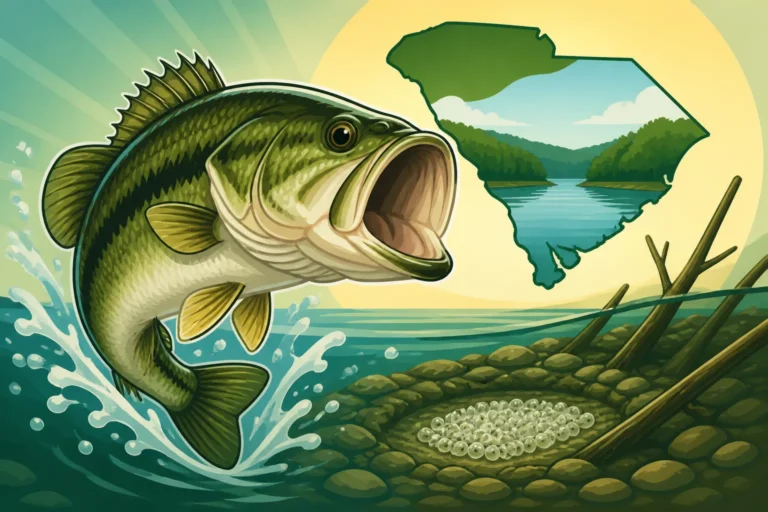
The pre-spawn period is that magical window when water temperatures begin to rise steadily from their winter lows, but haven't quite reached the critical point for bass to start bedding and laying eggs. Think of it as the bass's intensive pre-wedding feast. They've been relatively dormant and conserving energy during the colder months, and now, with rising temperatures signaling the approach of spawning, their metabolism kicks into high gear. This means one thing for us anglers: they're hungry. Really hungry.
During this time, bass are actively seeking out food sources to build up the fat reserves necessary for the strenuous act of spawning. Both males and females are gorging themselves, making them highly susceptible to well-presented baits. For the females, it's about developing those egg sacs, which can add significant weight. For males, it's about establishing territories and having the energy to guard the nest once the spawn begins. Missing this window means missing some of the most aggressive and productive fishing of the year.
South Carolina's Varied Pre-Spawn Timelines
South Carolina is a wonderfully diverse state, and its geography means that "spring" doesn't hit all at once. The pre-spawn period is highly dependent on water temperature, which, in turn, is influenced by latitude and specific body of water characteristics. You’ll find that the lower Coastal Plain, with its generally warmer climate, often sees bass entering pre-spawn weeks, if not a month, earlier than the cooler Upstate reservoirs nestled in the foothills of the Blue Ridge.
For instance, lakes closer to the coast, like Lake Marion and Lake Moultrie in the Santee Cooper Lakes system, might see pre-spawn activity starting as early as late February or early March, especially after a mild winter. Venture further north and west to lakes like Lake Hartwell or Lake Jocassee, and you might not see significant pre-spawn movement until late March or even early April. River systems, like the Edisto River, also have their own unique timelines, often influenced more by local rainfall and river flow than large reservoir thermal mass. Always check local reports and water temperatures for your specific target. Understanding the nuances of South Carolina's Freshwater Fishing Calendar is key to timing your trips right.
Key Environmental Cues
While a calendar date can give you a rough idea, bass don't follow our Gregorian calendar. They respond to specific environmental cues. The most critical factor is water temperature. Bass typically begin their serious pre-spawn migration and feeding frenzy when water temperatures consistently climb into the mid-50s Fahrenheit, often peaking in the low to mid-60s before the full spawn kicks in.
Beyond temperature, increasing daylight hours, known as photoperiod, plays a significant role. As days get longer, it signals to the fish that spring is truly on its way. Moon phases can also influence activity. Many seasoned anglers believe that major and minor feeding periods, especially around the full and new moons, can trigger more intense pre-spawn feeding binges. A string of warm, sunny days following a cold snap can rapidly warm shallow coves and trigger a surge of bass activity, pushing them towards those staging areas where they'll eventually spawn.
Essential Gear and Tackle for Pre-Spawn Bass
Having the right tools for the job can make all the difference, especially during the dynamic pre-spawn period. You need versatility to adapt to changing conditions and the power to handle larger, more aggressive fish.
Rod and Reel Setups for Versatility
The pre-spawn angler often faces a dilemma: do you throw big, aggressive reaction baits or subtle, slower presentations? The answer is often "both," sometimes even on the same trip. This means having a selection of rod and reel setups is incredibly beneficial.
For casting larger crankbaits, spinnerbaits, and swim jigs, a medium-heavy power baitcasting rod, typically 6'10" to 7'4" in length with a fast action, is ideal. This combination offers the backbone to cast heavy lures and drive hooks into a big bass's mouth, while the fast action provides the sensitivity for detecting subtle bites and accuracy for precise casts. A high-speed baitcasting reel (7.1:1 or higher gear ratio) is excellent for quickly taking up slack and battling fish away from cover. On the other hand, for more finesse presentations like a shaky head, a Neko rig, or lighter jerkbaits, a medium power, fast action spinning rod (6'8" to 7'2") paired with a 2500 or 3000 series spinning reel offers superior sensitivity and casting control for lighter lines and baits. Many anglers find quality rods and reels on Amazon, making it easy to build a versatile arsenal.
Line Choices for Different Presentations
The right fishing line is your direct connection to the fish, and choosing it wisely is paramount. Each type of line has its strengths and weaknesses, making specific applications more effective.
- Fluorocarbon: This is often the go-to for many pre-spawn techniques due to its low visibility, excellent sensitivity, and moderate stretch. Its abrasion resistance is also a huge plus when fishing around submerged timber or rocky bottom. Use 10-17 lb fluorocarbon for crankbaits, jigs, and Texas rigs where sensitivity to bottom contact is crucial. The low stretch helps you feel even the lightest bite in deeper water.
- Braided Line: When fishing heavy cover, like thick brush piles or matted vegetation, braided line shines. Its incredible strength-to-diameter ratio, zero stretch, and superior abrasion resistance make it perfect for punching through cover or yanking big fish out of dense structure. However, its high visibility can be a deterrent in clear water, so many anglers opt for a fluorocarbon leader (2-4 feet) tied to their braided main line using a strong knot like the FG knot or Alberto knot. For spinnerbaits in thick weeds or even pitching jigs, 30-50 lb braid can be a game-changer.
- Monofilament: While perhaps less popular than it once was for general bass fishing, monofilament still has its place. Its stretch can be advantageous for certain topwater baits or reaction baits, as it can prevent hooks from tearing out of a bass's mouth during aggressive strikes. It's also more forgiving when a bass makes a sudden run. For example, some anglers prefer 12-17 lb mono for shallow-diving crankbaits or even spinnerbaits where a little extra stretch is desired.
Terminal Tackle Essentials
Don't overlook the small but mighty components of your tackle box. Hooks, weights, and swivels are just as important as your lures.
- Hooks: Always use sharp, strong hooks. For Texas rigs and Carolina rigs, wide gap or extra wide gap (EWG) hooks from brands like Gamakatsu or Owner are excellent for ensuring good hooksets on soft plastics. Jig heads come in various styles: football jigs for rocky bottoms, round ball heads for shaky heads, and stand-up heads for finesse worms. Circle hooks are fantastic if you plan on catch and release, as they often hook fish in the corner of the mouth, causing less damage.
- Weights: You'll need an assortment of weights. Tungsten weights are highly favored over lead due to their smaller profile, increased sensitivity (you can feel bottom changes much better), and environmental friendliness. Have a range from 1/8 oz for finesse applications up to 1/2 oz or 3/4 oz for punching through cover or fishing deeper water. Bullet weights for Texas rigs, drop shot weights, and even egg sinkers for Carolina rigs are all valuable to have on hand.
- Swivels: While not always necessary, quality barrel or ball bearing swivels can prevent line twist, especially when using lures that spin or for the leader connection on a Carolina rig. Consider investing in some quality offerings available on Amazon to ensure your line performs optimally.
Top Lures and Presentations for Spring Pre-Spawn Bass
This is where the rubber meets the road! Pre-spawn bass are aggressive, but they can also be finicky. Matching your lure choice and presentation to their mood and the conditions is crucial.
Crankbaits and Jerkbaits for Aggressive Bites
When bass are actively feeding and feeling aggressive, reaction baits are incredibly effective. Their erratic action and ability to cover water quickly make them ideal for finding those schooling pre-spawn bass.
- Crankbaits: Lipless crankbaits, like a SPRO ArukuShad or a Strike King Red Eye Shad, are fantastic when bass are cruising submerged grass or vast flats. Their high vibration and fast retrieve can trigger brutal strikes. Colors like chrome/blue, chartreuse/blue, or crawfish patterns are perennial favorites. Shallow-diving squarebill crankbaits, such as a KVD 1.5, are perfect for bouncing off stumps and laydowns in 2-5 feet of water, often deflecting off cover to trigger a strike. Medium-diving crankbaits that reach 6-12 feet are excellent for targeting channel swings and secondary points. Experiment with retrieve speeds and pauses.
- Jerkbaits: Suspending jerkbaits, like a Lucky Craft Pointer or a Megabass Vision 110, are lethal during pre-spawn, especially when water temperatures are still in the mid-50s. The key is the "pause." Cast the jerkbait out, reel it down to its running depth, and then give it a series of sharp jerks followed by a long pause – sometimes 5-10 seconds or even longer. That suspending action, mimicking a stunned baitfish, is often irresistible to pre-spawn bass. Colors resembling local baitfish, like shad or herring patterns, are usually best.
Jigs and Soft Plastics for Slow, Methodical Approaches
Sometimes, bass won't chase a fast-moving bait, especially after a cold front or if they're holding tight to cover. This is when jigs and soft plastics shine, allowing for slower, more methodical presentations.
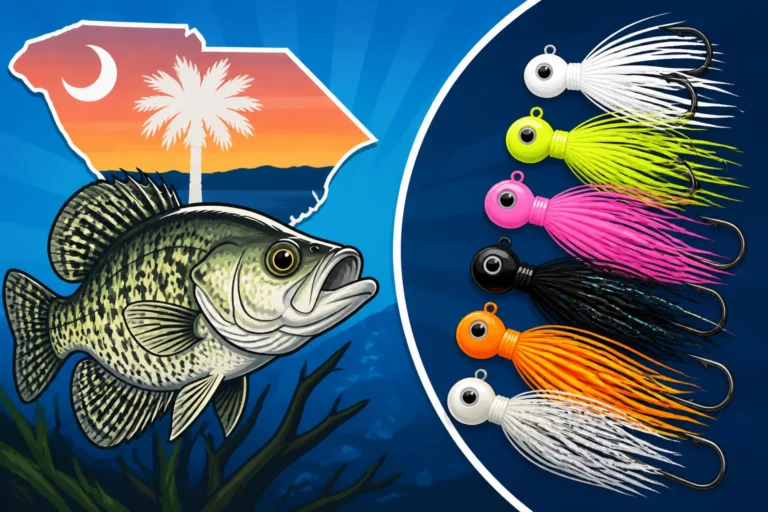
- Football Jigs: These jigs are designed for dragging along rocky or hard bottoms, making them perfect for targeting transition areas like points and humps where pre-spawn bass stage. The football head shape helps the jig "walk" over rocks without snagging, and the skirt pulsates tantalizingly. Pair them with crawfish-imitation trailers in colors like green pumpkin, brown, or black and blue. A steady drag with occasional hops can be incredibly effective. Learning how to properly How to Fish a Jig for Largemouth Bass is a fundamental skill for pre-spawn success.
- Swim Jigs: Unlike football jigs, swim jigs are designed to be retrieved. Think of them as a bulkier, weedless spinnerbait. With a compact profile and a paddle-tail or craw trailer, they excel when fished through sparse grass, around docks, or over submerged timber. Black and blue, white, or green pumpkin are popular choices. Experiment with trailer types and sizes to match local forage.
- Texas Rigs and Carolina Rigs: These are bread-and-butter setups for soft plastics. A Texas rig, featuring a bullet weight pegged or unpegged above an EWG hook, is fantastic for pitching worms, creature baits, or craws into heavy cover. It's weedless and can penetrate brush with ease. For a more subtle, slower presentation, the Carolina rig uses a heavier weight (often 1/2 oz to 1 oz) above a swivel, followed by a long leader (2-5 feet) and a soft plastic bait. This rig keeps the bait suspended off the bottom, allowing it to waft enticingly. It’s excellent for covering deeper flats and points. You can learn the finer points of How to Rig a Texas-Rig Worm for Bass to ensure your presentation is flawless.
- Shaky Heads: When bass are pressured or finicky, a shaky head jig paired with a finesse worm can often tempt bites when nothing else will. The lightweight jig head allows the worm to stand vertically on the bottom, mimicking a feeding or injured baitfish. Work it slowly, shaking the rod tip to impart action, especially around rocky banks, docks, or sparse cover.
Spinnerbaits and Chatterbaits for Reaction Strikes
These lures create significant flash and vibration, making them excellent for covering water and eliciting reaction strikes from bass that might not be actively chasing.
- Spinnerbaits: A classic for a reason, spinnerbaits are incredibly versatile. They can be slow-rolled along the bottom, burned just under the surface, or bumped off cover. For pre-spawn, opt for tandem Colorado/Willowleaf blade combinations for more flash and vibration, especially in stained water. White, chartreuse, or combinations with blue are popular. Focus on retrieve speed and depth, trying to tick the tops of submerged cover or grass beds.
- Chatterbaits (Bladed Jigs): These lures have exploded in popularity, and for good reason. The bladed jig vibrates wildly, creating an aggressive thump that bass feel from a distance. They combine the flash of a spinnerbait with the erratic action of a crankbait. Pair them with a swim jig trailer, and retrieve them with a steady reel, occasionally twitching or pausing. They are phenomenal around grass lines, docks, and rocky banks. Green pumpkin, white, or black and blue are consistent producers.
Locating Pre-Spawn Bass in South Carolina Lakes
Finding the fish is often the hardest part, but during pre-spawn, bass follow predictable patterns as they transition from their winter haunts to their spawning grounds. Understanding these movements is critical for consistent success in South Carolina's diverse bodies of water, from the massive Santee Cooper Lakes: South Carolina's Legendary Bass Fishery to the more compact Lake Wateree.
Following the Migration Routes
Bass don't just magically appear in spawning coves; they migrate along established routes, using deeper water as a highway to reach shallower areas. Your job is to intercept them along these paths.
- Channel Swings: These are key transition areas. Bass will often move from deeper main lake channels into the shallower bends or swings of creek channels. Look for these where the main channel comes close to a point or a flat.
- Points: Main lake points, especially those with deeper water access on one side and a gradual slope on the other, are prime staging areas. Bass will hold on these points, waiting for optimal conditions before moving further into the coves. Secondary points, located inside major creeks or bays, are even more important as they are the last staging areas before the bass move onto the spawning flats.
- Humps and Ridges: Submerged humps and ridges, particularly those with hard bottom compositions, act as resting and feeding areas for bass on their journey. These offshore structures can hold large schools of pre-spawn bass, especially on lakes like Murray. For insights specific to Pre-Spawn Bass Techniques for South Carolina's Lake Murray, look for how to target these features.
Targeting Transitional Cover
As bass move into shallower water, they will utilize various types of cover for ambush points and security. Focusing on these specific cover types can significantly increase your chances.
- Brush Piles and Submerged Timber: These are classic bass magnets year-round, but especially during pre-spawn. Bass will stage in and around brush piles near channels or on points, using them as cover to ambush baitfish. Whether it's a natural laydown tree or a man-made fish attractor, these spots are gold.
- Rock Piles and Riprap: Rocky areas, including riprap banks along causeways or bridges, absorb and retain heat, making them warmer than surrounding waters. This attracts baitfish and, in turn, pre-spawn bass. Dragging jigs or crankbaits along these rocky edges can be incredibly productive.
- Docks and Pilings: Man-made structures like docks offer shade, cover, and often deeper water access. Bass will suspend under or near dock pilings, especially those in the mouth of coves or near channel swings. Pitching jigs or soft plastics under these structures requires precision but can pay off big.
Understanding Depth and Structure
Electronics are your best friend during pre-spawn. They can reveal hidden treasures beneath the surface and help you understand how bass are relating to structure.
- Electronics Usage: Modern fish finders with side imaging, down imaging, and 2D sonar can pinpoint brush piles, rock formations, and even individual fish. Spend time idling over likely areas, scanning for baitfish schools and larger arcs (bass) holding nearby.
- Contour Lines: Study your lake maps (electronic or paper) to identify contour lines. Areas where contour lines are tightly packed indicate steep drops, while spread-out lines show gradual slopes or flats. Look for bass staging on the first significant drop-off or breakline outside of a spawning cove.
- Thermocline Absence: During pre-spawn, the water column is usually uniform in temperature (no thermocline yet). This means bass can be found at a wider range of depths. However, they will still gravitate towards the warmest water available, often in the upper layers or shallower coves, especially after a few sunny days. Pay attention to how the bass are relating to depth – sometimes they'll be suspended, other times glued to the bottom.
Adapting to Weather and Water Conditions
South Carolina spring weather can be notoriously fickle. One day it's warm and sunny, the next a cold front rolls through, dropping temperatures. Successful pre-spawn fishing isn't just about knowing the "hot" lures; it's about being able to adapt to these ever-changing conditions.
Cold Fronts and Their Impact
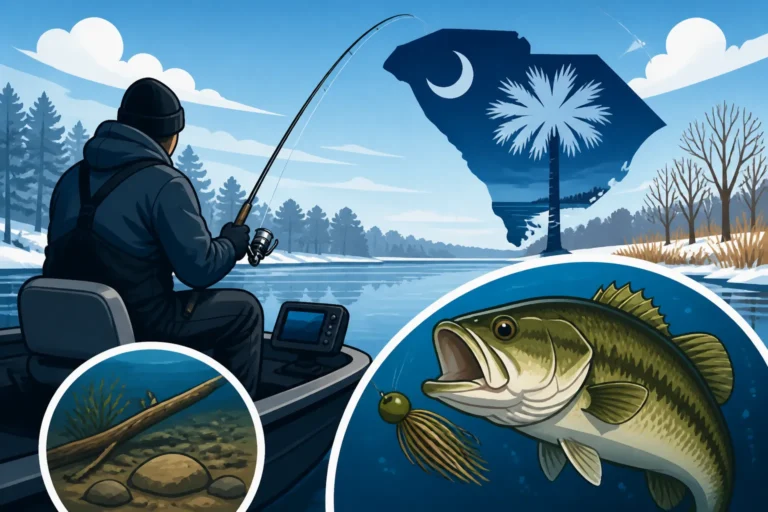
A cold front moving through during pre-spawn is often the bane of an angler's existence. The immediate drop in air temperature, often accompanied by clear, blue skies and high pressure, can shut down an aggressive bite instantly.
- Slow Down Presentations: When a cold front hits, bass often become lethargic and move deeper. Fast-moving reaction baits become less effective. This is the time to slow everything down. Think jigs, shaky heads, or Texas-rigged worms worked painstakingly slowly along the bottom. Let your bait soak for longer.
- Darker Colors and Deeper Water: Bass can become more wary in post-front conditions, and darker, more subtle colors like black and blue, green pumpkin, or plum can be more effective than bright, flashy options. Concentrate your efforts on deeper structure adjacent to the areas where you found active fish before the front. They might retreat to the security of deeper water but will still be close to their staging areas. Sometimes, even targeting areas on the bottom of a channel swing can yield results.
- Target the Sunny Side: Even with a cold front, bass will seek out any advantage. The north-facing banks (which receive direct sun exposure) of coves or main lake shorelines will warm up faster throughout the day. A few degrees difference can be enough to draw some bass into these areas.
Rising vs. Falling Water Levels
Water level fluctuations, common in South Carolina's reservoirs due to rainfall or power generation, significantly affect bass behavior during pre-spawn.
- Rising Water: A steady rise in water level can be a blessing. It floods new cover – bushes, grass, even laydowns – providing bass with fresh ambush points and spawning grounds. Bass will often follow the rising water into these newly inundated areas, especially if the water is slightly warmer. Target the very edges of the new water line with spinnerbaits, squarebill crankbaits, or even pitching jigs into newly flooded bushes. This can be particularly good for finding Best Largemouth Bass Spots on Lake Murray, South Carolina in newly flooded timber.
- Falling Water: A rapid drop in water level, however, can be challenging. Bass will often pull back from the shallows, sometimes retreating to the nearest deep cover or channel. They can become disoriented and less aggressive. Focus on the last available cover that was in the water, or the first significant drop-off outside of where the water was. Finesse techniques become more important here, as bass might be holding tight and require a subtle presentation to bite.
Water Clarity and Color Choices
The clarity of the water drastically influences lure choice and color selection.
- Clear Water Finesse: In exceptionally clear water, common in Upstate lakes like Keowee or Jocassee, bass rely heavily on sight. This calls for more natural, subtle lure colors (shad patterns, natural green pumpkins, translucent worms) and finesse techniques. Fluorocarbon line is almost a must. Long casts, lighter lines, and smaller baits are often key. A weightless Senko or a small shaky head can be incredibly effective here.
- Stained to Muddy Water: In stained or muddy water, often found in the lower Santee Cooper lakes or after heavy rains on Lake Hartwell Fishing Spots on the South Carolina-Georgia Border, bass rely more on vibration and profile. This is where loud, thumping crankbaits, spinnerbaits with large thumping blades, and chatterbaits shine. Bold, contrasting colors like black and blue, chartreuse, or bright reds and oranges become more visible and create a stronger silhouette. Don't be afraid to go with a larger profile bait in these conditions, as it can help bass locate your lure.
| Lure Type | Best Water Temp Range (F) | Ideal Water Clarity | Primary Target Areas | Retrieval Style |
|---|---|---|---|---|
| Suspending Jerkbait | 50-60 | Clear to Stained | Points, Channel Swings, Open Water Bait Schools | Jerk-Jerk-Pause (long pauses vital) |
| Lipless Crankbait | 55-65 | Stained to Muddy | Grass Flats, Main Lake Points, Hard Bottom | Steady Burn, Rip-Pause, Yo-Yo |
| Football Jig | 50-62 | Clear to Stained | Rocky Points, Humps, Deep Structure | Slow Drag, Hop, Crawl |
| Swim Jig | 58-68 | Stained to Clear | Grass Edges, Docks, Submerged Timber | Steady Retrieve, Occasional Twitch |
| Spinnerbait | 52-65 | Stained to Muddy | Sparse Cover, Channel Swings, Grass Lines | Slow Roll, Medium Retrieve, Bump-and-Go |
| Chatterbait | 55-68 | Stained to Clear | Grass, Docks, Wood, Rocky Banks | Steady Retrieve, Stop-and-Go, Occasional Rip |
| Texas Rig (Worm) | 55-68 | Any | Heavy Cover, Brush Piles, Docks, Laydowns | Pitch-Flip-Drag, Slow Lift-and-Drop |
| Shaky Head | 50-65 | Clear to Stained | Rocky Banks, Docks, Open Bottom | Subtle Shake, Slow Drag, Minimal Movement |
Ethical Angling and Conservation During Pre-Spawn
As passionate anglers, we have a responsibility to protect the resources that bring us so much joy. The pre-spawn period is particularly sensitive because bass are concentrating and preparing to reproduce. Practicing ethical angling and conservation is not just good manners; it's essential for ensuring healthy bass populations for future generations of South Carolina anglers.
Minimizing Stress on Spawning Fish
The stress of being caught can take a toll on any fish, but it's especially critical to minimize that stress during pre-spawn. Female bass are heavy with eggs, and excessive handling or fighting can negatively impact their spawning success.
- Gentle Handling: When you land a bass, handle it as little as possible. If you can, use a net to safely bring the fish into the boat. Always support the fish horizontally, especially larger females. Avoid weighing fish by the jaw alone, as this can cause internal damage. A fish gripper can be useful if used carefully to support the fish's weight.
- Quick Release: The longer a fish is out of the water, the more stressed it becomes. Have your camera ready, snap a quick photo if you wish, and get the fish back into the water promptly. Revive the fish if necessary by holding it gently in the water, allowing water to pass over its gills until it's strong enough to swim away on its own.
- Avoiding Bedding Areas if Visible: While pre-spawn bass are staging and not yet on beds, sometimes the lines blur. If you happen to encounter bass that are clearly on visible beds (which can happen late in the pre-spawn phase), consider leaving them alone. While not illegal to target them, continuously catching and releasing fish off beds can disrupt the spawning process and lead to nest abandonment. Let those fish do their job.
Understanding South Carolina's Regulations
It's your responsibility to know the rules. South Carolina has specific regulations regarding South Carolina Fishing Bag Limits Explained and size limits for largemouth bass, which are in place to protect the fishery. These regulations can vary by lake and river, so always check the latest South Carolina Department of Natural Resources (SCDNR) guide before you head out.
- Size Limits: Some lakes have a minimum size limit, meaning any bass caught below that length must be immediately released. Other lakes might have slot limits, where fish within a certain size range must be released, but fish above or below that slot can be kept.
- Bag Limits: This refers to the maximum number of fish you can keep per day. Adhering to bag limits ensures that enough fish remain in the population to reproduce and sustain the fishery.
- Special Regulations: Certain bodies of water or specific periods might have unique regulations. For example, some areas might have artificial-lures-only rules or special restrictions on live bait. Always confirm the rules for your specific fishing location. Not knowing the rules is no excuse, and penalties for violations, such as those described in Penalties for Fishing Without a License in South Carolina, can be steep.
Practicing Catch and Release
While some anglers choose to harvest bass for the table (and there's nothing wrong with that within regulations), practicing catch and release is a hallmark of conservation-minded anglers, especially for larger, trophy-sized bass that are often the most prolific spawners.
- Proper Tools: Have needle-nose pliers or a dehooking tool readily available to quickly remove hooks. Barbless hooks can also make removal much easier and cause less damage to the fish.
- Reduce Fight Time: When you hook a fish, try to land it as efficiently as possible without horsing it in. A prolonged fight can exhaust a fish, making it harder for it to recover upon release. This is where a properly matched rod and reel setup (like those medium-heavy baitcasters) can help you land fish quickly and safely.
- Consider the Conditions: If the water is very warm, or the fish has been fought for an extended period, take extra care in reviving it. If a fish is bleeding heavily, it's generally best to keep it if it meets regulations, rather than releasing it only for it to die. However, with proper technique and sharp hooks, deep hooking is rare.
By being mindful of these practices, you contribute directly to the health and vitality of South Carolina's incredible bass fishery, ensuring that the thrill of the spring pre-spawn bite can be enjoyed for generations to come.
Disclaimer
Fishing involves inherent risks, including injury and drowning. Always prioritize safety, wear appropriate personal flotation devices, and be aware of your surroundings. Fishing regulations in South Carolina can change, so always consult the latest official guidelines from the South Carolina Department of Natural Resources (SCDNR) before engaging in any fishing activity. This guide is for informational purposes only and should not replace professional advice or official regulations.