Best Streams for Brook Trout in the Blue Ridge Mountains
For many anglers, the thought of chasing native brook trout conjures images of distant mountain ranges and epic journeys. But right here in South Carolina, nestled within our own Blue Ridge Mountains, lies a hidden gem: pristine streams teeming with these beautiful, wild fish. If you've been dreaming of a quiet day wading through clear, cold water, far from the crowds, this guide is for you, offering a deep dive into finding and appreciating the Palmetto State's very own brook trout sanctuaries.
Understanding South Carolina's Native Brook Trout Fishery
There's something truly magical about the native brook trout, or "speckled trout" as they're often called locally. These aren't your typical hatchery-raised fish; they are descendants of generations that have thrived in these specific cold, clean mountain waters, adapting perfectly to their environment. For an angler, catching one is a privilege, a connection to a wild past, and a testament to the health of our headwater streams. It’s an experience that goes beyond just fishing; it’s about immersion in nature.
Why South Carolina's Brook Trout Are Special
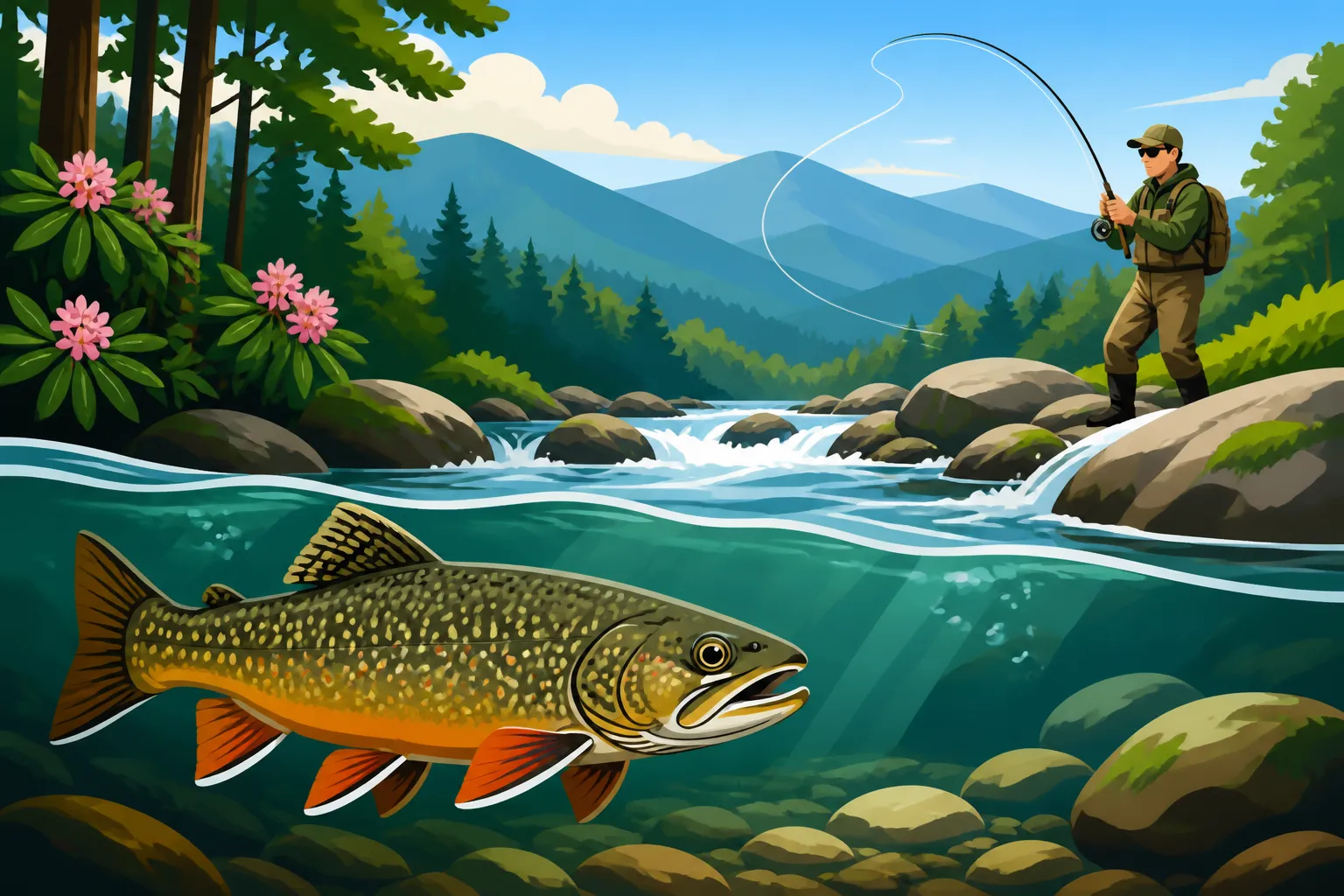
South Carolina boasts one of the southernmost native brook trout populations in the world, a unique ecological distinction we should all cherish. These fish are relatively small compared to their northern cousins, but what they lack in size, they make up for in vibrant coloration and tenacious spirit. Their flanks are often adorned with intricate patterns of red and yellow spots, sometimes ringed with blue, set against a dark, mottled background. They are truly living jewels of our mountain streams. Catching one is less about the fight of a larger fish and more about the delicate art of presentation and the sheer beauty of the creature itself. For a detailed look into their unique biology, you might enjoy reading South Carolina's Native Brook Trout: A Blue Ridge Mountain Original.
The existence of these fish serves as a critical indicator of water quality. Brook trout demand exceptionally cold, clean, and oxygen-rich water to survive and reproduce. Their presence signifies a healthy, undisturbed stream ecosystem, free from significant pollution or thermal changes. As such, fishing for them often means venturing into some of the most pristine and beautiful wilderness areas the state has to offer, away from developed areas and often requiring a good hike. It's a journey into solitude and natural splendor, making the reward of a wild brook trout even sweeter.
The Delicate Ecosystem of Mountain Trout Streams
The streams where brook trout thrive are intricate, fragile ecosystems. They are typically headwater streams, meaning they originate high in the mountains, fed by springs and runoff, which keeps their temperatures consistently low. The surrounding forest canopy is crucial, providing shade that prevents water from warming too much, and contributing leaves and insects that form the base of the food chain. Large woody debris like fallen trees also plays a vital role, creating deep pools, current breaks, and hiding spots where trout can escape predators and strong currents.
These streams are often characterized by a series of riffles, runs, and pools, each offering different conditions for trout and their prey. The gravel bottoms are essential for spawning, while undercut banks and boulders provide crucial cover. Any disturbance to this delicate balance – whether it's sedimentation from erosion, pollution, or rising water temperatures – can have devastating effects on the brook trout population. When you step into these waters, you become part of this system, and it's imperative to tread lightly and understand your impact.
Key Factors for Finding Brook Trout
Finding native brook trout isn't about casting into the biggest, widest part of a river. It's about precision and understanding their preferred habitat. They are primarily ambush predators, always looking for cover and a break in the current where they can dart out to snatch an insect or small baitfish. Look for them in places that offer protection and food opportunities.
Here are some prime locations to target:
- Behind Boulders and Fallen Logs: These structures create current seams and eddies where trout can rest without expending too much energy, while still having food drift by.
- Undercut Banks: These provide excellent overhead cover and deep water, making trout feel secure. Fish your offerings close to and under these banks.
- Deep Pools: Especially those at the base of small waterfalls or rapids, these pools collect food and offer cooler water during warmer periods.
- Pocket Water: This refers to small, turbulent areas between rocks, where little pockets of calmer water form. Brook trout often hold in these tiny sanctuaries.
- Shady Areas: The cooler, darker sections of the stream, particularly those shaded by rhododendrons or hemlocks, are always good bets.
Understanding these preferences will dramatically increase your chances of success. It's often more about reading the water and making a delicate, accurate cast than brute force.
Top Blue Ridge Mountain Streams for Brook Trout in South Carolina
While South Carolina's mountain region might be smaller than some of its neighbors, it holds a surprising number of excellent native brook trout streams, particularly in the extreme northwestern corner of the state. These are generally within the Sumter National Forest, where the land is managed to protect these vital watersheds. You'll often find these spots require a bit of a hike, but the solitude and wild beauty are well worth the effort.
Chattooga River (Upper Sections)
The Chattooga River, famous for its wild and scenic designation, forms part of the border between South Carolina and Georgia, but its upper headwaters on the South Carolina side hold some fantastic brook trout opportunities. These are usually small, steep, and heavily canopied streams that feed into the main river. The upper sections, before the river widens significantly, maintain the cold, clear conditions brook trout need.
Access can be challenging, often involving hiking through dense forest, but that's part of the appeal for those seeking true wilderness fishing. You'll likely encounter a mix of native brook trout and perhaps some wild rainbow trout, but the smaller, higher tributaries are where the brookies truly dominate. Patience and a willingness to explore off the beaten path will be your greatest assets here. Remember, these areas are remote, so proper preparation is key.
East Fork Chattooga River
A significant tributary of the Chattooga, the East Fork is another excellent choice for brook trout anglers. Like its parent river, the headwaters of the East Fork offer pristine conditions. The stream flows through sections of the Sumter National Forest, providing ample public access, though getting to the prime brook trout water often means a hike away from main roads or popular access points.
The East Fork is characterized by its clear, swift-moving water, with numerous small plunges, riffles, and rocky pools. Anglers who venture here will appreciate the wild setting and the challenge of fishing these tight, technical waters. You'll want to focus on the feeder creeks and higher elevations of the East Fork drainage for the highest concentration of brook trout. This is a place where small, accurate casts and a stealthy approach truly pay off, as the fish can be skittish.
Chauga River (Upper Reaches)
The Chauga River system, also originating in the Blue Ridge Mountains of Oconee County, is another fantastic option for native brook trout. Similar to the Chattooga, it's the upper reaches and its feeder streams that hold the healthiest populations of brookies. The Chauga is known for its rugged terrain and beautiful waterfalls, making the journey to fish it an adventure in itself.
Fishing the Chauga's upper sections requires navigating dense rhododendron thickets and slippery rocks, so good wading boots and a sturdy hiking stick are highly recommended. These streams are wild and untamed, offering a genuine backcountry fishing experience. The reward for your effort will be the chance to catch one of South Carolina's purest native fish in an incredibly scenic environment. It's a strenuous but deeply rewarding experience, ideal for the angler seeking solitude and a challenge.
Other Notable, Smaller Tributaries
Beyond these main river systems, there are numerous smaller, unnamed, or less-traveled tributaries and feeder creeks scattered throughout the Sumter National Forest in Oconee and Pickens counties that hold healthy brook trout populations. These are often steeper, even more overgrown, and require significant bushwhacking to access. They are the true gems for the adventurous angler who values solitude above all else.
These tiny streams might only be a few feet wide in places, but they are often teeming with small, eager brook trout. Researching topographical maps, looking for areas with high elevation and dense forest cover, can help you discover these hidden pockets. Sometimes, the best brook trout stream is the one you find yourself, away from any established trail. Just be sure to always check with the local South Carolina Department of Natural Resources (SCDNR) office or Sumter National Forest authorities for current access rules and any special regulations that might apply to these sensitive areas. You'll want to review South Carolina's Freshwater Fishing Regulations before heading out.
Essential Gear and Techniques for South Carolina Brook Trout
Catching native brook trout in these small, tight mountain streams isn't like fishing for bass in a large reservoir. It demands a specialized approach, often with lighter gear and a greater emphasis on stealth and presentation. You're not looking for brute strength in your tackle, but rather finesse and accuracy to deliver tiny offerings into very specific, often challenging, spots.
Lightweight Rods and Reels for Tight Spaces
For these smaller streams, heavy gear will only hinder you. The ideal setup is a lightweight fly rod, typically in the 2-weight to 4-weight range, and often on the shorter side, around 6 to 7.5 feet. This shorter length makes casting in brushy, overgrown conditions far more manageable. A lightweight reel to match, filled with a floating fly line, completes the fly fishing setup. For those who prefer spinning gear, an ultralight spinning rod, around 5 to 6 feet long, paired with a small reel spooled with light line (2-4 lb test monofilament or fluorocarbon) is perfect. The key is minimal splash and maximum accuracy.
When choosing a rod, consider its action. A medium-fast action rod will give you the flexibility needed for delicate presentations with small flies or lures, while still having enough backbone to handle a feisty brook trout. Remember, these fish aren't huge, but they fight hard for their size! You can find a great selection of ultralight rods and reels, suitable for this type of fishing, on sites like Amazon. Don't forget a small pair of nippers and forceps, which are invaluable for handling tiny flies and releasing fish carefully.
Fly Fishing vs. Spin Fishing: Which to Choose
Both fly fishing and spin fishing can be incredibly effective for brook trout, and your choice often comes down to personal preference and the specific conditions of the stream.
-
Fly Fishing: Many purists consider fly fishing the quintessential method for brook trout. Dry flies, emergers, and small nymphs are often irresistible to these fish. Casting a fly accurately in tight quarters, often with a roll cast or bow-and-arrow cast, is a skill that takes practice but is immensely rewarding. Small, high-floating dry flies like Parachute Adams, Elk Hair Caddis, or a Royal Wulff work wonders when fish are rising. When they're not looking up, drifting a small pheasant tail nymph or a caddis larva imitation through deeper pockets can be deadly. If you're new to fly fishing, our guide on Fly Fishing Basics for Stocked Trout offers a great starting point, with principles easily adaptable to native brook trout.
-
Spin Fishing: For anglers who prefer spinning gear, small inline spinners (like Panther Martin or Mepps), tiny spoons, or micro-jigs can be very effective. Lure colors that mimic natural prey, such as black, brown, or olive, often work best. The key is to use lures that are small enough to match the natural food sources and light enough to cast accurately without spooking the fish. Work your lures slowly through the pools and runs, paying attention to any subtle taps. For spinner enthusiasts, Spinner Techniques for Stocked Trout Streams provides insights into effective presentations that can also apply to these wild fish. The ultralight approach allows for a gentle presentation that doesn't send the brook trout fleeing for cover.
Stealth and Approach: Becoming a Shadow on the Stream
Brook trout in these small streams are incredibly wary. They live in clear water and are acutely aware of their surroundings. A heavy footstep on the bank, a sudden movement, or even your shadow falling across the water can send them scattering. Therefore, stealth is paramount. Think of yourself as a hunter, observing your prey before making your move.
Approach the stream slowly and cautiously, staying low and using bankside vegetation for cover. Wear drab, natural colors that blend with the environment, not bright, contrasting clothing. When wading, move deliberately and quietly to avoid disturbing the streambed. Often, it's best to fish upstream, as trout naturally face into the current, making it harder for them to see you approaching from behind. Cast from a kneeling or crouching position whenever possible, minimizing your profile. Making accurate, delicate casts on your first attempt is crucial, as often that first perfect drift is your best chance at catching an unspooked fish.
Conservation and Best Practices for Preserving the Fishery
Fishing for native brook trout is more than just catching fish; it's about connecting with a rare and precious natural resource. Because these populations are so delicate, practicing responsible angling is not just a suggestion – it's an imperative. Our actions on the stream today directly impact the health of these fisheries for years to come. We all share a responsibility to protect these wild fish and their pristine habitats.
Catch and Release: Protecting Future Generations
The vast majority of native brook trout fishing in South Carolina should be done on a catch-and-release basis. These fish grow slowly, and their populations can be easily depleted. While it might be tempting to keep a few for a meal, the true joy comes from the experience and the knowledge that you've contributed to the fishery's sustainability. Releasing a healthy fish ensures it can spawn and contribute to future generations of brook trout. Some streams have specific regulations for catch and release, and you'll want to check Which South Carolina Streams Are Catch-and-Release Only for Trout? before you go.
When practicing catch and release, handle the fish as little as possible. Wet your hands before touching the fish to protect its delicate slime coat, which acts as a barrier against disease. Use barbless hooks, or pinch down the barbs on your hooks, as this makes removal much easier and reduces stress and injury to the fish. If a fish is deeply hooked, it's often best to cut the line as close to the hook as possible rather than trying to rip the hook out. Revive the fish gently in the water, facing it into the current until it swims away under its own power. A good pair of long-nosed forceps or a hemostat, easily found on Amazon, is invaluable for hook removal.
Respecting Private Property and Public Access
While many of the best brook trout streams flow through public lands like the Sumter National Forest, it's crucial to be aware of property boundaries. Some sections of streams may cross private land, and fishing there without permission is trespassing and can lead to the loss of access for everyone. Always research your access points and be respectful of "No Trespassing" signs. A good topographical map or a GPS app on your phone can help you determine public vs. private land.
When parking, ensure you're not blocking gates, driveways, or roads. Leave no trace of your visit, and carry out everything you carry in, including all trash and fishing line. Public access to these precious natural resources is a privilege, not a right, and maintaining positive relationships with landowners and local communities is essential for preserving our ability to enjoy these wild places. Always remember that you are a guest in these delicate ecosystems.
Minimizing Your Impact on the Stream Environment
Beyond catch and release, there are many ways to minimize your overall impact on the stream environment. When wading, avoid shuffling your feet excessively, as this can disturb the streambed and dislodge aquatic insects, which are vital food for trout. Try to avoid walking directly on gravel beds during spawning season (typically fall to early winter for brook trout), as these areas often contain hidden eggs.
Pack out all your trash, including any discarded fishing line or bait containers. Fishing line, in particular, can be deadly to wildlife. Consider using biodegradable lures or natural baits where allowed. Avoid trampling vegetation along the banks, as this can lead to erosion and sediment entering the stream, which is harmful to trout. Every small action contributes to the overall health and longevity of these precious brook trout habitats.
Planning Your South Carolina Brook Trout Adventure
A successful brook trout outing involves more than just showing up at the stream with a rod. It requires careful planning, understanding the regulations, and preparing for the unique challenges of mountain fishing. These trips are often about the journey as much as the destination, providing a real escape into the tranquility of nature.
Best Times of Year for Brook Trout Fishing
Generally, the spring and fall offer the most productive and pleasant conditions for brook trout fishing in South Carolina.
- Spring (March-May): As snow melts and rain swells the streams, water levels can be high, but trout become very active, feeding heavily after the leaner winter months. Insect hatches are common, offering exciting dry fly opportunities. The weather is generally mild, and the forest is bursting with new life. However, be mindful of higher water levels and potentially stronger currents. For more specific seasonal insights, check out Best Time of Year to Fish for Brook Trout in South Carolina's Mountains.
- Summer (June-August): Summer can be challenging due to higher water temperatures, which stress brook trout. Focus on the very early mornings, late evenings, or after a good rain shower that cools the water. Stick to the highest elevation headwater streams where water temperatures remain colder. This is a time when the fish might be more sluggish and less willing to chase, so delicate presentations are even more crucial.
- Fall (September-November): Many consider fall to be the prime time for brook trout. The weather is crisp, the leaves are changing, and the trout are often vibrant with spawning colors. They feed aggressively in preparation for winter. Water levels are usually stable, and insect activity can still be good. This is a visually stunning time to be in the mountains and on the water.
- Winter (December-February): Winter fishing can be tough due to cold temperatures and potentially frozen stream sections. However, on milder days, if you can find open water, brook trout can still be caught, often holding in deeper pools. Patience and slow presentations are key.
Navigating Regulations and Licensing
Before you even tie on your first fly or lure, you absolutely need to understand South Carolina's fishing regulations and ensure you have the correct license. All anglers 16 years of age and older need a valid South Carolina fishing license. For freshwater fishing in the mountains, you'll need a freshwater license. There are annual, 14-day, and 3-year options available, and costs vary for residents and non-residents. You can learn all about it in our South Carolina Fishing License Guide or by visiting the SCDNR website.
Beyond the general license, pay close attention to specific trout regulations for the streams you plan to fish. This includes bag limits (how many fish you can keep), size limits (minimum or maximum lengths), and tackle restrictions (e.g., artificial lures only, single barbless hooks only). Many of the native brook trout streams are managed under special regulations, often promoting catch and release. Always review the current regulations pamphlet, often available online or at sporting goods stores. Consulting resources like Checking a Stream's Trout Limit Before You Fish It is also highly recommended.
| License Type | Resident Status | Typical Duration | Water Type | Key Consideration |
|---|---|---|---|---|
| Freshwater | Resident | Annual/14-Day/3-Year | Rivers, Lakes, Streams | Required for Brook Trout in Blue Ridge Mountains. Ensure to check for any specific trout stamps or endorsements needed. |
| Freshwater | Nonresident | Annual/14-Day/3-Year | Rivers, Lakes, Streams | Higher cost for nonresidents. Essential for visitors to the Blue Ridge Mountain region. |
| Senior Lifetime | Resident (age 64+) | Lifetime | All SC Waters | Excellent value for qualifying seniors, often covers both hunting and fishing. |
| Disability/Veteran | Resident (qualifying) | Annual/Lifetime | All SC Waters | Special rates or exemptions may apply; check SCDNR criteria. |
Always verify current prices and specific requirements on the official SCDNR website.
Safety First: Preparing for Mountain Stream Conditions
Fishing in the Blue Ridge Mountains, especially in remote areas, comes with inherent risks. Proper preparation is crucial for a safe and enjoyable trip.
- Weather: Mountain weather can change rapidly. Always check the forecast before you go and pack layers, including rain gear, even if the day starts clear.
- Footwear: Sturdy wading boots with good grip are essential for navigating slippery rocks and uneven terrain. Felt soles or rubber soles with studs provide the best traction. Consider a wading staff for added stability.
- Navigation: Carry a map and compass, or a reliable GPS device/app, even if you think you know the area. Cell service can be spotty or nonexistent in remote mountain valleys. Let someone know your itinerary and when you expect to return.
- Wildlife: Be aware of local wildlife, including snakes, bears, and other critters. Carry bear spray if appropriate for the area, and know how to use it. Make noise while hiking to avoid surprising animals.
- Water Safety: Be mindful of water levels and currents, especially after heavy rains. Never attempt to cross a stream if the current is too strong or the water is too deep.
- Essentials: Always carry plenty of water, high-energy snacks, a first-aid kit, a headlamp or flashlight, and a small knife. An emergency whistle can also be a lifesaver.
By taking these precautions, you can focus on the unparalleled beauty of South Carolina's mountain streams and the thrill of pursuing its native brook trout. It's an adventure waiting to happen, but one that demands respect for both the environment and your own safety.
Disclaimer
This article is for general informational purposes only and does not constitute professional advice. Laws, prices and regulations vary by location and change over time. Consult a qualified professional for guidance on your specific situation.