Largemouth Bass Spawning Season Explained
For any angler who loves chasing that thrill of a big bite, understanding the largemouth bass spawning season in South Carolina isn't just a niche detail – it's the difference between a memorable day on the water and a frustrating, empty stringer. Many of us have experienced those perplexing days when the bass seem to have vanished, only to realize later we were fishing right in the middle of their most critical annual ritual. This guide will walk you through everything you need to know about when, where, and why largemouth bass spawn in our beautiful Palmetto State, helping you adapt your strategies for better success.
Understanding the Largemouth Bass Spawning Cycle in South Carolina
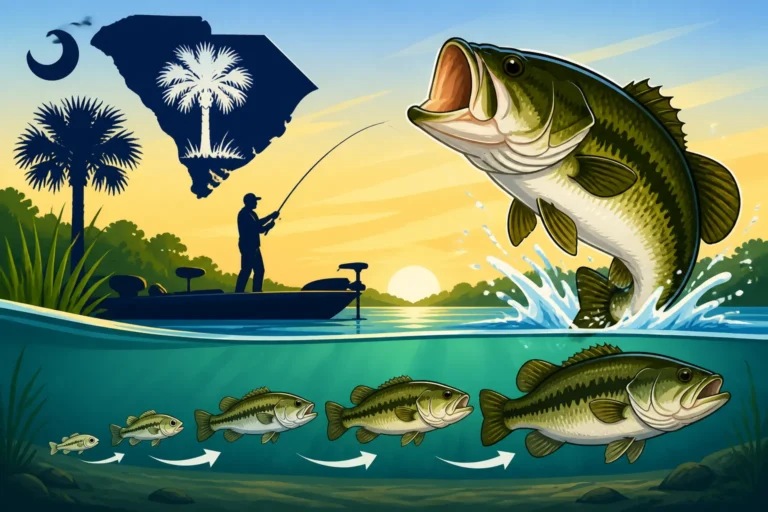
The spawning cycle of largemouth bass is one of nature's most fascinating processes, deeply tied to the rhythms of spring. It's not a single event, but a series of behaviors triggered by environmental cues, primarily water temperature and day length. For us anglers, knowing these stages is like having a secret weapon, helping us predict where the fish will be and what they'll be doing.
When Does the Spawn Typically Begin and End?
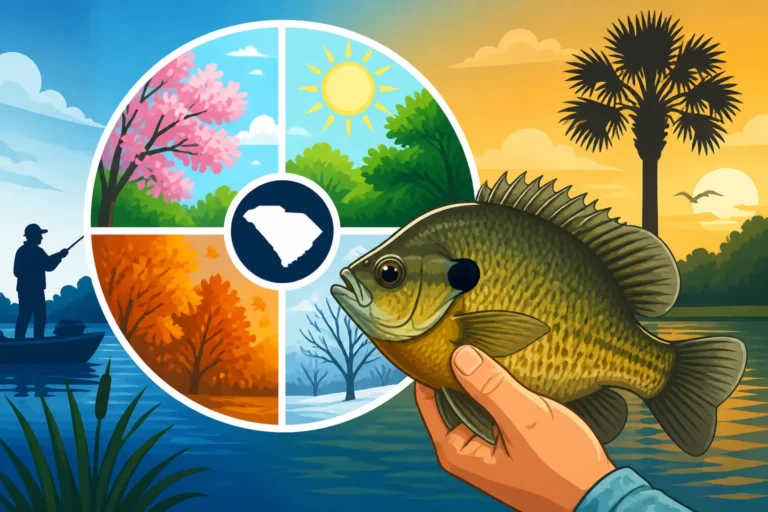
In South Carolina, the largemouth bass spawn is typically a spring affair, usually kicking off sometime in March and extending well into May, sometimes even early June in the cooler, more northern parts of the state or in deeper lakes. It's a gradual process, not like a light switch, and it really hinges on the water temperature. Once those lake temperatures start to consistently hold in the mid-50s Fahrenheit, the bass begin to get "itchy" and start moving toward shallower water.
The sweet spot, the time when most of the actual spawning activity occurs, is usually when the water hits between 60 to 70 degrees Fahrenheit. If you're on Lake Murray or the Santee Cooper lakes, you might see this happening a bit earlier than up in the foothills on a lake like Keowee, simply because the water warms up faster in the flatter, more southern regions. It's a beautiful thing to witness if you're quiet and observant, seeing those big females moving onto beds. But just as quickly as it begins, it also tapers off. Once the temperatures push consistently into the low 70s and beyond, the main spawning push is typically over, and the fish transition into their post-spawn patterns, which can be just as challenging to figure out. Understanding Largemouth Bass Spawning Season Explained is crucial for planning your trips.
The Different Phases: Pre-Spawn, Spawn, and Post-Spawn
Thinking of the spawn as three distinct phases—pre-spawn, spawn, and post-spawn—can really help you strategize your fishing. Each phase brings its own set of challenges and opportunities for anglers.
The pre-spawn is arguably one of the most exciting times to fish for largemouth bass in South Carolina. This is when the water is warming up, typically from the mid-50s into the low 60s. The bass, especially the big females, are gorging themselves, trying to pack on as much weight and energy as possible before the rigors of spawning. They're often found moving from deeper winter haunts towards shallower staging areas, like points, humps, and secondary creeks mouths, close to where they'll eventually build their nests. They're aggressive, hungry, and often willing to chase down a variety of baits.
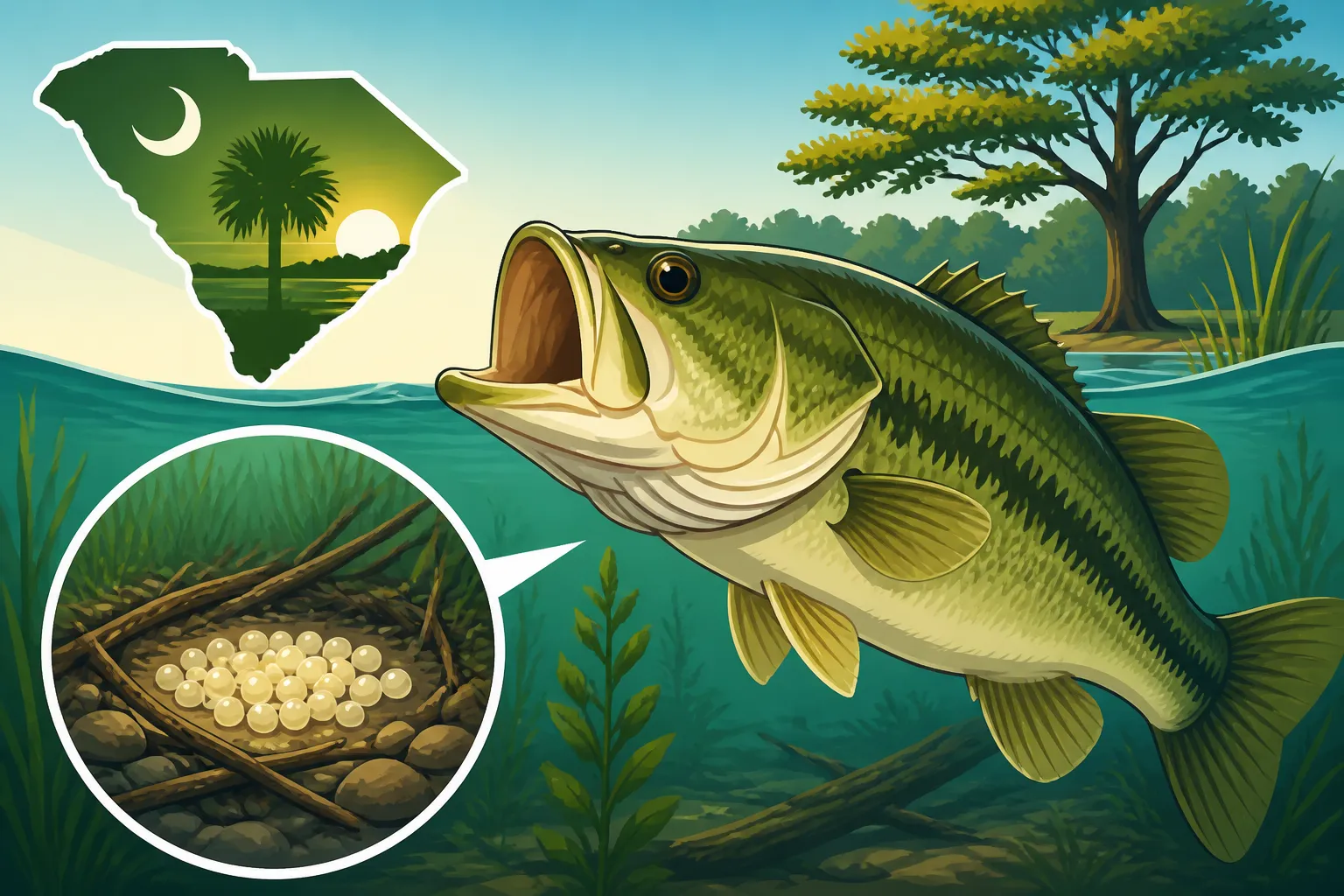
Then comes the spawn itself, that magical window when the water temperature settles into the 60-70 degree range. The males move into the shallows first, clearing out circular "beds" or nests, often in protected coves, on sandy or gravelly bottoms, or around submerged cover. The females then join them, lay their eggs, and are often quickly gone, leaving the males to guard the eggs and fry. During this phase, bass can be incredibly territorial and protective, but also highly focused on their duties, making them a bit trickier to tempt with traditional baits. Many anglers avoid actively fishing bedding bass, choosing instead to let them do their thing undisturbed, preserving the future generations of fish.
Finally, we have the post-spawn, which can be a notoriously tough time for anglers. After the energy expenditure of spawning, the bass, particularly the females, are often tired, thin, and need a period of recovery. They'll retreat to slightly deeper water, often holding around offshore structure, brush piles, or submerged hydrilla beds, where they can recuperate and regain their strength. They're not as actively feeding, and their bites can be subtle. The males, having guarded the fry for a bit, will also eventually move off the beds. Finding these fish requires patience and a good understanding of deeper water tactics. It’s a completely different game from the aggressive pre-spawn bite.
Key Environmental Factors Influencing the Spawn
While we've touched on water temperature, there are several other environmental factors that play a significant role in dictating when and how the largemouth bass spawn unfolds in South Carolina. These elements can cause variations from year to year and even from one lake to another.
The Critical Role of Water Temperature
Water temperature is, without a doubt, the single most critical factor for triggering the largemouth bass spawn. It’s like the master switch. As soon as the water consistently warms up to that crucial 60-70 degree Fahrenheit range, bass instinctually know it's time. Think of a prolonged cold snap in early spring; it can easily delay the spawn for weeks. Conversely, an unseasonably warm spell might bring it on earlier than expected.
Anglers often monitor water temperature with sophisticated fish finders or even simple hand-held thermometers. Knowing the exact temperature of the water you're fishing can tell you if you're in the pre-spawn staging areas, directly on the beds, or if the fish are already transitioning into post-spawn recovery. For example, if you're fishing in a shallow cove that's soaking up the sun and the temperature reads 68 degrees, you can be fairly certain there's some spawning activity going on nearby. If the main lake is still 55 degrees, you might be catching active, pre-spawn bass out on main lake points. It's a dynamic puzzle that changes with every warming ray of sunshine or cooling rain shower. Water Temperature Affects Morning Bite Timing is a key component here.
Impact of Water Levels, Clarity, and Weather
Beyond temperature, water levels, clarity, and weather patterns can significantly impact the bass spawn. A stable water level is ideal for bass. If the lake level drops drastically during the spawn, it can expose nests, causing eggs to dry out, or force fish to abandon their beds and seek new, deeper areas, disrupting the entire process. High water, on the other hand, can flood new areas, creating additional spawning habitat but also dispersing the fish over a wider area, making them harder to locate.
Water clarity is another big one. Bass are visual creatures, and they prefer to build their nests in areas where they can see predators approaching to protect their eggs and fry. Generally, clearer water is preferred for spawning, which is why you'll often find them in shallower, less turbid areas. If a heavy rain event muddies up a spawning flat, the fish might temporarily suspend spawning activities or move to clearer water until conditions improve.
Finally, weather patterns can make or break a spawning period. Stable, warm weather with consistent sunshine is what bass dream of for spawning. A sudden cold front, however, can send water temperatures plummeting, often causing bedding bass to pull off their nests and suspend in slightly deeper water. They might return once the weather stabilizes, but these fronts can interrupt the spawn, making fishing tough for a few days. High winds can also stir up shallow water, reducing clarity and making it difficult for bass to protect their nests. Keeping an eye on the forecast is almost as important as having the right bait in your tackle box.
Here's a quick look at the typical conditions associated with each spawning phase:
| Spawning Phase | Water Temperature (Fahrenheit) | Bass Behavior | Ideal Conditions |
|---|---|---|---|
| Pre-Spawn | 55-62 | Aggressively feeding, staging near shallows | Stable warm weather, rising water |
| Spawn (Peak) | 62-70 | On beds, territorial, guarding eggs | Stable warm weather, clear water |
| Post-Spawn | 70+ | Recuperating, scattered, less active feeding | Warming water, sometimes deeper cover |
How the Spawning Season Affects Bass Behavior and Fishing Success
Knowing when the bass spawn is only half the battle; understanding how their behavior changes during each phase is what truly unlocks consistent fishing success. You can't just throw the same lure in the same spot all spring and expect to do well.
Targeting Pre-Spawn Bass: Where to Find Them and What They're Eating
The pre-spawn period is often characterized by big, aggressive bass, making it a favorite time for many anglers to chase trophy fish. These fish are moving from their deeper wintering holes towards the shallower areas where they'll eventually spawn. They're essentially bulking up for the big event, so they're often found gorging on baitfish and crayfish.
To target pre-spawn bass, focus on transition areas. Look for points, humps, creek channel swings, and secondary points leading into spawning coves. These are like major highways where bass travel and stop to feed. Lipless crankbaits, jerkbaits, and spinnerbaits are fantastic choices because they allow you to cover water quickly and appeal to the bass's aggressive feeding instincts. A classic Carolina rig or a football jig can also be deadly when fished slowly along structure where bass might be staging. Think about areas where they can easily move between deeper water and shallower feeding grounds. These fish are hungry and often willing to chase down a meal. You might even find success with a Texas-rigged worm, slowly worked through brush. Learning Pre-Spawn Bass Techniques for South Carolina's Lake Murray will give you an edge.
Fishing During the Peak Spawn: A Delicate Approach
Fishing during the peak spawn requires a completely different mindset. While you can catch bass on their beds, many anglers choose not to, as it can disrupt the spawning process and potentially harm future generations of fish. If you do decide to fish this period, understand that these bass are not actively feeding out of hunger; they are reacting to intruders in their spawning territory.
Bedding bass are highly territorial. They will strike at anything that they perceive as a threat to their nest or eggs. Sight fishing can be incredibly effective here, if allowed and you have the patience for it. Look for those tell-tale circular clearings in the shallow bottoms of protected coves, often around docks, cypress trees, or stumps. Small, subtle baits like wacky-rigged worms, creature baits, or jigs pitched directly into the nest area can provoke a strike. The key is often to aggravate the bass into biting, rather than tempting them with a meal. You might need to cast multiple times, let the bait sit, and give it subtle twitches until the bass becomes agitated enough to grab it and move it away. Remember, during this sensitive time, it's often better to just observe and appreciate nature's cycle.
Post-Spawn Strategies: Finding Recuperating Bass
The post-spawn can be a real head-scratcher for many anglers. The females, especially, are exhausted and thin, having expended immense energy laying eggs. They need to recuperate, and often move to slightly deeper, cooler water, but not too far from the shallows. Males, after guarding the fry for a period, will also eventually disperse.
Finding post-spawn bass often means looking for them on the first available cover or structure adjacent to their spawning areas. Think about deep weed lines, brush piles, submerged timber, or secondary points that drop off into deeper water. They might not be actively chasing fast-moving baits. Slower, more subtle presentations are often the ticket. Topwater baits can sometimes trigger a reaction strike, especially during low light conditions, but often a shaky head, a drop shot, or a slow-rolled jig will be more effective. Soft plastics fished slowly and thoroughly are excellent for picking apart cover where these recovering bass might be hiding. They're still hungry, but they're not going to expend a lot of energy for a meal. You have to put it right in front of them. Understanding Post-Spawn Bass Patterns on South Carolina's Santee Cooper can significantly boost your success.
Local Variations and Checking Specific Lake Conditions
It's tempting to think of the "South Carolina bass spawn" as one uniform event, but our state is incredibly diverse, and local conditions can cause significant variations. What's happening on Lake Hartwell might be completely different from what's occurring on Lake Marion, even on the same weekend.
Why Spawning Dates Can Differ Across South Carolina Lakes
Several factors contribute to these localized differences in largemouth bass spawning dates. The sheer geographical spread of South Carolina means that lakes in the Lowcountry (like the Santee Cooper system) often warm up much earlier than those in the Upstate (like Lake Jocassee or Lake Keowee). These mountain lakes, with their deeper, clearer, and often spring-fed waters, simply take longer to reach those critical spawning temperatures.
The size and depth of a lake also play a role. Larger, shallower lakes will typically warm faster than smaller, deeper reservoirs. Furthermore, factors like the amount of current, inflow from rivers, and even the type of bottom composition can influence how quickly a specific area of a lake warms up. For example, a muddy flat in a protected cove will heat up much faster than a deep, rocky main lake point exposed to wind and current. This means that even within the same lake, bass in different coves or sections might be in different stages of the spawn. Always consider the specific body of water you're fishing and its unique characteristics.
Resources for Real-Time Spawning Information
Given these variations, relying solely on a generic "South Carolina spawn calendar" isn't the best strategy. To truly dial in your fishing, you need to seek out more localized and up-to-date information. While I can't give you live data, I can tell you about the types of resources experienced anglers use.
One of the best ways to get real-time insights is to connect with local fishing communities. Visit local tackle shops; the folks behind the counter often have their fingers on the pulse of what's happening on nearby lakes. They hear reports daily and can offer invaluable advice on water temperatures, where fish are being caught, and what stage the spawn is in. Online fishing forums and social media groups dedicated to South Carolina fishing can also be great resources, where anglers share their experiences and observations. Just remember that fishing reports can vary, and what works for one angler might not work for another. The best resource is always your own observation once you get on the water. A good quality fish finder can tell you the exact water temperature, and seeing bass on beds with your own eyes is the ultimate confirmation. Consider investing in good fishing guidebooks available on Amazon that cover South Carolina's specific lakes and species. They often have historical data and insights that can guide you season after season.
Disclaimer
This article is for general informational purposes only and does not constitute professional advice. Laws, prices and regulations vary by location and change over time. Consult a qualified professional for guidance on your specific situation.