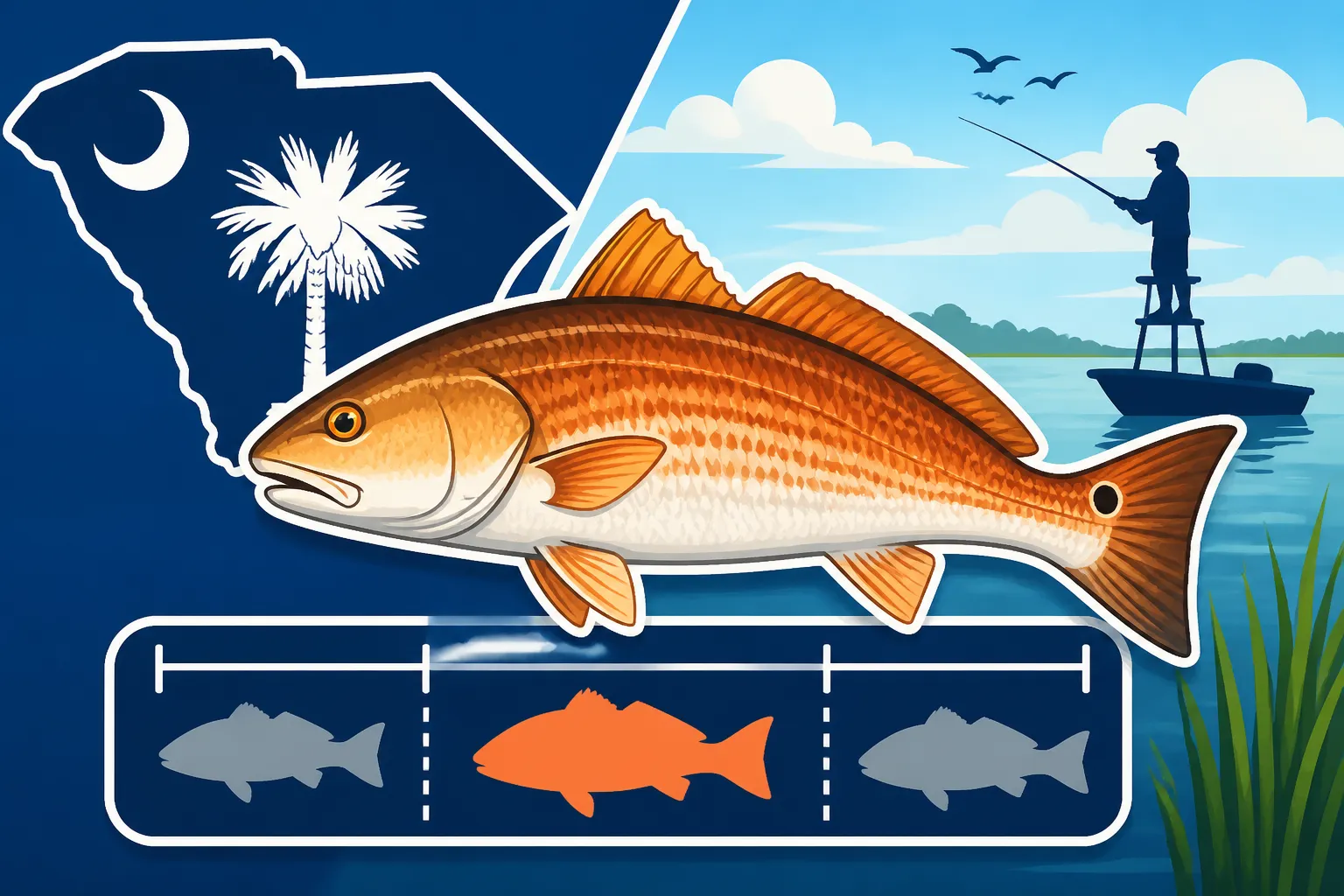
South Carolina Redfish Slot Limit Rules
There's nothing quite like the thrill of feeling that unmistakable tug on your line, the head shake, and the powerful run of a redfish in South Carolina's coastal waters. But as exhilarating as it is, many anglers, myself included, often find themselves scratching their heads when it comes to understanding the ever-important redfish slot limit rules. It's a common frustration to catch a beautiful fish only to realize you're not entirely sure if it's a keeper. This guide is here to clear up all that confusion, offering a comprehensive look at South Carolina's redfish regulations to ensure your next trip is both successful and fully compliant.
Understanding the Basics of Redfish Slot Limits
Let's start with the fundamental concept behind these rules. Fishing regulations, especially for popular species like redfish, aren't just arbitrary numbers thrown out by a government agency. They're carefully crafted guidelines designed to protect our fisheries and ensure there are plenty of fish for everyone, for generations to come. For redfish, specifically, South Carolina employs a "slot limit" system, which is a bit different from a simple minimum or maximum size.
Defining "Slot Limit" in Fishing
A slot limit in fishing means you can only keep fish that fall within a specific size range – not too small, and not too big. Think of it like a "goldilocks zone" for fish. For redfish in South Carolina, this means any fish that is too small must be released, and any fish that is too large must also be released. The idea here is pretty ingenious, really. By protecting the smaller, immature fish, you give them a chance to grow and reproduce. And by protecting the larger, more mature fish (often referred to as "bull reds"), you safeguard the crucial breeding stock that contributes most significantly to the next generation of redfish. It's a delicate balance, but one that has proven effective in maintaining healthy populations.
The Difference Between Size Limits and Slot Limits
You might be familiar with basic size limits, which are common for many species. A minimum size limit, for example, means you can't keep any fish shorter than a certain length. This protects juveniles and allows them to mature. A maximum size limit, on the other hand, means you can't keep any fish longer than a certain length, typically to protect the largest, most prolific breeders. A slot limit combines these two concepts, setting both a minimum and a maximum.
Imagine a species with only a minimum size limit of 15 inches. Anglers would naturally keep all fish over 15 inches, potentially depleting the larger, older fish that are the best breeders. Conversely, a maximum size limit might protect those big breeders but allow too many smaller, still-developing fish to be harvested. The beauty of the slot limit for a species like redfish is its dual protection. It allows for harvest of a healthy, growing segment of the population while giving the youngest and oldest fish a pass, making sure they can continue their vital roles in the ecosystem. This nuanced approach helps keep the redfish population robust, which is something every angler can appreciate when they're out on the water.
Why Redfish Slot Limits Exist
The rationale behind these regulations is deeply rooted in conservation and sustainable management. It's not about making fishing harder; it's about ensuring that South Carolina's reputation as a fantastic fishing destination holds true for years to come. The species we love to target, like redfish, need careful stewardship to thrive under increasing fishing pressure and environmental changes.
Protecting Breeding Stock
One of the primary reasons for the redfish slot limit is to protect the species' breeding stock. Those massive "bull reds" that are often found in deeper waters or congregating in estuaries are typically the most prolific spawners. These large, mature fish produce a significantly higher number of eggs than younger, smaller fish. Removing too many of these crucial breeders can severely impact the reproductive potential of the entire population. By ensuring that these larger fish are released, the slot limit helps maintain a healthy genetic diversity and a strong breeding pool, which is absolutely essential for the long-term health of the redfish fishery. It's a way of thinking about the future, not just the immediate catch.
Ensuring Sustainable Fishing for Future Generations
Beyond the immediate breeding stock, slot limits are a cornerstone of ensuring sustainable fishing practices. As more people discover the joy of saltwater angling in places like Murrells Inlet or Charleston Harbor, the pressure on fish populations naturally increases. Without thoughtful regulations, we could easily see a decline in redfish numbers, making it harder for future generations to experience the same incredible fishing opportunities we enjoy today. The slot limit creates a harvest window that targets fish that are past their initial growth phase but haven't yet reached their prime breeding years. This allows anglers to enjoy catching and keeping fish while minimizing the impact on the overall population's ability to replenish itself. It's about finding that sweet spot where recreational angling can coexist with ecological responsibility. This proactive approach helps protect the very resource that brings so much enjoyment to so many. For those who want to learn more about the broader rules, checking out our guide on South Carolina's Saltwater Fishing Rules in South Carolina can provide additional context.
Managing Population Health
Finally, slot limits play a crucial role in the overall management of redfish population health. By allowing smaller fish to grow and larger fish to continue breeding, the slot limit helps maintain a balanced age structure within the redfish population. A healthy fish population isn't just about having a lot of fish; it's about having a good mix of different age classes. If too many fish of a certain age group are removed, it can create bottlenecks in the population's ability to recover from environmental stresses or natural fluctuations. The slot limit helps distribute fishing pressure across different size classes, preventing overharvesting of any single group. This strategy contributes to a more resilient and robust redfish population that can better withstand challenges, whether they be changes in water temperature, habitat degradation, or disease outbreaks. It's a comprehensive approach to keep our redfish strong and healthy.
Current South Carolina Redfish Slot Limit and Bag Limits
Navigating the exact numbers is where many anglers get tripped up, and honestly, it's completely understandable. Regulations can sometimes feel like they're written in a different language, and they do change periodically. But for redfish in South Carolina, the rules have been pretty consistent for a while now, focusing on a specific size range and strict limits on how many you can take home. It's always a good idea to double-check with the South Carolina Department of Natural Resources (SCDNR) website or their official app before heading out, as regulations can always be subject to change. This is Why You Should Always Double-Check Current Redfish Rules is such a critical piece of advice.
The 18 to 25 Inch Rule
The golden rule for South Carolina redfish is the 18 to 25 inch slot limit. This means that any redfish you intend to keep must measure at least 18 inches total length, but no more than 25 inches total length. If you catch a redfish that's 17.5 inches, it goes back in the water. If you land a magnificent 26-inch bull red, it also goes back. Only fish that fall perfectly within that 18-to-25-inch window are legal to harvest. This specific range is designed to maximize the protection of juvenile fish, allowing them to grow past their most vulnerable stages, while also protecting the large, mature spawning fish that are so vital to the population's reproduction.
This rule is probably the most talked-about regulation among South Carolina anglers, and for good reason. It's the primary gatekeeper for what can and cannot be kept. Many experienced anglers will carry a measuring board, or even have markings on their boat, to quickly and accurately check a fish's length. Getting a clear measurement is key, which we'll delve into a bit later. If you're specifically looking for more information on this exact rule, our article South Carolina Redfish Slot Limit 18 to 25 Inches provides even more detail.
The Daily Bag Limit Per Angler
Beyond the slot limit, there's also a daily bag limit that applies to each individual angler. In South Carolina, you are permitted to keep a maximum of two redfish per person, per day. This means that if you've already harvested two legal-sized redfish, any additional redfish you catch, regardless of whether they fit the slot limit, must be immediately released. This bag limit works in tandem with the slot limit to manage the overall harvest pressure on the redfish population. It prevents individual anglers from taking an excessive number of fish, further distributing the recreational catch among more participants.
This daily limit is crucial for personal responsibility. It's easy to get excited when the bite is hot, but keeping track of your catch is paramount. Even if you're fishing with a group, each person's limit is their own, so you can't, for example, pool your limits. If you're new to fishing in South Carolina or haven't been out in a while, it's easy to forget these numbers, so a quick refresh is always a good idea. This specific aspect is well-covered in our piece on South Carolina Redfish Daily Bag Limit Per Person.
The Vessel Limit and Its Implications
Now, here's where things can get a little more complex, especially for groups fishing together: the vessel limit. South Carolina has a maximum vessel limit for redfish, which means that no more than six redfish total can be kept on any single boat, regardless of the number of licensed anglers on board. This is a critical point that often catches people off guard.
Let's break it down with an example:
- If you have one angler on board, they can keep two redfish (their personal bag limit).
- If you have two anglers, they can each keep two, for a total of four redfish.
- If you have three anglers, they could theoretically keep six redfish (two each). This reaches the vessel limit, so even if there were more anglers on board, the boat cannot keep any more fish.
- If you have four, five, or six (or more) anglers, the total number of redfish allowed on that boat is still capped at six. Each individual angler still has their personal limit of two fish, but the boat cannot exceed six.
This vessel limit is a powerful conservation tool because it limits the total take from a single fishing trip, preventing large groups from having an outsized impact on the redfish population. It promotes responsible group fishing and encourages catch-and-release once the boat's limit is met. It's a regulation that underscores the state's commitment to protecting the fishery. For a deeper dive into this, check out South Carolina Redfish Vessel Limit Explained. It's really important to understand this nuance, especially if you're planning a trip with friends or family.
| Regulation Type | Size Limit | Daily Personal Bag Limit | Vessel Limit | Notes |
|---|---|---|---|---|
| Redfish (Red Drum) | 18 to 25 inches (Total Length) | 2 fish per person | 6 fish per vessel | All fish outside the slot must be immediately released. |
How to Measure a Redfish Correctly
Alright, so you've landed a beautiful redfish, and you're pretty sure it's a keeper. But how do you really know? A sloppy measurement can turn a legal fish into a violation, and nobody wants that. Getting an accurate measurement is just as important as knowing the slot limit itself. It’s not just about guessing; there's a specific method to ensure compliance and avoid any issues with SCDNR officials.
Using a Measuring Device
First things first: you absolutely need a reliable measuring device on your boat or pier. This isn't something you want to eyeball or guess with a ruler you found in your tackle box that's seen better days. Many tackle shops, as well as online retailers like Amazon, sell specialized fish measuring boards or mats that are perfect for this. These devices often have a raised end to butt the fish's nose against and clear markings for inches. Some even float, which can be super handy if you accidentally drop it overboard!
When you measure, try to keep the fish as still and flat as possible. A thrashing fish is hard to measure accurately and also increases the stress on the fish. Many anglers use a wet rag over the fish's eyes to calm it down. The key is to be quick and gentle to minimize stress, especially for fish you intend to release. A solid, non-stretchable measuring tape can also work, but a rigid board is generally preferred for consistency.
Nose to Tail Fork Measurement
South Carolina regulations, like many others, specify how to measure fish. For redfish, it's typically a total length measurement. This means you measure from the tip of the snout (nose) to the tip of the tail, with the tail squeezed together (or compressed) as much as possible. It's not to the fork of the tail, but the absolute end of the longest tail fin ray.
Here’s a step-by-step:
- Place the fish on its side on your measuring device.
- Gently push the nose against the raised end of the measuring board (if applicable). Make sure the mouth is closed.
- Ensure the fish is straight, not curved. A curved fish will measure shorter than its actual length.
- Compress the tail fin. Gently squeeze the top and bottom lobes of the tail together so that the longest point of the tail extends as far as it can. This is often where anglers make mistakes, as an uncompressed tail will give a shorter reading.
- Read the measurement at the tip of the compressed tail.
It’s crucial to be precise. A quarter-inch can make all the difference between a legal fish and a fine. Practicing this technique, even with smaller, non-keeper fish, can build your confidence for when that perfect slot-sized redfish comes aboard.
Common Measurement Mistakes to Avoid
Even experienced anglers can make errors when measuring a redfish, especially when the excitement of a catch is high. Being aware of these common pitfalls can help you avoid them:
- Measuring to the Fork: As mentioned, this is a big one. Redfish are measured to the total length with the tail compressed, not just to the fork in the tail. This alone can often lead to a fish appearing shorter than it actually is, causing you to mistakenly release a keeper or keep one that's slightly over.
- Curved Fish: A redfish naturally has a slight curve to its body. If you don't lay the fish perfectly straight on your measuring device, you'll get an inaccurate, shorter reading. Always ensure the fish is as flat and straight as possible.
- Uncompressed Tail: Failing to gently squeeze the tail lobes together can result in an underestimation of the fish's true length. Make sure that tail is fully compressed to get the maximum length.
- Rushing the Measurement: In the excitement, it's easy to rush. Take a breath, get the fish calm, and measure carefully. It only takes a few seconds, and it’s worth doing right.
- Using a Flexible Tape: While some flexible tapes are accurate, they can sag or stretch, leading to inconsistent measurements. A rigid measuring board is always the most reliable tool.
- Measuring in a Livewell: Don't try to measure a fish while it's flopping around in a livewell. Take it out, place it on a dedicated measuring device, and get a clear reading.
By avoiding these common mistakes, you can be confident that you're accurately assessing your catch and complying with South Carolina's Redfish Slot Limit Rules for Coastal Anglers. Getting this right not only keeps you on the right side of the law but also contributes to better conservation efforts by ensuring proper adherence to the regulations.
What Happens if You Exceed the Redfish Limit
Nobody wants to deal with a run-in with law enforcement, especially when you're out trying to enjoy a relaxing day of fishing. Unfortunately, ignorance of the law is rarely an excuse. Exceeding the redfish limit, whether it's the slot limit, the daily bag limit, or the vessel limit, carries consequences. These regulations are in place to protect the fishery, and the SCDNR takes them seriously. Knowing the potential repercussions can be a strong motivator to ensure you're always in compliance.
Penalties for Violations
Violations of South Carolina fishing regulations, including those for redfish, can result in significant penalties. Typically, these can include:
- Fines: Monetary fines are common and can vary depending on the severity of the violation and whether it's a first offense or a repeat offense. These fines can range from a few hundred dollars to well over a thousand, especially for multiple fish over the limit or repeat offenders.
- Court Appearances: Many fishing violations are considered misdemeanors, meaning you might be required to appear in court. This means taking time off work and dealing with the legal system, which can be stressful and time-consuming.
- Forfeiture of Catch and Equipment: In some cases, game wardens have the authority to confiscate illegally taken fish. More severely, your fishing equipment (rods, reels, tackle), and even your boat, could potentially be seized, particularly in cases of egregious or repeat violations.
- Loss of Fishing Privileges: A serious consequence, especially for dedicated anglers, is the suspension or revocation of your fishing license. This can mean being unable to fish legally in South Carolina for a period of time, or even permanently. This can also affect your ability to get a South Carolina Fishing License Guide in the future.
The exact penalty is often at the discretion of the court or the SCDNR, but the message is clear: these are not minor infractions. It's far better to err on the side of caution and release a questionable fish than to face these kinds of consequences. Our article on Penalty for Fishing Without a License in South Carolina can give you a broader idea of the legal ramifications for various fishing-related offenses.
Consequences Beyond Fines
While fines and license suspensions are tangible consequences, there are other, less obvious but equally significant repercussions for violating fishing limits.
- Damage to Reputation: In tight-knit fishing communities, word travels fast. Being known as someone who bends or breaks fishing rules can damage your reputation among fellow anglers, guides, and charter operators. Respect for conservation is a big deal in the fishing world, and violating rules goes against that ethos.
- Impact on Fisheries: Every illegally harvested fish, especially an oversized breeding redfish, is a small blow to the overall health and sustainability of the redfish population. These regulations exist for a reason – to protect the resource. Ignoring them directly undermines those efforts and can contribute to population declines that hurt everyone in the long run.
- Increased Scrutiny: Once you've been caught violating regulations, you might find yourself under increased scrutiny from game wardens in the future. They remember faces and boats, and you might be subject to more frequent checks.
- Emotional Stress: Let's be honest, getting caught and facing penalties is incredibly stressful. It can put a real damper on your enjoyment of the sport and create a cloud over future fishing trips.
These broader consequences highlight that respecting fishing regulations isn't just about avoiding a ticket; it's about being a responsible steward of our natural resources and a respected member of the angling community.
Importance of Adherence
The importance of adhering to redfish slot limits and bag limits cannot be overstated. It's a fundamental aspect of ethical angling and effective conservation. Every angler who follows the rules contributes to:
- Healthy Fish Populations: By releasing undersized and oversized fish, anglers allow them to grow and reproduce, directly contributing to a robust and stable redfish population. This ensures that there are plenty of fish for future generations to enjoy.
- Sustainable Recreational Fishing: Adherence to limits helps maintain the balance between harvest and replenishment, ensuring that recreational fishing remains a viable and enjoyable pastime in South Carolina for decades to come.
- Credibility of Anglers: When the angling community collectively demonstrates a commitment to conservation, it strengthens our voice in policy discussions and ensures that our interests are considered in resource management decisions.
- A Positive Public Image: Responsible angling projects a positive image to the general public, fostering support for fishing access and conservation programs.
Ultimately, understanding and respecting the Current Redfish Regulations for Coastal Waters is a small price to pay for the immense privilege of enjoying South Carolina's incredible redfish fishery. It's a shared responsibility that benefits everyone who loves to feel that strong pull of a redfish on the line.
The Future of Redfish Regulations
Just like the tides, fishing regulations are rarely static. They evolve over time, responding to scientific data, environmental shifts, and changes in fish populations. While South Carolina's redfish slot limit has been fairly stable, it's crucial for every angler to understand that future adjustments are always a possibility. Being proactive in staying informed is part of being a responsible steward of our waterways.
Factors Influencing Regulation Changes
A multitude of factors can trigger a review and potential change in redfish regulations. It's a complex interplay of science, observation, and policy.
- Scientific Assessments: The South Carolina Department of Natural Resources (SCDNR) conducts regular stock assessments to gauge the health and abundance of the redfish population. They look at indicators like recruitment rates (how many young fish are joining the population), spawning success, average size and age of harvested fish, and overall population trends. If these assessments indicate a decline in population numbers or a shift in the age structure that suggests stress, regulations may be tightened. Conversely, if the population is thriving, there might be room for slight adjustments that could benefit anglers.
- Environmental Changes: Redfish, like all marine species, are sensitive to their environment. Factors such as water temperature fluctuations, habitat degradation (e.g., loss of marsh grasses), pollution, and changes in prey availability can all impact redfish health and numbers. A severe cold snap, for example, can cause significant redfish mortality, prompting a need for stricter limits to aid recovery. Climate change is an ongoing factor that resource managers are constantly evaluating.
- Fishing Pressure: As South Carolina continues to grow and attract more residents and tourists, the number of anglers on the water also increases. More fishing pressure means more fish being harvested, even within legal limits. If data shows that cumulative harvest is becoming unsustainable, regulations may need to be adjusted to reduce overall take.
- Angler Input: While scientific data drives much of the decision-making, angler input also plays a role. Public hearings and feedback from fishing groups provide valuable on-the-ground observations and perspectives that can inform the regulatory process.
- Interstate Management: Redfish populations don't respect state lines. The species ranges along the entire East Coast, and sometimes, regional management strategies or changes in adjacent states' regulations can influence South Carolina's approach to ensure consistency or address migratory patterns.
Understanding these influences helps us appreciate that regulation changes aren't arbitrary but are driven by a commitment to conservation. This is particularly relevant when considering How Often Redfish Regulations Get Updated.
Staying Informed About Updates
Given the dynamic nature of fishing regulations, staying informed is paramount. Relying on old knowledge or hearsay from the boat ramp can lead you astray and potentially into a violation.
Here are the best ways to stay up-to-date:
- SCDNR Website and Official App: The South Carolina Department of Natural Resources (SCDNR) website is the official and most reliable source for current fishing regulations. They also often have a mobile app that you can download, which is incredibly convenient for checking rules while you're out on the water. Make it a habit to check before each season or whenever you hear whispers of potential changes.
- Local Tackle Shops: Your local tackle shop is often a treasure trove of current information. The folks who work there are usually avid anglers themselves and are typically well-versed in the latest regulations. They might even have printed copies of current rulebooks.
- Fishing Forums and Social Media Groups: While not official sources, many reputable South Carolina fishing forums and social media groups are excellent places to hear about potential regulation changes. Just be sure to cross-reference any information you find there with official SCDNR sources.
- SCDNR Email Lists and Newsletters: Sign up for any email newsletters or alerts offered by the SCDNR. This is a direct way to receive notifications about proposed changes, public comment periods, and finalized regulations.
- Print Publications: Local and regional fishing magazines often publish annual summaries of regulations or articles detailing significant changes. You can even find essential fishing guides and regulation summaries on platforms like Amazon.
Being proactive about staying informed is a sign of a responsible angler. It ensures that your passion for chasing redfish contributes positively to the fishery, rather than inadvertently harming it. Keep an eye on resources like Redfish Fishing in South Carolina: Rules, Spots, and Tips for broader guidance that often touches on regulatory shifts.
Disclaimer
Please remember that while this guide aims to provide accurate and comprehensive information, fishing regulations are subject to change. It is your responsibility as an angler to always consult the most current regulations published by the South Carolina Department of Natural Resources (SCDNR) before engaging in any fishing activities. This guide is for informational purposes only and should not be considered legal advice.