South Carolina Spotted Seatrout Minimum Size 14 Inches
It's incredibly frustrating when you're out on the beautiful waters of South Carolina, you reel in a gorgeous spotted seatrout, and then you're left wondering, "Is this fish even legal to keep?" The Palmetto State has specific regulations to protect our precious fisheries, and for spotted seatrout, that means understanding the minimum size limit. This guide will walk you through everything you need to know about the 14-inch minimum size for spotted seatrout, ensuring you're fishing legally and responsibly.
Understanding South Carolina's 14-Inch Minimum Size Limit for Spotted Seatrout
For any angler worth their salt in South Carolina, knowing the rules is just as important as knowing how to cast. When it comes to spotted seatrout, one of the most popular inshore species, the current regulation dictates a strict 14-inch minimum size limit. This isn't just a random number; it's a carefully determined standard set by the South Carolina Department of Natural Resources (SCDNR) to promote sustainable fishing. You can find all the official guidelines regarding the current regulations for coastal anglers.
This means if you catch a spotted seatrout that measures even a hair under 14 inches, it must be immediately and carefully released. There's no wiggle room here. It's about protecting the future of the fishery, and honestly, it's just good stewardship of our natural resources.
Why Size Limits Matter for Fish Populations
Let's be real, nobody wants to see our favorite fishing spots depleted. The 14-inch minimum size limit for spotted seatrout isn't just to make our lives harder; it's a vital conservation tool. Most fish species need to reach a certain size and age before they can reproduce successfully. By setting a minimum size, the SCDNR ensures that a significant portion of the spotted seatrout population has the chance to spawn at least once, if not multiple times, before they're eligible to be harvested.
Think of it this way: if we were allowed to keep every small trout, we'd quickly be pulling out juvenile fish that haven't had the chance to contribute to the next generation. This could lead to fewer fish overall in the long run, and less exciting fishing trips for everyone. This regulation works hand-in-hand with the daily bag limit to create a balanced approach to managing the species, ensuring there are plenty of fish for future generations. It’s a bit like investing in a long-term savings account for the ecosystem!
How to Measure a Spotted Seatrout Correctly
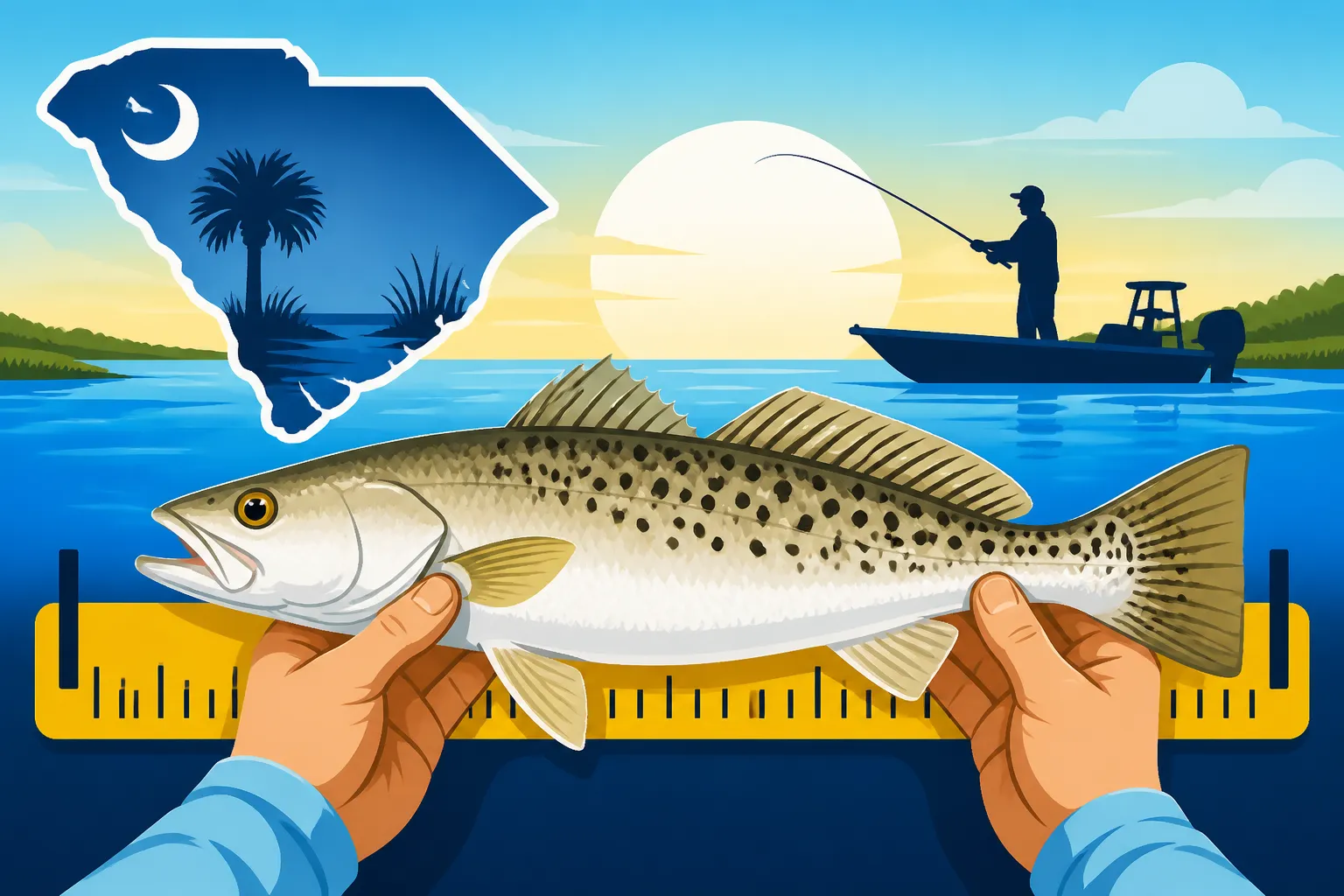
This is where a lot of anglers can get tripped up, and making a mistake can lead to a hefty fine. Measuring a fish correctly is absolutely crucial for compliance. For spotted seatrout in South Carolina, the measurement is taken from the tip of the snout (with the mouth closed) to the tip of the tail (with the tail pinched).
Here’s a step-by-step breakdown to ensure you're doing it right:
- Retrieve the Fish: Handle the fish as gently as possible. If you intend to release it, minimizing its time out of water is key.
- Lay it Flat: Place the fish on a flat, rigid measuring device. Many anglers use a measuring board, which you can easily find on Amazon, or a good quality tape measure fixed to a cooler or boat deck. The snout should be flush against the bump or starting point of your measuring device.
- Close the Mouth: Ensure the fish's mouth is completely closed. Measuring with an open mouth can add extra length and give you an inaccurate reading.
- Pinch the Tail: Gently pinch the lobes of the tail together. This makes the tail appear longer and gives you the maximum possible length. This "pinched tail" method is standard for most coastal species in South Carolina.
- Read the Measurement: Take your reading at the longest point of the pinched tail. If it's 14 inches or more, and you haven't exceeded your daily bag limit, congratulations! If it's less, it's time for a careful release.
Always double-check your measurement, especially if it's close to the legal limit. A few seconds of careful measurement can save you from a potential violation.
What Happens if You Catch a Sub-Legal Trout?
It happens to the best of us – you cast out, feel a strong tug, and reel in what feels like a decent fish, only to find it's just shy of that 14-inch mark. The immediate next step is critical: responsible release. Keeping an undersized fish, whether intentionally or accidentally, can lead to serious consequences. This is why understanding the law and how to handle these situations is paramount for any angler. The "South Carolina Spotted Seatrout Minimum Size 14 Inches" isn't just a suggestion; it's a mandatory rule.
Proper Handling and Release Techniques
Releasing a fish unharmed is a skill every angler should master, especially when dealing with species like spotted seatrout that might be handled multiple times before reaching legal size. Your goal is to maximize the fish's chances of survival once it's back in the water.
Here's how to do it right:
- Minimize Air Exposure: Fish need water to breathe. The less time they spend out of the water, the better their chances. Have your measuring device and dehooking tools ready before you even bring the fish in.
- Wet Your Hands: If you must touch the fish, wet your hands first. Dry hands can remove the protective slime coat, making the fish more susceptible to disease and infection.
- Use Dehooking Tools: Barbless hooks can make release easier, but often you'll need a good pair of long-nosed pliers or a specialized dehooking tool to remove hooks quickly and efficiently. Avoid tearing the fish's mouth. If a fish is deeply hooked in the gills or gut, it's often best to cut the line as close to the hook as possible rather than attempting to rip the hook out. The hook will eventually rust away.
- Support the Fish: When holding a spotted seatrout, support its body horizontally. Don't hold it vertically by the jaw or gills, as this can damage its internal organs and spine.
- Revive if Necessary: If the fish seems sluggish after release, gently hold it in the water, facing into a mild current. Move it back and forth slightly to push water over its gills until it regains its strength and swims away on its own.
Practicing these techniques ensures that those sub-legal trout can grow up to be keepers!
Penalties for Keeping Undersized Fish
This is where the rubber meets the road. South Carolina takes its fisheries regulations seriously, and fishing without a license or keeping undersized fish can result in significant penalties. Violating fishing regulations, including size limits, can lead to fines, confiscation of your gear, and in some cases, even jail time, especially for repeat offenders or egregious violations.
For instance, if you're caught with an undersized spotted seatrout, you could be looking at a fine that varies depending on the specific county and the discretion of the enforcing officer or court. These fines can easily run into the hundreds of dollars per fish, not to mention court costs. SCDNR officers are regularly patrolling our waters, from the coastal estuaries to the inland lakes, and they have the authority to check your catch and your compliance with all regulations. It's a reminder that those "Penalties for Fishing Without a License in South Carolina" aren't just for licenses, but for all applicable rules. The best way to avoid these unpleasant situations is simply to know the rules, measure carefully, and release any fish that doesn't meet the legal requirements.
Navigating Other Spotted Seatrout Regulations
While the 14-inch minimum size is a cornerstone, it’s not the only rule you need to know when targeting spotted seatrout in South Carolina. Our state’s fisheries management is a bit like a puzzle, with several pieces fitting together to create a healthy ecosystem. Being aware of these additional regulations will ensure your fishing adventures are always within the bounds of the law, keeping both you and the fish safe. From the general Spotted Seatrout Size and Bag Limits in South Carolina to specific restrictions, it's all part of responsible angling.
Daily Bag Limits and Vessel Limits
Beyond the minimum size, there's also a limit to how many spotted seatrout you can legally keep in a day. Currently, the daily bag limit for spotted seatrout in South Carolina is 10 fish per person. This means that no individual angler can possess more than ten legal-sized spotted seatrout, regardless of how many times they might go fishing in a single day.
But wait, there's more! South Carolina also has a "vessel limit" for spotted seatrout, which caps the total number of fish on any one boat, regardless of how many anglers are on board. The current vessel limit is 20 spotted seatrout per boat. This regulation is particularly important for groups of anglers, charter trips, or families fishing together. For example, if you have three anglers on a boat, each person could theoretically keep 10 fish, totaling 30. However, the vessel limit of 20 would override this, meaning the entire boat cannot have more than 20 legal-sized spotted seatrout. This helps prevent overharvesting by large parties and promotes sharing of the resource.
It’s always a good idea to check the most current SCDNR regulations before each fishing trip, as these limits can sometimes change based on stock assessments and conservation needs.
Seasonal Restrictions and Gigging Bans
Spotted seatrout are particularly vulnerable during certain times of the year, especially when water temperatures drop. To protect the species during these crucial periods, South Carolina often implements seasonal restrictions. One notable example is the winter gigging ban for seatrout.
Gigging, which involves spearing fish with a long pole, is a popular method for targeting seatrout in shallow waters. However, during the colder months, typically from December through February, spotted seatrout become sluggish and congregate in deeper holes, making them highly susceptible to gigging. To prevent overharvesting during this vulnerable time, the SCDNR prohibits gigging for spotted seatrout. This does not mean you can't fish for them with a rod and reel during these months, but it does mean you need to use traditional hook-and-line methods.
So, while you might be able to find a good spot to catch them, remember that the "South Carolina's Winter Gigging Ban for Seatrout" is strictly enforced. Anglers found gigging for seatrout during the closed season face the same penalties as those caught with undersized fish. Always be aware of these temporary or seasonal rules to ensure you're fishing legally and contributing to the long-term health of our spotted seatrout populations.
Gear and Techniques for Targeting Legal-Sized Trout
It's one thing to know the rules; it's another to actually catch a legal-sized spotted seatrout! While smaller trout are often eager to bite, consistently landing those 14-inchers and above requires a bit more strategy, the right gear, and understanding their habits. You want to give yourself the best chance to land a fish that's not only exciting to catch but also legal to keep.
Lures and Baits That Attract Larger Fish
While a small shrimp or jig might catch any hungry seatrout, if you're specifically trying to target larger ones, consider stepping up your bait and lure game. Bigger fish often prefer a bigger meal, which can help you weed out some of the smaller, sub-legal fish.
Here are some go-to options:
- Live Baits: A lively mud minnow, a larger live shrimp, or a finger mullet under a popping cork can be irresistible to bigger trout. These natural baits mimic what larger trout are already hunting, and their size can deter smaller fish. You can rig them on a simple Carolina rig or a slip float rig.
- Soft Plastics: Gulp! Shrimp, Z-Man MinnowZ, or other soft plastic swimbaits in the 3-5 inch range are incredibly effective. Colors like "new penny," "chartreuse," or "white" are perennial favorites in South Carolina's inshore waters. Rig them on a 1/8 to 1/4 ounce jig head. The larger profile often gets the attention of more mature fish. You can find a vast selection of these types of lures and jig heads on Amazon.
- Topwater Lures: Nothing beats the explosive strike of a big trout on a topwater plug like a MirrOlure MirrOdine or a Heddon Super Spook Jr. These lures create a disturbance on the surface that can trigger aggressive strikes from larger, territorial fish. They work particularly well during low light conditions at dawn or dusk.
- Scented Baits: Using scented soft plastics or adding a fish attractant can make your offerings even more appealing, especially in murky water conditions.
Experiment with different options to see what's working on any given day, but generally, a slightly larger presentation will help you target those keeper-sized fish.
Effective Fishing Techniques for Spotted Seatrout
Knowing where and how to present your bait or lure is just as important as what you're using. Spotted seatrout are ambush predators, so understanding their preferred habitats and feeding patterns will significantly increase your success.
Consider these techniques:
- Popping Corks: This classic South Carolina technique is deadly for trout. Rig a live shrimp or soft plastic about 18-24 inches below a popping cork. The "pop" sound mimics a feeding shrimp, drawing attention to your bait. Cast it near oyster beds, grass lines, and creek mouths, then give it a sharp twitch every few seconds.
- Free-lining Live Bait: When fishing areas with current, like tidal creeks or inlets, free-lining a live shrimp or small baitfish can be very effective. Let the current carry your bait naturally, allowing it to drift into ambush points where trout might be hiding.
- Jigging Soft Plastics: This versatile technique allows you to cover different depths. Cast your soft plastic jig and let it sink to the bottom. Then, use a series of short, sharp twitches of your rod tip, reeling in the slack as you go. This mimics a fleeing baitfish or a shrimp hopping along the bottom. Vary your retrieve speed and depth until you find what the trout are responding to.
- Fishing Structure: Spotted seatrout love structure. Target oyster beds, docks, submerged pilings, rock piles, and especially grass flats with potholes. These areas provide cover, ambush points, and a plentiful food source. Knowing how to fish these "Best Inshore Fishing Spots Along the South Carolina Coast" will put you in the right place.
- Tide-Based Fishing: Pay attention to the tides. Often, the hour leading up to and after a high or low tide can be prime feeding times for spotted seatrout as baitfish are concentrated or flushed out of cover. Understanding "Does Tide Direction Change Where Trout Feed?" is key.
By combining the right bait and lure choices with effective techniques, you'll not only enjoy the thrill of the catch but also increase your chances of bringing home some delicious, legal-sized spotted seatrout.
| Regulation Category | Specific Rule for Spotted Seatrout in South Carolina | Notes |
|---|---|---|
| Minimum Size | 14 inches (total length, tip of snout to pinched tail) | Fish measuring less than 14 inches must be immediately released unharmed. |
| Daily Bag Limit | 10 fish per person | No individual may possess more than 10 legal-sized spotted seatrout in a 24-hour period. |
| Vessel Limit | 20 fish per boat | The total number of legal-sized spotted seatrout on any one boat cannot exceed 20, regardless of anglers. |
| Gigging Season | Prohibited from December 1st to February 28th/29th | Gigging for spotted seatrout is banned during these winter months to protect vulnerable fish populations. |
| Rod & Reel Season | Year-round | You can catch spotted seatrout with a rod and reel year-round, provided all other regulations are followed. |
Disclaimer
The information provided in this guide is for general informational purposes only and is not intended as legal advice. Fishing regulations in South Carolina can change, and it is the angler's responsibility to consult the most current official regulations published by the South Carolina Department of Natural Resources (SCDNR) before engaging in any fishing activities. Always verify specific dates, sizes, and bag limits directly with the SCDNR.