Best Time of Year to Catch Walleye
Oh, the elusive walleye in South Carolina! It's a truth universally acknowledged that chasing these toothy critters can be incredibly rewarding, but figuring out when and where to find them in our beautiful Palmetto State can feel like cracking a secret code. Many anglers get frustrated, spending hours on the water without a bite, simply because they haven't aligned their efforts with the walleye's distinct seasonal movements and feeding patterns. This guide is here to unravel that mystery, helping you understand the absolute best times of year to target walleye, giving you a much better shot at success.
Understanding Walleye Seasonal Movements in South Carolina Waters
Walleye, unlike some of our more common freshwater species, are particularly sensitive to light and water temperature. This means their behavior, especially their feeding and migratory patterns, shifts dramatically throughout the year. They aren't just lounging in the same spot all the time! For anglers in South Carolina, where walleye populations are concentrated in specific reservoirs like Lake Hartwell, Lake Russell, and Lake Thurmond, understanding these seasonal changes is absolutely crucial. Without this knowledge, you're pretty much guessing, and that’s a quick recipe for a slow day on the water.
Why Temperature and Light Dictate Walleye Activity
Think of walleye as creatures of comfort, but their comfort zone changes with the seasons. In colder water, their metabolism slows down, making them less active. As water warms, they become more energetic and need to feed more frequently. Light sensitivity is another huge factor; walleye have excellent low-light vision, which is why they often prefer deeper water during the day or feed most actively at dawn, dusk, and even at night. This inherent sensitivity means that when the sun is high and bright, they'll typically seek out deeper, cooler, and darker refuges. Knowing this fundamental behavior allows us to predict where they'll be and when they'll be most willing to bite. You can learn more about how these factors influence fish by checking out How Water Temperature Affects Fish Feeding.
General Seasonal Patterns to Expect
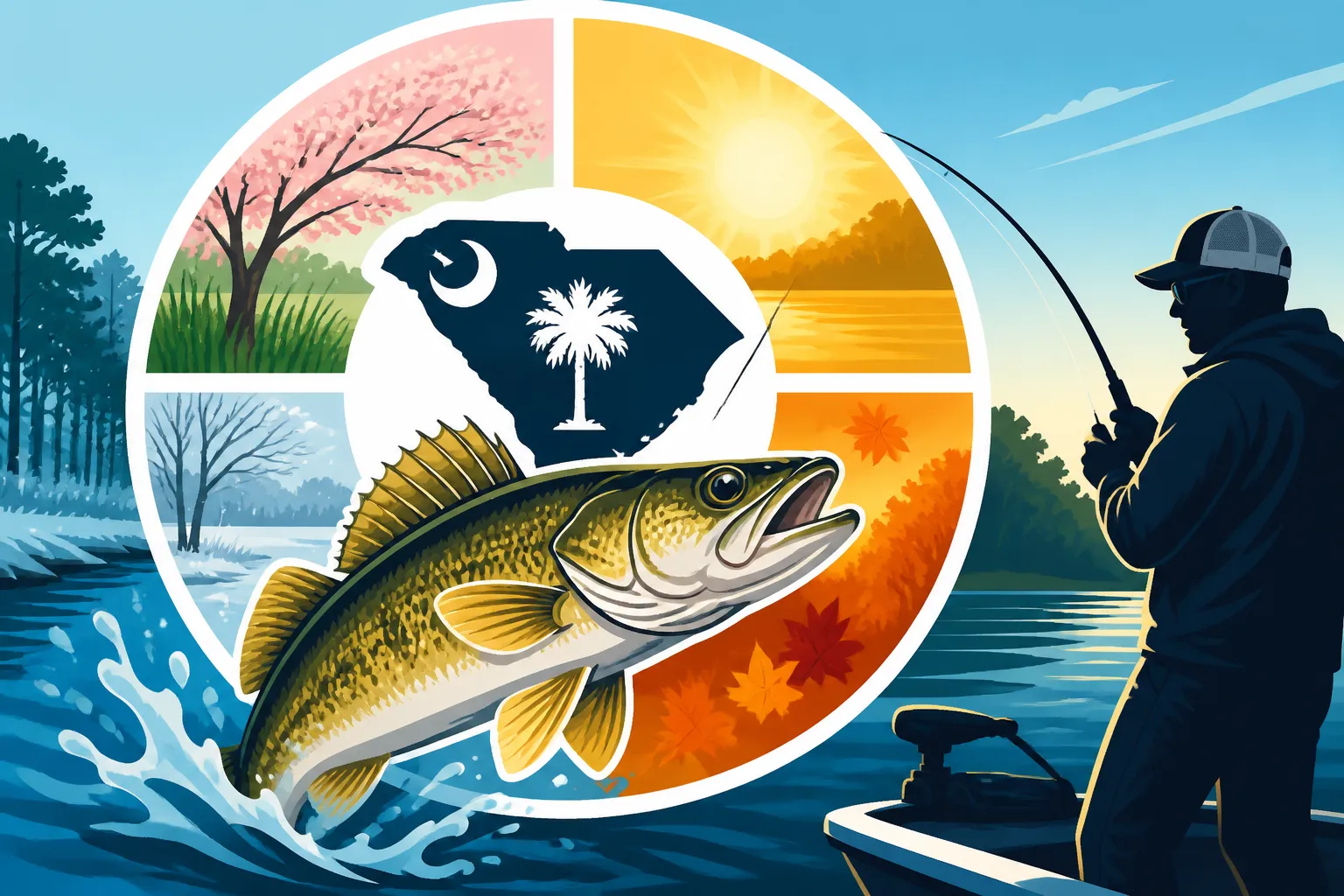
While the exact timing can vary a bit year to year depending on weather and water levels, there's a reliable rhythm to walleye movements. Generally, spring is prime time for shallow-water action as they move up to spawn. Summer sees them retreat to deeper, cooler sections of the lakes. Fall brings a renewed shallow-water bite as they feed heavily in preparation for winter. And even in winter, while slower, dedicated anglers can find them in predictable deep-water haunts. These general patterns are your roadmap to a successful walleye season in South Carolina. For a broader look at fishing throughout the year, explore our South Carolina Fishing Seasons Guide.
Spring: The Peak Walleye Season
Without a doubt, spring is hands down the best time of year to catch walleye in South Carolina. This is when the fish are most accessible and aggressive, driven by the urge to spawn and then recover. Anglers who focus their efforts during this window often experience the most productive days. It's a frantic but exciting time when the fishing can be truly phenomenal, especially in the larger reservoirs where our walleye populations thrive.
Pre-Spawn Buildup and Early Spring Action
As winter’s chill begins to recede, typically from late February into March, walleye start to stage for their spawn. The water temperatures begin to climb into the 40s and low 50s, signaling it’s time to move. During this pre-spawn period, walleye will congregate in deeper channels and humps adjacent to spawning areas, often rocky points or riprap banks. They are actively feeding, trying to pack on energy for the upcoming spawn. This is an excellent time for vertical jigging or slow trolling with crankbaits and swimbaits along these transition areas. Many anglers find great success by using their electronics to locate schools of fish suspended over structure. Remember, they're looking for baitfish, so matching the hatch is always a good idea. You can find a wide variety of effective pre-spawn lures on platforms like Amazon.
The Walleye Spawn: Timing and Tactics
The actual walleye spawn in South Carolina usually occurs from mid-March through April, when water temperatures reach the upper 40s to low 50s. Unlike bass, walleye typically spawn on rocky bottoms, submerged humps, or riprap where there’s some current or wave action to oxygenate their eggs. They often move onto these spawning grounds at night or during low-light conditions. During the peak of the spawn, they can be difficult to catch as their focus is entirely on reproduction. However, immediately before and after this intense period, they can be incredibly aggressive. After spawning, hungry females will drop back into slightly deeper water nearby, actively feeding to recover their energy. For this post-spawn recovery bite, targeting rocky points, humps, and submerged timber with jigs, plastics, or small crankbaits can be very effective.
Post-Spawn Recovery and Continued Success
Following the spawn, usually late April through May, walleye continue their feeding frenzy. They've expended a lot of energy, and they’re looking to replenish it. This is still a fantastic time to catch them, as they spread out a bit more but remain relatively shallow compared to their summer patterns. Look for them on main lake points, secondary points, and along creek channels, often relating to submerged cover like brush piles or rock formations. Trolling with crankbaits or casting jigs and soft plastics can be productive. The key is to cover water and find those hungry fish that are roaming and actively chasing bait. Don't be afraid to experiment with different depths until you find where they're holding. Our guide on Best Bait and Lures for Walleye in South Carolina offers detailed recommendations.
Summer: The Deep and Dark Shift
As South Carolina’s summer heat intensifies and water temperatures soar into the 70s and 80s, walleye retreat to their deep-water sanctuaries. This can be a challenging time for many anglers, but with the right techniques and a willingness to fish unconventional hours, summer can still yield impressive catches. It's all about understanding their need for cooler water and lower light.
Retreating to Cooler Depths
In the scorching summer months, walleye seek out thermal refuge in the deepest, coolest parts of the reservoirs. This means finding them often involves fishing depths of 20 to 40 feet, sometimes even deeper. They'll relate to main lake points, offshore humps, channel edges, and any significant structure that offers a break from the direct sunlight and heat. Without good electronics, locating these fish can be a real struggle. Once you find them, vertical jigging with heavy spoons, drop-shotting, or slow trolling deep-diving crankbaits are common tactics. Pay close attention to thermoclines if your electronics show them, as walleye will often suspend just above or within this cooler layer.
Night Fishing and Low-Light Opportunities
Because of their extreme light sensitivity, summer is an excellent time for night fishing for walleye. As the sun sets, walleye often move shallower to feed under the cover of darkness. They might come up to 10-20 feet, or even shallower near illuminated docks or bridges, chasing baitfish that also become more active at night. Trolling shallow-running crankbaits, casting stickbaits, or even vertical jigging under lights can be incredibly effective. Dawn and dusk also offer brief windows of opportunity as the light levels are lower, mirroring their preferred conditions. Anglers chasing species like striped bass often find walleye in similar deep waters during summer, so techniques might overlap. You might find our discussion on What Time of Day Do Bass Bite Best? generally useful, even for walleye.
Dealing with Summer's Challenges
Summer walleye fishing demands patience and persistence. The fish are often scattered, and finding the schools can take time. It's also important to be prepared for the heat and stay hydrated. Investing in good quality braided line, easily found on Amazon, can help you feel those subtle deep-water bites. Consider what type of equipment you'll need for varying conditions; a comprehensive guide to South Carolina Fishing License Guide is important for any trip. While challenging, the reward of a big summer walleye, especially at night, makes the effort worthwhile.
Fall: The Feeding Frenzy Returns
As autumn colors paint the landscape and water temperatures begin to cool, walleye fishing kicks back into high gear in South Carolina. Fall represents another fantastic opportunity, perhaps second only to spring, as walleye embark on a furious feeding spree to build up reserves for the coming winter. They become more aggressive and are often easier to locate.
Cooling Waters and Increased Activity
From September through November, as the water temperatures drop into the 60s and then 50s, walleye gradually move shallower. They are driven by the need to gorge themselves on baitfish, which are also very active and schooling up in the cooler water. This means they are often found chasing schools of shad or herring in the upper water column or along defined structure. Look for them on main lake points, along creek channels, and even in the backs of larger coves where baitfish are congregating. Trolling with crankbaits that mimic local baitfish is particularly effective during this period, as is casting jigs or blade baits into schooling fish.
Following the Baitfish
The key to fall walleye success is finding the bait. Walleye will be wherever their food source is, and in the fall, baitfish are often concentrated. Use your sonar to scan for bait balls, and you’ll likely find walleye lurking nearby. Once you pinpoint a school of walleye, techniques like snap jigging or casting spoons can be deadly. As the water cools further into late fall, they might start to relate more to deeper structure again, similar to pre-spawn areas, but they'll still be actively feeding. Consider reviewing Best Bait for Walleye in Cold Water for specific recommendations during this transition.
The Late Fall Transition
As fall transitions into early winter, typically in December, walleye will begin to settle into their deeper winter patterns. However, they'll still be opportunistic feeders. This late fall period can offer a "last hurrah" of active fishing before the cold really sets in. Focus on vertical presentations near deep structure, but don't overlook shallower bites during brief periods of warming weather or low light. The aggressive nature of their fall feeding makes this a very rewarding time for South Carolina anglers willing to brave the cooler weather. Don't forget that a good pair of polarized sunglasses, available on Amazon, can make a huge difference in spotting subtle changes in the water during sunny fall days.
Winter: The Slow but Steady Bite
Winter fishing for walleye in South Carolina might not be as explosive as spring or fall, but it can still be incredibly productive for patient anglers. While we don't typically experience ice fishing in the traditional sense for walleye down here, the cold water conditions demand specific strategies.
Deep Water and Slow Presentations
During the coldest months, from December through February, walleye will be found in their deepest, most stable wintering holes. This means targeting deep channels, main lake basins, and large offshore humps. They'll often be tightly schooled and hugging the bottom. Their metabolism is slowed down significantly, so presentations need to be much slower and more methodical. Vertical jigging with small, subtle baits like hair jigs, finesse worms, or slow-moving spoons are excellent choices. Live bait, such as shiners or minnows, presented on a slip-bobber rig or a bottom rig, can also be very effective. It's about putting the bait right in front of them and enticing a reluctant bite. You might also encounter sauger, a close cousin, in similar cold-water habitats; understanding Walleye vs Sauger: How to Tell Them Apart can be helpful for identification.
Adjusting to Cold Water Conditions
Cold water means colder hands and longer waits between bites. Dressing warmly and having appropriate gear is essential. A quality fish finder becomes your best friend, as locating these deep, inactive schools is paramount. Once found, work the area thoroughly and patiently. Don't be afraid to try different depths within a general area, as walleye might suspend slightly off the bottom or be tucked into specific pockets of structure. While not as widespread as some other species, Is Walleye Fishing Good in South Carolina? helps set expectations for your winter pursuit.
A Rewarding Challenge
Catching walleye in winter can be a testament to an angler's skill and patience. The bites are often subtle, feeling more like a slight pressure than a dramatic strike. Setting the hook on a winter walleye after a long, patient wait is incredibly satisfying. While it requires a different approach than the warmer months, winter offers the chance to catch some of the largest walleye of the year, as big females tend to be more concentrated.
Here's a quick summary of the best times and tactics for South Carolina walleye:
| Season | Best Time (Approx.) | Key Behaviors | Prime Locations | Recommended Techniques |
|---|---|---|---|---|
| Spring | Late Feb – Early May | Pre-spawn staging, spawning, post-spawn recovery | Rocky points, humps, riprap, creek channels | Jigging, slow trolling, crankbaits |
| Summer | June – August | Deep water retreat, nocturnal feeding | Deep channels, offshore humps, main lake | Vertical jigging, drop-shot, night trolling |
| Fall | Sept – November | Aggressive feeding, baitfish chasing | Main lake points, creek channels, bait balls | Trolling crankbaits, jigs, blade baits |
| Winter | December – Mid-February | Deep water congregating, slow metabolism | Deep channels, main lake basins, humps | Slow vertical jigging, live bait presentations |
Successfully targeting walleye in South Carolina truly comes down to understanding their seasonal rhythms and adapting your approach. Whether it's the frantic spring spawn, the challenging but rewarding summer nights, the aggressive fall feeding, or the patient winter deep-water game, there's always an opportunity to land one of these prized fish. Don't be afraid to experiment, stay persistent, and always pay attention to those water temperatures! You'll be well on your way to a walleye catch. For specific locations, you might want to look at Where to Catch Walleye in South Carolina.
Disclaimer
This article is for general informational purposes only and does not constitute professional advice. Laws, prices and regulations vary by location and change over time. Consult a qualified professional for guidance on your specific situation.