How to Identify a Native Brook Trout
It can be incredibly frustrating when you're out on the pristine mountain streams of South Carolina, casting for trout, and you spot a fish, but you're just not sure if it's the elusive native brook trout or one of its introduced cousins. Knowing the difference isn't just about satisfying curiosity; it's crucial for conservation and ensuring you're following local regulations. This guide will walk you through the distinct characteristics of South Carolina's native brook trout, helping you confidently identify these beautiful fish and appreciate their unique place in our state's natural heritage.
The Elusive Beauty: Understanding South Carolina's Native Brook Trout Heritage
South Carolina might be famous for its lowcountry marshes and coastal fishing, but tucked away in the highest reaches of our Blue Ridge Mountains, we have a hidden treasure: the native brook trout. These aren't just any trout; they are a unique, genetically distinct population that has thrived in these cold, clear waters for thousands of years. They are part of the original ecosystem, a living testament to the wildness of our Upstate.
Why These Fish Are So Special
Imagine a fish that has adapted over millennia to the specific conditions of a small mountain stream—its water temperature, its food sources, its flow patterns. That's our native brook trout. They are indicators of healthy, undisturbed aquatic environments. When you find native brook trout, it's often a sign that the stream they inhabit is in excellent ecological condition, untouched by significant pollution or habitat degradation. Their presence is a badge of honor for a watershed, signifying pristine water quality and a balanced ecosystem. They represent a connection to the past, a wild heritage that we, as anglers and stewards, have a responsibility to protect for future generations. South Carolina's Native Brook Trout: A Blue Ridge Mountain Original goes into more detail about their significance.
Their Place in the Ecosystem
Native brook trout are often top predators in their small stream ecosystems, feeding on aquatic insects, terrestrial insects that fall into the water, and even smaller fish or amphibians. They play a vital role in maintaining the balance of their environment. However, they are highly sensitive to changes in water temperature, oxygen levels, and sedimentation. This sensitivity makes them vulnerable to habitat destruction and competition from introduced species like rainbow trout and brown trout, which can tolerate slightly warmer or less pristine conditions. Understanding their role helps us appreciate why identifying and conserving them is so critical. They are a keystone species in these delicate high-elevation environments, and their health reflects the health of the entire stream.
Spotting the Differences: Key Physical Traits of Native Brook Trout
Identifying a native brook trout is like solving a beautiful natural puzzle. You need to pay attention to a few key visual clues that, once you know them, become unmistakable. These aren't always immediately obvious, especially if you're comparing them to a stocked brook trout, but with a keen eye and a bit of practice, you'll be able to tell the difference.
Coloration and Markings: The "Worm Tracks" and Halo Spots
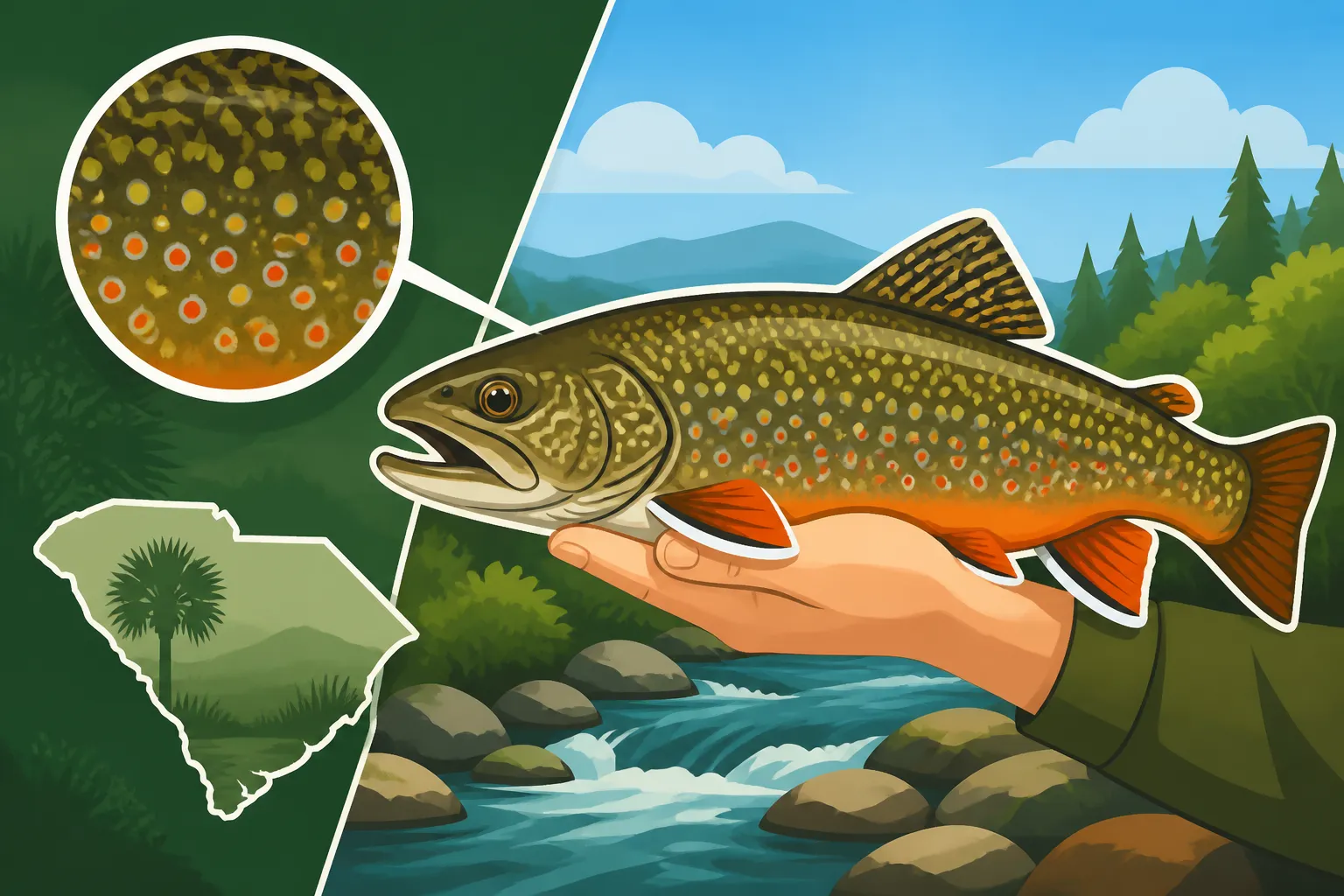
The most striking and definitive characteristic of a native brook trout is its intricate pattern of markings. Look closely at the back and sides, above the lateral line. You'll see distinctive, wavy, worm-like markings that are often referred to as "vermiculations." These are typically olive green or dark brown against a lighter olive or gray background. This pattern is unique to brook trout and sets them apart from rainbow or brown trout.
Below the lateral line, you'll notice small, colorful spots. These aren't just plain dots; they are often red or orange, surrounded by a pale blue or yellow "halo." These "halo spots" are another hallmark of the brook trout. While stocked brook trout might have similar markings, the intensity and vibrancy are often much more pronounced in native fish, particularly those living in truly wild, clear waters. The overall body color of native brook trout can vary from olive green to dark brown on top, fading to lighter flanks and a white belly. During spawning season, especially in males, the belly can turn a brilliant orange or red.
Fin Details and Body Shape
Beyond the spots and vermiculations, the fins offer crucial clues. Native brook trout possess distinct white leading edges on their pectoral, pelvic, and anal fins. These white edges are typically followed by a narrow black band, creating a very noticeable and beautiful contrast. This "white-edged fin" feature is a reliable identifier for brook trout, both native and stocked, but combined with other features, it helps solidify your identification.
Their body shape is also subtly different. Native brook trout tend to be more torpedo-shaped, perfectly evolved for navigating swift mountain currents and darting into small pockets of calm water. They are generally smaller than stocked trout, especially those found in our high-elevation, nutrient-poor streams. A native brook trout in South Carolina might only be 6 to 10 inches long, with anything over 12 inches considered a true trophy. Their heads are usually proportionally smaller and more streamlined compared to some of the larger, stockier hatchery-raised fish you might encounter. If you're observing them in their natural habitat, they often display a more alert and wild demeanor than their hatchery-raised counterparts.
Native vs. Neighbor: Distinguishing Brook Trout from Other Species
One of the biggest challenges for anglers is differentiating native brook trout from other trout species that share our mountain waters, or even from their own stocked brethren. Understanding these nuances is vital for responsible angling and for truly appreciating what you've caught.
Native Brook Trout vs. Stocked Brook Trout
This is perhaps the trickiest comparison because, genetically, they are the same species. However, their appearance can differ significantly due to their upbringing. Stocked brook trout are raised in hatcheries, often in crowded concrete raceways, and fed commercial pellets. This can lead to subtle physical differences:
- Fin Condition: Stocked trout often have visibly worn, damaged, or rounded fins due to their hatchery environment. Native trout, living in natural streams, typically have pristine, fully-formed fins.
- Coloration: While stocked brook trout have the same vermiculations and halo spots, their colors are generally duller, less vibrant, and less defined than a wild, native fish. The reds and oranges might be less intense, and the overall body color can appear more uniform or muted. They sometimes look a bit "washed out" compared to the fiery hues of a native.
- Body Shape: Stocked trout can sometimes appear chunkier or have a slightly deformed look due to their diet and lack of natural predation pressures. Native trout are lean, athletic, and perfectly streamlined.
- Vigor: When hooked, a native brook trout often exhibits a powerful, wild fight that is distinct from the more subdued struggle of a hatchery-raised fish.
Understanding these differences is key, especially since South Carolina Stocked Trout Daily Limit might apply differently than for native populations.
Brook Trout vs. Rainbow Trout
Rainbow trout are a common sight in many South Carolina mountain streams, especially those that are regularly stocked. Telling them apart from brook trout is usually quite straightforward:
- Spots: Rainbow trout are characterized by small, dark spots scattered over their entire body, including their tail fin. Brook trout have the distinctive worm-like markings on their back and head and the red/orange halo spots on their sides.
- Lateral Stripe: Rainbow trout often have a prominent pink or red stripe running horizontally along their lateral line, which intensifies during spawning. Brook trout do not have this stripe.
- Tail Fin: Rainbow trout generally have a squarish tail fin, often with small black spots. Brook trout usually have a slightly forked tail, though this can be less pronounced in smaller fish.
- Fin Edges: While brook trout have the white leading edges on their lower fins, rainbow trout do not.
The vibrant, almost iridescent sheen of a rainbow trout is also a good indicator, differing from the more muted, earthy tones of a brook trout.
Brook Trout vs. Brown Trout
Brown trout are another introduced species found in some of South Carolina's cooler mountain streams, prized by anglers for their size and elusive nature. They are also relatively easy to distinguish from brook trout:
- Spots: Brown trout typically have prominent dark spots (often with pale halos) on their sides, and some red or orange spots that may or may not have halos. Crucially, their spots extend onto their gill covers and tail, and they do not have the worm-like vermiculations on their back and head like brook trout.
- Coloration: Brown trout usually have a yellowish-brown or golden-brown body color, hence their name. They generally lack the vibrant reds and blues seen on brook trout, though their bellies can be yellowish.
- Tail Fin: Brown trout have a relatively square or slightly forked tail, often with very few, if any, spots, contrasting with the spotted tail of a rainbow and the overall lack of spots (but presence of vermiculations) on a brook trout's tail.
- Fin Edges: Like rainbow trout, brown trout do not possess the distinctive white leading edges on their lower fins that brook trout do.
Here's a quick comparison table to help visualize the differences:
| Feature | Native Brook Trout | Stocked Brook Trout | Rainbow Trout | Brown Trout |
|---|---|---|---|---|
| Back Markings | Distinctive, wavy "worm tracks" (vermiculations) | Less vibrant "worm tracks" | Small, dark spots (no worm tracks) | No worm tracks, but dark spots |
| Side Spots | Red/orange spots with blue/yellow halos | Duller red/orange spots, less defined halos | Small, dark spots throughout | Dark spots (often with halos), some red/orange spots |
| Lateral Line | No distinct stripe | No distinct stripe | Prominent pink/red stripe usually present | No distinct stripe |
| Fin Edges | White leading edges on lower fins (pectoral, pelvic, anal), often with black band | White leading edges (may be worn/rounded) | No white leading edges | No white leading edges |
| Tail Fin | Slightly forked, often unspotted | Slightly forked, may be rounded or damaged | Square or slightly forked, often with dark spots | Square or slightly forked, few to no spots |
| Overall Color | Olive green to dark brown back, vibrant reds/oranges on sides/belly (especially spawning) | Muted olive/brown, less vibrant colors | Silvery or olive green, iridescent sheen, pink stripe | Yellowish-brown to golden-brown back, lighter belly |
| Body Shape | Streamlined, wild, generally smaller | Can be chunkier, sometimes fin damage, larger | More robust | Robust, often larger |
For a more in-depth look, check out South Carolina's Native Brook Trout vs Stocked Trout and How to Tell a Native Brook Trout From a Rainbow Trout. You might also find a good field guide on Amazon useful for detailed illustrations.
Protecting Our Precious Gems: Conservation and Ethical Angling
Knowing how to identify native brook trout is more than just an academic exercise; it's a critical step in becoming a responsible angler and contributing to their conservation. These fish are sensitive, and their populations rely on pristine habitats and thoughtful human interaction.
Prime Habitats and Where to Find Them
In South Carolina, native brook trout are almost exclusively found in the coldest, highest elevation headwater streams of the Blue Ridge Mountains. Think of the remote creeks and tributaries in areas like the Sumter National Forest, where the water flows crystal clear and is shaded by dense forest canopy. These are typically small, steep-gradient streams, often with plenty of fallen timber and rocky structure that provide cover and hold fish.
You won't find native brook trout in large rivers or lowland lakes. They require very specific conditions: consistently cold water (below 68°F), high oxygen levels, and minimal sedimentation. Streams with healthy riparian buffers (trees and vegetation along the banks) are crucial as they help regulate water temperature and reduce erosion. If you're exploring for new spots, look for these characteristics. Information on Best Streams for Brook Trout in the Blue Ridge Mountains and Native Brook Trout Streams in South Carolina's Blue Ridge Mountains can offer excellent starting points. Consider investing in a good pair of polarized sunglasses from Amazon to help you spot these camouflaged fish in their clear water homes.
The Importance of Catch-and-Release
Because native brook trout populations are fragile and exist in isolated pockets, many streams where they thrive are managed as catch-and-release fisheries. Even if a stream isn't strictly designated as catch-and-release, practicing it with native brook trout is highly encouraged to ensure their long-term survival. Removing even a few fish from a small, self-sustaining population can have a significant impact.
When practicing catch-and-release, remember these crucial tips:
- Use Barbless Hooks: These minimize damage to the fish's mouth, making hook removal quick and easy. You can crimp down barbs on your existing hooks with a pair of pliers.
- Handle With Care: Keep the fish in the water as much as possible. If you must handle it, do so with wet hands to protect its delicate slime coat, which is its primary defense against disease.
- Minimize Air Exposure: A trout out of water is not breathing. Limit its time in the air to just a few seconds for a quick photo, then release it gently.
- Revive if Necessary: If the fish seems sluggish, hold it gently in the current, facing upstream, until it regains its strength and can swim away on its own.
- Use Appropriate Gear: Light tackle, such as a 2-4 weight fly rod or a ultralight spinning rod, is ideal for these smaller, feisty fish. This allows for a good fight without overly stressing the fish. You can find excellent quality ultralight rods and reels, as well as small tackle boxes suitable for stream fishing, on Amazon.
By adopting these practices, you become a guardian of South Carolina's native brook trout, helping to ensure that these beautiful, wild fish continue to grace our mountain streams for generations to come. Always remember to check South Carolina Fishing License Guide and specific regulations for any stream you plan to fish, as rules can vary, and some areas may have special designations like Which South Carolina Streams Are Catch-and-Release Only for Trout?.
Disclaimer
This article is for general informational purposes only and does not constitute professional advice. Laws, prices and regulations vary by location and change over time. Consult a qualified professional for guidance on your specific situation.