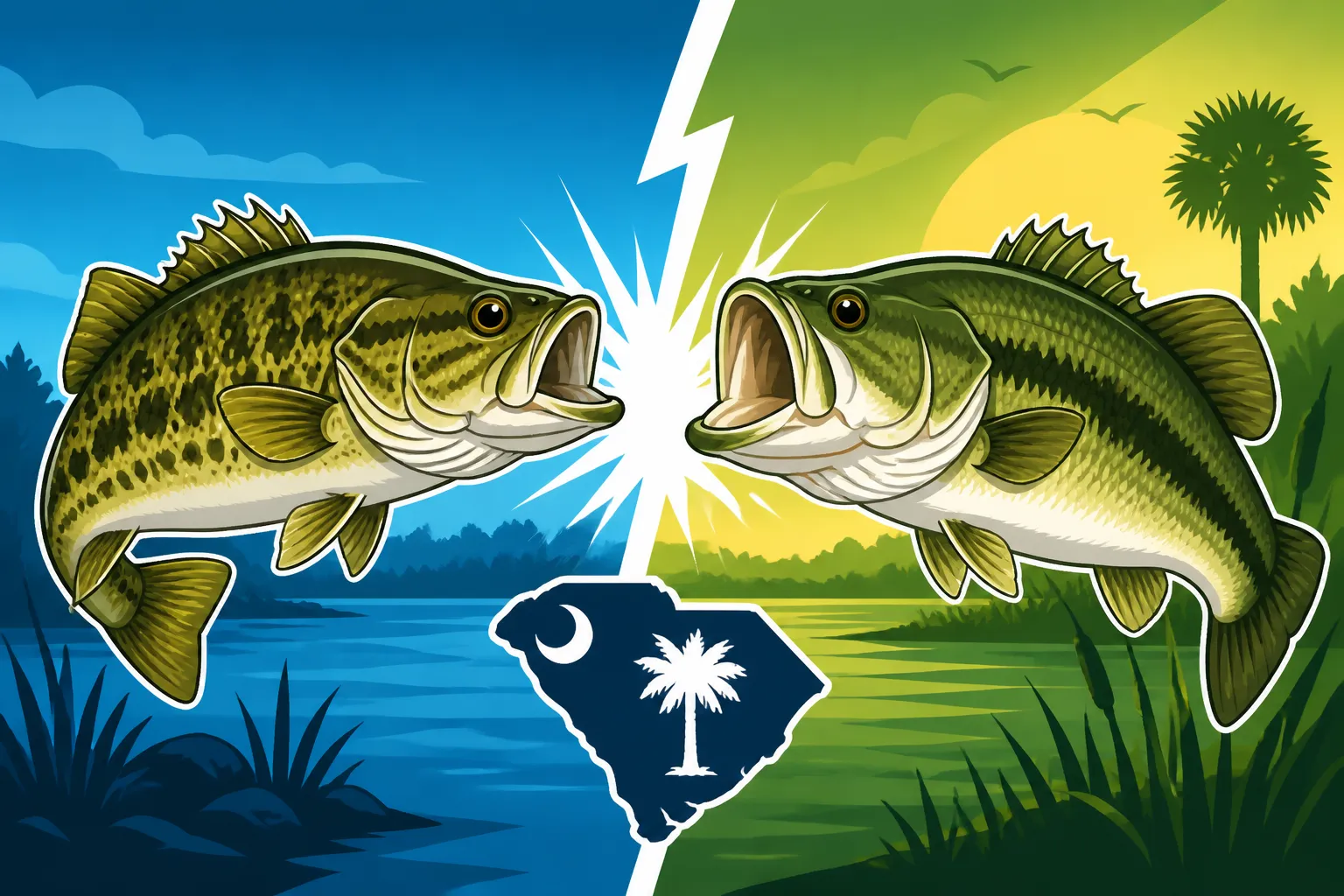
Spotted Bass vs Largemouth Bass: How to Tell Them Apart
Oh, the age-old question that has stumped countless anglers casting lines in South Carolina: "Is this a spotted bass or a largemouth?" It's a genuinely tricky identification challenge, especially when they share the same waters and even look strikingly similar at first glance. There’s nothing more frustrating than thinking you’ve landed a monster largemouth, only to find out it's a "spot" after a closer look, or vice-versa, which can actually impact how you log your catch or even adhere to specific regulations. This guide is here to clear up that confusion once and for all, giving you the insider tips to tell these two popular bass species apart with confidence.
The Tale of Two Bass: Why the Confusion?
It’s easy to feel a bit sheepish when you can't quite distinguish between a spotted bass and a largemouth, but honestly, you're not alone. Many experienced anglers, even those who've fished South Carolina waters for years, can get momentarily stumped, especially with younger fish or those that exhibit unusual coloring for their species. The truth is, they're both members of the black bass family, sharing a lot of genetic traits, and they frequently inhabit similar environments, making visual differentiation a real skill to master.
Shared Habitats and Similarities
Think about a typical South Carolina lake, like Lake Hartwell or Lake Keowee. You'll find plenty of largemouth bass lurking in the shallow, weedy coves, but you'll also encounter spotted bass cruising the rocky points and deeper humps. Sometimes, their territories overlap, and you might catch both from the same general area! Both species are predatory, aggressive, and offer a fantastic fight, which is why we love targeting them. They both have that classic olive-green to blackish back, fading to lighter sides and a whitish belly, with a prominent dark lateral line. For a quick overview of what's out there, check out our South Carolina Fish Species: A Complete Guide to What's in the Water.
Beyond just physical appearance, they often react to similar baits and lures, especially when they're actively feeding. A spinnerbait or a soft plastic worm that's deadly for a largemouth might just entice a hungry spotted bass as well. This shared preference for certain presentations means that you often hook into one when you're specifically targeting the other, further blurring the lines in the minds of anglers on the water.
The Importance of Correct Identification
So, why does it even matter if you know the difference? Well, it's not just about bragging rights or knowing your fish ID. For one, regulations can sometimes differ. While most bass regulations in South Carolina are fairly uniform, understanding the nuances between species is part of being a responsible angler. Beyond that, knowing which bass you're targeting can dramatically improve your fishing success. Spotted bass often prefer different depths and structures than largemouth, and while there's overlap in their diets, their primary forage can lead to distinct patterns in lure preference. If you consistently identify the fish you're catching, you can start to understand patterns in their behavior and adjust your techniques accordingly, making you a more effective angler. South Carolina Fishing License Guide covers all the basics of staying legal on the water, regardless of what you're catching.
Key Physical Differences: Spotted Bass vs. Largemouth Bass
Alright, let's get down to brass tacks. When you've got a bass in your hands, what are the definitive visual cues to look for? It's all about paying attention to a few key anatomical features. Trust me, once you train your eye, it becomes second nature.
Mouth Size and Jawline
This is often the most talked-about and easiest way to tell them apart, and for good reason!
The largemouth bass gets its name from its distinctly large mouth. When you close the fish's mouth, the corner of its jaw (the maxillary) will extend past the back of its eye. It's usually a pretty obvious difference, making the largemouth look like it can swallow a much bigger meal. This wide gape is one of the reasons largemouth are such effective predators in their preferred cover. If you're looking for tips to catch these big biters, our Largemouth Bass Fishing in South Carolina: The Complete Guide has you covered.
The spotted bass, on the other hand, has a mouth that's proportionally smaller. When its mouth is closed, the corner of its jaw will typically line up underneath the middle of its eye, or just slightly behind it, but rarely past the back edge of the eye. It's a more modest mouth, better suited for the types of forage it often pursues in its rockier, deeper habitats.
Dorsal Fin Separation
Another excellent identifier lies in their dorsal fins, those fins along their back. Both species have two dorsal fins – a spiny one towards the head and a soft-rayed one towards the tail.
For a largemouth bass, these two dorsal fins will appear almost completely separated by a very deep notch. It looks like two distinct fins, barely connected, if at all. Imagine a valley between two peaks; that's roughly what you're looking for with a largemouth.
With a spotted bass, the two dorsal fins are connected by a much shallower notch. It appears more continuous, almost like one long fin with just a dip in the middle. It's a subtle difference, but once you know what to look for, it's quite clear.
Tongue Patch and Lateral Line
Now we're getting into some slightly more advanced, but highly reliable, identifiers. You might need to gently open the bass's mouth for these.
The spotted bass is unique among black bass for often having a small, rough patch of teeth on its tongue. If you run your finger (carefully!) over its tongue, you'll feel a bumpy patch. This is almost always present in spotted bass. This patch is a key feature when you are trying to be certain.
The largemouth bass will almost always have a smooth tongue, completely lacking this rough patch of teeth. If you don't feel anything, you're likely holding a largemouth.
Regarding the lateral line, both species have a dark, horizontal stripe running along their sides, but the patterning above and below it differs.
A largemouth bass will typically have a very distinct, often unbroken, dark lateral line, with scales above it usually being a fairly uniform olive or green.
A spotted bass also has a lateral line, but the scales below this line often feature distinct dark spots, sometimes arranged in rows, giving it a "spotted" appearance—hence the name! These spots are usually more pronounced than any you'd find on a largemouth. Spotted Bass Identification and Where to Find Them in South Carolina goes into more detail about these characteristics.
Scales and Patterns
While the overall coloration can vary widely based on water clarity, diet, and habitat, there are some general patterns to observe.
Largemouth bass tend to have larger, more uniform scales, especially towards the head. Their overall body can appear smoother, with the lateral line sometimes looking like a single, solid dark band that can break up towards the tail in some fish. The dark blotches or bars above the lateral line are usually larger and less defined than the spots on a spotted bass.
Spotted bass typically have smaller, more numerous scales. The "spotted" appearance is not just due to the dark spots below the lateral line, but sometimes a more mottled or speckled pattern across their body, especially on their cheeks and gill plates. This finer, more intricate spotting is a hallmark of the species. Sometimes you'll find them with a brighter, almost golden sheen in some waters.
Here’s a quick comparison table to help you keep these differences straight:
| Feature | Largemouth Bass | Spotted Bass |
|---|---|---|
| Jaw Extends | Past the back of the eye | To the middle of the eye or slightly behind |
| Dorsal Fins | Deeply separated, almost two distinct fins | Shallowly connected, appearing more continuous |
| Tongue Patch | Smooth | Rough patch of teeth often present |
| Lateral Line Spots | Few to none below lateral line | Distinct dark spots often present below lateral line |
| Body Shape | More elongated, often stockier | Slightly more streamlined, often slenderer |
| Overall Pattern | Large, often broken lateral stripe, larger scales | More uniform lateral stripe, smaller scales, distinct spots below |
Habitat and Behavior Clues
Beyond just looking at the fish once it's in your hand, you can often make an educated guess about which species you're dealing with just by where you catch it and how it behaves. These environmental preferences are strong indicators.
Where Each Species Prefers to Live
This is perhaps one of the most reliable "clues" when you're still fishing.
Largemouth bass are the kings of cover. They absolutely thrive in environments with abundant vegetation, submerged timber, lily pads, and shallow brush. They love to ambush prey from hidden spots in these environments. You’ll often find them lurking in the calm, warm backwaters of lakes, ponds, and slow-moving rivers. Think about casting into thick grass beds in Lake Murray, and you're almost certainly targeting largemouth. For more on where to find them, check out Best Largemouth Bass Spots on Lake Murray, South Carolina.
Spotted bass, conversely, have a strong preference for clearer, cooler water and hard, rocky bottom structures. They often hang out on main lake points, rocky humps, ledges, and creek channels, typically in deeper water than largemouth. They are more comfortable in current than largemouth and are frequently found in reservoirs and larger rivers. If you're working a deep drop-off with a jig or a shaky head, especially in the clear waters of an Upstate lake, you're probably in prime spotted bass territory. They thrive in places like Lake Keowee's deep, rocky coves and points. If you're looking for those hidden gems, you might consult our Remote Coves on Lake Keowee for Fishing.
Dietary Habits and Preferred Forage
Both are opportunistic predators, but their typical habitats steer their diets.
Largemouth bass have that big mouth for a reason: they eat almost anything they can fit in it! Their diet often includes smaller fish (like shad, sunfish, and even small catfish), crawfish, frogs, snakes, and even small birds or rodents that fall into the water. This broad diet means they respond well to a wide variety of artificial lures that mimic these prey items. Understanding What Do Largemouth Bass Eat in South Carolina Ponds? can help you choose the right bait.
Spotted bass tend to have a more refined, though still aggressive, diet. They often key in on smaller baitfish like shad and threadfin, as well as crawfish. Because they often inhabit clearer water and deeper structures, they might be more inclined to chase smaller, more agile prey. This can sometimes mean they prefer smaller presentations or lures that mimic forage found deeper in the water column.
Fighting Style on the Line
Once you've hooked into one, their fighting styles can also give you a hint, though this is less scientific and more based on experience.
Largemouth bass are known for their explosive, head-shaking jumps and powerful runs into cover. They often try to spit the hook with violent thrashing, especially when they hit the surface. It's a raw, powerful fight that often involves a lot of aerial acrobatics.
Spotted bass are generally considered stronger "pullers" for their size. While they can jump, they are more renowned for their deep, bulldogging runs and their relentless pulling power. They tend to stay deeper in the water column and fight with a lot of sustained pressure, often feeling heavier than their actual weight. Many anglers describe their fight as more akin to a smallmouth bass—powerful, deep, and relentless—than a largemouth's acrobatic display. This deeper fighting style often means they're found in How to Fish Deep Water From a Boat scenarios.
Fishing Techniques and Lure Choices
Knowing the difference isn't just for identification; it's for putting more fish in the boat! Tailoring your approach to each species can significantly boost your success, especially when you consider their preferred habitats and feeding habits. While there's certainly overlap, focusing on what each bass truly loves can be a game-changer.
Targeting Largemouth Bass
When you're after those big green fish, think about cover, cover, and more cover. Largemouth love to hide and ambush.
- Topwater Lures: In the early morning or late evening, especially around lily pads or grass mats, a frog imitation or a walking bait can be absolutely explosive. The largemouth's big mouth makes it perfectly suited for engulfing these surface baits.
- Jigs and Soft Plastics: Flipping and pitching jigs or Texas-rigged worms into thick brush, submerged timber, or heavy weeds is a classic largemouth tactic. They're waiting in that cover, and a jig mimics a crawfish perfectly. A creature bait or a senko-style worm retrieved slowly can also be incredibly effective. If you're new to this, learning How to Rig a Texas-Rig Worm for Bass is a great start. Many anglers find great success with a variety of soft plastics, readily available on platforms like Amazon, where you can find different colors and sizes to match local forage.
- Crankbaits and Spinnerbaits: Shallow-diving crankbaits are excellent for covering water along weed lines or rocky banks. Spinnerbaits shine when working through sparse cover or over submerged grass, creating flash and vibration that largemouth can't resist. Our guide on How to Fish a Spinnerbait for Bass offers more insights.
- Buzzbaits: Another fantastic topwater option, especially in low light or when fish are aggressive. The commotion it creates is a huge draw for largemouths.
Targeting Spotted Bass
For spotted bass, you often want to think smaller, deeper, and more finesse-oriented, especially if they are keying on smaller baitfish.
- Finesse Jigs and Soft Plastics: Spotted bass often prefer smaller jigs and shaky head worms. Because they inhabit clearer water and rockier environments, a subtle presentation can be more effective. Drop shot rigs, small Ned rigs, or small finesse worms on a shaky head can be incredibly productive when fishing ledges, points, or deep brush piles. Many of these specialized finesse baits can be found quickly on Amazon.
- Small Crankbaits and Jerkbaits: Smaller profile crankbaits, particularly those that dive deeper, can be excellent for spots. Jerkbaits are also deadly, especially when twitched over submerged humps or rocky structures, mimicking wounded baitfish.
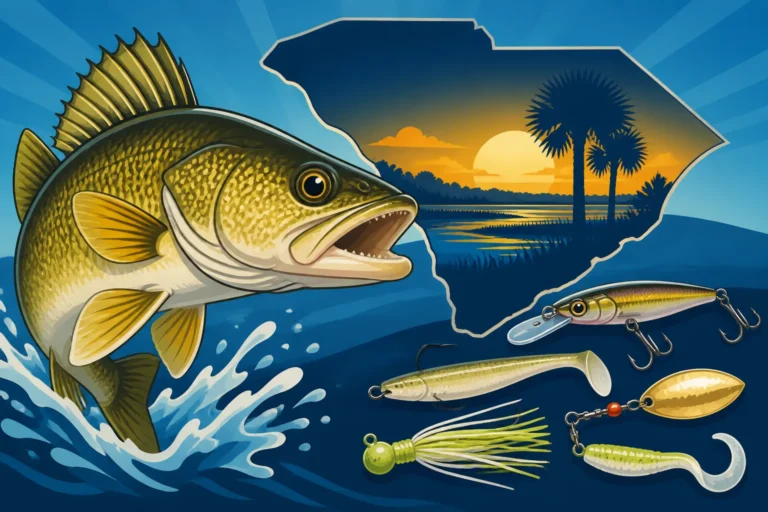
- Underspins and Swimbait Heads: Pairing a small soft plastic swimbait with an underspin jig head can be very effective in clearer water, mimicking shad or other baitfish that spotted bass love to chase. This technique works well for covering open water around main lake structures.
- Topwater (Smaller Profiles): While not as common as largemouth, spotted bass will absolutely smash topwater lures, especially smaller poppers or walking baits, when they are feeding on baitfish near the surface, typically around rocky points or shallow humps in the early morning.
- Spoons: Vertical jigging spoons can be a killer technique for spotted bass suspended over deeper structures, especially in winter or when they're congregated around bait balls. Knowing the Winter Fishing Techniques in South Carolina Lakes can be very beneficial here.
Remember, fish behavior changes with the seasons and weather. Always consult a resource like the South Carolina Freshwater Fishing Calendar or our Best Time of Year to Fish in South Carolina to understand what the bass might be doing at any given moment. Adaptability is key, and the more you learn to differentiate between these fantastic fighting fish, the better angler you'll become!
Disclaimer
This article is for general informational purposes only and does not constitute professional advice. Laws, prices and regulations vary by location and change over time. Consult a qualified professional for guidance on your specific situation.