Largemouth Bass Fishing in South Carolina: The Complete Guide
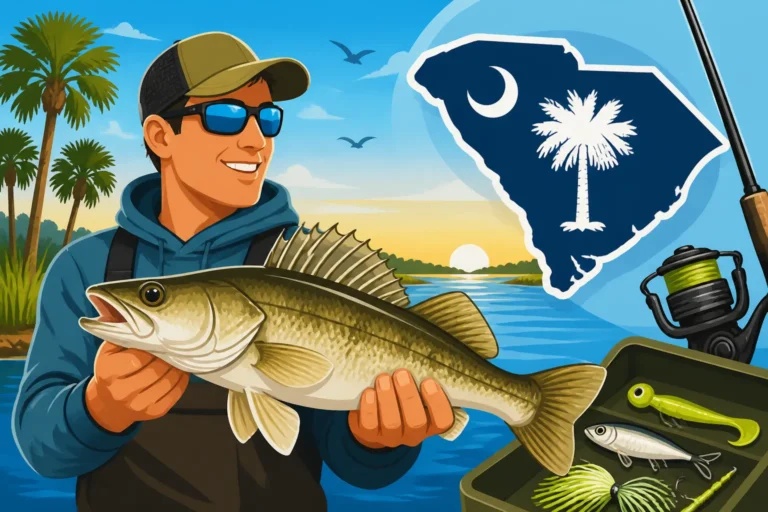
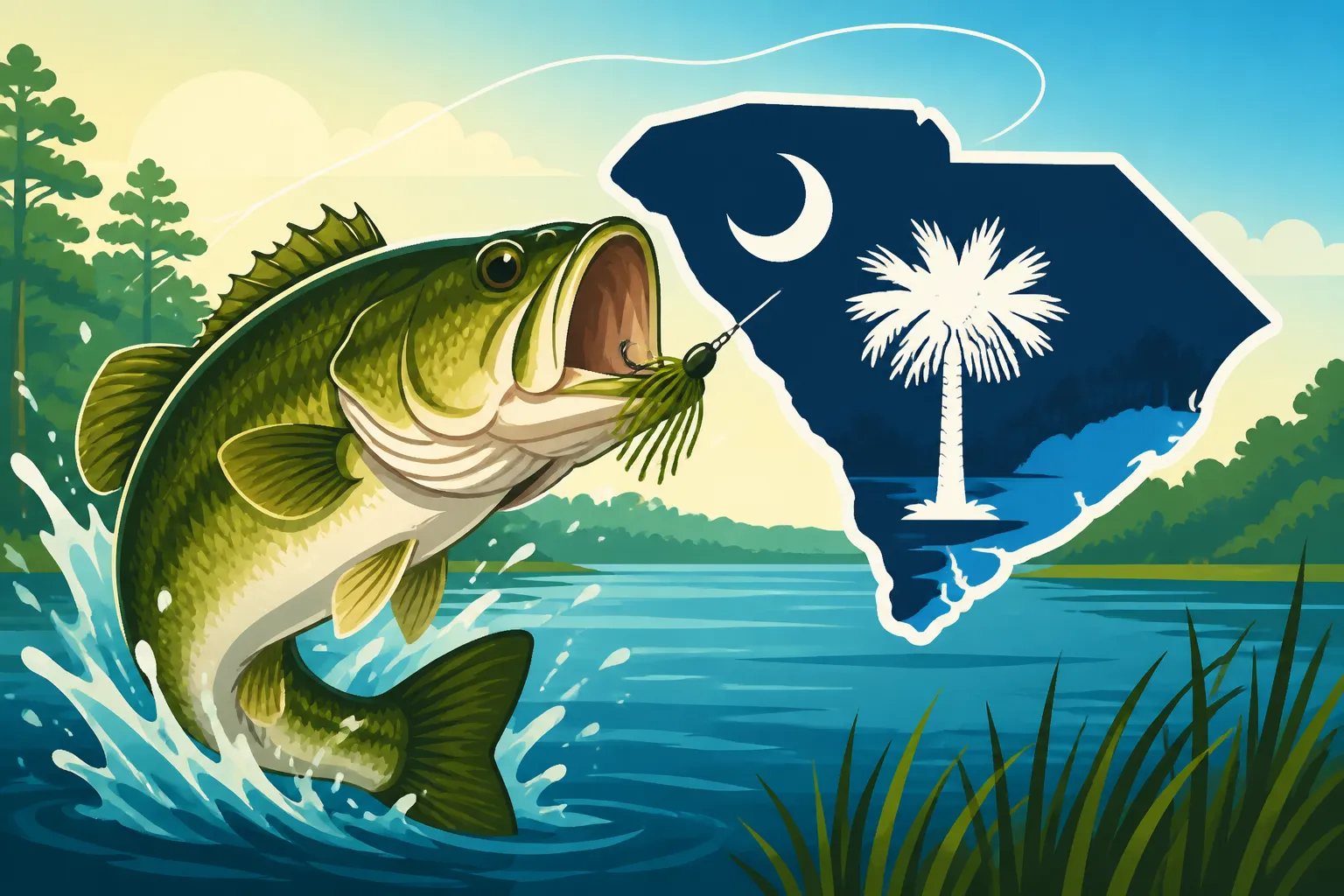
For anyone who’s ever felt that heart-stopping thump on the end of their line, you know the thrill of chasing largemouth bass. South Carolina, with its incredible network of lakes and rivers, offers some truly phenomenal opportunities for these hard-fighting fish, but knowing where to start and what to use can feel a bit overwhelming. This comprehensive guide is here to walk you through everything you need to know to successfully target and land largemouth bass across the Palmetto State, from understanding their habits to mastering the right techniques.
Understanding the Largemouth Bass in South Carolina
Largemouth bass are the undisputed champions of freshwater sportfishing in South Carolina, and for good reason. They're aggressive, challenging, and plentiful, making them a favorite target for anglers of all skill levels. But what exactly makes a South Carolina largemouth tick? Getting inside their "heads" is the first step to consistent success.
The Biology and Behavior of South Carolina Largemouth
The largemouth bass (scientific name: Micropterus salmoides) is easily identifiable by its prominent lower jaw that extends beyond the rear edge of its eye when closed. In South Carolina's diverse waters, these fish thrive, adapting their diet and habits to local conditions. They are ambush predators, meaning they love to hide in cover – think submerged timber, thick grass beds, dock pilings, or rocky outcrops – and dart out to snatch unsuspecting prey. Their keen eyesight and sensitivity to vibrations make them incredibly effective hunters.
Understanding their behavior means knowing they are largely influenced by water temperature, light conditions, and the availability of food. As warm-blooded creatures, their metabolism speeds up in warmer water, making them more active and aggressive feeders. Conversely, cooler water slows them down. This biological truth dictates everything from where they hold to what baits they prefer, so paying attention to the weather and water conditions is paramount.
Largemouth bass are also territorial, especially during spawning season, and will often guard prime feeding or nesting spots. This territoriality can be exploited by anglers who present a bait in a way that appears threatening or as an easy meal. They are not solitary creatures, often congregating in schools around structure, especially when they are younger. Knowing these fundamental behaviors helps you predict their movements and ambush points.
Average Size and Growth Rates in Palmetto State Waters
South Carolina is known for producing some truly impressive largemouth bass, with numerous lakes holding legitimate trophy potential. While the average largemouth you'll encounter might be in the 1-3 pound range, it's not uncommon to hook into fish weighing 5, 8, or even over 10 pounds, particularly in the state's larger reservoirs. The growth rate of these fish is heavily influenced by factors like water temperature, food availability, and the overall health of the ecosystem.
In rich, fertile lakes with abundant forage like shad, bluegill, and crawfish, largemouth bass tend to grow faster and achieve larger sizes. A fish that might take five years to reach five pounds in a less productive pond could hit that mark in three years in a nutrient-dense reservoir. This is why certain lakes consistently produce bigger fish. Anglers often chase the elusive "double-digit" bass, a fish weighing 10 pounds or more, which represents a significant accomplishment and a testament to the health of South Carolina's fisheries. Keep in mind that consistent growth also means they need a healthy environment, so responsible angling and conservation practices are key to maintaining these populations for future generations.
Habitat Preferences and Favorite Hangouts
Largemouth bass are masters of their environment, and their habitat preferences are a roadmap for anglers. They are structure-oriented fish, meaning they gravitate towards anything that offers cover, shade, or an ambush point. This could be anything from a sprawling hydrilla bed in Lake Murray to a sunken tree in the Edisto River. Understanding these preferences helps you narrow down your search.
In lakes, you'll often find them along grass lines, under lily pads, around submerged timber, near rock piles, and especially around boat docks and bridge pilings. Points, humps, and ledges where depth changes abruptly are also prime locations, as these offer easy access to deeper, cooler water while still being close to shallow feeding grounds. In rivers, they'll hold in eddies, behind current breaks, around fallen logs, and in oxbows where the current is slower. When the sun is high and bright, they'll seek out shade; on cloudy days or during low light, they might be more active in open water. Always consider what provides them with cover from predators, a good ambush point for prey, and a comfortable temperature zone.
Prime Largemouth Bass Fishing Spots in South Carolina
South Carolina boasts an incredible array of freshwater fishing opportunities, and for largemouth bass anglers, certain spots have legendary status. Whether you're chasing quantity or that once-in-a-lifetime trophy, the Palmetto State has a lake or river system for you.
Legendary Lakes: Santee Cooper and Lake Murray
When you talk about largemouth bass fishing in South Carolina, the conversation inevitably starts with the Santee Cooper Lakes and Lake Murray. These expansive reservoirs are not just big bodies of water; they are true bass factories, consistently producing both numbers and trophy-sized fish. It's no wonder they host countless tournaments and draw anglers from across the country.
The Santee Cooper Lakes: South Carolina's Legendary Bass Fishery — Lake Marion and Lake Moultrie — cover over 170,000 acres, offering an astounding variety of habitat. Here, you'll find vast cypress forests, expansive grass beds, stump fields, and numerous creek channels. The sheer size and diversity mean that bass can be found in almost any type of cover imaginable. Anglers often target the cypress trees in Lake Marion for flipping and pitching jigs and soft plastics, while the open waters of Lake Moultrie can be excellent for schooling bass hitting topwater lures. The diversion canal connecting the two lakes is also a hot spot, offering consistent current that draws baitfish and, consequently, hungry bass. This system is a true gem, offering a chance at a true monster largemouth.
Then there's Lake Murray Fishing Guide for South Carolina Anglers, often called the "Jewel of South Carolina." While famous for its striped bass, Lake Murray also boasts a thriving largemouth population. This lake is known for its clear to stained waters, deep ledges, submerged humps, rocky points, and extensive docks. During the spring, anglers flock to the shallower coves and feeder creeks for spawning bass. In the summer, the bass retreat to deeper waters, often congregating on offshore structure, making techniques like deep cranking and Carolina rigging highly effective. Its proximity to Columbia makes it a popular choice for local anglers, and it consistently produces solid catches. Both of these lakes provide exceptional opportunities for anglers willing to put in the time to learn their vast waters.
Upstate Gems: Lake Hartwell, Keowee, and Greenwood
While Santee Cooper and Murray often steal the spotlight, the Upstate region of South Carolina offers its own fantastic bass fishing on beautiful, clear-water lakes. These reservoirs present a different challenge and often a different experience compared to their larger, mid-state counterparts.
Lake Hartwell Fishing Spots on the South Carolina-Georgia Border is a stunning reservoir that often gets overlooked for its largemouth potential in favor of its spotted bass. However, trophy largemouth certainly call Hartwell home. Known for its clear water, rocky points, deep humps, and standing timber, Hartwell requires a more finesse approach at times, but can also produce explosive topwater action. The Tugaloo River arm, with its submerged timber and creek channels, is a particularly productive area for largemouth. Fishing around docks and brush piles can also yield excellent results.
Lake Keowee is another breathtakingly clear lake, nestled in the foothills of the Blue Ridge Mountains. Its deep, pristine waters are more associated with spotted bass and trout, but largemouth bass are present and can be quite large. They tend to hold tight to cover in Keowee's clear waters, making a stealthy approach and precise presentations crucial. Look for them around boat docks, rocky points, and submerged timber. Lake Greenwood, on the other hand, is a more fertile, stained-water lake. It has a great population of largemouth, and anglers often find success targeting grass beds, stumps, and dock structures. Greenwood offers a more traditional shallow-water bass fishing experience in many areas, particularly in its numerous creeks and coves. Each of these Upstate lakes offers a unique angling adventure with plenty of largemouth to be caught.
River Systems and Smaller Ponds for Largemouth
Beyond the major reservoirs, South Carolina's rivers and countless smaller ponds also hold fantastic largemouth bass fishing opportunities, often with less pressure than the big lakes. These more intimate settings can be incredibly rewarding.
The state's river systems, such as the Edisto, Congaree, Broad, and Wateree, provide excellent habitat for largemouth. These rivers often feature abundant fallen timber, cypress trees, and oxbow lakes that create ideal ambush points. River bass tend to be strong fighters due to the constant current. When fishing rivers, look for areas where the current breaks, like behind sandbars, fallen trees, or along steep banks. These current seams are natural feeding lanes for bass. Kayak and canoe anglers find particular joy in exploring the less accessible stretches of these rivers, often discovering untouched pockets of aggressive largemouth.
Don't overlook the myriad of smaller public and private ponds scattered across South Carolina. Many of these ponds are managed for fishing and can produce incredible numbers of bass, and sometimes even a trophy. Farm ponds, community lakes, and even some golf course ponds can be honey holes. While some require permission, others are open to public access. Fishing in ponds often means less boat traffic and a chance to truly focus on individual pieces of structure. A simple Texas-rigged worm or a spinnerbait can be incredibly effective in these smaller, often shallower, bodies of water. Always remember to check South Carolina's Freshwater Fishing Regulations before heading out, especially concerning private property.
Seasonal Strategies for Largemouth Bass in South Carolina
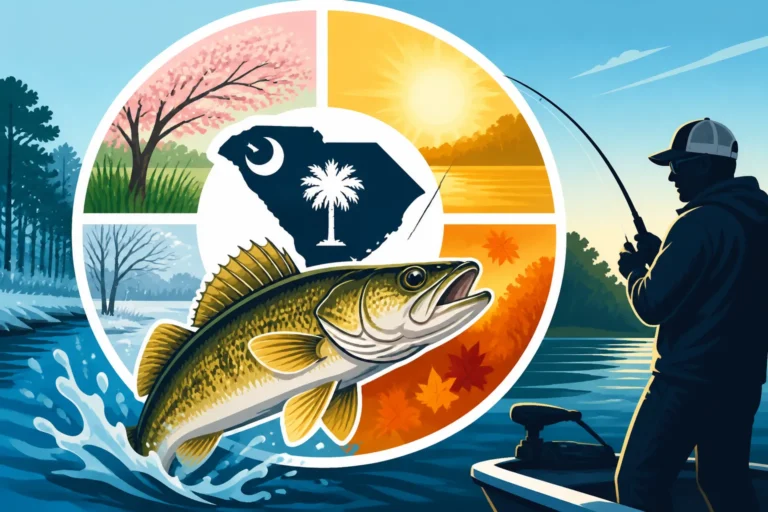
Largemouth bass are highly responsive to environmental changes, particularly water temperature. This means that successful bass fishing in South Carolina is a year-round endeavor, but your tactics need to adapt with the seasons. What works in spring won't necessarily be effective in summer, and vice-versa.
Spring: Pre-Spawn and Spawn Tactics
Spring is arguably the most anticipated time of year for bass anglers in South Carolina, marking the crucial pre-spawn and spawning periods. As water temperatures begin to climb from the mid-50s into the 60s Fahrenheit, largemouth bass migrate from their deeper wintering grounds towards shallower spawning areas.
During the pre-spawn phase, usually from late February through April, bass are aggressively feeding to build up energy for the upcoming spawn. They'll often stage on points, humps, and ledges near deeper water, making them accessible to a variety of baits. This is a fantastic time for crankbaits, spinnerbaits, and lipless crankbaits, which allow you to cover water quickly and find active fish. As the water warms further, moving into the high 50s and low 60s, bass will move into shallower coves, flats, and pockets. Largemouth Bass Spawn Timing in South Carolina Reservoirs varies slightly by region and specific water body, but typically occurs from March into May. Bass will seek out hard bottoms like gravel, sand, or shell beds, often near some form of cover such as a dock, log, or brush pile, to build their nests. This is when sight fishing becomes popular, as you can often spot male bass guarding their beds. Soft plastics, especially Texas-rigged worms or creature baits, pitched carefully into these beds can provoke a strike from a protective male. Remember that during the spawn, female bass are often heavier with eggs, so practicing careful catch and release is especially important to ensure future generations.
Summer: Deep Water and Early Morning Bites
Once the water temperatures consistently hit the 70s and climb into the 80s, South Carolina's largemouth bass typically shift their patterns dramatically. The summer heat often pushes fish out of shallow, open water and into deeper, cooler havens, or causes them to feed primarily during low-light conditions.
During the scorching summer days, you'll often find largemouth bass seeking refuge in deeper water, often holding to thermoclines (layers of water with distinct temperature differences). This means fishing offshore structures like ledges, humps, deep points, and submerged timber becomes paramount. Techniques like deep cranking with large-lipped crankbaits, slow-dragging a Carolina rig with a lizard or worm, or dropping a jigging spoon become incredibly effective. Finding these deep-water schools can be challenging but highly rewarding once you locate them. Electronic fish finders become invaluable tools for identifying these submerged structures and the fish holding to them. Many anglers also find success by targeting brush piles that guides or other anglers have sunk in deeper areas.
Alternatively, the best shallow water action in summer often occurs during the low-light periods of dawn and dusk. Before the sun gets high and hot, bass will venture into shallower areas to feed. Topwater lures like poppers, walking baits, and buzzbaits can produce explosive strikes in the early morning or late evening. Fishing around docks, seawalls, and over grass beds at these times can be very productive. Night fishing for largemouth bass, particularly on full moon nights, can also be a unique and highly effective summer strategy. What Time of Day Do Bass Bite Best? often depends entirely on the season and water temperature.
Fall and Winter: Transition and Cold Water Approaches
As summer heat gives way to cooler autumn temperatures, largemouth bass undergo another significant transition, preparing for the lean months of winter. This "fall feeding frenzy" can offer some of the most exciting fishing of the year in South Carolina.
In the fall, as water temperatures drop into the 60s, bass become incredibly active, aggressively feeding to put on weight for winter. They often follow baitfish, like shad, into creek arms and shallower coves. This is an excellent time for reaction baits that mimic fleeing baitfish, such as spinnerbaits, lipless crankbaits, and jerkbaits. Schools of bass can often be found chasing bait on the surface, making topwater baits effective, especially during cloudy days. Focus on points, humps, and the backs of creeks where baitfish tend to congregate. The bass are often easier to locate during this time as they actively hunt.
Winter fishing in South Carolina presents a different, often more challenging, but potentially very rewarding scenario. As water temperatures drop into the 40s and low 50s, bass become sluggish and less active. They typically retreat to deeper, more stable water, often suspending over deep channels or holding tight to bottom structure. Your presentation needs to slow down considerably. Techniques like slow-rolling spinnerbaits, dragging jigs, or fishing suspending jerkbaits with long pauses can be effective. Drop-shot rigs and shaky head jigs fished slowly on the bottom are also excellent choices. While you might not catch as many fish in winter, the ones you do catch can often be larger, as the big fish are often the most resilient to the cold. Patience is truly a virtue during the winter months.
Top Baits and Lures for South Carolina Largemouth Bass
Choosing the right bait or lure is often the most discussed topic among bass anglers, and for good reason. With so many options available, understanding when and where to use specific baits for South Carolina largemouth bass can make all the difference.
Soft Plastics: Worms, Creatures, and Jerkbaits
Soft plastics are perhaps the most versatile and consistently effective category of lures for largemouth bass, especially in South Carolina's diverse waters. Their ability to imitate a wide range of forage, from worms and crawfish to baitfish, makes them indispensable.
The classic plastic worm is a staple for a reason. How to Rig a Texas-Rig Worm for Bass is a fundamental skill every angler should master, allowing you to fish weedless in heavy cover. Worms come in countless colors, sizes, and tail designs, each offering a different action. Stick worms, like the popular Senko-style baits, have an incredible subtle fall that drives bass crazy, especially around docks and grass edges. Creature baits, with their flapping appendages and bulky profiles, excel at imitating crawfish or other aquatic critters. They are fantastic for flipping and pitching into dense cover, provoking reaction strikes. Flukes and other soft jerkbaits, fished weightless or with a light weight, are deadly when bass are targeting shad or other baitfish, offering an erratic, darting action that triggers strikes. You can find a vast selection of these on platforms like Amazon, making it easy to experiment with different brands and styles.
The key to soft plastics is understanding how to present them. Slow, subtle retrieves often work best, allowing the lure's natural action to entice bites. Varying your retrieve speed, adding pauses, and twitching the rod tip can make a huge difference. Colors are also important; natural tones like green pumpkin, junebug, and black/blue are always reliable, but don't shy away from brighter colors in stained water. The beauty of soft plastics lies in their adaptability, allowing you to tailor your presentation to the specific conditions and mood of the bass.
Hard Baits: Crankbaits, Jerkbaits, and Topwaters
Hard baits provide a different approach, often covering water more efficiently and eliciting aggressive reaction strikes from active bass. This category includes a wide array of lures, each designed for a specific purpose.
Crankbaits are fantastic for searching for bass and fishing at specific depths. Shallow-diving crankbaits are great for covering flats and shallow points, deflecting off cover to trigger strikes. Medium and deep-diving crankbaits are essential for targeting offshore structure in South Carolina's larger lakes, allowing you to reach bass holding on ledges and humps. The vibration and erratic wobble of a crankbait mimic a struggling baitfish, making it irresistible to hungry bass. Jerkbaits (hard body) are another excellent choice, particularly in cooler water or when bass are finicky. Their darting, suspending action, often punctuated by long pauses, can be deadly. They imitate a wounded baitfish perfectly, drawing strikes from bass that might ignore other presentations.
Topwater lures – including poppers, walk-the-dog style baits, and buzzbaits – offer some of the most exciting fishing experiences. There's nothing quite like a bass exploding on a lure fished on the surface. These are best used in low-light conditions, over grass beds, or when bass are actively chasing bait near the surface. Poppers create a disturbance with their cupped faces, while walking baits like a Heddon Super Spook Jr. glide enticingly across the surface. Buzzbaits create a commotion and propeller noise that can call bass up from surprising depths. Experiment with retrieve speeds and pauses to find what the bass prefer on any given day.
Spinnerbaits, Chatterbaits, and Jigs
These three categories of lures represent some of the most effective and time-tested options for largemouth bass, offering unique actions and versatility for different fishing scenarios in South Carolina.
Spinnerbaits are true workhorses, excellent for covering water, especially around grass, wood, and rock. Their flashing blades (Colorado, Willowleaf, or Indiana styles) and vibrating skirt create a tremendous amount of attraction, mimicking baitfish or even a crawfish. They are particularly effective in stained or muddy water where the vibration and flash help bass locate the lure. You can slow-roll them deep, burn them across the surface, or bump them off cover, making them highly adaptable. The combination of flash, vibration, and a weedless design makes them a go-to for many South Carolina anglers.
Chatterbaits, also known as bladed jigs, have taken the bass fishing world by storm due to their incredible vibrating action and ability to catch big fish. The unique blade attached to the jig head creates a rapid, erratic shimmy that drives bass wild. They excel when retrieved through grass, around docks, or over submerged stumps, often drawing violent strikes. A soft plastic trailer, such as a swimbait or a craw, enhances their appeal and adds bulk. You can find a wide variety of these popular lures on Amazon, allowing you to try different blade shapes and colors.
Jigs, whether football jigs, flipping jigs, or finesse jigs, are arguably the most versatile and consistent big-bass lures. They imitate crawfish, bluegill, or other bottom-dwelling prey. Flipping and pitching jigs into heavy cover like fallen trees, thick bushes, or deep docks is a classic technique for targeting trophy largemouth. Finesse jigs are excellent for pressured fish or colder water, while football jigs excel on rocky bottom or ledges. Adding a pork or soft plastic trailer enhances the jig's profile and action. Jigs require a patient, methodical approach but often reward anglers with the biggest bites.
| Lure Category | Best Use Cases | Key Features | Recommended Retrieval Style | Seasonal Effectiveness |
|---|---|---|---|---|
| Soft Plastics | Flipping, pitching, finesse, weedless fishing | Versatile shapes, subtle action, weedless rigging | Slow drag, twitch, hop, dead-stick | Year-round, especially pre-spawn/spawn |
| Crankbaits | Covering water, targeting specific depths | Wobble, vibration, dives to different depths | Steady retrieve, occasional pause | Spring, Fall, Summer (deep) |
| Jerkbaits | Suspending, imitating wounded baitfish | Erratic darting, long pauses, suspending | Twitch-pause-twitch, steady retrieve | Cooler water: Spring, Fall, Winter |
| Topwaters | Low light, over grass, shallow aggression | Surface disturbance, walking action, popping | Walk-the-dog, pop-pause, steady buzz | Warm water: Summer, Spring, Fall (early) |
| Spinnerbaits | Covering water, stained water, bumping cover | Flash, vibration, weedless design | Slow roll, burning, stop-and-go | Spring, Fall, Summer, Winter (slow) |
| Chatterbaits | Vibrating action, grass fishing, reaction bites | Erratic shimmy, strong vibration, weedless (often) | Steady retrieve, pump-and-drop | Spring, Fall, Summer |
| Jigs | Heavy cover, bottom fishing, trophy hunting | Imitates crawfish/bluegill, bulky profile | Hop, drag, shake, dead-stick | Year-round, excellent for big bass |
Essential Gear for Largemouth Bass Anglers in South Carolina
Having the right equipment can significantly impact your success and enjoyment on the water. While you don't need the most expensive gear to catch bass, investing in quality tackle suited for South Carolina's conditions will pay dividends.
Rods, Reels, and Line Choices
The foundation of any bass angler's setup is their rod, reel, and line combination. For largemouth bass fishing in South Carolina, most anglers rely on a versatile arsenal that includes both baitcasting and spinning gear.
Baitcasting setups are preferred for heavier lines, larger lures, and more powerful techniques like flipping, pitching, and deep cranking. A good all-around baitcasting rod might be a 7-foot medium-heavy fast-action rod, capable of handling lures from 3/8 to 1 ounce. For heavier cover or bigger baits, a heavy-action rod might be necessary. Pair this with a reliable baitcasting reel with a gear ratio appropriate for your technique – a faster gear ratio (7.1:1 or higher) for quickly retrieving slack or burning spinnerbaits, and a slower ratio (6.4:1 or lower) for crankbaits where power is key. Spinning gear, on the other hand, is ideal for lighter lines, finesse presentations, and casting smaller baits. A 6'6" to 7' medium-light or medium-action spinning rod with a fast tip, paired with a 2500 or 3000 series reel, is perfect for drop-shotting, shaky heads, or throwing small topwaters.
Line choice is critical and depends on the technique and cover. Monofilament line offers stretch, which can be forgiving for treble hook baits and topwaters, and is relatively inexpensive. Fluorocarbon line is nearly invisible underwater, offers low stretch for increased sensitivity, and sinks, making it excellent for bottom-contact baits like jigs and worms. Braided line has zero stretch, incredible strength-to-diameter ratio, and floats, making it ideal for fishing in heavy vegetation or for topwater frogs. Many anglers use braid as their main line with a fluorocarbon or monofilament leader. For purchasing options, sites like Amazon offer a wide range of reputable brands and types, allowing you to stock up on all your fishing line needs.
Electronics and Boat Accessories
For serious largemouth bass anglers, especially those targeting fish on larger reservoirs like Santee Cooper or Lake Murray, advanced electronics and smart boat accessories are no longer luxuries but necessities.
Modern fish finders with GPS capabilities are invaluable. Units that offer CHIRP sonar, side imaging, and down imaging allow you to see not just what's directly beneath your boat, but also detailed imagery of structure and fish to the sides. This helps immensely in locating submerged humps, ledges, brush piles, and even individual fish. GPS allows you to mark waypoints of productive spots, navigate safely, and follow contour lines. Many advanced units also integrate with mapping software, providing highly detailed charts of lake contours. Having multiple units – one at the console for navigation and one at the bow for precise fishing – is common among experienced anglers.
Beyond the fish finder, a reliable trolling motor is paramount for bass fishing. Foot-controlled electric trolling motors allow for precise boat positioning and hands-free operation while casting. Many modern trolling motors also integrate with GPS, offering features like "spot lock" to hold your boat in position, or the ability to follow a pre-programmed route. Other important boat accessories include a good battery system to power your electronics and trolling motor, an onboard charger, comfortable seating, and plenty of rod holders. A livewell is also essential for keeping your catch healthy, especially if you plan to participate in tournaments or practice catch and release for larger fish.
Angler Comfort and Safety Gear
Fishing, especially for largemouth bass, can often mean long hours on the water under varying conditions. Ensuring your comfort and safety is just as important as having the right rod and reel.
Protecting yourself from the elements is crucial. High-quality polarized sunglasses are a must-have for reducing glare and allowing you to see into the water, spotting structure and even bass. Sunscreen, a wide-brimmed hat, and breathable, UV-protective clothing will guard against sunburn and heat exhaustion during South Carolina's long, hot summers. A good rain suit is also a wise investment, ensuring you stay dry and comfortable during unexpected downpours, which are common in the Southeast. Comfortable, water-resistant footwear with good grip is also important for stability on wet boat decks or slippery banks.
Safety should always be a top priority. A properly fitting personal flotation device (PFD) for everyone on board is legally required and essential for safety, even if you're a strong swimmer. A first-aid kit stocked with essentials, including items for cuts, stings, and minor emergencies, is highly recommended. Other safety items include a fully charged cell phone, a whistle or air horn, navigation lights (if fishing at dawn/dusk or night), and a spare propeller if you're venturing far on a larger lake. Staying hydrated by bringing plenty of water or sports drinks is also critical, especially during the warmer months. Being prepared ensures you can focus on the fishing and enjoy your time on the water without unnecessary worries.
Largemouth Bass Fishing Techniques for Success
While having the right gear and knowing where the fish are is crucial, understanding how to present your lures effectively is what truly separates successful anglers from those who struggle. Largemouth bass fishing involves a variety of techniques, each suited for different conditions and cover types.
Flipping and Pitching Heavy Cover
Flipping and pitching are stealthy, precision casting techniques designed to present a bait quietly and accurately into heavy cover where bass often hide. These methods are essential for targeting largemouth bass in South Carolina's thickest vegetation, tangled laydowns, and dense docks.
Flipping involves using a long rod (typically 7'6" to 8' heavy action) and a specific pendulum motion to swing a weedless jig or heavy soft plastic (like a creature bait with a heavy sinker) into cover. You keep a short line out, often only extending a few feet from the rod tip, and control the bait's entry with your hand, ensuring a quiet splash. The goal is to drop the bait straight down into a small opening in the cover, minimizing disturbance. Pitching is similar but involves a slightly longer cast, using a gentle underhand lob to send the bait into targets that are a bit further away. Both techniques require a high level of accuracy and a quiet entry to avoid spooking the bass.
Once the bait is in the cover, it's often a short, sharp bite, so maintaining constant contact and being ready to set the hook immediately is vital. These techniques are particularly effective when bass are shallow and holding tight to thick cover, such as during the pre-spawn, spawn, or when heavy vegetation is abundant in warmer months. Heavy braided line (50-65 lb test) is often preferred for these methods to cut through vegetation and quickly extract a big fish from heavy cover. The reward for mastering flipping and pitching is often a direct confrontation with a large, unpressured bass.
Casting and Retrieving in Open Water
While heavy cover fishing is crucial, many largemouth bass, particularly during certain seasons or times of day, will roam in more open water or relate to less dense structure. This calls for various casting and retrieving techniques that cover water efficiently.
One of the most common approaches is simply casting and steadily retrieving a lure. This works well with crankbaits, spinnerbaits, chatterbaits, and even swimbaits. The idea is to find active fish by covering a lot of water and presenting a bait that mimics baitfish. Varying your retrieve speed, adding pauses, or incorporating twitches can often trigger strikes from following fish. For topwater lures, specific retrieve styles are critical. "Walking the dog" with a Zara Spook or a similar bait involves a rhythmic retrieve that makes the lure glide side-to-side across the surface, imitating a wounded baitfish. Poppers require a "pop-pause" retrieve, creating a splash and then letting the ripples dissipate before popping again.
When bass are suspending in open water, often over deep bait schools, casting and retrieving can still be effective, but with different lure choices. Suspending jerkbaits with long pauses can entice these finicky fish. Also, umbrella rigs (Alabama rigs) can be incredibly effective for mimicking a school of baitfish, allowing you to cast and retrieve multiple swimbaits through open water to intercept schooling bass. Pay attention to your electronics to identify baitfish schools and any bass that might be beneath or around them.
Deep Water Structure Fishing
As mentioned earlier, during the hot summer months or cold winter periods, largemouth bass often retreat to deeper, more stable water, making deep water structure fishing a highly effective strategy. This requires a different set of skills and an understanding of underwater topography.
Key deep-water structures include ledges, humps, points that extend into deep water, and offshore brush piles. These areas provide bass with cooler temperatures, access to baitfish, and cover. Locating these structures typically requires good electronics with detailed mapping. Once located, presentation is key. Deep-diving crankbaits are excellent for hitting specific depth ranges and bumping off structure, triggering reaction strikes. Carolina rigs, consisting of a heavy sinker, a swivel, a leader, and a soft plastic bait, are perfect for dragging along the bottom of deep structures, mimicking a crawfish or lizard. The weight keeps the bait on the bottom while the leader allows the bait to waft freely behind it.
Jigging spoons are another powerful deep-water tool, especially when bass are tightly schooled. You drop the spoon to the desired depth and then vertically jig it, imitating a dying baitfish. Drop shot rigs, which suspend a soft plastic bait above a weight, are excellent for presenting a lure precisely to fish holding tight to vertical structure or suspending just above the bottom. The key to deep water fishing is patience, precise boat positioning, and a keen understanding of your electronics to identify subtle changes in depth and locate fish.
Regulations and Conservation for Largemouth Bass in South Carolina
Responsible angling isn't just about catching fish; it's about ensuring future generations can enjoy the same opportunities. Understanding and adhering to South Carolina's fishing regulations and practicing good conservation habits are crucial for maintaining healthy largemouth bass populations.
Understanding Licensing and Bag Limits
Before you even make your first cast in South Carolina, the absolute most important step is to make sure you have the correct fishing license. South Carolina Fishing License Guide clearly outlines all the requirements, but generally, anyone aged 16 or older needs a valid freshwater fishing license. These licenses support the management and conservation efforts that keep our fisheries thriving, so it's money well spent. You can often purchase them easily online through the South Carolina Department of Natural Resources (SCDNR) website or at various retail locations.
Beyond the license, it's critical to understand the specific regulations for largemouth bass, particularly bag and size limits. These limits are put in place by the SCDNR to protect fish populations from overfishing and allow them to reproduce and grow. While statewide regulations exist, some specific lakes or river sections might have special regulations, so always double-check the latest SCDNR fishing guide for the particular body of water you'll be fishing. For largemouth bass, this typically includes a daily creel (bag) limit, specifying how many fish you can keep in a 24-hour period, and a minimum (or sometimes slot) size limit, meaning fish below or between certain lengths must be released. Disregarding these rules can lead to significant fines and penalties, so ignorance is no excuse. Always refer to the current South Carolina's Freshwater Fishing Regulations to ensure compliance.
Catch and Release Best Practices
Many largemouth bass anglers, particularly those targeting trophy fish or participating in tournaments, practice catch and release. This responsible approach ensures that big, healthy fish are returned to the water to spawn again and contribute to the population. However, simply tossing a fish back isn't enough; proper catch and release techniques are vital for the fish's survival.
Minimizing the stress on the fish is paramount. Try to land the fish as quickly as possible without "playing" it to exhaustion, especially in warmer water. Use barbless hooks or crush the barbs on your hooks to make removal easier and reduce tissue damage. When handling the fish, wet your hands first to protect its protective slime coat. Avoid touching its eyes or gills, as these are highly sensitive and easily damaged. If possible, keep the fish in the water while removing the hook. If you must remove it from the water, support its entire body horizontally, especially for larger fish, to avoid damaging its jaw or internal organs. Never hold a large bass vertically by its jaw alone.
For deep-caught fish, especially in hotter weather, consider using a fizzing tool to release air from their swim bladder if they are unable to swim down. This is particularly important if you see them floating on their side after release. Releasing fish gently headfirst into the water allows them to swim down easily. Observing the fish as it swims away helps ensure a successful release. These practices are not just good sportsmanship; they are crucial for sustaining the quality of South Carolina's largemouth bass fishing for years to come.
Protecting Our Bass Fisheries
Conservation goes beyond just licenses and catch and release; it encompasses a broader commitment to protecting the ecosystems that support our largemouth bass fisheries. Every angler has a role to play in this ongoing effort.
One of the biggest threats to bass fisheries is the spread of aquatic invasive species, such as hydrilla, giant salvinia, or zebra mussels. These non-native plants and animals can rapidly outcompete native species, destroy habitat, and disrupt the food chain. Always "Clean, Drain, Dry" your boat, trailer, and gear after every fishing trip to prevent the accidental transfer of these invaders from one body of water to another. This simple step can have a profound impact.
Furthermore, being mindful of your environmental footprint is key. Dispose of all trash properly – never leave discarded fishing line, plastic bait containers, or food wrappers by the water. Report any observed pollution or illegal fishing activities to the SCDNR. Consider joining local conservation groups or participating in lake cleanup events. Supporting organizations that advocate for clean water and healthy habitats directly benefits the bass populations we love to pursue. Ultimately, the health of South Carolina's largemouth bass fisheries depends on the collective efforts and responsible stewardship of all anglers.
Tips for Landing a Trophy Largemouth Bass in South Carolina
The pursuit of a trophy largemouth bass — often defined as a fish exceeding 8 or even 10 pounds — is a dream for many anglers. South Carolina certainly has the potential to produce these giants, but consistently catching them requires a specific mindset, targeted strategies, and a good dose of patience.
Targeting Bigger Fish with Specific Lures and Methods
Catching a truly massive largemouth often means adjusting your approach beyond what you'd typically do for numbers of average-sized fish. Big bass are older, wiser, and often more solitary, requiring different tactics.
Firstly, "big baits for big bass" is a mantra for a reason. While not exclusively true, larger lures tend to attract larger fish. This includes oversized jigs, large swimbaits (both soft and hard), substantial crankbaits, and big soft plastic creature baits. Think about the energy expenditure for a large bass; it wants a meal worth the effort. These larger presentations often imitate mature baitfish or substantial crawfish, which are staple foods for trophy bass. Another key method is fishing slowly. Big bass are often ambush predators that won't chase a fast-moving bait unless it perfectly triggers a reaction. Dragging a jig or Texas-rigged worm painstakingly slowly through heavy cover or along a deep ledge can be incredibly effective.
Consider also targeting specific times and conditions. Low light — dawn, dusk, or even night fishing — can be prime for trophy bass, as they often move shallower under the cover of darkness to hunt. Overcast days with a light drizzle can also put big bass on the prowl. Fishing before a cold front or during stable weather patterns can increase your chances, as bass are more predictable and aggressive during these times. Remember, South Carolina Largemouth Bass Record Chasers Guide often emphasizes dedication to these specific, often slower, techniques.
Reading the Water for Trophy Potential
The ability to "read the water" is a skill that develops over time, and it's particularly vital when hunting for trophy largemouth. This means understanding how currents, wind, sunlight, and different types of structure and cover influence where big bass position themselves.
When you look at a stretch of water, try to identify areas that offer distinct advantages to a large, dominant bass. This could be a particularly dense brush pile on a main lake point, a specific bend in a river with a deep eddy, a cluster of cypress trees that offers superior shade and ambush points, or the darkest shadow under a dock. These are the "power positions" where a big bass can comfortably hold, conserve energy, and ambush prey. Pay attention to changes in depth, bottom composition (rocky transitions, shell beds), and the presence of baitfish. Where there's bait, there are often predators.
Wind can be your friend when targeting big bass. A steady wind pushing into a bank or point can concentrate baitfish, creating a feeding zone. It also creates a "chop" on the water's surface, breaking up light penetration and making bass less wary. Conversely, on calm, clear days, big bass will often retreat to the deepest, darkest cover available. Observing bird activity (like herons or ospreys) can also give clues to baitfish presence, which in turn points to potential bass locations. Learning to piece together these environmental clues is a major step in consistently finding those elusive giants.
Patience and Persistence: The Keys to a Giant
Perhaps the most underrated, yet absolutely critical, elements in the pursuit of a trophy largemouth bass in South Carolina are patience and persistence. These are not fish you typically catch by accident; they are earned through dedication.
You might spend an entire day making hundreds of casts, meticulously working prime cover, and only get one bite. That one bite, however, could be the fish of a lifetime. The biggest bass didn't get big by being reckless, so they often require a slower, more deliberate approach. You might have to present a bait to the same piece of cover multiple times from different angles before you finally get a reaction. Don't be afraid to slow down your retrieve to an almost excruciating pace, especially in cold water or when fish are pressured.
Persistence also means being willing to fish through unproductive periods, knowing that the bite window for a big fish can be fleeting. It means venturing out in less-than-ideal weather conditions or waking up before dawn to capitalize on those prime low-light hours. It means learning from every cast, every missed bite, and every fish you catch, no matter the size. Keeping a fishing log, noting conditions, lures, and locations, can help you identify patterns over time. The anglers who consistently catch trophy bass are those who put in the time, maintain a positive attitude, and never give up on the idea that the next cast could be the one that connects them with a true South Carolina giant.
Disclaimer
This article is for general informational purposes only and does not constitute professional advice. Laws, prices and regulations vary by location and change over time. Consult a qualified professional for guidance on your specific situation.