How to Fish Deep Water From a Boat
Ah, the age-old dilemma: you're out on a gorgeous South Carolina lake, the sun is shining, but the fish seem to have vanished into thin air. Many anglers get frustrated when the shallow bite disappears, not realizing that their target species have simply moved to deeper, more comfortable waters. This guide is all about equipping you with the knowledge and techniques to confidently fish those deeper sections from your boat, turning those "tough days" into successful adventures.
Understanding Deep Water Environments
When the weather heats up or other conditions change, fish don't just disappear; they seek refuge in the cooler, more stable environment of deeper water. Learning to read these submerged landscapes is crucial for consistent success, especially in vast reservoirs like Lake Murray or the Santee Cooper Lakes.
The Thermocline Effect
One of the most critical factors influencing deep water fish behavior is the thermocline. Imagine a lake or reservoir having distinct layers, much like a layer cake. In warmer months, the top layer (epilimnion) is warm and oxygen-rich, but often too hot for many game fish. The bottom layer (hypolimnion) is much colder but can become depleted of oxygen. Between these two is the thermocline – a transition zone where the water temperature changes rapidly. This layer often acts as a highway or a ceiling for fish, as it usually has the most comfortable temperature and a good balance of oxygen. Identifying the depth of the thermocline with your electronics is like finding the "strike zone" for many deep-dwelling species.
Understanding the thermocline means you're not just casting blindly; you're targeting a specific depth range where fish are most likely to be active. For instance, on a hot July afternoon, the bass might be suspended just above or within the thermocline, avoiding the scorching surface water. Learning how water temperature affects fish feeding patterns is key to adjusting your approach, which is why a keen eye on your fish finder's temperature gauge can be a game-changer.
Identifying Key Structures Beneath the Surface
Just like in shallow water, deep water has its own "neighborhoods" and highways that fish use for feeding, hiding, and migrating. These submerged structures are magnets for baitfish, and where the bait goes, the predators follow.
- Ledges and Drop-offs: These are underwater cliffs or sharp changes in depth, providing ambush points for predators. Fish can sit on the deeper side, waiting for bait to swim by on the shallower flat, or vice-versa.
- Humps and Ridges: Submerged hills or long underwater spines that rise from the bottom. These act as high points that attract baitfish and give predatory fish an elevated vantage point. For example, knowing how to fish Dreher Island's submerged humps for South Carolina stripers can be incredibly productive.
- Old Riverbeds and Creek Channels: Before many of South Carolina's lakes were impounded, they were river valleys. The old riverbeds and creek channels, often identifiable by their distinct contours, act as migration routes and holding areas for fish, especially when they move between shallow and deep water.
- Submerged Timber and Brush Piles: Man-made or natural, these underwater forests and brush piles offer cover, shade, and excellent ambush points for a variety of species, from crappie to largemouth bass. They are often found along ledges or in old creek beds.
- Roadbeds and Foundations: Believe it or not, submerged roads, old bridge abutments, and even house foundations from pre-inundation days can be fantastic fish attractors. These provide unique hard cover and structure that fish utilize.
Mastering Boat Positioning Techniques for Bass Fishing becomes vital when you're trying to work these structures precisely. You'll want to use your trolling motor to stay on top of the desired depth contours and maximize your time in the strike zone.
Essential Gear and Technology for Deep Water Fishing
You wouldn't bring a butter knife to a steak dinner, right? Similarly, fishing deep water effectively requires specialized tools. While basic gear can land you a fish now and then, having the right equipment dramatically increases your chances of consistent success and makes the experience much more enjoyable.
Rods, Reels, and Lines for Depth
When you're trying to detect subtle bites in 30, 40, or even 60 feet of water, your tackle choice matters immensely.
- Rods: Look for longer rods, typically 7 to 7.5 feet, with a fast or extra-fast action. The length helps with longer casts, but more importantly, the fast action means the rod tip is very sensitive, allowing you to feel light bites from fish way down deep. A strong backbone is still necessary to set the hook and fight larger fish.
- Reels: For deep cranking or other techniques that require reeling in a lot of line, a baitcasting reel with a lower gear ratio (around 5.1:1 to 6.4:1) can be beneficial, providing more torque for hauling in those deep-diving baits. For techniques like dropshotting or vertical jigging, a sensitive spinning reel with a smooth drag is often preferred. You can find excellent options for sensitive graphite rods and strong baitcasting reels on retailers like Amazon, often with reviews from other anglers that can help guide your choice.
- Lines: This is perhaps the most critical component for deep water.
- Fluorocarbon: Known for its low stretch and invisibility underwater, fluorocarbon is fantastic for deep water. Its low stretch transmits even the lightest bites directly to your rod tip, and its higher density helps baits sink faster.
- Braided Line: While visible, braided line has virtually no stretch, offering unparalleled sensitivity. Many anglers use braided line as their main line, then tie on a fluorocarbon leader (6-15 feet) to maintain stealth. This combo gives you the best of both worlds: extreme sensitivity with a nearly invisible presentation.
Choosing the right line weight depends on your target species and the size of your lures, but generally, you'll want to go a bit heavier than you might for shallow water, as larger fish tend to reside in deeper areas and you'll be fighting them through more water resistance.
Electronics Are Your Best Friend
Trying to fish deep water without modern electronics is like trying to navigate a foreign city without a map or GPS – you might stumble upon something, but it's mostly guesswork. Your boat's electronics are your eyes underwater.
- Fish Finders (Sonar): This is non-negotiable. Modern fish finders utilize CHIRP sonar, down imaging, and side imaging to give you incredibly detailed views of the bottom and everything in the water column.
- 2D Sonar (CHIRP): The traditional view, showing arches for fish and the bottom contour. CHIRP technology offers much better target separation, allowing you to distinguish individual fish from bait balls or structure.
- Down Imaging: Provides a picture-like view directly beneath your boat, making it easier to identify submerged timber, brush piles, or rock formations with photographic clarity.
- Side Imaging: Scans out to the sides of your boat, revealing structure and fish far away from your direct path. This is invaluable for quickly locating humps, ledges, or schools of baitfish without having to drive directly over them.
- GPS and Mapping: Integrated GPS with detailed lake maps (often pre-loaded on modern fish finders) allows you to mark waypoints for productive spots, follow depth contours precisely, and return to exact locations. This is crucial for navigating vast bodies of water and pinpointing those subtle deep structures. If you find a school of baitfish or a group of fish on a particular hump, you can mark it, turn around, and present your lure right to them.
Investing in quality electronics pays dividends, especially when targeting fish that primarily live in deeper zones. These tools allow you to not just find fish, but to understand why they are there, helping you develop better patterns for success on any given day.
Techniques for Targeting Deep Water Fish
Once you've located some promising deep water structure and identified potential fish on your electronics, it's time to present your lure or bait. Deep water fishing often requires patience, precision, and a willingness to try different approaches until you crack the code for the day.
Vertical Jigging and Dropshotting
These techniques are all about finesse and precision, ideal when fish are concentrated in a specific area or holding tight to structure.
- Vertical Jigging: This technique involves dropping a jig, spoon, or other lure directly beneath your boat and working it up and down. It's incredibly effective when fish are suspended in the water column or tightly schooled on the bottom. You watch your electronics intently, drop your lure to the depth where you see fish, and then impart action. For example, if you see a tight school of crappie holding around a brush pile on Lake Moultrie, a small spoon or jig dropped directly into them can be deadly. The key is to keep your bait in the strike zone for as long as possible.
- Dropshotting: Originally a bass technique, dropshotting has proven incredibly versatile. It involves tying a hook directly to the main line (leaving a tag end), then tying a weight to the very end of that tag line. This allows your soft plastic bait to suspend horizontally at a chosen depth, just above the bottom, giving it a natural presentation without any weight influencing its action. It's fantastic for highly pressured fish or when they're lethargic. You can shake the bait gently without moving the weight, making it irresistible to finicky fish. This is a subtle but highly effective way to entice bites when other methods fail.
Both techniques rely heavily on your fish finder to place your bait accurately. Pay close attention to how fish react on your screen – do they move towards the bait? Do they ignore it? This feedback helps you adjust your presentation.
Deep Cranking and Carolina Rigging
When fish are more spread out or actively foraging over deep flats and ledges, techniques that cover more water can be highly effective.
- Deep Cranking: This involves casting deep-diving crankbaits that are designed to reach depths of 15-25 feet, sometimes even deeper, depending on line size and retrieve speed. These lures have large bills that dig into the water and pull the bait down, imitating baitfish. The goal is often to "deflect" the crankbait off submerged structure like a rock pile or a timber snag, which can trigger an aggressive reaction strike from bass or stripers. Good quality deep diving crankbaits can be easily found on Amazon, giving you plenty of options to choose from. Vary your retrieve speed and incorporate pauses to see what triggers a bite.
- Carolina Rigging: A classic deep water presentation, the Carolina rig consists of a heavy weight (like an egg sinker), a bead, a swivel, and a leader (typically 18 inches to 4 feet long) tied to a hook with a soft plastic bait. The weight drags along the bottom, creating a disturbance that attracts fish, while your bait floats freely behind it, presenting a natural, unweighted look. This rig is excellent for covering large areas of deep flats, ledges, and points, especially when targeting largemouth or smallmouth bass. The separation between the weight and the bait allows for a very natural presentation, even with a heavy weight getting it down deep.
These techniques are perfect for working those subtle contours and expansive deep zones where fish might be cruising rather than holding tight to one specific spot.
Live Bait Presentations
Sometimes, nothing beats the real thing. Live bait can be incredibly effective in deep water, especially for species like striped bass or catfish, which are often less finicky about presentation than, say, a highly pressured largemouth.
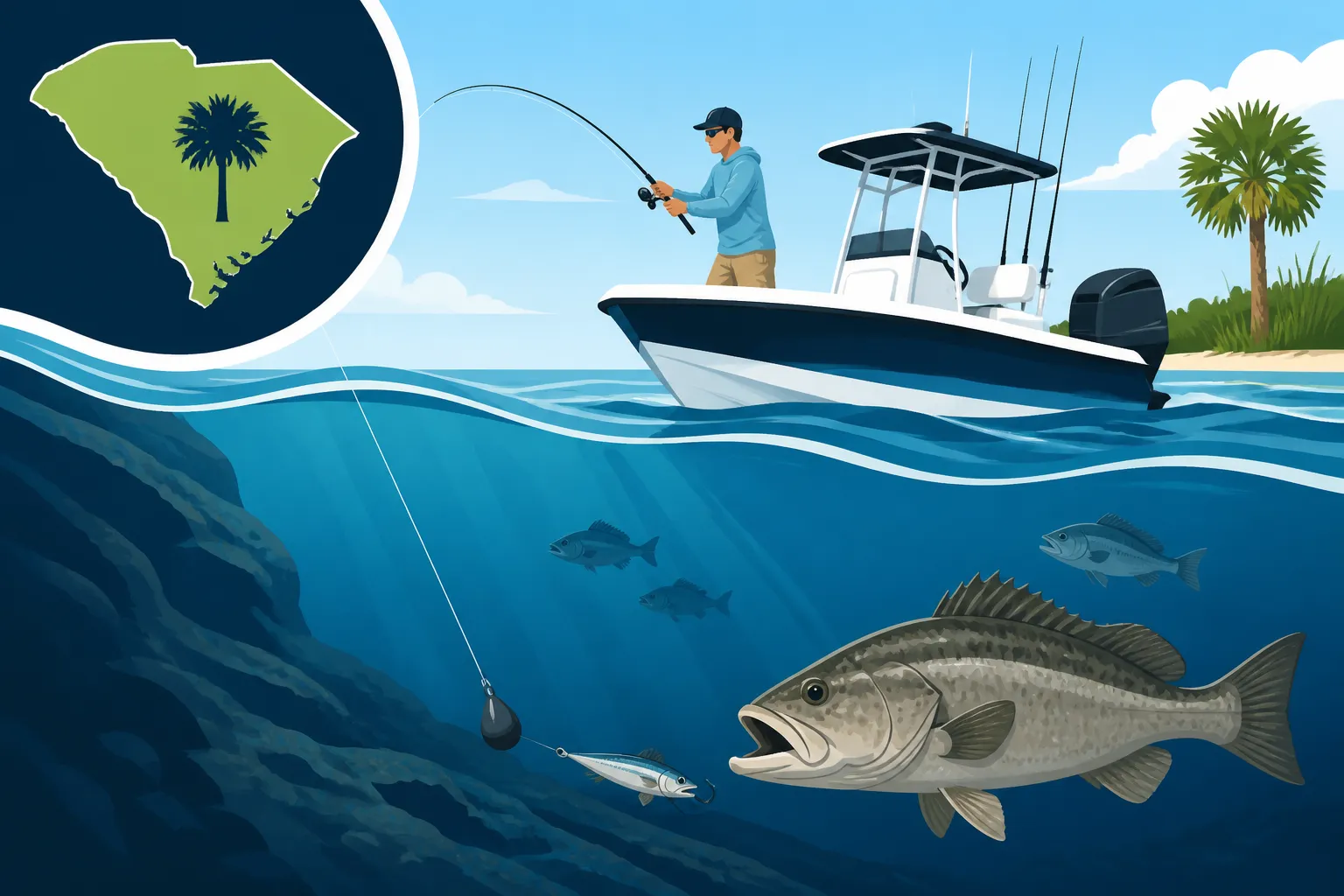
- Downlining: This technique involves suspending a live baitfish (like a shiner, shad, or blueback herring) beneath your boat using a heavy lead weight. You use your electronics to drop the bait precisely to the depth where you're seeing fish. This is a popular method for catching striped bass on Lake Murray or Lake Hartwell when they're schooled up deep in the summer.
- Bottom Rigging: For catfish or other bottom dwellers, a simple slip-sinker rig with a live or cut bait (like shad, worms, or chicken liver) can be deadly. You let the bait settle on the bottom in deep channels, holes, or along ledges. The beauty of a slip-sinker rig is that fish can pick up the bait and swim off without feeling the weight, allowing for a more natural take. This method is incredibly effective for targeting channel cats or blue cats in the deep holes of the Santee River or Congaree River.
Regardless of the live bait method, ensure your bait is fresh and lively. The frantic movements of a struggling baitfish often provide the irresistible trigger that makes a deep water predator strike.
Species to Target and Seasonal Considerations
South Carolina's diverse waterways offer a fantastic array of fish species that will readily take a deep water presentation. Understanding their seasonal movements and preferred deep water habitats will greatly improve your success.
Deep Water Targets in South Carolina
Many of our most sought-after species spend significant time in deeper water, especially during certain parts of the year.
- Striped Bass: South Carolina's official state fish, stripers are perhaps the quintessential deep water target. In the warmer months, they often retreat to the cooler, oxygenated depths of major reservoirs like Lake Murray, Lake Hartwell, and the Santee Cooper Lakes. They'll school up over humps, points, and old river channels, often feeding on large baitfish like blueback herring. Downlining live bait or pulling deep-diving planer boards are highly effective. For more specific information, check out our guide on Striped Bass: South Carolina's Official State Fish.
- Largemouth Bass: While often associated with shallow cover, largemouth bass will move deep, especially in summer and winter. They'll relate to offshore humps, deep ledges, brush piles, and creek channel bends. Deep cranking, Carolina rigging, dropshotting, and even football jigs can tempt these deep-dwelling bucketmouths. Understanding South Carolina Bass Fishing Techniques by Season will give you an edge in finding them throughout the year.
- Crappie: These panfish love deep brush piles, submerged timber, and bridge pilings. They often suspend in large schools, particularly during colder months or hot summers. Vertical jigging small jigs or minnows is a classic deep water crappie technique. The Best Crappie Fishing Spots on the Santee Cooper Lakes are well-known for producing excellent numbers of deep-water crappie.
- Catfish (Channel, Blue, and Flathead): Catfish are masters of the deep. They lurk in the deepest holes of rivers, along the bottoms of old creek channels in lakes, and around significant structure where current brings them food. Bottom rigging with cut bait, live bait, or stink baits in these deep, dark places is incredibly effective. The Santee Cooper Lakes: South Carolina's Legendary Bass Fishery is also renowned for its monster catfish.
- Trout (Rainbow, Brown): In the colder, deep waters of certain upstate lakes, you can even find trout. While many focus on stream fishing, these lake-dwelling trout often suspend in the cooler depths during summer. Trolling spoons or stickbaits at specific depths can be productive. Keep in mind that South Carolina Stocked Trout Limits Explained still apply, even in deeper lake environments.
Seasonal Movements to Deeper Water
Fish movements are heavily dictated by environmental factors, especially temperature and oxygen levels.
- Summer Heat: This is prime time for deep water fishing in South Carolina. As surface temperatures climb, many game fish seek the cooler, more stable environment of the thermocline and deeper structures. This is when stripers go deep, bass pull off offshore ledges, and crappie suspend over brush piles. Early mornings and late evenings might offer a brief shallow bite, but the midday heat usually sends them packing for the depths.
- Winter Cold: In colder months, while fish activity generally slows, many species will still concentrate in deeper, more stable water where temperatures fluctuate less. Bass might school up tightly on deep humps or channel bends, while crappie will often be found in large schools suspended over deep timber. Slow presentations, like slow-rolling a deep crankbait or vertically jigging, can be effective. Knowing How Cold Fronts Affect Fish Behavior is particularly important in winter, as fish can become lethargic and require very subtle presentations.
- Spring and Fall Transitions: While these seasons often bring fish into shallower waters for spawning or aggressive feeding, there are still periods where fish will utilize deep water. Pre-spawn bass might stage on deep points leading into spawning coves, and post-spawn fish may retreat to nearby deep cover. Fall migrations can see baitfish pushing into deeper channels, with predators following close behind. Checking the South Carolina Freshwater Fishing Calendar can help you anticipate these movements.
Deep water fishing isn't just a backup plan; it's a primary strategy for consistently catching fish in South Carolina's lakes and rivers. By understanding the environment, utilizing the right gear, and mastering specific techniques, you can unlock a whole new dimension of angling success. Always remember to check the latest South Carolina Fishing License Guide and regulations before heading out on the water!
| Technique | Target Species | Ideal Conditions | Key Gear |
|---|---|---|---|
| Vertical Jigging | Striped Bass, Crappie, Largemouth Bass | Fish suspended or tightly schooled, calm winds | Sensitive rod, braid/fluoro line, jigs, spoons, minnows |
| Dropshotting | Largemouth Bass, Smallmouth Bass, Crappie | Finicky or pressured fish, clear water | Spinning rod, light fluoro leader, dropshot weights, soft plastics |
| Deep Cranking | Largemouth Bass, Striped Bass, Walleye | Actively feeding fish, covering water, structure | Low-gear ratio baitcaster, deep-diving crankbaits, stout rod |
| Carolina Rigging | Largemouth Bass, Catfish, Spotted Bass | Searching deep flats/ledges, moderate activity | Medium-heavy casting rod, heavy weight, swivel, long leader, soft plastics |
| Live Bait (Downline) | Striped Bass, Catfish | Fish suspended or on bottom, often summer heat | Stout rod, heavy sinker, large circle hooks, live baitfish (shad, herring) |
Disclaimer
This article is for general informational purposes only and does not constitute professional advice. Laws, prices and regulations vary by location and change over time. Consult a qualified professional for guidance on your specific situation.