How to Fish a Spinnerbait for Bass
It's incredibly frustrating when you're out on the water, you know the bass are there, but they just won't commit to anything you're throwing. We've all been there, staring at a still line, wondering what magic lure will finally entice a bite. But what if there was one bait that consistently cuts through the finicky behavior, offering flash, vibration, and a meal all in one? This guide is going to walk you through everything you need to know about effectively fishing a spinnerbait for bass in South Carolina, turning those frustrating days into memorable catches.
Understanding the Spinnerbait Advantage for South Carolina Bass
Let's face it, bass can be moody. One day they want a slow-moving plastic, the next they're chasing anything that flies. That's where the spinnerbait truly shines. It’s not just a lure; it’s a full sensory experience for a bass, mimicking the look, feel, and even the "sound" of an easy meal. Many anglers, especially those new to bass fishing, often overlook the spinnerbait, but it's a staple in the tackle boxes of seasoned pros for a very good reason.
Why Spinnerbaits Excel in Diverse Conditions
Think about the various conditions you encounter on South Carolina's lakes and rivers. From the murky, stump-filled waters of the Santee Cooper lakes to the clear, rocky depths of Lake Jocassee, a spinnerbait has a place. Its design creates an irresistible combination of visual flash from the spinning blades and disruptive vibration that bass can detect from a distance, even in stained or muddy water. This dual appeal makes it incredibly versatile.
For instance, on a cloudy day, or in waters with less visibility like many of our coastal plain rivers after a rain, the vibration of a Colorado blade spinnerbait can be key. The fish might not see it clearly, but they sure can feel that thumping blade, drawing them in for a closer look. Conversely, on a bright, sunny day in clearer reservoirs like Lake Keowee, a willow leaf blade spinnerbait, with its intense flash, can imitate a fleeing shad, triggering aggressive reaction strikes. Plus, the single upward-riding hook design, often protected by the wire frame and skirt, makes spinnerbaits remarkably weedless. This means you can confidently cast them into heavy cover – lily pads, submerged hydrilla, brush piles, or flooded timber – places where other lures would snag instantly. This ability to penetrate thick cover gives you access to bass that might otherwise be unreachable, turning frustrating snags into productive casts.
Key Components of a Quality Spinnerbait
To truly appreciate and effectively fish a spinnerbait, it helps to understand its anatomy. Each part plays a critical role in how the lure performs and appeals to bass.
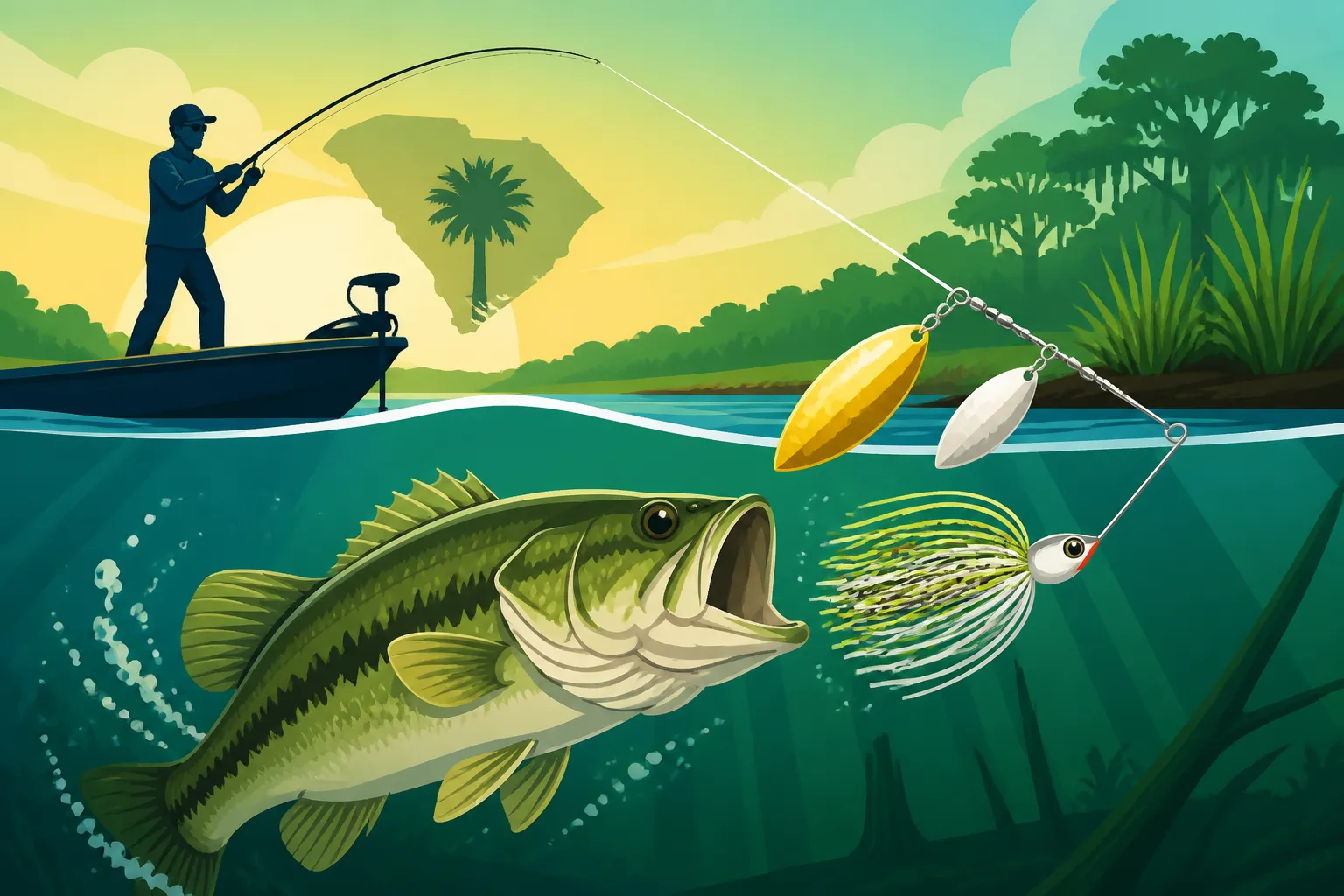
First, you have the wire frame, usually made of stainless steel. This V-shaped wire holds everything together and gives the spinnerbait its signature profile. One arm holds the blade(s), and the other leads to the hook and head. A good quality wire frame will be strong enough to withstand strikes from big bass and not bend out of shape too easily. Next is the head, typically lead, which dictates the weight and balance of the lure. It's often painted to resemble a baitfish head, with eyes for added realism. The weight of the head determines how fast the lure sinks and how deep you can fish it.
Then there's the skirt, usually made of silicone or living rubber strands, which flares out to give the spinnerbait body and action, mimicking the pulsations of a baitfish or crawfish. Skirt colors are crucial, and we’ll dive deeper into that later, but they often range from natural greens and browns to flashy whites, chartreuse, and vibrant mixes. And of course, the hook. Most spinnerbaits come with a single, stout hook designed to penetrate the tough mouth of a bass. Some anglers add a smaller, secondary "trailer hook" to catch fish that short-strike, meaning they nip at the back of the lure without fully engulfing the main hook. Finally, the blades are the heart of the spinnerbait’s appeal. They come in various shapes, sizes, and finishes, each creating a different amount of flash and vibration. Understanding these differences is key to matching the lure to the conditions. You can find a fantastic array of these components, from replacement skirts to different blade types, on Amazon to customize your spinnerbaits for any situation you encounter in South Carolina.
Mastering Spinnerbait Retrieve Techniques
A spinnerbait isn't just a "cast and reel" lure; its effectiveness is heavily influenced by how you retrieve it. Learning to vary your retrieve, sometimes even mid-cast, can unlock bites you wouldn't get otherwise. Think of it as having a conversation with the bass – sometimes you need to speak loudly and quickly, other times a soft whisper is more effective.
The Slow Roll: Deep Water and Cold Fronts
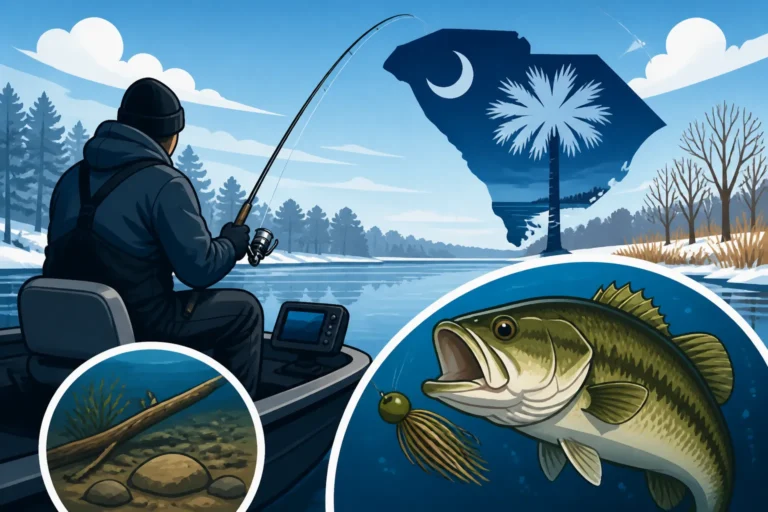
The slow roll is perhaps the most fundamental and often most effective retrieve for spinnerbaits, especially when bass are lethargic or holding deep. This technique involves a slow, steady retrieve, just fast enough to make the blades turn. Imagine a wounded baitfish, barely swimming, just above the bottom or along a structure. That's the imitation you're going for.
When to use it: This technique truly shines in colder water temperatures, like during the late fall or winter months on Lake Wateree, or when fishing deep structure. It's also incredibly effective after a cold front has moved through, making bass less active. If you're targeting bass that are suspended over ledges or holding tight to submerged brush piles, the slow roll allows the spinnerbait to stay in their strike zone for a longer period.
Step-by-step:
- Cast it out: Make a long cast past your target area.
- Let it sink: Allow the spinnerbait to sink to your desired depth. If you're fishing deep, count it down.
- Slow and steady: Begin a very slow retrieve, just enough to feel the subtle thump of the blades. You should be able to feel the blades working through your rod. If you stop feeling that thump, you're reeling too slow.
- Maintain contact: Try to keep your spinnerbait just above the bottom or ticking the tops of submerged cover without snagging. This takes practice and a feel for your lure.
- Anticipate the strike: Often, the strike on a slow roll will feel like a dull thud or simply a cessation of the blade vibration. Reel down and set the hook hard!
This technique is excellent for tempting inactive fish and can be incredibly productive, especially when the bass are buried in deep cover as described in our guide to How to Fish Deep Structure for Bass in Summer.
Burning and Bulging: Reaction Strikes
Sometimes, bass don't want a subtle meal; they want something that screams "eat me now!" That's where burning and bulging come in. These are aggressive, high-speed retrieves designed to trigger reaction strikes from active fish.
When to use it: This technique is perfect when bass are active and feeding, often during the pre-spawn period, low-light conditions at dawn or dusk, or when covering a lot of water quickly to find active schools. Think about early mornings on Lake Murray during the spring, when bass are cruising the shallow flats. The flash and commotion of a quickly retrieved spinnerbait can be irresistible.
Step-by-step:
- Cast into target zones: Aim for shallow cover, the edges of grass lines, or along riprap.
- Reel fast and furiously: Immediately upon splashdown, start reeling at a very high speed. The spinnerbait should be running just under the surface (bulging) or just on the surface, creating a noticeable wake.
- Vary slightly: While the core is speed, don't be afraid to add a slight twitch of the rod tip or a momentary pause (like a half-second stutter) to create an erratic action, which can often trigger a follow-up strike.
- Watch your line: Strikes on a burn or bulge are often violent. The fish will usually snatch the lure, and your line will go taut or jump.
This method is about creating a sense of urgency and chaos, making the bass react instinctively without much thought. It's a key technique for South Carolina Bass Fishing Techniques by Season, especially during periods of high activity.
Stop-and-Go and Bottom Bouncing: Finicky Fish
When bass are pressured or just a bit hesitant, a retrieve that mimics erratic movement or foraging on the bottom can be incredibly effective. The stop-and-go and bottom bouncing methods add an element of unpredictability that can convert followers into biters.
When to use it: These techniques are ideal for bass that are short-striking or simply following your lure without committing. If you're fishing a highly pressured lake near Charleston, or when the bite is tough, these subtle variations can make all the difference. They also work well around specific pieces of cover like isolated stumps or rock piles.
Step-by-step for Stop-and-Go:
- Cast and retrieve: Cast your spinnerbait and start a medium-speed retrieve.
- Pause, then go: After a few cranks, stop reeling for a second or two, letting the spinnerbait flutter or fall slightly. Then, quickly resume your retrieve.
- Vary the rhythm: Don't be predictable. Vary the length of your retrieve segments and the duration of your pauses. This erratic action can make the lure seem like a dying baitfish, an easy target.
Step-by-step for Bottom Bouncing:
- Deep cast: Cast to your target area and let the spinnerbait sink all the way to the bottom.
- Lift and drop: With your rod tip pointed down, make a sharp, upward sweep with your rod to lift the spinnerbait off the bottom.
- Controlled fall: Immediately drop your rod tip, allowing the lure to fall back to the bottom on a semi-slack line. Pay close attention to your line during the fall, as many strikes occur as the lure descends.
- Repeat: Reel up the slack and repeat the lift-and-drop motion, effectively "bouncing" the spinnerbait along the bottom, mimicking a crawfish or baitfish rooting for food. This can be deadly around rocky areas on Lake Hartwell Spring and Fall Bass Fishing Patterns in South Carolina.
Ripping and Tearing Through Cover
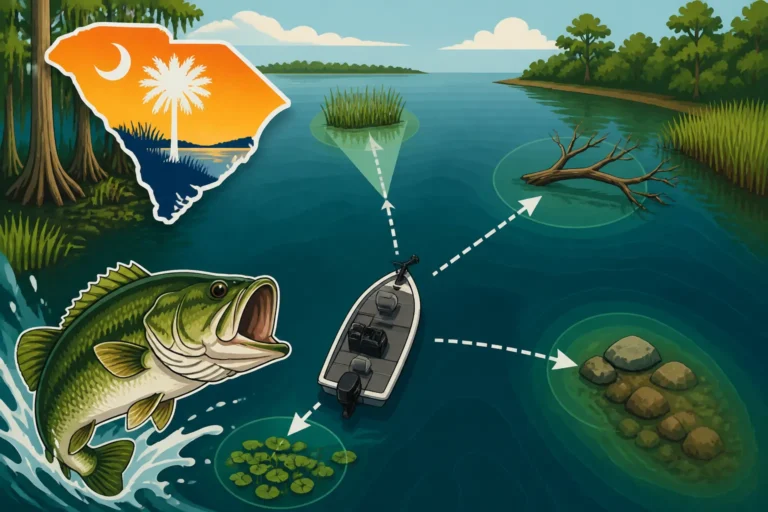
One of the greatest strengths of a spinnerbait is its ability to be fished effectively in heavy cover where other lures would simply get hung up. Bass love to ambush from dense cover, and a spinnerbait can be presented right in their living room.
When to use it: This tactic is fantastic when bass are holding tight to dense vegetation like lily pads, hydrilla mats, thick submerged grass, or even blowdowns and thick brush. On the Santee Cooper lakes, where hydrilla can be rampant, or along the banks of the Edisto River with its abundant fallen timber, ripping a spinnerbait through can provoke violent strikes.
Step-by-step:
- Heavy duty gear: Make sure you're using robust tackle – a medium-heavy or heavy power rod, braided line, and a stout spinnerbait.
- Cast into the thick stuff: Don't be shy. Cast directly into the densest cover you can find.
- Rip it out: Start reeling, and when you feel the lure connect with vegetation, give a sharp, upward rip of the rod to tear it free. This erratic, stop-and-start movement, combined with the sudden burst of vibration and flash, is often when a bass will strike aggressively.
- Don't give up: If it gets bogged down, don't just reel it in. Try to snap it free with a sharp rod twitch. Many strikes come just as the lure pops free from the cover.
This aggressive presentation capitalizes on the spinnerbait's weedless design and the bass's instinct to ambush prey that seems to be escaping.
Choosing the Right Spinnerbait for South Carolina Waters
Walking into a tackle shop or browsing online for spinnerbaits can be overwhelming. There are so many variations in blades, colors, and sizes. But don't fret! Understanding the core principles of matching your spinnerbait to the conditions will help you make confident choices, whether you're fishing a local pond or chasing trophy bass on Lake Murray Fishing Guide for South Carolina Anglers.
Blade Selection: Flash, Vibration, and Depth
The blades are the literal "bells and whistles" of a spinnerbait, creating the visual and vibratory appeal that draws in bass. There are three primary blade types, and knowing when to use each is crucial.
- Willow Leaf Blades: These are long, narrow, and resemble a willow leaf. They offer maximum flash, less vibration, and allow for faster retrieves and deeper running. They cut through the water efficiently.
- When to use: Ideal for clear water conditions, bright sunny days, and when you want to "burn" the lure or fish deeper without a lot of resistance. Great for imitating shad or other slender baitfish. Perfect for open water or sparsely vegetated areas on lakes like Hartwell.
- Colorado Blades: These are round and cupped, creating a tremendous amount of thump and vibration, but less flash. They also create more drag, making the lure run shallower and slower.
- When to use: Excellent for stained or murky water, low light conditions (overcast, dawn/dusk, night fishing), and for slow-rolling in colder water. The strong vibration helps bass locate the lure when visibility is poor. They are also good for fishing through heavy cover because they tend to "helicopter" down slower, giving bass more time to react.
- Indiana Blades: A hybrid between the willow leaf and Colorado, these are oval-shaped. They offer a good balance of flash and vibration, making them a versatile choice.
- When to use: When you're unsure of the conditions, or when bass seem to prefer something in between. They're a great "all-around" blade that can be effective in a variety of situations.
Often, spinnerbaits come with a combination of two blades (tandem), typically a larger Colorado blade up front for vibration and a smaller willow leaf blade in the back for flash. This combination is highly effective for many situations.
Color and Size: Matching the Hatch and Conditions
Beyond blades, the color of your spinnerbait skirt and the overall size of the lure are critical for success. You want to "match the hatch" – imitate the prevalent baitfish in the area – but also consider water clarity and light conditions.
- Skirt Colors:
- White and Chartreuse: These are classics for a reason. White is excellent for imitating shad, especially in clear to lightly stained water on bright days. Chartreuse (often combined with white or green) is fantastic for stained or murky water, or on overcast days, as its vibrant hue stands out. These are go-to colors for Best Lures for Largemouth Bass in Muddy Water.
- Natural Tones (Green Pumpkin, Brown, Black/Blue): These mimic crawfish or bluegill and work well in clearer water, especially around rocky banks or when bass are feeding on bottom-dwelling prey. A black and blue spinnerbait can be surprisingly effective in very dark or muddy water, as its silhouette shows up well.
- Fire Tiger/Bright Combinations: Sometimes, you need something loud. These flashy colors can trigger aggressive strikes when bass are highly active, especially in slightly turbid water.
- Spinnerbait Size (Weight):
- 1/4 to 3/8 ounce: Great for shallower water (under 8 feet), working over grass flats, or when bass are smaller and less aggressive. Also good for burning retrieves.
- 1/2 to 3/4 ounce: The most versatile range for deeper water, covering more ground, and appealing to larger bass. This is your workhorse size for many South Carolina lakes.
- 1 ounce +: For very deep water, strong currents, or when targeting truly monster bass that prefer a larger profile. You might use these when fishing for stripers that occasionally hit bass lures on big impoundments.
Remember, a good starting point is to use natural colors in clear water and brighter, more contrasting colors in stained or muddy water. As for size, if the baitfish are small, go smaller; if they're larger, upsize your spinnerbait. This applies to various scenarios outlined in Best Bait for Largemouth Bass in South Carolina Lakes.
Trailer Hooks and Soft Plastic Trailers
Even with the perfect spinnerbait, bass can sometimes be finicky and "short-strike," meaning they nip at the tail of the lure without getting the main hook in their mouth. This is where trailer hooks and soft plastic trailers come into play.
- Trailer Hooks: A trailer hook is a small, usually single, hook that you slide onto the main hook of your spinnerbait. It dangles freely, extending the effective hooking zone.
- Benefits: Dramatically increases your hook-up ratio, especially with light-biting or short-striking fish.
- Considerations: Can increase snagging in very heavy cover, so use judiciously. If you're constantly getting hung up, consider removing it. Many anglers find them indispensable, and you can buy a variety pack of trailer hooks on Amazon for different spinnerbait sizes.
- Soft Plastic Trailers: These are soft plastic baits (like grubs, small swimbaits, or chunks) that are threaded onto the main hook of the spinnerbait.
- Benefits:
- Increased Bulk/Profile: Adds more body to the spinnerbait, making it appear larger and more appealing to big bass.
- Enhanced Action: A soft plastic trailer can add a pulsating or swimming action, further mimicking a struggling baitfish. A curly-tail grub, for example, will kick and swim even on a slow retrieve.
- Color Contrast/Accent: You can use a trailer that contrasts with your skirt color to create an additional visual attractant.
- Types:
- Grubs: Single or double curly-tail grubs are classic choices, adding tail action.
- Swimbaits: Small paddle-tail swimbaits offer a realistic baitfish profile and wobble.
- Chunks: Often used to mimic crawfish, these are typically wider and flatter, adding bulk.
- Benefits:
Experiment with different trailer types and colors. Sometimes a subtle trailer makes the difference, other times a bulky one is what the bass want.
Advanced Spinnerbait Tactics and Gear
Once you've got the basics down, you can start refining your approach to spinnerbait fishing. This involves optimizing your gear and understanding how to apply these techniques to specific South Carolina fishing scenarios and seasonal changes. After all, the bass on Lake Marion might behave differently than those in a mountain stream!
Rod, Reel, and Line for Spinnerbait Success
Having the right tackle can significantly improve your spinnerbait fishing experience, offering better casting, control, and hook-setting power.
- Rods:
- Power: A medium-heavy (MH) power rod is generally the most versatile choice for spinnerbaits. It provides enough backbone to cast heavier lures, pull bass out of cover, and drive a stout hook home. For lighter spinnerbaits or more open water, a medium (M) power rod can offer more sensitivity.
- Action: A moderate-fast to fast action rod is ideal. This means the rod bends mostly in the top third or quarter of the blank. It allows for good casting distance and accuracy, yet still provides enough "give" to absorb aggressive strikes without ripping the lure out of the fish's mouth. The slightly softer tip of a moderate-fast action can also help with feeling those subtle blade thumps.
- Length: A 6'6" to 7'3" rod is standard. Longer rods offer better casting distance and leverage for fighting fish, while shorter rods can be more accurate for target casting in tight spots.
- Reels:
- Gear Ratio: A medium gear ratio baitcasting reel (around 6.3:1 to 7.1:1) is a great all-around choice. This allows you to perform both slow rolls and faster retrieves effectively. You can always slow down your retrieve with a faster reel, but you can't speed up a slow reel much.
- Durability: Choose a reel with a smooth, reliable drag system, as bass often make powerful runs, especially when hooked near cover.
- Line:
- Fluorocarbon: A popular choice for spinnerbaits (15-20 lb test). Its low stretch provides excellent sensitivity for feeling blade rotation and strikes, and its invisibility underwater is a huge advantage in clear water.
- Monofilament: A good option (17-20 lb test) for its stretch, which can act as a shock absorber during violent strikes, and its buoyancy, which can keep your spinnerbait a bit higher in the water column if desired. More visible than fluoro.
- Braided Line: Excellent for heavy cover (30-50 lb test) due to its incredible strength and zero stretch, allowing you to rip lures free from weeds and maintain direct contact with the fish. Its visibility can be an issue in clear water, so some anglers use a fluorocarbon leader.
Fishing Spinnerbaits in Specific South Carolina Scenarios
Knowing the general rules is one thing, but applying them to the unique characteristics of South Carolina's diverse fishing environments is where true mastery lies.
- Lake Murray: This "Jewel of South Carolina" is known for its incredible striped bass and largemouth bass fishery. For largemouth, spinnerbaits shine around the plentiful docks, brush piles, and submerged humps, especially during the post-spawn period. A tandem willow leaf spinnerbait in white or chartreuse, burned over deep grass beds or slow-rolled along channel swings, can be deadly. Check out our comprehensive Lake Murray Fishing Guide for South Carolina Anglers for more insights.
- Santee Cooper Lakes (Marion & Moultrie): These vast, interconnected lakes are famous for their cypress trees, hydrilla beds, and abundant stumps. Here, a Colorado blade or tandem spinnerbait in chartreuse, white, or a black/blue combination is a powerhouse. Rip it through the hydrilla, bump it off cypress trees, or slow-roll it through stump fields. The strong vibration will cut through the stained water prevalent in parts of these lakes. These lakes are truly legendary as discussed in Santee Cooper Lakes: South Carolina's Legendary Bass Fishery.
- Lake Hartwell: On the border with Georgia, Hartwell is characterized by clearer water, rocky points, and abundant submerged timber, especially in its Tugaloo River arm. Here, willow leaf or Indiana blades in shad-imitating colors (white, silver, pearl) are excellent. Target rocky points, submerged timber, and deep creek channels. A slow-rolled spinnerbait along the bottom of these structures, particularly during cooler months, can entice big bass. For more on this, see Lake Hartwell Spring and Fall Bass Fishing Patterns in South Carolina.
Seasonal Considerations for Spinnerbaits
Bass behavior changes dramatically with the seasons, largely driven by water temperature and spawning cycles. Adapting your spinnerbait approach to these seasonal shifts is crucial for consistent success.
- Spring (Pre-spawn and Spawn): This is prime time for spinnerbaits! As water temperatures rise into the 50s and 60s, bass move shallow to feed heavily before the spawn. Aggressive retrieves like burning or bulging a tandem willow leaf spinnerbait over shallow flats, around spawning pockets, or along creek channel banks can trigger explosive strikes. Think about targeting the areas where you know Largemouth Bass Spawn Timing in South Carolina Reservoirs is approaching.
- Summer: As waters warm significantly, bass often move deeper or seek refuge in heavy cover during the day. During low-light periods (early morning, late evening) or on overcast days, burning a spinnerbait over submerged grass beds or around docks can be effective. During the heat of the day, slow-rolling heavier spinnerbaits along deep points, ledges, or brush piles can coax lethargic fish.
- Fall: As water temperatures cool and baitfish begin to migrate, fall can be another fantastic spinnerbait season. Bass are actively feeding to pack on weight for winter. Covering water quickly with a medium-speed retrieve around schooling baitfish, secondary points, and creek channel bends can be highly productive. Tandem willow leaf blades in shad patterns are excellent choices as bass chase schools of bait.
- Winter: This is often when many anglers put away their spinnerbaits, but that's a mistake! While the retrieves will be much slower, a spinnerbait can still be very effective. A heavy Colorado blade spinnerbait, slow-rolled along deep breaks, creek channels, or the bottom of main lake points, can tempt sluggish bass that are concentrated in deeper, warmer water. The thumping vibration of the Colorado blade can trigger strikes from bass that are reluctant to move much. For more insights on this, you might explore Best Time of Year to Catch Largemouth Bass in South Carolina.
By understanding these seasonal patterns and adjusting your blade type, retrieve speed, and depth accordingly, you'll find that the spinnerbait remains a versatile and powerful tool in your bass fishing arsenal year-round in the Palmetto State. It’s a core technique covered in Largemouth Bass Fishing in South Carolina: The Complete Guide.
| Spinnerbait Blade Type | Primary Characteristic | Best for Water Conditions | Ideal Retrieve Speed | Imitates | Additional Notes |
|---|---|---|---|---|---|
| Willow Leaf | Max Flash, Low Vibration | Clear, Sunny | Fast, Medium | Shad, Minnows | Deep running, less drag, good for open water |
| Colorado | Max Vibration, Low Flash | Stained, Murky, Low Light | Slow, Medium | Baitfish, Crawfish | Shallow running, high drag, excellent for cover |
| Indiana | Balanced Flash & Vibration | Versatile, Mixed Clarity | Medium | General Baitfish | Good all-rounder, middle-ground performance |
| Tandem (Colorado/Willow) | Balanced Flash & Vibration | Versatile, Mixed Clarity | Medium, Slow, Fast | Shad, General Baitfish | Most popular combination, great for diverse conditions |
Disclaimer
Fishing involves inherent risks. Always prioritize safety, be aware of your surroundings, and follow all local and state regulations, including those regarding fishing licenses, bag limits, and vessel operation. The information provided in this guide is for informational purposes only and should not be considered a substitute for professional advice or local regulation adherence. Fishing conditions and regulations can change, so always consult the South Carolina Department of Natural Resources (SCDNR) for the most current information.