Spotted Seatrout vs Other Trout Species: How to Tell Them Apart
It can be incredibly frustrating to land a beautiful fish, feel that thrill of the fight, and then stare at it, scratching your head, wondering "Is this a trout? But which kind?" Especially here in South Carolina, where we have both freshwater and saltwater species that go by the name "trout," it's easy to get them mixed up. This guide is here to help you confidently distinguish the popular Spotted Seatrout from its freshwater cousins and other coastal lookalikes, so you'll always know exactly what you've caught and how to follow those all-important regulations.
The South Carolina Spotted Seatrout: A Coastal Favorite
Ah, the Spotted Seatrout! For many Lowcountry anglers, this is a true staple of inshore fishing, a species that brings smiles and delicious meals. But despite its common name, the Spotted Seatrout isn't actually a "trout" in the biological sense like the rainbow or brook trout you'd find in mountain streams. It's part of the drum family, a croaker, and a prized game fish for very good reason. They are sleek, aggressive, and can put up a fantastic fight on light tackle. Knowing what to look for will make identifying them a breeze.
Distinctive Features of the Spotted Seatrout
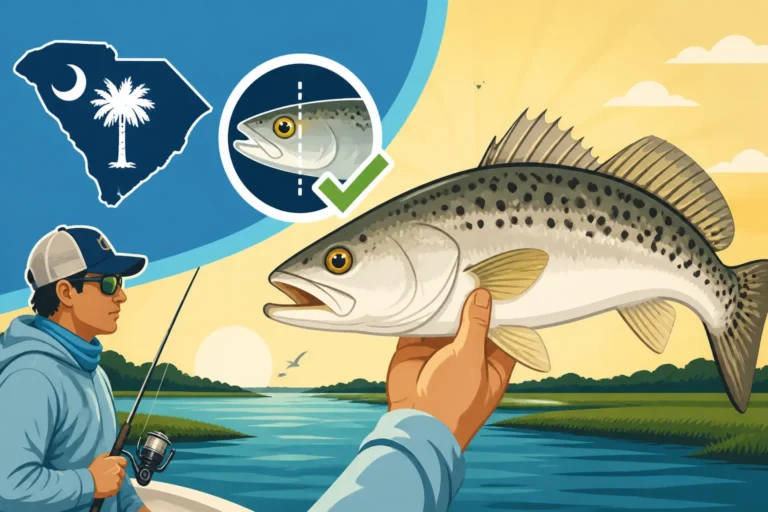
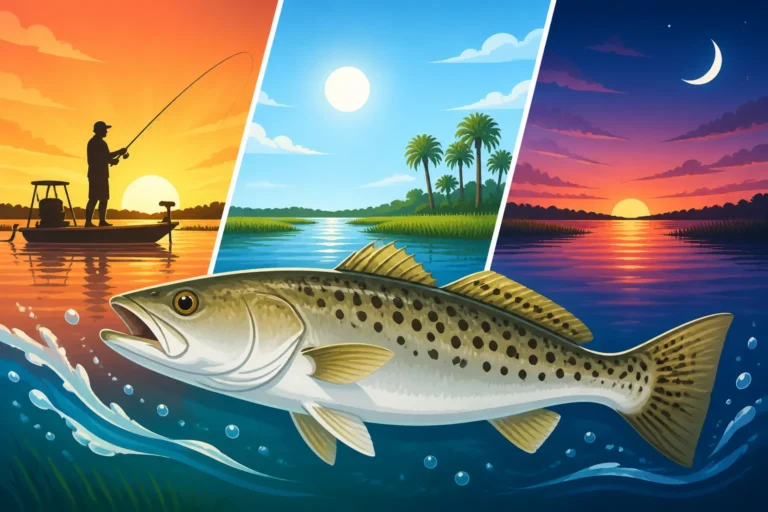
When you pull a Spotted Seatrout out of the water, there are a few tell-tale signs that immediately distinguish it. First and foremost, look for those prominent, dark, irregular spots scattered across its back and upper flanks, extending onto its dorsal and caudal (tail) fins. These spots are usually quite dark and well-defined, not fuzzy or faint. These aren't the tiny speckles you might see on a brook trout, but rather distinct, roundish marks. The overall color can vary a bit depending on its habitat, ranging from a silvery-grey to a more golden-bronze hue on its upper body, fading to white on its belly.
Another key feature is its mouth. Spotted Seatrout have a relatively large mouth with a distinct set of prominent canine teeth at the front of their upper jaw. These aren't razor-sharp like a barracuda's, but they are clearly visible and feel quite sharp if you accidentally get a finger in there! This tooth structure is a big clue. Their body shape is generally elongated and slender, built for speed and quick strikes in shallow coastal waters. They typically have two dorsal fins, with the first being spiny and the second soft-rayed, and a slightly forked tail. It's a truly beautiful fish, and once you've seen a few, you'll start to recognize their unique elegance.
Habitat and Behavior of Spotted Seatrout
Unlike their cold-water, stream-dwelling namesakes, Spotted Seatrout are saltwater dwellers, thriving in the brackish estuaries and shallow coastal waters of South Carolina. You'll find them in tidal creeks, bays, salt marshes, along oyster beds, and over grass flats. They love structure – think docks, jetties, bridge pilings, and submerged oyster rakes – where they can ambush baitfish and shrimp. These fish are highly sensitive to water temperature, which often dictates their movements. They tend to move into deeper, warmer water during colder months and spread out into shallower areas during the spring and summer.
Their feeding behavior is a blast to witness and target. Spotted Seatrout are ambush predators, often hiding in grassy areas or near structure, waiting for an unsuspecting shrimp or small baitfish to swim by. They'll then dart out with surprising speed. They're particularly active during tide changes, especially the beginning of an incoming or outgoing tide, as these water movements dislodge bait and create feeding opportunities. Many anglers swear by fishing around oyster beds during higher tides, as the trout move in to feed on shrimp and small crabs hiding in the shells. You can catch them using a variety of techniques, from live bait like shrimp and mud minnows under a popping cork to artificial lures like soft plastics, topwater plugs, and even flies. Understanding their habitat and behavior is crucial for consistent success, whether you're targeting them specifically or just happen to stumble upon a hungry school.
Understanding Freshwater Trout in South Carolina
Now, let's talk about the other "trout" in South Carolina – the ones that actually belong to the salmon and trout family (Salmonidae). These are typically found in the cooler, oxygen-rich waters of our mountain streams and reservoirs, a world away from the salt marshes where you'll find seatrout. While South Carolina isn't traditionally known as a premier trout fishing destination compared to some northern states, we do have some fantastic opportunities, especially for those willing to explore the Upstate's pristine waters. Getting to know these cold-water beauties means appreciating a completely different type of fishing experience.
Rainbow Trout: The Stocked Stream Staple
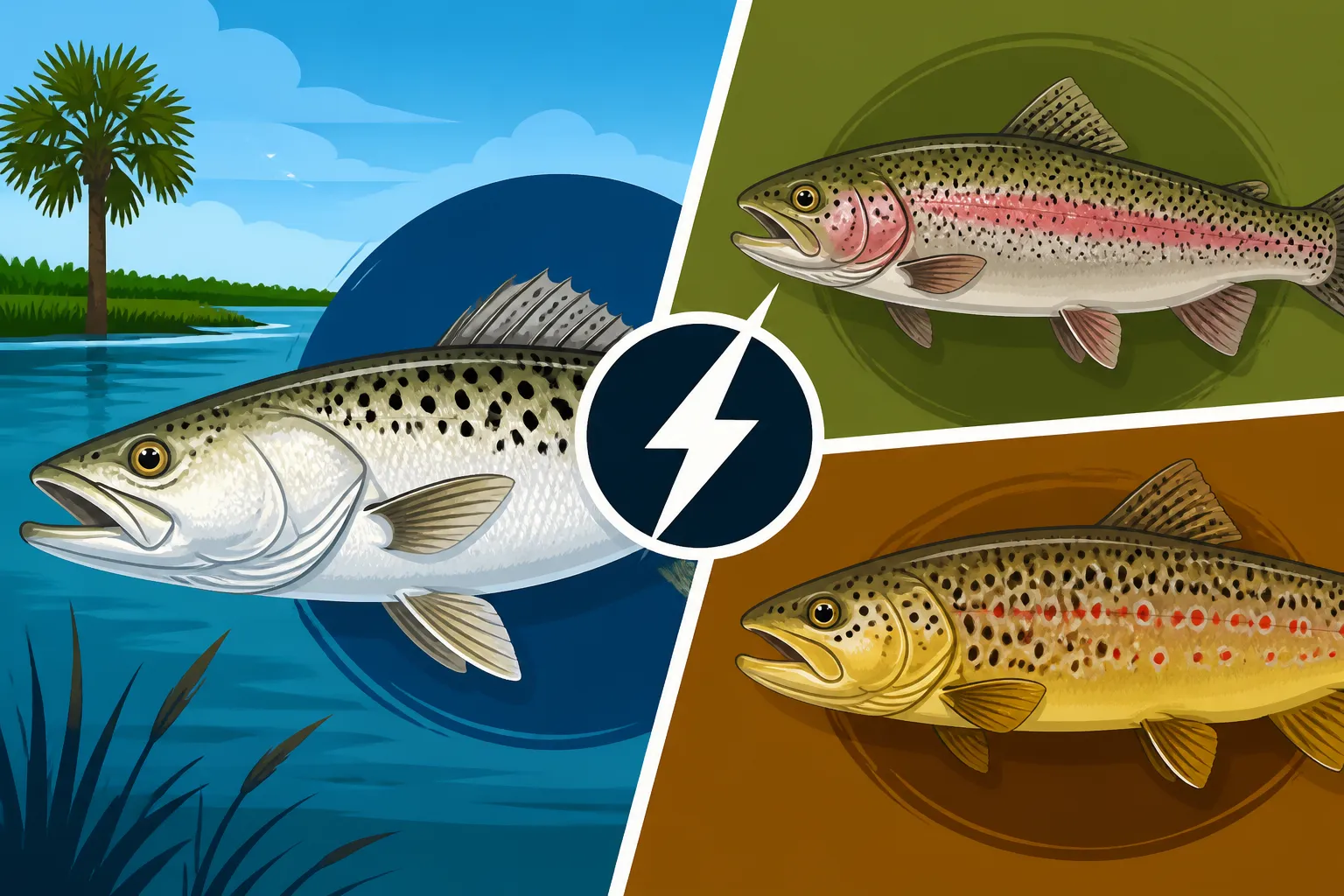
The Rainbow Trout (Oncorhynchus mykiss) is probably the most commonly encountered freshwater trout in South Carolina, largely thanks to stocking programs. These beautiful fish are recognizable by the distinct pink or red stripe running horizontally along their sides, resembling a rainbow – hence the name! Their bodies are typically silver-green or blue-green on the back, fading to silvery sides and a white belly. They're also covered in small, dark spots, but these spots are generally smaller and more numerous than those on a Spotted Seatrout, and they usually extend onto the fins as well.
Rainbow Trout thrive in cold, clear, well-oxygenated water, which is why you'll find them predominantly in the mountain streams and tailwaters of our Upstate. They're not native to South Carolina but have been successfully introduced and provide a thrilling fishery. They are opportunistic feeders, eating insects (both aquatic and terrestrial), small crustaceans, and even smaller fish. Anglers pursue them with everything from corn and PowerBait to intricate fly patterns mimicking natural insects. You can often find them in riffles and runs, or lurking in the deeper pools where they feel safe and food drifts by. Fishing for rainbows in South Carolina is a truly serene experience, offering a stark contrast to the dynamic coastal environment of seatrout.
Brown Trout: An Elusive European Import
The Brown Trout (Salmo trutta) is another non-native species found in some of South Carolina's colder mountain waters, though it's generally less prevalent than the Rainbow Trout. Brown Trout are often celebrated for their wariness and challenging nature, making them a highly sought-after trophy for many experienced anglers. Their coloration tends to be more subdued and camouflaged, featuring a golden-brown or olive-brown back, cream-colored flanks, and a lighter belly. The key identifying marks are the distinct dark spots (often with pale halos) and reddish-orange spots, particularly on their sides. Unlike rainbows, the spots on brown trout rarely extend onto the tail fin.
Brown Trout prefer slightly warmer water than brook trout, but still require very cold, clean, and oxygenated streams or lake environments. They are known for being more nocturnal and predatory than other trout species, often targeting larger prey items like minnows, sculpins, and even mice or frogs, especially as they grow larger. This preference for larger forage often means they can reach impressive sizes in the right conditions. Catching a large brown trout in South Carolina's mountain streams is a true testament to an angler's skill and patience, as they are notoriously finicky and wary of presentation. For those who love a challenge, targeting brown trout offers a deep reward.
South Carolina's Native Brook Trout: A Blue Ridge Mountain Original
Now, for a truly special freshwater species: the Brook Trout (Salvelinus fontinalis). This is South Carolina's only native trout species, and it's a true gem of our highest elevation, pristine mountain streams. These fish are often smaller than their rainbow or brown trout cousins, but what they lack in size, they more than make up for in beauty and wildness. Identifying a brook trout is like looking at a piece of living art. They have a dark, olive-green back with distinctive worm-like markings, often referred to as "vermiculations," that are lighter in color. Their sides are usually adorned with scattered red spots, often with blue halos, along with some lighter yellow spots.
But the most striking feature of the brook trout is their lower fins – pectoral, pelvic, and anal fins – which are typically orange or reddish, tipped with a crisp white leading edge, followed by a black stripe. This "white-edged fin" is a dead giveaway for a brook trout. They are highly sensitive to water quality and temperature, requiring the coldest, cleanest, most oxygenated headwater streams, often at higher elevations. Fishing for them usually involves light tackle, small lures, or delicate fly presentations in remote, picturesque settings. They are often protected by special regulations, including catch-and-release only sections in some streams, to help preserve their fragile populations. Encountering a native brook trout in its natural habitat is an experience that connects you directly to the wild heart of our Upstate mountains.
Key Differences: Spotted Seatrout vs. Freshwater Trout
Alright, let's cut to the chase and directly compare these fish. While they both carry the "trout" moniker, a close look reveals they are worlds apart. Understanding these core differences isn't just about satisfying curiosity; it's essential for responsible angling, especially when it comes to adhering to local regulations and ensuring the health of our fisheries. Nobody wants to accidentally keep a protected species or violate a bag limit because of a mistaken identity!
Physical Characteristics: Spotting the Tells
This is where the rubber meets the road. Let's lay out the visual distinctions clearly.
Spotted Seatrout:
- Spots: Large, irregular, dark spots scattered across the back, upper sides, and sometimes on the tail and dorsal fins. Think polka dots, not tiny freckles.
- Mouth: Large, with prominent canine teeth at the front of the upper jaw. This is a big one!
- Body Shape: Elongated, slender, sleek, and generally silver or grey with varying golden or bronze tones.
- Tail: Slightly forked.
- Fins: Generally plain, matching body coloration, though spots may extend onto them.
Freshwater Trout (Rainbow, Brown, Brook):
- Rainbow Trout: Pink/red horizontal stripe along the lateral line. Numerous small dark spots over the body and fins. No prominent canine teeth.
- Brown Trout: Dark spots (often with pale halos) and reddish-orange spots on sides. Spots rarely on tail. Golden-brown to olive coloration. No prominent canine teeth.
- Brook Trout: "Worm-like" vermiculations on dark back. Red spots with blue halos on sides. Lower fins are orange/red with a white leading edge and black stripe. No prominent canine teeth.
- Mouth: While they have teeth, they are much smaller and less prominent than the seatrout's canines.
- Body Shape: More torpedo-shaped, typically thicker in the body than seatrout, especially brook trout which can be quite chunky for their length.
- Tail: Usually square or slightly emarginate (slightly indented), not distinctly forked like a seatrout.
- Fins: Often patterned with spots (rainbows) or distinct white edges (brook trout).
If you're ever in doubt, the presence of those large canine teeth is your number one indicator for a Spotted Seatrout. If there are no big fangs, it's not a seatrout. And conversely, if you're holding a fish with that beautiful white-edged fin, you've definitely got a brook trout, not a seatrout.
| Feature | Spotted Seatrout | Freshwater Trout (General) |
|---|---|---|
| Habitat | Saltwater/Brackish (Estuaries, Coastal) | Freshwater (Cold streams, rivers, lakes) |
| Family | Drum (Sciaenidae) | Salmon/Trout (Salmonidae) |
| Spots | Large, irregular, dark, on back/sides/fins | Small, numerous (Rainbow), Red/Halo (Brown), Red/Blue Halo (Brook) |
| Mouth/Teeth | Large mouth with prominent canine teeth | Smaller teeth, no prominent canines |
| Body Shape | Slender, elongated, silvery/grey | More torpedo-shaped, thicker, varied colors |
| Tail Fin | Slightly forked | Square or slightly emarginate |
| Other Key Marks | None besides spots | Rainbow stripe, Brown's red spots, Brook's white-edged fins/vermiculations |
Habitat and Salinity Preferences
This is another huge differentiator that helps prevent misidentification. These fish simply live in completely different environments.
Spotted Seatrout are exclusively marine or estuarine. This means they live in saltwater, or at least brackish water where freshwater and saltwater mix, such as river mouths and coastal bays. They cannot survive long-term in pure freshwater. Their bodies are adapted to regulate salts and fluids in a saline environment. If you catch what you think is a "trout" in a South Carolina salt marsh or tidal creek, it's almost certainly a Spotted Seatrout or one of its saltwater cousins. You won't find a rainbow or brook trout there, period. You can easily find the right gear for saltwater fishing on platforms like Amazon, from robust rods to corrosion-resistant reels built for the harsh marine environment.
Freshwater trout, on the other hand, require freshwater. Rainbow, brown, and brook trout are perfectly adapted to freshwater streams, rivers, and cold-water lakes. They cannot tolerate saltwater. Their bodies would quickly dehydrate in a marine environment. So, if you're hiking into the mountains of Oconee or Pickens County and pull a "trout" out of a crystal-clear, cold stream, it's absolutely one of the freshwater species. You simply won't encounter Spotted Seatrout in these upstream environments. This fundamental difference in preferred habitat means that where you catch the fish is often the first and most definitive clue to its identity.
Behavioral Traits and Fishing Techniques
Beyond appearance and habitat, the way these fish behave and how you typically catch them also varies significantly, reflecting their distinct biological adaptations.
Spotted Seatrout are active predators, often found feeding on shrimp and baitfish in relatively shallow water. They're known for their aggressive strikes, especially on lures or live bait presented under a popping cork that mimics a shrimp fleeing. Their fight is characterized by quick runs and head shakes. Techniques for Spotted Seatrout often involve casting and retrieving artificial lures like soft plastics, topwater plugs, or spoons, especially around oyster beds, grass lines, and drop-offs in tidal creeks. Best Bait for Spotted Seatrout in Cold Weather might highlight specific live or artificial options that resonate with their feeding habits.
Freshwater trout, especially in streams, often exhibit more nuanced feeding behaviors. They might hold in specific current seams, behind rocks, or in deep pools, waiting for insects or small baitfish to drift by. Their strikes can range from a subtle "tap" to a more aggressive take, depending on the species and conditions. Fishing for them often requires delicate presentations, especially with fly fishing gear. Small spinners, inline weights, and tiny artificial worms are also popular. For the elusive South Carolina's Native Brook Trout: A Blue Ridge Mountain Original, stealth and precision are often more important than power. The gear you use is typically lighter too, with ultra-light rods and reels for mountain stream adventures.
Understanding these behavioral differences can help you confirm your identification. If a fish is hitting a topwater plug like a freight train in a coastal creek, it's probably not a shy brown trout from the mountains!
Other Lookalikes and Important Distinctions
While the main comparison is between Spotted Seatrout and freshwater trout, there are a couple of other species that can sometimes cause confusion, particularly in the coastal environment. Knowing these distinctions is key to confidently identifying your catch and staying within the legal parameters.
Weakfish: The Spotted Seatrout's Close Cousin
The Weakfish (Cynoscion regalis) is perhaps the most common "lookalike" for the Spotted Seatrout. They are indeed close cousins, belonging to the same drum family (Sciaenidae), and often inhabit the same coastal waters. In fact, many anglers initially struggle to tell them apart, and sometimes, a Weakfish is mistakenly identified as a Spotted Seatrout.
So, how do you tell them apart? The primary difference lies in the spots. While Spotted Seatrout have distinct, dark, roundish spots scattered across their back and upper sides, Weakfish typically have a more iridescent, silvery body with faint, wavy lines or streaks running longitudinally along their sides, rather than distinct spots. Sometimes, a Weakfish might have very faint, scattered spots, but they are never as prominent, dark, or numerous as those on a Spotted Seatrout. Another subtle difference can be their tail fin; while both have somewhat forked tails, the Weakfish's tail is often slightly more pointed. Both species have those characteristic canine teeth, so that isn't a reliable distinguishing factor between them. However, if you see those clear, distinct spots, it's a Spotted Seatrout. If you see wavy lines or very faint, almost absent spots, it's likely a Weakfish. The internal link Spotted Seatrout vs Weakfish: What's the Difference? offers an even deeper dive into these subtle but important distinctions.
Redfish and Other Coastal Species
Sometimes, particularly for beginners, even the Redfish (Sciaenops ocellatus), also known as Red Drum, can be confused with a Spotted Seatrout. While both are prized coastal game fish and belong to the same family, their differences are quite striking once you know what to look for.
The Redfish is named for its coppery-red coloration, which is its most defining feature, ranging from a deep bronze to a bright red. Unlike the Spotted Seatrout's scattered spots, the Redfish has one, sometimes several, very distinct black spot(s) at the base of its tail. This "eyespots" are a definitive identifying mark for a Redfish. They also have a different body shape – more robust and bull-like than the slender seatrout – and a downturned mouth, adapted for rooting around on the bottom for crabs and shellfish, rather than the seatrout's toothy, upward-facing mouth designed for ambushing baitfish. Their scales are also noticeably larger. So, if your fish is reddish with a big black spot near its tail, it's a Redfish, not a Spotted Seatrout. Other coastal species like Black Drum also have chin barbels (whisker-like appendages) that are absent on seatrout and redfish, making them easy to differentiate.
Why Proper Identification Matters for South Carolina Anglers
Getting your fish identification right isn't just about showing off your knowledge; it's a critical part of being a responsible and law-abiding angler in South Carolina. Our state's fisheries are carefully managed, and adhering to regulations is key to ensuring healthy fish populations for generations to come. Trust me, the last thing you want is a run-in with a SCDNR officer because you genuinely mistook one fish for another!
Adhering to Regulations: Size and Bag Limits
Every species of fish has its own set of rules and regulations designed to prevent overfishing and protect spawning populations. This includes specific size limits (minimum and sometimes maximum lengths) and bag limits (how many fish you can keep per person per day). For example, Spotted Seatrout Size and Bag Limits in South Carolina are very specific, dictating both a minimum size of South Carolina Spotted Seatrout Minimum Size 14 Inches and a daily bag limit of South Carolina Spotted Seatrout Daily Bag Limit of 10 Fish. These numbers are crucial.
If you mistakenly identify a smaller Weakfish as a Spotted Seatrout and keep it, you might be violating a minimum size limit. Or, if you catch a protected freshwater trout in a catch-and-release section of a mountain stream, thinking it's a "different kind of trout" you can keep, you could face significant penalties. Freshwater species like our native Brook Trout often have very strict regulations, sometimes catch-and-release only, or special tackle restrictions to protect their fragile populations. The regulations for South Carolina's Freshwater Fishing Regulations will be vastly different from those governing coastal species. Always double-check the current regulations before you head out, and a general guide like South Carolina Fishing Bag Limits Explained can be a great starting point, but always verify details for your specific target species and location.
Conservation and Sustainable Fishing Practices
Beyond simply avoiding fines, proper fish identification is a cornerstone of conservation. By knowing exactly what you've caught, you can make informed decisions that contribute to the sustainability of our fisheries. If you catch a fish that's undersized, or a species that's protected, correct identification ensures you release it quickly and carefully, maximizing its chances of survival.
This also extends to understanding the broader ecosystem. Knowing the difference between a saltwater Spotted Seatrout and a freshwater Rainbow Trout helps you appreciate the distinct habitats and ecological roles each plays. This awareness fosters a deeper respect for the diverse aquatic environments South Carolina offers, from its pristine mountain streams to its vibrant coastal estuaries. Participating in sustainable practices, like releasing fish gently, minimizing stress, and understanding the "why" behind regulations, helps ensure that future generations of anglers will have the same thrilling experiences we enjoy today. Investing in a quality fishing scale and tape measure, easily found on Amazon, can help you quickly and accurately verify your catch's size right on the water, promoting responsible harvesting. And of course, having a valid South Carolina Fishing License Guide is the first step in being a responsible angler, no matter what species you're targeting.
Disclaimer
This article is for general informational purposes only and does not constitute professional advice. Laws, prices and regulations vary by location and change over time. Consult a qualified professional for guidance on your specific situation.