Redfish vs Sheepshead: Comparing Two Lowcountry Favorites
For those of us who live and breathe South Carolina fishing, the Lowcountry estuaries are a treasure trove of incredible species. Two of the most sought-after and, at times, most confusing residents of these brackish waters are the Redfish and the Sheepshead. While both are prized catches for their fighting spirit and delicious table fare, they couldn't be more different in their habits, appearance, and the techniques needed to bring them to the net. If you've ever stood on a dock or a flat, wondering if that shadowy shape was a bronze brawler or a striped convict, this guide is for you. We'll dive deep into what makes each of these species unique, helping you identify them, understand their behavior, and ultimately, improve your chances of catching them.
Understanding the Redfish: The Lowcountry's Bronze Brawler
Ah, the Redfish! Also known as Red Drum, this fish is arguably the most iconic inshore species in South Carolina, a true symbol of our coastal angling. There's just something about that broad bronze back and powerful tail that screams "Lowcountry." They're a favorite target for fly anglers, artificial lure enthusiasts, and bait fishermen alike, and for good reason – they pull hard and often.
Distinctive Features and Identification
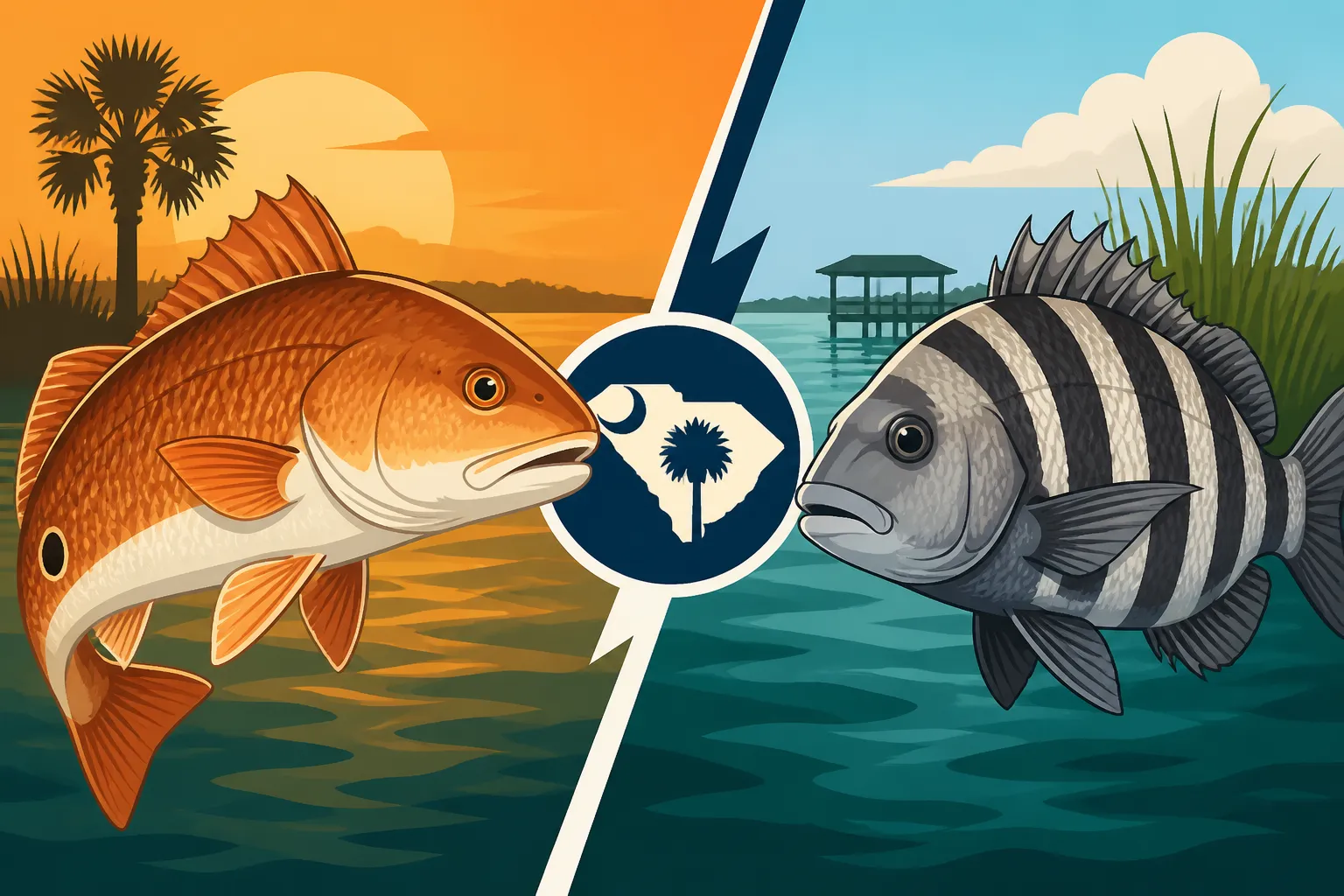
When you first lay eyes on a redfish, you'll be struck by its beautiful coppery or bronze coloration, which can vary slightly depending on the water clarity and bottom composition of its habitat. Fish caught in clear, grassy flats often display a lighter, more vibrant hue, while those from muddier creek systems might appear a bit darker. Their bodies are elongated and robust, built for powerful runs through shallow water. But the absolute tell-tale sign of a redfish, the one feature that no other fish in our waters possesses quite like it, is the prominent black spot (or sometimes multiple spots!) on the upper part of their tail. This "eyespots" can vary in size and number, with some fish boasting several spots, while others have just one perfectly round mark. Some anglers even joke about the number of spots indicating how lucky you'll be!
These fish aren't just pretty faces; they're substantial. While juveniles are commonly found in the smaller creeks and shallow ponds, fully grown redfish, often referred to as "bull reds," can reach impressive sizes, pushing well over 40 pounds. The average keeper-size redfish in South Carolina waters typically falls within a specific slot limit, making them a fantastic challenge and a rewarding catch. They have a downward-pointing mouth, perfectly adapted for rooting out crustaceans and small baitfish from the bottom, which hints at their feeding habits.
Preferred Habitats and Behavior
Redfish are true connoisseurs of the Lowcountry landscape. You'll find them in a wide variety of inshore environments, though they show a strong preference for shallow, brackish waters rich with oyster beds, spartina grass flats, and winding tidal creeks. These areas provide both abundant food sources and crucial protection from predators. During high tide, they'll often venture deep into the flooded grass, sometimes with their tails poking out of the water – a phenomenon known as "tailing" – as they root around for fiddler crabs and other tasty morsels. This is a sight that gets any serious inshore angler's heart pumping!
Their diet is quite varied, making them adaptable predators. They'll readily munch on shrimp, fiddler crabs, mud minnows, and small mullet. Redfish are often found schooling, especially the younger, "slot" fish. These schools can be quite large, sometimes numbering in the dozens or even hundreds, moving across flats or along creek banks in search of food. As they get older and larger, they tend to become more solitary or gather in smaller groups in deeper channels or near inlets. Their behavior is largely dictated by the tide; they follow the water into shallow areas to feed and retreat to deeper channels as the tide falls. Understanding Does Tide Timing Matter for South Carolina Redfish? is crucial for consistent success.
Popular Fishing Techniques for Redfish
Catching redfish can be incredibly exciting, and there are many ways to do it, making them accessible to anglers of all skill levels. For those who love the thrill of sight fishing, targeting tailing reds on a flooded grass flat with a carefully placed artificial lure or fly is an experience like no other. Soft plastic lures, like grub tails or shrimp imitations rigged on a jig head, are incredibly effective. Topwater plugs can also be a blast during low light conditions, producing explosive strikes. If you're looking for Best Lures for Tailing Redfish in Grass Flats, you'll find plenty of options on a site like Amazon, from soft plastics to spoons.
For bait anglers, live shrimp or mud minnows under a popping cork are tried-and-true methods. The "pop" of the cork attracts attention, mimicking a feeding fish, and then the bait presents itself naturally. Bottom fishing with a Carolina rig and a piece of cut mullet or a whole live shrimp is also very productive, especially in deeper holes or along oyster rakes. Redfish are strong fighters, so you'll want a medium-heavy rod with a good backbone and a reel spooled with braided line to handle their powerful runs. If you're just getting started, learning some Inshore Redfish Techniques for Beginners can set you up for success.
Getting to Know the Sheepshead: The Convict of the Coast
Now, let's talk about the sheepshead, often affectionately (or perhaps frustratingly) called the "convict fish" due to its distinctive black and white stripes. While it might not have the same flashy reputation as the redfish, the sheepshead offers a unique challenge and a truly delicious reward for those patient and skilled enough to catch them.
Unique Appearance and Identification
The sheepshead is an unmistakable fish. Its most striking feature is its set of five to seven prominent, vertical black stripes that run down its silver-gray body, giving it that "convict" look. Unlike the redfish's elongated, torpedo-like shape, the sheepshead has a deep, compressed body, almost disc-shaped. But the real showstopper, and perhaps the most memorable feature, is its mouth. Open a sheepshead's mouth, and you'll be greeted by a set of incredibly human-like incisors and molars. Seriously, it looks like someone swapped out its fish teeth for a set of dentures! These specialized teeth are not for show; they are perfectly designed for crushing the shells of its favorite prey.
Adult sheepshead can grow to a respectable size, often reaching 15-20 inches and weighing several pounds. While not typically as large as a bull redfish, a big sheepshead can still put up a tremendous fight, especially around the structure they call home. Their unique dental work is key to their survival and provides a fantastic clue as to where and how to target them.
Natural Habitat and Feeding Habits
Sheepshead are structure junkies. They absolutely love anything that grows barnacles, oysters, or other crustaceans. This means you'll find them congregating around bridge pilings, jetties, dock pilings, rock formations, and, of course, oyster reefs. They are often right in the thick of things, picking off marine invertebrates with those powerful teeth. They're masters at navigating these tight, abrasive environments, which makes hooking and landing them even more challenging.
Their diet is almost exclusively hard-shelled invertebrates. They'll crush oysters, barnacles, mussels, and especially fiddler crabs with ease. This specialized diet means they're not generally interested in chasing down a fast-moving artificial lure like a redfish might be. You've got to present their food naturally and precisely. This structure-oriented feeding habit and diet directly influence the best techniques for catching them. Understanding Sheepshead Fishing Tips for South Carolina's Brackish Waters often starts with knowing their preferred menu.
Effective Tactics for Sheepshead Anglers
If you're looking to target sheepshead, be prepared for a lesson in patience and finesse. Their bite is notoriously subtle, often described as a gentle "tap" or simply a feeling of slight pressure. It's not the aggressive strike you'd expect from a redfish. Anglers often say you have to "feel for the weight" rather than a distinct bite. The key to success often lies in using small, natural baits like fiddler crabs, pieces of oyster, or small shrimp. You can find specialized sheepshead jigs and rigs on Amazon that are designed to present these baits effectively.
A sensitive rod is crucial, allowing you to detect those faint bites. Many experienced sheepshead anglers prefer a light-action spinning rod with a fast tip. Light fluorocarbon leader material is also a good idea, as sheepshead can be line-shy, especially in clear water around heavy structure. When fishing for them, you typically drop your bait straight down next to the pilings or structure. The moment you feel that subtle tap, a quick, sharp hookset is required to get past their tough, bony mouth. It's a game of precision and quick reflexes, but incredibly rewarding once you get the hang of it. If you want to know How to Catch Sheepshead Around South Carolina's Piers and Jetties, focus on finding dense marine growth.
Key Differences: Redfish vs. Sheepshead at a Glance
While both redfish and sheepshead are pillars of South Carolina's inshore fishery, they are distinct creatures that demand different approaches. Understanding these core differences is essential for any angler hoping to master the Lowcountry waters.
Visual Comparison: Spots vs. Stripes
The most obvious difference, as we've discussed, lies in their appearance. This is your first and easiest way to tell them apart when you've got one on the line, or even just spotted one darting through the water.
| Feature | Redfish (Red Drum) | Sheepshead (Archosargus probatocephalus) |
|---|---|---|
| Coloration | Coppery, bronze, reddish-brown | Silver-gray with 5-7 distinct vertical black stripes |
| Distinct Mark | One (or more) prominent black spot on the tail | No spots, instead has the "convict" stripes |
| Body Shape | Elongated, robust, torpedo-like | Deep, compressed, somewhat disc-shaped |
| Mouth/Teeth | Downward-pointing, suited for bottom foraging | Human-like incisors and molars for crushing shells |
| Eyes | Relatively small, set forward | Larger, often giving a watchful appearance |
Remember, the spot on the tail is the redfish's signature, while the black and white stripes are unmistakably sheepshead. You really can't confuse them once you know what to look for!
Habitat and Diet Distinctions
Beyond their looks, where they live and what they eat are perhaps the most crucial distinctions for anglers. Redfish are often associated with open water, whether it's shallow grass flats, sandbars, or slightly deeper creek channels. They are active hunters, often chasing down baitfish or rooting through soft bottoms for crustaceans. Their diet is more varied, making them susceptible to a wider range of baits and lures. You'll find Best Bait for Redfish in South Carolina's Marsh Creeks will often include shrimp, mud minnows, and mullet.
Sheepshead, on the other hand, are strictly tied to hard structure. They don't typically roam vast open flats. Their world revolves around barnacle-encrusted pilings, oyster reefs, and rock jetties. Their diet reflects this, being almost exclusively hard-shelled invertebrates. This means you won't catch a sheepshead casting a topwater plug across a flat; you need to put your bait right on their doorstep, often vertically dropping it along a piling. Charleston Harbor Sheepshead Fishing Spots are prime examples of structure-rich environments where these fish thrive.
Fishing Experience and Challenge
The fight and the challenge each fish presents are also vastly different. Hooking a redfish typically involves a more aggressive strike. Once hooked, they are known for their powerful, drag-screaming runs, especially the larger ones. They'll often try to head for the nearest structure or simply burn line in open water. It's an exciting, often visual, fight that gets the adrenaline pumping.
Sheepshead, by contrast, are notorious for their incredibly subtle bite. You might feel a slight pressure, a gentle tap, or nothing at all before you realize your bait is gone. Setting the hook requires incredible timing and feel. Once hooked, they don't typically make long runs. Instead, they'll pull incredibly hard in short bursts, trying to get back into the structure to break you off. They are masters at rubbing your line on barnacles or pilings. This makes the sheepshead a true test of an angler's focus and precision, making a successful catch feel incredibly earned.
Angling Considerations and Lowcountry Lore
Navigating the waters for redfish and sheepshead involves more than just knowing their differences. It also means respecting regulations, preparing your gear, and understanding the local nuances that make South Carolina fishing so special.
Regulations and Conservation
As responsible anglers, respecting fishing regulations is paramount. South Carolina has specific rules in place to ensure healthy populations of both redfish and sheepshead for future generations. For redfish, there's a strict South Carolina Redfish Slot Limit Rules and a daily bag limit, usually South Carolina Redfish Daily Bag Limit Per Person, along with a South Carolina Redfish Vessel Limit Explained that limits the total number of fish kept per boat. These limits are designed to protect the breeding stock and allow younger fish to grow.
Sheepshead also have size and bag limits, though they can sometimes differ from redfish. Always check the latest regulations from the South Carolina Department of Natural Resources (SCDNR) before heading out. Regulations can change, and staying informed helps keep our fisheries vibrant. Ignoring these rules can lead to stiff penalties, so it's always worth a quick check!
Gear Selection and Preparation
Having the right gear makes all the difference when targeting these two distinct species. For redfish, a medium-heavy spinning rod or baitcasting setup, spooled with 15-20lb braided line and a fluorocarbon leader of 20-30lb, is a great all-around choice. This setup gives you the power to cast lures and bait, and the backbone to fight a strong fish. You'll want a variety of jig heads, soft plastics, and perhaps some popping corks and circle hooks for bait fishing. Many anglers prefer buying their tackle online from retailers like Amazon for convenience and selection.
For sheepshead, the approach is more delicate but no less robust. A lighter, more sensitive rod (medium-light to medium action) is crucial for detecting those subtle bites, paired with a small spinning reel spooled with 10-15lb braided line and a short, tough fluorocarbon leader (20-30lb) to resist abrasion from structure. Small, sharp hooks are key, as are sensitive sheepshead jigs or Carolina rigs with tiny weights. Fiddler crabs or small pieces of shrimp are often the Best Bait for Sheepshead in Brackish Water, so plan to acquire those before your trip. Always remember a pair of pliers for removing hooks, as their teeth are no joke!
Culinary Delights and Table Fare
Both redfish and sheepshead are highly regarded for their delicious white, flaky meat, though many anglers have their distinct preferences. Redfish offers a versatile fillet that can be grilled, baked, fried, or blackened. It has a mild flavor that holds up well to various seasonings. The meat is firm and consistent, making it a crowd-pleaser for many.
Sheepshead, with its diet of crustaceans and shellfish, is often praised for having some of the sweetest, cleanest-tasting white meat in the ocean. It's fantastic baked whole, steamed, or filleted and pan-fried. Many consider it a delicacy, well worth the effort required to catch it. While both are fantastic, the sheepshead often gets the nod for its unique, delicate flavor profile.
Whether you're battling a bronze brawler on the flats or meticulously extracting a convict from the pilings, both redfish and sheepshead offer unforgettable angling experiences in the rich, diverse waters of South Carolina. Understanding their differences isn't just about identification; it's about appreciating the unique ecology of our coast and becoming a more versatile and successful angler.
Disclaimer
This article is for general informational purposes only and does not constitute professional advice. Laws, prices and regulations vary by location and change over time. Consult a qualified professional for guidance on your specific situation.