Why South Carolina Has One of the World’s Southernmost Brook Trout Populations
When people think of South Carolina fishing, images of sprawling coastal marshes, vast bass lakes, or maybe even offshore adventures often come to mind. It's easy to assume that our warm, humid climate isn't exactly prime real estate for coldwater species like trout. But here's a secret that might surprise you: the Palmetto State harbors one of the southernmost populations of native brook trout in the entire world, clinging to existence in our pristine mountain streams. This guide will dive deep into the fascinating reasons why these beautiful, iridescent gems call South Carolina home, and what makes their habitat so unique.
The Mountainous Heart of the Palmetto State
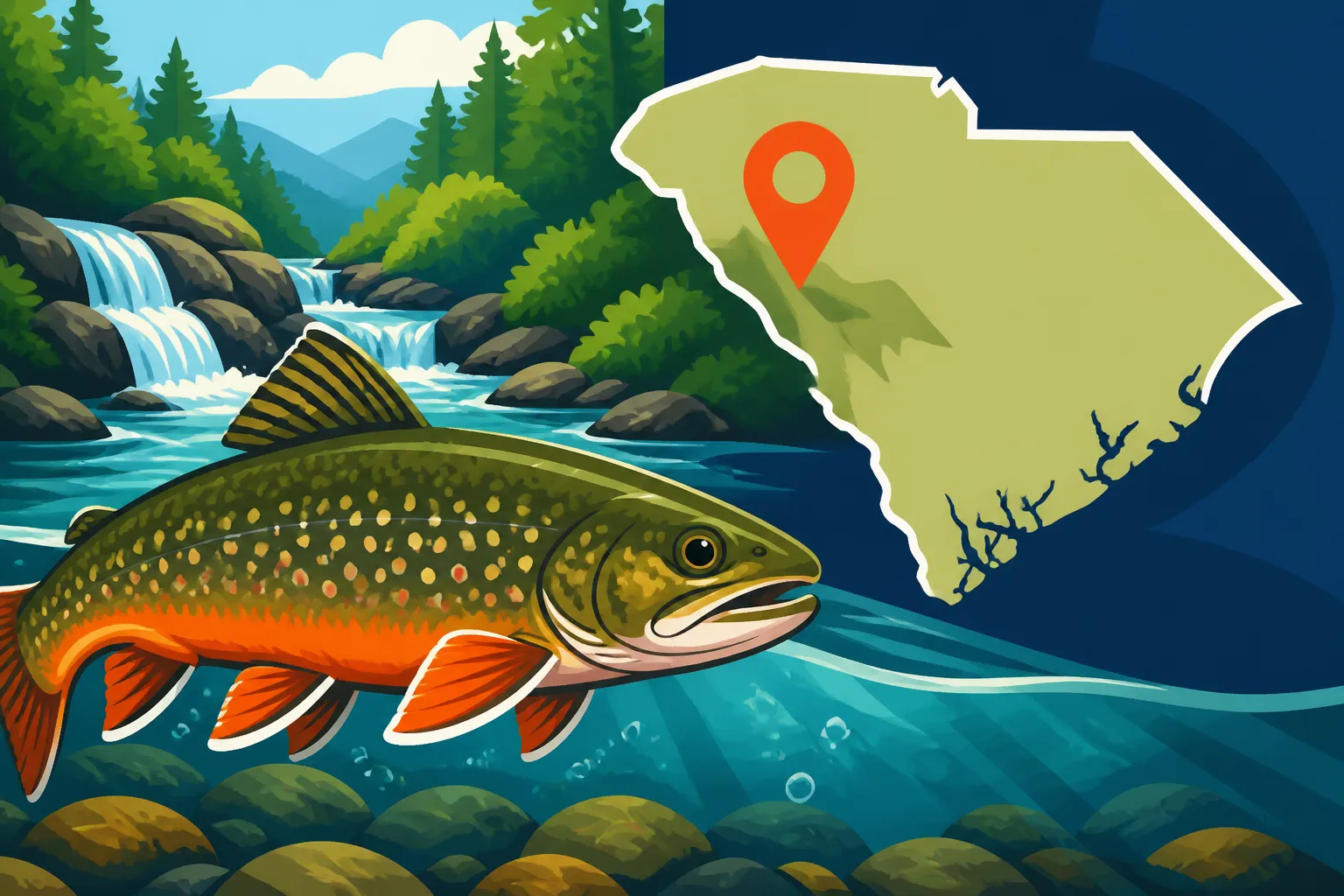
It might sound contradictory, but South Carolina isn't all sandy beaches and flat lowcountry. Venture into the far northwestern corner of the state, and you'll find a dramatic landscape of rolling foothills giving way to the ancient, rugged peaks of the Blue Ridge Mountains. This is where our native brook trout find their sanctuary, far from the warmer waters typically associated with the South.
The Appalachian Foothills and Blue Ridge Escarpment
Our tiny slice of the Appalachians, particularly within Oconee, Pickens, and Greenville counties, is a critical factor in supporting these coldwater fish. The elevation here rises significantly, creating a cooler microclimate that mimics conditions found hundreds of miles north. Imagine driving through the generally flat midlands, then suddenly you're ascending winding mountain roads, surrounded by dense forests. This dramatic shift in topography is the key. The sheer elevation alone causes a drop in air temperature, which in turn influences water temperatures in the streams. These aren't just hills; they are the southernmost reaches of a major mountain range, providing a vital thermal refuge.
The Blue Ridge Escarpment, in particular, is a geographic marvel. It's where the elevated plateau of the Blue Ridge Mountains abruptly drops off to the lower piedmont. This steep descent creates numerous waterfalls and rapid-flowing streams, which are inherently cooler and more oxygenated than slower, meandering rivers. This unique geological feature acts like a natural air conditioner, funneling cool air and providing the necessary gradient for swift, cold water to cascade down the slopes, forming the perfect nursery for brook trout. It’s a stark contrast to the vast, slower-moving waters of places like Lake Murray or the Santee Cooper system.
Coldwater Springs and Stream Habitats
Beyond the elevation, the very source of the water in these mountain streams is crucial. Many of the smaller tributaries and headwaters are fed directly by groundwater seeps and springs. Unlike surface runoff that can quickly heat up under the sun, spring water emerges from underground at a consistently cold temperature, often in the low 50s Fahrenheit, year-round. This constant influx of icy-cold water acts as a lifeline, maintaining the stable, chilly conditions that brook trout absolutely require to survive and reproduce. Without these natural refrigeration systems, our southern brookies wouldn't stand a chance.
The dense forest canopy overhead also plays an indispensable role. Mature hardwood and conifer forests, typical of our mountain regions, provide deep, consistent shade that prevents direct sunlight from warming the narrow stream channels. Think of it as a natural umbrella, keeping the water temperatures stable even on the hottest South Carolina summer days. This shade also helps to minimize evaporation, keeping water levels consistent. Furthermore, the root systems of these trees stabilize the stream banks, preventing erosion and sedimentation, which can choke out the gravel beds essential for trout spawning. The water isn't just cold; it's also incredibly clean and highly oxygenated due to its rapid flow and minimal pollutants, which are non-negotiable for these sensitive fish. If you're looking for gear to navigate these often rugged, shaded terrains, even something as simple as a reliable backpack or waterproof map can be found on a site like Amazon, helping you prepare for a day in the wilderness.
Relict Populations and Glacial History
The presence of native brook trout in South Carolina isn't just a geographical anomaly; it's a living testament to ancient geological events and a fascinating story of survival. These fish are not recent introductions; they are true natives, their lineage stretching back millennia.
A Legacy of Ice Ages
To understand why brook trout are here, we need to take a trip back in time, to the last Ice Age. During periods of glacial maximum, massive ice sheets covered much of North America, pushing cold-adapted species, including brook trout, much further south than their current range. As the climate warmed and the glaciers began to recede over thousands of years, these coldwater species followed the retreating ice north. However, some populations, like those in the Appalachian Mountains, found pockets of suitable habitat at higher elevations.
As the lowlands around these mountains warmed considerably, these southern populations became isolated, cut off from their northern kin. They essentially became "relict" populations—survivors left behind in isolated, high-altitude refuges. Our South Carolina brook trout are descendants of these ancient, geographically trapped fish. They adapted to their specific mountain stream environments, evolving distinct genetic characteristics that make them truly unique to the region. This makes them incredibly special and a vital part of our state's natural heritage, a living fossil of colder times.
The Difference Between Native and Stocked Trout
It's absolutely vital for any angler, especially those new to trout fishing in South Carolina, to understand the critical difference between these native brook trout and the stocked trout often found in other parts of the state. Many streams and lakes in South Carolina, particularly those around major recreational areas, are regularly stocked with hatchery-raised rainbow trout and brown trout. These stocked fish are often larger, easier to catch, and are meant to provide a "put-and-take" fishery. You can learn more about these fish in our guide to South Carolina's Native Brook Trout vs Stocked Trout.
Native brook trout, by contrast, are typically much smaller, often no more than 6-10 inches, but they are vibrant, feisty, and display incredible natural beauty with their intricate patterns and red spots. They are wild fish, born and raised in the stream, and their survival is dependent on pristine conditions. Visually, you can often tell them apart by their worm-like patterns (vermiculations) on their backs and dorsal fins, and the white leading edges on their lower fins. If you want to dive deeper into identification, check out How to Tell a Native Brook Trout From a Rainbow Trout. Catching a native brook trout is a far different experience from catching a stocked fish; it's a testament to patience, skill, and respect for a truly wild creature.
Conservation Efforts and Angler Responsibility
The fact that these unique brook trout populations have survived in South Carolina for millennia is incredible, but their existence remains fragile. Protecting them requires ongoing vigilance and a deep commitment from both state agencies and responsible anglers.
Protecting a Fragile Ecosystem
The pristine mountain streams that harbor our native brook trout are delicate ecosystems, constantly threatened by various factors. Habitat degradation, primarily from development, logging, or improper land use, can lead to increased sedimentation, filling in the gravel beds vital for spawning. Rising global temperatures pose a long-term threat, as even a slight increase in water temperature can push these cold-sensitive fish beyond their tolerance limits. Competition from non-native species, like stocked rainbow or brown trout, can also put pressure on brook trout populations by competing for food and habitat.
State agencies, often working with private conservation groups, are actively involved in monitoring water quality, restoring degraded stream habitats, and managing riparian zones to maintain canopy cover. There are often specific regulations in place for these sensitive streams, sometimes involving catch-and-release only rules or restrictions on tackle to minimize harm to the fish. Understanding these specific local efforts is key to appreciating the larger picture of brook trout survival. For those interested in finding these special places, our resource on Best Streams for Brook Trout in the Blue Ridge Mountains offers guidance, but always remember that conservation is paramount. Many conservation-minded anglers even invest in specialized gear, which you can often research on platforms like Amazon, to ensure they have the lightest footprint possible while exploring these delicate areas.
Responsible Angling for Brook Trout
For anglers lucky enough to fish for native brook trout in South Carolina, immense responsibility comes with the privilege. These fish are not just a catch; they are a symbol of wilderness and a testament to natural resilience. Therefore, practicing ethical and responsible angling is non-negotiable. Catch-and-release is strongly encouraged, and in many native brook trout streams, it's actually mandated by regulation. The goal isn't to harvest a meal, but to experience a connection with a unique wild creature and ensure its survival for future generations.
When practicing catch-and-release, handling the fish gently and minimally is crucial. Wet your hands before touching the fish to protect its slime coat, and try to keep it in the water as much as possible. Use barbless hooks, or pinch down the barbs on your hooks, as this greatly reduces harm during hook removal. Lure choice is also important; many native trout streams require artificial lures with a single hook, prohibiting bait that can be swallowed deeply. Familiarize yourself with these specific rules, which can be much stricter than, say, South Carolina Stocked Trout Daily Limit regulations. Some streams are even designated as Which South Carolina Streams Are Catch-and-Release Only for Trout? for added protection. The joy of catching a native brook trout comes from the challenge and the beauty, not the harvest.
Where to Find These Southern Gems
So, now that you know why they're here, you might be wondering where you can actually find these elusive, beautiful fish. Chasing native brook trout in South Carolina is an adventure in itself, often leading you to some of the most remote and breathtaking corners of the state.
Specific Mountain Streams and Protected Areas
When we talk about finding native brook trout, we're generally referring to the headwater streams within our national forests and state-managed wildlife areas in the Upstate. Places like the Sumter National Forest, particularly in the Andrew Pickens Ranger District, are prime examples. These areas offer a mosaic of small creeks and feeder streams, often tucked away in deep ravines and shaded by dense forest. You won't find them in wide-open, easily accessible rivers. Instead, think narrow, winding waterways, sometimes no wider than a small ditch, requiring bushwhacking and careful navigation. Access points can be limited, and sometimes you'll need to hike a fair distance to reach the truly productive stretches. Our guide to Native Brook Trout Streams in South Carolina's Blue Ridge Mountains provides a starting point for exploration, but remember, the best spots are often found through personal adventure and discovery.
It's also important to note that many of these areas are protected, and some might require special permits or have very specific access rules. Always check with the South Carolina Department of Natural Resources (SCDNR) or the U.S. Forest Service before heading out. Respecting private property and understanding public land boundaries is just as important as knowing your fishing regulations. These streams are wild and untamed, offering a true wilderness experience that contrasts sharply with the more developed fishing spots closer to urban centers.
The Experience of Chasing Southern Brookies
Fishing for native brook trout in South Carolina is unlike almost any other angling experience in the state. It's not about the size of the fish or filling a cooler; it's about the journey, the pristine environment, and the thrill of connecting with a piece of living history. Imagine hiking through lush mountain forests, the sound of rushing water filling the air, and sunlight dappling through the leaves. The streams are often small, requiring precise casts with ultralight gear, or delicate presentations with a fly rod. This is a quiet, contemplative pursuit, a true escape from the hustle and bustle of everyday life. If you're new to trout streams, learning How to Read a Trout Stream for Beginners can significantly improve your chances and enhance the experience.
The fish themselves, while small, are incredibly vibrant and energetic, striking with surprising force for their size. Their iridescent colors—deep olive green with mottled patterns, bright red spots with blue halos, and fiery orange fins tipped with white—are a sight to behold. It’s an intimate experience, often requiring you to get down on your hands and knees to peer into a clear, cold pool, hoping to spot a subtle movement. The best time to experience this magic is often in the cooler months or during the early morning and late evening, as detailed in Best Time of Year to Fish for Brook Trout in South Carolina's Mountains. While stocked trout might offer a more immediate reward, the native brook trout of South Carolina offer something far more profound: a glimpse into a wild, resilient ecosystem and a truly unforgettable connection to nature. For those interested in this specific type of fishing, searching for specialized micro-fly fishing gear or ultralight spinning rods on Amazon can set you up perfectly for these unique streams.
| Feature | South Carolina Native Brook Trout Habitat | Typical Warmwater SC Fishing (e.g., Lake Murray) |
|---|---|---|
| Location | Blue Ridge Mountains (Upstate) | Statewide, especially Midlands and Lowcountry |
| Elevation | High (above 1,000 ft, often steeper) | Low to moderate |
| Water Temperature | Consistently cold (50s-low 60s F) | Variable, often warm (70s-80s F in summer) |
| Stream Size | Small, narrow, high-gradient headwaters | Large lakes, wide rivers, coastal estuaries |
| Water Clarity | Usually crystal clear | Can vary from clear to stained/muddy |
| Primary Food Source | Aquatic insects, small terrestrial insects | Baitfish, crawfish, larger insects |
| Angling Method | Ultralight spin, fly fishing (delicate) | Baitcasting, heavy spin, trolling |
| Conservation Focus | Strict catch-and-release, habitat protection | Regulation for sustainable harvest |
Ultimately, South Carolina's native brook trout are a natural treasure, a testament to the diverse and often surprising ecosystems hidden within our state. Their survival story, rooted in ancient ice ages and sustained by the unique geography of our mountains, is a powerful reminder of nature's resilience and the importance of conservation. Whether you're an experienced angler or simply curious about our state's wild heritage, learning about these southern brookies offers a deeper appreciation for the Palmetto State's incredible natural beauty.
Disclaimer
This article is for general informational purposes only and does not constitute professional advice. Laws, prices and regulations vary by location and change over time. Consult a qualified professional for guidance on your specific situation.