Does Tide Timing Matter for South Carolina Redfish?
If you’ve spent any time on the water in South Carolina chasing redfish, you've probably heard the seasoned locals mumbling about the tide. It’s a common frustration for newcomers to hit a promising creek at what seems like a perfect time, only to find the water barren and the fish nowhere in sight. This isn't just bad luck; it’s a clear sign that understanding the ebb and flow of the tide is absolutely crucial for redfish success in the Palmetto State. This guide will meticulously break down how tide timing profoundly impacts redfish behavior, helping you unlock more productive fishing trips and truly get in tune with their feeding rhythms.
Understanding Redfish Behavior and Tides
Redfish, often called Red Drum, are master opportunists, and their entire existence in the inshore waters of South Carolina revolves around the tides. They aren't just swimming aimlessly; they are actively using the tidal currents to their advantage, whether for feeding, seeking shelter, or simply moving between different habitats. Ignoring this fundamental aspect is like trying to guess the winning lottery numbers without even knowing the game's rules – you might get lucky, but consistent success will forever elude you.
How Tides Influence Redfish Movement
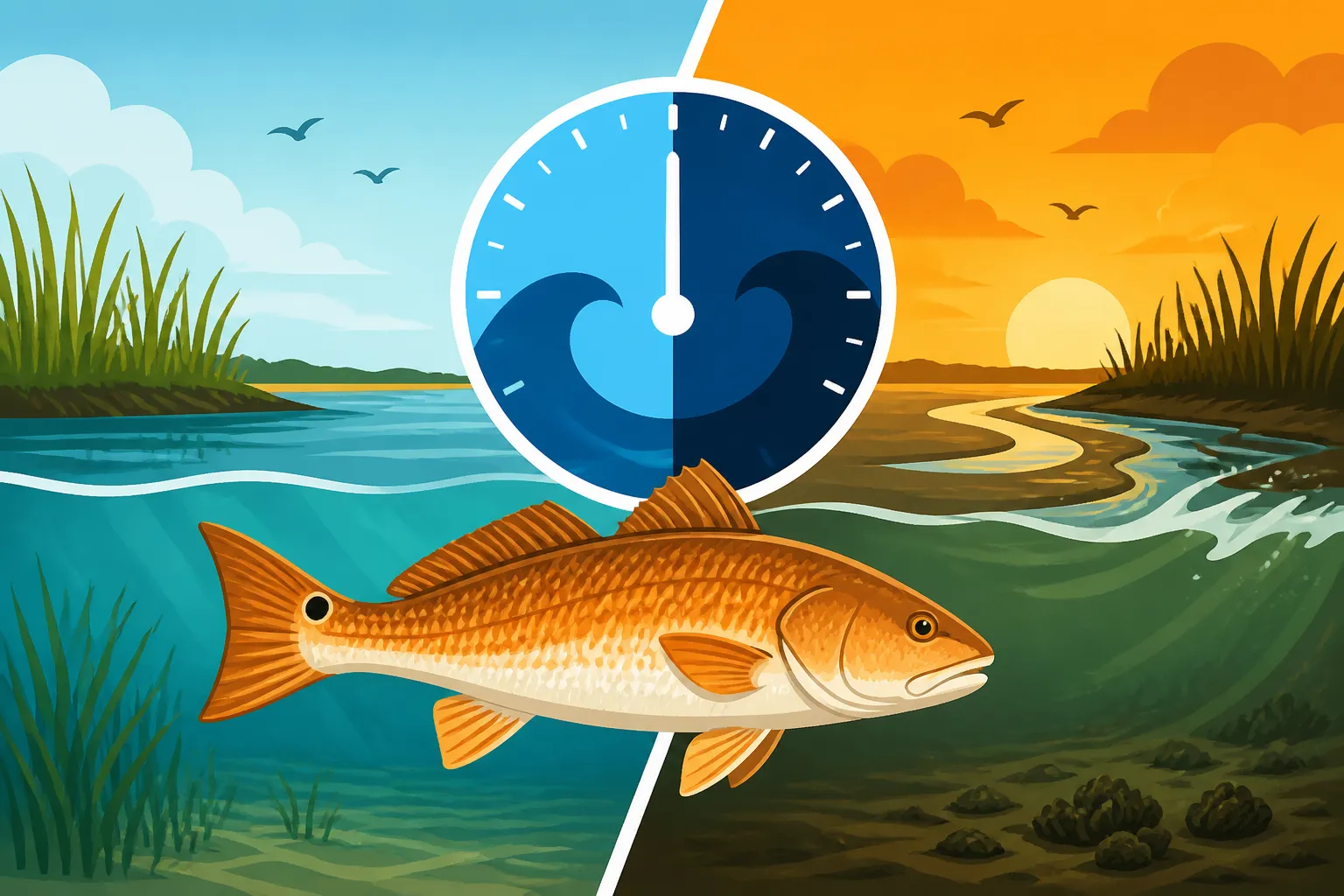
Think of the tide as the conveyor belt of the marsh, constantly bringing in new food and taking out old. As the tide rises and falls, it creates dynamic currents that flush out baitfish, shrimp, and crabs from hiding spots, making them easy targets for hungry redfish. This moving water doesn’t just transport food; it also opens up or closes off vast areas of prime feeding grounds that would otherwise be inaccessible.
During an incoming tide, redfish will push into shallower areas, exploring submerged grass flats and oyster beds that offer an abundance of food. They can venture deep into these spots, using the water's depth for cover and easier access to prey. Conversely, as the tide recedes, these same fish are forced to retreat, often concentrating in deeper channels, potholes, and creek mouths where they can wait out the low water or ambush unsuspecting prey trying to escape the draining flats. This constant migration is a core part of their daily life cycle, dictating where they are and, more importantly, when they are there.
The Rhythmic Dance of Feed and Retreat
Redfish are incredibly attuned to this tidal rhythm. It’s a primal dance of feed and retreat that has evolved over millennia. When the tide is high and flooding the grassy marshes, redfish will often move in with it, pushing into the spartina grass where they "tail"—a telltale sign where their tails break the surface as they nose down to root out fiddler crabs and other crustaceans. This behavior is a direct result of the tide granting them access to a buffet of sheltered food sources.
As the tide begins to fall, this buffet disappears, and the redfish instinctively begin their retreat. They position themselves strategically along the edges of channels, points, and oyster bars, waiting for the outgoing current to wash out shrimp, baitfish, and crabs from the now-draining marshes. These current breaks and ambush points become feeding stations where they can expend minimal energy while capitalizing on the bounty the tide delivers. Understanding this pattern of movement—where they go to feed and where they go to retreat—is the secret sauce to consistently finding them in South Carolina's diverse inshore waters.
Decoding the Best Tidal Stages for Redfish in South Carolina
Different stages of the tide present unique opportunities and challenges for targeting redfish. It's not just about "high" or "low" tide; it's about the movement of the water during those stages and how redfish respond to it. Becoming proficient means understanding these subtle shifts and adapting your strategy accordingly.
The Magic of Moving Water: Incoming Tides
For many South Carolina redfish anglers, the incoming tide, especially the last half of it, is often considered prime time. As the water starts to creep higher, it brings with it cooler, oxygenated water and a fresh supply of bait into the shallows. Redfish, sensing this influx of life, will actively move with the rising water, pushing deeper into the marsh grass, over oyster reefs, and onto expansive mudflats. This is when you'll often see those incredible "tailing" redfish, their bronze backs and waving tails visible above the surface as they gorge themselves on crabs and shrimp in just inches of water.
This stage is fantastic for sight casting, particularly in clear water. Anglers can pole through the shallow flats or use a quiet trolling motor, looking for signs of feeding fish. Using weedless soft plastics or a weedless spoon can be incredibly effective when casting into these grassy areas, mimicking the crabs and baitfish that redfish are hunting. It's a truly exhilarating experience to spot a redfish rooting around and make a precise cast right to it. For more in-depth strategies, check out our guide on how to fish an incoming tide for Redfish.
Slack Tide: A Time for Patience or Persistence?
Slack tide refers to the period right at the peak of high tide or the dead low tide, when the water's horizontal movement momentarily pauses before reversing direction. Many anglers view slack tide as a "dead" period, and it's true that fishing can often slow down significantly during these times. However, it's not always a time to pack up and go home; it simply requires a shift in tactics.
During slack high tide, redfish that have pushed far into the grass flats might become less active, spread out, and harder to locate. The current isn't sweeping food to them, so they might hunker down or cruise lazily. This could be a good time for a very slow presentation of live bait or even trying topwater lures during dawn or dusk, when light conditions might encourage them to strike.
During slack low tide, redfish are often concentrated in deeper channels, creeks, and potholes within the flats. While they might not be actively feeding in the same aggressive manner as during moving water, they are present. This is a perfect scenario for soaking live or cut bait on the bottom, allowing it to sit in front of fish that are holding in deeper water, waiting for the tide to turn. A patient approach with a natural bait can often yield results when the water isn't moving.
The Power of the Outgoing Tide
The outgoing tide, particularly the first few hours after the high slack, is another incredibly productive time for South Carolina redfish. As the water begins its steady retreat from the marshes, it creates a literal flush of bait and nutrients back into the main channels and estuaries. Redfish, anticipating this outflow, will position themselves along edges, points, and current breaks, turning these areas into prime ambush points.
Imagine a smorgasbord of baitfish, shrimp, and crabs being swept out of their grassy hiding spots by the receding water; redfish are lined up, ready to intercept them. Creek mouths and points where smaller creeks meet larger ones are absolute magnets during the outgoing tide. Here, you can effectively use soft plastics on jig heads, allowing them to drift with the current, or fish live mud minnows and shrimp on a Carolina rig. Understanding tide-based techniques for inshore fishing is essential here. The key is to present your bait or lure in a way that mimics an injured or disoriented piece of prey being washed out, making it an easy meal for a waiting redfish.
Local Nuances: How South Carolina's Coast Affects Tidal Fishing
South Carolina's coastline is a mosaic of diverse habitats, from the sprawling salt marshes of the Lowcountry to the intricate creek systems further north. While the general principles of tidal fishing apply everywhere, the specific structure of each area can dictate how redfish utilize the tides and, consequently, how you should approach your fishing.
Mudflats, Oyster Beds, and Grass Lines: Prime Tidal Zones
In places like Murrells Inlet, Mount Pleasant, and the vast estuaries around Charleston and Hilton Head Island, the geography is dominated by extensive mudflats, dense oyster beds, and countless miles of spartina grass. Each of these features interacts with the tide in a unique way, creating distinct fishing opportunities.
- Mudflats: These expansive, shallow areas warm up quickly under the South Carolina sun, attracting baitfish and shrimp. Redfish will move onto these flats with the incoming tide, especially during cooler months, to feed in the warmer water. As the tide recedes, they often funnel off the flats into nearby channels or potholes, making these exit routes prime targets.
- Oyster Beds: Oyster beds are critical habitats, offering both food and protection. At high tide, redfish can cruise over these jagged reefs, picking off crabs and small fish seeking refuge among the shells. As the tide falls, the edges of oyster bars become natural ambush points, as bait is pushed off the exposed oysters and into deeper water. You'll often find concentrated redfish around these structures during the outgoing tide.
- Grass Lines (Spartina Marshes): The iconic spartina grass is the nursery of the inshore fishery. During high tide, especially the upper half of the incoming, redfish will push deep into these flooded grass lines, hunting for fiddler crabs and other invertebrates. This is where you find those characteristic "tailing" redfish. When the tide falls, the redfish move out of the grass and often hold along the edges of the marsh, particularly near creek mouths, waiting to ambush anything washed out by the current. Focusing on specific areas, you can find the Best Redfish Fishing Spots Along the South Carolina Coast.
Reading a Tide Chart and Planning Your Trip
Trying to fish for redfish without consulting a tide chart is like driving to a new destination without a map – you might get there eventually, but it'll be a lot of wasted time and frustration. Tide charts, readily available online from sources like NOAA, or through various fishing apps, are your most valuable tool. They provide crucial information: the times of high and low tide, as well as the predicted tidal range (how much the water will rise and fall).
It’s not just about knowing when high tide is, but also understanding the rate of the tidal flow. Stronger currents (often associated with full and new moons, known as spring tides) mean more aggressive feeding and clearer definitions of feeding lanes. Weaker currents (during quarter moons, or neap tides) might mean fish are more spread out and less predictable. By carefully studying the tide chart for your specific location – remember, tides can vary significantly even a few miles apart – you can anticipate redfish movements. For instance, if you want to target tailing redfish, you'll plan your trip to coincide with the upper half of the incoming tide when the grass flats are flooded. If you're focusing on creek mouths for outgoing tide ambushes, you'll time your arrival for the falling water. This strategic planning is vital for maximizing your chances.
Gear and Techniques for Tidal Redfish Success
Having the right gear and knowing how to apply specific techniques to each tidal stage will significantly elevate your redfish game. It’s about being prepared for the conditions the tide presents.
Essential Tackle for South Carolina Redfish
When targeting South Carolina redfish, you'll want a reliable setup that can handle powerful runs and the harsh saltwater environment. A medium-heavy spinning rod, typically in the 7-foot range, paired with a 3000-4000 series spinning reel, is a versatile choice. Spool your reel with 15-30 lb braided line, which offers excellent casting distance and sensitivity. For a leader, 20-30 lb fluorocarbon is ideal, as it's nearly invisible underwater and resistant to abrasion from oyster shells.
When it comes to terminal tackle, a variety of hooks, weights, and swivels are necessary. Circle hooks, sized from 2/0 to 4/0, are excellent for live or cut bait, promoting jaw hookups and easier releases. For artificials, jig heads ranging from 1/8 to 1/2 ounce are standard, depending on current strength and water depth.
Live bait is a redfish favorite, with mud minnows, live shrimp, and finger mullet being top choices. For artificial lures, soft plastics like Gulp! shrimp or Z-Man paddletails are incredibly effective when fished on a jig head. Spoons, like a gold Johnson Silver Minnow, and topwater plugs can also trigger explosive strikes. Always make sure your fishing license is up to date, and consider picking up a good fishing hat and polarized sunglasses – essential items you can easily find on Amazon to protect you from the intense South Carolina sun. A good quality push pole or a quiet trolling motor can be a game-changer for navigating shallow flats, and you can find a wide selection of these, along with essential boating accessories, on Amazon.
Mastering Tidal Techniques
Matching your technique to the specific tidal stage is where true expertise shines.
- Incoming Tide: As the water rises, especially when it's just starting to flood the grass, consider using a popping cork rig with a live shrimp or artificial Gulp! shrimp. The "pop" attracts attention, mimicking a feeding fish or escaping bait. For targeting tailing redfish in the flooded grass, weedless soft plastics or spoons cast well ahead of the fish are excellent. The goal is to get your lure in their strike zone without spooking them. You can learn more about live bait rigs for inshore redfish here.
- High Slack: During this lull, redfish might be spread out in the grass. A slower approach is best. Try sight casting to any cruising fish with a weightless worm or slowly working a topwater lure around deeper pockets if it’s early morning or late evening.
- Outgoing Tide: This is prime time for ambushing redfish. Position your boat near creek mouths, points, or oyster bar edges. Cast soft plastics on a jig head and let the current carry them naturally along the ambush points. Cut bait, like a chunk of mullet or menhaden, fished on a Carolina rig on the bottom, can be deadly as redfish await an easy meal. This is where you master Inshore Redfish Techniques for Beginners.
- Low Slack: Redfish will be concentrated in the deepest parts of channels and potholes. A slow, bottom-oriented approach is best. Use a Carolina rig with live or cut bait, letting it sit right on the bottom in front of the fish. Sometimes, a very slow retrieve of a soft plastic on a heavy jig head can also entice a bite.
Having a reliable tackle box stocked with a variety of lures is key; many anglers swear by Gulp! shrimp or Z-Man soft plastics, which are readily available on Amazon. Remember, persistence and adaptation are your best friends when fishing the tides. Always be ready to switch baits, lures, or techniques as the water levels and currents change.
Tidal Stages and Redfish Behavior
To help you visualize how redfish behave across different tidal stages and what techniques might work best, here’s a quick overview:
| Tidal Stage | Redfish Behavior | Best Fishing Spots | Recommended Techniques |
|---|---|---|---|
| Incoming Tide | Moving into shallow grass, feeding aggressively | Grass flats, oyster bars, creek mouths | Sight casting, popping corks, weedless soft plastics |
| High Slack | May be deeper in grass, less active, spread out | Deeper pockets within grass, edges of channels | Slow presentations, live bait, topwater (early/late) |
| Outgoing Tide | Retreating from shallows, ambushing bait in current | Creek mouths, points, drop-offs, deeper channels | Live bait (cut/whole), soft plastics, jigging |
| Low Slack | Concentrated in deeper holes/channels, less active | Deep channels, potholes in flats, ICW turns | Live/cut bait on bottom, slow retrieve plastics |
Understanding these patterns will give you a significant advantage, allowing you to not only find redfish but to target them effectively regardless of the specific conditions you encounter in South Carolina's dynamic coastal waters. Always be sure to keep up with the Current Redfish Regulations for Coastal Waters as they can change.
Final Thoughts on Mastering Tidal Redfish
The question of whether tide timing matters for South Carolina redfish isn't just an emphatic "yes," it's a fundamental truth that underpins all successful inshore fishing in the state. The tide is the heartbeat of the marsh, dictating where redfish feed, where they seek refuge, and how accessible they are to anglers. By understanding the nuances of incoming, outgoing, and slack tides, you gain an incredible advantage, transforming your fishing from a hit-or-miss endeavor into a strategic pursuit.
It takes time, observation, and a willingness to adapt, but once you start to truly read the water and how it interacts with the local environment – the mudflats, oyster beds, and sprawling grass lines – you'll unlock a new level of appreciation for this incredible fishery. So, grab your tide chart, study your chosen spot, and get ready to experience the thrill of consistent redfish success in South Carolina.
Disclaimer
Fishing regulations, license requirements, and fish behavior can change based on environmental factors and management decisions. Always consult the latest South Carolina Department of Natural Resources (SCDNR) regulations before heading out. This guide is for informational purposes only and should not replace official guidelines.