Best Lures for Tailing Redfish in Grass Flats
There's nothing quite like the thrill of spotting a redfish tailing in a shallow South Carolina grass flat. It’s a moment that sends a jolt through every angler, but it also brings a unique challenge: how do you present a lure to these wary, heads-down feeders without spooking them? This guide is designed to help you navigate those skinny waters, understand why redfish behave this way, and arm you with the best lures and techniques to make that memorable catch.
Understanding Tailing Redfish Behavior in Grass Flats
Spotting a redfish tailing is often the highlight of an inshore fishing trip, but it's more than just a cool visual; it’s a direct indicator of active feeding. Understanding why and how redfish tail can dramatically improve your chances of success in the intricate world of South Carolina's lowcountry estuaries.
Why Redfish Tail
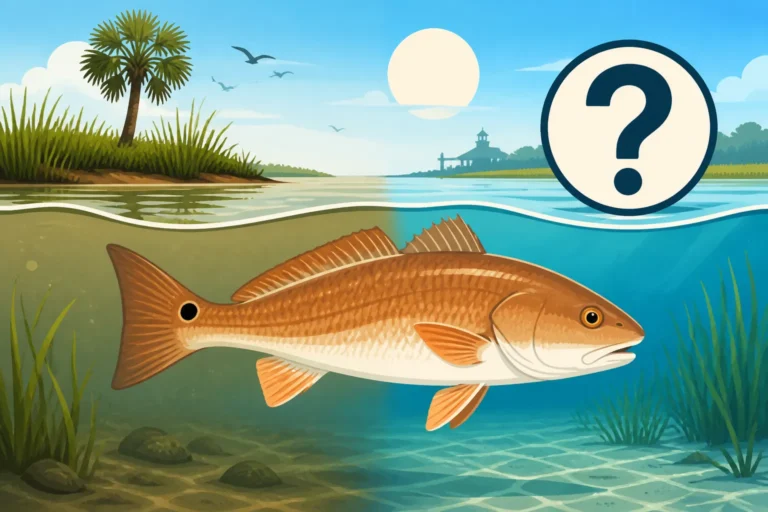
When we talk about "tailing" redfish, we're referring to that unmistakable sight of their broad, copper-colored tails breaking the surface of the water, often wiggling or waving in the air. This happens because the redfish are actively foraging on the bottom in extremely shallow water, often so shallow that their heads are buried in the mud or grass, and their tails are literally sticking out of the water. They are usually rooting around for crabs, shrimp, and small baitfish that hide in the dense grass beds.
This behavior is most common during low tide stages, especially on the incoming or outgoing tide when the water is just starting to flood or drain off the flats. As the water level drops, or as the tide slowly rises over a flat, these areas become accessible for a short window. The redfish seize this opportunity to gorge themselves on trapped or exposed prey before the water becomes too deep for efficient tailing or too shallow to sustain them. It's a prime feeding window, making these fish highly focused but also incredibly sensitive to disturbances.
The sheer excitement of seeing a tailing redfish comes from knowing they are actively eating. They aren't just cruising; they're committed to finding food. This focus, however, can also make them easily spooked by clumsy casts or sudden movements. They are literally heads-down, oblivious to their surroundings to a degree, but any unexpected vibration or shadow can send them fleeing in a burst of muddy water.
Reading the Flats and Spotting Tailing Fish
Becoming proficient at catching tailing redfish starts with becoming a skilled observer of the flats themselves. You need to learn to interpret the environment and anticipate where and when tailing behavior is most likely to occur. The incoming and outgoing tides are your best friends here, particularly the first few hours of the flood or the last few hours of the ebb. These are the windows when the water levels are just right for redfish to push into the grass or be concentrated on the edges.
Look for subtle disturbances on the water's surface. It's not always a clear tail waving like a flag. Sometimes it's just a slight ripple, a dark smudge moving through the grass, or a faint "push" of water indicating a fish moving just under the surface. Polarized sunglasses are absolutely essential for cutting through glare and allowing you to see into the water, even if it's murky. Practice makes perfect when it comes to distinguishing a redfish tail from a piece of floating debris or a swaying reed.
Wind conditions also play a huge role. A strong wind can make it nearly impossible to spot tails or feel subtle bites. Ideally, you want calm days with bright sun to aid visibility, or at least a light breeze that doesn't churn the water too much. Pay attention to the edges of oyster rakes and deeper channels adjacent to the flats; these are often the highways redfish use to access and exit their feeding grounds. Remember, patience is key. Sometimes you might wait for a long time, but that one perfect presentation to a tailing fish makes it all worthwhile.
The Challenge of the Environment
Fishing for tailing redfish isn't just about finding the fish; it's about navigating a challenging environment that demands precision and stealth. South Carolina's grass flats, particularly in areas like the Lowcountry, are often rich with spartina grass, oyster shells, and mud. These elements provide excellent cover and food sources for redfish but pose significant obstacles for anglers. Your lure needs to be able to glide over or through the grass without snagging, which is easier said than done.
A major frustration for many anglers is getting hung up on every other cast. The thick grass can foul your lure, mask a strike, or even cause you to pull a lure right out of a fish's mouth if it gets tangled. Oyster beds, while fantastic for attracting prey, are notoriously sharp and will readily cut through braided line or fluorocarbon leaders if you're not careful. This means you need robust gear and a smart approach to your rigging.
Furthermore, the shallow, clear water means redfish are acutely aware of their surroundings. Any sudden movement, loud noise, or even a shadow cast over the water can send them fleeing in a flash. This makes wading, poling a skiff, or using a silent trolling motor absolutely critical. The goal is to be as stealthy as possible, minimizing your footprint and disturbance. It's a delicate dance between getting close enough for an accurate cast and staying far enough away to avoid detection. How to Catch Redfish in South Carolina's Lowcountry delves deeper into these unique challenges.
Top Lures for Tailing Redfish in South Carolina Grass Flats
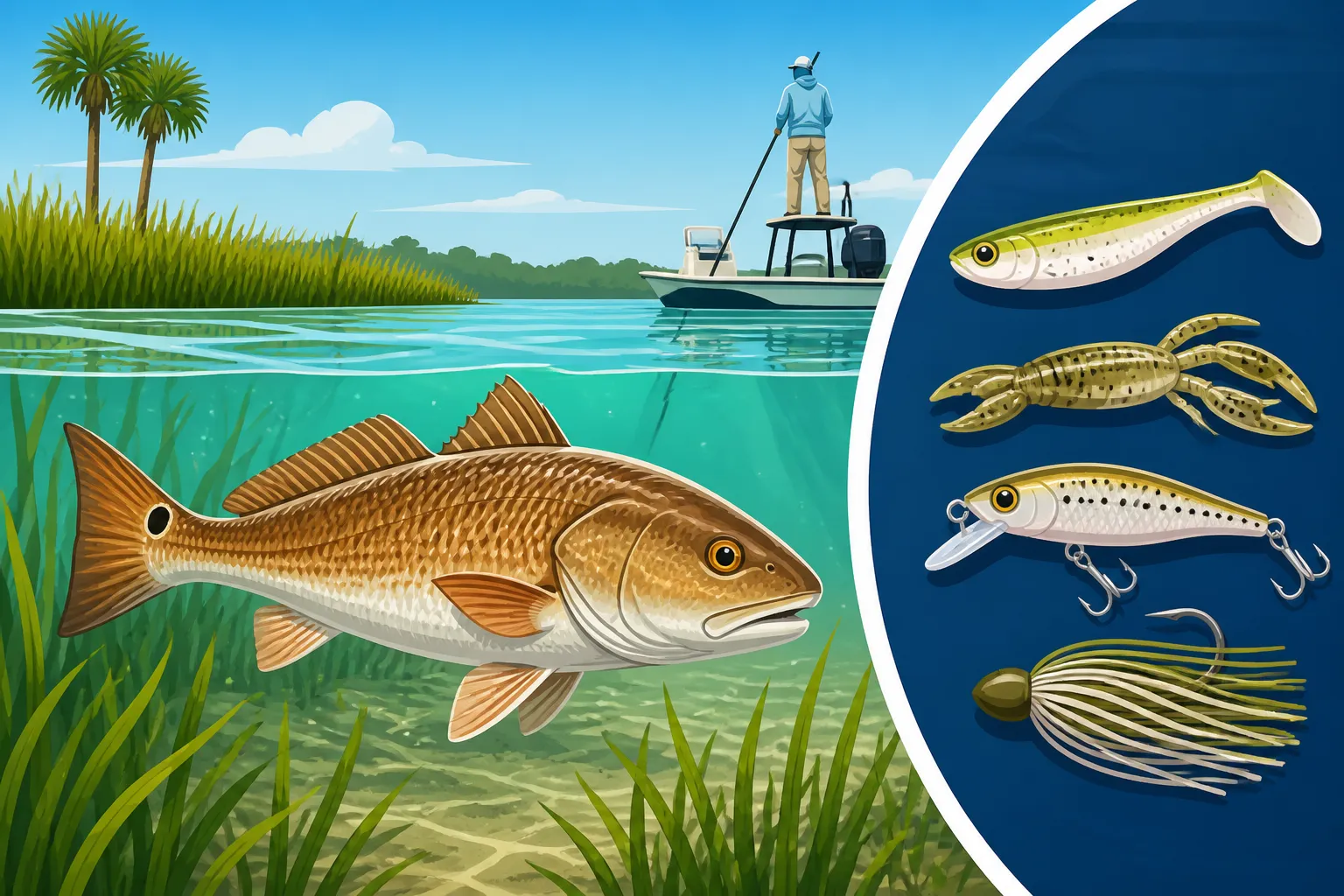
When a redfish is tailing, it's focused on grubbing for food. This means your lure needs to mimic their natural forage, be presented subtly, and, most importantly, be weedless. Forget anything with exposed treble hooks in these environments; you'll spend more time picking grass off your lure than actually fishing.
| Lure Type | Key Characteristics | Ideal Conditions | Pros | Cons |
|---|---|---|---|---|
| Soft Plastic Paddle Tail | Realistic profile, vibrant tail kick, various colors | Shallow grass, clear/stained water | Natural action, versatile, relatively inexpensive | Can still snag on very thick grass, requires proper weedless rigging |
| Weedless Spoon | Flashy, wobbling action, single weedless hook | Shallow grass, oyster beds, windy days | Excellent weed guard, casts far, attracts attention with flash | Less natural action than soft plastics, retrieve can be too fast if not controlled |
| Scented Artificial Shrimp | Realistic look & smell, soft texture | Very shallow water, finicky fish, clear water | Mimics natural prey perfectly, scent enhances strikes | Can be delicate, often more expensive, retrieve needs to be very slow |
Soft Plastic Paddle Tails
Soft plastic paddle tails are, without a doubt, a go-to choice for many seasoned South Carolina redfish anglers, especially when targeting tailing fish in grass flats. Their versatility and realistic action make them incredibly effective. The subtle thumping vibration of the paddle tail as it moves through the water mimics a struggling baitfish or a swimming shrimp, which is exactly what a redfish is often looking for.
When choosing paddle tails for tailing redfish, think natural. Colors like "rootbeer/gold flake," "new penny," "chartreuse," or "glowing pearl" are popular choices that imitate various baitfish and shrimp found in the marsh. Size matters too; generally, a 3-4 inch bait is perfect. Rigging these lures weedless is paramount. A 3/0 or 4/0 wide gap or extra wide gap hook, threaded through the plastic so the hook point is skin-hooked back into the body, keeps it snag-free. This allows the lure to slide effortlessly over grass blades and oyster shells. You can find a vast selection of these plastics and weedless hooks on Amazon, making it easy to stock up for your next trip.
The retrieve for a paddle tail in this scenario should be slow and deliberate. Think small twitches and pauses, just enough to make that tail kick, then let it settle. Tailing redfish are usually rooting around, not chasing down fast-moving prey. A slow, steady retrieve mimicking a crab scuttling or a shrimp crawling along the bottom can be incredibly enticing. If a fish is actively tailing, try to land your cast a few feet beyond the fish and retrieve the lure into its strike zone.
Weedless Spoons
Weedless spoons are another highly effective lure for targeting tailing redfish, particularly when dealing with thicker grass or oyster-laden bottoms where other lures might snag too easily. The design of a weedless spoon, typically featuring a single, upward-pointing hook protected by a wire guard, makes it incredibly efficient at deflecting obstacles. This means you can cast it into areas that would be absolute nightmares for other types of lures, presenting it directly where those tailing redfish are rooting around.
The flash and wobble of a spoon are its main attraction. As it moves through the water, it reflects light and creates an erratic, injured baitfish or crab-like action that can trigger a strike from even a finicky redfish. Gold and silver are classic colors, but sometimes a copper or black-gold spoon can be incredibly effective, especially in slightly stained water. Sizes typically range from 1/4 ounce to 1/2 ounce, depending on how far you need to cast and the depth of the water.
When fishing a weedless spoon for tailing redfish, a slow, steady retrieve with occasional subtle twitches is often best. You want it to flutter and wobble, not zip past the fish. It's about getting that irresistible flash and subtle vibration into the redfish's field of vision as it roots around on the bottom. Like with paddle tails, aim your cast to land beyond the fish and retrieve the spoon into its path. The beauty of the spoon is its ability to cast a long distance, allowing you to reach those wary fish without getting too close and risking spooking them.
Scented Artificial Shrimp
For those truly challenging days, or when the redfish are being particularly picky, scented artificial shrimp can be a game-changer. Brands like Berkley Gulp! Shrimp have revolutionized this category, offering baits that not only look and feel realistic but also release a powerful scent trail that can draw in redfish from a surprising distance. This scent factor can be the deciding advantage when fish are hesitant to strike traditional plastics.
The realism of these baits is often remarkable, mimicking the natural movement and appearance of live shrimp, which are a primary food source for redfish in the grass flats. They come in various colors, with natural shrimp tones like "new penny," "molting," and "natural" being top performers. Rigging is key: a light jig head (1/16 to 1/8 ounce) or a weedless worm hook, depending on the depth and amount of grass, works well. The goal is to keep the presentation as natural and unobtrusive as possible. You can often find great deals on various scented shrimp options on Amazon.
The retrieve for scented artificial shrimp should be incredibly slow and subtle. Think about how a real shrimp would move along the bottom – short hops, pauses, and slow crawls. Let the scent do a lot of the work. Cast it out, let it sink to the bottom, and then use very light rod tip twitches to make it hop a few inches, followed by a pause. Many strikes occur on the pause as the redfish investigates the enticing scent. This method is particularly effective for Targeting Slot-Size Redfish in South Carolina's Lowcountry Estuaries who are very cautious.
Key Considerations for Presenting Lures to Tailing Redfish
Catching tailing redfish isn't just about having the right lure; it's about the entire approach. These fish are in their most vulnerable, and often most skittish, state. A flawless cast can make all the difference between a hook-up and an empty flat.
Stealth and Approach
When you spot a tailing redfish, your first instinct might be to cast immediately. Resist that urge! Stealth is absolutely paramount. Any sudden movement, loud noise, or even the splash of a heavy lure can send these wary fish bolting. Whether you're wading, poling a skiff, or using a quiet trolling motor, approach the fish slowly and deliberately. If you're wading, shuffle your feet to avoid creating vibrations, and stay low. If you're on a boat, use the wind or current to drift silently, or pole gently.
Consider your angle of approach. Try to position yourself so the sun is not directly in the fish's eyes, and you're not casting a shadow over the area where the fish is feeding. A long, accurate cast is often your best bet, allowing you to stay a good distance from the fish. Practice your casting to minimize splash, aiming for a soft entry of your lure into the water. Remember, the goal is to make your lure appear as a natural, unthreatening food source, not a sudden intruder. This quiet approach is critical for success in these sensitive environments.
Once you’ve made your cast, don't rush. Let the lure settle, then begin a very subtle retrieve. If the fish stops tailing, it might have sensed something. Give it a moment. Sometimes, they'll resume feeding if they don't feel directly threatened. The patience required for this kind of fishing is immense, but the reward of hooking into a truly wild, tailing redfish is unparalleled. It's a test of your angling skills and your ability to become one with the environment.
Rigging for Success
The intricacies of rigging your lure can make or break your tailing redfish adventure. As mentioned, weedless is non-negotiable. For soft plastics, a wide-gap or extra-wide-gap worm hook is essential. Make sure the hook point is just barely skin-hooked into the plastic body, allowing it to remain weedless but ensuring it exposes fully on a strike. The size of the hook should match the size of your soft plastic; typically, 3/0 to 5/0 hooks are used for common 3-5 inch paddle tails and shrimp imitations.
Leader material is another critical component. While your main line might be braided for strength and sensitivity, a fluorocarbon leader is highly recommended. Fluorocarbon is nearly invisible underwater, which is a huge advantage in clear, shallow grass flats where redfish have excellent eyesight. A 20-30 lb fluorocarbon leader is usually sufficient, offering a good balance of stealth and abrasion resistance against oyster shells and rough fish mouths. Connect it to your main line with a strong knot like an FG knot or an Albright knot, ensuring a smooth transition that won't snag.
Always check your knots and leader for any nicks or abrasions after each fish or if you've been fishing around oyster rakes. A weak spot can lead to a lost fish and a lot of heartbreak. Additionally, consider adding a small, lightweight worm weight (1/16 oz or less) to your soft plastic rig if you need to get it down quickly or cast further into the wind, but keep it as light as possible to maintain a natural fall rate.
Retrieve Techniques
The retrieve for a tailing redfish isn't about speed; it's about subtle finesse and imitating natural prey. Remember, these fish are usually heads-down, rooting around for crustaceans and small fish that aren't making a mad dash. A slow, deliberate retrieve is almost always the most effective strategy.
For soft plastics and scented shrimp, try short, subtle hops or drags along the bottom. Cast your lure a few feet past the fish, let it sink, and then make a short, gentle twitch of the rod tip, just enough to move the lure a few inches. Then, let it settle again. Many strikes will happen as the lure falls or pauses, as the redfish perceives it as a vulnerable, easy meal. How to Fish an Incoming Tide for Redfish often calls for this specific kind of slow presentation.
Weedless spoons can be retrieved with a similar slow, steady reel, allowing their natural wobble to do the work. Occasionally, give the rod tip a gentle pop to make the spoon flash and dart, mimicking a startled baitfish. Pay close attention to your line for any unusual movement or "tick" – redfish often pick up the lure very gently. Keep your rod tip down when retrieving to maintain better contact with the lure and get a more direct hook set when a strike occurs. It’s a game of patience and precision, where every subtle movement counts.
Gear and Best Practices for Tailing Redfish Adventures
Having the right gear and adopting some best practices can significantly enhance your chances of success and enjoyment when chasing tailing redfish in South Carolina's pristine grass flats. From your rod to your ethics, every detail contributes to the experience.
Rod and Reel Setup
Your rod and reel setup is crucial for effectively targeting tailing redfish. You'll want a combination that offers a good balance of casting distance, sensitivity, and fighting power. A medium-light to medium power spinning rod, typically 7 to 7'6" in length, with a fast action tip, is ideal. The longer length helps with casting distance and accuracy, while the fast action provides the sensitivity needed to detect subtle bites and the backbone to control a strong redfish in shallow water.
Pair this with a 2500 or 3000 series spinning reel. These reels offer a smooth drag system, enough line capacity, and are generally lightweight enough for all-day casting. Spool your reel with 10-15 lb braided line. Braid offers superior casting distance, minimal stretch for excellent sensitivity, and incredible strength for its diameter. The lack of stretch is particularly important for feeling those gentle "thumps" or slight pressure changes that indicate a redfish has picked up your lure. Don't forget, a good drag system is paramount, especially when a redfish decides to make a run for it across a shallow flat.
Essential Accessories
Beyond your rod, reel, and lures, a few essential accessories can truly make your tailing redfish experience more comfortable and productive. First and foremost, a good pair of polarized sunglasses is non-negotiable. They cut through the glare on the water, allowing you to spot those subtle tails and moving fish. Without them, you're essentially blind to the signs of active redfish.
Next, a pair of fishing pliers is vital. They are indispensable for safely removing hooks, cutting line, and crimping weights. A fish gripper or lip-grip device can also be useful for handling redfish, especially larger ones, to minimize stress on the fish and protect your hands from sharp gill plates. Always have a measuring device handy, like a bump board or a tape measure, to ensure any fish you decide to keep meets South Carolina Redfish Slot Limit 18 to 25 Inches and South Carolina Redfish Daily Bag Limit Per Person.
Lastly, consider a small, waterproof tackle bag or backpack to carry your lures, extra leader material, sunscreen, and water. Staying hydrated is important, especially during long days on the water. A good pair of comfortable wading boots or shoes with good grip can also make a huge difference if you plan on getting out of the boat and walking the flats. These small items, easily found on Amazon, collectively enhance your comfort and efficiency.
Conservation and Regulations
As passionate anglers, we have a responsibility to protect the precious resources that make South Carolina fishing so incredible. Practicing catch and release, especially for larger breeding redfish, is a cornerstone of responsible angling. Studies show that larger redfish contribute significantly to the overall health and population of the species. When you do release a fish, handle it gently, minimize its time out of the water, and ensure it swims off strongly.
Familiarize yourself with the current regulations. South Carolina has specific rules regarding redfish, including Current Redfish Regulations for Coastal Waters and possession limits. For example, there’s typically a slot limit, meaning you can only keep fish within a certain size range, and a daily bag limit per person. There's also a South Carolina Redfish Vessel Limit Explained, which affects how many fish a group on a boat can keep. These rules are in place to ensure a healthy redfish population for future generations of anglers.
Always check the latest regulations from the SCDNR before you head out. These rules can change, so staying informed is crucial. Beyond regulations, practice ethical angling by leaving no trace, respecting private property, and being courteous to other anglers. The health of our fishing grounds depends on all of us doing our part. The beauty of South Carolina's coast and the thrill of its fishing opportunities are truly a gift, and it's our duty to preserve them.
Disclaimer
This article is for general informational purposes only and does not constitute professional advice. Laws, prices and regulations vary by location and change over time. Consult a qualified professional for guidance on your specific situation.