Night Fishing Techniques for Catfish
Trying to hook those elusive South Carolina catfish during the scorching heat of the day can be a real challenge, often leading to slow bites and frustration as they seek cooler, deeper waters. But when the sun dips below the horizon, and the air cools, a whole new world of opportunity opens up for serious catfish anglers. This comprehensive guide will dive deep into the most effective night fishing techniques for catfish in South Carolina, covering everything from essential gear and prime locations to proven strategies that will help you land more whisker fish under the stars.
Why Night Fishing for Catfish is Unbeatable in South Carolina
There's a reason why so many experienced anglers swear by night fishing for catfish, especially in the warm waters of South Carolina. It's not just about tradition; it's about understanding the fundamental biology and behavior of these incredible fish. Daytime heat, boat traffic, and angler pressure often push catfish into hiding, making them notoriously difficult to entice. But come sundown, everything changes.
Catfish Nocturnal Habits Explained
Catfish are primarily nocturnal hunters, meaning they become most active and feed aggressively during the twilight hours and throughout the night. This isn't just a preference; it's an evolutionary advantage. Under the cover of darkness, they feel safer moving into shallower waters, venturing out from deep channels and submerged structures to hunt for prey. This shift in behavior makes them much more accessible and willing to bite after sunset. The darkness also gives them an edge over their prey, which might rely more on sight. For anglers, this translates to more consistent action and often, bigger fish. If you've ever wondered, Is Night Fishing Better for Catfish?, the answer in South Carolina is often a resounding yes.
During the day, especially in the hot summer months, catfish retreat to the deepest, coolest parts of the lake or river, often suspending or burying themselves in cover to escape the sun's harsh rays. They become lethargic and less inclined to chase a meal. As the evening approaches and water temperatures begin to drop even slightly, their metabolism kicks in, and they start to actively forage. This is your prime window of opportunity.
Escape the South Carolina Daytime Heat and Crowds
Let's be honest, fishing in South Carolina during July and August afternoons can be brutal. The sun beats down, sweat drips, and the sheer discomfort can take the enjoyment out of a perfectly good fishing trip. Furthermore, many of our popular fishing spots, like those in the Santee Cooper Lakes: South Carolina's Legendary Bass Fishery, can get pretty crowded with pleasure boats and other anglers during the day. Night fishing offers a serene, cooler, and often more productive alternative.
The cooler nighttime temperatures aren't just more comfortable for you; they're more favorable for the fish too. Warm water holds less oxygen, and while catfish are hardy, they are still more active and energetic in cooler conditions. Less boat traffic means calmer waters, which can make it easier for catfish to locate your bait without the constant disturbance of passing vessels. It also means you often have your chosen fishing hole all to yourself, allowing for a peaceful and focused angling experience, free from distractions.
Essential Gear for South Carolina Night Catfishing
Successful night catfishing requires more than just a rod and reel; it demands a specific set of gear to ensure both productivity and safety in the dark. Don't think of it as an added expense, but rather an investment in a more enjoyable and fruitful fishing experience. Missing one critical item can turn a promising night into a frustrating ordeal.
Rods, Reels, and Line Considerations
When targeting South Carolina catfish, you'll want gear that can handle powerful fish and heavy lines. For channel catfish and smaller flatheads, a medium-heavy spinning or baitcasting rod, 7 to 8 feet long, paired with a reel capable of holding 150-200 yards of 15-30 lb test line is generally sufficient. For the truly monstrous blue catfish that inhabit our larger lakes and rivers, you'll need to step up your game. A heavy-action rod, 8-10 feet, coupled with a large baitcasting reel (like an Abu Garcia Ambassadeur or Penn Battle III) spooled with 50-80 lb braided line or heavy monofilament is essential.
Braided line is often preferred for catfishing due to its incredible strength-to-diameter ratio, lack of stretch, and sensitivity. This allows you to feel subtle bites even with heavy weights and long casts. However, some anglers prefer the forgiving stretch of monofilament when using circle hooks, believing it helps prevent fish from tearing off. Regardless of your choice, ensure your line is fresh and free of nicks. For hooks, circle hooks are highly recommended, especially when using cut or live bait, as they are designed to hook fish in the corner of the mouth, leading to fewer gut hooks and easier releases. Sizes can range from 3/0 for smaller channels to 10/0 or larger for big blues and flatheads. Don't forget an assortment of egg sinkers (1-6 oz depending on current) and swivels to complete your rigs. You can often find great deals on these items, including bulk packs of hooks and weights, on platforms like Amazon.
Illumination and Navigation Tools
Fishing in the dark without proper lighting is not only inefficient but dangerous. A good headlamp with both white and red light options is your best friend. White light helps you see to tie knots, bait hooks, and handle fish, while red light preserves your night vision and is less likely to spook fish. Keep spare batteries handy! If fishing from a boat, you must have navigation lights in working order, as well as a powerful spotlight to scan the water for hazards or buoy markers.
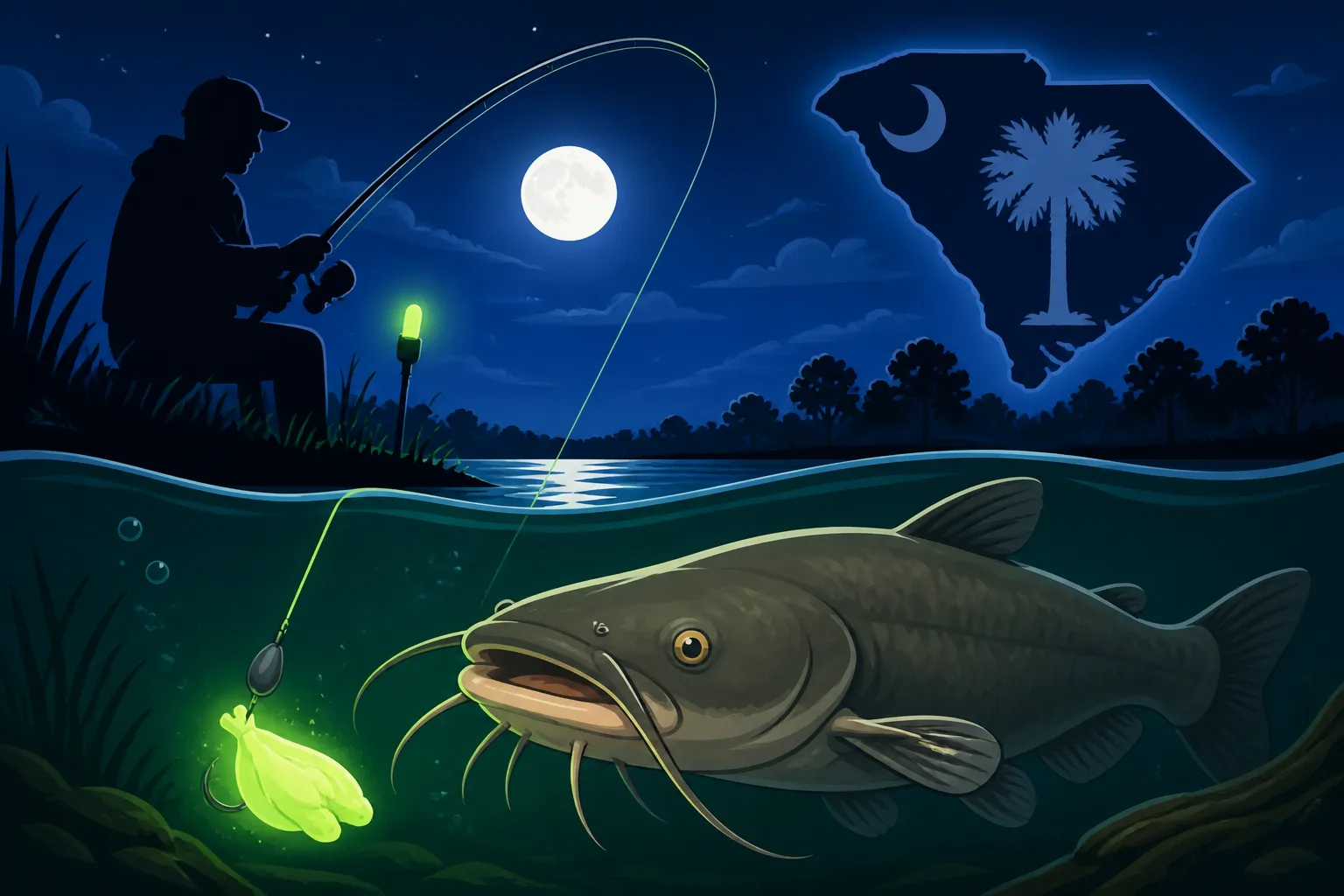
Beyond personal lighting, consider glow sticks or small LED lights that attach to your rod tips. These allow you to easily see bites without constantly shining a bright light on your line, which can put off wary fish. Some anglers even use light-up bobbers for drift fishing or suspending baits. For safety on the water, especially in unfamiliar territory, a reliable GPS or marine chartplotter is crucial for navigating back to the ramp or avoiding submerged hazards you can't see in the dark. Don't forget a first-aid kit, a fully charged cell phone, and backup power bank as well.
Comfort and Safety Essentials
Night fishing is often an all-night affair, so comfort is key. A comfortable boat seat or bank chair, insect repellent (South Carolina mosquitoes are legendary!), and appropriate layers of clothing are vital. Even summer nights can get chilly on the water. A good cooler stocked with drinks and snacks will keep you fueled. Always pack rain gear, even if the forecast looks clear; weather can change quickly.
Safety, however, is paramount. Always wear a PFD (Personal Flotation Device) when boating at night, or at least have them easily accessible for everyone on board. Let someone know where you're going and when you expect to return. A sharp knife, pliers, and a large landing net or lip gripper are essential for safely handling fish, especially large, feisty catfish. And, of course, remember to always carry your valid South Carolina Fishing License Guide. Game wardens do work after dark, and the penalties for fishing without a license can be steep.
Choosing Your Night Catfishing Spot in South Carolina
The secret to consistent catfishing, day or night, often lies in location, location, location. Catfish, particularly the larger blues and flatheads, are creatures of habit. They will follow predictable patterns and congregate in specific areas where food is abundant and cover is readily available. At night, these patterns shift slightly, as they move out of their daytime sanctuaries to feed.
Deep Channels and River Bends
Catfish love depth and current, making deep channels and sharp bends in rivers prime targets. These areas often scour out holes and create eddies where baitfish can congregate, and where catfish can ambush prey with less effort. In rivers like the Santee or Congaree, focusing on the outside bends where the current carves deeper holes can be incredibly productive. The Congaree River Catfish Fishing Spots Near Columbia are known for their deep holes and excellent night fishing.
As catfish move out from these deep sanctuaries to feed at night, they'll often patrol the edges of the channels. Positioning your boat or setting up on the bank near these transitions, where deep water meets a shallower shelf or flat, is a smart strategy. The current also serves to carry the scent of your bait downstream, drawing in catfish from a wider area. Pay attention to any natural pinch points or convergences in the river flow, as these can funnel both baitfish and catfish.
Submerged Structure and Ledges
Catfish are ambush predators and will often relate closely to submerged structure. This includes old river beds, stump fields, brush piles, rock piles, and ledges. These features provide cover for catfish to hide in during the day and excellent ambush points for feeding at night. On large reservoirs like Lake Moultrie or Lake Murray, finding submerged timber can be a goldmine. The Lake Moultrie Catfish and Crappie Fishing Guide points out many areas with excellent structure. Similarly, checking out the Catfish Fishing Spots on Lake Murray, South Carolina will show you how important structure is for those big stripers and catfish.
Using your sonar (fishfinder) is absolutely critical for identifying these submerged hotspots. Look for abrupt depth changes, irregular bottom contours, and clusters of baitfish on your screen. Once you locate a promising spot, anchor upwind or upcurrent, allowing your bait to drift naturally into the strike zone. Remember, catfish don't typically chase their food far; they prefer to sit and wait for it to come to them.
Dam Tailraces and Discharge Areas
Below dams, particularly in the larger river systems, are perennial hotspots for catfish, especially at night. The turbulent, oxygen-rich waters below a dam are often teeming with baitfish that get churned up or pass through the spillways. This creates a natural feeding frenzy for catfish. The constant flow also keeps the water cooler, which is a big draw during warmer months.
When fishing tailraces, be acutely aware of water release schedules and safety. The currents can be incredibly strong, and water levels can change rapidly. Always keep a safe distance from the dam structures. Popular spots like the tailrace below Lake Marion or Lake Moultrie can hold an incredible number of large blue catfish. Look for eddies and slack water areas just outside the main current, where catfish can rest and dart out into the faster water to grab passing prey. Nighttime in these areas can be absolutely electric with activity, and you might even find yourself catching some impressive fish in the Santee River Fishing Spots for Catfish.
Proven Night Catfishing Techniques and Rigging
Catching catfish at night isn't just about showing up with a rod and bait. It's about employing specific techniques and rigs that are optimized for their nocturnal feeding habits and the challenging conditions of low light. Understanding how to present your bait effectively can make all the difference.
Bottom Fishing with the Carolina Rig
The Carolina rig is a classic and highly effective bottom fishing setup for catfish, day or night. It's simple, allows your bait to move naturally, and keeps it directly on the bottom where catfish primarily feed. To tie it, you'll need a main line, an egg sinker (weight depends on current and depth, typically 1-4 oz), a barrel swivel, and a leader line (18-36 inches of fluorocarbon or monofilament, often slightly lighter than your main line) tied to your hook. The sinker slides freely on your main line, above the swivel, allowing the fish to pick up the bait without immediately feeling the weight. This free-sliding action is crucial for not spooking wary catfish.
When setting up on the bank or from an anchored boat, cast your Carolina rig out to your desired spot, let it sink, and keep a relatively tight line. Catfish bites can range from a gentle tap to a rod-bending thud. When you feel a bite, resist the urge to immediately set the hook. Give the fish a moment to take the bait, especially with circle hooks, then simply reel down and apply steady pressure. This allows the circle hook to do its job and rotate into the corner of the fish's mouth. If you want to dive deeper into this, check out How to Bottom Fish for Catfish.
The Versatile Santee Cooper Rig
A slight variation of the Carolina rig, the Santee Cooper rig, is particularly popular and effective in the lakes and rivers of South Carolina, especially the Santee Cooper system, hence its name. The key difference is the addition of a small float (often a peg float or a small, round foam float) on the leader, positioned a few inches above the hook. This float lifts your bait off the bottom, making it more visible and keeping it out of snags and detritus. This is particularly useful when fishing over muddy bottoms, dense vegetation, or areas with a lot of debris.
The Santee Cooper rig allows your bait, whether it's cut bait or a live offering, to hover just above the bottom, mimicking a struggling or injured baitfish. This presentation can be irresistible to cruising catfish. The float also adds some buoyancy, allowing your bait to drift more naturally in the current, spreading its scent more effectively. For this rig, ensure your leader is strong and abrasion-resistant, as catfish often drag lines across rough bottom structures. Like the Carolina rig, let the fish take the bait before applying pressure.
Drifting and Anchoring Techniques
Choosing between drifting and anchoring depends on the conditions and the specific spot you're targeting. When actively seeking fish in a large area, especially over featureless flats or along channel edges, drifting can be incredibly effective. This involves allowing your boat to drift with the current or wind, slowly dragging your baited rigs across the bottom. This covers a lot of water and presents your bait to a wider range of fish. Using a drift sock can help control your speed, ensuring your bait stays in the strike zone. If you need to keep your boat steady in a strong current, learning How to Anchor for Catfish in Current can be a game-changer.
Conversely, if you've pinpointed a specific piece of structure, a deep hole, or a known catfish staging area using your sonar, anchoring is the way to go. Anchor both fore and aft to keep your boat from swinging, allowing your baits to remain stationary in the exact location you want to target. This is particularly effective when targeting schooling catfish or large flatheads that might be holding tight to cover. Both techniques are productive for night fishing, but selecting the right one for your situation is key.
Jug Fishing and Trotlining for Greater Coverage
For anglers looking to cover even more water or target a higher volume of fish, jug fishing and trotlining are traditional methods, though they require specific regulations and careful planning. Jug fishing involves setting multiple lines with baited hooks suspended from individual floats (jugs). These are set adrift, and you follow them, checking each one periodically. This method is highly effective for covering vast areas, particularly on large bodies of water like Lake Moultrie or Lake Marion.
Trotlining involves setting a long main line across a river or lake, with numerous baited snoods (shorter lines with hooks) attached at intervals. It's a stationary method, typically set and retrieved hours later, often overnight. Both jug fishing and trotlining are highly productive for catfish but come with strict regulations regarding the number of jugs/hooks, tagging requirements, and where they can be deployed. Always consult the South Carolina Department of Natural Resources (SCDNR) regulations before attempting these methods. For more detailed instructions on these methods, you can refer to guides like Setting Up a Trotline for Catfish and How to Jug Fish for Catfish.
Best Baits for South Carolina Night Catfishing
When the sun goes down and catfish become active, they're often looking for a hearty meal. The right bait can make or break your night fishing success. South Carolina catfish aren't too picky, but certain baits consistently outperform others, especially when targeting larger specimens.
The Power of Cut Bait
For big blue catfish and flatheads, cut bait is king. Fresh, oily fish cut into chunks or strips releases a powerful scent trail that catfish, with their keen sense of smell, can detect from a long distance. Shad, herring, mullet, bream, and even carp are excellent choices. Gizzard shad are particularly effective due to their high oil content. For larger catfish, don't be afraid to use sizable chunks – a 3-4 inch piece is not too big for a 20+ pound blue cat.
Cut bait can be fished on the bottom with a Carolina or Santee Cooper rig, or drifted. The key is freshness. While some anglers swear by slightly "aged" bait, truly fresh cut bait, bleeding and oily, is usually the most potent. You can even enhance the scent with commercially available dips or sprays, often found on Amazon, although fresh bait is usually all you need. Always use a sharp, strong hook appropriate for the size of your bait and target fish.
Live Bait for Flatheads and Large Blues
While cut bait attracts all three major catfish species, live bait is particularly effective for flathead catfish, which prefer live, struggling prey. Small bream, sunfish, or even live gizzard shad are excellent choices. Rig them through the back (above the lateral line, avoiding the spine) or through the lips to keep them lively on the hook. Ensure your hooks are large enough and strong enough to handle a powerful strike and keep the live bait securely on.
Presenting live bait requires a bit more finesse than cut bait. You want the baitfish to swim naturally, attracting attention without getting tangled. A free-sliding sinker on a Carolina rig works well, giving the live bait enough slack to move a bit. Some anglers also use a float to keep the live bait suspended just off the bottom or near structure. Just remember to check local regulations on using certain species as live bait.
Prepared Baits and Worms
For channel catfish and smaller blues, prepared baits and traditional worms can be incredibly effective, especially for bank anglers or those targeting high-traffic areas. Punch baits, dip baits, and stink baits, often cheese-based or blood-based, are designed to emit a strong, attractive scent. These typically require a special bait holder hook or a sponge to keep them on.
While not as effective for trophy-sized flatheads, these prepared baits can lead to consistent action with channel catfish. Nightcrawlers or large pieces of red worms are also excellent for channel cats and provide a more natural presentation. You can fish them individually or in a tangled wad to create a larger, more enticing offering. The strong scent and visual appeal of a wriggling worm can often trigger bites even when fish are less aggressive. If you're looking for general advice on bait, consider reading Best Bait for Summer Catfish Fishing, which can be adapted for night use.
Safety Considerations for Night Fishing in South Carolina
Night fishing is an exhilarating experience, but the cover of darkness brings unique challenges that demand heightened safety awareness. Whether you're on a boat or casting from the bank, taking precautions is not just recommended, it's absolutely essential for a safe and enjoyable outing.
Navigation and Water Hazards
If you're fishing from a boat at night, your navigation lights must be operational and on. This isn't just a recommendation; it's a legal requirement and crucial for preventing collisions. A powerful spotlight is indispensable for scanning the water ahead for buoys, markers, debris, and other boats. Familiarity with the waters you're fishing is also key. Submerged hazards like stumps, rocks, and sandbars that are easily visible during the day become invisible death traps at night. Stick to areas you know well or navigate with extreme caution using your GPS and marine charts.
Always keep a sharp eye out for other vessels, especially smaller boats or kayaks that might not have adequate lighting. Sound signals (a horn or whistle) can be a lifesaver if you encounter dense fog or other low-visibility conditions. Ensure all passengers are aware of safety protocols and where emergency equipment is stored.
Personal Safety and Environmental Awareness
Falling overboard in the dark, especially in cold water, can quickly become a life-threatening situation. Always wear a PFD, even if you're a strong swimmer. The shock of cold water and disorientation in the dark can incapacitate even the most experienced individuals. If you're on the bank, be mindful of slippery surfaces, steep drop-offs, and unexpected changes in terrain. Headlamps are crucial here for seeing where you step.
Beyond water hazards, remember that you're in the natural environment. Wildlife, including snakes, alligators, and various insects, are more active at night. Keep your camp clean, store food properly, and always be aware of your surroundings. Good quality insect repellent is a must in South Carolina to fend off mosquitoes and other biting insects.
Communication and Emergency Preparedness
Never fish alone at night if possible. The buddy system provides an extra layer of safety. If fishing solo, always inform someone of your fishing plans, including your location and estimated return time. Carry a fully charged cell phone in a waterproof case, and consider a satellite communication device if you're venturing into remote areas without cell service.
Your boat should be equipped with all required safety gear: distress signals (flares or an air horn), a fire extinguisher, and a first-aid kit. Know how to use them. Before heading out, check the weather forecast. Storms can roll in quickly in South Carolina, and being caught on the water at night during a severe weather event is extremely dangerous. Be prepared to pack up and head in if conditions deteriorate. A little foresight goes a long way in ensuring your night catfishing adventure is not only productive but also safe.
| Catfish Night Fishing Checklist | Importance | Notes |
|---|---|---|
| Rods & Reels | High | Heavy action for big cats, medium-heavy for channels. |
| Line | High | Braided (50-80 lb) or Monofilament (20-40 lb). |
| Hooks | High | Circle hooks (3/0 – 10/0) are recommended. |
| Weights | High | Egg sinkers (1-6 oz) for Carolina/Santee Cooper rigs. |
| Swivels & Leaders | High | Barrel swivels, fluorocarbon/mono leaders (18-36 inches). |
| Baits | High | Fresh cut bait (shad, herring), live bait (bream), prepared baits. |
| Headlamp | Critical | White and red light options, spare batteries. |
| Navigation Lights | Critical | For boats, ensure fully functional. |
| Spotlight | High | For scanning water and hazards. |
| Rod Tip Lights/Glow Sticks | Medium | For bite detection. |
| GPS/Chartplotter | High | For navigation and marking spots. |
| PFD (Life Vest) | Critical | Wear always, especially when boating at night. |
| Insect Repellent | High | Essential for South Carolina nights. |
| Weather-Appropriate Clothing | High | Layers for warmth, rain gear. |
| First-Aid Kit | High | Basic wound care, pain relief. |
| Charged Phone & Power Bank | High | Communication in emergencies. |
| Large Net/Lip Gripper | High | Safe fish handling. |
| Knife & Pliers | High | General utility, hook removal. |
| Cooler with Food & Drinks | Medium | Stay hydrated and fueled. |
| South Carolina Fishing License | Critical | Always have it valid and accessible. |
| Buddy System | Highly Recommended | Extra eyes and help in emergencies. |
Disclaimer
Fishing regulations, species limits, and license requirements in South Carolina can change. Always consult the latest rules and guidelines from the South Carolina Department of Natural Resources (SCDNR) before embarking on any fishing trip. This guide is for informational purposes only and does not supersede official regulations. Stay safe and respect our natural resources.