Setting Up a Trotline for Catfish
If you've ever spent countless hours casting for catfish, only to come home with an empty cooler or just a couple of small ones, you know the frustration. Catching these bottom-dwelling beauties consistently can feel like a game of chance, especially when you're targeting those bigger, elusive whiskerfish. That's where a trotline can become a real game-changer, offering a more efficient and often more productive way to harvest a mess of catfish. This guide will walk you through everything you need to know about setting up a trotline in South Carolina, from understanding the rules to deploying your gear for maximum success.
Understanding South Carolina's Trotline Regulations
Before you even think about buying a length of line and a box of hooks, the absolute first thing you need to do is get familiar with South Carolina's specific regulations regarding trotlines. Believe me, ignorance of the law is no excuse, and violating these rules can lead to hefty fines and confiscation of your gear. The South Carolina Department of Natural Resources (SCDNR) has a clear set of guidelines designed to ensure fair play, protect our fisheries, and maintain safety on the water.
Legal Requirements for Trotlines
South Carolina is quite particular about how you can use a trotline, and for good reason. These aren't just arbitrary rules; they're in place to manage fish populations, prevent navigation hazards, and ensure everyone has a good experience on the water.
Firstly, you absolutely need a valid South Carolina fishing license to use a trotline, just like any other method of fishing. You can't just throw out a line if you haven't taken care of this basic requirement. For more on getting your license, check out our South Carolina Fishing License Guide. Beyond the license, let's talk about the gear itself. Trotlines are generally restricted to a maximum length, typically not exceeding 100 yards, and can have a limited number of hooks, usually no more than 50. These hooks must be spaced at least 20 inches apart. This spacing prevents overcrowding and reduces the chances of catching multiple fish in one spot, which can lead to unnecessary waste if you're not checking the line frequently. Also, circle hooks are often encouraged, and in some areas, may be legally required due to their effectiveness in hooking fish in the corner of the mouth, leading to less injury and easier release of unwanted bycatch.
Furthermore, every trotline needs to be clearly marked. We're talking about a visible tag or buoy at each end, displaying the owner's name and SCDNR customer identification number. This is crucial for identification and enforcement, preventing "ghost fishing" where lost or abandoned gear continues to catch fish. The markers also help other boaters avoid your lines. Neglecting these markers is a common mistake that can get you into trouble, and it can also become a hazard for others enjoying our beautiful waterways.
Restricted Waters and Placement Rules
Not all waters are open to trotline fishing, and even in those that are, there are specific placement rules you must follow. Generally, trotlines are prohibited in navigable waters or channels where they could impede boat traffic. Think about busy rivers like the Congaree River or major lakes like Lake Murray; you can't just stretch a trotline across these areas. The general rule is that they should be set in a manner that does not interfere with the free passage of boats. This often means placing them out of the main channel, in coves, or along less-trafficked shorelines.
You'll also find restrictions on how close a trotline can be to public boat ramps, docks, or swimming areas. These rules are for public safety and to ensure that recreational areas remain accessible for all users. For instance, imagine trying to launch your boat at a busy ramp only to find a trotline strung across the path; it's both a nuisance and a danger. Always consult the most current SCDNR regulations, as these can change. A quick search on the SCDNR website or a call to their local office will keep you on the right side of the law. Remember, these regulations are in place to preserve the resource for everyone, so understanding them fully is part of being a responsible angler.
Gathering Your Trotline Gear for Success
Once you've got those regulations down pat, it's time to assemble your arsenal. A successful trotline isn't just about tossing out any old rope and hooks; it's about having the right equipment that can withstand the elements, hold up to strong fish, and be deployed and retrieved safely. You'll find a lot of these supplies readily available online from retailers like Amazon, or at your local tackle shop.
Choosing the Right Line and Hooks
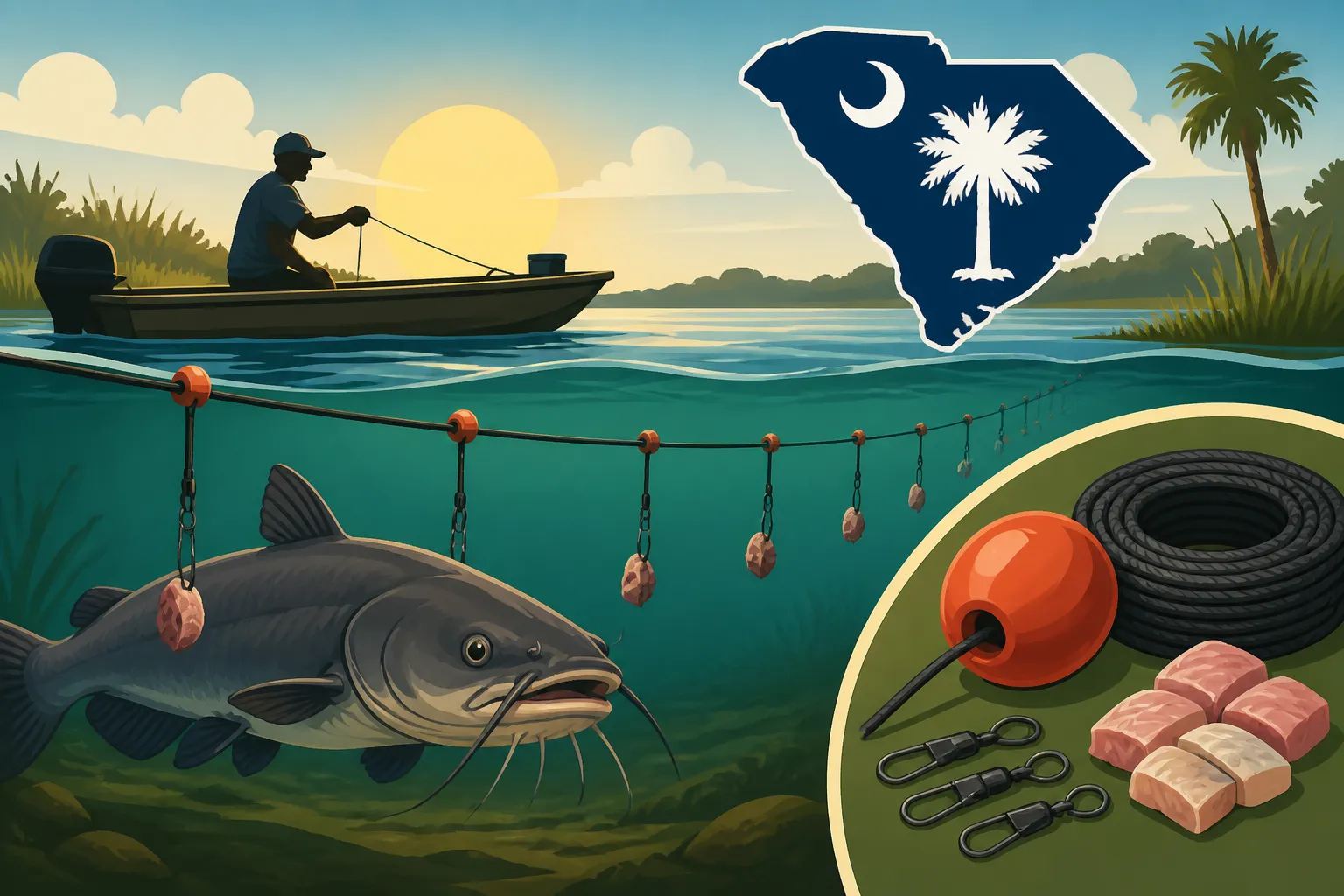
The backbone of your trotline is, well, the line itself. You need something robust and durable. Most experienced trotliners opt for heavy-duty nylon or polypropylene rope. Nylon is strong and resistant to abrasion, making it a good choice for areas with submerged structure. Polypropylene is lighter and floats, which can be an advantage or disadvantage depending on how you plan to set your line. A good diameter for the mainline is usually around 1/4 inch or thicker – something that can withstand the pull of a substantial catfish and won't cut into your hands when you're pulling it up.
For your snoods (the shorter lines that connect the hooks to the mainline), consider using a slightly lighter but still strong monofilament or braided line. This allows for some give and makes it easier to replace individual snoods if they get damaged. As for hooks, size matters, especially when you're targeting catfish. Larger hooks, typically 5/0 to 8/0 circle hooks, are excellent choices for catching blue and flathead catfish. Circle hooks are particularly effective because they're designed to hook fish in the corner of the mouth as the line tightens, minimizing gut-hooking and making catch-and-release easier if you land a fish you don't want to keep. They are also often a requirement in specific regulations, so double-check your local rules. Make sure you have plenty of hooks, as they can get bent, broken, or lost to snags.
| Component | Recommended Material/Size | Key Benefit |
|---|---|---|
| Mainline | 1/4" – 3/8" Nylon or Polypropylene Rope | Durable, resists abrasion, strong |
| Snoods | 50-80 lb Monofilament or Braided | Strong, flexible, easily replaceable |
| Hooks | 5/0 – 8/0 Circle Hooks | Effective, minimizes gut-hooking, often required |
| Swivels | Heavy-duty barrel swivels | Prevents line twist, secures snoods |
| Weights | Brick, cinder block, heavy metal | Anchors the line firmly to the bottom |
| Floats | Jugs, buoys, pool noodles | Marks line ends, provides flotation |
| Bait | Cut bait, liver, worms, stink bait | Attracts catfish, specific to species |
Anchors, Floats, and Additional Tools
Every trotline needs to be anchored securely to prevent it from drifting away with the current or being pulled by a powerful fish. For this, you'll need substantial weights. Bricks, cinder blocks, or heavy metal weights work perfectly. You'll typically need two main anchors, one for each end of your mainline. Some anglers also add smaller weights along the mainline itself to keep it submerged, especially if using a floating rope like polypropylene, but this depends on your desired setup.
Floats are just as important as anchors. They serve two primary purposes: marking your trotline's location and providing flotation to keep the line at a desired depth. Old plastic jugs, dedicated fishing buoys, or even repurposed pool noodles can work. Just make sure they're brightly colored and clearly visible, especially if you're marking your line in an active area. Remember, each float needs to have your identifying information clearly written on it as per SCDNR regulations. You can find robust, marine-grade buoys on Amazon that are built to last.
Beyond the main components, a few extra tools will make your life a lot easier. A good pair of heavy-duty pliers or cutters is essential for rigging and dealing with hooks. A sharp knife is always handy. A bait bucket or cooler to keep your bait fresh, and a large cooler with ice for your catch, are also must-haves. Don't forget a pair of gloves to protect your hands from hooks and sharp fins, especially when dealing with a feisty catfish. You might even consider a sturdy net or a gaff for landing larger fish safely. For more on preparing for your trip, consider checking out our guide on What to Bring on a South Carolina Fishing Charter, which has some overlap in essential gear.
Step-by-Step Trotline Setup and Deployment
Now that you've got your gear and understand the rules, it's time for the exciting part: putting your trotline into action. This process requires a bit of planning and careful execution to ensure your line is effective and safe for everyone on the water.
Choosing Your Location and Preparing the Line
Selecting the right spot is paramount for trotline success. Catfish, whether you're targeting blue, channel, or flathead, tend to congregate in specific types of areas. Look for deeper channels, bends in rivers, submerged structures like fallen trees or rock piles, and areas where currents create eddies or washouts. These are prime feeding grounds where catfish lie in wait. On larger lakes like Lake Moultrie or Lake Wateree, targeting old creek beds or inundated timber can be highly effective. The best time to scout these locations is often with a depth finder on a calm day, looking for humps, drop-offs, and cover.
Once you have your spot, it's time to prepare your mainline. You'll want to rig your snoods and hooks onto the mainline before deployment. Cut your snoods to the desired length (usually 12-24 inches) and attach a swivel to one end. Then, attach your hook to the other end of the snood. Now, starting from one end of your mainline, attach a snood every 20 inches or so, making sure to keep the required spacing. Many anglers use a simple loop knot to attach the snood's swivel to the mainline. Lay out your entire trotline, complete with snoods and hooks, in an organized fashion in your boat. This prevents tangles during deployment, which can be incredibly frustrating. Keep the hooks covered or secured to avoid accidental snagging while you're moving.
Deploying the Trotline Safely and Effectively
Deployment is a two-person job if possible, especially with longer lines. Start by securing one anchor to the first end of your mainline and dropping it into your chosen location. As your boat slowly moves along the intended path of your trotline, steadily pay out the mainline, making sure the snoods and hooks don't tangle. This is where pre-organizing your line really pays off. As you move, carefully bait each hook with your chosen offering.
Once you've reached the other end of your desired trotline length, attach the second anchor and drop it. Finally, attach your marker buoys to each end of the mainline, ensuring they display your identification clearly. The goal is to have your mainline stretched relatively taut, but not so tight that it can't move slightly with the current. You want the hooks to hang freely in the water column, generally close to the bottom where catfish feed. Avoid setting your line directly across known boat paths or highly visible areas to prevent conflicts with other anglers and boaters. If you're fishing a river like the Santee River, paying attention to the current and placing your anchors appropriately will be key to keeping your line in place.
Baiting and Checking Your Trotline for Success
Setting the trotline is only half the battle; the real art lies in baiting it effectively and knowing when and how to check it to maximize your catch and adhere to responsible angling practices. The type of bait you use and the frequency of your checks can make all the difference.
Best Baits for South Carolina Catfish
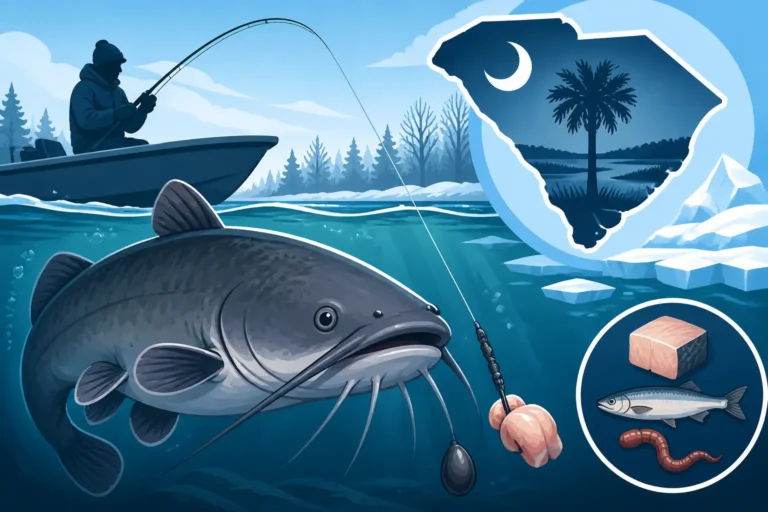
Choosing the right bait is critical when trotlining for catfish. Different species and different seasons often call for different approaches. For blue catfish, which are abundant in many of South Carolina's larger rivers and lakes, cut bait is often king. Freshly cut pieces of shad, herring, or even smaller panfish like bream (where legal) are incredibly effective. The oil and scent trail they leave in the water are irresistible to blues. You can often find bait fish at local tackle shops, or you can catch your own using methods discussed in our Bait Choices for Cold Weather Fishing guide.
Flathead catfish are a bit different; they prefer live bait. Small live bream, sunfish, or even sturdy minnows are excellent choices. Flatheads are ambush predators, so a struggling live baitfish gets their attention. Make sure your live bait is healthy and hooked in a way that allows it to swim naturally without expiring too quickly. You can purchase bait wells and aerators to keep your live bait vigorous, often found on Amazon.
For channel catfish, which are widespread across almost all South Carolina waters, you have a lot more options. They're less picky than their larger cousins. Cut bait works well, but so do traditional offerings like chicken liver, nightcrawlers, and various manufactured stink baits. These highly scented baits disperse well in the water, attracting channel cats from a distance. If you're new to catfish fishing in South Carolina, starting with chicken liver is a tried-and-true method that rarely disappoints. Our guide on Best Bait for Summer Catfish Fishing offers more detailed recommendations.
Checking Your Trotline and Managing Your Catch
How often you check your trotline is a delicate balance. You want to check it frequently enough to prevent fish from dying on the line and to re-bait as needed, but not so frequently that you scare fish away. Most anglers recommend checking trotlines at least once every 12-24 hours. If you're fishing in warmer water, more frequent checks are advisable to ensure the fish stay fresh. Many anglers prefer to set their trotlines in the late afternoon or evening and check them first thing in the morning, which aligns with the natural feeding patterns of many catfish species, especially if you consider Is Night Fishing Better for Catfish?.
When approaching your trotline, do so slowly and quietly. Start at one end, carefully pulling the mainline into your boat. As you retrieve, check each hook. If you have a fish, handle it carefully. Large catfish can be powerful, so be prepared with gloves, pliers, and perhaps a specialized catfish gripper. If you plan to keep the fish, immediately place it on ice in a cooler to preserve its freshness. If you catch a fish you don't intend to keep or one that's undersized, release it quickly and gently to minimize stress. Re-bait any empty hooks before slowly paying the line back out. Always be mindful of your surroundings and any other boaters or anglers nearby, and retrieve your trotline completely when you are finished fishing to avoid creating hazards or violating regulations.
Disclaimer
Fishing regulations and best practices can change. Always consult the latest South Carolina Department of Natural Resources (SCDNR) guidelines before deploying any fishing gear, including trotlines. This article is for informational purposes only and should not be considered a substitute for official legal or regulatory advice. Please fish responsibly and prioritize safety.