Identifying a Keeper-Size Spotted Seatrout by Eye
There’s nothing quite like the thrill of feeling a strong tug on your line, setting the hook, and reeling in a beautiful spotted seatrout from the shimmering inshore waters of South Carolina. The excitement is palpable! But then, as you hoist it aboard, a common question pops into every responsible angler's mind: "Is this one a keeper?" The worry about accidentally breaking regulations, or worse, harming the fishery by keeping an undersized fish, can quickly dampen that initial joy. This guide is designed to help you confidently identify and measure a keeper-size spotted seatrout by eye, ensuring you’re always fishing within South Carolina’s regulations.
The Frustration of the Unknown: Why Size Matters for Spotted Seatrout
It’s a scenario many of us have faced: you've just landed a gorgeous fish, its iridescent spots catching the sun, and you're beaming with pride. Then, a tiny seed of doubt begins to sprout. Is it big enough? What’s the exact limit again? That moment of uncertainty can be incredibly frustrating, especially when you’re trying to do everything right. Nobody wants to find themselves on the wrong side of a regulation, not just because of potential penalties, but because we all care about the health of our local fisheries.
The Angler's Dilemma: Catching a Fish You Can't Keep
Imagine the sheer disappointment of hooking what feels like a trophy, only to realize once it's in the boat that it’s just shy of the legal limit. You’ve put in the effort, felt the fight, and now you have to carefully release it, hoping it swims away strong. This isn't just about missing out on a meal; it's about respecting the rules that keep our fishing vibrant. Misidentifying or mismeasuring a fish can lead to a citation, and nobody wants to deal with the hassle and expense of a fine. While the focus here is on spotted seatrout, understanding the general principle applies across species – just like knowing Penalty for Fishing Without a License in South Carolina helps you avoid legal trouble before you even cast a line, knowing your species-specific regulations is paramount.
Why Regulations Exist: Protecting Our Fishery
These rules aren't arbitrary hurdles designed to make your life harder. Quite the opposite, in fact. Size limits, bag limits, and seasonal restrictions are all carefully crafted conservation tools. They are put in place by wildlife agencies, like the South Carolina Department of Natural Resources (SCDNR), to protect fish populations, especially the crucial spawning stock. By letting smaller fish grow to maturity and reproduce, we ensure there are plenty of fish for future generations of anglers to enjoy. It's a delicate balance, and adherence to these regulations is key to maintaining the incredible bounty of South Carolina's coastal waters. We want those abundant spotted seatrout populations to thrive for years to come, and our responsible angling practices play a huge part in that success.
Understanding South Carolina's Spotted Seatrout Regulations
Before you even think about casting a line for spotted seatrout in South Carolina, it’s absolutely vital to be crystal clear on the current regulations. These rules are the backbone of sustainable fishing, ensuring that our cherished seatrout populations remain healthy and plentiful for everyone to enjoy, now and in the future. Don't rely on old memories or what someone "heard" at the bait shop; always verify the current official guidelines.
The Official Minimum Size Limit
For spotted seatrout in South Carolina, there is a specific minimum size limit. This isn't a suggestion; it's a hard rule. Any spotted seatrout you catch that measures below this specific length must be immediately and carefully released back into the water. The intent behind this minimum size is to allow these fish to grow to a mature size, giving them at least one opportunity to spawn and contribute to the population before they can be harvested. This helps to secure the future of the fishery, a concept explored further in South Carolina Spotted Seatrout Minimum Size 14 Inches. Taking the time to measure correctly and release undersized fish ensures a vibrant ecosystem.
Daily Bag Limits: How Many Can You Keep?
Beyond the minimum size, South Carolina also sets a daily bag limit for spotted seatrout. This limit dictates the maximum number of fish a single angler can keep in a 24-hour period. Just like size limits, bag limits are a crucial management tool to prevent overfishing and distribute the harvest more equitably among anglers. It means that even if you catch ten fish over the minimum size, you might only be allowed to keep a certain number. This is clearly outlined in South Carolina's 10-Fish Spotted Seatrout Daily Limit Explained. Always be aware of your daily limit and stop fishing for that species once you've reached it, or switch to catch-and-release only if you wish to continue angling.
Special Considerations: Seasonal Bans and Gigging
It's not just about length and quantity; sometimes how you catch fish, or when, is also regulated. For spotted seatrout, a significant special consideration in South Carolina is the winter gigging ban. Gigging, which involves spearing fish, can be particularly effective in cooler waters when seatrout often congregate. To protect these vulnerable populations during specific times, especially when they might be more lethargic or concentrated, gigging may be prohibited for a period. It's crucial to understand that this ban typically applies specifically to gigging and does not usually extend to traditional rod and reel fishing. For a deeper dive into these specific regulations, you can read South Carolina's Winter Gigging Ban for Seatrout. Always make sure you understand the nuances of these rules, as they can sometimes be species-specific or method-specific.
| Regulation Type | Spotted Seatrout in South Carolina | Importance |
|---|---|---|
| Minimum Size | Check current SCDNR regulations | Ensures fish reach reproductive age, protecting spawning stock. |
| Daily Bag Limit | Check current SCDNR regulations | Prevents overharvesting, promotes equitable distribution among anglers. |
| Vessel Limit | Check current SCDNR regulations | Prevents a boat full of anglers from taking an excessive number of fish. |
| Gigging Ban | Typically December through February (check year) | Protects concentrated fish during vulnerable cold-weather periods. |
Always consult the latest South Carolina Department of Natural Resources (SCDNR) regulations before heading out, as rules can change.
Mastering the Measurement: How to Accurately Size Your Catch
So, you’ve reeled in that beautiful spotted seatrout. Now comes the moment of truth: the measurement. Getting this right is crucial, not just for compliance, but for the well-being of the fish you might have to release. A rushed or incorrect measurement could mean keeping an illegal fish or, conversely, releasing a keeper that could have been dinner!
The Proper Way to Measure a Spotted Seatrout
Measuring a fish accurately might seem straightforward, but there are specific techniques that ensure consistency and compliance with regulations. For spotted seatrout in South Carolina, you'll need to measure from the tip of the snout (with the mouth closed) to the very end of the tail fin. Here's a quick step-by-step:
- Lay the Fish Flat: Gently place the fish on a flat, stable surface, like a measuring board or a cooler lid. Make sure it's not flopping around too much; keep handling to a minimum.
- Close the Mouth: Ensure the fish's mouth is completely closed. If the mouth is agape, it can add precious fractions of an inch to the measurement, leading to an inaccurate reading.
- Position the Head: Align the tip of the fish's snout with the zero mark on your measuring device.
- Pinch the Tail: Gently squeeze or pinch the tail lobes together so they form a straight line. This ensures you're measuring to the absolute farthest point of the tail. In some regulations, a "natural lay" of the tail is specified, but for spotted seatrout, pinching is generally the accepted method to get the maximum length.
- Read the Measurement: Take your reading at the pinched tail's farthest point. If the fish is squirming, take a deep breath and gently reposition it. It's better to take an extra few seconds for accuracy than to make a mistake.
Remember, every fraction of an inch counts, so be diligent.
Tools for Accurate Measurement on the Water
Having the right tools can make all the difference in getting an accurate and stress-free measurement. Forget trying to eyeball it or using a flimsy ruler that blows away in the wind.
- Bump Boards: These are fantastic for quick, accurate measurements. A bump board is a rigid piece of plastic or wood with a fixed stop at one end. You simply "bump" the fish's snout against the stop and read the measurement where the tail lands. They’re great for minimizing handling time, which is critical for released fish. You can find durable, easy-to-read bump boards specifically designed for fishing on platforms like Amazon.
- Flexible Tape Measures: While not as quick as a bump board, a flexible, waterproof tape measure (often found in fishing tackle kits or easily purchased on Amazon) works well. Look for ones that are durable and clearly marked, perhaps with brightly colored increments for easy reading in varying light conditions.
- Measuring Decals: Some anglers apply waterproof measuring decals directly to their cooler lids or the side of their boat. This can be super convenient, as the measuring device is always there and ready. Just make sure it’s securely adhered and won't peel or distort over time.
Whichever tool you choose, ensure it's robust, waterproof, and clearly legible. The less time you spend fumbling with a flimsy device, the better for both you and the fish.
Common Measurement Mistakes to Avoid
Even with the right tools, it's easy to make small errors that can lead to big problems. Being aware of these common mistakes can help you avoid them:
- Slack Tape Measure: Trying to measure a fish that’s arching its back or not laying flat on a flexible tape measure will always give you an undersized reading. The fish needs to be as straight as possible.
- Open Mouth: Forgetting to gently close the fish's mouth before aligning it with the zero mark can add a surprising amount of length, potentially making an undersized fish appear legal.
- Not Pinching the Tail (if applicable): If regulations require a "pinched tail" measurement, failing to do so will result in an artificially shorter measurement. Always know the specific requirement for the species you're targeting.
- Measuring on an Uneven Surface: Trying to measure a fish over tackle boxes, coolers with bumpy textures, or uneven boat decks can lead to inaccuracies. Always use a truly flat surface.
- Excessive Handling Time: The longer a fish is out of the water, the more stressed it becomes. Rushing can lead to errors, but dawdling is worse for the fish. Practice quick, efficient measurement to minimize air exposure.
By paying attention to these details, you'll be able to quickly and confidently determine if your spotted seatrout is a keeper.
Identifying Your Catch: Beyond Just Size
Before you even think about grabbing that measuring tape, you need to be absolutely sure you’ve actually caught a spotted seatrout! While their distinctive appearance makes them relatively easy to identify for experienced anglers, beginners or those new to South Carolina's waters can sometimes get them confused with similar-looking species. Knowing the key features will build your confidence and prevent any accidental mix-ups.
Key Features of a Spotted Seatrout
Spotted seatrout are genuinely beautiful fish, and once you know what to look for, they become unmistakable. Their common name, "spotted," is a huge clue, but there's more to their identity than just the dots.
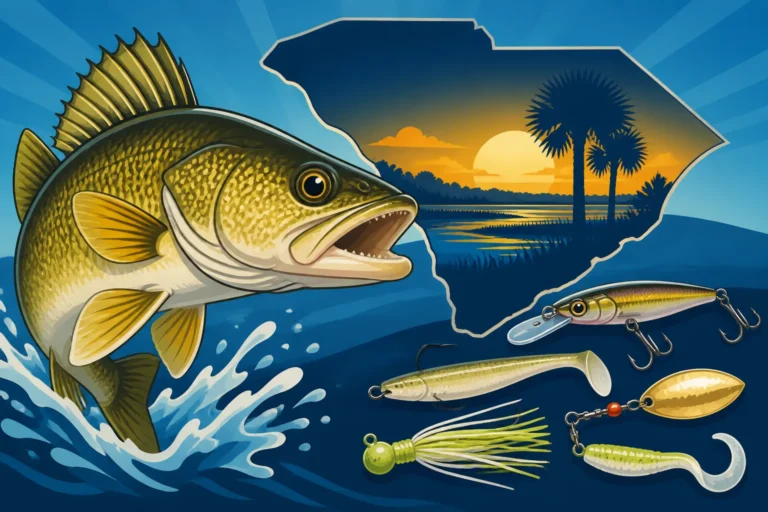
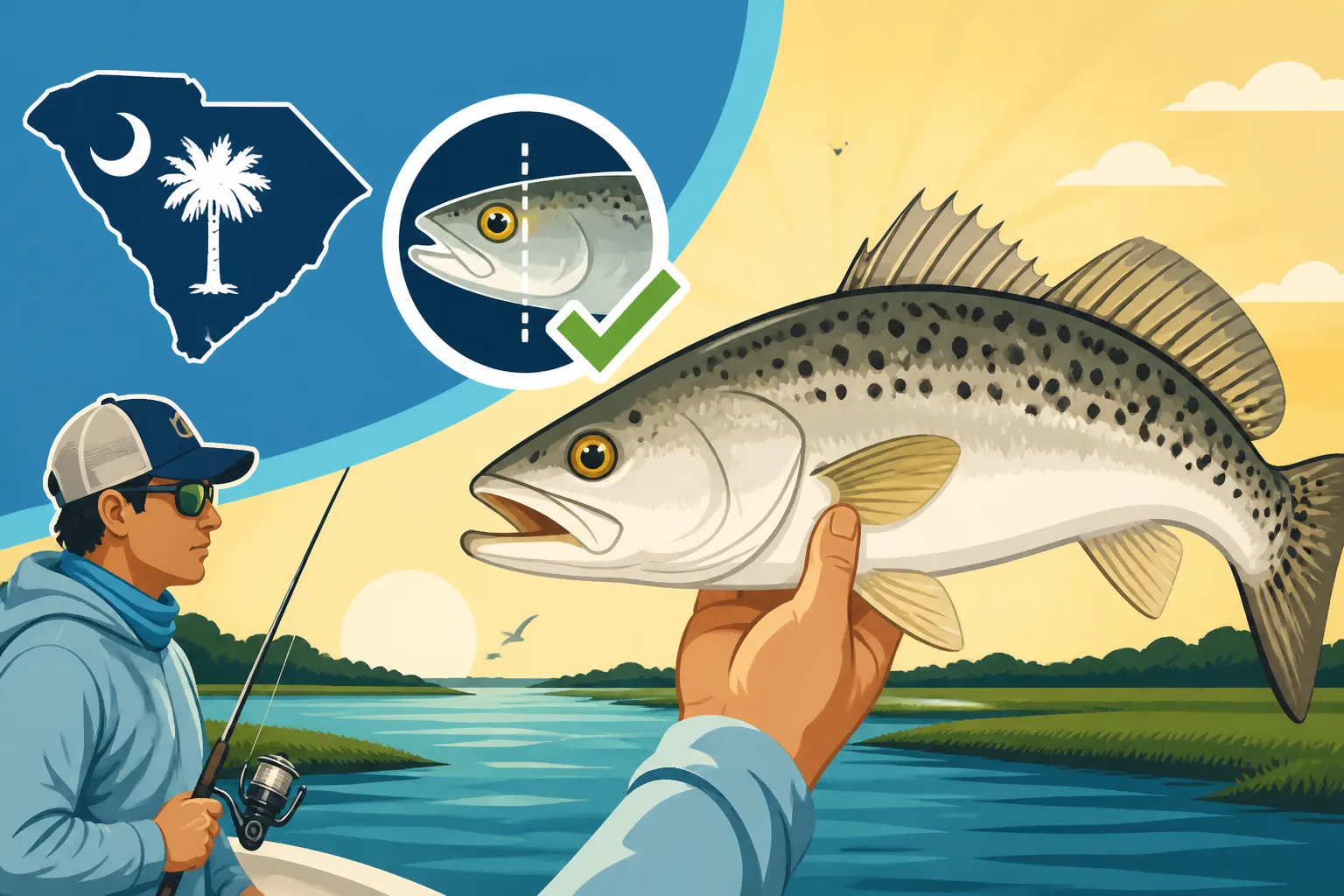
- The Spots: This is their most prominent feature! Spotted seatrout are adorned with numerous small, distinct black spots scattered across their back, sides, and extending onto their dorsal and caudal (tail) fins. These spots are usually irregular in size and placement.
- Body Shape: They have a sleek, elongated, and somewhat compressed body. They're built for speed and quick strikes in the shallows.
- Mouth and Teeth: Open their mouth carefully (if you need to observe, do so briefly and gently), and you'll notice a prominent lower jaw. They have two distinct canine-like teeth at the front of their upper jaw, often called "fangs," which are perfectly designed for grasping slippery prey like baitfish.
- Dorsal Fins: They possess two dorsal fins that are distinctly separated. The first dorsal fin is spiny, while the second is soft-rayed. This separation is a good identifier.
- Coloration: Their backs are typically dark grey or greenish, fading to silvery sides and a white belly. This countershading helps them blend in with their environment.
These features collectively paint a clear picture of a spotted seatrout, distinguishing them from other species that might swim in the same brackish and saltwater habitats.
Differentiating from Look-Alikes: Weakfish and Others
The biggest challenge in identifying spotted seatrout often comes from their close relatives or other species that share similar habitats. The most common confusion arises with weakfish, but there are other fish you might encounter:
- Weakfish (Cynoscion regalis): This is the classic doppelganger. Weakfish are very similar in body shape and size to spotted seatrout, and they can even have some faint spots, especially when young. However, the key difference lies in the spots: weakfish typically have fewer, much smaller, and less distinct spots, often appearing as wavy lines or blotches, primarily above the lateral line. They rarely have spots extending onto their fins in the prominent way a spotted seatrout does. Their overall coloration can also be more yellowish or golden, especially on the fins. Understanding the nuances here can be greatly aided by resources like Spotted Seatrout vs Weakfish: What's the Difference?.
- Red Drum (Redfish): While usually distinct, very young red drum might occasionally be confused with a trout. However, red drum (redfish) almost always have one or more very prominent, large black spots near the base of their tail. Spotted seatrout have many small spots across their body and fins, but not usually a single large one right at the tail's base. You can often find Where to Catch Redfish Near Charleston, South Carolina in similar inshore habitats.
- Other Drum Species (Black Drum, Croaker): These fish have different body shapes, mouth structures, and usually lack the distinct spotting of the seatrout. Croaker, for instance, are much smaller and have barbels on their chin. Black drum have multiple barbels and a much deeper body.
Always take a moment to observe the fish carefully. Look at the full pattern of spots, the shape of the mouth, and the arrangement of the fins. When in doubt, it’s always best to release the fish. Fishing in general, and specifically for these popular species, often goes hand-in-hand with exploring places like Where to Catch Spotted Seatrout in South Carolina's Inshore Waters, where you're likely to encounter both the target species and its look-alikes.
Tips and Tools for On-the-Water Confidence
Having the regulations memorized and knowing how to identify a spotted seatrout is a great start, but applying that knowledge effectively on the water requires a bit of practice and the right mindset. Fishing is about enjoying the experience, not stressing over every catch, so let's get you set up for confident decisions.
Practicing Identification and Measurement
Like any skill, identifying and measuring fish accurately gets easier with practice. You wouldn’t expect to master a new casting technique on your first try, right? The same goes for this.
- Measure Every Fish: Even the obvious throwbacks. Every time you catch a spotted seatrout (or any regulated species), take the time to go through the measurement process. This builds muscle memory and helps you get quicker and more efficient. The more you measure, the more intuitive it becomes to judge a fish's length just by looking at it.
- Study Pictures: Before your trip, spend some time looking at images of spotted seatrout and their common look-alikes. Pay attention to the subtle differences in spot patterns, fin shapes, and mouth structures. The more visual references you have, the easier it will be to make quick decisions on the water.
- Fish with Experienced Anglers: There’s no substitute for learning from someone who's been doing it for years. If you have friends or family who are seasoned South Carolina anglers, ask them to demonstrate their measuring techniques and point out key identification features. They can offer invaluable real-time advice.
Confidence comes from repetition and experience. Don’t be afraid to take your time in the beginning; with practice, it’ll become second nature.
Essential Gear for Responsible Angling
Beyond your rod, reel, and bait, a few key pieces of gear can significantly enhance your ability to fish responsibly, especially when it comes to measuring and releasing fish.
- Measuring Device: As discussed earlier, a good quality bump board or a durable, waterproof tape measure is non-negotiable. Many anglers find the rigid bump boards particularly useful for speed and accuracy. You can often find excellent options made from marine-grade materials that will withstand the saltwater environment on platforms like Amazon.
- Dehooking Tools: A pair of long-nosed pliers or a specialized dehooking tool is essential for quickly and safely removing hooks from fish, especially those you intend to release. This minimizes handling time and reduces stress and injury to the fish.
- Wet Towel/Gloves: Keeping a wet towel handy or wearing wet gloves can help you handle fish without removing their protective slime coat, which is crucial for their health upon release.
- Camera: While not for measurement, having your phone camera ready allows you to snap a quick photo of your catch before release, preserving the memory without prolonging the fish's time out of water.
Having these items readily accessible means you can spend less time fumbling and more time making good decisions for the fish. When you're fishing for species like these, having gear that stands up to the demands of saltwater angling is key.
Staying Up-to-Date with Regulations
This is perhaps the most critical tip of all: regulations can change! What was legal last year might not be legal this year. Fisheries management is dynamic, constantly adapting to population assessments, environmental factors, and scientific recommendations.
- Check SCDNR Regularly: Before every fishing trip, or at least seasonally, visit the official South Carolina Department of Natural Resources (SCDNR) website or pick up their latest fishing regulations guide. This is your definitive source for current size limits, bag limits, and any special closures or seasonal restrictions.
- Understand the "Why": Often, changes in regulations are made to protect a vulnerable population or enhance a recovering fishery. Understanding the conservation reason behind a rule can make it easier to accept and follow.
- General License is the First Step: While having your South Carolina Fishing License Requirements in South Carolina is the absolute bare minimum to even be on the water legally, it doesn't automatically mean you know all the species-specific rules. You need both the license and the knowledge of the rules for the fish you're targeting.
Making it a habit to check the regulations will save you from potential legal trouble and ensure you're always contributing to the long-term health of South Carolina's incredible fishing resources.
Catch and Release Best Practices for Undersized Fish
Even with the best intentions and the sharpest eye, you’re inevitably going to catch undersized spotted seatrout. It's just part of fishing! When this happens, your actions in releasing that fish become incredibly important. A healthy release means that fish has a much better chance of surviving, growing larger, and contributing to future spawns. This is especially true when targeting species where Best Bait for Spotted Seatrout in Cold Weather can make them more vulnerable to stress.
Minimizing Stress for a Healthy Release
The goal is to get that fish back into the water as quickly and gently as possible, with minimal harm. Stress is a silent killer for released fish, and it can be caused by excessive handling, air exposure, and improper support.
- Wet Hands: Always wet your hands thoroughly before touching a fish you intend to release. Dry hands can remove the fish's protective slime coat, which acts as its first line of defense against parasites and infections.
- Minimize Air Exposure: Try to keep the fish in the water as much as possible, especially if you're just measuring. If you must bring it aboard for a quick measure, do it swiftly and efficiently. Every second out of water is stressful.
- Support the Fish Horizontally: Never hold a fish vertically by its jaw or tail if you plan to release it, especially larger fish. This can cause severe internal damage to their spine, jaws, and internal organs. Instead, support its body horizontally with one hand under the belly and the other gently gripping the tail.
- Gentle Handling: Avoid squeezing or grabbing the fish tightly. Use a firm but gentle grip that controls its movements without causing injury.
These simple steps dramatically increase a fish's chances of survival after being caught and released.
Proper Dehooking Techniques
Removing the hook is often the most critical moment for a released fish. The faster and cleaner you can do it, the better.
- Use Tools: This is where those long-nosed pliers or dehooking tools really shine. They allow you to reach hooks that are deeply set without putting your fingers (or the fish's gills) at risk.
- Back Out the Hook: If the hook is visible and easily accessible, gently back it out the way it went in. Don't yank or twist violently.
- Cut the Line: If a fish is deeply hooked in the gills or gut, and you can't easily and quickly remove the hook, it's often better to simply cut the line as close to the hook as possible. Studies show that hooks left in often rust out, and the fish has a higher survival rate than if you attempt to rip out a deeply embedded hook, which would cause significant trauma.
- Consider Barbless Hooks: For species you frequently catch and release, especially spotted seatrout, consider crimping down the barbs on your hooks. Barbless hooks greatly reduce tissue damage and make hook removal incredibly quick and easy.
Remember, the goal is to get the fish back into its element with as little damage as possible.
Reviving and Releasing the Fish
Just tossing a fish back isn't always enough, especially if it's been a tough fight or out of water for a bit. Sometimes, a little "TLC" is needed for a successful release.
- Hold in Current: Gently hold the fish in the water, facing it into a gentle current if possible. This allows water to flow over its gills, helping it to breathe.
- Allow for Recovery: Don't let go until the fish shows strong signs of recovery. It should start trying to swim away from your grasp on its own. If it rolls over or floats away, it’s not ready. Gently move it back and forth a little to push water through its gills, mimicking swimming.
- Avoid "Tossing": Never simply toss a fish back into the water. This can cause additional injury from impact and disorient the fish, making it vulnerable to predators. Gently lower it into the water until it swims away under its own power.
- Be Mindful of Predators: If you see a lot of aggressive birds or larger fish in the immediate area, try to release the fish in a spot where it has some cover or a better chance to escape.
By following these best practices, you're not just adhering to regulations; you're actively participating in the conservation of South Carolina's incredible spotted seatrout fishery, ensuring there are plenty of healthy fish for years to come. Whether you're fishing Spotted Seatrout Fishing Near Beaufort or anywhere else along the coast, these steps are universal for responsible angling.
Disclaimer
This article is for general informational purposes only and does not constitute professional advice. Laws, prices and regulations vary by location and change over time. Consult a qualified professional for guidance on your specific situation.