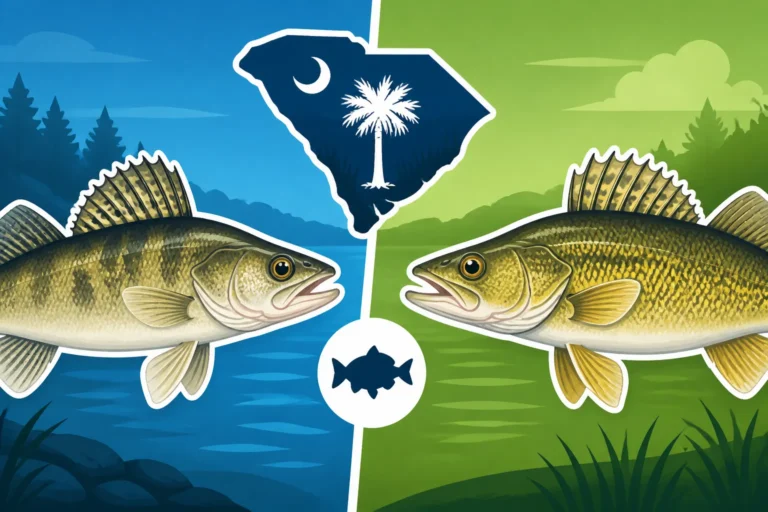
Spotted Seatrout vs Weakfish: What’s the Difference?
Ah, the age-old question that has stumped many a seasoned angler and certainly confused countless beginners out on the beautiful waters of South Carolina: "Is that a spotted seatrout, or did I just catch a weakfish?" It’s a common mix-up, and honestly, with their similar appearances and shared habitats, it’s completely understandable to get them confused. But for us South Carolina fishing enthusiasts, knowing the difference isn't just about showing off your fish ID skills; it's crucial for understanding regulations, improving your technique, and truly appreciating the diversity of our coastal ecosystems. This guide is going to break down all the subtle (and not-so-subtle) differences between spotted seatrout and weakfish so you can confidently identify your next catch.
Understanding the Spotted Seatrout
Let's start with a true Lowcountry celebrity: the spotted seatrout. These fish are a staple for inshore anglers across South Carolina, known for their aggressive strikes and delicious table fare. They’re called "spotted" for a very good reason, which we'll dive into!
Key Identification Features
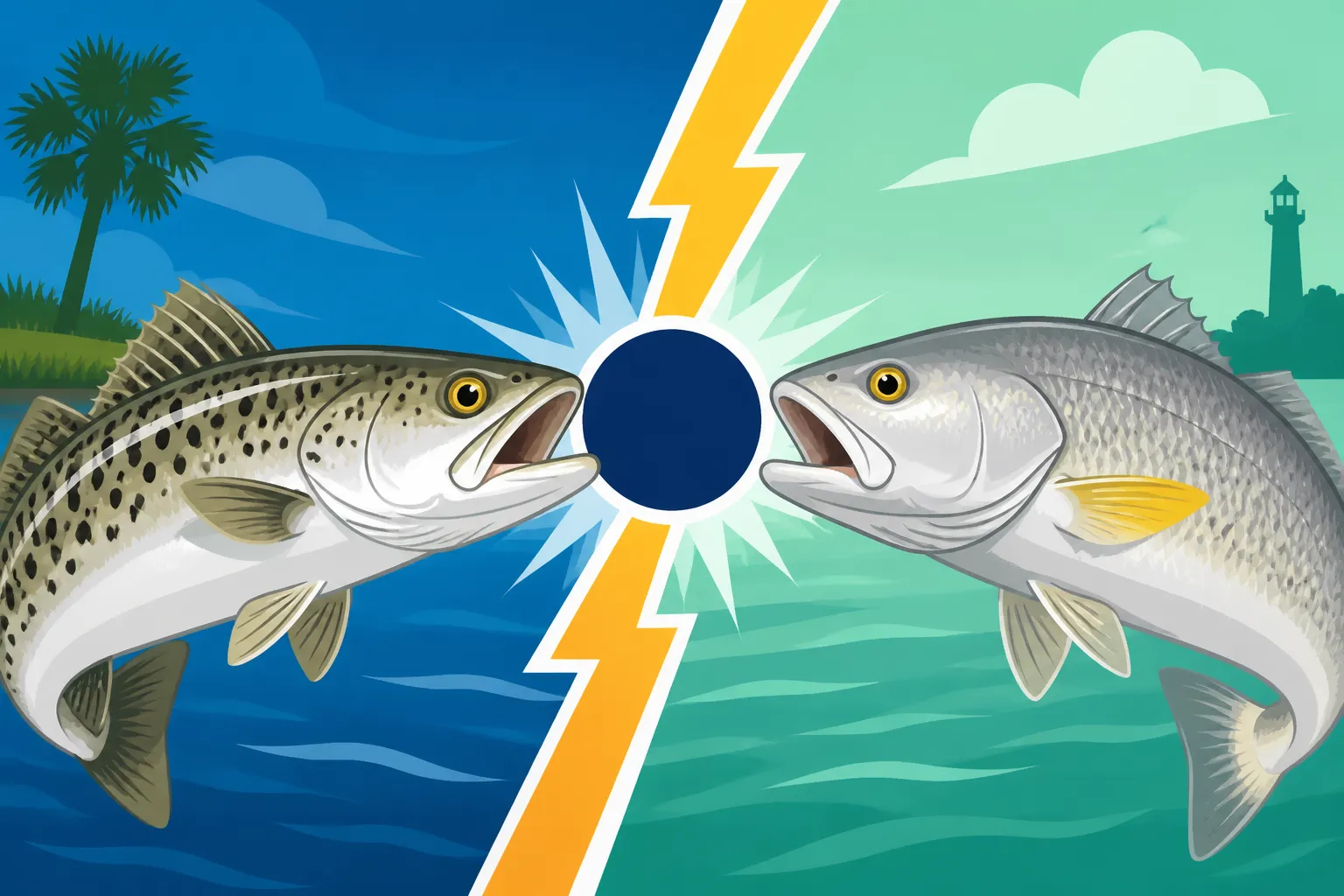
When you pull a spotted seatrout out of the water, the first thing that usually jumps out at you (besides its feisty spirit!) are those tell-tale spots. These aren't just random speckles; they're usually distinct, dark, circular spots that are scattered over their back, sides, and even on their second dorsal and caudal (tail) fins. Think of it like a beautiful, natural polka-dot pattern.
Beyond the spots, take a closer look at their mouth. Spotted seatrout have a somewhat elongated, pointed head, and if you gently open their mouth, you'll notice two prominent canine-like teeth at the front of their upper jaw. These aren't huge, fang-like teeth, but they're definitely noticeable and are a key characteristic. Their overall body shape is slender and somewhat compressed, making them excellent, agile predators in shallow water. Their coloration typically ranges from a silvery-white belly fading into a grayish-green or olive back, often with iridescent hues when fresh out of the water. Their caudal fin is usually somewhat pointed or slightly concave, not deeply forked.
Habitat and Behavior in South Carolina
Spotted seatrout absolutely adore South Carolina’s estuarine environments. We're talking about those beautiful, sprawling tidal creeks, vast salt marshes, and shallow grass flats. They thrive in brackish water, which is that perfect mix of fresh and saltwater that defines our coastal areas. You'll often find them lurking around oyster beds, submerged grass, and other structures where they can ambush baitfish, shrimp, and crabs.
Their diet is pretty varied, but they're definitely opportunistic predators. Shrimp and small baitfish like mullet and menhaden are high on their menu. You might see them "tailing" in the shallows during high tide, their tails breaking the surface as they root around for prey in the grass. While they don't typically migrate over vast distances like some offshore species, their movements are often tied to seasons and tides. In cooler months, they might move into deeper channels or up into rivers to find more stable water temperatures, while warmer weather sees them spread out across the flats and creeks. For more on where they like to hang out, check out Where to Catch Spotted Seatrout in South Carolina's Inshore Waters.
South Carolina Regulations for Spotted Seatrout
Understanding the regulations for spotted seatrout is vital for any angler in South Carolina. These rules are put in place to ensure a healthy and sustainable fishery for generations to come. Generally, there's a minimum size limit and a daily bag limit that anglers must adhere to. For example, you’ll typically find rules like South Carolina Spotted Seatrout Minimum Size 14 Inches and South Carolina Spotted Seatrout Daily Bag Limit of 10 Fish.
It’s not just about size and numbers, though. There are also specific seasonal restrictions that can impact how and when you can target them. For instance, South Carolina often implements a winter gigging ban for seatrout in certain areas, particularly from December through February. This ban aims to protect the species during vulnerable cooler months when they might be more concentrated and susceptible to harvest. So, if you're planning a winter fishing trip, be sure to check whether Is Seatrout Gigging Legal in South Carolina in December? or if South Carolina's Winter Gigging Ban for Seatrout is in effect. These regulations can change, so it's always smart to double-check the latest guidelines from the SCDNR before you head out. Ultimately, respecting these rules helps everyone enjoy better fishing for this beloved species.
Getting to Know the Weakfish (Gray Trout)
Now, let's turn our attention to the weakfish, often affectionately called "gray trout" by many a local, which can definitely add to the confusion! While not as prevalent in all inshore areas as the spotted seatrout, they are certainly a valuable and interesting catch in our coastal waters.
Distinctive Physical Characteristics
Unlike the spotted seatrout, the weakfish's most striking visual characteristic is usually its overall coloration and lack of prominent spots. Weakfish typically have a beautiful, iridescent, silvery-green or bronze sheen on their back, fading to a bright silvery-white belly. They might have some faint, wavy lines or blotches along their sides, but these are generally indistinct and never form the clear, round spots seen on a spotted seatrout.
When you look at their mouth, you'll again notice some differences. While weakfish also have an impressive set of teeth, they generally have a more even row of small, sharp teeth, with only slightly enlarged canines, not the two prominent, distinct canines found in the upper jaw of a spotted seatrout. Their body tends to be a bit deeper and more robust than a seatrout, with a more streamlined, torpedo-like appearance, especially as they get larger. Their caudal (tail) fin is often slightly more pointed than that of a spotted seatrout, though not deeply forked like some offshore species. The name "weakfish" comes from the fact that their mouth tissue is quite delicate and can tear easily when hooked, leading to many lost fish – a frustration familiar to anyone who’s hooked into one!
Preferred South Carolina Environments and Habits
Weakfish generally prefer slightly deeper, more open coastal waters than their spotted cousins, though there's definitely some overlap. You'll often find them schooling over sandy or muddy bottoms, near inlets, and sometimes in the deeper channels of larger estuaries. While they do enter brackish waters, they tend to favor areas closer to the ocean.
Their diet is quite similar to spotted seatrout, consisting of small fish, shrimp, and crabs, but due to their sometimes larger size and more open water habitat, they might also target larger baitfish. They are active predators, often found in schools, especially when feeding. You might encounter them foraging along channel edges or deeper flats, particularly where there's a good current. While both fish are members of the drum family, the weakfish's preference for slightly different habitat often means you'll find them in different concentrations, though it's not uncommon to catch both in the same general area, adding to the identification challenge.
Fishing Considerations for Weakfish in South Carolina
Fishing for weakfish in South Carolina can be a real treat, but it often requires a bit of different approach compared to consistently targeting spotted seatrout. Weakfish populations can fluctuate more dramatically and they aren't as uniformly distributed across all inshore areas. You might find them in good numbers in certain inlets or deeper bay systems, while they're less common in shallower, marshier creeks where spotted seatrout reign supreme.
Anglers targeting weakfish often use methods similar to those for seatrout, including artificial lures like soft plastics, jigging spoons, and even live bait such as shrimp or mullet. However, because weakfish tend to inhabit slightly deeper water and often school, vertical jigging or drifting baits through channels can be particularly effective. It's important to remember their delicate mouths, which means a lighter touch when setting the hook and fighting the fish can prevent them from tearing free. While South Carolina has specific limits for spotted seatrout, weakfish regulations typically fall under a general "trout" category, but always confirm current rules with the SCDNR. The joy of landing a strong, iridescent weakfish is a unique experience, especially knowing you've successfully identified it correctly.
Head-to-Head Comparison: Spotted Seatrout vs. Weakfish
Okay, let's get down to the nitty-gritty and put these two beautiful fish side by side. Once you know what to look for, the differences really do become clearer. It's all about observation!
Visual Distinctions at a Glance
Imagine you've just brought a shimmering fish over the gunwale. How do you tell if it's a spotted seatrout or a weakfish? Here’s a quick breakdown of what to focus on:
| Feature | Spotted Seatrout (Cynoscion nebulosus) | Weakfish (Cynoscion regalis) |
|---|---|---|
| Body Coloration | Silvery-white belly, greenish-grey back; iridescent hues. | Silvery-white belly, iridescent bronze/greenish-gold back. |
| Spots | Prominent, distinct, dark circular spots on back, sides, and fins. | Absence of distinct spots; may have faint, wavy lines or blotches. |
| Mouth/Teeth | Two very prominent, dagger-like canine teeth at front of upper jaw. | More even rows of smaller, sharp teeth; less prominent canines. |
| Caudal Fin (Tail) | Slightly pointed or emarginate (shallowly notched). | Usually more pointed or slightly truncated. |
| Body Shape | More slender, elongated, and compressed. | Often deeper-bodied, more robust, and torpedo-shaped. |
| Iridescence | Generally less pronounced than weakfish. | Often strikingly iridescent, especially when fresh. |
When in doubt, always go for the spots! Those distinct, dark polka dots are almost always the giveaway for a spotted seatrout. If the fish is more uniformly colored with a beautiful sheen but no obvious spots, you're likely holding a weakfish. Another tip: carefully feel the roof of their mouth. The two strong canines of the seatrout are hard to miss. Many anglers also swear by specific rod and reel combos available on Amazon for targeting these inshore favorites.
Habitat Overlaps and Separations
While both are common inshore species in South Carolina, they definitely have their preferences, and understanding this can help you predict which one you’re more likely to encounter. Spotted seatrout are the kings and queens of the shallow, brackish marsh creeks, oyster rakes, and expansive grass flats. If you're poling a skiff through inches of water or casting into a tidal gut lined with spartina grass, you're primarily in seatrout territory.
Weakfish, on the other hand, tend to prefer slightly deeper water. They'll frequent inlets, main channels, and larger bays that are closer to the ocean. While they might venture into estuaries, they generally aren't as comfortable in the super-shallow, labyrinthine creeks that seatrout adore. So, if you're fishing a deeper cut near an ocean inlet or drifting a live bait through a strong current in a wider bay, your chances of hooking a weakfish increase. Knowing these subtle habitat differences can inform your fishing strategy and help you narrow down your identification. For a broader look at where these fish live, consider exploring South Carolina Saltwater Fishing Seasons.
Angling Tips for Both Species
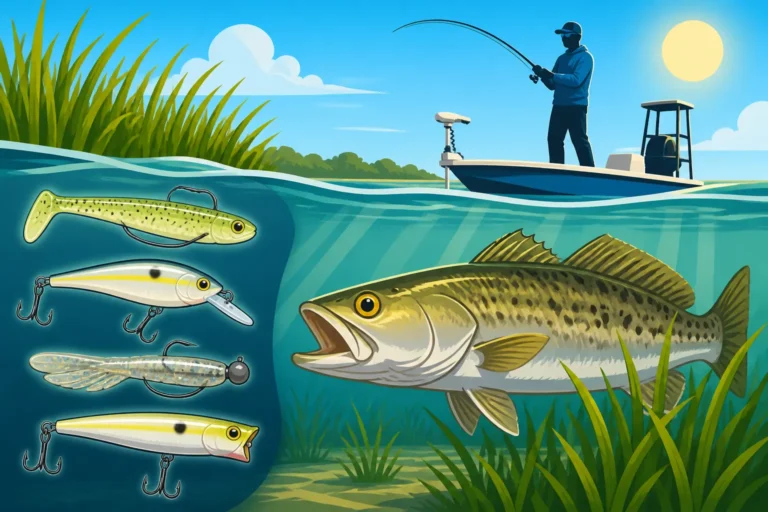
Given their habitat preferences, your angling approach might shift slightly depending on your target. For spotted seatrout, especially in the shallower marsh creeks and grass flats, light tackle is often key. Think soft plastic paddle tails rigged on jig heads, suspending twitch baits, or even topwater lures fished over submerged grass. Live shrimp under a popping cork is always a classic, go-to presentation. You can find a great selection of artificial lures on Amazon that are perfect for either species, though specific types might excel for one over the other.
When targeting weakfish in deeper channels or inlets, you might lean towards slightly heavier jigs or bait rigs. Often, drifting a live shrimp or mud minnow along the bottom, or even jigging a soft plastic vertically in a strong current, can be highly effective. Since they often school, once you find one, you might find several! Remember that delicate mouth of the weakfish – a gentle touch on the hookset and a smooth fight will increase your landing ratio. Regardless of which species you're chasing, knowing their preferred diet can really make a difference. For example, Best Bait for Spotted Seatrout in Cold Weather can give you an edge when temperatures drop.
Why Correct Identification Matters to Anglers
Beyond simply knowing what you caught, there are very practical and important reasons why correctly identifying your fish species is critical for South Carolina anglers. It's about being a responsible, ethical, and successful fisherman (or fisherwoman!).
Regulatory Compliance and Conservation
This is perhaps the most important reason. South Carolina, like most states, has specific regulations for different fish species, including size limits, bag limits, and sometimes even seasonal closures or gear restrictions. These rules are designed by wildlife agencies, like the South Carolina Department of Natural Resources (SCDNR), to manage fish populations sustainably, ensuring there are plenty of fish for future generations.
If you can't tell the difference between a spotted seatrout and a weakfish, you could inadvertently violate these regulations. Imagine you've caught a weakfish, but mistakenly identify it as a spotted seatrout, and then keep it even though it doesn't meet the size requirements for that specific species. This could lead to fines or penalties. Understanding rules like South Carolina Spotted Seatrout Fishing Regulations Explained or South Carolina Redfish Slot Limit Rules is crucial. Every angler has a role to play in conservation, and accurate identification is the first step towards adhering to the laws that protect our precious aquatic resources. A good fishing guide or book, often found on Amazon, can also be an invaluable resource.
Enhancing Your Fishing Experience
Beyond the legal aspects, knowing your fish simply makes you a better, more engaged angler. When you can correctly identify a species, it unlocks a deeper understanding of its behavior, habitat, and how best to catch it. You'll start to notice patterns: "I caught this weakfish in that deeper channel, just like I expected," or "These spotted seatrout are really hammering the topwater lures on the grass flats."
This knowledge helps you refine your techniques, choose the right tackle, and even pick the best spots to fish. It turns every fishing trip into a learning opportunity, allowing you to build expertise and confidence. Plus, there's an undeniable satisfaction in being able to confidently tell your fishing buddies exactly what you've landed, sharing insights rather than shrugging your shoulders in confusion. It's all part of the journey of becoming a truly skilled and knowledgeable angler here in the Palmetto State. For those just starting out, learning Inshore Trout Fishing Techniques for Beginners can be a huge help.
So, the next time you're out on the water, take an extra moment with your catch. Look for those distinct spots, check the mouth for those tell-tale canines, and observe the overall body shape and coloration. With a little practice, you'll be a pro at distinguishing between the magnificent spotted seatrout and the beautiful weakfish. Happy fishing, y'all!
Disclaimer
This article is for general informational purposes only and does not constitute professional advice. Laws, prices and regulations vary by location and change over time. Consult a qualified professional for guidance on your specific situation.