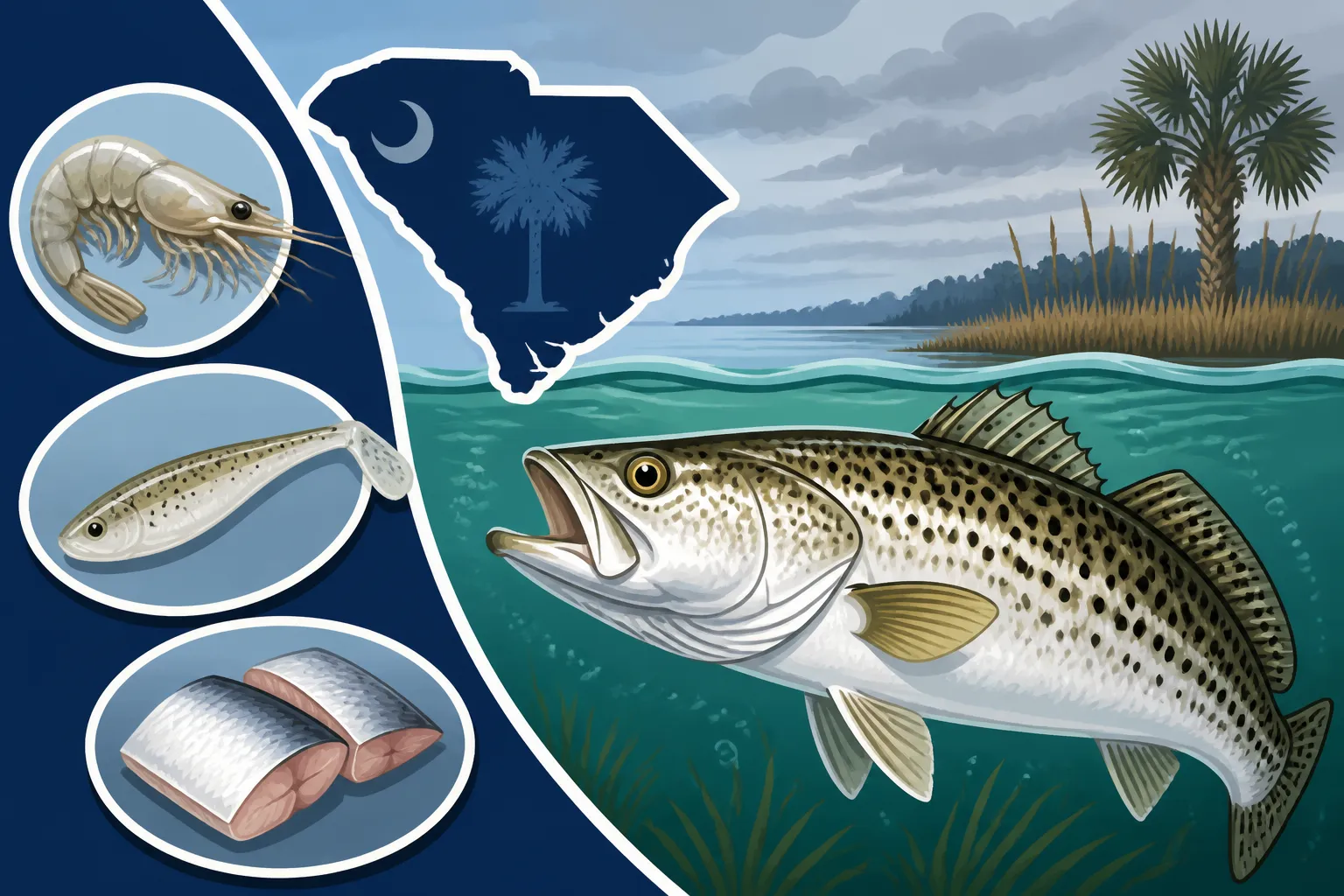
Best Bait for Spotted Seatrout in Cold Weather
Fishing for spotted seatrout in South Carolina when the temperatures drop can be incredibly challenging, can't it? The fish seem to vanish, the bites get finicky, and it feels like everything you learned during warmer months just doesn't apply. But don't throw in the towel just yet! This guide is all about equipping you with the knowledge and confidence to target those elusive winter seatrout, focusing specifically on the best baits and techniques to use when the water gets chilly.
Understanding Spotted Seatrout Behavior in Cold Water
When the water temperatures in South Carolina's estuaries start to dip below the comfort zone of, say, 60 degrees Fahrenheit, spotted seatrout don't just disappear; they change their entire approach to life. It's a common frustration for anglers who are used to easy limits in the spring and fall. Understanding these changes is your first step to unlocking winter success.
Why Seatrout Change Their Habits When Temperatures Drop
Just like us, fish don't much care for being uncomfortable. As the water cools, a seatrout's metabolism slows down significantly. Think of it like a slow-motion button has been pressed on their entire system. They need less food to sustain themselves, and they become far less active. This isn't just about being sluggish; it's a survival mechanism. They conserve energy, making them less likely to chase down fast-moving prey. That quick, aggressive strike you're used to seeing in summer? It becomes a subtle, almost hesitant bump or tap in the winter. They're still feeding, but they're doing it on their terms, making every calorie count.
This metabolic slowdown also means they are looking for warmth wherever they can find it. Slight temperature differences, sometimes just a degree or two, can concentrate fish in specific areas. They become very sensitive to cold fronts, often shutting down completely for a day or two after a significant drop. Patience becomes your absolute best friend, as the bite windows can be short and require precise timing.
Prime Cold Weather Habitats
So, if they're sluggish and seeking warmth, where do these wily fish go? They're looking for thermal refuge and a steady, easy meal. This often means deeper holes within creeks, especially those with dark, muddy bottoms that absorb and retain heat from the sun. Think about the winding back creeks that lead into the marsh, or the deeper bends of a tidal river. Structure is key – oyster beds, docks, fallen trees, and even bridges can offer protection from strong currents and help hold slightly warmer water.
In the Lowcountry, anglers often focus on specific areas. Creeks with shell rakes or deeper channels where water exchange is slower can be honey holes. Canals that connect to larger bodies of water, offering a stable environment, can also be productive. These aren't the expansive grass flats you'd target in warmer weather; those areas cool down too quickly and offer little protection. Instead, focus on narrow, protected waters where the sun can penetrate and warm the darker substrate, providing a sanctuary for both the seatrout and their prey. Knowing Where to Catch Spotted Seatrout in South Carolina's Inshore Waters is half the battle, especially in colder months.
Top Live Baits for Cold Weather Spotted Seatrout
When seatrout are lethargic in cold water, presenting them with a natural, easy meal is often the most effective strategy. Live bait has an undeniable advantage: it smells, tastes, and moves like the real thing, often triggering a strike when artificials might not.
Shrimp: The Perennial Favorite
It's hard to talk about inshore fishing in South Carolina without mentioning shrimp, and this holds true even in cold weather. Shrimp are a natural part of a seatrout's diet year-round, and they represent a soft, easy-to-digest meal that a sluggish fish can't resist. In cold water, seatrout are less likely to chase, so a struggling shrimp presented right in their face is often too tempting to pass up.
When rigging shrimp, consider a simple setup. A basic slip-sinker rig with a small, sharp hook (like a Kahle or J-hook) can get your bait down to the bottom in deeper holes. You can also fish them under a small, unweighted popping cork if there's very little current and you want to keep the shrimp just above the bottom. The key is to keep the retrieve slow – agonizingly slow, sometimes. Let the current do the work, or impart only the slightest twitches. Fresh, live shrimp are always best, but even dead, fresh shrimp can be effective when fished very slowly on the bottom, as the scent trail can draw in lethargic fish. Remember that South Carolina Spotted Seatrout Minimum Size 14 Inches means you'll want to be ready to measure.
Finger Mullet: A Hearty Winter Meal
While smaller baitfish can be scarce in colder months, finger mullet are often a staple, and a larger meal for a seatrout. When a seatrout's metabolism is slowed, they prefer to expend as little energy as possible for the maximum caloric return. A plump finger mullet provides exactly that. They're also quite hardy, meaning they'll stay lively on your hook longer, broadcasting distress signals that can attract a nearby predator.
Live-lining a finger mullet, either free-lined with no weight or with just a small split shot to get it down, can be deadly. Hook them through the lips or just in front of the dorsal fin for the most natural presentation. If live mullet are hard to come by, or if you prefer a more static approach, cut sections of mullet can also work wonders. The oily scent dispersed from the cut bait can draw in seatrout from a distance. Again, presentation is key: fish them on a Carolina rig or a similar bottom rig, allowing the scent to do the attracting, and be prepared for a very light tap on your line.
Mud Minnows and Killifish: Small but Mighty
These unassuming little fish are absolute cold-water champions. Mud minnows and killifish are incredibly resilient to cold temperatures and are often one of the few active baitfish available when everything else has hunkered down. They're a natural part of the winter estuary ecosystem, making them a readily recognized and easy meal for spotted seatrout. Their hardiness means they stay alive and wiggling on the hook for a long time, providing continuous attraction.
You can rig mud minnows or killifish in a few ways. A classic free-line rig with just a small hook (often a size 1 or 1/0 circle hook) through the lips works well, allowing them to swim naturally. For deeper holes, a small split shot or a Carolina rig will help get them to the strike zone. The key is their natural, subtle movement – they don't dart around wildly, which perfectly mimics the slow-moving prey a cold-water seatrout is looking for. Keep your retrieve glacial, focusing on feel rather than aggressive action. Sometimes, simply letting the minnow swim naturally in a likely spot is all it takes.
Effective Artificial Lures for Chilly Conditions
While live bait often shines in cold weather, artificial lures can absolutely still be productive, especially if you know how to work them to appeal to a less active fish. The trick is to think "slow and subtle" rather than "flashy and fast."
Soft Plastics: Mimicking Natural Prey
Soft plastic lures are incredibly versatile and can be highly effective for cold-water seatrout. They offer a lifelike profile and texture, and when paired with the right jig head, they can be worked at extremely slow speeds, perfectly imitating a wounded baitfish or a struggling shrimp. Paddle tails, jerk shads, and even straight-tail grubs are excellent choices.
When selecting soft plastics, opt for natural colors like clear with silver flake, white, pearl, or light pink, especially in clearer winter water. On overcast days or in stained water, chartreuse or darker colors might get more attention. The key is the presentation. Cast out and let the lure sink to the bottom. Then, use a slow, subtle retrieve: a few turns of the reel handle, a short twitch of the rod tip, and then a pause. The pause is critical in cold water; it allows the lure to suspend or slowly fall, giving a lethargic seatrout ample time to make up its mind and strike. You'll find a wide array of soft plastics and jig heads to experiment with on online retailers like Amazon, allowing you to try different combinations to see what the fish prefer on a given day. These can often be more effective than, say, topwater lures when How to Catch Spotted Seatrout in Cooler Fall Water transitions into winter.
Suspending Hard Baits: Hanging in the Strike Zone
Suspending hard baits, often referred to as "twitchbaits" or "mirrolures," are absolute game-changers for cold-water seatrout. Unlike sinking lures that go to the bottom or floating lures that stay on top, suspending baits, as their name suggests, hover at a specific depth when you pause your retrieve. This is invaluable when seatrout are holding at a certain depth and are unwilling to move far to strike.
Imagine a seatrout nestled in a deeper hole, conserving energy. You cast a suspending hard bait, twitch it a few times to get it down to their level, and then pause. That lure hangs right in front of them, motionless, looking like an easy, wounded meal. That long pause is often when the strike occurs. Experiment with pause durations – sometimes a 5-second pause, sometimes 10 or even 15 seconds. Colors like silver with a blue back, white, or clown patterns are often successful. The Rapala Twitchin' Rap or MirrOLure MirrOdine are classic examples, but many brands offer excellent suspending hard baits, and you can easily compare options on Amazon.
Jig Heads and Their Importance
The jig head you choose for your soft plastics can make or break your cold-weather seatrout success. It's not just about weight; it's about balance and presentation.
- Weight: In cold water, lighter is often better. A 1/8 oz or even a 1/16 oz jig head will allow your soft plastic to sink slower and maintain a more natural, subtle action. You only go heavier if you're dealing with very deep water or strong currents, and even then, try to use the lightest possible weight that still gets you to the desired depth.
- Hook Size: Match the hook size to your soft plastic to ensure the lure swims correctly and you get good hook sets. A jig head with a sharp, strong hook is non-negotiable.
- Color: While perhaps less critical than the soft plastic body, some anglers swear by certain jig head colors. White, chartreuse, or even red can sometimes provide an extra visual trigger.
The right jig head ensures that your soft plastic lure maintains a natural profile and movement, mimicking the slow, vulnerable prey that a cold-water seatrout is most likely to target.
Rigging and Presentation Strategies for Cold Water Success
Successfully enticing cold-water seatrout isn't just about having the right bait; it's crucially about how you present it. Your rigging and retrieve methods need to adapt to the fish's lethargic state.
The Popping Cork Dilemma: When to Use It, and When to Ditch It in Cold Water
Popping corks are a staple for seatrout fishing in warmer months, creating commotion that mimics feeding fish and attracts attention. However, in cold water, that commotion can actually be a deterrent. A loud "pop" in otherwise quiet winter waters can spook already wary fish.
So, when do you use a popping cork? Rarely, if ever, in truly cold water. If you absolutely feel the need to suspend live shrimp or a soft plastic, opt for a stealthier, unweighted cork that simply floats your bait without any popping action. Think of it more as a strike indicator than an attractor. The goal in cold water is minimal disturbance and maximum natural appeal. Most of the time, you'll find more success fishing your bait or lure without a cork, allowing for a quieter, slower descent to the bottom where the fish are likely holding.
Bottom Bouncing Rigs: Getting Down to Where They Are
Since cold-water seatrout often hug the bottom in deeper holes and channels, getting your bait down to them is paramount. This is where bottom-bouncing rigs, like the Carolina rig or a simple slip-sinker rig, come into their own.
- Carolina Rig: This rig consists of a sliding egg sinker above a swivel, followed by a fluorocarbon leader (typically 18-36 inches) and then your hook. The leader allows your bait to move naturally and subtly, even while the sinker holds it near the bottom. This is ideal for live shrimp, mud minnows, or cut bait. The longer leader provides a more natural presentation, crucial for hesitant fish.
- Slip-Sinker Rig: Similar to a Carolina rig but often with a shorter leader, this rig is excellent for keeping your bait directly on the bottom. It's simple, effective, and allows the fish to pick up the bait without feeling the weight of the sinker, which is vital for those super light winter bites.
Regardless of the specific rig, choose just enough weight to hold bottom in the current, and use a light, sensitive rod to detect those incredibly subtle winter bites. You might even consider using lighter line, like 8-10 lb braided main line with a 15-20 lb fluorocarbon leader, to enhance sensitivity.
Slow and Steady Wins the Race
This cannot be stressed enough: when fishing for spotted seatrout in cold water, your retrieve must be slow. Forget the fast jerks and rapid reeling of summer. Think deliberate, almost lazy movements. Whether you're using live bait or artificials, the goal is to present an easy meal that doesn't require the seatrout to expend much energy to catch.
For artificials, this means a slow roll for paddle tails, long pauses for suspending twitchbaits, and minimal movement for soft plastics. Let your jig head hit the bottom, twitch it once or twice, let it settle, then retrieve slowly for a few feet, and pause again. Repeat. For live bait, simply letting it sit on the bottom or drift with the current is often the most effective. The bite will often feel like a light tick, a subtle pressure, or simply your line going slack. It takes immense patience and focus, but mastering this slow, deliberate approach will exponentially increase your success rate for winter seatrout. You can find more specific tips for this kind of subtle retrieve in articles discussing Best Lures for Spotted Seatrout in Grass Flats.
| Bait Type | Cold Weather Effectiveness | Best Presentation | Pros | Cons |
|---|---|---|---|---|
| Live Shrimp | High | Carolina rig, unweighted, slow drift | Natural scent, universally appealing, easy meal for lethargic fish | Can be harder to keep alive in cold weather, expensive |
| Finger Mullet | High | Live-lined (lips/dorsal), cut bait on bottom | Larger meal, good scent trail from cut bait, hardy live bait | Can be harder to catch/buy, larger profile may deter smaller fish |
| Mud Minnows | High | Free-lined, small split shot, Carolina rig | Extremely hardy, natural prey, very subtle movements | Smaller profile, might attract non-target species |
| Soft Plastics | Medium to High | Light jig head, slow roll, twitch-pause-pause | Versatile, can mimic various prey, durable | Requires angler skill for proper retrieve, less natural scent |
| Suspending Hard Baits | High | Twitch-twitch-long pause, retrieve at target depth | Mimics wounded baitfish perfectly, ideal for specific depths | Can be expensive, requires knowledge of fish depth, no natural scent |
Essential Gear and Tips for Cold Weather Seatrout Fishing
Beyond just bait and technique, a few other considerations can significantly impact your comfort and success when chasing cold-water spotted seatrout.
Rod, Reel, and Line Considerations
- Rod: Sensitivity is paramount. A medium-light to medium power spinning rod, around 7 feet in length with a fast or extra-fast action, is ideal. This combination allows for long casts with lighter lures and, crucially, transmits those incredibly subtle winter bites straight to your hands. A good quality graphite rod will make a huge difference in feel.
- Reel: A reliable 2500 or 3000 series spinning reel is perfect. Smooth drag is always important, but the reel's primary role is consistent performance and comfortable handling in chilly conditions.
- Line: Spool up with 8-10 lb braided line for your main line. Braid offers superior sensitivity and casting distance. Crucially, tie on a fluorocarbon leader of 15-20 lb test, about 18-36 inches long. Fluorocarbon is nearly invisible in water, more abrasion-resistant, and provides that extra stealth needed for wary winter fish. If you're looking for specific recommendations, you can find a good range of fishing lines and leaders on Amazon.
Spot Selection and Timing
Always remember that in colder weather, the fish are looking for refuge and stability. Focus on:
- Deeper holes: Especially those adjacent to shallow flats or oyster beds.
- Dark bottoms: Mud and shell bottoms absorb and retain heat better than sand.
- Protected creeks and canals: Areas shielded from strong winds and open water can offer slightly warmer, more stable conditions.
- Tides: Often, the middle to end of an outgoing tide, or the first hour or two of an incoming tide, can be productive as water moves in and out of the deeper channels, concentrating bait and fish. Understanding Does Tide Direction Change Where Trout Feed? is key.
- Sunny days: Even a weak winter sun can make a difference. Fish often become more active on the sunny side of a creek bank or dock.
Dressing for the Chill
Let's be honest, nobody enjoys being cold, especially when trying to concentrate on a subtle bite. Layering is your best friend. Start with a moisture-wicking base layer, add insulating layers (fleece or down), and top it off with a waterproof and windproof outer shell. Don't forget:
- Warm Hat: You lose a lot of heat through your head.
- Gloves: Fingerless gloves offer warmth while allowing for dexterity.
- Warm Socks and Waterproof Boots: Cold, wet feet are miserable.
- Hand Warmers: Small packets can make a huge difference in your pockets or gloves.
- Warm Drinks: A thermos of coffee or hot chocolate can be a morale booster.
Being comfortable will allow you to stay out longer and focus better, directly impacting your success. You'll find a wide variety of excellent cold-weather fishing apparel and accessories on Amazon to help you stay warm on the water.
Fishing for spotted seatrout in cold weather demands patience, adaptability, and a willingness to slow everything down. By understanding their winter behavior, choosing the right baits and lures, perfecting your subtle presentations, and staying warm, you can absolutely enjoy some fantastic fishing even when the temperatures drop in South Carolina. Good luck out there!
Disclaimer
This article is for general informational purposes only and does not constitute professional advice. Laws, prices and regulations vary by location and change over time. Consult a qualified professional for guidance on your specific situation.