South Carolina Redfish Slot Limit and How It Affects Technique
It can be incredibly frustrating to head out on the water, spend hours perfecting your cast, only to realize the beautiful redfish you just reeled in falls outside the legal harvest limits. Navigating South Carolina's redfish regulations, especially the slot limit, can feel like a puzzle, leaving many anglers wondering how to adjust their techniques to legally keep a fish or ensure a healthy release. This guide aims to clear up that confusion, diving deep into the current redfish slot limit and offering practical advice on how it should influence your fishing strategies.
Understanding South Carolina's Redfish Slot Limit
Let's be honest, fishing regulations can often feel like they're written in a language only lawyers and state officials truly understand. But when it comes to redfish in South Carolina, understanding the slot limit is absolutely crucial for both conservation and avoiding a hefty fine. This isn't just about adhering to rules; it's about protecting one of our most beloved inshore species for future generations.
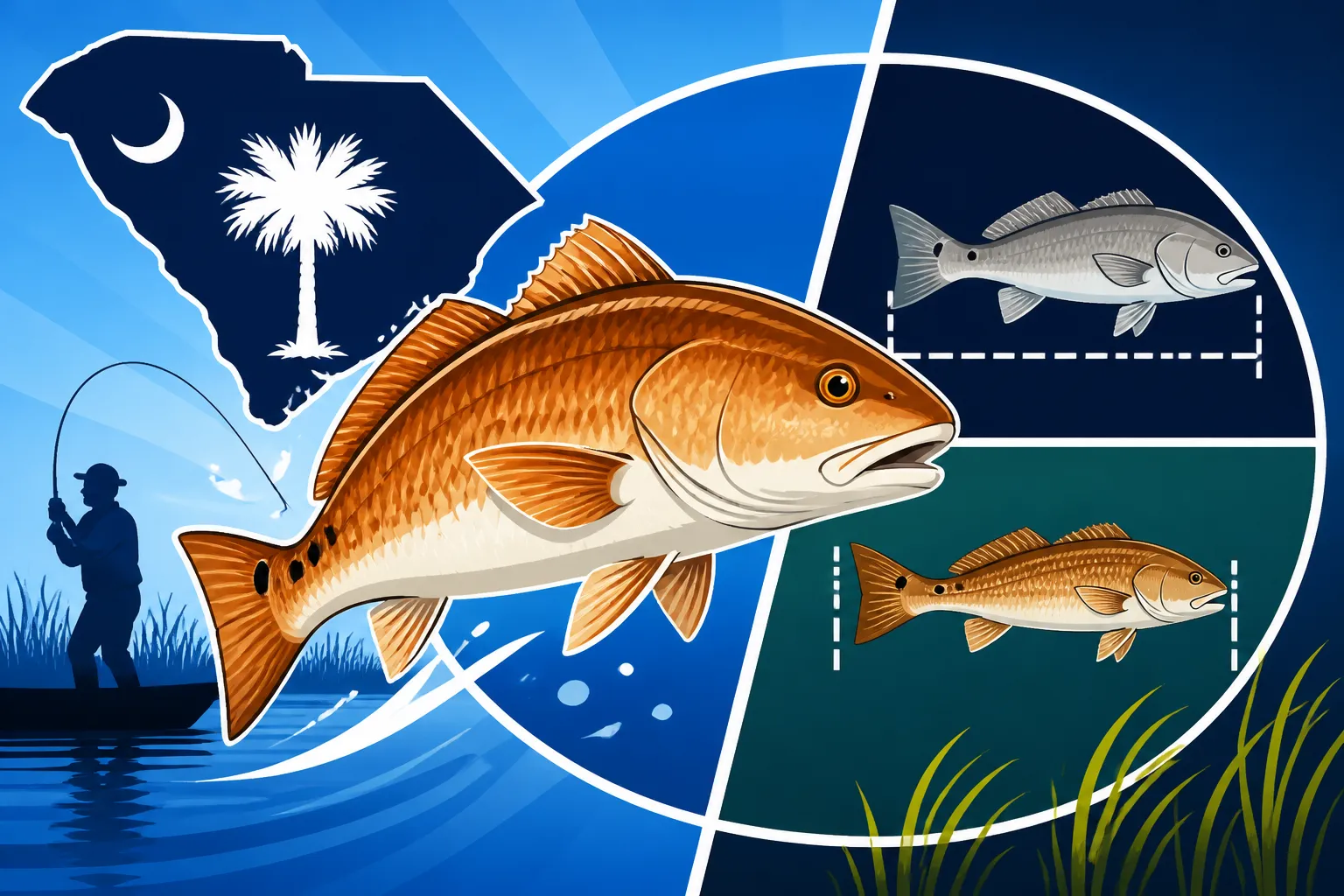
The current regulation for redfish, often called spottail bass or red drum, in South Carolina dictates an 18 to 25-inch slot limit. What this means, quite simply, is that any redfish you intend to keep must measure at least 18 inches but be no more than 25 inches in total length. If a fish is shorter than 18 inches, it's considered an "underslot," and if it's longer than 25 inches, it's an "overslot." Both underslot and overslot fish must be immediately and carefully released.
Beyond the length, there's also a daily bag limit: you're allowed to keep two redfish per person per day. However, there's an additional layer of regulation: the vessel limit. Regardless of how many licensed anglers are on a boat, the maximum number of redfish that can be harvested and kept on any single vessel is four. So, if you have three anglers on a boat, you can only keep a total of four fish, not six. This nuance, explained in depth in resources like the South Carolina Redfish Vessel Limit Explained, ensures that even large groups don't put excessive pressure on the redfish population. These rules are in place to allow younger fish to grow to maturity and larger, more productive breeding fish to continue spawning, which is vital for maintaining a robust fishery.
Why the Slot Limit Matters for Conservation
The 18-to-25-inch slot limit isn't an arbitrary number. It's a carefully considered conservation strategy implemented by the South Carolina Department of Natural Resources (SCDNR). The logic is elegant: by protecting smaller fish (underslots), we ensure they have a chance to grow into reproductive adults. By protecting larger fish (overslots), often referred to as "bull reds" or "breeding stock," we safeguard the population's ability to reproduce and replenish itself. These larger redfish are often the most prolific spawners, and their removal would have a disproportionately negative impact on the overall health of the fishery.
Think of it like this: if you constantly harvested all the young trees in a forest, you'd never have mature trees to produce seeds. Similarly, if you only took the biggest, oldest trees, the forest's long-term health would suffer. The redfish slot limit aims for a balanced harvest, allowing for recreational fishing while prioritizing the long-term sustainability of the species. This ensures that when you're looking for Redfish Hot Spots Along the South Carolina Coastline, those spots remain productive year after year.
Measuring Your Catch Accurately
Getting an accurate measurement of your redfish is critical. A few inches, or even a fraction of an inch, can be the difference between a legal keeper and a fish that must be released. Always carry a reliable measuring device on your boat or kayak. Many anglers prefer a bump board, which provides a rigid edge to push the fish's nose against, ensuring a consistent measurement from the tip of the jaw to the fork of the tail. Lay the fish flat on its side, gently close its mouth, and press its nose against the stop. Read the measurement to the nearest quarter or eighth of an inch at the tail fork.
It's a good practice to have a measuring device permanently affixed to your boat or a sturdy, marked cooler. This minimizes handling time and stress on the fish. You can find excellent, durable measuring boards on platforms like Amazon, often made from marine-grade plastic, which are easy to clean and won't degrade in saltwater environments. Always double-check your measurement, especially if you're close to the 18 or 25-inch mark, because DNR officers certainly will. For more specifics on how these rules apply, check out South Carolina Redfish Slot Limit 18 to 25 Inches.
| Regulation Type | Details |
|---|---|
| Slot Limit | 18 to 25 inches (total length) |
| Daily Bag Limit | 2 fish per person |
| Vessel Limit | 4 fish per vessel |
| Release Rule | Underslot (<18") and Overslot (>25") must be immediately released |
Adjusting Your Angling Techniques to the Slot Limit
Now that we've covered the "what," let's get into the "how." The redfish slot limit directly influences the most effective and responsible fishing techniques. It's not just about what you do once you've caught a fish; it's about how you approach your entire fishing trip.
Targeting Slot-Sized Redfish
To increase your chances of catching a slot-sized redfish and minimize unwanted catches of underslot or overslot fish, you might need to fine-tune your approach. Larger baits and lures tend to attract larger fish, but not always exclusively within the slot. Conversely, smaller baits might tempt more undersized fish. It's a balance.
For example, when casting into shallow marsh grass, where smaller redfish often congregate, consider using slightly larger soft plastics or topwater lures that might deter tiny juvenile fish but still appeal to a hungry 20-inch red. If you're targeting areas known for bull reds, like deeper channels or jetties, be prepared for overslot fish and have your release strategy ready. You might switch to heavier tackle and larger baits in these areas, knowing that the chances of catching a trophy fish (which must be released) are higher. Many anglers looking for "bull reds" specifically target these areas, but they understand the South Carolina Redfish Slot Limit Rules for Coastal Anglers mean those giants go back.
Minimizing Stress for Released Fish
Perhaps the most critical aspect of fishing with a slot limit is mastering the art of safe and quick release for underslot and overslot fish. Every fish you release is a potential future keeper or a vital part of the breeding population. Poor handling can lead to delayed mortality, negating the conservation efforts.
Here are some key tips for minimizing stress:
- Use Circle Hooks: This is a non-negotiable for many ethical anglers. Circle hooks are designed to hook fish in the corner of the mouth, avoiding deep gut hooks that are often fatal. They are especially effective when fishing with natural baits. Many tackle shops, and certainly online retailers like Amazon, offer a wide selection of circle hooks.
- Handle Fish as Little as Possible: The less contact you have with a fish, the better. Avoid dragging them on the sand or boat deck. If possible, de-hook the fish while it's still in the water, especially if it's an underslot.
- Support the Fish Horizontally: If you must bring a fish into the boat for a quick measurement or photo, support its full body weight horizontally. Never hold a redfish vertically by its jaw or tail, as this can damage its internal organs and spine.
- Use Proper Tools: Keep a pair of long-nose pliers or a de-hooking tool handy for quick hook removal. A good pair of lip grippers can also help manage a feisty fish safely without touching its body. There are many reliable options for these tools on Amazon, often in rust-resistant marine-grade materials.
- Revive the Fish: If a fish seems sluggish after the fight, hold it gently in the water, facing into the current, until it regains its strength and can swim away on its own.
Understanding How Many Redfish Can You Keep in South Carolina? is just one piece of the puzzle; knowing how to safely release the others is equally important for the health of our fisheries.
The Role of Tides and Habitat in Finding Slot Fish
Redfish are masters of their environment, and their behavior is heavily influenced by tides and habitat. To consistently find slot-sized fish, you need to think like a redfish.
- Incoming Tide: As the tide floods into the marsh, redfish move onto the shallow flats, oyster bars, and into the grass to feed on crabs, shrimp, and baitfish that are pushed in with the water. This is an excellent time for sight-fishing, especially for slot-sized reds that might be "tailing" in the grass, their tails breaking the surface as they root for food. Using shallow-running lures or weedless soft plastics can be very effective here. Many anglers swear by Does Tide Timing Matter for South Carolina Redfish?.
- Outgoing Tide: As the tide recedes, redfish often congregate in creek mouths, along oyster rakes, and in deeper pockets or channels, waiting for bait to be flushed out. This is a prime opportunity for ambushing hungry fish. Sinking lures, jigs with soft plastics, or cut bait presented in these pinch points can be highly productive for various sizes, including slot fish.
- Structure and Cover: Redfish love structure – oyster beds, docks, submerged logs, rock piles, and marsh grass. These areas provide ambush points and protection. Focus your efforts around these features, adjusting your presentation to the depth and current. Deeper structure in cooler water might hold larger fish, while shallower grass flats could hold a mix of sizes.
Essential Gear and Local Strategies for South Carolina Redfish
Beyond the basic understanding of the slot limit and fish behavior, having the right gear and knowing a few local strategies can significantly improve your success rate and adherence to regulations. South Carolina's diverse coastal environment, from the tidal creeks around Mount Pleasant to the vast marshlands near Murrells Inlet, offers unique challenges and opportunities.
Selecting the Right Tackle
Choosing appropriate tackle isn't just about fighting the fish; it's also about giving yourself the best chance to land a slot-sized fish efficiently and release others unharmed.
- Rods and Reels: For inshore redfish, a medium-light to medium action spinning rod, typically 6'6" to 7'6" in length, paired with a 2500 to 4000 series reel, is generally ideal. This setup provides enough backbone to fight a strong redfish while offering the sensitivity to feel subtle bites. It also allows you to make accurate casts into tight spaces. Brands like Penn, Shimano, and Daiwa offer reliable options that can be found at local tackle shops or online at Amazon.
- Line: Braided line, in the 10-20 lb test range, is popular for its sensitivity and casting distance. Pair it with a fluorocarbon leader (20-30 lb test) for abrasion resistance against oyster shells and improved stealth in clear water. The leader is crucial – those sharp gill plates and rough mouths of redfish can easily fray weaker lines.
- Lures and Baits:
- Soft Plastics: PADDLETAIL, GULP! shrimp, and grub tails rigged on jig heads (1/8 oz to 1/2 oz, depending on depth and current) are incredibly versatile. Experiment with colors like chartreuse, white, natural shrimp, or "new penny" to match the local baitfish.
- Hard Baits: Topwater plugs work wonders during low light conditions or when redfish are actively feeding on the surface. Shallow-diving crankbaits or suspending twitchbaits can be effective in slightly deeper water around structure.
- Natural Bait: Live or cut mullet, shrimp, or fiddler crabs are irresistible to redfish. When using natural bait, especially with circle hooks, allow the fish to take the bait and swim off slightly before gently coming tight on the line to set the hook in the corner of its mouth.
You can often find great deals on fishing line, leader material, and a variety of soft plastics or hard baits by browsing retailers like Amazon. Having a diverse tackle box will prepare you for varying conditions and redfish behaviors.
Localized Techniques for Maximizing Slot Catches
While general techniques apply, understanding local nuances can give you an edge in South Carolina's diverse coastal environment.
- Shallow Water Sight Fishing: In the pristine, clear waters of the Lowcountry, particularly around areas like Mount Pleasant or Hilton Head, sight fishing is king on calm, sunny days. Pole your skiff or kayak across expansive grass flats on an incoming tide, looking for "wakes," "pushes," or "tails" indicating feeding redfish. Cast a weedless jig or a soft plastic a few feet in front of the fish and retrieve it slowly. This technique is highly selective, allowing you to often spot and target fish that appear to be within the slot.
- Targeting Oyster Rakes and Structure: Oyster beds are redfish magnets. Whether you're near Charleston Harbor or a secluded creek further south, casting soft plastics or live bait close to oyster rakes during tidal movements can be incredibly effective. Be prepared for aggressive strikes and the need to quickly move the fish away from the sharp shells. A stronger leader is a must here.
- Fishing Creek Mouths and Points: As tides ebb and flow, baitfish are pushed in and out of smaller creeks. Redfish will stage at the mouths of these creeks or on prominent points to ambush passing prey. Using a popping cork with a live shrimp or Gulp! shrimp can be deadly here, as the popping sound mimics feeding activity and draws attention. Alternatively, a weedless spoon or a jig bounced along the bottom can produce strikes.
Remember that Current Redfish Regulations for Coastal Waters can sometimes change, so a quick check with the SCDNR website or a local bait shop before heading out is always a smart move.
Staying Informed and Adapting to Changes
Fishing regulations aren't set in stone. They are dynamic tools used by wildlife agencies to manage fish populations based on scientific data, environmental conditions, and angler feedback. What holds true today might shift next year, which is why actively staying informed is an angler's responsibility and a crucial part of ethical fishing.
Why Regulations Change
The SCDNR constantly monitors the health of redfish stocks through various surveys and studies. Factors like spawning success, juvenile recruitment (how many young fish survive), fishing pressure, environmental changes (like extreme cold snaps or habitat loss), and even broader climate trends can all influence the need to adjust regulations. For instance, a particularly harsh winter or a significant red tide event could prompt stricter limits to help the population recover.
Think back to the Understanding Redfish Slot Limit Changes Over Time – these aren't random shifts. They are data-driven decisions made to ensure that future generations of South Carolina anglers have healthy redfish populations to enjoy. Ignoring these changes not only risks penalties but also undermines the collective conservation effort.
How to Stay Updated on Redfish Rules
It’s easier than ever to keep up with the latest regulations, so there’s really no excuse for being caught unaware.
- SCDNR Website: The official South Carolina Department of Natural Resources (SCDNR) website is your go-to source. They publish all current regulations, news releases about proposed changes, and often have comprehensive guides for specific species like redfish. Make it a habit to check this site at the beginning of each fishing season or before any major trip.
- Local Bait and Tackle Shops: These are invaluable community hubs for anglers. The folks who run these shops are often seasoned local fishermen themselves and are usually the first to know about any changes or critical advisories. Plus, they can offer hyper-local tips on what's biting and where.
- Fishing Apps and Publications: Several fishing-specific apps or online publications will also provide up-to-date regulations. Just be sure to verify the source is reliable and specific to South Carolina.
- Subscribe to Newsletters: Many state agencies or fishing organizations offer email newsletters that alert you to important updates.
Remember, ignorance of the law is not an excuse. DNR officers patrol regularly, and they will check your license and your catch. The Penalty for Fishing Without a License in South Carolina can be steep, and misinterpreting bag or slot limits can lead to similar consequences. Always carry your valid South Carolina Fishing License Guide and know the rules.
Being a Responsible Angler
Ultimately, the slot limit and all fishing regulations are there to foster a healthy, sustainable fishery. As anglers, we have a vital role to play in this. It's not just about obeying the rules; it's about embracing the spirit of conservation. Practicing catch-and-release effectively, especially for overslot and underslot fish, is a testament to your commitment to the resource. Educating fellow anglers, especially newer ones or children, about these rules and ethical practices helps ensure that South Carolina's redfish fishery remains strong for years to come. Your actions on the water, whether you're bringing home a couple of slot-sized redfish for dinner or releasing a magnificent bull red, contribute to the larger picture.
Disclaimer
The information provided in this guide is for informational purposes only and is subject to change. While we strive to provide accurate and up-to-date information, fishing regulations can be modified by the South Carolina Department of Natural Resources (SCDNR) at any time. It is the responsibility of every angler to consult the official SCDNR website or current regulations handbook before fishing to ensure compliance with all applicable laws.