South Carolina Flounder Fishing Regulations Explained
It can be incredibly frustrating to head out for a day of flounder fishing, only to realize you’re not entirely sure about the latest rules and regulations. With conservation efforts constantly evolving, keeping up with minimum size limits, daily bag limits, and other specifics for flounder in South Carolina can feel like a moving target. This guide is here to untangle those complexities, helping you understand the crucial regulations that protect this beloved species while ensuring you enjoy a compliant and successful fishing trip.
The Evolving Landscape of Flounder Regulations in South Carolina
Let's be real, it can feel like fishing regulations change more often than the tides, and flounder rules are no exception. One minute you think you've got it down, the next there's a new update. This isn't just to make our lives harder, though! There are really important reasons behind these shifts, especially when it comes to a species as popular and vulnerable as flounder.
Why Flounder Regulations Change
Flounder, particularly the Southern Flounder which is a common target in our coastal waters, face a lot of pressure. They're a favorite on the dinner plate, and that popularity means a lot of anglers are out there trying to catch them. The South Carolina Department of Natural Resources (SCDNR) constantly monitors the health of our flounder populations. They look at things like how many fish are out there, how many are being caught, and how quickly they're reproducing. When these studies show that the population might be struggling, or when their numbers aren't bouncing back as strongly as hoped, changes to regulations are often put in place. These changes are vital to ensure there are still plenty of flounder for future generations of anglers to enjoy. It's all about finding that delicate balance between allowing people to fish and protecting the species itself.
Sometimes, environmental factors also play a huge role. Things like water quality, habitat loss, or even widespread weather events can affect fish populations. Scientists work tirelessly to understand these complex dynamics. When significant environmental shifts occur, or when new data emerges about flounder migration or spawning habits, regulations can be adjusted to respond to these new insights. It's a continuous process of learning and adapting, all aimed at the long-term sustainability of our precious marine resources. Think of it as a dynamic conversation between nature, science, and the fishing community, all trying to keep the flounder healthy and abundant. You can learn more about general rules in our Saltwater Fishing Rules in South Carolina guide.
The Impact on Anglers
For us anglers, these regulation changes can definitely be a source of frustration. You spend years learning the ins and outs of flounder fishing, perhaps even perfecting certain techniques, only for the rules to shift. It means we have to be constantly vigilant, checking the latest guidelines before every trip. This often translates to buying a new fishing ruler, or double-checking the SCDNR website right before you head out, just to make sure you're compliant. Nobody wants to be caught off guard by a regulation they weren't aware of, especially when the consequences can include fines.
Beyond the immediate inconvenience, these changes can also impact how and where we fish. For example, if a slot limit is introduced or a bag limit is reduced, it might mean adjusting your expectations for a trip. Instead of focusing on quantity, you might shift your focus to quality, trying to catch fewer, but larger, legal fish. It can also encourage more catch-and-release fishing, which, while beneficial for the fish, might require a change in mindset and technique for some anglers. Ultimately, while sometimes challenging, these adjustments are a necessary part of being a responsible steward of our natural resources, ensuring that the thrill of hooking a flounder remains for years to come. Checking South Carolina Fishing Bag Limits Explained can provide even more context on this topic.
Key Flounder Regulations You Need to Know
When you're out there on the water, the last thing you want is to be guessing about whether your catch is legal. Flounder regulations focus on a couple of really important aspects: how big the fish has to be, and how many you can keep. These aren't arbitrary numbers; they're carefully decided to give the fish a chance to grow and reproduce before they end up in your cooler.
Minimum Size Limits for Flounder
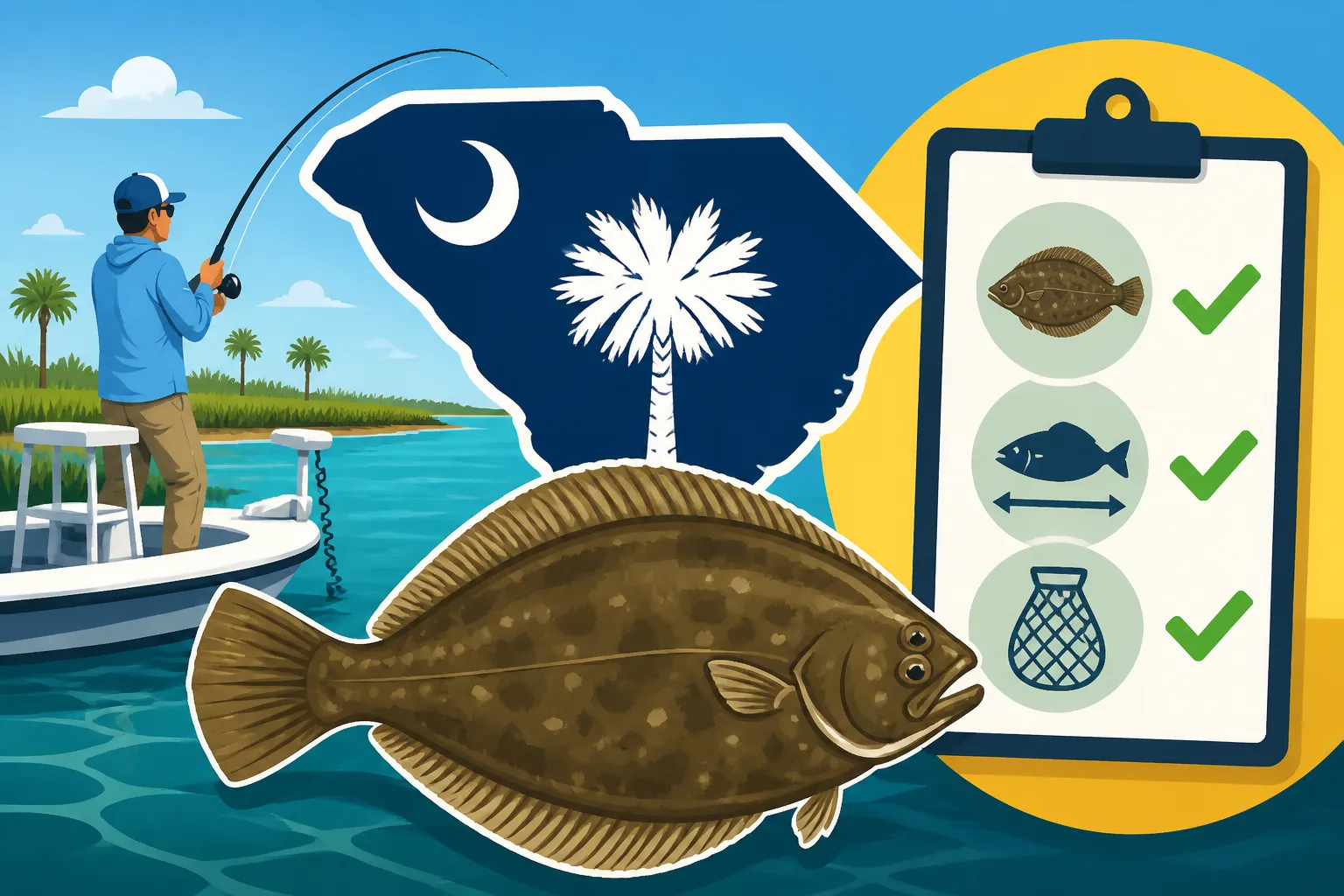
The minimum size limit is arguably one of the most critical regulations for flounder. This rule means that any flounder you catch must be at least a certain length from the tip of its nose to the end of its tail (often measured with the tail pinched). If it's even a fraction of an inch under that mark, it has to go back into the water immediately and safely. The reasoning here is simple: it allows flounder to reach a mature size where they've had a chance to spawn, contributing to the next generation of fish. Without this, we'd quickly deplete our stocks of breeding fish, leading to a much larger problem down the line.
Successfully adhering to the minimum size limit requires a reliable measuring device. You can find excellent, durable fish rulers on platforms like Amazon, or at most local tackle shops. These often stick right to your cooler or boat, making quick measurement easy. When you land a flounder, don't just eyeball it. Lay it flat against your ruler, pinch the tail to get the maximum length, and check the measurement. If it's undersized, handle it gently with wet hands, remove the hook quickly (barbless hooks can help here!), and release it back into the water. Ensuring a quick and careful release is just as important as the measurement itself for the fish's survival. For a comprehensive look at flounder fishing, check out our Flounder Fishing Guide for South Carolina Anglers.
Daily Bag Limits for Flounder
Beyond how big they need to be, there's also a limit to how many flounder you can keep per day. This is your daily bag limit, and it applies to each individual angler. So, if you're fishing with a buddy, you each have your own bag limit, but you can't combine them. The daily bag limit prevents overharvesting by limiting the total number of fish removed from the population each day. This is especially crucial for species like flounder that tend to gather in certain areas, making them more susceptible to high catch rates.
It's tempting when the bite is on to keep reeling them in, but it's essential to stop once you've hit your individual limit. Once you've caught your legal number of fish, any additional flounder, even if they're of legal size, must be released immediately. This is where keeping track can sometimes get a little tricky, especially if you're releasing a lot of undersized fish throughout the day. A good practice is to bring a stringer or cooler dedicated to your keepers, making it easy to see how many you have. Always refer to the official SCDNR regulations for the most current daily limits, as these are subject to change based on stock assessments. Our article, Flounder Fishing Season in South Carolina, offers further details on timing your trips.
Vessel Limits (if applicable)
While not always in place for every species, sometimes regulations include a "vessel limit" in addition to, or in place of, individual bag limits. A vessel limit means there's a maximum number of a particular species that can be kept on a single boat, regardless of how many licensed anglers are on board. This type of regulation is often implemented for species that are particularly vulnerable to collective harvesting, or when it's harder for law enforcement to track individual angler compliance on a boat.
For flounder, while individual bag limits are the primary concern, it’s always wise to be aware if any vessel limits have been introduced, especially if you're fishing with a large group or on a charter. If a vessel limit were in effect, and your boat has, say, a limit of 10 flounder, then once those 10 fish are in the cooler, no one else on that boat can keep any more flounder, even if they haven't met their individual bag limit yet. This ensures that the total take from a specific area or fishery is controlled. Always confirm the exact wording of the regulations – whether it's "per person" or "per boat" – directly from the SCDNR before you cast off. It's a key part of responsible angling and avoiding any penalties.
Distinguishing Flounder Species and Their Rules
Did you know there isn't just one type of flounder swimming in South Carolina waters? This is where things can get a little nuanced, as regulations sometimes differ between species, or at least understanding which flounder you've caught can help you interpret the rules correctly. While the primary target is often Southern Flounder, knowing the differences can prevent any confusion. Learning How to Identify a Flounder's Eyes can be very helpful here.
Southern Flounder vs. Summer Flounder (Fluke)
The Southern Flounder is by far the most common and sought-after flounder species in South Carolina's inshore and nearshore waters. These are the fish you'll typically catch lurking on sandy bottoms, near oyster beds, and along marsh edges. They're characterized by their typically light brown or gray coloration with scattered, dark spots and blotches that allow them to perfectly camouflage with their environment. Their eyes are always on the left side of their head. These are the flounder primarily addressed by the state's general regulations concerning size and bag limits.
The Summer Flounder, often called "fluke" in more northern states, does occasionally make an appearance in South Carolina, especially in deeper, cooler offshore waters. They tend to have a lighter, more mottled pattern with three distinct, darker spots that form a triangle. Like the Southern Flounder, their eyes are also typically on the left side of their head. While their presence in South Carolina is less frequent than Southern Flounder, it's good to be aware of them. Generally, South Carolina's flounder regulations apply broadly to flounder species, but being able to differentiate them can sometimes be useful if regional or species-specific rules were ever introduced or if you travel to neighboring states where rules might differ.
Gulf Flounder in South Carolina
The Gulf Flounder is another species you might encounter, though it's typically less common than the Southern Flounder along the immediate South Carolina coast. As its name suggests, it's more prevalent in the Gulf of Mexico, but its range extends along the southeastern Atlantic coast, including parts of South Carolina. The key visual identifiers for a Gulf Flounder are usually three prominent, ocellated (ringed) spots that form a triangle on its body, often larger and more distinct than the spots on a Southern Flounder. Like the other species mentioned, its eyes are on the left side of its head.
While the Gulf Flounder is present, it's generally grouped under the same statewide regulations as the Southern Flounder for recreational anglers in South Carolina. However, knowing your species is part of being a well-informed angler. If you're really into the science of it, or if you plan to fish in other coastal states, understanding these subtle differences can be quite rewarding. For most recreational purposes within South Carolina, if you catch a "flounder," the standing state regulations for minimum size and bag limit will apply regardless of whether it's a Southern or a Gulf Flounder. This simplifies things for the casual angler, but for those who love to dive deep into marine biology, it's an interesting distinction. Best Flounder Fishing Spots Along the South Carolina Coast will help you target these delicious flatfish.
Here’s a quick overview of key flounder characteristics for identification:
| Feature | Southern Flounder | Gulf Flounder | Summer Flounder (Fluke) |
|---|---|---|---|
| Eye Side | Left-eyed | Left-eyed | Left-eyed |
| Color/Pattern | Variable, light brown to gray, scattered dark spots | Light to dark brown, 3 prominent ocellated spots | Mottled brown/tan, 3 large dark spots (triangle) |
| Prevalence in SC | Most common, inshore & nearshore | Less common, inshore | Less common, offshore & deeper waters |
| Typical Habitat | Sandy/muddy bottoms, marsh creeks, oyster beds | Sandy bottoms, seagrass beds | Sandy/muddy bottoms, often deeper |
Practical Tips for Navigating Flounder Regulations
It's one thing to know what the regulations are, but it's another to actually apply them correctly and consistently every time you hit the water. Being prepared and proactive is key to staying within the law and doing your part for conservation.
Staying Up-to-Date on Current Rules
The single most important piece of advice any veteran angler can give you is to always check the current regulations before you go fishing. I know, I know, it sounds tedious, but it's really the only way to ensure you're compliant. Regulations can change seasonally, yearly, or even in response to emergency management measures. Relying on what you heard last year, or what your buddy told you, is a recipe for trouble.
The absolute best source for current information is the South Carolina Department of Natural Resources (SCDNR) website. They typically have a dedicated fishing regulations section that is updated regularly. You can also pick up a physical copy of the SCDNR Fishing Regulations guide at most tackle shops, bait stores, and even some sporting goods retailers. Consider downloading their app if available, or bookmarking their regulations page on your phone so you can quickly reference it while on the boat. Investing in a good quality, waterproof fishing measuring board, like those you can find on Amazon, can also be a game-changer for quick, accurate checks. This vigilance isn't just about avoiding a fine; it's about respecting the effort to maintain healthy fish populations for everyone. You'll also need to ensure you have your South Carolina Fishing License Guide in order.
Measuring Your Catch Correctly
Accurate measurement is non-negotiable when it comes to minimum size limits. A few common mistakes can lead to an undersized fish inadvertently ending up in your cooler, and that's a violation. First, always measure from the tip of the nose to the absolute end of the tail. For flounder, this often means "pinching" the tail by pressing the tail lobes together to get the longest possible measurement. Don't just let the tail lie naturally; give it a gentle squeeze.
Secondly, lay the fish flat and straight against your measuring device. Don't hold it up or try to measure it in your hand, as this can easily lead to an inaccurate reading. Wet your hands before handling the fish, especially if you intend to release it, to protect its protective slime coat. If it's borderline, or even just slightly under, it's always best to err on the side of caution and release it. Remember, an inch or two can make all the difference, and a conservation officer won't appreciate an "almost" legal fish. Flounder Fishing Tips for Beginners in South Carolina often cover these details more broadly.
The Importance of Responsible Angling
Beyond simply following the letter of the law, true responsible angling embraces the spirit of conservation. This means understanding why regulations are in place and doing your part to protect the fishery. If you see signs of stress on the fish population, even if current regulations allow a certain level of harvest, consider self-imposing a stricter limit on yourself. For example, if you catch your limit quickly, think about switching to a different species or practicing catch-and-release for the rest of the day.
Another critical aspect of responsible angling is practicing proper catch-and-release techniques for fish you don't intend to keep, or those that are undersized. Minimize handling time, use dehooking tools when necessary, and get the fish back into the water as quickly and gently as possible. Avoid dragging fish across abrasive surfaces. Every effort you make to ensure the survival of released fish contributes to the health of the overall population. By taking these extra steps, you're not just fishing; you're actively participating in the preservation of South Carolina's incredible marine resources, ensuring that How Long Does It Take a Flounder to Grow to Keeper Size? won't be a question for future generations. And when you do keep one for the table, you'll know that Is Flounder Good to Eat? has a resounding "yes" answer.
Disclaimer
This article is for general informational purposes only and does not constitute professional advice. Laws, prices and regulations vary by location and change over time. Consult a qualified professional for guidance on your specific situation.