What Do Largemouth Bass Eat in South Carolina Ponds?
For anyone who loves spending a quiet morning or a relaxed afternoon fishing a local South Carolina pond, there's always that burning question: "What are these bass actually eating down there?" It's a natural curiosity that goes beyond just catching fish; it's about understanding the intricate world beneath the surface and how it influences your success. This guide is dedicated to demystifying the diet of largemouth bass in South Carolina ponds, giving you the insights you need to choose the right baits, understand their behavior, and ultimately, land more of these fantastic fish.
The Opportunistic Hunter: Understanding Largemouth Bass Feeding Habits
Largemouth bass are truly fascinating creatures, embodying the very essence of a top-tier pond predator. They're not picky eaters; instead, they operate on a simple, effective principle: if it fits in their mouth and looks like a meal, they're probably going to try to eat it. This opportunistic nature is a huge part of what makes them so thrilling to pursue, but it also means their diet can be incredibly varied.
Why Ponds are Unique Ecosystems for Bass
When we talk about bass in South Carolina, our minds often jump to massive reservoirs like Lake Murray or the Santee Cooper lakes. However, ponds, whether they're farm ponds, private community lakes, or small public impoundments, offer a distinctly different kind of ecosystem for largemouth bass. These smaller, often isolated bodies of water typically have fewer species of fish and invertebrates compared to a sprawling lake. What they lack in diversity, though, they often make up for in concentration. The food sources available, while perhaps limited in variety, can be incredibly abundant within that pond's confines. This means bass in ponds often become highly attuned to the specific prey species that thrive there, creating a more predictable—yet still challenging—feeding pattern for anglers to decipher. Pond management, too, plays a huge role; a well-managed pond might be stocked with certain forage fish, while an unmanaged one relies purely on what naturally colonizes it.
The "Eat What's Available" Mentality
The phrase "eat what's available" perfectly encapsulates the largemouth bass's feeding strategy, especially in the contained environment of a pond. These fish are ambush predators through and through. They'll patiently lurk in cover—whether it's lily pads, submerged timber, or even a shaded bank—waiting for an unsuspecting meal to swim, crawl, or even fall within striking distance. Their diet isn't dictated by preference alone, but by immediate opportunity. If a school of small Bluegill Fishing Tips for South Carolina Ponds swims by, they're fair game. If a frog hops too close to the water's edge, it's a snack. This adaptability means that while certain prey might be their favored food, they won't hesitate to devour anything that presents itself as an easy meal. Understanding this foundational principle is key to mimicking their forage effectively with your lures and baits.
Primary Forage: The Mainstays of a Pond Bass Diet
While largemouth bass will eat almost anything, there are certainly preferred meals that make up the bulk of their diet in most South Carolina ponds. These primary food sources are what keep bass growing big and healthy, and they're what most savvy anglers try to imitate.
Baitfish: The Calorie Kings
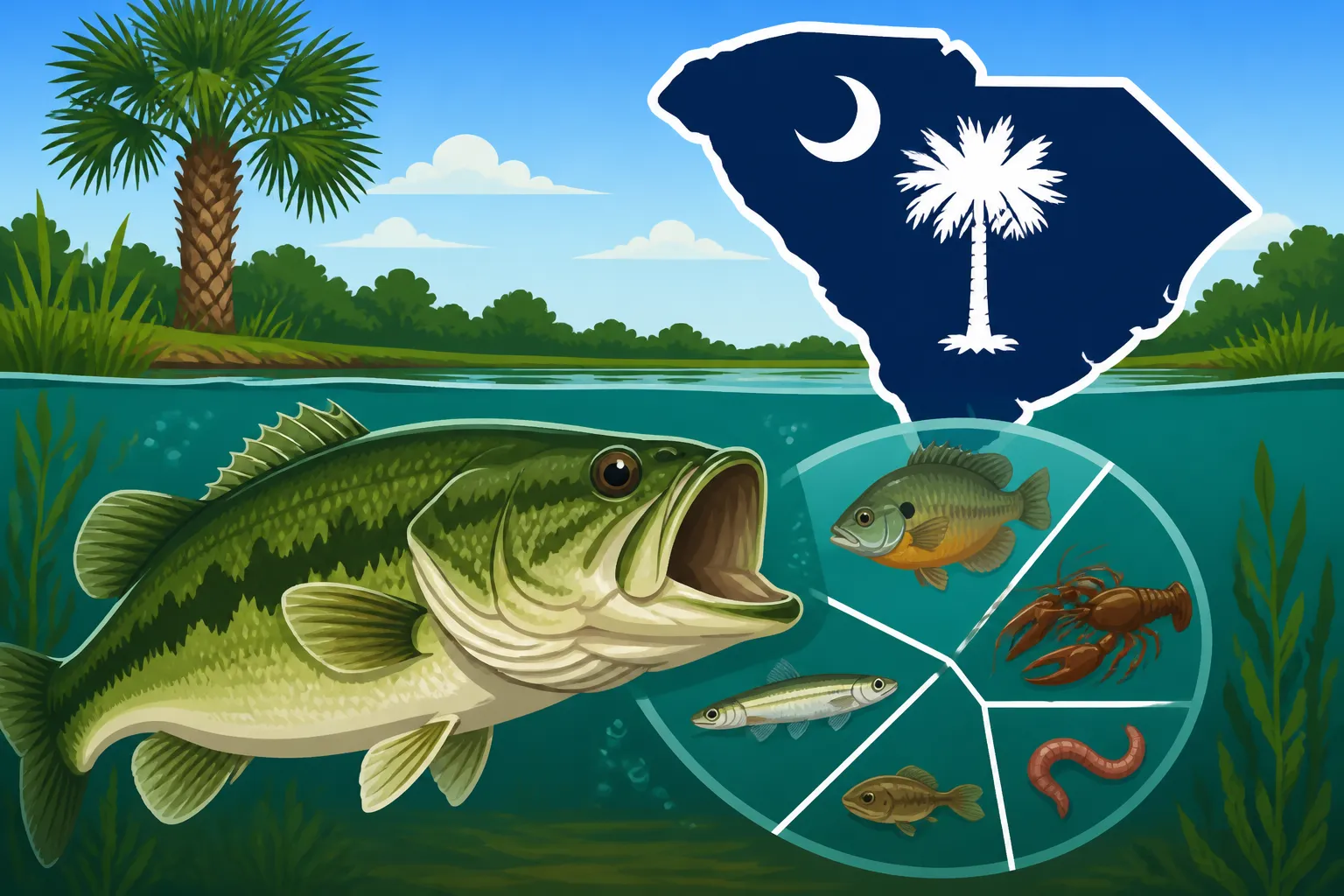
Without a doubt, smaller fish are the most crucial component of a largemouth bass's diet. These "baitfish" provide the essential protein and calories needed for rapid growth and sustained energy. In South Carolina ponds, you'll commonly find bass preying on a variety of smaller finned creatures. Minnows are a staple, often reproducing in huge numbers and providing an easily accessible food source. When present, threadfin or gizzard shad can also be a significant part of the diet, though they are more common in larger reservoirs.
Perhaps the most important baitfish in many ponds, however, are panfish like bluegill, redbreast sunfish, and even small crappie. Many ponds are intentionally stocked with bluegill as a forage base for largemouth bass, creating a thriving predator-prey relationship. Bass will target smaller, weaker individuals from these schools, often picking off the youngest or slowest swimmers. This abundance of smaller fish is why so many successful bass lures imitate the profile and swimming action of baitfish. Think about the classic crankbaits, jerkbaits, and soft plastic swimbaits you might find on Amazon; they're all designed to look and move like these vital food sources. The presence and health of these baitfish populations directly correlate to the size and health of the bass in your favorite pond.
Crustaceans and Insects: Small but Mighty Meals
While fish often take center stage, other invertebrates play a surprisingly vital role in a pond bass's diet, contributing to a more rounded nutritional intake. Crayfish, sometimes called mudbugs, are an absolutely critical food source, especially for larger bass. These freshwater crustaceans are abundant in many South Carolina ponds, lurking under rocks, logs, and other submerged cover. Bass will actively hunt for crayfish, especially after a rain when they might be more active, or when water temperatures make them more vulnerable. Anglers often have great success using jigs or soft plastic baits that mimic a crayfish's scuttling motion along the bottom, many of which can be found readily on Amazon.
Beyond crayfish, insects, both aquatic and terrestrial, are also on the menu. Dragonfly nymphs and other aquatic larvae live in the water column and amongst vegetation, providing a constant source of protein. Then there are the terrestrial insects – grasshoppers, crickets, beetles, and cicadas – that occasionally fall into the water from overhanging branches or during windy conditions. While individually small, a large number of these insects can be a significant food source. During major insect hatches or periods when insects are abundant near the water, bass will often shift their focus to the surface, eagerly slurping up anything that hits the water. This is where topwater lures, especially those imitating bugs, really shine.
Beyond the Usual Suspects: Surprising Bass Snacks
While baitfish and invertebrates form the foundation, largemouth bass are known for their willingness to tackle less conventional meals. These "surprising snacks" highlight just how opportunistic and aggressive these predators can be, particularly the larger, more dominant fish in a pond.
Amphibians and Reptiles: Easy Targets
Frogs are perhaps the most famous of the "unusual" bass meals. In any South Carolina pond, bullfrogs and green frogs are common residents, often lounging on lily pads or along the bank. Their sudden splash into the water is an irresistible trigger for a lurking bass. A frog represents a substantial meal, rich in protein, and often an easy catch for an ambushing predator. Bass will patrol the edges of vegetation, waiting for a frog to make a mistake. This is why frog imitation lures, particularly topwater frogs that can be worked over heavy cover, are so effective.
Beyond frogs, other amphibians and even small reptiles can sometimes become bass fodder. Salamanders, though less common as a primary food source, will be eaten if encountered. Occasionally, a small snake or even a very young turtle venturing into the water can become an opportunistic meal for a particularly large and aggressive bass. These instances might be less frequent, but they demonstrate the sheer predatory instinct of a largemouth, ready to capitalize on any vulnerability in its environment.
Small Mammals and Birds: When Opportunity Knocks
This might sound like something out of a wildlife documentary, but it's absolutely true: very large largemouth bass, especially those that have grown to trophy size in isolated pond environments, will sometimes prey on small mammals and birds. Imagine a voles, mice, or even a small duckling that accidentally falls into the water and begins to struggle. To a dominant bass, this struggling creature is an easy, high-calorie meal that requires minimal effort compared to chasing down agile baitfish.
While these events are rarer and certainly not a daily occurrence, they contribute to the legend of the largemouth bass as a truly formidable predator. For anglers, this knowledge reinforces the idea that sometimes, the most outlandish-looking topwater lure or a larger, more aggressive presentation can trigger a strike from that elusive monster bass that's grown accustomed to bigger, less conventional meals. On platforms like Amazon, you can even find some truly unique lures designed to mimic these less common prey items, catering to the angler hoping to tempt a true pond behemoth.
Seasonal Shifts and Size-Based Preferences
The diet of a largemouth bass in a South Carolina pond isn't static; it's a dynamic reflection of the changing seasons and the bass's own growth. What a bass eats in spring might be very different from its winter menu, and a small bass will target different prey than a lunker. Understanding these shifts is vital for year-round angling success.
Spring and Summer: Abundance and Activity
As the waters of South Carolina ponds warm in spring, everything kicks into high gear. Bass metabolism increases dramatically, leading to higher activity levels and a more aggressive feeding drive. This is also when many Largemouth Bass Spawning Season Explained activities occur, and after the spawn, bass are often ravenous as they recover. The warmer months bring an explosion of new life, providing an abundance of fresh prey. Newly hatched baitfish fry are everywhere, along with an influx of insects emerging from the water or falling from bankside vegetation.
During this period, bass are less picky and more willing to chase. They'll actively pursue schools of minnows and sunfish, hunt for crayfish along the bottom, and eagerly strike at anything moving on the surface, from buzzing insects to splashing frogs. Anglers often find success with a wide array of lures, from fast-moving crankbaits imitating fleeing baitfish to topwater poppers and walking baits that mimic the splash and commotion of a surface meal. The sheer availability of food means bass can afford to be less selective, making for some exciting and consistent fishing. South Carolina Bass Fishing Techniques by Season will often shift during these abundant times.
Fall and Winter: Packing on the Pounds
As summer gives way to the cooler temperatures of fall, a different feeding strategy emerges. Bass sense the impending cold and enter a "fall feeding frenzy." Their goal is to pack on as much weight as possible to sustain them through the lean winter months. During this time, they often target larger, fattier prey, such as bigger bluegill or robust crayfish, to maximize caloric intake. They might be less interested in chasing small, individual insects and more focused on substantial meals. Anglers often find success by slowing down their presentations and using larger baits that appeal to a bass looking for a hearty meal.
Winter brings the biggest change. As pond water temperatures plummet, the metabolism of largemouth bass slows significantly. They become less active, often retreating to deeper water or dense cover where temperatures are more stable. While they still need to eat, their feeding windows become much shorter and their strikes more subtle. During these colder months, bass will conserve energy, often waiting for an easy, slow-moving meal. This means a focus on slower presentations like jigs, blade baits, or suspending jerkbaits that can hang enticingly in the strike zone. You might be surprised to learn that Do Largemouth Bass Bite in Cold Weather?, but their diet definitely changes. They're still opportunistic, but now they prioritize efficiency and energy conservation over active pursuit, making patience and presentation key for anglers.
Here’s a simplified breakdown of typical bass diet by season:
| Season | Primary Forage | Secondary Forage | Notable Lure Imitations |
|---|---|---|---|
| Spring | Baitfish (minnows, panfish fry), Crayfish | Frogs, Worms, Aquatic Insects | Spinnerbaits, Jigs, Shallow Crankbaits |
| Summer | Baitfish (adult panfish, shad), Frogs, Terrestrial Insects | Crayfish, Salamanders, Small Reptiles | Topwaters, Soft Plastics, Deep Crankbaits |
| Fall | Larger Baitfish, Crayfish | Frogs, Small Mammals | Jerkbaits, Swimbaits, Jigs, Larger Crankbaits |
| Winter | Slow-moving Baitfish, Crayfish | N/A (highly opportunistic) | Jigs, Suspending Jerkbaits, Blade Baits |
Regardless of the season, understanding Best Bait for Largemouth Bass in South Carolina Lakes will greatly enhance your chances. Using techniques like How to Fish a Jig for Largemouth Bass can be incredibly effective when bass are focused on bottom-dwelling prey, while Topwater Bass Fishing Techniques for Early Morning work wonders when they're targeting surface meals. Ultimately, knowing what these magnificent fish are eating is about more than just fishing; it's about appreciating the wildness of South Carolina's aquatic environments. This insight, combined with the general guide for Largemouth Bass Fishing in South Carolina: The Complete Guide, will empower you to become a more effective and knowledgeable angler, whether you're chasing average-sized bass or hoping to land a lunker that makes you wonder How Big Do Largemouth Bass Get in South Carolina Lakes.
Disclaimer
This article is for general informational purposes only and does not constitute professional advice. Laws, prices and regulations vary by location and change over time. Consult a qualified professional for guidance on your specific situation.