Largemouth Bass Average Size in Freshwater Lakes
It can be incredibly frustrating to pull a beautiful largemouth bass out of a South Carolina lake and wonder, "Is this a good fish, or just average?" Anglers often want to know what a typical catch looks like in the Palmetto State's abundant freshwater systems. This guide will walk you through what to expect in terms of largemouth bass size in our lakes, what factors shape those fish, and how you can increase your chances of landing a true lunker.
What Constitutes an "Average" Largemouth Bass in South Carolina?
When we talk about the "average" size of a largemouth bass in South Carolina's freshwater lakes, it’s important to understand that this isn't a hard and fast rule. Fish populations vary wildly from one lake to another, even within the same state. However, based on general observations and common catches reported by anglers, an average largemouth bass in many of our public reservoirs will typically fall into a certain range.
Think of it this way: most bass you'll encounter on a regular fishing trip, especially if you're not specifically targeting trophy fish, will be keepers, but not necessarily giants. These are the fish that make up the bulk of the population and contribute to the healthy ecosystem of a lake. They’re fun to catch, put up a respectable fight, and are a great indicator of a thriving fishery.
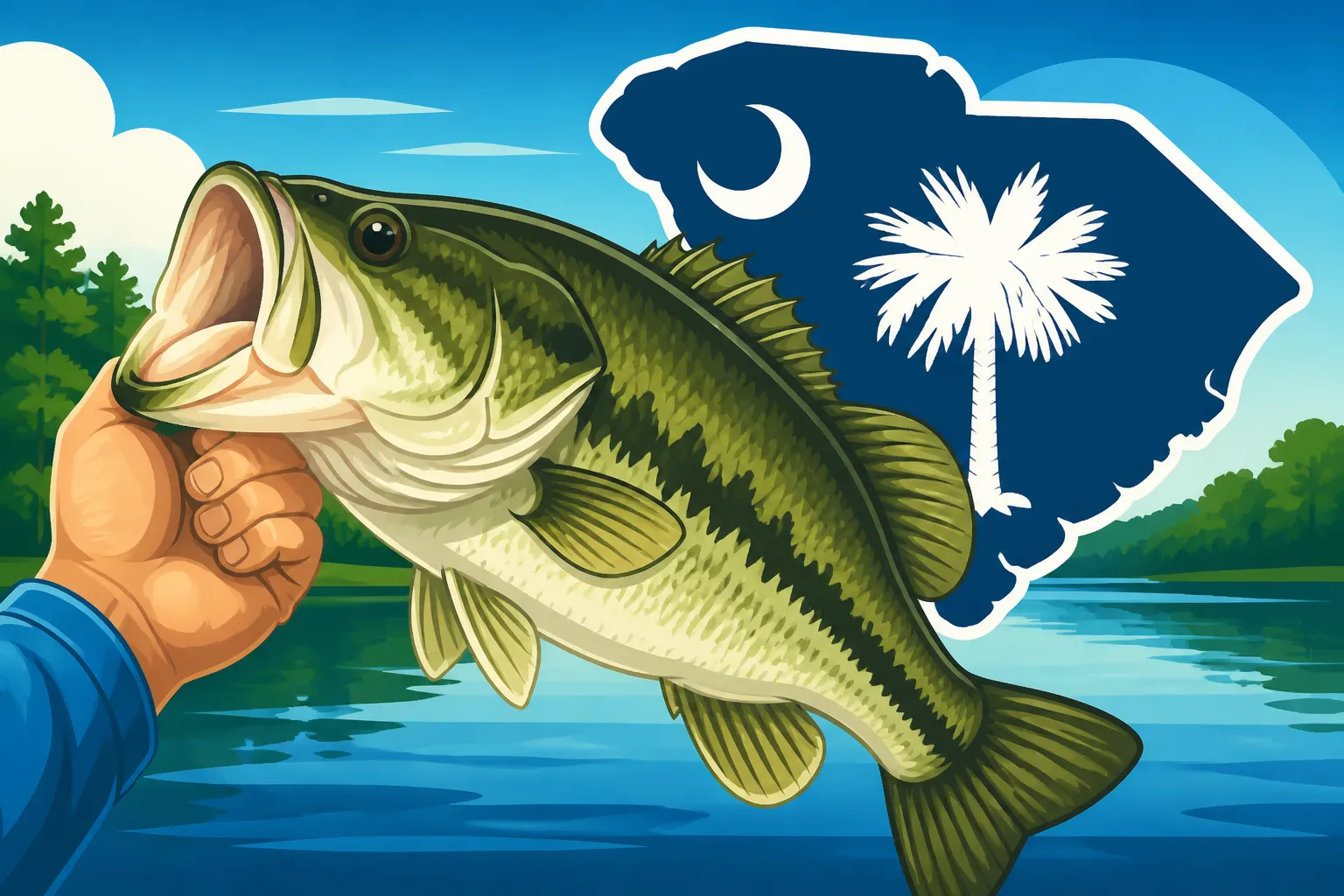
For most of South Carolina's major lakes, like Lake Murray or the Santee Cooper system, an average largemouth bass typically weighs in at a few pounds and measures anywhere from 14 to 18 inches. You’ll definitely catch smaller ones, often referred to as "sore mouths" due to their aggressive biting, and occasionally you'll hook into something larger. But that 1-3 pound, 14-18 inch range is a pretty common benchmark for what you might consistently encounter on a productive day. It's the kind of fish you feel good about, but maybe not one you'll mount on the wall.
The Standard Lake Largemouth
The bass that dominate most of our recreational fisheries are those perfectly sized fish that are a blast to catch on standard gear. They’ve grown past their juvenile stage, are actively feeding, and haven't yet reached their full growth potential, which requires many years of optimal conditions. These fish are typically strong and healthy, perfect for a photo before a careful release, ensuring they can grow even larger for future anglers. You'll find these plentiful in diverse habitats, from shallow coves to deeper structure.
Often, when you're out fishing with friends or family, these are the fish that keep the action going. They're responsive to a variety of baits and lures, making them accessible to anglers of all skill levels. They validate your efforts, even if they aren't setting any records. It's truly a delight to feel that familiar tug on the line, even from a bass that isn't massive.
Why "Average" is a Good Thing
While every angler dreams of a lunker, a healthy population of "average" sized bass is a sign of a thriving fishery. It means there's a good balance of food, habitat, and successful reproduction happening in the lake. If all you ever caught were massive bass, it might indicate a declining population where only a few dominant fish remain. So, appreciating the average size bass is really appreciating the health and vitality of your favorite fishing hole.
These mid-sized fish also provide a crucial food source for larger predators (including bigger bass!) and contribute significantly to the overall biomass of the lake. They're the backbone of the ecosystem. Plus, they offer fantastic opportunities for anglers to hone their skills, experiment with different techniques, and enjoy consistent action, which, let's be honest, is what keeps us coming back for more.
Factors Influencing Largemouth Bass Size
You might fish two different lakes in South Carolina and notice a significant difference in the average size of the largemouth bass. This isn't random; it's due to a complex interplay of environmental and biological factors. Understanding these can help you choose your fishing spots more wisely or adjust your expectations when you're on the water.
Everything from the lake's overall fertility to the fishing pressure it receives can impact how big the bass grow. It's not just about how long a fish lives, but how well it lives during its lifetime. Lakes are like living organisms themselves, and what they "feed" their bass population directly translates into the average size you'll encounter. For instance, a lake rich in forage fish and with plenty of cover will generally produce healthier, faster-growing bass than a sterile, open reservoir.
Let's consider a scenario: a sprawling, nutrient-rich lake like Lake Marion, part of the Santee Cooper system, is known for its excellent bass fishing. It has vast areas of submerged timber, aquatic vegetation, and a huge population of baitfish. These conditions are ideal for bass to grow quickly and reach impressive sizes. Compare that to a smaller, heavily fished municipal pond that might have limited food sources and constant angling pressure; the bass there, while still fun, will likely remain smaller on average.
Forage Base and Diet
The old adage "you are what you eat" definitely applies to largemouth bass. The abundance and type of forage available are arguably the biggest factors determining how large bass will grow. Lakes with a rich and diverse diet of shad, bluegill, small crappie, crawfish, and even smaller bass will produce bigger, healthier fish. A consistent and plentiful food supply means bass don't have to expend excessive energy hunting, allowing them to convert more calories into growth.
Consider a lake teeming with gizzard shad and threadfin shad. Bass in such an environment have a constant, high-protein food source, enabling them to pack on pounds rapidly. Conversely, in a lake with a sparse forage base, bass might be more numerous, but they'll typically be thinner and shorter, as they're constantly competing for limited food resources. This is why fisheries management often includes stocking forage species to boost the overall health and size potential of game fish. If you're looking for Best Bait for Largemouth Bass in South Carolina Lakes, understanding the local forage is key.
Habitat and Water Quality
The physical environment of a lake also plays a crucial role. Features like abundant submerged timber, vast grass beds, rock piles, and deep ledges provide crucial cover for bass to ambush prey, escape predators, and find thermal refuge. Good water quality, including appropriate oxygen levels, temperature, and pH, directly impacts a bass's metabolic rate and overall health, which in turn dictates growth. Lakes with stable, clean water and diverse structures offer the best conditions for bass to thrive and reach their full potential.
A lake with clear water might allow bass to rely more on sight feeding, while murky waters might encourage more reliance on lateral lines. Both can be productive, but the type and density of habitat offer different advantages. Areas with healthy aquatic vegetation, for example, not only provide cover for bass but also create nurseries for baitfish, creating a complete ecosystem that supports robust bass growth. When looking for Best Largemouth Bass Spots on Lake Murray, South Carolina, you'll often find these areas of prime habitat.
Genetics and Age
Just like people, some bass are genetically predisposed to grow larger than others. While environmental factors are huge, the genetic makeup of a bass population can influence its maximum size potential and growth rate. Furthermore, age is obviously a factor; older bass generally mean larger bass, provided they have survived long enough and had access to sufficient food. However, growth rates slow down considerably as bass age, so an old bass might not necessarily be a giant if conditions weren't optimal throughout its life.
Different strains of largemouth bass, such as the Florida strain, are known for their potential to grow to much larger sizes than the native northern strain. In South Carolina, many lakes have a mix, leading to a population with varying genetic potential. Understanding Largemouth Bass Growth Rate From Fingerling to Trophy helps illustrate that it's a long journey for a bass to reach truly impressive dimensions.
Fishing Pressure and Management
Lakes that experience heavy fishing pressure, especially those with high harvest rates (where many fish are kept), might see a reduction in the average size of bass over time. Anglers naturally tend to keep the larger fish, which can remove the bigger, older, and genetically superior fish from the population, leaving behind smaller ones. Conversely, lakes with catch-and-release regulations or slot limits often have healthier populations of larger bass. Good fisheries management, including stocking programs and habitat restoration, also directly influences average size.
Conservation efforts and smart angling practices are vital. When anglers conscientiously release larger bass, they are helping to ensure that those genes stay in the population, potentially leading to future generations of bigger fish. This is a practice many dedicated bass anglers uphold, understanding that a thriving fishery benefits everyone. Bass Fishing Techniques After the Spawn often emphasize careful handling and release.
| Factor | Impact on Largemouth Bass Size | Example SC Lake/Scenario |
|---|---|---|
| Forage Abundance | High forage = faster growth, larger fish | Santee Cooper Lakes (Lake Marion, Lake Moultrie) with vast shad populations |
| Habitat Structure | Abundant cover (timber, grass) = protection, ambush points, growth | Lake Hartwell with its submerged timber and creek channels |
| Water Quality | Clean, oxygenated water = healthy fish, better growth | Clear waters of Lake Keowee supporting robust bass |
| Genetics | Presence of Florida strain genes = potential for larger size | Lakes with historical Florida strain stockings producing bigger fish |
| Age | Older fish generally mean larger fish (up to a point) | A 7-year-old bass in an optimal environment will be larger than a 3-year-old in the same lake |
| Fishing Pressure | High pressure/harvest = smaller average size over time | Heavily fished community ponds with frequent harvest |
| Fisheries Management | Slot limits, stocking = enhanced potential for larger fish | Lakes with strict catch-and-release rules or protective slot limits |
Targeting Larger Largemouth Bass in South Carolina
So, you've understood what an average bass looks like and what makes them grow. Now, how do you go about catching those above-average, truly memorable largemouths in South Carolina? It often comes down to a combination of strategic location, specialized techniques, and the right gear. It's about being patient, persistent, and thinking like a big bass.
Landing a trophy bass isn't usually an accident. It's the result of diligent effort, understanding the fish's behavior, and presenting an irresistible offering. While you might still catch smaller fish in the process, your focus shifts from simply getting a bite to getting a quality bite. This means often fishing slower, with larger baits, and in areas where those big girls tend to hang out.
Many experienced anglers will tell you that to catch bigger fish, you need to fish bigger baits. This isn't always true, but it's a good starting point. Trophy bass are often looking for a substantial meal, something that gives them a lot of calories for the energy expended. So, while a small worm might catch plenty of average fish, a larger swimbait or jig could be the ticket to that once-in-a-lifetime lunker.
Strategic Location and Timing
Bigger bass are often older, wiser, and more territorial. They tend to relate to specific types of structure or cover that offer them an advantage for ambushing prey while providing security. Think deep-water humps, dense hydrilla beds, expansive submerged timber, or isolated rock piles away from the main boat traffic. Timing is also crucial: targeting periods like the Largemouth Bass Spawning Season Explained can yield larger fish as they move into shallower waters. Early mornings, late evenings, or even night fishing can also be productive when these larger fish are more active and less wary.
A trophy bass isn't going to be sitting out in the middle of nowhere. It's going to be near a prime ambush point, usually where it can quickly grab a meal and retreat to safety. Knowing where these fish should be, based on water temperature, time of year, and prevailing conditions, is half the battle. This might mean exploring areas that aren't easily accessible or that require specialized boat handling to navigate.
Specialized Techniques and Lures
To specifically target larger bass, anglers often employ techniques that appeal to their predatory instincts and preferred diet. This often involves slowing down your presentation and using larger, more realistic baits. Big swimbaits, substantial jigs and creature baits, oversized crankbaits that mimic large forage, and even live bait like large shiners can be highly effective. Techniques like flipping and pitching into heavy cover, deep cranking ledges, or slow-rolling a spinnerbait on deep points are common strategies for enticing a lunker.
Consider a massive jig-and-trailer combo, mimicking a crawfish or a substantial baitfish. You might not get as many bites with it, but the bites you do get are often from bigger fish. Learning How to Rig a Texas-Rig Worm for Bass with a larger worm can also be incredibly effective for enticing those wary giants hiding in dense cover. Don't be afraid to experiment with lures you might typically pass over because of their size; if you're serious about a trophy, these are your tools. Many anglers find a great selection of these specialized lures and gear on Amazon, making it easy to experiment without breaking the bank.
Gear Considerations
While you don't need top-of-the-line gear to catch bass, targeting larger fish often benefits from a slightly heavier setup. A medium-heavy to heavy action rod, paired with a stout baitcasting reel and stronger fishing line (fluorocarbon or braid in higher pound tests), will give you the power to cast larger lures, penetrate thick cover, and more importantly, control and land a powerful fish. A quality landing net is also a wise investment to safely secure and handle a trophy bass, especially one that might be too large to lip easily. You can find robust casting rods and reels, as well as high-quality braided line, available through retailers like Amazon.
Having the right gear isn't just about landing the fish; it's about making the entire process more efficient and effective. A rod with the right backbone allows you to set the hook hard on a big fish, especially if you're fishing with thicker line or through heavy cover. Strong line reduces the risk of break-offs when a big bass makes a powerful run or tries to bury itself in structure. And remember, a good pair of pliers from Amazon can be invaluable for removing hooks safely and quickly, especially from larger fish.
Understanding the Difference: Average vs. Trophy Bass
It's one thing to catch a few average-sized bass during an afternoon outing, and quite another to hook into a true trophy. While the line between "average" and "trophy" can feel subjective, there are generally accepted benchmarks for what constitutes a genuinely large largemouth bass in South Carolina. This isn't just about weight or length; it's about the fish's history, its rarity, and the challenge it presents.
A trophy bass represents a significant achievement for an angler. It's a testament to the health of the fishery and often to the angler's skill, patience, and dedication. These fish are not only larger but often possess a unique character—scars from past battles, a darker, more mature coloration, and a powerful, almost defiant fight.
For many South Carolina anglers, a largemouth bass around the 5-pound mark is starting to be considered a really good fish, perhaps even a personal best for some. But a true "trophy" often starts at 8 pounds and up, with anything over 10 pounds being the stuff of dreams for most freshwater anglers in the state. Anything close to the state record is a truly exceptional fish.
Characteristics of a Trophy Bass
A trophy largemouth bass isn't just heavier; it's usually longer, girthier, and visibly more robust than its average counterparts. These fish have typically survived many seasons, avoiding predators and anglers alike, honing their survival instincts. They often show signs of age, perhaps a slightly rougher skin texture, or a more pronounced jawline. Their behavior can also be different – they might be more cautious, harder to tempt, and fight with incredible power and determination once hooked.
They're not just bigger; they're smarter. These fish have learned to avoid common pitfalls, recognizing specific boat noises or patterns of lures. Catching one often feels like outsmarting an apex predator that has seen it all. The fight is intense, demanding skill and often pushing your tackle to its limits.
The Thrill of the Chase
The pursuit of a trophy bass is what drives many anglers to spend countless hours on the water, meticulously studying maps, weather patterns, and fish behavior. It's a game of patience, strategy, and often a little bit of luck. The excitement of finally hooking into a genuinely large fish, feeling the heavy tug and the powerful runs, is an unparalleled experience that keeps anglers coming back, year after year.
Whether you’re exploring South Carolina's Best Bass Fishing Lakes or trying to figure out How Big Do Largemouth Bass Get in South Carolina Lakes, the journey is often as rewarding as the catch itself. Each cast is filled with anticipation, the potential for that one fish that makes all the effort worthwhile. It's not just about the numbers; it's about the story, the memory, and the connection to the wild. The ultimate goal isn't just to catch a fish, but to catch a legend.
Disclaimer
This article is for general informational purposes only and does not constitute professional advice. Laws, prices and regulations vary by location and change over time. Consult a qualified professional for guidance on your specific situation.