Best Time to Catch Striped Bass on South Carolina’s Rivers
Trying to figure out the "best" time to catch striped bass on South Carolina's rivers can feel like you're trying to solve a complex puzzle, especially with the ever-changing conditions of tides, seasons, and fish behavior. It's frustrating to dedicate time and effort only to come up empty-handed because you weren't there during a prime window. This guide is here to help you unlock the secrets of river striper timing, giving you the insights needed to plan your trips for maximum success, no matter the season or specific river section you’re targeting.
Understanding Striped Bass Behavior in Rivers
Before we dive into specific timings, it's crucial to understand why striped bass behave the way they do in river systems. These fish are incredibly adaptable, moving between freshwater and saltwater, but their movements are largely dictated by a few key factors: water temperature, their natural spawning migrations, and where they can find an easy meal. Knowing these elements helps you predict their patterns, turning guesswork into informed decisions.
The Influence of Water Temperature
Water temperature is perhaps the single most critical factor influencing striped bass activity. These fish are cold-blooded, meaning their metabolism and activity levels are directly linked to the temperature of the water around them. In South Carolina's rivers, this means distinct changes from the chilly depths of winter to the warm, often sweltering, highs of summer. When the water is too cold, stripers become sluggish, conserving energy. They might still feed, but their bites will be less aggressive and harder to provoke. Conversely, when the water gets too warm, especially above 75-80 degrees Fahrenheit, stripers can become stressed. They'll seek out deeper, cooler thermal refuges or areas with more oxygen, and their feeding windows might narrow significantly, often to just dawn, dusk, or nighttime hours. Understanding these temperature thresholds for the different South Carolina Fishing Seasons Guide is key to successful planning.
Spawning Runs and Migration Patterns
One of the most exciting times to target striped bass in South Carolina's rivers is during their annual spawning runs. These majestic fish are anadromous, meaning they spend most of their lives in saltwater but migrate upstream into freshwater rivers to reproduce. In South Carolina, this typically happens in the spring, when rising water temperatures signal it's time to move. They'll push far upriver, sometimes hundreds of miles, creating incredible opportunities for anglers. Following these Striped Bass Migration Up South Carolina's Coastal Rivers patterns can lead to some of the most memorable fishing experiences. After spawning, they'll gradually make their way back downriver towards the more brackish and saltwater environments, often pausing to feed aggressively as they recover from the strenuous journey.
Forage and Feeding Habits
Striped bass are opportunistic predators with a voracious appetite. Their feeding habits in river systems are heavily influenced by the availability of forage, which can include everything from smaller baitfish like shad, herring, and mullet to crustaceans and even smaller game fish. If you can locate the bait, you're often not far from the stripers. In rivers, this often means looking for schools of shad or herring, especially during their own migrations. Stripers will stage themselves in areas where they can ambush baitfish, such as current breaks, submerged structures, deep holes, or along the edges of channels. Understanding these feeding patterns allows you to choose the Best Bait for Striped Bass in Freshwater Lakes (which often applies to river systems as well) and the right presentation to entice a strike.
Seasonal Strategies for River Stripers
The "best" time to catch striped bass on South Carolina's rivers really comes down to the season. Each part of the year presents unique challenges and opportunities, requiring different approaches and techniques. Adapting your strategy to the seasonal nuances will dramatically improve your chances of success.
Spring: The Spawning Frenzy
Spring, particularly from late February through May, is arguably the most anticipated season for river striper anglers in South Carolina. This is when the anadromous stripers make their heroic journey upstream to spawn. As water temperatures climb into the 50s and 60s Fahrenheit, the fish become highly active and concentrated in the middle and upper sections of major river systems like the Santee-Cooper, Cooper, and Congaree rivers. They're driven by instinct, but they also feed actively to fuel their arduous migration.
During this time, anglers often target pinch points, tributary mouths, and deeper bends in the river where fish might rest or hold before continuing upstream. Live bait, like shad or herring (where legal and available), can be incredibly effective, drifted or slow-trolled. Artificial lures such as large swimbaits, bucktail jigs, and lipless crankbaits also produce well, especially when cast towards cover or into current seams. The sheer numbers of fish present during the spawn make this a prime time for both quantity and quality.
Summer: Deep and Challenging
As South Carolina's temperatures soar from June through August, river fishing for striped bass becomes a much more challenging endeavor. The warmer water, often reaching into the upper 70s and 80s, pushes stripers into deeper, cooler sections of the river. They'll seek out thermal refuges, often congregating around deep holes, springs, or areas with stronger current that provides more oxygen. Their metabolism slows, and their feeding windows become much shorter, typically limited to the cooler parts of the day.
Early morning before the sun gets too high, or late evening into the night, becomes your best bet. Targeting these deep-water haunts with vertical jigging techniques using heavy spoons or large bucktails can be effective. Trolling deep-diving crankbaits or live bait (again, where legal and available) through cooler channels can also draw strikes. Patience is key in the summer, and understanding that the fish are often less aggressive can prevent a lot of frustration. Sometimes, simply finding cooler, oxygenated water is half the battle.
Fall: Aggressive Feeding Times
Fall, from September through November, is another fantastic period for river striped bass fishing, often rivaling spring in terms of action. As water temperatures begin to drop from their summer highs, stripers become much more active and aggressive. They're on a mission to fatten up for the leaner winter months ahead, which means they're actively chasing baitfish. This is when you can experience incredible topwater action in the early mornings or late evenings as schools of baitfish, like mullet, begin their own migrations out of the estuaries.
During the fall, stripers can be found throughout the river system, from the upper freshwater reaches down into the brackish tidal areas. Look for schooling baitfish being harassed on the surface, especially around major creek mouths, points, and current rips. Casting topwater plugs, large soft plastic swimbaits, and big spoons into these feeding frenzies can result in explosive strikes. It's a highly visual and exciting time to be on the water. The cooler, more stable weather also makes for a much more pleasant day of fishing for anglers.
Winter: Consistent, Cold-Water Bites
Don't let the cold deter you – winter, from December through February, can be an incredibly productive time for river striped bass in South Carolina, especially if you understand their cold-water patterns. While the fish are less active than in spring or fall, they tend to congregate in predictable deeper areas, making them easier to locate once you find them. They're often seeking slightly warmer, more stable water in deep holes, bends, or channels. You can learn a lot from Striped Bass Winter Fishing Patterns in Freshwater Lakes to apply to river fishing as well.
The key to winter success is a slower, more methodical approach. Vertical jigging with heavy spoons or blade baits directly over suspended fish is highly effective. Live bait, such as large shiners or trout, presented slowly on the bottom or suspended at the depth where fish are holding, can also be irresistible. Pay close attention to your electronics to pinpoint schools of stripers and bait. The bites might be subtle, but the fish you hook in winter are often larger, making the effort worthwhile. Don't forget to bundle up and prepare for the elements! You might even find some useful cold-weather gear on Amazon to keep you comfortable.
Here's a quick overview of seasonal opportunities:
| Season | Typical Water Temp Range (F) | Striped Bass Activity | Prime Locations | Recommended Techniques |
|---|---|---|---|---|
| Spring | 55-70 | High (Spawning Run) | Upper/Mid-River, Pinch Points, Tributaries | Live bait, large swimbaits, bucktail jigs |
| Summer | 75+ | Moderate (Stress/Deep) | Deep holes, Current Breaks, Thermal Refuges | Deep vertical jigging, trolling deep divers |
| Fall | 65-75 | High (Feeding Frenzy) | Entire River, Creek Mouths, Baitfish Schools | Topwater, soft plastic swimbaits, spoons |
| Winter | 45-55 | Moderate (Congregated) | Deep holes, River Bends, Channels | Slow vertical jigging, live bait on bottom |
Daily Timing: When to Hit the Water
Beyond the seasons, the time of day can dramatically influence your success on South Carolina's rivers, especially for striped bass. Early birds and night owls often have the advantage, but even overcast days can present unexpected opportunities.
Dawn and Dusk: Prime Feeding Windows
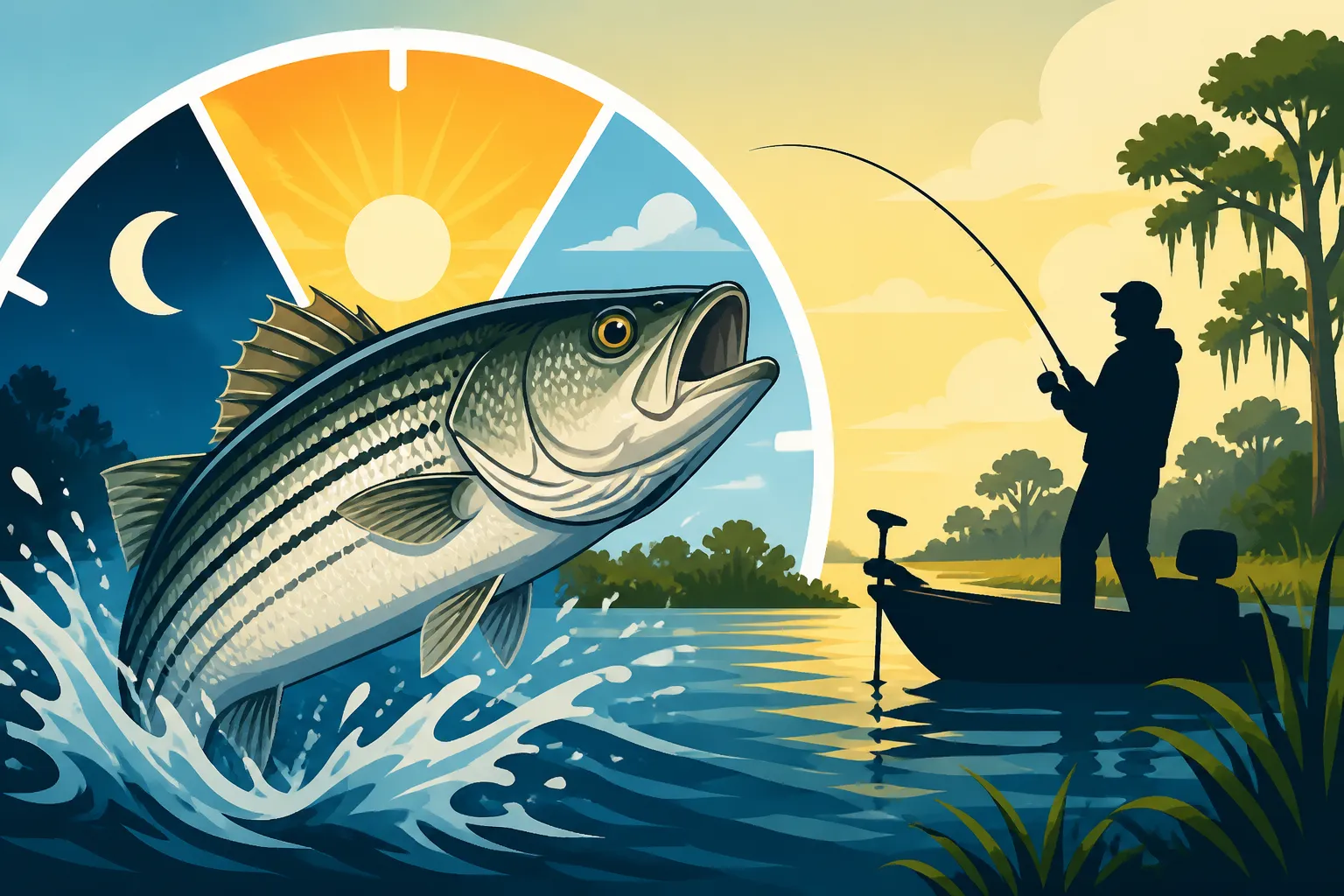
Just like many other predatory fish, striped bass are most active during the low-light periods of dawn and dusk. These are often considered the "golden hours" for fishing, and for good reason. The receding or rising sun creates a natural camouflage for stripers, making it easier for them to ambush unsuspecting baitfish. Additionally, water temperatures are usually at their most stable or favorable during these transitions, especially in the warmer months.
During dawn, the fish are often coming off a night of active feeding and might still be cruising shallower areas or ambushing bait as the sun starts to peek over the horizon. At dusk, they're gearing up for their nocturnal hunts, becoming increasingly aggressive. For aggressive fish, this can mean explosive topwater action, while for more cautious biters, it's still a time when they are more likely to let their guard down. Plan to be on the water at least an hour before sunrise and stay an hour after sunset to capitalize on these prime Dawn and Dusk Fishing Techniques.
Overcast Days and Rain: Unexpected Opportunities
While many anglers prefer bright, sunny days, an overcast sky can actually be a blessing for striped bass fishing in rivers. Low light conditions extend those prime feeding windows beyond just dawn and dusk, making stripers more comfortable venturing into shallower water or being active throughout the day. The diffused light reduces shadows and makes it harder for baitfish to spot predators.
Light rain, especially after a dry spell, can also stir up bait and wash nutrients into the river, stimulating a feeding response. However, heavy, sustained rain can muddy the water, increase current, and lower water temperatures significantly, sometimes making fishing more challenging. The trick is to find that sweet spot: light rain or consistent overcast conditions without extreme runoff. When the skies are grey, don't pack up your gear – grab your rain jacket and get out there! You might find that perfect lure on Amazon for those low-visibility conditions.
Tidal Influences in Coastal Rivers
For those fishing the lower, more brackish sections of South Carolina's rivers that are influenced by the ocean, understanding the tides is absolutely paramount. Tides create currents, move bait, and concentrate fish, dictating when and where striped bass will be most active. The movement of water, whether incoming or outgoing, can dramatically change feeding patterns.
Many experienced anglers find that the period just before and after a tide change, particularly an outgoing tide, can be incredibly productive. As the tide recedes, baitfish are often swept out of creeks and marsh flats, funneling them into main river channels where stripers lie in wait. Conversely, an incoming tide can push bait into new areas, bringing stripers with them. Learning to "read the tide" for your specific river section is a skill that takes time, but it's essential for consistent success in these tidal environments. Pay attention to local tide charts and how they affect the specific areas you plan to fish.
Gear and Techniques for River Stripers
Having the right gear and knowing the appropriate techniques can make all the difference, especially when you've honed in on the "best time" to be on the water. River stripers can be powerful fighters, and being prepared means more landed fish and fewer frustrations.
Essential Rod and Reel Setups
For river striped bass, you're generally looking for a versatile setup that can handle powerful runs and the occasional heavy lure or live bait. A medium-heavy to heavy action spinning or baitcasting rod, typically 7 to 7.5 feet long, is a great all-around choice. This length provides good casting distance while still offering enough leverage to fight a strong fish in current. Match this with a robust reel (spinning reels in the 4000-6000 size range, or baitcasting reels with a good drag system) spooled with 30-50 lb braided line. Braid offers sensitivity and strength, and a fluorocarbon leader (20-40 lb test) is often tied on for abrasion resistance and invisibility.
If you plan on trolling, especially in larger river systems or reservoirs, a heavier conventional rod and reel setup might be preferred. For vertical jigging in deep water, a shorter, more sensitive rod can give you better feel for subtle bites. Don't cheap out on your drag system; a smooth, reliable drag is crucial for preventing break-offs when a big striper decides to make a run. You can find a wide array of options for Best Lures for Striped Bass in South Carolina and rods/reels on Amazon, perfect for any budget.
Top Baits and Lures
The choice of bait or lure for river stripers can be very situational, changing with the season, time of day, and the specific forage available. However, some standbys consistently produce results:
- Live Bait: Freshly caught shad, herring, or large shiners are often irresistible to stripers, particularly during the spawning runs and in colder water. Fish them on a circle hook with enough weight to get them to the desired depth, either drifted or suspended under a bobber.
- Swimbaits: Large soft plastic paddle-tail swimbaits, often 4-8 inches long, rigged on a heavy jig head, are incredibly versatile. They mimic baitfish perfectly and can be fished at various depths.
- Bucktail Jigs: These classic lures are effective year-round. Varying weights (1/2 oz to 2 oz or more) allow you to fish different depths and current speeds. Tip them with a soft plastic trailer for added appeal.
- Crankbaits: Deep-diving crankbaits are excellent for trolling or casting to reach fish holding in deeper channels or near structure. Lipless crankbaits can be great for covering water and eliciting reaction strikes.
- Topwater Plugs: During aggressive feeding periods, especially in spring and fall, nothing beats the excitement of a topwater strike. Poppers, walk-the-dog lures, and prop baits can all draw explosive bites.
The key is to match the hatch – use baits and lures that resemble what the stripers are currently feeding on.
Reading the River for Stripers
Understanding the "best time" to catch striped bass also involves knowing where to look. Stripers are creatures of habit and structure. In river systems, this means paying attention to current, depth changes, and submerged features.
Look for areas where the current creates a natural ambush point:
- Confluence of Tributaries: Where smaller creeks meet the main river, often washing bait into the larger flow.
- River Bends: The outside bends of a river are typically deeper and can create current breaks where stripers hold.
- Submerged Structure: Sunken trees, rock piles, old bridge pilings, or channel markers all provide cover and current breaks.
- Depth Changes: Look for ledges, humps, or sudden drops in depth where fish can easily move up or down to feed or rest.
- Current Seams: The boundary between fast-moving and slower water is a prime feeding lane.
Utilize your boat's electronics (fishfinder and GPS) to mark schools of bait and stripers, identify depth contours, and navigate safely. Learn to interpret what your fishfinder is telling you. Are those big arches stripers, or just catfish? Is that cloud of dots a school of baitfish? Over time, you'll develop an intuition for where stripers ought to be, combining your knowledge of the South Carolina Freshwater Fishing Calendar with real-time observation.
By combining an understanding of the seasonal movements, daily timing, and the right gear and techniques for reading the river, you'll be well on your way to consistently finding and catching striped bass in South Carolina's diverse river systems. Good luck out there!
Disclaimer
This article is for general informational purposes only and does not constitute professional advice. Laws, prices and regulations vary by location and change over time. Consult a qualified professional for guidance on your specific situation.