How to Fish a Jig for Largemouth Bass
For many anglers, the largemouth bass jig can feel like one of the most intimidating lures in the tackle box. You’ve seen the pros haul in monster bass on them, but trying to replicate that success yourself often leads to snags, missed bites, and a whole lot of head-scratching. It’s easy to get frustrated when you're not sure if you're even presenting it correctly or if a subtle tap was a bite or just a stick. This guide is here to break down exactly how to fish a jig for largemouth bass in South Carolina waters, turning that mystery into consistent catches.
Understanding the Largemouth Bass Jig and Why It Works
Before you even make your first cast, it's incredibly helpful to understand what a bass jig truly is and why it's so incredibly effective. It's more than just a hunk of lead and rubber; it's a carefully designed lure meant to imitate some of a bass's favorite meals. Many anglers shy away from jigs because they seem complex, but once you grasp the basics, you'll see their genius.
Anatomy of a Bass Jig
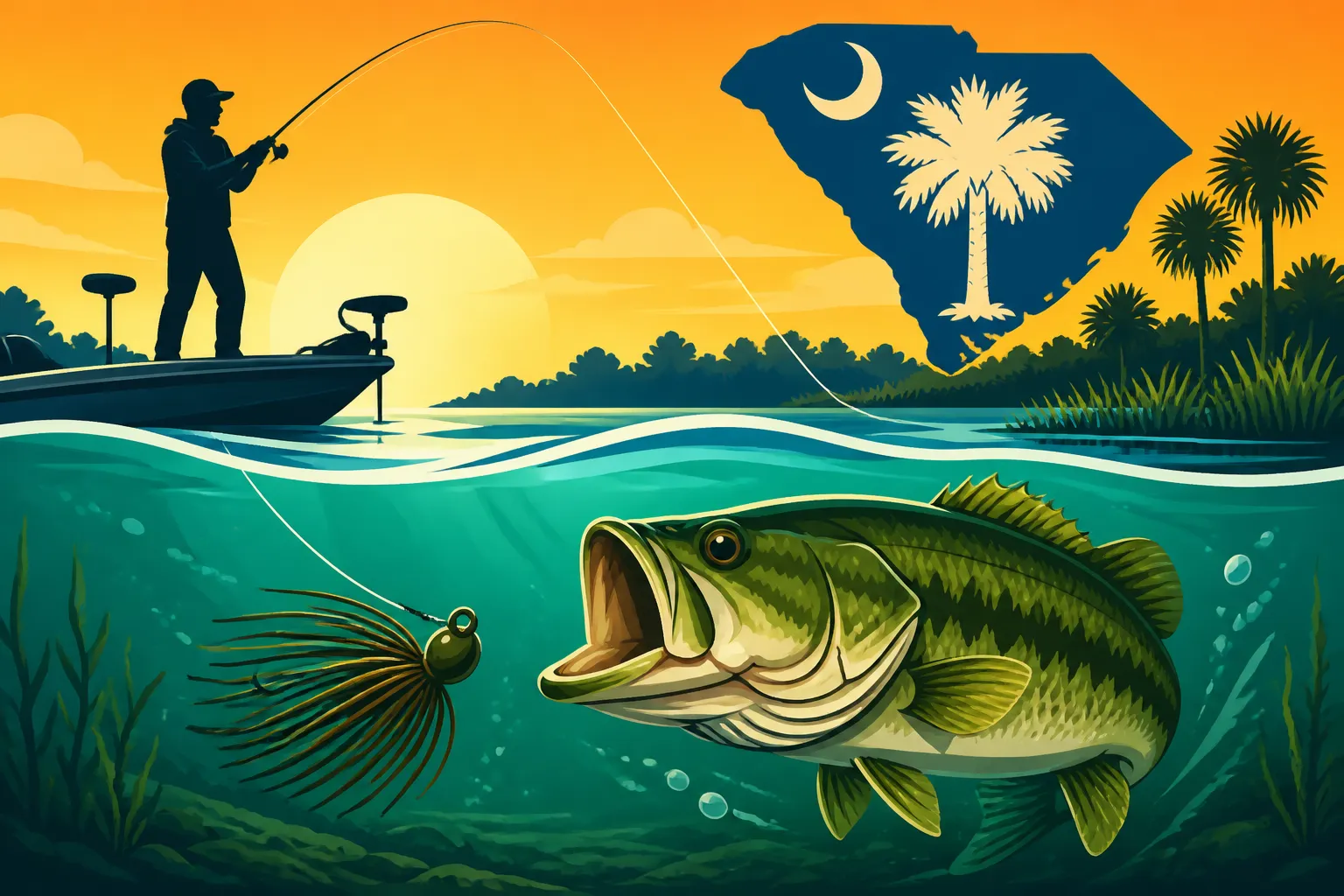
A bass jig is essentially a weighted hook dressed with a skirt, often paired with a soft plastic trailer. Each component plays a crucial role in its overall presentation and effectiveness:
- Lead Head: This is the heart of the jig, providing weight for casting and sinking. Heads come in various shapes like football, arkie, or flipping. The shape dictates how the jig moves through cover and over different bottom compositions. For instance, a football head is designed to wobble and crawl over rocks, while a bullet-shaped flipping head slides through dense vegetation more easily. The weight is also crucial, dictating how fast it falls and how much contact you maintain with the bottom.
- Skirt: The skirt is typically made of silicone or living rubber strands that flare and pulsate in the water, mimicking the legs of a crawfish or the fins of a baitfish. The colors and patterns of the skirt are vital for matching the hatch in your specific fishing conditions. Skirts can be trimmed or left long to alter the overall profile and action of the lure.
- Weed Guard: This is a bundle of stiff bristles (usually nylon) that extends from the jig head, protecting the hook point from snags on wood, rocks, or grass. A good weed guard is stiff enough to deflect cover but flexible enough to compress on a hookset, ensuring solid penetration. Without it, you'd spend more time untangling snags than actually fishing.
- Hook: Jigs feature heavy-duty, super sharp hooks designed to stand up to powerful bass and penetrate their bony mouths, even through the weed guard. The size and strength of the hook are proportional to the jig's weight and intended target species.
- Rattle Chamber (Optional): Some jigs include a small chamber with BBs or beads that create an audible rattle, adding an extra attractant, especially in stained water or low light conditions. The subtle clicking sound can draw in curious bass from a distance.
Why Jigs Are So Effective
Jigs aren't just for seasoned pros; they're an essential tool for any serious bass angler because of their unique advantages:
- Unmatched Versatility: Jigs can be fished in nearly any situation imaginable. You can drag them along deep ledges, flip them into thick brush, pitch them under docks, or even swim them through grass. This adaptability means you can keep a few different jig styles on hand and be ready for whatever South Carolina's lakes throw at you, from Lake Murray's deep structure to the dense cover of Lake Hartwell.
- Natural Presentation: The combination of the weighted head and the flowing skirt, especially when paired with a realistic soft plastic trailer, perfectly mimics a crawfish scurrying along the bottom, a baitfish darting through cover, or even a bluegill defending its bed. This natural action is incredibly enticing to bass, which are often looking for an easy, high-protein meal.
- Big Fish Magnet: There's a reason why so many tournament winners rely on jigs – they catch big bass. Larger, more mature bass often prefer substantial, slow-moving meals that require less energy to chase. A jig presented correctly can trigger a predatory response from these bigger fish when other lures might fail. They provide a meal that feels substantial, convincing cautious giants to commit.
- Heavy Feel and Sensitivity: Despite their sometimes complex appearance, jigs offer excellent feedback to the angler. The dense head helps maintain constant contact with the bottom, allowing you to "feel" changes in depth, cover, and even the subtle pick-up of a bass. This sensitivity is crucial for detecting those often barely perceptible bites, which might just feel like a slight "tick" or a sudden heaviness on your line.
Essential Gear for Jig Fishing Success
To truly excel at jig fishing for largemouth bass, having the right equipment isn't just a recommendation; it's a necessity. The gear you choose will directly impact your ability to cast accurately, feel subtle bites, and effectively set the hook on a big fish in heavy cover. Don't skimp here; quality gear makes a noticeable difference.
Rod, Reel, and Line Selection
The synergy between your rod, reel, and line is paramount when fishing jigs. Each component plays a vital role in the overall presentation and your ability to land fish.
- Rod: For jig fishing, you'll want a casting rod that's typically medium-heavy to heavy power with a fast action tip. The length often ranges from 7' to 7'6".
- Power: The "power" rating refers to the rod's stiffness. A medium-heavy or heavy rod provides the backbone needed to effectively drive a stout jig hook through a bass's jaw, especially when fishing in dense cover. It also gives you the leverage to pull big fish out of thick vegetation or away from submerged timber.
- Action: "Fast action" means the rod bends mostly in the top third of the blank. This gives you a sensitive tip to detect those subtle bites, while the stiffer mid-section allows for powerful hooksets and accurate casting. A sensitive tip is key for feeling the difference between a rock and a bass mouthing your jig.
- For example, if you're flipping docks on Lake Murray, a 7'3" heavy power, fast action rod would be an excellent choice, giving you the power to extract a bass quickly.
- Reel: A high-speed baitcasting reel with a gear ratio of 7.1:1 or even 8.1:1 is highly recommended for jig fishing.
- The high gear ratio allows you to quickly reel in slack line after a cast or when a bass picks up your jig and swims towards you. This rapid line pickup is critical for maintaining contact with your lure and setting the hook efficiently, especially when you're working the jig in a stop-and-go fashion or flipping into tight spots.
- Having a smooth, powerful drag system is also essential for fighting larger bass that might make strong runs. Brands like Shimano and Lew's offer excellent options for these demanding techniques.
- Line: Your choice of line significantly impacts sensitivity, castability, and abrasion resistance.
- Fluorocarbon (15-20 lb test): This is a top choice for many jig anglers. Fluorocarbon is nearly invisible underwater, has very little stretch (enhancing sensitivity), and is relatively abrasion-resistant, which is crucial when fishing around rocks and wood. Its sinking property helps keep your jig on the bottom.
- Braided Line (30-50 lb test with a fluorocarbon leader): When fishing extremely heavy cover like dense lily pads or thick brush piles, braided line is a game-changer. Its incredible strength and zero stretch mean you can rip a bass (and your jig) free from almost any snag. However, braid is highly visible, so it's best to tie on a 15-20 lb fluorocarbon leader (typically 18-36 inches) using an FG knot or an Albright knot. This combination gives you the best of both worlds: strength and sensitivity from the braid, and invisibility from the fluorocarbon.
Choosing the Right Jig and Trailer
The sheer variety of jigs can be overwhelming, but selecting the right style, weight, and color, along with an appropriate trailer, is crucial for success.
- Jig Types:
- Football Jigs: Named for their football-shaped head, these are ideal for fishing on hard bottoms like rock piles, deep points, and ledges. Their design helps them crawl over structure without snagging and offers a subtle, swaying action that mimics a crawfish. They're excellent for dragging and hopping in open water.
- Flipping/Pitching Jigs: Featuring a more bullet or arkie-shaped head, these are designed to penetrate heavy cover like boat docks, laydowns, and dense vegetation with minimal snagging. They typically have a stout weed guard and a heavy-duty hook to handle aggressive hooksets in tight quarters.
- Arkie Jigs: A highly versatile jig with a flattened, wedge-shaped head that allows it to stand up on the bottom when paused and work well through various types of cover. If you're only going to carry one style, an arkie is a solid all-around choice.
- Swim Jigs: These jigs often have a more hydrodynamic head shape, lighter weed guard, and a skirt designed for consistent movement when retrieved steadily. They're meant to be retrieved like a spinnerbait or ChatterBait, mimicking a swimming baitfish through grass or shallow cover.
- Weights: Jig weights typically range from 1/4 oz to 1 oz or more.
- The appropriate weight depends on factors like water depth, current, wind, and the density of the cover you're fishing. Heavier jigs (3/4 oz to 1 oz) are better for deep water, strong currents, or windy conditions to maintain bottom contact. Lighter jigs (1/4 oz to 1/2 oz) are ideal for shallow water, sparse cover, or when a slower fall rate is desired.
- Colors: Matching the hatch is key here.
- Natural Colors: Green pumpkin, brown, and black/blue are staples. Green pumpkin and brown excel in clear water, mimicking crawfish. Black and blue is a classic in almost any condition, particularly in stained or muddy water where its silhouette stands out.
- Other Options: White or chartreuse jigs can be effective for swim jigs or when mimicking shad in clearer water. Always consider what the bass are likely feeding on in a particular area.
- Trailers: A soft plastic trailer is almost always added to a jig to enhance its action, bulk, and appeal.
- Crawfish Imitations: Soft plastic craws (e.g., Strike King Rage Craw, Zoom Super Chunk) are perfect for imitating a crawfish. They add bulk and give the jig a natural "clacking" sound as they hit the bottom.
- Chunk Style Trailers: These are usually small, paddle-tailed plastics that add a subtle wiggling action. They work well with football or arkie jigs.
- Creature Baits: These plastics have various appendages that create a lot of action and a larger profile, useful when you want to mimic a larger meal or displace more water.
- You can find a massive selection of jigs and trailers from reputable brands like Strike King, Zoom, and Gary Yamamoto on platforms like Amazon. Experiment with different styles and colors to see what the bass in your area prefer. Ensuring your trailer is rigged straight and flush with the jig head is critical for a natural presentation.
Mastering Jig Fishing Techniques for Largemouth Bass
Once you have your gear sorted, it's time to learn the techniques that will make your jig a bass-catching machine. Jig fishing isn't just about casting and reeling; it's about subtle movements, feel, and understanding how the lure interacts with its environment. There are distinct approaches for different situations, each designed to entice a strike.
Flipping and Pitching Jigs in Heavy Cover
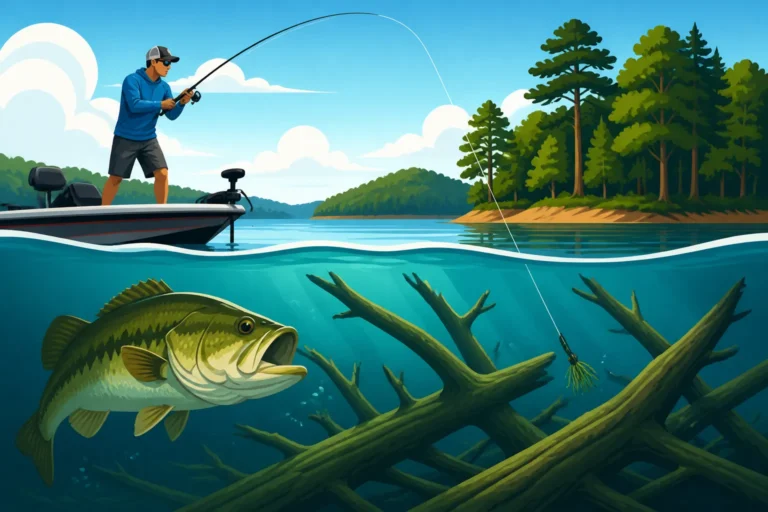
This is arguably the most precise and rewarding way to fish a jig, especially when targeting those trophy largemouth tucked away in hard-to-reach places. Flipping and pitching are short-range casting techniques that allow for silent, accurate presentations.
- Understanding the Difference:
- Flipping: You hold the lure in your hand, lower your rod tip, and use a pendulum motion to swing the jig forward underhand, releasing line from your off-hand. It's for very close-quarters combat, typically within 10-15 feet.
- Pitching: This involves holding the rod tip low, swinging the lure forward, and using a controlled thumb release on the spool to send the jig skipping or gently landing into targets a bit further away (15-40 feet).
- Step-by-Step Execution:
- Short, Accurate Casts: The goal is a quiet, controlled entry directly into the target zone. Whether it’s a tight spot under a dock, a tiny opening in lily pads, or the heart of a laydown, the jig should land with minimal splash.
- The Fall is Key: As soon as the jig hits the water, let it fall on a semi-slack line. Many, many bites occur on the initial fall, as the jig sinks with a natural, enticing action. Watch your line closely for any twitches, jumps, or sudden stops – these are often bites!
- Subtle Shakes and Lifts: Once the jig hits the bottom, give your rod tip a few subtle shakes to make the skirt and trailer pulsate. Then, gently lift your rod tip a few inches to hop the jig forward, letting it fall back to the bottom. Don't overdo it; less is often more.
- Repeat and Retrieve: Work the jig slowly and meticulously through the cover. Lift, shake, pause, repeat. After you've worked it through the prime strike zone, retrieve it quickly and make another accurate cast to the next promising piece of cover.
- Target Areas: Think "bass hiding spots." Docks, boat lifts, fallen trees (laydowns), brush piles, dense lily pad fields, cattails, and thick grass beds are all prime flipping and pitching targets. These are the places where bass ambush prey, and a jig perfectly imitates something scuttling into their lair. When fishing in places like Lake Wateree, look for submerged timber and old stumps where bass love to hide.
Dragging and Hopping Football Jigs on Open Bottom
When bass are holding deeper or relating to offshore structure, football jigs shine. This technique is about maintaining bottom contact and meticulously covering contours.
- The Technique:
- Long Casts: Cast your football jig out a good distance, allowing it to sink all the way to the bottom.
- Slow Drag: Once it's down, slowly drag the jig along the bottom using your rod tip. You'll feel it ticking off rocks, crawling over gravel, and bumping into submerged objects. Maintain a slow, steady retrieve with your reel to take up slack.
- Subtle Hops: Every few feet, give your rod tip a gentle hop to lift the jig a foot or two off the bottom before letting it fall back down. This mimics a crawfish fleeing or foraging.
- The Pause: Don't underestimate the power of a pause. Often, a bass will strike when the jig is sitting still on the bottom or slowly sinking after a hop.
- Target Areas: This technique is deadly on deep points, underwater humps, rock piles, shell beds, and offshore ledges. These are common features on larger reservoirs like the Santee Cooper Lakes or Lake Greenwood. The football head's design prevents it from getting hung up as easily in rocky terrain, making it perfect for feeling out the bottom composition.
- Emphasis on Contact: The key here is feeling everything. Your rod, reel, and line need to work together to transmit every bump and grind from the bottom. This allows you to discern a subtle bite from a rock, and it also helps you understand the underwater topography.
Swimming Jigs Through Grass and Shallow Cover
Swim jigs offer a different presentation, mimicking a baitfish or crawfish actively moving through the water column, rather than just on the bottom.
- The Technique:
- Steady Retrieve with Twitches: Cast your swim jig (often with a paddle-tail or grub-style trailer) near grass lines, sparse lily pads, or even open water flats. Retrieve it steadily, much like a spinnerbait, but add occasional twitches or pauses with your rod tip.
- Varying Speed: Experiment with your retrieve speed. Sometimes a slow, steady retrieve is best, other times a faster, more erratic retrieve can trigger strikes. The goal is to make the jig look like a natural prey item actively swimming.
- Mimicking Prey: Think about what you're trying to imitate. A bass chasing a bluegill might be attracted to a quicker, more aggressive retrieve, while a crawfish scuttling through grass might warrant a slower, more deliberate motion.
- Target Areas: Grass flats, sparse lily pad fields, emergent vegetation, shallow points, and even around rip-rap are excellent places to throw a swim jig. If you're fishing the shallow backwaters of the Edisto River, a swim jig can be incredibly effective when bass are feeding on baitfish.
- Colors and Trailers: Brighter colors like white or chartreuse can work well, especially in stained water, but natural shad or bluegill patterns are also highly effective. Paddle-tail swimbaits or grub trailers add significant action to the jig, enhancing its "swimming" profile. You can find a vast array of these trailers on sites like Amazon, making it easy to experiment with different actions.
Reading the Water and Timing Your Jig Fishing
Successfully fishing a jig isn't just about mastering the retrieve; it's also about understanding when and where to apply these techniques based on the conditions. Bass behavior changes dramatically with the seasons and environmental factors in South Carolina.
Seasonal Considerations for Jig Fishing in South Carolina
The Palmetto State offers year-round fishing, but the best jig presentations will shift with the calendar. Understanding these patterns is key to maximizing your success. For more detailed information, check out our guide on South Carolina Bass Fishing Techniques by Season.
- Spring (Pre-spawn/Spawn): This is prime time for jig fishing!
- Pre-spawn: As water temperatures rise into the 50s and 60s, bass move to shallower, staging areas near spawning flats. They are hungry and aggressive, loading up on calories before the spawn. Flipping and pitching jigs into emergent cover like cattails, shallow brush, and boat docks is incredibly effective. Bass are often found around hard cover, looking for warmth and ambush points.
- Spawn: When water temperatures are consistently in the low to mid-60s, bass move onto beds. Flipping a jig directly onto a visible bed can provoke a strike from a territorial bass. Be mindful of ethical considerations during this period and practice catch-and-release, as these fish are crucial for future generations. Our guide on Largemouth Bass Spawn Timing in South Carolina Reservoirs offers deeper insights.
- Summer: As temperatures soar, bass often move deeper to find cooler, more oxygenated water.
- Deep Structure: This is when football jigs excel. Dragging and hopping them along deep points, humps, ledges, and offshore brush piles becomes the go-to technique. Look for bass relating to baitfish schools in these areas. You might find this strategy useful on a lake like Lake Murray, where Lake Murray Summer Striped Bass Techniques in South Carolina can also apply to deep-holding bass.
- Early Morning/Late Evening: During low light periods, bass may push shallower into grass lines or shady cover. Swim jigs can be effective when bass are cruising or actively chasing bait in these areas. Our article on How to Fish Deep Structure for Bass in Summer delves into finding these spots.
- Fall: As water temperatures cool, bass become very active, chasing baitfish in preparation for winter.
- Versatility: Fall offers a fantastic mix of shallow and deep jig fishing opportunities. Bass will often be found shallow around cover in the mornings and evenings, actively feeding. Flipping and pitching jigs remain strong, but football jigs on main lake points or creek channel bends can also be very productive as bass move into their wintering grounds. For more fall strategies, consult Best Bass Lures for Fall Fishing.
- Winter: This is often the toughest time to fish, but jigs can still produce if fished slowly and patiently.
- Deep and Slow: Bass move to their deepest haunts, often suspended or relating tightly to vertical cover like bluff walls, deep docks, or submerged timber in creek channels. A slow, subtle retrieve with a heavier football or casting jig is crucial. Less is more; let the jig sit, give it a tiny shake, and then pause for a long time. Bass are lethargic, so you need to put the bait right in front of them and give them plenty of time to react. If a cold front moves in, fish become even more sluggish, so review How to Catch Bass After a Cold Front for nuanced tactics.
Factors Affecting Jig Presentation
Beyond the seasons, several immediate environmental factors will influence how you should present your jig.
- Water Clarity:
- Clear Water: Opt for more natural colors like green pumpkin, brown, or light blue. A less obtrusive presentation, with minimal splash and slow movements, is usually best.
- Stained/Muddy Water: Darker colors like black/blue or even brighter colors like white (for swim jigs) create a more defined silhouette that bass can see. Adding a rattle to your jig can also help bass locate it in low visibility. If you're wondering Best Lures for Largemouth Bass in Muddy Water, jigs are definitely on that list!
- Wind: Wind can be a jig angler's enemy or ally.
- Maintaining Contact: On windy days, heavier jigs are essential to maintain good bottom contact and feel. The bow in your line from the wind can make subtle bites nearly impossible to detect with lighter jigs.
- Generating Current: Wind can create current, pushing baitfish into certain areas. Fishing the downwind side of points or banks can be productive, as bass will often stage there to ambush disoriented prey.
- Current: Rivers like the Congaree or stretches of the Savannah River on the border with Georgia present unique challenges.
- Weight Adjustment: In strong currents, you'll need heavier jigs to get down to the bottom and stay there.
- Natural Drift: Cast upstream and allow your jig to drift naturally with the current, maintaining just enough tension to feel for bites. This mimics a crawfish or baitfish being swept downstream.
- Bottom Composition: Knowing what lies beneath the surface helps you choose the right jig head and presentation.
- Rocks/Gravel: Football jigs are perfect for crawling over rocky bottoms. Their head shape minimizes snagging and creates a natural "clacking" sound.
- Mud/Silt: Lighter jigs might get buried in soft mud. An arkie or bullet head jig that can stand up on the bottom is ideal, or a swimming jig kept above the muck.
- Grass/Weeds: Flipping jigs with heavy weed guards are designed to slide through vegetation. Swim jigs are also excellent for covering large grass flats. On a lake like Lake Hartwell, understanding the nuances of how Lake Hartwell Spring and Fall Bass Fishing Patterns in South Carolina change with cover is crucial.
Common Mistakes and How to Avoid Them
Jig fishing is a nuanced technique, and even experienced anglers make mistakes. Recognizing and correcting these common pitfalls will dramatically improve your success rate and confidence.
Not Feeling the Bite
This is perhaps the biggest hurdle for new jig anglers. Jig bites are rarely a violent tug; they're often incredibly subtle, especially in cold water or when bass are lethargic.
- Subtle Signals: Instead of a hard strike, you might feel a soft "thump," a spongy or mushy sensation on the end of your line, or the feeling of your jig just getting "heavy." Sometimes, your line will simply jump or go slack unexpectedly. The most frustrating part is when you reel in and find a fish on, having felt absolutely nothing!
- The Importance of Line Watching: Your line is your best indicator. After casting, watch the point where your line enters the water. Any twitch, sudden movement to the side, or even just a slight straightening or slackening could indicate a bite. If you see anything unusual, set the hook!
- Rod Sensitivity is Key: This goes back to gear selection. A sensitive rod (fast action, good graphite construction) is paramount. It transmits those subtle vibrations directly to your hand. Holding the rod with your index finger extended onto the blank can further enhance this feel.
- Minimize Slack: While you need some slack for a natural fall, too much slack line will kill your sensitivity. Use your reel to take up just enough slack to maintain a connection, but not so much that you're pulling the jig unnaturally.
Setting the Hook Incorrectly
When you finally do feel that subtle thump, a proper hookset is crucial. Jigs have stout hooks and weed guards that require force to penetrate a bass's bony mouth.
- The "Sweep Set": Unlike a vertical, upward "jerk" hookset often used with topwaters or Texas rigs, jig fishing often calls for a powerful "sweep set."
- When you feel a bite, drop your rod tip slightly towards the lure to gather any slack.
- Then, in one fluid motion, sweep the rod hard and horizontally to the side (or slightly upward), pulling with your entire body, not just your arms.
- Continue to reel as you sweep, maintaining constant pressure.
- Why It Works: This sweeping motion applies maximum pressure for a longer duration, driving that thick hook through the weed guard and into the bass's jaw. A weak or vertical hookset often results in the jig just pulling out of the fish's mouth or getting hung up in the weed guard.
- Don't Hesitate: When in doubt, set the hook! It's better to set on a stump than to miss a trophy bass. The stout hooks on jigs are designed for this aggressive action.
Improper Trailer Selection or Placement
The trailer is an integral part of the jig's presentation. A poorly chosen or rigged trailer can diminish the jig's effectiveness.
- Rigging Straight: Always ensure your soft plastic trailer is rigged perfectly straight and flush against the jig head. If it's crooked, it will cause the jig to spin or move unnaturally, signaling to bass that something is off. Take an extra few seconds to make sure it's perfect before each cast.
- Matching Size and Action:
- Size: The trailer should generally complement the size of your jig. A tiny trailer on a massive jig head can look disproportionate, and vice-versa.
- Action: Consider the desired action. If you want a lot of flapping and kicking, go with a crawfish imitation with large claws or a paddle-tail grub. If you want a more subtle, gliding presentation, a simpler chunk or small creature bait might be better.
- Color Matching: While not always necessary, matching the trailer color to the jig skirt can create a more cohesive, natural look, especially in clear water. For example, a green pumpkin jig with a green pumpkin craw trailer is a classic combination.
- Experimentation: Bass can be finicky, and sometimes changing just the trailer can make all the difference. Keep a variety of colors, sizes, and styles on hand. Websites like Amazon offer an endless selection of soft plastic trailers, so you can easily stock up and find what works best for your local South Carolina waters and the current mood of the fish. Don't be afraid to try something new if your go-to isn't producing.
Mastering Your Jig: A Quick Reference Table
This table provides a concise overview of common jig types, their optimal applications, and suitable trailers to help you make informed choices on the water.
| Jig Type | Primary Application | Ideal Cover/Structure | Common Weights (oz) | Recommended Trailers | Key Action |
|---|---|---|---|---|---|
| Football Jig | Deep water, hard bottom, open water | Rocks, gravel, ledges, humps | 1/2, 3/4, 1 | Craws, chunks, small creature baits | Dragging, hopping, slow crawling |
| Flipping Jig | Heavy, dense cover, precise drops | Docks, laydowns, brush, lily pads | 3/8, 1/2, 3/4 | Craws, creature baits, larger chunks | Flipping, pitching, vertical drops |
| Arkie Jig | Versatile all-rounder, medium cover | Wood, sparse grass, varied bottom | 3/8, 1/2 | Craws, chunks, grubs | Dragging, hopping, stand-up presentation |
| Swim Jig | Moving through cover, mimicking baitfish | Grass lines, shallow flats, open water | 1/4, 3/8, 1/2 | Paddle-tail grubs, swimbaits, craws | Steady retrieve, jerking, "swimming" |
Disclaimer
Fishing conditions and regulations in South Carolina can change. Always consult the latest South Carolina Department of Natural Resources (SCDNR) regulations before heading out to ensure you are in compliance with all current laws and bag limits. This guide is for informational purposes only.