Spotted Bass Growth Rate and Average Size
Understanding the potential size and growth of a fish species you're targeting can dramatically change your fishing strategy, whether you're hoping for a personal best or just curious about what's lurking beneath the surface. For anglers in South Carolina, the spotted bass presents a unique challenge and reward, often leaving folks wondering how big these feisty fighters truly get and how their growth compares to their more famous cousins, the largemouth and smallmouth. This comprehensive guide will dive deep into the growth rates and average sizes of spotted bass found in our beautiful South Carolina waters, giving you the knowledge to better appreciate and pursue this distinct species.
Understanding the Spotted Bass: Not Just Another Bass
Before we talk about how big they get, it's really important to know what a spotted bass is and how it stands apart. Many anglers, especially those new to our state's diverse fisheries, might mistake a spotted bass for a largemouth or even a smallmouth, leading to confusion about typical sizes. The spotted bass, or Micropterus punctulatus, is a distinct species with its own characteristics and preferred habitats, and these factors directly influence its growth patterns.
Spotted bass are native to the Mississippi River basin and Gulf Coast states, but they've been introduced into many other areas, including parts of South Carolina. They thrive in clear, rocky reservoirs and rivers, often occupying depths that are a bit deeper than largemouth prefer, but not quite as cold or turbulent as prime smallmouth territory. Their scientific name, punctulatus, refers to the rows of spots along their lower side, which is a key identification marker. They also have a jaw that doesn't extend beyond the eye when closed, unlike a largemouth, and a rough patch of teeth on their tongue, which a largemouth typically lacks. For more on how to tell them apart, check out Spotted Bass vs Largemouth Bass: How to Tell Them Apart.
Their diet generally consists of smaller fish, crawfish, and insects. Because they often compete for food with largemouth in shared habitats, their growth can sometimes be influenced by the dominant species. However, their unique niche allows them to carve out a healthy existence and grow to respectable sizes in the right conditions. Recognizing the spotted bass for what it is—a distinct, aggressive, and often hard-fighting fish—is the first step in understanding its growth potential.
Factors Influencing Spotted Bass Growth in South Carolina
Just like any other fish species, the growth rate and ultimate size of a spotted bass aren't set in stone. They're heavily influenced by a combination of environmental factors and genetic predispositions. In South Carolina, where we have a range of habitats from large reservoirs to fast-flowing rivers, these factors can vary significantly from one body of water to another.
Water Body Productivity and Food Availability
Perhaps the most significant factor is the overall health and productivity of the water body. Lakes and rivers with an abundant supply of forage fish, like shad, sunfish, or even smaller crappie, will naturally produce larger, faster-growing spotted bass. When food is plentiful, bass don't have to expend as much energy hunting, allowing them to convert more of their intake into growth. Conversely, in waters where competition for food is high or the forage base is scarce, spotted bass might grow slower and not reach their maximum potential size. This is a common challenge in overpopulated systems where too many predators are chasing too few prey.
Water chemistry also plays a subtle but vital role. Lakes with good levels of dissolved oxygen, a healthy pH balance, and sufficient nutrient cycling tend to support a more robust food web, which ultimately benefits game fish like spotted bass. Stressors like pollution or extreme fluctuations in water levels can negatively impact the forage base and, by extension, the bass.
Water Temperature and Growing Season Length
South Carolina's climate, with its long, warm summers, generally provides an extended growing season for spotted bass. Unlike fish in colder northern climates that might have a shorter window for active feeding and growth, our spotted bass can feed and grow for a greater portion of the year. Warmer water temperatures increase a fish's metabolism, making them hungrier and more active, which is great for growth—up to a point. Extremely hot water, especially during prolonged droughts, can stress fish, reduce oxygen levels, and actually slow growth or even cause die-offs.
Conversely, mild winters mean spotted bass don't enter as deep a state of torpor as their northern counterparts. While their activity might slow, they can still forage on warmer days, contributing to year-round, albeit slower, growth. This extended period of potential growth is one reason why South Carolina can produce impressive specimens.
Population Density and Competition
Imagine a buffet where there are only a few people versus a buffet packed shoulder-to-shoulder. The fewer the diners, the more food there is for each individual. The same principle applies to fish populations. In a lake with a low density of spotted bass, each fish has a better chance of finding ample food and reaching a larger size. However, if a spotted bass population becomes over-dense, competition for food becomes fierce, leading to stunted growth for the majority of the fish. This is why sometimes you'll hear about a particular lake "producing a lot of fish, but none of them are very big."
Competition isn't just within their own species. In South Carolina, spotted bass often share habitats with largemouth bass. While they tend to occupy slightly different niches (spotted bass often preferring deeper, rockier structures), there is still overlap. If largemouth are exceptionally dominant and numerous, they can outcompete spotted bass for food resources, potentially limiting the spotted bass's growth.
Genetics and Age
Just like people, some fish are simply genetically predisposed to grow larger and faster than others. This inherent potential is passed down through generations. Fisheries biologists often study the genetics of fish populations to understand this better. Older fish also naturally tend to be larger, assuming they've survived predators and harsh conditions. A spotted bass that has managed to avoid anglers, birds of prey, and other threats for several years will have had more time to pack on the pounds and length.
However, there's a point of diminishing returns. After reaching a certain age, a fish's growth rate typically slows considerably. They might still add some weight and length, but not at the rapid pace of their younger years. The trick is to find those fish that have had the genetic potential and the time to reach their maximum size in an environment that supports it.
Average Size and Growth Rates of South Carolina Spotted Bass
Now for the information you've been waiting for! While it's impossible to give exact figures for every single spotted bass in South Carolina, we can talk about averages and typical maximums based on the conditions we've just discussed. Generally, spotted bass are considered smaller than largemouth bass but often larger than smallmouth bass found in their native ranges.
In South Carolina, a common spotted bass will often fall into the 1 to 3-pound range. A fish around 12-15 inches is quite typical, and these are still feisty fighters on appropriate tackle. However, don't let that fool you into thinking they don't get bigger! A 3 to 5-pound spotted bass is considered an excellent catch, and anything above 5 pounds is truly trophy-worthy in our state. The state record for spotted bass in South Carolina often hovers around the 6-pound mark, which, while not a world record, is a testament to the healthy populations we have in certain lakes.
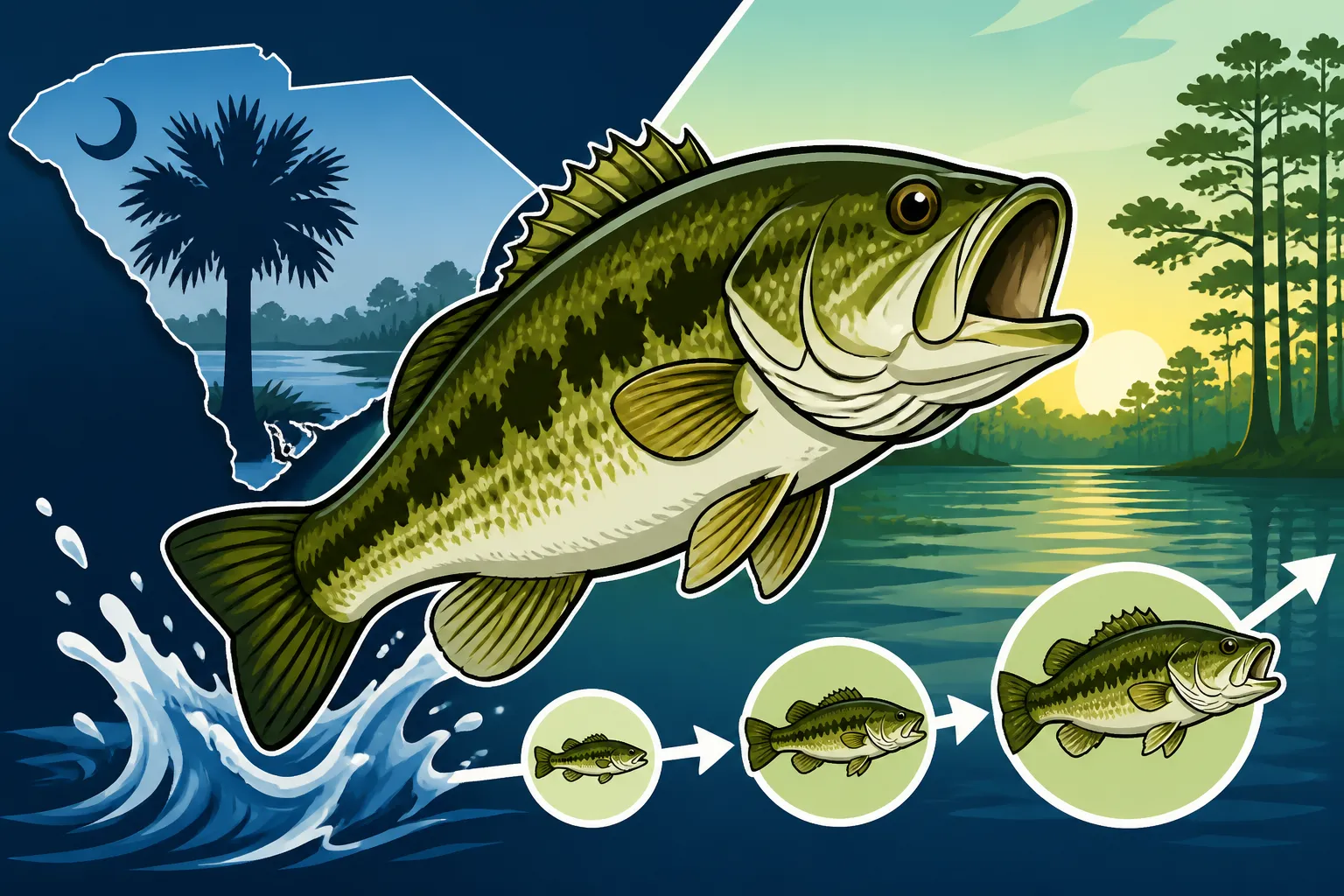
The growth rate of a spotted bass is relatively consistent for the first few years. In a healthy South Carolina lake, a spotted bass can reach keeper size (often around 12 inches, though regulations vary by body of water) within 2-3 years. After that, their growth slows down, but they'll continue to add weight and length, albeit at a decreasing rate. For instance, a 1-year-old might be 6-8 inches, a 2-year-old 10-12 inches, and a 3-year-old 13-15 inches. Beyond that, adding another inch or a pound can take much longer.
Here's a generalized table illustrating typical spotted bass growth in good conditions in South Carolina. Keep in mind these are averages and can vary widely:
| Age (Years) | Average Length (Inches) | Average Weight (Pounds) | Notes |
|---|---|---|---|
| 1 | 6-8 | 0.25 – 0.5 | Fast initial growth, primarily focused on survival. |
| 2 | 10-12 | 0.75 – 1.5 | Often reaches "keeper" size; strong fighters. |
| 3 | 13-15 | 1.5 – 2.5 | Mature size, reproducing. |
| 4 | 15-17 | 2.5 – 3.5 | Excellent fighting fish, starting to become a "good" catch. |
| 5+ | 17-20+ | 3.5 – 6+ | Trophy potential; growth slows significantly, relies on ample forage and good genetics. |
Lakes like Lake Jocassee, Lake Hartwell, and Lake Keowee are often mentioned when discussing South Carolina's best spotted bass fisheries. These clear, deep, and often rocky reservoirs provide ideal habitat, excellent forage, and cooler, well-oxygenated water that spotted bass thrive in. You can find more information about these fishing spots in Lake Hartwell Fishing Spots on the South Carolina-Georgia Border and Lake Keowee Fishing Spots and Boat Ramps.
Tips for Targeting Larger Spotted Bass
If you're aiming to catch those bigger, older spotted bass in South Carolina, you'll need to adjust your approach slightly. These fish are often smarter, more wary, and hold to specific types of structure. It's less about luck and more about understanding their habits and preferred environments.
Focus on Deeper, Clearer Water with Rocky Structure
Spotted bass are absolute fans of structure, especially rocky points, humps, ledges, and submerged timber. Unlike largemouth that often relate to shallower cover like grass beds, spotted bass will frequently suspend over deep water or hug hard bottom in 20-60 feet of water. Your boat's electronics, such as a good fishfinder, become indispensable here. Look for baitfish schools and arcs indicating larger fish holding close to these underwater features.
In South Carolina, many of our piedmont reservoirs, especially in the Upstate, offer this kind of habitat. Think about the deep clear waters of Lake Jocassee or the main lake points and ledges on Lake Hartwell. These areas typically have the cooler, well-oxygenated water that bigger spots prefer, especially during the warmer months.
Choose the Right Baits and Techniques
Larger spotted bass tend to be opportunistic but can also be quite picky. They often respond well to baits that mimic their natural forage like shad or crawfish.
- Jigs: Football jigs or stand-up jigs fished slowly along the bottom are deadly for spotted bass holding tight to rocky structure. Tip them with a craw or creature bait trailer. The subtle action is often irresistible.
- Drop Shots: When bass are suspended or just off the bottom in deep water, a drop shot rig can be incredibly effective. Small, realistic finesse worms or minnow imitations are key. It allows you to present your bait right in their strike zone for extended periods.
- Swimbaits: Both hard-bodied and soft plastic swimbaits, especially those designed to mimic shad, can entice larger spots that are hunting larger prey. Retrieve them steadily or with a slight pause-and-go action.
- Deep-Diving Crankbaits: These are excellent for covering water along deep ledges and points. Match the crankbait's dive depth to the depth where you're marking fish.
- Spoons: Jigging spoons can be highly effective when spotted bass are schooled up on deep humps or channel swings. Vertical jigging them directly below the boat can trigger aggressive strikes.
For more detailed information on lure selection, consider researching Best Lures for Spotted Bass in Rocky Lakes. Many resources, including books and guides available on Amazon, delve into the nuances of these techniques. A good fishing app can also provide depth contours and structure information to help you identify prime spots.
Consider Time of Day and Season
While spotted bass can be caught throughout the day, early mornings and late evenings often provide the best opportunities, especially for larger fish. During these low-light periods, bigger bass might move slightly shallower to feed or become more active in their deeper haunts. Overcast days can also extend this feeding window.
Seasonally, spring and fall are prime times. In spring, as water temperatures rise, spotted bass move towards spawning areas, often shallower rocky banks and points. This is when they are most accessible and aggressive. Fall sees them schooling up and feeding heavily in preparation for winter, often chasing baitfish in deeper water. Even in winter, they can be caught deep, especially during warmer spells. South Carolina Bass Fishing Techniques by Season offers a broader look at seasonal patterns.
Patiently Work the Structure
Spotted bass aren't always in a chasing mood. Often, you'll need to patiently work your bait through a specific piece of structure. Make multiple casts from different angles, varying your retrieve speed and bait choice. Sometimes it takes just the right presentation to trigger a strike from a cautious, larger fish. Don't be afraid to slow down, especially when using bottom-contact baits like jigs or Carolina rigs. The goal is to make your offering look like an easy, irresistible meal.
For serious anglers looking to up their game, investing in quality gear, perhaps even through a reputable retailer like Amazon, that allows for sensitive detection of subtle bites is a game-changer. A fast-action rod with a sensitive tip is crucial for feeling those light takes, especially when fishing deep.
Disclaimer
This article is for general informational purposes only and does not constitute professional advice. Laws, prices and regulations vary by location and change over time. Consult a qualified professional for guidance on your specific situation.