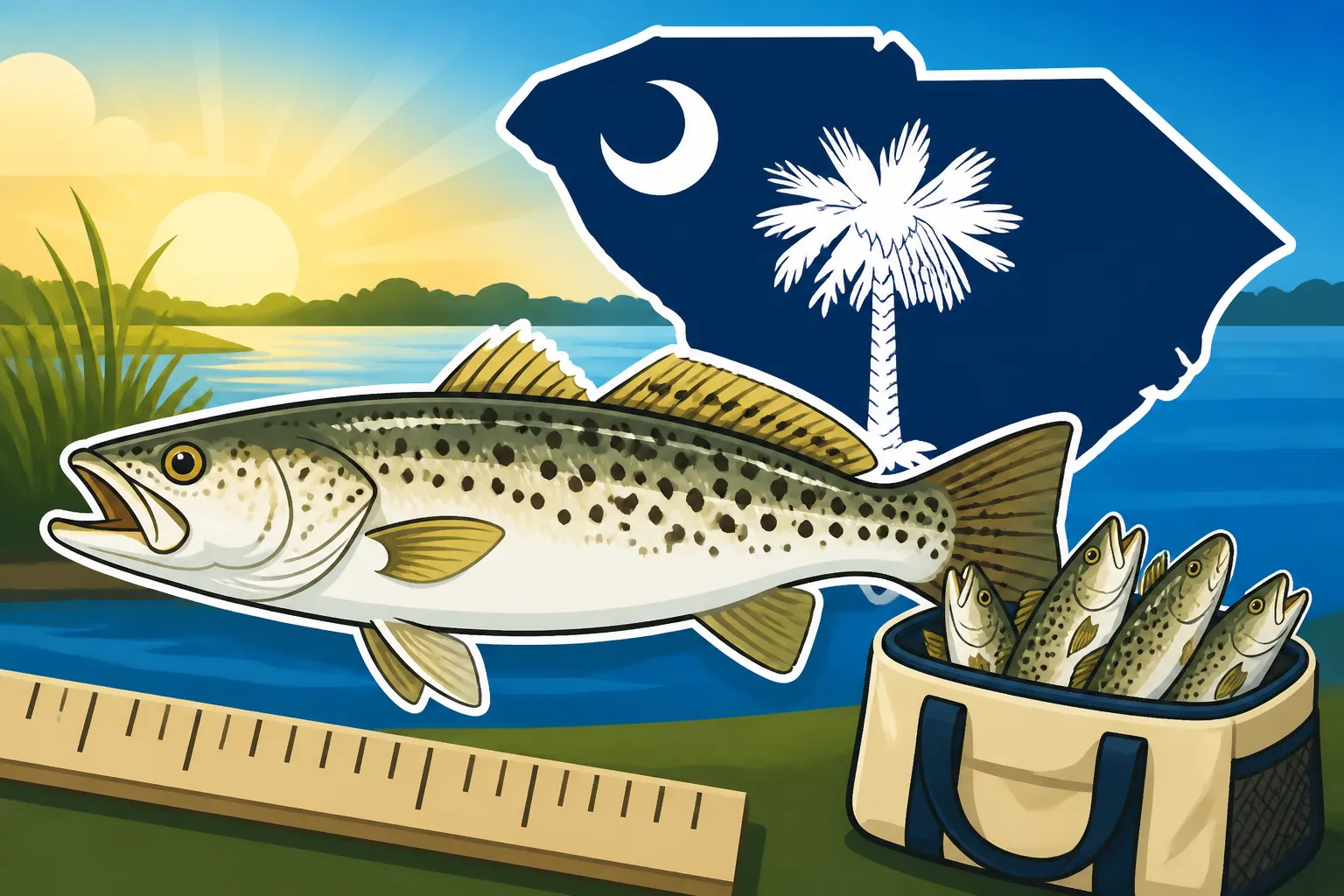
Spotted Seatrout Size and Bag Limits in South Carolina
Fishing in South Carolina's coastal waters for spotted seatrout can be incredibly rewarding, but nothing sours a great day on the water faster than realizing you've accidentally violated a regulation. The rules surrounding size and bag limits for these popular fish are crucial for conservation and ensuring future generations can enjoy the same fantastic fishery. This comprehensive guide will break down everything you need to know about spotted seatrout limits in the Palmetto State, helping you fish responsibly and avoid common pitfalls.
Understanding South Carolina's Spotted Seatrout Fishery
Spotted seatrout, often affectionately called "specks" by local anglers, are one of the most sought-after inshore species along the South Carolina coast. Their aggressive strikes, beautiful coloration, and delicious table fare make them a prime target for both recreational anglers and seasoned pros. However, this popularity means they are also susceptible to overfishing if not managed properly. The South Carolina Department of Natural Resources (SCDNR) implements strict regulations to maintain healthy populations, ensuring that these vibrant fish continue to thrive in our estuaries and nearshore waters.
Why Spotted Seatrout Regulations Are Essential
The very nature of spotted seatrout makes them vulnerable. They typically inhabit estuaries, coastal rivers, and shallow flats, areas that are easily accessible to anglers. Unlike some offshore species that have vast oceanic ranges, specks often congregate in specific areas, making them relatively easy to locate and catch. Without proper management, such as the size and bag limits we'll discuss, these populations could be quickly depleted, leading to a decline in fishing quality and ecological imbalance.
Think about it: if every angler kept every single seatrout they caught, regardless of size, the smaller, immature fish wouldn't have a chance to reproduce, and the larger, more prolific breeders would quickly disappear. This kind of unsustainable harvesting devastates fish stocks, impacting not just the fish themselves, but also the delicate ecosystem they are a part of. The regulations aren't there to make your life harder; they're there to protect a valuable natural resource for everyone, now and in the future. It's a critical component of responsible angling and stewardship.
Identifying Spotted Seatrout and Key Characteristics
Before you even think about limits, it's essential to be able to correctly identify a spotted seatrout. While they share the "trout" name, they are not true trout (like the freshwater rainbow or brook trout), but rather members of the drum family. They are easily recognized by their elongated bodies, silvery-gray coloration on their backs fading to white on their bellies, and distinct dark spots scattered across their back and fins. A key identifier is the presence of two prominent canine teeth in their upper jaw.
Knowing how to differentiate them from other species, like weakfish or redfish, is vital, as different species have different regulations. For instance, sometimes anglers confuse them with weakfish, which have similar body shapes but generally lack the prominent spots and canine teeth of a true spotted seatrout. Understanding these subtle differences is part of becoming a knowledgeable angler and ensures you're applying the correct rules to your catch. If you're ever unsure, a quick reference guide or even a quick search on your phone can help clarify any doubts. For more on identification, check out our guide on Spotted Seatrout vs Other Trout Species: How to Tell Them Apart.
Navigating Spotted Seatrout Size Limits in South Carolina
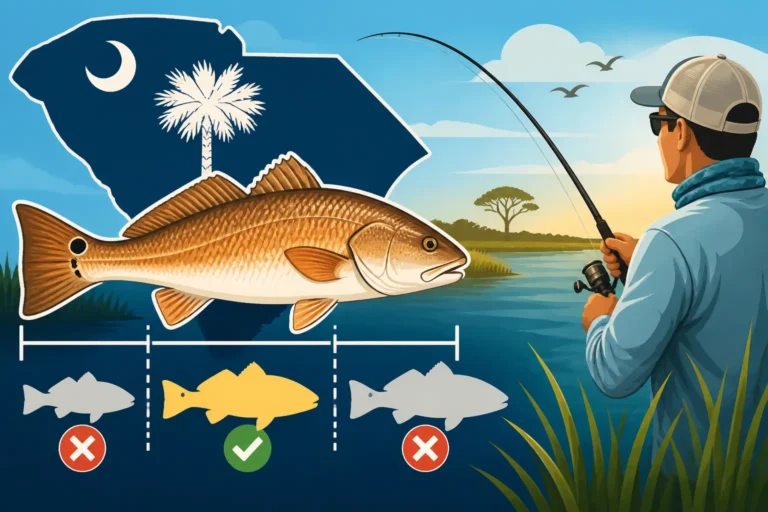
One of the most fundamental regulations for spotted seatrout in South Carolina is the minimum size limit. This rule is designed to protect juvenile fish, allowing them to grow to maturity and spawn at least once before being harvested. This ensures that they contribute to the next generation of seatrout, maintaining a healthy population cycle.
The Minimum Size Requirement Explained
Currently, in South Carolina, the minimum size limit for spotted seatrout is 14 inches total length. This means any spotted seatrout you catch must measure at least 14 inches from the tip of its snout to the end of its tail (with the tail compressed) to be legally kept. If a fish doesn't meet this minimum, it must be immediately released back into the water, unharmed.
It's not just a suggestion; it's the law. Imagine you're out fishing in a lowcountry marsh creek and you pull in a beautiful speck, only to find it's just shy of the 14-inch mark. As tempting as it might be to keep it, especially if it's your only bite, releasing that fish is crucial. That small difference in length can mean the fish gets to spawn multiple times, contributing significantly to the overall health of the fishery. Always have a reliable measuring device with you, like a sturdy tape measure or a pre-marked cooler lid. You can find excellent, waterproof measuring tapes on Amazon that can be a lifesaver for quickly and accurately assessing your catch. This aligns with the specific rule of South Carolina Spotted Seatrout Minimum Size 14 Inches.
Proper Measuring Techniques to Avoid Violations
Getting an accurate measurement is critical. The SCDNR defines "total length" as the distance from the tip of the snout to the extreme end of the tail, with the fish laid flat on its side and the tail compressed. Here's a quick breakdown of how to do it right:
- Lay the Fish Flat: Place the fish on a flat surface, such as a measuring board or cooler, on its side.
- Snout at Zero: Position the tip of the fish's snout firmly against the zero mark of your measuring device.
- Compress the Tail: Gently squeeze or compress the tail fin so that the lobes are as close together as possible, extending it fully to get the maximum length.
- Read the Measurement: Read the measurement at the very end of the compressed tail.
It's a common mistake to measure without compressing the tail, which can lead to an inaccurate, shorter reading. If you measure it wrong and it turns out to be undersized, you could be facing a penalty for fishing without proper adherence to regulations. Always err on the side of caution. If it's borderline, let it go. It’s better to release an extra fish than to risk a citation.
Understanding Daily Bag Limits for Spotted Seatrout
Beyond size, there's also a strict limit on the number of spotted seatrout you can harvest per day. This "bag limit" is another vital component of sustainable fishery management, preventing individual anglers from taking too many fish and depleting local populations.
The Individual Daily Bag Limit
In South Carolina, the daily bag limit for spotted seatrout is 10 fish per person. This means that, as an individual angler, you are legally permitted to keep no more than 10 spotted seatrout within a 24-hour period. This limit applies whether you're fishing alone, with family, or on a guided trip.
This limit is generous enough for most recreational anglers to have a successful and enjoyable day, while still ensuring that a large number of fish aren't removed from the population by a single person. Imagine a scenario where you're having an incredible day, catching fish after fish. It's easy to lose track, especially when the bite is hot. That's why keeping a mental (or even written) tally of your keepers is so important. Once you hit that 10-fish mark, it’s time to switch to catch-and-release, target another species, or simply call it a day on the seatrout. Our detailed guide on South Carolina Spotted Seatrout Daily Bag Limit of 10 Fish provides more in-depth examples.
Special Considerations for Group Fishing and Charters
When you're fishing with a group, particularly on a charter, the bag limit structure can sometimes cause confusion. While the limit is 10 fish per person, there are often overarching vessel limits or shared responsibilities.
For example, on a charter boat with four anglers, theoretically, the group could possess up to 40 spotted seatrout (10 fish x 4 people). However, it's crucial to defer to your captain or guide, who is often an expert in these regulations and will ensure the group stays within all legal parameters. Reputable guides, like those found through South Carolina Fishing Charters: The Complete Guide, are meticulously aware of all rules and will guide you in compliance. They'll also typically handle the measuring and counting, ensuring no one accidentally goes over the limit for the vessel. Always clarify the specifics of bag limits with your guide before the trip starts, especially if you plan on keeping your catch. The goal is a fun day, not a fine.
Seasonal Restrictions and the Winter Gigging Ban
Regulations aren't always static; they can change based on the time of year or specific conservation needs. For spotted seatrout, a significant seasonal restriction to be aware of in South Carolina is the winter gigging ban.
The Spotted Seatrout Gigging Ban Explained
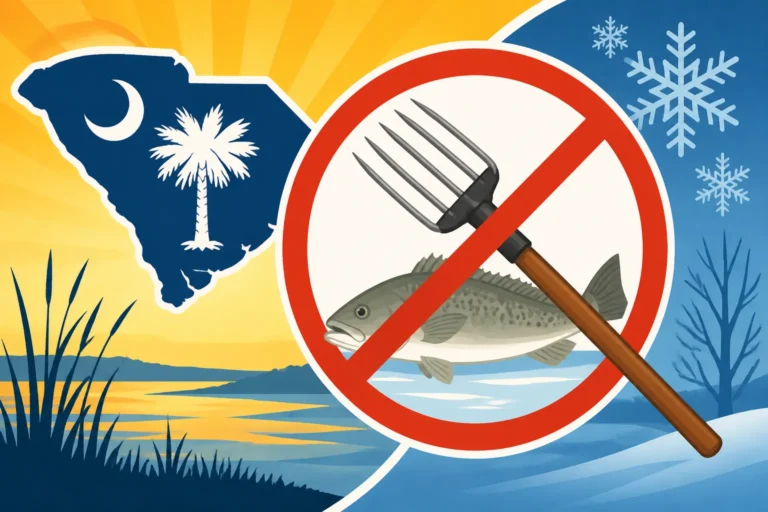
One critical regulation specifically designed to protect spotted seatrout during their vulnerable cooler months is the seasonal gigging ban. In South Carolina, gigging for spotted seatrout is prohibited from December 1st through the last day of February each year. This means that during these winter months, you cannot use a gig (a spear-like instrument) to harvest spotted seatrout.
This ban is in place for a very important reason. During colder water temperatures, spotted seatrout tend to congregate in shallow, protected creeks and estuaries. They become lethargic and less active, making them extremely susceptible to gigging, a method that involves visually locating and spearing fish. Without this ban, gigging could easily decimate winter aggregations of seatrout, severely impacting the breeding stock. While you can still catch them with a rod and reel during this period, the ban ensures that they have a refuge from a highly efficient and potentially over-harvesting method when they are most vulnerable. For a deeper dive into this, read our article on South Carolina's Winter Gigging Ban for Seatrout.
Why Gigging is Restricted While Rod-and-Reel Fishing is Not
It might seem contradictory that gigging is banned while rod-and-reel fishing is still permitted during the same period. The key difference lies in the efficiency and selectivity of the methods. Rod-and-reel fishing, especially when fish are lethargic in cold water, is generally less efficient at harvesting large numbers of fish rapidly. Anglers using traditional hook-and-line methods have to entice the fish to bite, and fish in cold water are often less inclined to feed actively. This offers them a natural level of protection.
Furthermore, with rod-and-reel fishing, there's often an opportunity for catch-and-release, particularly if an undersized fish is caught. Gigging, by its very nature, is a take-only method, with little to no chance for a caught fish to survive if it's found to be undersized. The ban is a strategic conservation measure, specifically targeting the most impactful harvesting method during the most vulnerable time for the species. To learn more about this nuance, check out Why Gigging Gets Banned but Rod-and-Reel Fishing Doesn't. This specific regulation highlights the SCDNR's adaptive approach to managing fisheries, adjusting rules to reflect species behavior and environmental conditions.
The Importance of Accurate Information and Compliance
Regulations for fishing are not arbitrary; they are the result of scientific research, population assessments, and ongoing monitoring by wildlife agencies. Staying informed and compliant is not just about avoiding fines; it's about being a responsible angler and contributing to the longevity of South Carolina's incredible spotted seatrout fishery.
Consequences of Non-Compliance
Ignoring or unknowingly violating fishing regulations can lead to serious consequences. In South Carolina, fishing without a valid license or failing to adhere to size and bag limits can result in significant penalties, including hefty fines, confiscation of fishing gear, and even the loss of fishing privileges. These are not minor slaps on the wrist; they are designed to deter illegal activity and protect the resource.
For example, if you're caught with undersized spotted seatrout or over the daily bag limit, an SCDNR officer can issue a citation that may cost you hundreds of dollars. Beyond the financial impact, there's the ethical consideration: intentionally disregarding limits contributes directly to the decline of fish populations, hurting everyone who enjoys the sport. Our article on Penalty for Fishing Without a License in South Carolina details the broader implications of violating fishing laws, but rest assured, these apply to limits too. Knowing the ins and outs of Saltwater Fishing Rules in South Carolina is paramount.
Staying Updated with SCDNR Regulations
Fish populations and environmental conditions can change, and so too can regulations. What was legal last year might not be legal today. The South Carolina Department of Natural Resources (SCDNR) is the primary authority for setting and enforcing these rules. They regularly publish updated information on their website and through various publications.
It is every angler's responsibility to check the latest regulations before heading out. A quick visit to the SCDNR website or picking up a current copy of their regulations handbook (often available at tackle shops or Wal-Mart) is a simple step that can save you a lot of trouble. You can even download apps that provide real-time updates. Don't rely solely on what you heard from a friend or an old fishing buddy; verify the information yourself. Staying informed ensures you're always fishing within the law and contributing positively to the conservation efforts that keep our fisheries healthy. This is especially true for rules like Current Redfish Regulations for Coastal Waters, which are also subject to change.
Practical Tips for Responsible Spotted Seatrout Fishing
Beyond just knowing the rules, there are practical steps you can take to be a more responsible angler, especially when targeting spotted seatrout. These practices not only help conserve the species but can also enhance your overall fishing experience.
Handling and Releasing Undersized Fish
Even with the best intentions, you're bound to catch undersized spotted seatrout. How you handle these fish is crucial to their survival. Improper handling can cause stress, injury, or even death, undermining the purpose of the size limits.
When you catch a short fish, try to handle it as little as possible. Use wet hands to minimize the removal of the fish's protective slime coat. If possible, dehook the fish while it's still in the water, avoiding bringing it into the boat or onto the bank entirely. If you must bring it aboard, support its full body weight horizontally, especially if it's a larger fish, to avoid damaging its internal organs or spine. Use needle-nose pliers or a dehooking tool to quickly remove the hook. Avoid using a rag or gripping the fish tightly, as this can cause more harm. A quick, gentle release back into the water gives the fish the best chance of survival to grow and spawn another day.
Gear Choices for Conservation-Minded Anglers
Your choice of fishing gear can also play a role in conservation. Selecting appropriate hooks and tackle can minimize harm to fish, particularly those you intend to release.
Using circle hooks, especially when fishing with natural bait, significantly increases the chances of a hook-up in the corner of the fish's mouth, rather than deep in its throat. This makes dehooking much easier and less traumatic for the fish. Lures, while often swallowed, can also be removed effectively with good pliers. Choosing the right strength of line is also important; using excessively heavy line can overtire a fish, while too light a line can prolong the fight and stress the fish, especially larger ones. Always keep a pair of long-nosed pliers or a dehooker tool easily accessible. Many anglers keep a small, purpose-built tool kit, readily available for purchase on Amazon, right next to their tackle box for quick and efficient hook removal. Remember, knowing your gear, along with getting your South Carolina Fishing License Guide, makes for a complete angler.
Summary of Spotted Seatrout Regulations in South Carolina
To help you keep track, here’s a quick overview of the current spotted seatrout regulations in South Carolina. It’s always best to verify these directly with the SCDNR for the most up-to-date information, but this table serves as a handy reference for your next trip.
| Regulation Type | Current Limit (as of 2024) | Notes |
|---|---|---|
| Minimum Size | 14 inches (total length) | Measure from tip of snout to end of compressed tail. |
| Daily Bag Limit | 10 fish per person | Applies to individual anglers. |
| Vessel Limit | N/A (Based on per-person) | Check with charter captains for group possession limits. |
| Gigging Season | Closed Dec 1 – Feb 28/29 | Prohibited during winter months for conservation. |
| Open Season | March 1 – November 30 | Rod-and-reel fishing is generally open year-round, but gigging has specific closures. |
This table provides a snapshot of the critical rules, but remember that understanding the "why" behind them, as detailed in this guide, makes you a more informed and responsible angler. Knowing when Does South Carolina's Seatrout Gigging Ban End? can help you plan your winter fishing trips effectively. For those interested in the culinary side, you might also be wondering Is Spotted Seatrout Good to Eat?
Final Thoughts on Preserving South Carolina's Spotted Seatrout
South Carolina's coastal waters are a true treasure, offering incredible opportunities to target species like the spotted seatrout. These fish are a cornerstone of our inshore fishery, providing countless hours of enjoyment and delicious meals. However, the health and abundance of these populations depend entirely on how we, as anglers, treat them.
By adhering to the established size and bag limits, understanding seasonal restrictions, and practicing responsible fish handling, we all play a vital role in conservation. It's about respecting the resource and ensuring that these beautiful, spot-laden fish continue to thrive for generations to come. So, grab your gear, check the regulations, and head out to enjoy the fantastic spotted seatrout fishing that the Palmetto State has to offer! Don't forget your measuring tape, perhaps one you picked up from Amazon, and a good set of pliers.
Disclaimer
Please be aware that fishing regulations are subject to change. While every effort has been made to provide accurate and up-to-date information in this guide, it is ultimately the angler's responsibility to verify current regulations with the South Carolina Department of Natural Resources (SCDNR) before engaging in any fishing activity. This content is for informational purposes only and should not be considered legal advice.