Flounder vs Sole: What South Carolina Anglers Should Know
Oh, the age-old question that has stumped many a keen angler casting a line into South Carolina's beautiful waters: "Is this a flounder or a sole?" It's a truly common point of confusion, especially when you're excitedly reeling in a flatfish and trying to quickly determine if it's a keeper, if it's legal, or even what species it actually is. It's easy to lump all flat, bottom-dwelling fish into one category, but knowing the subtle differences between flounder and sole can make all the difference, not just for your dinner plate, but for adhering to regulations and understanding the incredible biodiversity of our coastal ecosystems. This guide is here to untangle that mystery, giving you the real scoop on how to tell these fascinating fish apart in the Palmetto State.
Understanding the Flatfish Family in South Carolina
South Carolina's coastal waters are teeming with life, and among the most distinctive inhabitants are the flatfish. These incredible creatures, with their compressed bodies and eyes migrated to one side of their head, are perfectly adapted for life on the seafloor. But while they might all look similar at first glance, there's a world of difference hiding beneath their sandy camouflage. Getting a grasp on the broader flatfish family helps lay the groundwork for understanding the specifics of flounder and sole.
The General Confusion: Flounder, Sole, and Their Relatives
The terms "flounder" and "sole" are often used interchangeably, and honestly, who can blame anyone? They both lie flat, have eyes on one side, and are masters of blending into the sandy or muddy bottom. However, from a biological standpoint, and critically, from a South Carolina fishing regulation standpoint, they represent distinct groups of fish. Many anglers might simply call any flatfish a "flounder," but this generalization can lead to misidentification, which can be problematic when you're trying to abide by specific size and bag limits. The flatfish order, Pleuronectiformes, is vast and includes families like Pleuronectidae (righteye flounders), Bothidae (lefteye flounders), Paralichthyidae (large-tooth flounders), and Soleidae (true soles), among others. It’s a bit of a scientific mouthful, but the key takeaway is that these are separate lineages with unique characteristics, even if they share a similar lifestyle.
The confusion is compounded by common names. Sometimes, a fish that is technically a type of flounder might be colloquially called a "sole," or vice-versa, depending on local tradition or just general lack of precise knowledge. For instance, some folks might refer to a small flatfish as a "sand sole" when it's actually a juvenile flounder. This is why knowing the scientific distinctions and the specific characteristics of the species found here in South Carolina is so important. It helps us speak the same language as wildlife officials and other experienced anglers, ensuring we're all on the same page about what we're catching.
Why Identification Matters for Anglers
For the recreational angler in South Carolina, correctly identifying your catch isn't just about showing off your marine biology knowledge; it has tangible, important implications. First and foremost, regulations. Different species of fish, even within the broad "flatfish" category, can have vastly different size limits, bag limits, and even seasons. What might be a legal keeper for one type of flounder could be a protected species for another, or below the minimum size for a third. Ignorance of the law is never an excuse, and a simple mistake in identification could lead to a fine or even more serious penalties.
Beyond legalities, accurate identification plays a crucial role in conservation. When anglers correctly identify and report their catches (or releases), it provides valuable data to fisheries managers. This data helps scientists understand population health, monitor trends, and make informed decisions about future regulations, all aimed at ensuring sustainable fishing for generations to come. If everyone simply reports "flatfish," it's impossible to track the health of specific species like Southern Flounder, which are incredibly important to our ecosystem and economy. So, learning these distinctions is a real step towards being a responsible and impactful member of the South Carolina angling community.
Getting to Know South Carolina Flounder
When most people in South Carolina talk about "flounder fishing," they're typically referring to species within the Paralichthyidae family, commonly known as the large-tooth flounders. These are the flatfish that are highly sought after for their delicious fillets and thrilling fight. Our local waters are home to a few prominent species, and understanding their individual traits is key to a successful and compliant fishing trip.
Key Identification Features of Flounder
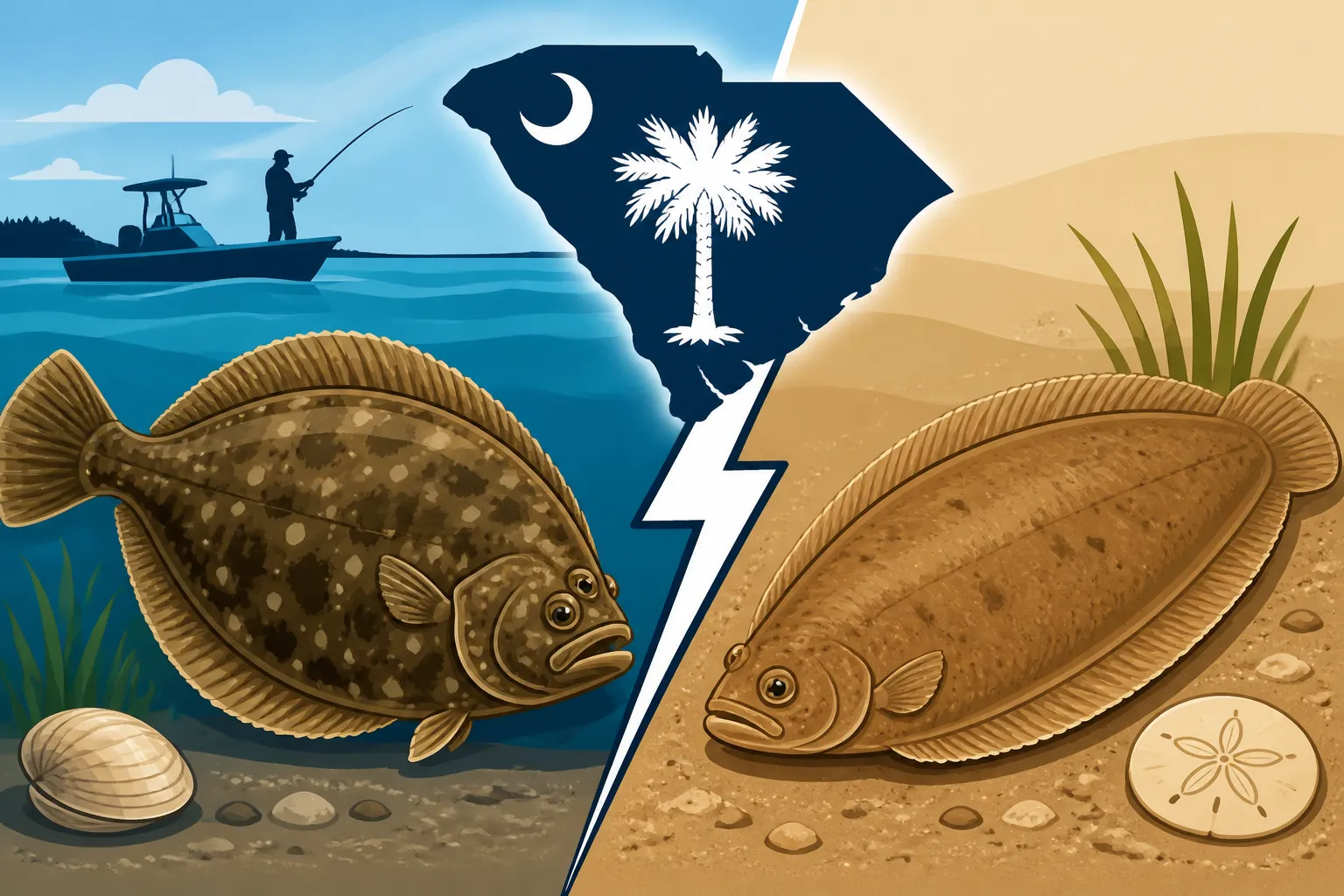
Flounder, particularly the species we target here in South Carolina, tend to share some distinct characteristics that help set them apart. One of the most critical identifiers is their "left-eyed" nature. This means that when you hold the fish with its belly towards you and its head pointing up, its eyes will typically be on the left side of its body. This is a primary differentiator from many true sole species, which are predominantly "right-eyed." We'll dive more into this "eye test" later, but it's a foundational piece of the puzzle.
Another common feature is their mouth. Flounder generally have a relatively large mouth with sharp, well-developed teeth, perfectly suited for ambushing smaller fish and crustaceans. This large mouth gives them their "large-tooth flounder" moniker and is a good indication of their predatory nature. Their body shape is usually broader and more rounded than many sole species, giving them that classic "pancake" look. The lateral line, which runs along the side of the fish, is often distinct and can have a noticeable arch over the pectoral fin. Pay close attention to these details when you pull one out of the water!
Common Flounder Species in South Carolina
South Carolina is primarily known for two main species of flounder that anglers regularly target: the Summer Flounder (also known as fluke in some regions) and the Southern Flounder. While they share many similarities, there are subtle differences to tell them apart, especially important for accurate reporting and appreciation of our local fish.
The Southern Flounder (Paralichthys lethostigma) is perhaps the most iconic flounder species here. They are known for their drab, mottled brown to olive coloration, allowing them to blend seamlessly with sandy or muddy bottoms. They lack the distinct spots often found on their northern cousins. Southern Flounder can grow to impressive sizes, making them a prize catch. They are frequently found in inshore waters, estuaries, and around inlets, often ambushing baitfish. You'll find these guys tucked into oyster beds or along creek banks waiting for an unsuspecting meal to swim by.
The Summer Flounder (Paralichthys dentatus) is also present, though perhaps more common further north. These flounders are identifiable by their more distinct spotting patterns, often featuring 5-14 ocellated (eye-like) spots arranged in a row or scattered across their body. Their coloration can vary greatly depending on their habitat, allowing them to perfectly match their surroundings. Summer Flounder are also left-eyed and possess the characteristic large mouth. They tend to prefer slightly cooler waters than Southern Flounder, often found closer to the inlets and nearshore ocean environments.
Understanding these specific species is crucial because South Carolina Flounder Fishing Regulations Explained often specify rules based on species, size, and bag limits. Always check the current regulations before you head out!
Habitat, Diet, and Fishing Tips for Flounder
Flounder are ambush predators, perfectly designed to lie in wait, camouflaged against the bottom. They prefer soft, sandy, or muddy bottoms, often near structure like oyster beds, docks, jetties, and creek mouths. In South Carolina, you'll find them in tidal creeks, sounds, and around our barrier islands. They love areas where baitfish congregate and where the current brings food right to them. This is why spots with good current flow and changes in bottom contour are often prime Best Flounder Fishing Spots Along the South Carolina Coast.
Their diet consists primarily of small fish like mullet, menhaden, and minnows, as well as shrimp and other crustaceans. They're opportunistic feeders, and anything that swims or crawls by their camouflaged position is fair game. This aggressive feeding behavior makes them a fun target for anglers.
When it comes to fishing for flounder, artificial lures like scented soft plastics fished on a jig head can be incredibly effective. A popular technique involves slow-drifting these baits along the bottom. However, live bait is often king. Small live mud minnows, finger mullet, or shrimp fished on a Carolina rig are irresistible to a hungry flounder. The key is to keep your bait near the bottom and present it naturally. Many anglers will tell you that a slow drag or twitching motion is far more productive than rapid retrieves. And remember, when you feel that characteristic "thump," let the flounder take the bait for a few seconds before setting the hook – they need time to get that meal fully in their mouth! If you're looking for gear, a good medium-light spinning rod and reel combo with braided line, available on platforms like Amazon, is ideal for feeling those subtle bites. You can also find a variety of jig heads and soft plastics there to experiment with your technique.
Exploring Sole and Pleuronectidae in South Carolina
Now, let's talk about sole. While "sole" is a common culinary term for any flatfish, the true biological "sole" species are a bit different from what most South Carolina anglers are primarily targeting when they go "flounder fishing." The distinction is important, not just for accuracy, but also for understanding the full scope of our local marine life.
Defining "Sole" and Its Presence (or Absence) in SC
Biologically, "sole" typically refers to fish within the family Soleidae (true soles) or sometimes other families like Cynoglossidae (tonguefishes). These are distinct from the flounder families like Paralichthyidae (large-tooth flounders) and Bothidae (lefteye flounders). A key characteristic that often defines true soles is their "right-eyed" nature – meaning their eyes are on the right side of their head when viewed from the belly with the head up. They also tend to have smaller mouths compared to flounders, often with a more rounded or pointed snout, indicating a diet geared more towards small invertebrates from the substrate rather than larger fish.
Here's the interesting part for South Carolina anglers: while there are various flatfish species found off our coast, true "soles" in the Soleidae family are not as commonly targeted or encountered by recreational anglers in the same way flounder are. When you hear about "sole" in a restaurant or fish market, it often refers to European Dover Sole or Lemon Sole, which are not native to our waters. Sometimes, a small, drab flatfish might be colloquially called a "sole" or "hogchoker" here, but it's important to differentiate these from the commercially valuable flounder species that are the focus of our local recreational fishery. Many of these smaller, non-flounder flatfish are often too small to be of interest to most anglers, or are simply not regulated due to their lesser impact on the fishery.
Distinguishing Sole from True Flounder
Beyond the eye placement, there are other distinguishing features. As mentioned, the mouth is a big one. Flounder have those prominent teeth and a wider gape, built for capturing prey. True soles, on the other hand, typically have much smaller, almost inconspicuous mouths. This reflects their different feeding strategies. Soles are more likely to sift through sand and mud for worms, small crustaceans, and mollusks, rather than chasing down active baitfish.
The body shape can also be a clue. While both are flat, flounder tend to be more ovate or diamond-shaped, often with a more pronounced tail fin. Soles can sometimes be more elongated, almost tongue-shaped (hence "tonguefishes"), and their dorsal and anal fins often run nearly the entire length of their body, almost merging with a very small or absent caudal (tail) fin. This gives them a more continuous, ribbon-like appearance along their edges. The texture of their skin can also differ; some soles have a rougher, almost sandpaper-like feel, while flounder skin tends to be smoother. These subtle differences, while not always obvious at a quick glance, become clearer with practice.
Other "Flounder-like" Fish Anglers Might Encounter
While flounder are the stars of the show and true soles are less common in the recreational catch, South Carolina anglers might encounter other flatfish that could cause confusion. One such example is the Hogchoker (Trinectes maculatus). This is a small, round, highly camouflaged flatfish that is very common in estuaries, often found in both fresh and brackish water. It's technically a type of sole (American Sole family, Achiridae), but it's much smaller than typical flounder and rarely exceeds 6-8 inches. They are right-eyed and have a very rough texture. While not a target species, they often show up in shrimp trawls or as accidental catches on small hooks.
Another group that might occasionally be confused are the Tonguefishes (family Cynoglossidae). These are extremely elongated, asymmetrical flatfish with a pointed tail, giving them a "tongue-like" appearance. They are also typically right-eyed. Like the hogchoker, they are generally small and not commonly targeted by recreational anglers, but they are part of the incredible diversity of flatfish in our waters. Knowing that not every flatfish is a "flounder" or even a "sole" in the common sense helps appreciate the rich variety of marine life beneath the surface. South Carolina Fish Species: A Complete Guide to What's in the Water provides a broader look at all the incredible aquatic life you can encounter.
Practical Identification Tips for Anglers
Let's get down to the nitty-gritty of how you, as an angler, can quickly and confidently distinguish between flounder and the other flatfish you might encounter in South Carolina. It boils down to a few key visual cues that become second nature with a little practice.
The Eye Test: Left-Eyed vs. Right-Eyed
This is arguably the most consistent and reliable way to differentiate many flounder from soles and other flatfish. Remember the rule:
- Flounder (specifically the large-tooth flounders like Southern and Summer Flounder in SC) are almost always LEFT-EYED.
- True Soles (and most other non-flounder flatfish like Hogchokers) are almost always RIGHT-EYED.
How do you perform the eye test? It's simple:
- Hold the fish with its dark, eyed side up.
- Point the head away from you and the tail towards you.
- Observe which side the eyes are on.
If both eyes are on the left side of the fish's body, you're likely holding a flounder. If both eyes are on the right side, it's probably a sole or another right-eyed flatfish. There are always exceptions in nature, but for our common South Carolina species, this rule holds true the vast majority of the time. This visual trick, once you get the hang of it, is a game-changer for quick identification on the boat or shore.
Mouth and Lateral Line Clues
After the eye test, your next best bet is to examine the fish's mouth and its lateral line.
The Mouth:
- Flounder: Look for a relatively large mouth with sharp, prominent teeth. This indicates a predatory fish that actively hunts other fish and larger prey. If you gently open its mouth (carefully, those teeth can nip!), you'll see a formidable set of chompers.
- Sole/Hogchoker: These typically have a much smaller, almost dainty mouth, often crescent-shaped or slightly pointed, with very tiny, brush-like teeth or no obvious teeth at all. Their mouths are designed more for sifting through sand and mud to pick up small invertebrates.
The Lateral Line:
The lateral line is a sensory organ that runs along the side of the fish, detecting vibrations and pressure changes in the water.
- Flounder: The lateral line on flounder often has a distinct, high arch or curve over the pectoral fin (the fin just behind the gill plate). It's a noticeable feature that stands out against their body.
- Sole/Hogchoker: On many soles and related species, the lateral line is often straighter or less conspicuously arched, sometimes even difficult to see if the fish is small or its coloration is mottled.
These two clues, combined with the eye test, usually provide enough information for a solid identification.
Body Shape and Fin Characteristics
Finally, take a moment to observe the overall body shape and the fins. These can offer supporting evidence for your identification.
Body Shape:
- Flounder: Tend to be more oval or diamond-shaped, often broader relative to their length. They generally have a more defined, separate tail fin (caudal fin) that helps them propel themselves rapidly when striking prey.
- Sole/Hogchoker: Can vary, but often appear more elongated or tongue-shaped (especially tonguefishes) or more perfectly circular (like the hogchoker). Their dorsal (top) and anal (bottom) fins often extend for almost the entire length of their body, sometimes appearing to merge with a very small or even absent tail fin. This gives them a distinct, continuous-finned look.
Fin Characteristics:
While both groups have continuous dorsal and anal fins, the quality and prominence of the caudal fin can be a good indicator. Flounder use their powerful tail to dart and strike, while soles often rely more on subtle undulations of their body and dorsal/anal fins for movement, being less about speed and more about remaining hidden.
Putting all these clues together – eyes, mouth, lateral line, and overall shape – will empower you to confidently tell the difference. And if you're ever in doubt, a quick photo and a reliable field guide (you can find excellent ones on Amazon to keep handy in your tackle box or boat bag) can clarify things. When you're fishing for Flounder Fishing Guide for South Carolina Anglers, knowing these distinctions makes the experience much more rewarding and compliant.
| Feature | Flounder (e.g., Southern/Summer Flounder) | Sole (e.g., Hogchoker, true soles) |
|---|---|---|
| Eye Placement | Eyes typically on the LEFT side (when dark side up, head pointing away) | Eyes typically on the RIGHT side (when dark side up, head pointing away) |
| Mouth Size | Relatively large mouth with prominent, sharp teeth | Small, often inconspicuous mouth with tiny or no obvious teeth |
| Lateral Line | Distinct, high arch over the pectoral fin | Generally straighter or less pronounced |
| Body Shape | More oval to diamond-shaped, broader | Can be elongated/tongue-shaped or perfectly circular |
| Caudal (Tail) Fin | More distinct and separate, used for propulsion | Often small, rounded, or merged with dorsal/anal fins |
| Diet | Primarily fish, shrimp, crabs (active predators) | Primarily worms, small crustaceans (sifters) |
| Target Species for SC Anglers | Yes, highly sought after | Generally no, incidental catch due to small size |
Why Accurate Identification is Crucial for Conservation and Regulation
I know it might seem like a lot of detail just to tell one flatfish from another, but truly, for us anglers who care deeply about our South Carolina waters and the future of fishing, accurate identification isn't just an academic exercise. It's a critical component of responsible angling and vital for the health of our fisheries.
Understanding Species-Specific Regulations
The most immediate and practical reason for knowing your flatfish is to stay on the right side of the law. South Carolina, like many states, has specific regulations tailored to individual species. This means that a Southern Flounder might have a certain minimum size limit and a daily bag limit, while a Summer Flounder might have slightly different rules, and a small hogchoker might have no regulations because it's not a sport or food fish. If you misidentify a fish, you could unknowingly keep an undersized fish, exceed a bag limit, or even take a fish that is entirely protected.
Imagine you're out on the marsh, and you catch a couple of flatfish. If you assume they're all "flounder" and apply a generic flounder rule, you might accidentally keep a species that's currently experiencing population declines and has stricter limits, or conversely, release a perfectly legal keeper because you thought it was an unregulated species. This is why resources like South Carolina's Freshwater Fishing Regulations and Saltwater Fishing Rules in South Carolina are so vital – they break down the rules by species, and it's your job as an angler to know what you've got on the end of your line. Getting a citation for an honest mistake is a frustrating experience, but it's completely avoidable with a little bit of knowledge and attention to detail.
Contributing to Healthy Fish Populations
Beyond avoiding penalties, accurate species identification is a cornerstone of effective fisheries management and long-term conservation. State agencies like the South Carolina Department of Natural Resources (SCDNR) rely heavily on data to make informed decisions about fishing seasons, size limits, and bag limits. This data comes from a variety of sources, including angler harvest reports, scientific surveys, and creel census programs where biologists interview fishermen.
If anglers consistently misidentify their catches, that data becomes unreliable. For instance, if everyone reports catching "flounder" without distinguishing between Southern and Summer Flounder, it becomes difficult for biologists to track the individual health of each stock. Are Southern Flounder populations declining while Summer Flounder are stable? We can't tell if the data is muddled. By accurately identifying what we catch, whether we keep it or release it, we contribute to a clearer picture for scientists. This, in turn, allows them to set regulations that truly protect vulnerable species, manage healthy ones sustainably, and ensure that our children and grandchildren will still have thriving fish populations to enjoy. It's a collective responsibility, and every angler plays a part in the bigger picture of conservation. So, next time you're out there, take that extra moment to really look at your catch. It makes a difference!
Disclaimer
This article is for general informational purposes only and does not constitute professional advice. Laws, prices and regulations vary by location and change over time. Consult a qualified professional for guidance on your specific situation.