South Carolina Nonresident Fishing License Guide
There's nothing quite like the excitement of planning a fishing trip to a new state, especially one as renowned for its diverse waters as South Carolina. But let's be real, the moment you start thinking about licenses, a little bit of that excitement can quickly turn into a headache. Figuring out what you need, how much it costs, and where to even get it when you're not a local can feel like navigating a maze. This comprehensive guide is here to untangle all those complexities, ensuring you understand exactly what's required for a nonresident angler to enjoy the incredible fishing opportunities the Palmetto State has to offer.
Why a Nonresident Fishing License is Absolutely Essential
You've traveled all this way, perhaps planned an entire vacation around reeling in some fantastic fish in South Carolina's pristine lakes, winding rivers, or vibrant coastal waters. The last thing you want is for that dream trip to be marred by an unexpected encounter with a wildlife officer. Fishing without the proper license isn't just a minor oversight; it's a legal issue that can quickly dampen your spirits and lighten your wallet. Beyond avoiding trouble, purchasing a license contributes directly to the very resources that make South Carolina such a fantastic fishing destination.
Avoiding Fines and Legal Headaches
Imagine this scenario: you're out on Lake Murray, the sun is shining, the fish are biting, and you've just landed a beautiful striped bass. You're feeling on top of the world. Then, a South Carolina Department of Natural Resources (SCDNR) boat pulls up alongside you for a routine check. You confidently present your gear, but when asked for your license, your heart sinks because you realized you completely overlooked it, or perhaps you bought a freshwater license when you needed a saltwater one. This isn't just an awkward moment; it's a ticket waiting to happen.
The penalties for fishing without a license in South Carolina can range from several hundred dollars in fines to potentially having your equipment confiscated. It's a real buzzkill, and frankly, completely avoidable. Wildlife officers are out there doing their job, ensuring everyone is playing by the rules, which ultimately helps protect the fish populations for everyone. They're often friendly and willing to educate, but ignorance of the law isn't an excuse. Investing a relatively small amount in the correct license is far cheaper and less stressful than facing the consequences. You can learn more about the specifics of these penalties in our guide on the Penalty for Fishing Without a License in South Carolina.
Contributing to Conservation Efforts
When you purchase a fishing license in South Carolina, you're not just buying a piece of paper that gives you permission to fish. You're becoming an active participant in the conservation and management of the state's aquatic resources. A significant portion of the revenue generated from license sales goes directly into programs that benefit the fish and their habitats. This includes crucial activities like fish stocking, habitat restoration projects, research into fish populations, and maintaining public access points like boat ramps and fishing piers.
Think about the beautiful trout streams in the Upstate or the thriving redfish populations in the Lowcountry estuaries. These vibrant fisheries don't maintain themselves. They require constant monitoring, scientific research, and active management by dedicated professionals at the SCDNR. Your nonresident license fee, along with those from resident anglers, is a direct investment in ensuring that future generations, including your own, will have the opportunity to enjoy the same fantastic fishing experiences you're seeking today. It's a small contribution that makes a monumental difference in the long-term health of South Carolina's waterways.
Types of Nonresident Fishing Licenses
South Carolina offers a variety of fishing licenses tailored to different needs, locations, and durations. As a nonresident, it's crucial to select the one that precisely matches your intended fishing activity. You wouldn't want to buy a freshwater license if your dream is to chase redfish in the salty marshes, or vice-versa. Understanding the distinctions between freshwater, saltwater, and the various term lengths will save you hassle and ensure you're compliant no matter where you cast your line.
Nonresident Freshwater License Options
If your fishing adventure in South Carolina focuses on the state's numerous lakes, rivers, and ponds – think chasing largemouth bass on Lake Hartwell or catfishing on the Santee Cooper Lakes – then a freshwater license is what you'll need. The SCDNR makes it fairly straightforward for nonresidents by offering a couple of primary options designed to cover various trip lengths.
The most common option for an extended stay or multiple visits throughout the year is the annual nonresident freshwater fishing license. This license is valid for one full year from the date of purchase, providing flexibility for those who might return for several trips or have a longer vacation planned. It's a great value if you anticipate more than a single short outing. For example, if you're coming down from North Carolina for a week-long family camping trip at a state park like Dreher Island State Park and plan to hit the lake multiple times, the annual pass often makes the most sense.
However, if your visit is shorter, perhaps just a quick weekend getaway, South Carolina also offers a 14-day nonresident freshwater fishing license. This short-term option is perfect for those who only plan a brief fishing excursion and don't want to commit to an entire year's license. It's cost-effective for a single, focused fishing trip. You might be coming from Georgia for a long weekend to try your hand at striped bass on Lake Murray; in that case, the 14-day option is likely your best bet. Keep in mind that these licenses are generally for individuals, and even children above a certain age will need their own license, as detailed in our guide on Fishing License Rules for Kids in South Carolina.
Nonresident Saltwater License Options
For those drawn to the salty air and tidal waters of South Carolina's breathtaking coastline, a saltwater license is your key to unlocking incredible opportunities. Whether you're planning to target spotted seatrout in Murrells Inlet, redfish in the Charleston Harbor, or flounder from a pier in Myrtle Beach, a specific saltwater license is required. The Palmetto State recognizes that not all nonresident coastal trips are the same, offering flexible options to match your itinerary.
The most comprehensive choice is the annual nonresident saltwater fishing license, which covers you for a full year from the purchase date. This is ideal for snowbirds who spend several months in coastal towns like Hilton Head Island or frequent visitors who make multiple trips to fish the bountiful inshore and nearshore waters. It offers peace of mind knowing you're covered for any saltwater adventure within that 12-month period, whether it's casting from the surf or exploring oyster beds by kayak.
For shorter visits, South Carolina provides more convenient and budget-friendly choices. You can opt for a 7-day nonresident saltwater fishing license, perfect for a week-long beach vacation where a few days might be dedicated to fishing. This is a popular choice for families visiting coastal areas, allowing them to try their hand at fishing without a year-long commitment. Even shorter, there's a 1-day nonresident saltwater fishing license, which is fantastic if you just want to spend a single afternoon trying your luck off a public dock or pier. This flexibility ensures that no matter the length of your stay, there's a suitable saltwater license available, making it easy to enjoy the coastal angling experience.
Combination Licenses and Special Permits
While South Carolina offers distinct freshwater and saltwater licenses, they also understand that some anglers enjoy the best of both worlds, or have specific needs for certain activities. For those who want to experience both the tranquility of an inland lake and the thrill of the coastal estuaries during their visit, purchasing separate freshwater and saltwater licenses can be a bit of a jigsaw puzzle and sometimes a slightly higher cost.
Fortunately, the state does offer combo licenses for nonresidents, which bundle both freshwater and saltwater privileges into a single purchase. These are generally annual licenses and can provide a streamlined and often more economical solution than buying two separate year-long licenses. If your itinerary includes a few days bass fishing on Lake Moultrie and then heading to Mount Pleasant for some redfish action, a combo license could be a smart choice, saving you the hassle of juggling multiple documents and potentially a few dollars.
Beyond the general fishing licenses, some specific fishing activities or circumstances might require additional consideration, even for nonresidents. For instance, if you plan to participate in an organized fishing tournament, there might be specific Tournament Angler License Rules in South Carolina that apply, or certain requirements that tournament organizers must adhere to. While a general recreational license covers most anglers, always double-check with tournament organizers if you're traveling for a competition. Furthermore, if you're engaging in any commercial fishing activities, entirely different licensing and permitting schemes would come into play, which fall outside the scope of recreational nonresident fishing. Most recreational anglers, however, will be fully covered by the standard freshwater, saltwater, or combo options.
Understanding the Costs: Annual vs. Short-Term Options
Let's talk money, because for many nonresident anglers, the cost of a fishing license plays a significant role in their trip planning. South Carolina strives to offer options that are fair to visitors while still supporting robust conservation efforts. Generally, nonresident licenses are more expensive than resident licenses, which is a common practice across most states, reflecting the idea that residents contribute to the state's resources through taxes year-round. However, the availability of short-term licenses provides excellent flexibility and value for those on brief visits.
Nonresident Freshwater License Price Breakdown
When it comes to freshwater fishing in South Carolina as a nonresident, you'll find the pricing structured to accommodate different lengths of stay. The most popular options are the annual and 14-day licenses, each designed with a specific type of visitor in mind.
The annual nonresident freshwater fishing license typically costs around $35. This single fee covers you for a full 12 months from the date of purchase. For a nonresident planning multiple trips throughout the year, or even just one longer vacation that spans several weeks, this can be an incredibly cost-effective option. Imagine you're visiting family in the Columbia area twice a year, and both times you plan to spend a few days fishing the Congaree River. Two 14-day licenses would exceed the annual cost, making the annual license the clear winner for value. Our article on the $35 Nonresident Annual Freshwater License Explained offers a deeper dive into this option.
On the other hand, if your South Carolina visit is a quick one-off, or specifically for a short fishing excursion, the 14-day nonresident freshwater fishing license is a fantastic choice. This license is priced at approximately $11. It's an ideal solution if you're only going to be on the water for a single weekend or a few days within a two-week period. For example, a quick trip from Charlotte to Lake Wateree for some bass fishing would be perfectly covered by this shorter-term license, without paying for a full year of access you won't use. While the per-day cost might seem higher than the annual, it's about matching the expense to your actual usage.
| License Type | Cost (Approx.) | Duration | Best For |
|---|---|---|---|
| Annual Freshwater Nonresident | $35 | 12 Months | Multiple trips per year, extended vacations, frequent visitors to freshwater spots like Lake Murray or Hartwell. |
| 14-Day Freshwater Nonresident | $11 | 14 Days | Single short trips, weekend getaways, infrequent visits focused on freshwater fishing. |
Nonresident Saltwater License Price Comparison
Just like with freshwater, South Carolina's nonresident saltwater fishing licenses offer tiered pricing to match various lengths of stay, recognizing that coastal visits can range from a single day to an entire season. The options include annual, 7-day, and 1-day licenses, providing excellent flexibility.
The annual nonresident saltwater fishing license is usually priced around $75. This is the most comprehensive option for coastal anglers visiting South Carolina, offering 12 months of fishing access from the date of purchase. If you're someone who loves to spend extended periods on the South Carolina coast, perhaps traveling down from Virginia or Ohio, and plans to fish regularly throughout your stay, this annual license provides the best long-term value. It's also great if you like the flexibility to come and go, knowing you're always covered when you hit spots like Folly Beach or Kiawah Island. For more details, check out our guide on the $75 Nonresident Annual Saltwater License Explained.
For those with shorter coastal trips, the state offers more specific, temporary solutions. The 7-day nonresident saltwater fishing license is available for roughly $35. This option is perfect if your vacation is about a week long and you plan to dedicate a few days to fishing, perhaps chartering a boat out of Shem Creek or casting from the shore near Myrtle Beach. It's a significant saving compared to the annual fee if you won't be using it for an entire year. And for the ultimate short-term angler, there's the 1-day nonresident saltwater fishing license, usually priced around $10. This is ideal if you're just passing through and want to grab an afternoon of pier fishing, or have one specific day set aside for a quick inshore trip. It ensures you're legally compliant without a hefty commitment.
What Your License Fees Support
It's easy to look at a price tag, especially when it's for something intangible like a fishing license, and wonder where your money actually goes. For nonresident anglers in South Carolina, understanding the allocation of your license fees can provide valuable insight and peace of mind, knowing your contribution is genuinely impactful. These fees are not just revenue generators; they are direct investments in the future of fishing in the Palmetto State.
Primarily, your license fees support the South Carolina Department of Natural Resources (SCDNR) in their extensive efforts to manage and conserve fish populations. This includes critical scientific research to monitor fish health, growth rates, and reproductive cycles, ensuring sustainable harvest levels. For instance, SCDNR biologists regularly survey popular fishing grounds, collect data, and adjust regulations, like the South Carolina Redfish Slot Limit Rules, based on scientific findings. These efforts are vital for maintaining healthy fisheries for species like redfish, spotted seatrout, and various freshwater bass species.
Beyond research and regulation, funds from license sales also go towards habitat improvement projects. This could mean restoring oyster reefs in coastal estuaries, which serve as crucial nurseries for many saltwater species, or improving water quality in freshwater lakes and rivers. A portion also supports fish stocking programs, particularly for popular species like trout in the mountain streams, ensuring there are ample opportunities for anglers. Furthermore, these fees help fund enforcement efforts by game wardens, who ensure that everyone adheres to fishing regulations, protecting the resource from overharvesting. Finally, funds are allocated to maintain and improve public access, such as boat ramps, fishing piers, and shoreline access points, ensuring that anglers from all over can continue to enjoy South Carolina's diverse fishing grounds.
How to Purchase Your Nonresident License
So you're ready to secure your South Carolina fishing license and hit the water – fantastic! The good news is that the SCDNR has made the purchasing process quite accessible for nonresidents, offering several convenient methods to ensure you can get your license quickly and efficiently, no matter where you are when you decide to buy it. Whether you prefer the ease of online shopping, the personal touch of a local tackle shop, or a quick phone call, there's an option for you.
Buying Online Through Go Outdoors South Carolina
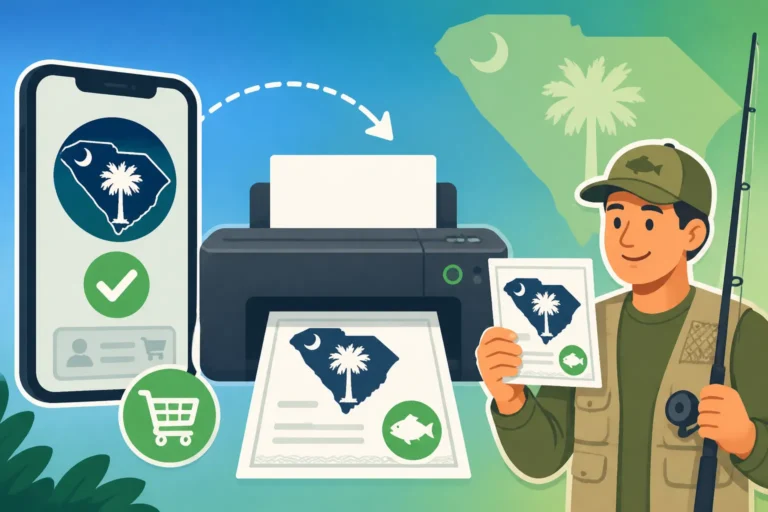
Without a doubt, the easiest and most common way for a nonresident to purchase a South Carolina fishing license is through the official SCDNR "Go Outdoors South Carolina" online licensing portal. This platform is designed for convenience, allowing you to buy your license from the comfort of your home, whether that's across the country or just down the road in your vacation rental.
The process is generally straightforward. You'll navigate to the "Go Outdoors South Carolina" website, where you'll be prompted to create an account if you don't already have one. This involves providing some basic personal information, including your name, address, date of birth, and usually some form of identification like a driver's license number. Once your account is set up, you can select the specific nonresident license you need – whether it's the annual freshwater, a 7-day saltwater, or a combination. The system will then guide you through the payment process using a credit or debit card. After successful payment, you'll receive a confirmation, and often, a temporary license that you can print immediately. It’s always a good idea to print a physical copy to carry with you, especially if you're heading to a remote area where cell service might be spotty. However, many wardens also accept a digital copy displayed on your phone. Our article on How to Buy a Fishing License on Go Outdoors South Carolina provides a step-by-step walkthrough to ensure a smooth online experience.
In-Person Purchase Locations
For those who prefer a more traditional approach or find themselves already in South Carolina and need a license on the fly, there are plenty of physical locations where you can purchase a nonresident fishing license. This can be a great option if you have last-minute questions, need some local fishing advice, or simply enjoy the experience of supporting a local business.
The most common in-person purchasing spots are SCDNR offices. These regional offices are staffed with knowledgeable personnel who can help you navigate the different license types and answer any specific questions you might have about regulations. While these offices might have more limited hours than retail stores, they are a reliable source. Another very popular option is visiting licensed tackle shops and bait stores across the state. These local establishments are hubs for anglers, and they often serve as official license vendors. Not only can you pick up your license, but you can also stock up on bait, lures, and get invaluable, up-to-the-minute local fishing reports from the folks who live and breathe fishing in that area.
Additionally, many big-box retailers and sporting goods stores that have a presence in South Carolina, such as Walmart, Academy Sports + Outdoors, and similar chains, often have a customer service desk or sporting goods counter where you can purchase fishing licenses. These locations offer extended hours, making it convenient if you need a license early in the morning before hitting the water or late in the evening. Just be sure to bring a valid ID and payment method. Remember, these retailers also often carry a wide array of fishing gear, from basic hooks and lines to specialized equipment, which you might find useful, especially if you forgot something or want to try new lures you saw online at Amazon.
Purchasing by Phone or Mail
While online and in-person purchases are the most popular methods for nonresidents, the South Carolina Department of Natural Resources also offers alternative ways to acquire your fishing license, particularly useful if you have limited internet access or specific circumstances. These methods provide flexibility, although they typically require a bit more planning ahead due to processing times.
For those who prefer to speak directly with someone or have specific questions that might be easier to address over the phone, you can purchase a license by calling the SCDNR's licensing division. This phone service allows you to discuss your needs with a representative, ensure you're getting the correct type of nonresident license for your trip, and complete the purchase using a credit card. While it's not as instantaneous as the online portal, it offers a human touch and can be reassuring for some anglers. Just be mindful of their operating hours, which are typically standard business hours.
Another option, though less frequently used by nonresidents due to the immediacy of travel plans, is purchasing a license by mail. This involves downloading a license application from the SCDNR website (or requesting one to be mailed to you), filling it out, and sending it back with a check or money order. This method definitely requires foresight, as postal delivery and processing times can add several days, if not weeks, to the overall timeline. It's generally not recommended for last-minute trips but can be a viable option for those planning well in advance or who prefer traditional mail transactions. Regardless of your chosen method, ensuring you have your license in hand before you cast your first line is paramount.
Key Regulations and Exemptions for Nonresidents
Beyond simply having a license, every angler, resident or nonresident, must adhere to South Carolina's extensive fishing regulations. These rules are in place to ensure fair chase, promote sustainable fisheries, and protect vulnerable species. For nonresidents, understanding these nuances is especially important, as they might differ significantly from regulations in your home state. Key areas to focus on include reciprocity agreements for border waters, species-specific bag and size limits, and understanding what, if any, exemptions might apply to you.
Reciprocity Agreements and Border Waters
One of the most common questions nonresidents have, especially those traveling from neighboring states, revolves around reciprocity. Can your Georgia or North Carolina fishing license be used in South Carolina waters? The answer is nuanced, particularly when it comes to shared "border waters."
South Carolina does have reciprocity agreements with both North Carolina and Georgia for specific bodies of water that straddle state lines. For instance, if you're fishing the Savannah River or lakes like Lake Hartwell or Lake Thurmond (Clarks Hill Lake), which form part of the border between South Carolina and Georgia, a valid resident fishing license from either state is generally recognized. This means a Georgia resident with a Georgia license can fish these shared waters without needing a separate South Carolina license. Similarly, on border waters with North Carolina, such as parts of the Chattooga River or Lake Wylie, a valid resident license from either state usually suffices. This is a huge convenience, saving you the cost and hassle of purchasing two separate licenses. Our guide on South Carolina Fishing License Reciprocity With Georgia and South Carolina Fishing License Reciprocity With North Carolina offers detailed insights into these agreements.
However, it's absolutely crucial to understand that these agreements are often limited to specific, mutually agreed-upon border waters and typically only apply to resident licenses from those states. If you step outside these designated shared waters into undisputed South Carolina territory, or if you are a nonresident of both South Carolina and the neighboring state (e.g., a Florida resident fishing the Savannah River with a Georgia nonresident license), then you will likely need a South Carolina nonresident license. Always double-check the exact boundaries and conditions for these reciprocity agreements before you venture out, as rules can sometimes have specific stipulations regarding species or zones. When in doubt, it's always safer to secure a South Carolina nonresident license.
Bag Limits and Size Restrictions
Once your license is secured, the next critical set of rules for any nonresident angler to master are the bag limits and size restrictions for various fish species. These regulations are paramount to the SCDNR's efforts to manage fisheries sustainably and prevent overfishing. They apply equally to residents and nonresidents alike.
Bag limits dictate the maximum number of fish of a particular species you can keep in a single day. For example, if you're targeting Redfish, South Carolina has a specific South Carolina Redfish Daily Bag Limit Per Person that you must adhere to. Violating this limit, even by one fish, can result in significant fines. Similarly, the Spotted Seatrout Daily Bag Limit of 10 Fish is something coastal anglers need to be acutely aware of. These limits are not arbitrary; they are determined by scientific assessment of fish populations, considering factors like spawning success, juvenile survival rates, and overall stock health.
Size restrictions, often referred to as "slot limits" or minimum/maximum size requirements, specify the legal length a fish must be to be harvested. For instance, the South Carolina Redfish Slot Limit 18 to 25 Inches means any redfish you catch must fall within that specific length range to be kept. Fish smaller than 18 inches or larger than 25 inches must be immediately released unharmed. The logic behind slot limits is often to protect juvenile fish (below the minimum) so they can grow and reproduce, and to protect large, mature breeding stock (above the maximum) to ensure they can continue to contribute to future generations. For species like spotted seatrout, there's typically a minimum size requirement, such as the South Carolina Spotted Seatrout Minimum Size 14 Inches. Always carry a tape measure or a fishing ruler to ensure your catch meets the legal requirements before you decide to keep it. Ignorance of these rules, even for a visitor, is not an acceptable defense, so check the most current SCDNR regulations before each trip.
Exemptions and Free Fishing Days
While the general rule is that all nonresidents need a valid fishing license, there are a few specific exemptions and special circumstances to be aware of. Understanding these can help you determine if a license is truly necessary for everyone in your party, or if there are particular days when licenses aren't required.
One significant exemption often pertains to young children. In South Carolina, youth under the age of 16 are typically not required to have a fishing license, regardless of residency. This is fantastic news for families visiting, as it makes fishing an accessible and affordable activity for the little ones. However, it's always wise to confirm the exact age cutoff, as these regulations can occasionally change. For detailed information, consult our guide on Fishing License Age Requirements for Minors.
Another important consideration is Free Fishing Days. South Carolina often designates specific days throughout the year when residents can fish without a license. These days are usually intended to encourage more people, particularly families, to try fishing. However, it's critical for nonresidents to understand that South Carolina's Free Fishing Days are generally only open to residents. This means if you're visiting from out of state during a free fishing weekend, you will still need to purchase your appropriate nonresident license. This distinction is important and often overlooked by eager visitors. Always check the SCDNR's official announcements for the most current information, specifically looking for language that clarifies eligibility for nonresidents. A prime example is the Free Fishing Days for Residents Only Explained article, which reinforces this point.
Lastly, some private waters, such as fee-based private ponds where the owner maintains a valid fish stocking permit, might not require a state fishing license. However, these situations are specific and less common for public access. If you're fishing from a licensed pier or on a chartered boat, your license requirements may also be different – often, the pier's master license or the charter captain's license covers all passengers, but again, always verify this directly with the pier or charter company beforehand.
Planning Your South Carolina Fishing Trip as a Nonresident
You've got your license sorted, you understand the regulations, and now the real fun begins: planning the actual fishing trip! As a nonresident, a little extra preparation can go a long way in ensuring a successful and enjoyable experience in South Carolina. From packing the right gear to knowing where to cast your line, and even considering a guided trip, every detail contributes to your adventure.
Essential Gear and Supplies
While you might already have a tackle box full of your trusty lures and rods from home, preparing for a South Carolina fishing trip as a nonresident involves a bit more thought. The diverse environments, from mountain streams to saltwater marshes, might require some specialized gear you don't typically use.
First and foremost, consider the type of fishing you'll be doing. If you're heading to the freshwater lakes for bass, your standard bass fishing setup should suffice: medium-heavy rods, baitcasting or spinning reels, and a selection of crankbaits, soft plastics, and topwater lures. However, if you're venturing into the coastal waters for redfish or trout, you'll need gear designed for saltwater conditions. This means corrosion-resistant reels, braided line, and lures specifically designed for inshore species like popping corks, soft plastic shrimp imitations, or Gulp! baits. You might even consider purchasing some general-purpose hooks, weights, and bobbers locally, as these are easy to acquire and can be specific to regional techniques. Many anglers find great deals on these essential items, as well as specialized tackle, on Amazon before their trip, or even from local tackle shops when they arrive.
Don't forget the essentials beyond fishing tackle. Sun protection is non-negotiable in South Carolina, even on cloudy days. Pack a wide-brimmed hat, polarized sunglasses (crucial for spotting fish in clear water), and plenty of reef-safe sunscreen. Comfortable, quick-drying clothing is a must, and depending on the season, layers are always a good idea. A good pair of waterproof boots or non-slip deck shoes will serve you well, especially in marshy areas or on a boat. And of course, a cooler with plenty of water and snacks will keep you hydrated and energized throughout your day on the water. Finally, make sure you have a valid ID with you at all times, along with your printed or digital fishing license, in case an SCDNR officer performs a check.
Finding the Best Spots
South Carolina offers an incredible array of fishing environments, each with its own unique charm and target species. As a nonresident, knowing where to focus your efforts can dramatically improve your chances of success and help you truly experience what the state has to offer.
If freshwater is your passion, South Carolina's lakes are legendary. Lake Murray, often called the "Jewel of South Carolina," is famous for its striped bass and largemouth bass. Lake Hartwell, on the border with Georgia, is another excellent choice for bass, particularly spotted bass. For those seeking monster catfish, the Santee Cooper Lakes (Lake Marion and Lake Moultrie) are world-renowned. Each of these massive bodies of water has numerous public access points and boat ramps. Our comprehensive guide to the Best Fishing Spots in South Carolina can give you a great overview, and for detailed information on specific lakes, check out our Lake Murray Fishing Guide for South Carolina Anglers.
For saltwater enthusiasts, the entire coastline from Little River down to Hilton Head Island is a treasure trove. Murrells Inlet is a popular spot for inshore fishing, offering excellent opportunities for redfish, spotted seatrout, and flounder in its intricate creek systems. The Charleston Harbor area, with its vast estuaries and numerous islands, is another prime location for these same species, along with sheepshead around bridge pilings and oyster beds. If surf fishing is your game, the beaches around Myrtle Beach and Folly Beach can yield whiting, pompano, and even smaller sharks. Exploring the marsh creeks by kayak or small boat can be incredibly rewarding, offering a more intimate connection with the Lowcountry's unique ecosystem. Before heading out, consider picking up a local chart from a tackle shop or reviewing satellite imagery on an app to identify promising structures, oyster beds, or deeper channels.
Charter Fishing for Out-of-State Visitors
For many nonresidents, especially those unfamiliar with South Carolina's waters, booking a fishing charter is an excellent way to maximize your experience and ensure a productive trip. A good charter captain brings local knowledge, specialized equipment, and often, a guaranteed good time.
One of the biggest advantages for nonresidents booking a charter is that the boat's license often covers all passengers. This means you typically don't need to purchase an individual South Carolina fishing license if you're fishing exclusively on a licensed charter boat. However, it's always prudent to confirm this directly with your chosen charter captain when you book. They will be able to clarify any specific licensing requirements for their operation. Our guide on South Carolina Fishing Charters: The Complete Guide provides extensive information on what to expect.
Charter captains are invaluable resources, particularly for nonresidents. They know the local waters like the back of their hand, understand seasonal patterns, and are skilled at finding where the fish are biting. Whether you're looking for an inshore trip targeting redfish and trout in the intricate marsh systems, or an offshore adventure chasing mahi-mahi and tuna, a charter can put you on the fish. They provide all the necessary gear, bait, and often even clean your catch for you. This allows you to focus purely on the fishing experience without worrying about navigation, regulations, or what bait to use. Popular charter destinations include Hilton Head Island, Charleston, and Myrtle Beach, each offering a range of trip types from half-day inshore excursions to full-day offshore adventures. For families or groups of friends, a charter is often the most enjoyable and stress-free way to go fishing in South Carolina.
Common Nonresident Questions Answered
Even with all the information out there, certain questions inevitably pop up for nonresident anglers. It's completely normal to have lingering uncertainties, especially when navigating new state regulations. Let's tackle some of the most frequently asked questions to help clarify any remaining doubts and ensure your South Carolina fishing trip is as smooth as possible.
"Do I Need a License If I'm Fishing with a Licensed Friend?"
This is a very common question, and the short answer is: yes, almost certainly. While it might seem convenient or even logical that if one person on the boat or shore has a license, it covers everyone, this is generally not how individual recreational fishing licenses work. In South Carolina, a fishing license is issued to an individual and grants that individual the privilege to fish. It does not extend to cover other unlicensed anglers, even if they are fishing from the same boat, pier, or bank.
Think of it like a driver's license; your friend's driver's license doesn't give you permission to drive their car without one yourself. Similarly, your friend's South Carolina fishing license, whether resident or nonresident, does not grant you the right to fish if you, as an individual, do not hold your own valid license. If an SCDNR officer inspects your fishing party, every person actively engaged in fishing (casting a line, holding a rod, tending a trap, etc.) must be able to produce their own valid license, unless they fall under specific age-based exemptions (e.g., children under 16). Failing to have your own license, even if your friend is fully compliant, will likely result in a citation for you.
The only significant exception to this rule is if you are fishing on a licensed charter boat or commercial fishing pier that holds a master license covering all paying passengers. In those specific scenarios, your individual license might not be required, but as always, confirm this directly with the charter captain or pier management beforehand.
"What if I Lose My License While Visiting?"
Losing your fishing license while on vacation in a new state can be incredibly frustrating and stressful. You're far from home, might not have easy access to a printer, and certainly don't want to risk fishing without proof of your legal right to do so. Thankfully, South Carolina has provisions in place to help you in such a predicament.
The best and quickest way to handle a lost or stolen license is to reprint it through the "Go Outdoors South Carolina" online portal. If you purchased your license online, your information is stored in your account. You can log in from any internet-connected device – a laptop at your hotel, a tablet, or even your smartphone – and access your purchase history. From there, you should be able to view and print a duplicate copy of your license. Many local libraries, hotel business centers, or even tackle shops might offer printing services for a small fee if you don't have access to a printer yourself. You could also purchase a small portable laminator on Amazon to protect your printed licenses for future trips.
If reprinting isn't an immediate option, or if you purchased your license in person and don't have an online account yet, you can also contact the SCDNR's licensing division by phone. They can often verify your purchase over the phone and might be able to email you a digital copy or guide you on the nearest location where you can get a replacement printed. In some cases, a digital image of your license stored on your phone might even be accepted by an understanding game warden, but a physical copy or official reprint is always the safest bet. Our article on Replacing a Lost or Stolen Fishing License provides more detailed instructions for navigating this situation.
"Can My Kids Fish Without a License?"
Bringing children along on a fishing trip is one of the most rewarding aspects of angling, and South Carolina actively encourages it by making it accessible for youngsters. This often leads nonresidents to wonder about license requirements for their kids.
In South Carolina, children under the age of 16 are generally not required to possess a fishing license to fish recreationally. This applies to both freshwater and saltwater fishing, and to both residents and nonresidents. This exemption is fantastic for families, as it means you can bring your younger anglers along without the added expense or hassle of purchasing multiple licenses. It's a wonderful way to introduce kids to the joys of fishing and the beauty of the outdoors. You can read more about this in our guide on Fishing License Age Requirements for Minors.
However, there are a couple of important caveats to keep in mind. While the children themselves don't need a license, the accompanying adult(s) who are actively fishing or assisting in the fishing activity must have their own valid license (unless they are also under 16, which is unlikely for a supervising adult). Also, while children are exempt from the license requirement, they are still subject to all other South Carolina fishing regulations, including bag limits, size restrictions, and gear restrictions. It's the responsibility of the supervising adult to ensure that the children's fishing activities comply with all applicable rules. This ensures that even the youngest anglers learn responsible fishing practices from the start, helping to conserve the fish populations for their future enjoyment.
Disclaimer
Please note that fishing regulations, including license requirements and costs, are subject to change. While every effort has been made to provide accurate and up-to-date information in this guide, it is crucial for all anglers, especially nonresidents, to verify the latest regulations directly with the South Carolina Department of Natural Resources (SCDNR) before embarking on any fishing trip. The SCDNR website (www.dnr.sc.gov) is the official source for all current fishing laws and licensing information.