Do You Need Two Licenses to Fish Border Lakes?
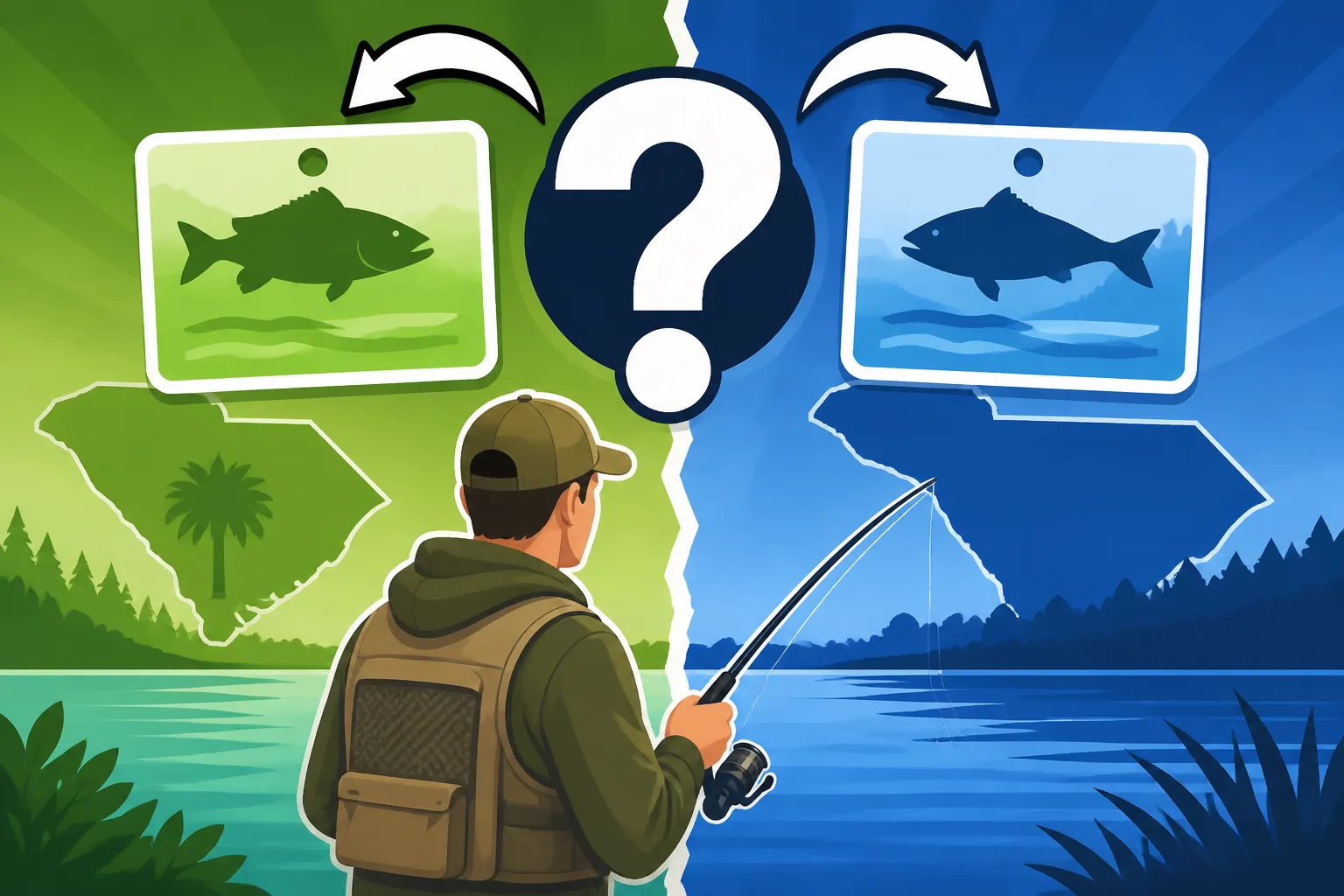
Navigating the waters shared by South Carolina and its neighboring states can often feel like solving a complex puzzle, especially when it comes to fishing licenses. Many anglers find themselves scratching their heads, wondering if they need to double up on licenses just to cast a line in a lake that straddles a state border. This comprehensive guide aims to clear up that confusion, explaining when one license is enough and when you might need to consider a second one for those unique border water situations.
Understanding Reciprocity Agreements
The concept of a "border lake" or "border water" immediately brings up questions of jurisdiction. You're out on the water, enjoying the peace and quiet, only to start wondering, "Am I in South Carolina or Georgia right now? Do I have the right paperwork?" It's a valid concern, and thankfully, both states often have agreements in place to simplify things for anglers.
What is a Reciprocity Agreement?
At its core, a reciprocity agreement is like a handshake deal between two states. It acknowledges that certain bodies of water are shared, and rather than forcing you to buy two separate fishing licenses, it allows one state's license to be valid across the shared waters, regardless of which state's side you're technically on. This is a huge relief for anglers, as it removes a significant barrier and encourages more people to enjoy these expansive, shared fisheries. Imagine having to constantly check your GPS to make sure you weren't drifting into "illegal" waters – it would take all the fun out of it! These agreements are designed to make your fishing experience as seamless as possible, fostering cooperation in wildlife management and allowing anglers from both sides to enjoy the shared resource. Without them, you'd constantly be worried about penalties for fishing without a license in South Carolina, which nobody wants.
How South Carolina Manages Border Waters
South Carolina, through the Department of Natural Resources (SCDNR), has established specific reciprocity agreements with its neighbors, primarily Georgia and to a lesser extent, North Carolina, for certain shared water bodies. These agreements are usually formalized laws or regulations, clearly outlining which state's license is acceptable under what conditions. The general rule for many of these shared waters is that if you possess a valid fishing license from either state, you are legally permitted to fish in the main body of the shared waterway. However, and this is where it gets tricky, these agreements often have specific caveats. They usually apply only to the primary lake or river channel and might not extend to tributary streams, creeks, or impoundments that flow into the main body but lie entirely within one state's jurisdiction. This distinction is incredibly important, as unknowingly crossing into a non-reciprocal tributary could still land you in hot water.
Key Border Lakes and Their Rules
South Carolina shares some fantastic fishing opportunities with its neighboring states. Knowing the specific rules for these waters is crucial for a stress-free trip.
Fishing Lake Hartwell (SC-GA Border)
Lake Hartwell, a massive reservoir spanning the border between South Carolina and Georgia, is a prime example of a reciprocal water body. For most anglers, fishing on the main lake is straightforward: if you have a valid South Carolina fishing license or a valid Georgia fishing license, you are covered to fish anywhere on Lake Hartwell. This includes targeting popular species like largemouth bass, crappie, and stripers that thrive in its diverse habitats. Whether you launch your boat from a South Carolina ramp near Anderson or a Georgia ramp near Toccoa, your single license typically allows you to explore the vast expanse of the lake.
However, there's a critical detail to remember: this reciprocity generally applies to the main impoundment itself. If you venture up into specific tributary arms that extend deep into only South Carolina or only Georgia, particularly above defined demarcation lines, you might find yourself needing the license for that specific state. For instance, if you're deep in a Georgia tributary arm, your South Carolina license might not cover you. Always consult the latest regulations from both the SCDNR and the Georgia Department of Natural Resources (GADNR) to confirm these boundaries, especially when exploring less-frequented areas. Understanding how to find fishing license costs in South Carolina can help you weigh your options if you decide to purchase a second license.
Fishing the Savannah River (SC-GA Border)
The Savannah River, forming a significant portion of the border between South Carolina and Georgia, also operates under a similar reciprocity agreement. Anglers with a valid South Carolina or Georgia fishing license can generally fish the main stem of the river and its impoundments like Thurmond Lake (also known as Clarks Hill Lake). This means you can drift for catfish or cast for bass along the river's extensive length without needing two licenses, as long as you stay within the agreed-upon reciprocal waters. The river offers incredible opportunities, from the deep pools below Augusta to the vast expanses of the major reservoirs.
Just like with Lake Hartwell, the critical nuance comes with the tributaries. If you decide to explore the smaller creeks and rivers that feed into the Savannah River, and these tributaries lie entirely within one state's boundary, your reciprocal license might not be valid there. For example, fishing Stevens Creek, which is entirely in Georgia, would require a Georgia license, even if you spent the morning fishing the main Savannah River with your South Carolina license. It's truly a case of "know before you go." The same logic applies when fishing the Savannah River border with a Georgia or South Carolina license; always double-check where you are headed.
Fishing Border Waters with North Carolina
While South Carolina shares a substantial border with North Carolina, the reciprocity agreements for fishing licenses are not as extensive or universally applied as they are with Georgia. For the most part, if you are fishing in waters that are distinctly in South Carolina, you need a South Carolina license. If you are in North Carolina waters, you need a North Carolina license. There are no broad, blanket reciprocity agreements that cover all border lakes or rivers between these two states in the same way as with Georgia. This means if you're planning a trip to a lake that technically straddles the SC-NC border, like parts of Lake Wylie or the Catawba River system, you generally need to possess the appropriate license for the state in which you are physically fishing.
This can be particularly confusing when you're on a body of water that appears continuous. You might be fishing on the South Carolina side of Lake Wylie near Rock Hill and then, without realizing it, drift into North Carolina waters. In such cases, if a game warden from North Carolina checks your license and you only have a South Carolina one, you could face penalties. While some localized agreements or specific rules might exist for very particular small stretches of water, the general rule of thumb for South Carolina and North Carolina border waters is to err on the side of caution. If there's any doubt about which state's jurisdiction you're in, having both a South Carolina fishing license and a North Carolina license is the safest bet to avoid any issues. For those looking at a trip that involves both states, reviewing the South Carolina fishing license reciprocity with North Carolina details is highly recommended.
Practical Scenarios and Common Questions
The practical application of these rules often leads to more specific questions. Let's break down some common scenarios.
Fishing from the Bank vs. Boat on Border Lakes
The method of fishing – whether from the bank or a boat – usually doesn't change the underlying reciprocity rules. If a body of water is subject to a reciprocal agreement, it generally applies to anyone fishing in that water, irrespective of their access method.
For example, on Lake Hartwell, if you're bank fishing from a public access point that is clearly within South Carolina, your South Carolina fishing license is valid. If you then move to a public access point on the Georgia side, your South Carolina license still covers you for the main lake body. The same principle applies when fishing from a boat. If you launch your boat from a ramp in South Carolina and fish anywhere on the main body of Lake Hartwell, your South Carolina license is sufficient. You don't suddenly need a Georgia license just because your boat crosses an invisible state line in the middle of the lake. However, remember the caveats about tributaries that might fall entirely within one state's jurisdiction. It's always a good idea to have a map, even a basic one from Amazon, that shows state lines on these border lakes. This can help prevent accidental excursions into non-reciprocal areas.
When a Second License MIGHT Be Needed
While reciprocity agreements simplify things, there are indeed scenarios where purchasing a second license from the neighboring state becomes a wise, if not mandatory, decision. The most common situation is when you plan to fish specific tributaries or impoundments that branch off the main reciprocal water body but are entirely contained within one state's geographical boundaries. As discussed, Lake Hartwell and the Savannah River have these kinds of specific boundaries where reciprocity ends.
Another scenario is if you intend to regularly fish a particular area of a border lake or river where the reciprocity rules are ambiguous or change frequently. Sometimes, it's simply easier for peace of mind to have both licenses, especially if you plan extended stays or frequent trips to the border region. Consider if your fishing plans include diverse areas, or if you might want to explore beyond the main reciprocal waters. For instance, if you are an angler in South Carolina but frequently visit friends or family on the Georgia side of the Savannah River and want to fish in their local private pond or a small creek entirely in Georgia, you would absolutely need a Georgia license. In such cases, understanding the South Carolina nonresident fishing license guide might be helpful if you’re coming from Georgia to fish SC’s waters, and vice-versa.
Verifying Current Regulations Before You Go
Fishing regulations are not static; they can change due to conservation efforts, environmental factors, or legislative updates. What was true last year might not be true today. Therefore, relying on old information or hearsay is a risky move that could lead to fines or confiscated gear. Before any trip to border waters, it is absolutely paramount to verify the most current regulations from both states' wildlife agencies.
The South Carolina Department of Natural Resources (SCDNR) website is your go-to source for South Carolina's rules. Similarly, the Georgia Department of Natural Resources (GADNR) and the North Carolina Wildlife Resources Commission (NCWRC) websites will have the most up-to-date information for their respective states. Look for sections specifically detailing "reciprocity agreements" or "border water rules." Print out the relevant sections or save them to your phone. A quick call to the local SCDNR or GADNR office can also provide clarity if you have specific questions about a particular spot. Taking this small extra step can save you a lot of grief and ensure your fishing trip remains enjoyable and lawful. This due diligence is part of being a responsible angler and helps you understand the fishing license requirements in South Carolina fully.
Border Water Fishing License Quick Reference
Here's a handy table to help you quickly understand the general reciprocity rules for popular South Carolina border waters:
| Border Water | Shared With | General Reciprocity Rule | Important Caveats |
|---|---|---|---|
| Lake Hartwell | Georgia | A valid South Carolina or Georgia fishing license is generally honored for fishing on the main body of the lake. | Reciprocity may not extend to tributary creeks or impoundments that lie entirely within one state's jurisdiction. Always check maps for state lines when moving into smaller arms. |
| Savannah River (Main Stem) | Georgia | A valid South Carolina or Georgia fishing license is generally honored for fishing on the main channel of the river and its major impoundments (e.g., Thurmond Lake/Clarks Hill Lake). | Similar to Lake Hartwell, tributary streams or backwaters entirely within one state might require that state's license. Be aware of where you are in relation to feeder creeks and rivers. |
| Lake Wylie | North Carolina | NO broad reciprocity agreement. You must possess a North Carolina fishing license when fishing in North Carolina waters and a South Carolina fishing license when fishing in South Carolina waters. | The state line runs through the lake, making it easy to inadvertently cross. Anglers frequently buy both licenses for peace of mind, especially if they fish both sides regularly. |
| Catawba River System | North Carolina | NO broad reciprocity agreement. Similar to Lake Wylie, you generally need the license for the state you are physically fishing in. | The Catawba flows through both states with several impoundments. If you're fishing a section designated as NC waters, you need an NC license. If it's SC waters, you need an SC license. |
| Other Border Waters/Creeks | Georgia/North Carolina | Generally, if there's no specific stated reciprocity agreement for a smaller body of water, assume you need the license for the state you are physically in. | Always err on the side of caution. Check official SCDNR, GADNR, or NCWRC regulations or call a local office if you are uncertain about a specific small creek or impoundment. |
This table provides a general overview, but please remember that regulations can change. Always check the official state DNR websites for the most current information before heading out.
Final Thoughts on License Requirements
It's clear that while reciprocity agreements offer a fantastic convenience for anglers, they aren't a blanket solution for every border water. The distinction between the main body of a shared lake or river and its individual tributaries is a crucial one that can often catch unsuspecting anglers off guard.
The easiest way to avoid any legal troubles and ensure a relaxing day on the water is to always be informed. A few minutes spent on the SCDNR website or the corresponding wildlife agency site for Georgia or North Carolina can save you from potential fines. If you find yourself consistently fishing areas where reciprocity is unclear or where you frequently cross into areas entirely within the neighboring state, purchasing a second license is often the simplest and most stress-free solution. For residents, this might mean looking into South Carolina annual fishing license price breakdown and comparing it to a nonresident license from the neighboring state.
Always keep your license easily accessible while fishing. While some states now accept digital copies on your phone, having a physical copy or a printed version readily available, perhaps laminated and stored in a waterproof bag you can find on Amazon, is always a good practice. This also ties into being prepared in case a game warden asks to see your South Carolina fishing license guide. Responsible angling isn't just about protecting the fish; it's also about understanding and respecting the rules that govern our cherished waterways. Happy fishing!
Disclaimer
Please note that fishing regulations are subject to change. While this guide provides comprehensive information based on current understanding, it is always the angler's responsibility to verify the most up-to-date rules and regulations with the South Carolina Department of Natural Resources (SCDNR) and any applicable neighboring state agencies before fishing. This content is for informational purposes only and does not constitute legal advice.