Seasonal Fishing Techniques for South Carolina Anglers
One of the biggest head-scratchers for any angler in South Carolina, whether you're a seasoned veteran or just starting out, is figuring out what to fish, where to fish, and how to fish it throughout the year. The Palmetto State boasts an incredible diversity of waters, from mountain trout streams to vast freshwater lakes and a sprawling coastline, which means the "rules" of fishing change dramatically with the calendar. It can feel overwhelming, like you're constantly playing catch-up, but understanding the seasonal shifts in fish behavior is the key to consistent success. This guide is here to break down those seasonal patterns and equip you with the techniques you'll need to make the most of your time on the water, no matter what month it is.
The Rhythmic Dance of South Carolina Seasons and Fish Behavior
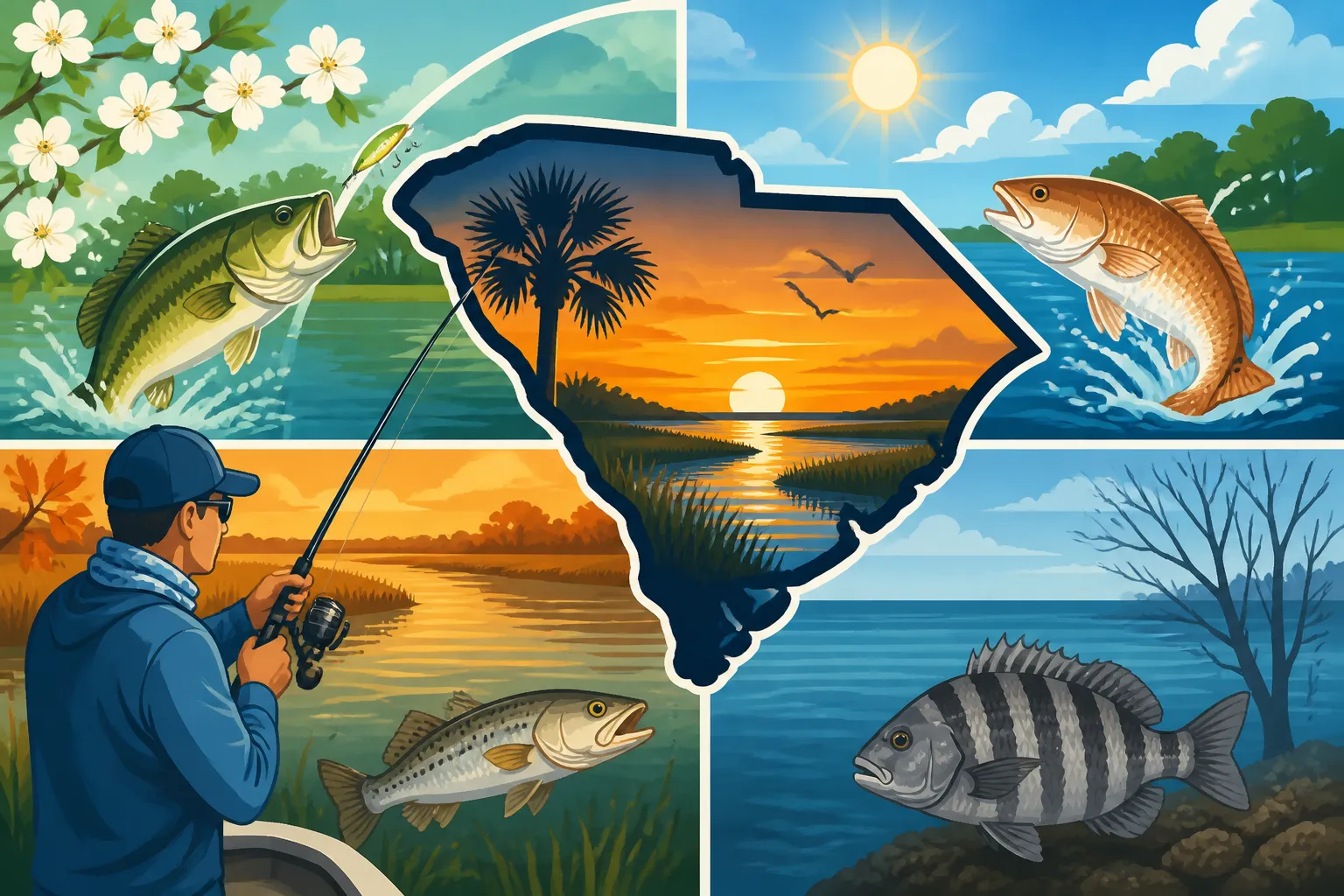
Think of South Carolina's fishing as a year-long symphony, with each season playing a distinct movement. Fish are cold-blooded creatures, meaning their metabolism, activity levels, and even where they choose to hang out are directly tied to the water temperature. This isn't just a minor detail; it's the fundamental principle that drives everything from spawning rituals to feeding frenzies. Understanding this natural rhythm is your first step to becoming a truly effective angler.
Understanding Water Temperature's Impact
Water temperature is the master conductor of the aquatic world. As the mercury rises or falls, fish react predictably. In general, cooler water means fish are more sluggish, seeking deeper, more stable temperatures and conserving energy. They're less likely to chase a fast-moving lure. Conversely, as water warms up to their preferred range, their metabolism kicks into high gear. They become more active, feed more aggressively, and often move into shallower areas.
For example, a largemouth bass might be lethargic and hunkered down in 25 feet of water during a frigid January, only willing to strike at a slow-moving jig or a subtle live bait. But come April, with water temperatures hovering in the 60s, that same bass will be cruising shallow flats, ambushing baitfish, and readily hitting topwater lures or fast-retrieved crankbaits. It's not just about comfort; it's about survival, breeding, and finding food. Knowing the optimal temperature ranges for different species is crucial.
How Day Length and Weather Fronts Affect the Bite
While temperature is paramount, it’s not the only factor. The lengthening or shortening of days (photoperiod) signals to fish that it's time to prepare for major life events like spawning or migration. For instance, increasing daylight in spring, coupled with rising temperatures, is the double-tap that tells bass it’s time to move to their spawning beds. Similarly, shorter days in fall cue many species to begin their intense feeding, stocking up for the lean winter months.
Weather fronts are another huge consideration, especially in South Carolina where conditions can change rapidly. A strong cold front rolling through can completely shut down a bite that was red-hot just hours before. The sudden drop in barometric pressure often makes fish uncomfortable, sending them deeper or causing them to cease feeding altogether. Conversely, a stable period of warm, sunny weather often means a consistent bite. Learning to read these environmental cues—not just the thermometer, but also the barometer, cloud cover, and recent rainfall—will dramatically improve your chances. Heavy rain, for instance, can stir up sediment and make water muddy, affecting visibility and sending some fish species deeper while others, like catfish, might become more active.
Spring Awakening: When the Waters Come Alive
Ah, spring in South Carolina! It's a time of renewal, not just for the landscape but for the fishing too. As the sun climbs higher and days grow longer, water temperatures steadily rise, triggering a cascade of activity in both freshwater and saltwater environments. This season is often considered one of the best times to be on the water, with many species moving shallow and feeding aggressively in preparation for or recovery from their spawning cycles.
Largemouth Bass Pre-Spawn and Spawn Tactics
Spring is undeniably prime time for largemouth bass fishing in South Carolina. As water temperatures creep into the upper 50s and low 60s, bass move from their deeper winter haunts towards shallower staging areas. This is the pre-spawn phase, characterized by aggressive feeding as they pack on weight before the energy-intensive spawn. They're hungry and actively looking for meals.
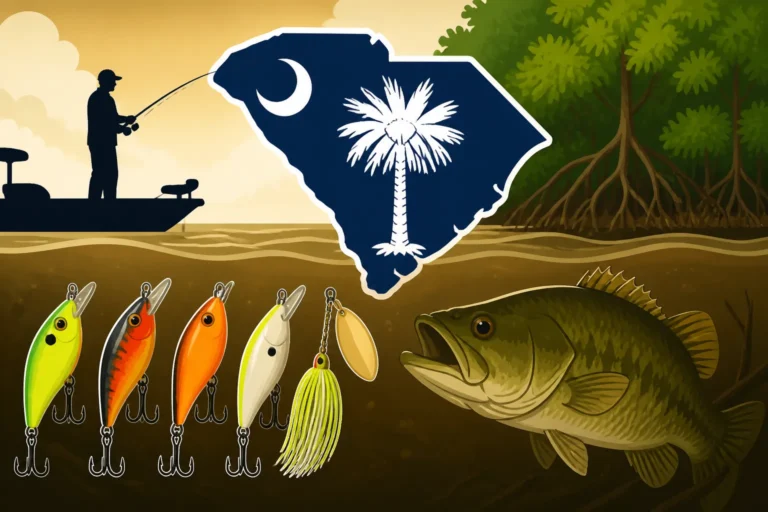
During this period, focus your efforts on points, submerged humps, and secondary creek channels leading into spawning flats. Look for cover like brush piles, docks, and rocky structures where bass can ambush prey. Lipless crankbaits like a Rat-L-Trap, spinnerbaits in chartreuse or white, and jerkbaits are incredibly effective for covering water and triggering reaction strikes from these active fish. When the water hits the mid-60s, the spawn begins. Bass will move onto hard-bottomed flats, coves, and protected pockets to create their beds. This is when sight fishing becomes a viable option in clear water, targeting visible bass guarding their nests. Flipping and pitching soft plastics like creature baits, jigs, or Senkos right onto the bed can provoke a strike, though remember the goal is usually to get them to bite, not necessarily to keep them if they're actively spawning. Understanding the Largemouth Bass Spawn Timing in South Carolina Reservoirs can significantly improve your spring bass fishing success.
Crappie and Panfish Bedding Bonanza
Just like bass, crappie and other panfish such as bluegill, redbreast sunfish, and shellcrackers also make their move shallow in spring for their spawning ritual, offering some fantastic opportunities for anglers of all skill levels. Crappie typically spawn when water temperatures reach the high 50s to low 60s. They congregate in brush piles, around submerged timber, and in shallow coves, often in depths ranging from 2 to 10 feet.
To target crappie, light tackle is key. Small jigs (1/16 to 1/32 ounce) tipped with a soft plastic grub or a live minnow fished under a slip bobber are highly effective. You can vertically jig these baits around submerged structure or cast them to the edges of cover. For panfish, which usually spawn a bit later as water temps climb into the mid-60s and 70s, look for "beds" – circular depressions on the bottom – in shallow, protected coves. Crickets, worms, or tiny artificial baits like a 1-inch grub under a bobber are irresistible to these feisty fighters. A simple cane pole or ultra-light spinning rod is perfect for a fun day of catching with the family. For more specific tactics, check out South Carolina Crappie Fishing Techniques by Season.
Inshore Redfish and Trout in Warming Estuaries
Spring brings a burst of activity to South Carolina's coastal estuaries, making it a fantastic time for inshore fishing. As water temperatures rise into the 60s, redfish become more active and start moving out of their winter deeper water haunts into the vast network of shallow creeks, oyster beds, and grass flats. They'll be aggressively feeding, often "tailing" in the shallows as they root for crabs and shrimp.
Sight fishing for redfish on flood tides in the grass becomes a premier spring technique. Look for their tails or backs breaking the surface. Soft plastic baits like Z-Man PaddlerZ or Gulp! Shrimp, usually rigged weedless, are excellent choices. Cast ahead of the fish and retrieve slowly to mimic their natural forage. Spotted seatrout also become more prevalent in the inshore waters during spring. They'll be found along oyster rakes, creek mouths, and deeper holes adjacent to grass flats. Popping corks with live shrimp or mud minnows, or artificial baits like MirrOlure MirrOdines, are deadly for trout. Pay attention to tide cycles; an incoming tide often brings baitfish into the creeks, while an outgoing tide can concentrate them in deeper channels, offering prime ambush points for both redfish and trout. Remember to always be aware of the South Carolina Redfish Slot Limit Rules, as they are strictly enforced to protect these popular game fish.
Summer's Sizzle: Adapting to the Heat
When the South Carolina summer sun beats down, surface water temperatures can soar, especially in shallow lakes and coastal areas. This doesn't mean the fishing shuts off, but it certainly means you need to adjust your tactics. Fish, much like us, seek comfort, and that often means moving deeper, finding shade, or feeding during cooler periods of the day. Adapting to these changes is what separates a frustrated angler from a successful one during the dog days of summer.
Deepwater Striped Bass and Catfish Strategies
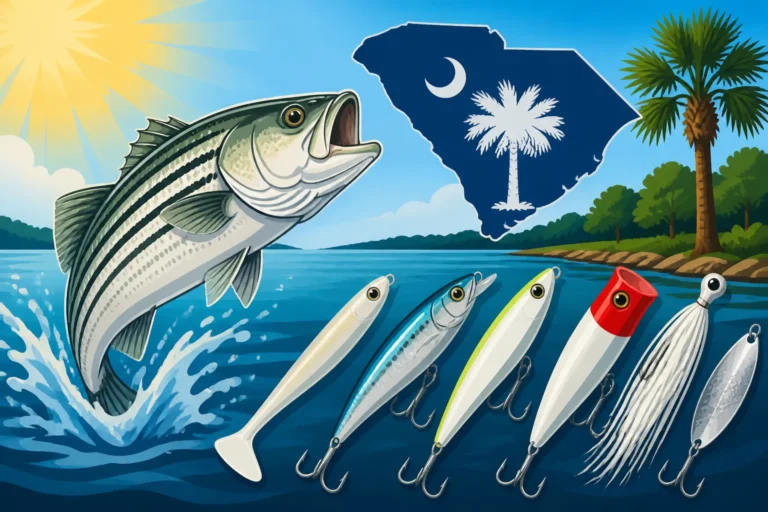
In the large freshwater reservoirs like Lake Murray, Lake Hartwell, and the Santee Cooper lakes, striped bass often go deep during the summer. They'll seek out cooler, oxygenated water, frequently congregating around thermoclines or near the dams. This means your summer striper tactics need to focus on vertical presentations and precise depth control.
Down-lining live bait, such as blueback herring or gizzard shad, is a highly effective method. Use your electronics to locate schools of stripers and present your bait directly to them. Trolling deep-diving crankbaits or umbrella rigs can also be productive for covering large areas of open water. For details on how to tackle these fish, check out Lake Murray Summer Striped Bass Techniques in South Carolina. Similarly, catfish, especially flatheads and big blue cats, can be found in deeper holes and channels in rivers and lakes during the summer. They're often most active at night when temperatures are cooler. Heavy bottom rigs with cut bait (shad, mullet, or bream) or live bait (perch, sunfish) are the way to go. Set up multiple rods with sturdy holders, and be patient; trophy cats often take their time finding the bait. Consider trying Catfish Bottom Fishing Basics.
Early Morning and Late Evening Bass Fishing
While midday bass fishing can be tough in summer, the cooler hours of dawn and dusk offer fantastic opportunities. During these periods, bass will often move shallower, particularly around low-light conditions, to feed before retreating to deeper, cooler water or dense cover as the sun gets high.
Topwater lures like poppers, walking baits (e.g., Heddon Super Spook), and prop baits can be incredibly exciting and effective right at first light or last light. Cast them near shallow cover, grass lines, or seawalls. As the sun rises a bit, switch to Texas-rigged worms, Senkos, or jigs fished slowly around docks, submerged timber, or shaded banks. Focus on areas with good cover that offer bass an easy escape to deeper water or shade. You might find some good deals on these summer lures on Amazon when stocking up for your next trip. Always remember that even a small amount of shade, like from an overhanging tree or a dock, can hold a surprising number of bass when the sun is blazing.
Offshore Adventures for Pelagic Species
Summer is when South Carolina's offshore waters truly come alive, offering thrilling opportunities for pelagic species that migrate through the warm currents. For those with access to a boat capable of heading out past the nearshore reefs, this is the time to target species like mahi-mahi (dolphin), wahoo, and tuna. These fish are fast, powerful, and offer an incredible fight.
Trolling is the most common and effective technique for these offshore species. Use a spread of baits and lures at varying depths and distances behind the boat. High-speed trolling for wahoo with specialized lures can be incredibly productive, while slower trolling with ballyhoo or skirted lures is excellent for mahi-mahi and sometimes tuna. Look for temperature breaks, weed lines (especially Sargassum), and floating debris, as these often concentrate baitfish and, consequently, the predators that feed on them. Shark fishing charters are also very popular during the summer months, offering a chance to tangle with powerful sharks closer to shore. Remember, offshore fishing requires specialized gear, navigation skills, and a keen eye for subtle signs on the water.
Fall Fiesta: Prime Time for Many Species
If spring is the awakening, fall is the feast. As summer's intense heat subsides and water temperatures begin to cool, fish in South Carolina often enter a highly active feeding pattern, known as the "fall turnover" or "fall bite." This is a spectacular time to be on the water, as many species become exceptionally aggressive, stocking up on calories in anticipation of the leaner winter months.
Aggressive Bass and Crappie Feeding Frenzies
For freshwater anglers, fall is synonymous with aggressive feeding behavior, particularly for bass and crappie. As lake water temperatures drop from the summer highs into the comfortable 60s and 70s, bass will move out of their deep summer haunts and follow baitfish into shallower creeks, coves, and main lake points. The water often "turns over" during this period, meaning the thermocline breaks down, and oxygen levels become more uniform throughout the water column, allowing fish to roam more freely.
Look for schools of baitfish, often visible on your electronics or breaking the surface. Bass will be actively chasing these schools. Crankbaits, spinnerbaits, chatterbaits, and topwater lures (especially on cloudy days or early mornings) can all be incredibly effective for enticing a strike from these hungry fish. Crappie also become very active, often schooling up tightly in deeper brush piles, submerged timber, or under docks, particularly in the later part of fall. Vertical jigging small jigs or using live minnows around these structures can lead to impressive catches. You might find a great selection of fall crappie jigs on Amazon.
Redfish and Trout Staging in Coastal Creeks
Fall is arguably the peak season for inshore redfish and spotted seatrout fishing along the South Carolina coast. The dropping water temperatures, particularly in the marsh creeks, signal to these fish that it's time to feed heavily. Baitfish like mullet and shrimp are abundant and often migrating out of the creeks, providing an easy meal.
Redfish will be found throughout the estuaries, from shallow grass flats on incoming tides to deeper creek bends and oyster bars on outgoing tides. They often school up in larger numbers in the fall. Live shrimp, mud minnows, or a variety of soft plastics (paddletails, jerk shads) fished on jigheads or under a popping cork are highly effective. Sight fishing for reds in clear, shallow water is a true thrill this time of year. Spotted seatrout fishing also hits its stride. Look for them concentrated in deeper creek channels, along oyster rakes, and around docks. Live shrimp under a popping cork or artificial lures like topwater plugs (early morning!) and suspending twitchbaits can produce fantastic results. Understanding Tide-Based Techniques for Inshore Fishing, especially as baitfish move with the current, is crucial for fall coastal success.
Transitioning Stripers on Freshwater Lakes
As fall progresses and water temperatures continue to drop, striped bass in South Carolina's major lakes begin to transition from their deep summer patterns to more scattered, active feeding throughout the water column. They'll start to chase baitfish closer to the surface, especially during low-light conditions, leading to exciting topwater blow-ups.
Look for schooling stripers on your sonar or by observing bird activity (gulls diving often indicate stripers pushing bait to the surface). Casting topwater plugs, bucktail jigs, or even live bait into these feeding frenzies can be incredibly productive. As the water cools further, they might still be found deeper, but they'll be more willing to move and strike than in the oppressive summer heat. Trolling with various lures and live bait remains a solid strategy for covering water and locating active schools as they migrate and spread out through the lake's cooler sections. For those targeting freshwater species, staying informed about the South Carolina's Freshwater Fishing Regulations, which can have seasonal changes, is always a good practice.
Winter's Chill: Finding the Warm Pockets
While many anglers might pack up their gear for the winter, South Carolina still offers fantastic fishing opportunities if you know where to look and how to adjust your techniques. Winter fishing often requires more patience and a slower presentation, but the rewards can be significant, especially for those targeting certain species that thrive in cooler temperatures.
Targeting Deepwater Bass and Crappie
In the coldest months, freshwater bass and crappie typically retreat to deeper, more stable water where temperatures fluctuate less. They become less active and more reluctant to chase fast-moving baits, meaning a subtle approach is often best. For largemouth bass, look for them schooled up on deep points, ledges, creek channel bends, and around standing timber in depths of 20 to 40 feet or more, depending on the lake.
Slower presentations are key. Jigging spoons, blade baits, and drop shot rigs with small soft plastics are excellent choices. A shaky head jig or a Ned rig fished slowly along the bottom can also trigger bites from sluggish bass. The bites will often be subtle, feeling more like a slight weight than a strong thump. For crappie, they'll congregate tightly in dense brush piles, submerged trees, and under docks in similar deep-water areas. Vertical jigging small 1/16 or 1/32 ounce jigs tipped with minnows or soft plastics directly into the cover is a proven method. Often, you’ll need to put the bait right in front of them, as they won't move far to strike. This is a time when understanding your electronics, especially side imaging and down imaging, can be invaluable for finding those hidden deepwater structures.
Sheepshead and Black Drum on Structure
Winter is often considered prime time for sheepshead along the South Carolina coast. These striped "convict fish" thrive in cooler water and can be found congregating around hard structures in the inshore and nearshore waters. Think bridge pilings, jetties, oyster reefs, docks, and rock outcroppings. They are notoriously tricky to hook due to their small, bony mouths and bait-stealing prowess.
To catch sheepshead, use small, sharp hooks (like a size 1 or 2 Finesse Wide Gap hook) and highly palatable baits like fiddler crabs, barnacles, or pieces of shrimp. Present the bait directly to the structure, feeling for the slightest tap. You'll need quick reflexes to set the hook! Black drum, another structure-loving species, also become more accessible in cooler months. They are often found in similar areas as sheepshead but tend to prefer soft bottoms near structure. Crabs, shrimp, or even chunks of cut mullet are good baits for black drum. They have a softer bite than redfish, so pay close attention.
The South Carolina Spotted Seatrout Gigging Ban Explained
One critical aspect of winter fishing in South Carolina's coastal waters that anglers need to be aware of is the seasonal gigging ban for spotted seatrout. From December through February, gigging for spotted seatrout is prohibited. This regulation is put in place to protect the species during a vulnerable time when they are often concentrated in specific areas, making them easier targets for gigging.
However, during this ban, traditional rod-and-reel fishing for spotted seatrout is still permitted, subject to the standard size and bag limits. This means you can still enjoy targeting trout, but you'll need to use conventional fishing methods. You can still use artificial lures like suspending twitchbaits or soft plastics rigged on a jighead, or live bait like shrimp or mud minnows. Focus your efforts on deeper creeks, protected channels, and areas with slower currents where trout might be seeking refuge from the colder water. Being aware of The South Carolina Spotted Seatrout Gigging Ban Explained, and all other Saltwater Fishing Rules in South Carolina, is crucial for responsible angling.
Essential Gear and Bait for Year-Round Success
Having the right tools for the job can make all the difference, no matter the season or target species. While you don't need to break the bank for every fancy gadget, a well-rounded tackle box stocked with versatile gear and a basic understanding of bait choices will serve you well across South Carolina's diverse fishing environments.
Freshwater Essentials for All Seasons
For freshwater fishing, a medium-light to medium-heavy spinning rod and reel combo, capable of handling 8-15 pound test line, will be your workhorse. This setup is versatile enough for bass, crappie, catfish, and panfish. If you're serious about bass, a baitcasting setup for heavier lures and cover can be a great addition.
Must-Have Baits & Lures:
- Soft Plastics: Worms (Texas-rigged, Carolina-rigged), creature baits, swimbaits, and small grubs. Colors like green pumpkin, junebug, and black/blue are staples.
- Crankbaits: Deep-diving for summer, shallow-diving for spring/fall, and lipless for covering water.
- Spinnerbaits & Chatterbaits: Excellent for searching and attracting reaction strikes, especially in spring and fall.
- Jigs: Flipping jigs for heavy cover, football jigs for deeper structure, and tiny marabou or soft plastic jigs for crappie and panfish.
- Live Bait: Minnows (crappie, bass), worms (panfish, catfish), and crickets (panfish) are always effective.
- Terminal Tackle: A variety of hooks (EWG, worm hooks, circle hooks), weights (bullet, egg, split shot), swivels, and bobbers. You can find many of these items on Amazon, often in convenient multi-packs.
Other Essentials: Pliers, line cutters, a fishing net, a cooler, sunscreen, insect repellent, and a good pair of polarized sunglasses are non-negotiable.
Saltwater Tackle for Coastal Exploits
Saltwater fishing often demands more robust gear due to the corrosive environment and stronger fish. A medium to medium-heavy spinning rod and reel, corrosion-resistant and spooled with 10-20 pound braided line, will handle most inshore species like redfish, trout, and flounder. For heavier nearshore or offshore species, you'll need a sturdier conventional or heavier spinning setup.
Key Baits & Lures:
- Live Bait: Shrimp and mud minnows are gold for nearly all inshore species. Fiddler crabs are essential for sheepshead.
- Soft Plastics: Paddle tails, jerk shads, and Gulp! Shrimp in various colors (chartreuse, white, natural shrimp patterns) are incredibly versatile when rigged on appropriate jigheads.
- Popping Corks: Indispensable for presenting live bait or soft plastics to speckled trout and redfish.
- Hard Baits: Suspending twitchbaits (MirrOlure MirrOdine) for trout, and topwater plugs (Skitter Walk, Top Dog) for early morning redfish.
- Terminal Tackle: Circle hooks (especially for bait fishing to minimize gut-hooking), jigheads (1/8 to 1/2 oz), swivels, and a selection of leader material (fluorocarbon is preferred for its invisibility and abrasion resistance).
Coastal Must-Haves: A reliable tackle box, a good cooler for your catch, a bait bucket with an aerator, a sharp fillet knife, and durable rain gear are all crucial. Always check the South Carolina Fishing License Guide, as coastal rules often differ from freshwater.
Mastering the Tides: A Coastal Angler's Secret Weapon
For anyone fishing South Carolina's expansive coastline and tidal estuaries, understanding the tides isn't just helpful—it's absolutely essential. Tides dictate everything from fish location and feeding behavior to boat access in shallow creeks. Ignoring them is like trying to drive a car without knowing how to steer; you might get somewhere, but it won't be efficient or very successful.
Understanding Incoming and Outgoing Tide Patterns
Tides are the rhythmic rise and fall of ocean water, primarily caused by the gravitational pull of the moon and sun. In South Carolina, we experience two high tides and two low tides each day (a semi-diurnal tide cycle), with roughly 6 hours between high and low tide.
- Incoming Tide (Flood Tide): As the water rises, it brings in fresh baitfish, crabs, and shrimp from the ocean into the creeks and estuaries. This often pushes bait into shallow areas like grass flats, making it a prime time for redfish to "tail" as they root for food. The rising water also provides access to areas that might be too shallow at low tide.
- Outgoing Tide (Ebb Tide): As the water recedes, it pulls baitfish and shrimp out of the shallower creeks and concentrates them in deeper channels, creek mouths, and along oyster rakes. This can create ambush points for predatory fish like redfish, trout, and flounder. The moving water also often exposes oyster bars and mud flats, which can be great spots to observe and plan for the next incoming tide.
The strength of the tide (known as tidal current) varies depending on the moon phase. During new and full moons (spring tides), the gravitational pull is stronger, resulting in higher high tides and lower low tides, with stronger currents. During quarter moons (neap tides), the pull is weaker, leading to less dramatic tidal swings and weaker currents. Fish often feed more aggressively during stronger tidal movements. For more specific techniques, explore topics like How to Fish an Incoming Tide for Redfish.
Fishing Specific Tide Stages for Optimal Results
Different tide stages offer unique opportunities for targeting various species:
- Low Tide: This is an excellent time for scouting. You can see oyster bars, creek channels, and submerged structure that might be hidden during higher water. Many anglers like to fish the last hour of the outgoing tide and the first hour of the incoming tide around these exposed features, as bait is concentrated and fish are funneled into deeper areas. Redfish will often be stacked in deeper holes and creek bends. Flounder will sit at the mouths of smaller creeks waiting for bait to wash out.
- Rising Tide (Flood Tide): As the water comes in, especially during a strong flood tide, redfish will push into the grass flats, often with their backs and tails exposed, making for exciting sight fishing opportunities. Speckled trout can be found cruising the edges of these grass flats. This is also a good time to target fish around docks and pilings as the water level rises and provides them new cover.
- High Tide: While sometimes tougher to fish because fish are more spread out in the vast amount of water, high tide can be excellent for targeting structure that's completely submerged, like deep oyster beds or rock piles that aren't visible at lower tides. Fish can also be found deeper under docks and along shaded mangrove (or coastal marsh grass) lines. The calmer currents of slack high tide can also be productive for certain species, allowing for a more subtle presentation.
- Falling Tide (Ebb Tide): This is often a favorite among anglers because it concentrates bait and fish. As the water rushes out of the marsh, fish position themselves at choke points: creek mouths, oyster rakes, and points. Redfish will often sit with their noses into the current, waiting for an easy meal to be swept past. Trout will ambush bait along current breaks. This is a fantastic time for jigging soft plastics or fishing live bait. Understanding How to Fish an Outgoing Tide for Trout, for example, can lead to a great day.
Adapting Your Approach: Weather, Water, and Location
Even within a single season, conditions can change dramatically, requiring you to think on your feet and adapt. A sudden cold front, a heavy rainstorm, or even just a shift in wind direction can completely alter fish behavior. The ability to read the water, understand the weather, and adjust your tactics accordingly is a hallmark of a truly skilled South Carolina angler.
Adjusting to Cold Fronts and Rain
A strong cold front rolling through South Carolina can be a real game-changer. Typically, the drop in atmospheric pressure before the front can sometimes trigger a feeding frenzy, but after the front passes, a high-pressure system moves in, often accompanied by clear skies, cooler temperatures, and strong winds. This combination usually makes fish lethargic and less willing to bite.
When faced with post-front conditions, slow down your presentation dramatically. Fish deeper, use smaller baits, and focus on areas with ample cover that offer fish a sense of security. For bass, think about fishing jigs or Texas-rigged worms very slowly along the bottom. For saltwater species, they might hunker down in deeper channels or protected pockets in the marsh. Sometimes, the best strategy after a severe cold front is simply to wait a day or two for conditions to stabilize. Likewise, heavy rain can drastically affect water clarity and levels. Muddy water often pushes sight-feeding fish deeper or causes them to rely more on their lateral lines. Consider using baits with more vibration or scent, and bolder colors that stand out in stained water. Conversely, a gentle, steady rain can sometimes make fish more active, especially in summer, by cooling the surface water and washing terrestrial insects into the water. For more specific insights, read Bass Fishing Techniques After a Cold Front.
Finding Productive Spots in Different Conditions
The "best" fishing spot isn't always the same. What was a hotspot on a warm, sunny spring day might be barren after a summer storm. Learning to identify what makes a spot productive under different conditions is key.
- Windy Days: Wind can be a blessing or a curse. A light chop on the water can break up the surface, making fish less wary and often triggering a bite. Target wind-blown points or banks where baitfish might be pushed and concentrated. However, heavy winds can make boat control difficult and muddy up shallow areas. On very windy days, seek out protected coves, creek channels, or the lee side of islands where the water is calmer.
- Cloudy vs. Sunny: On cloudy days, fish often feel more comfortable moving into shallower water and feeding throughout the day, as the overhead light isn't as intense. Topwater baits can remain effective longer. On bright, sunny days, especially in clear water, fish will often retreat to shade or deeper water. This is when skipping baits under docks, fishing deep structure, or targeting shaded banks becomes crucial.
- Current: In rivers and coastal estuaries, current is king. Fish will often position themselves in current breaks—behind rocks, points, or submerged logs—to ambush prey without expending too much energy fighting the flow. Understanding these current seams and eddies can unlock highly productive areas, regardless of the season.
Ultimately, South Carolina fishing is a dynamic experience. The angler who pays attention to the subtle cues of nature—the thermometer, the barometer, the tide chart, and the weather forecast—and is willing to adapt their techniques will consistently find more success and enjoy a richer, more rewarding experience on our beautiful waters.
Disclaimer
Fishing conditions, regulations, and fish behavior can change rapidly. Always consult the latest South Carolina Department of Natural Resources (SCDNR) regulations before heading out on the water. This guide provides general information and recommendations, but local conditions may vary. Please fish responsibly and safely.