Lake Murray Summer Striped Bass Techniques in South Carolina
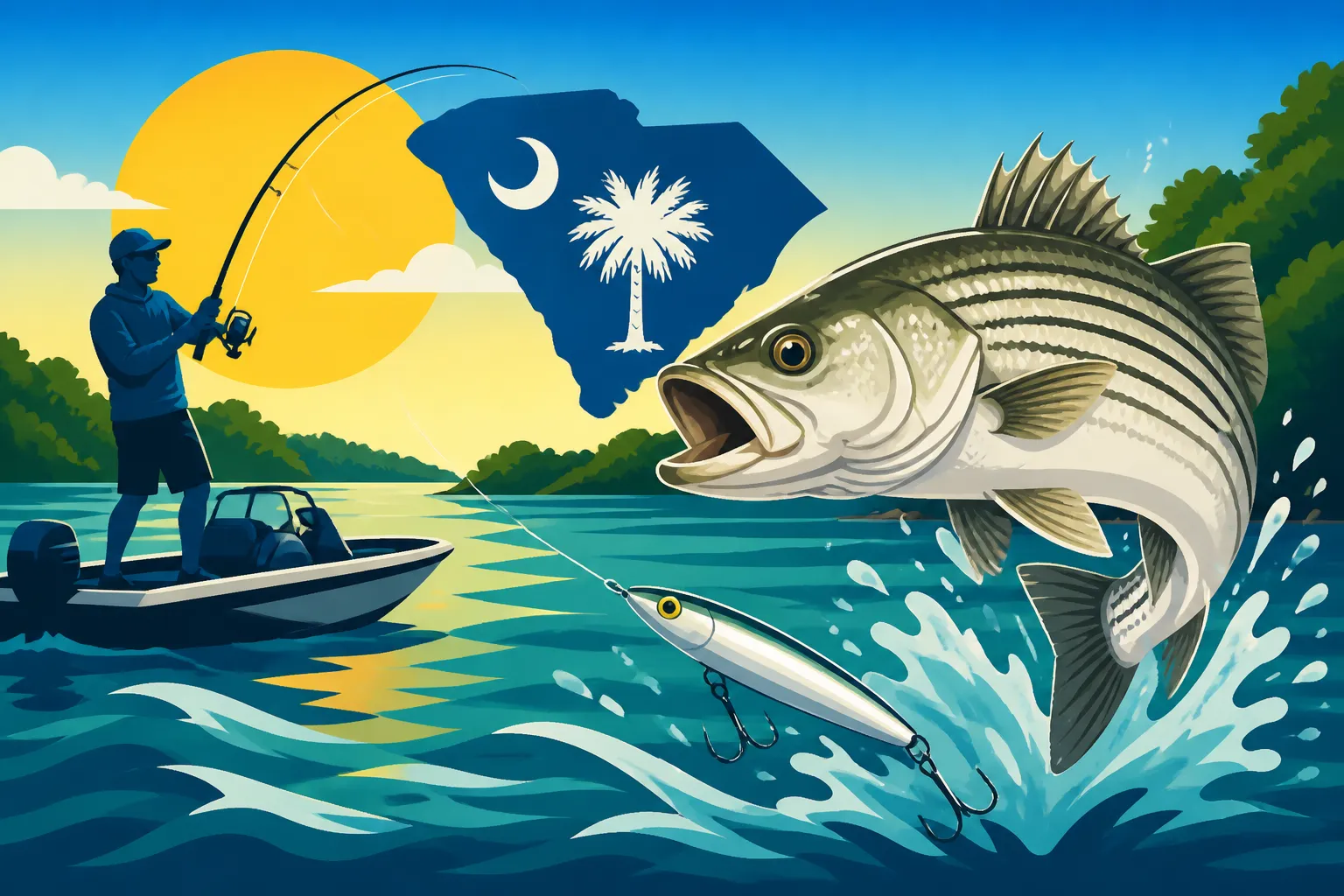
Summer fishing on South Carolina's Lake Murray can be incredibly rewarding, but it often presents a unique challenge for anglers chasing the mighty striped bass. As the scorching heat of the season sets in, these powerful fish retreat from the shallows, seeking cooler, more oxygenated waters in the depths, making them notoriously difficult to locate and entice. This guide is designed to equip you with the knowledge, strategies, and techniques needed to successfully target and catch striped bass on Lake Murray during the warmer months, transforming your summer frustrations into triumphant fishing expeditions.
Understanding Summer Striped Bass Behavior on Lake Murray
To consistently catch striped bass on Lake Murray during the summer, you first need to understand their seasonal movements and preferences. It's not just about finding water; it's about finding the right water that meets their physiological needs. This understanding is the cornerstone of any successful summer striper strategy.
The Thermal Stratification Effect
As summer progresses and the surface waters of Lake Murray heat up, the lake undergoes a natural process called thermal stratification. This means the lake divides into distinct layers: a warm upper layer (epilimnion), a middle layer where temperature changes rapidly (thermocline), and a cold, deep bottom layer (hypolimnion). The key for striped bass is that while the deep water is cooler, the deepest parts often become oxygen-depleted. This creates a narrow band of ideal habitat, usually within or just above the thermocline, where temperatures are tolerable and oxygen levels are sufficient. Knowing this "comfort zone" is vital for locating these fish. If you're seeing fish on your sonar but they aren't biting, they might be in water that's too hot or too cold, or worse, in a zone with insufficient oxygen.
This seasonal shift is why Lake Murray stripers move deeper as water warms. They are constantly searching for that sweet spot where they can conserve energy and thrive. Your job as an angler is to identify this depth. While the exact depth can vary based on the specific conditions of the lake each year, typically, you'll find them holding anywhere from 30 to 70 feet deep during the peak summer months. It's a game of hide-and-seek, but with the right tools, you can pinpoint their preferred hangout.
Following the Baitfish Down Deep
Striped bass are voracious predators, and their movements are almost entirely dictated by the presence of their primary food source: baitfish. On Lake Murray, this often means threadfin and gizzard shad. Just like the stripers, these baitfish also seek out more comfortable water temperatures and higher oxygen levels, congregating in massive schools in the thermocline layer. If you find the bait, you're usually not far from the stripers.
During summer, these bait balls can be immense, showing up on your sonar as dense clouds of activity. Stripers will often sit just below or on the edges of these schools, waiting for the opportune moment to strike. Watching your electronics for these congregations of bait is arguably the most crucial aspect of locating summer stripers. It's not uncommon to see large arches (the stripers) lurking beneath or within these bait clouds, indicating active feeding or staging behavior. Targeting these areas means you're putting your bait right in the strike zone of hungry predators.
Early Morning and Late Evening Bites
While summer striped bass generally hold deep, there are windows of opportunity when they may become more active and even push shallower, especially during low-light conditions. The early morning hours, just as the sun peeks over the horizon, and the late evening, as it dips below, can offer some of the best fishing. During these times, the surface water temperatures are at their coolest, and stripers may venture higher in the water column or closer to points and humps to feed.
This doesn't necessarily mean they'll be in shallow water, but they might suspend a bit higher than their midday depth. This also applies to overcast days or after a good summer thunderstorm has cooled the air and perhaps stirred the surface waters. These conditions can create a temporary reprieve from the heat, making stripers more willing to chase. Anglers who are dedicated enough to hit the water at dawn or stay out until dusk often reap the rewards of these more aggressive feeding periods.
Essential Gear and Electronics for Deepwater Stripers
Successfully targeting Lake Murray's summer striped bass demands more than just a rod and reel; it requires specialized gear and, perhaps most importantly, advanced electronics. Without the right tools to find the fish and present your bait effectively in deep water, you'll be largely fishing blind.
Rods, Reels, and Line Choices
When you're dealing with big, strong striped bass from the depths of Lake Murray, your tackle needs to be up to the task. For downlining live bait, which is a staple technique, a medium-heavy action rod, typically 7 to 7.5 feet long, is ideal. This length provides the leverage needed for strong hooksets and the backbone to winch in a powerful fish. Pair this with a conventional or high-capacity spinning reel that can hold at least 200 yards of 17-25 pound test monofilament or fluorocarbon line, or even heavier braided line with a fluorocarbon leader.
Braided line, like PowerPro or Berkley X9, is an excellent choice for deepwater striper fishing because it has virtually no stretch, allowing for immediate feel of a bite and solid hooksets, even when your bait is 60 feet down. Using a 15-30 pound fluorocarbon leader (attached with an Albright knot or an FG knot) helps with stealth in clear Lake Murray waters and provides abrasion resistance around submerged structures. For those who prefer trolling, a slightly stiffer trolling rod, usually around 6-7 feet with a line counter reel, is a game-changer for precise depth control, especially if you're pulling umbrella rigs or deep-diving crankbaits. You can find a wide array of options on Amazon to suit various budgets and preferences.
The Indispensable Role of Sonar and GPS
In the world of summer striper fishing on Lake Murray, your sonar (fishfinder) is your most valuable tool. Without it, you're simply guessing. Modern units from brands like Humminbird or Garmin offer incredible detail, allowing you to clearly see baitfish schools, individual striped bass arches, and the crucial thermocline layer. Look for units with high-frequency CHIRP sonar, down imaging, and side imaging capabilities. Down imaging provides a photographic-like view directly below the boat, helping you differentiate between bait and stripers. Side imaging can scan large areas to the left and right, quickly revealing schools of fish or structural elements you might otherwise miss.
Once you locate fish or bait schools, your GPS becomes essential. Mark waypoints precisely where you see activity. This allows you to drift back over the same spot, make repeated passes while trolling, or return to productive areas on future trips. Don't underestimate the power of mapping out your favorite spots or even recording a track of a productive drift. This combination of powerful sonar and accurate GPS navigation is how successful anglers consistently put fish in the boat, especially when fishing Dreher Island's submerged humps for South Carolina stripers.
Trolling Motors and Spot-Lock Technology
While not strictly "essential" for every angler, a modern electric trolling motor with GPS-controlled spot-lock or anchor mode technology has become a near-necessity for serious summer striper fishing on Lake Murray. Brands like Minn Kota's Ulterra or Ultrex, or Garmin's Force, allow you to precisely hold your boat's position over a specific waypoint, even in wind or current. This is invaluable when downlining live bait over a small hump or a dense bait school. Instead of constantly adjusting with your main engine, you can deploy your trolling motor, hit the anchor button, and focus entirely on fishing.
The ability to maintain a precise position means your bait stays in the strike zone longer, increasing your chances of a bite. Furthermore, these motors are often equipped with integrated sonar transducers, providing an additional view of what's directly beneath your boat or ahead of it. For those who often fish solo or want to maximize their time with lines in the water rather than constantly maneuvering, investing in a high-quality GPS-enabled trolling motor is one of the best upgrades you can make to your summer striper setup.
Top Techniques for Summer Lake Murray Striped Bass
Once you've located the fish and have the right gear, it's time to talk tactics. Summer striped bass on Lake Murray often require specific presentations to entice a bite, as they can be finicky in the deep, warmer waters. These techniques are proven methods for getting your bait in front of and hooked into these powerful fish.
Downlining Live Bait
Downlining live bait is arguably the most effective and popular technique for summer striped bass on Lake Murray. The strategy is simple: present a lively baitfish, typically a threadfin or gizzard shad, directly into the thermocline where the stripers are holding. The key is to keep your bait at the exact depth where you're marking fish and bait schools on your sonar.
To rig for downlining, you'll use a traditional Carolina rig or a similar setup. This involves a slip sinker (1/2 oz to 2 oz, depending on depth and current) above a swivel, followed by a 2-4 foot fluorocarbon leader tied to a sharp, circle hook (size 1/0 to 4/0, matching your bait size). The circle hook is crucial for reducing gut-hooked fish, as it's designed to set itself in the corner of the fish's mouth as it swims away. Use a fresh, lively baitfish, hooked through the nose or just behind the dorsal fin. Drop your rig down to the precise depth, keeping a close eye on your rod tip. The subtle twitch of a lively bait can be distinguished from the aggressive pull of a striper. For more detail, consider reviewing guides on the Best Bait for Striped Bass in Freshwater Lakes.
Trolling with Artificials
Trolling is another highly effective method for covering large areas and locating dispersed schools of striped bass during the summer months. This technique allows you to present multiple lures at varying depths simultaneously, increasing your chances of intercepting a feeding fish. Deep-diving crankbaits are a popular choice, with models like the Rapala Down Deep Husky Jerk or the Berkley Dredger capable of reaching significant depths. Umbrella rigs, consisting of a central leader with multiple teasers or lures, are also incredibly productive, mimicking a school of baitfish.
To effectively troll for summer stripers, precision in depth control is paramount. Using line counter reels, lead core line, or planer boards can help you achieve and maintain specific depths. Pay close attention to your sonar as you troll; if you pass over fish at a certain depth, adjust your lures accordingly. Varying your trolling speed, from 2 to 4 mph, can also trigger strikes. Sometimes a slight turn of the boat or a brief acceleration can make all the difference, causing your lures to dart and attracting attention. Many anglers choose to combine trolling with downlining, running a spread of both live bait and artificials for maximum coverage. If you're looking for specific recommendations, check out the Best Lures for Lake Murray Striped Bass in South Carolina Summer.
Jigging and Spooning Deep Structure
When you find tight schools of striped bass congregated on specific deep structures, jigging and spooning can be incredibly effective, offering a more active and engaging fishing experience. This technique involves dropping heavy metal jigs or spoons directly onto the fish you're marking on your sonar and then imparting an enticing action. Vertical jigging spoons, like the Nichols Lures Lake Fork Spoon or the Bass Pro Shops XPS Lazer Eye Spoon, are excellent choices, often weighing 1/2 oz to 2 oz depending on depth and current.
The technique typically involves dropping the spoon to the desired depth, letting it hit bottom, and then rapidly lifting and dropping your rod tip, allowing the spoon to flutter and flash like a wounded baitfish. Stripers will often strike on the fall, so pay close attention to any slack in your line. Similarly, heavy bucktail jigs or soft plastic swimbaits rigged on heavy jig heads can be worked in a similar fashion. The key is to match the hatch by choosing lure colors and sizes that mimic the local baitfish. This method requires a good understanding of your electronics to ensure your lure is descending directly into the strike zone. You might even find some specialized jigging spoons for deepwater striper fishing on Amazon.
Key Locations and Structures to Target
Lake Murray is a vast body of water, and while knowing the techniques is crucial, knowing where to apply them is equally important, especially during the summer. Striped bass will gravitate towards specific underwater features that offer them favorable conditions and ambush points.
Main Lake Humps and Points
During the heat of summer, the primary lake basin of Lake Murray becomes a hotbed for striped bass activity. Look for significant underwater humps, ridges, and extended points that drop off into deep water. These structures act as highways and congregating areas for both baitfish and stripers. The top of a hump might be 20-30 feet deep, but the sides will quickly drop off to 50, 70, or even 100+ feet. This provides the stripers with a range of depths to choose from, often holding on the cooler, oxygenated ledges or suspended off the sides.
Focus your efforts on the down-current or wind-blown sides of these structures, as current and wind can push baitfish against them, making them easier targets for stripers. Use your sonar to thoroughly scan these areas, looking for bait balls and the tell-tale arches of stripers. Once located, you can employ downlining, trolling, or jigging methods. Many of the most productive humps and points are well-known to local anglers, but with good electronics and a bit of exploration, you can find your own secret spots. Fishing Dreher Island's submerged humps for South Carolina stripers is a prime example of this strategy.
The Dreher Island Area and Mid-Lake Structures
The area around Dreher Island State Park is famously productive for striped bass, especially during the summer. This region of Lake Murray is characterized by numerous humps, channels, and deep-water access points. The waters here are generally deep and offer a consistent thermocline for stripers to inhabit. Anglers often find large schools of baitfish in this vicinity, which in turn attracts significant numbers of striped bass.
Beyond Dreher Island, explore other mid-lake structures that break up the vast open water. These could be old creek beds, submerged roadbeds, or even significant rock piles. Any feature that offers a change in depth or bottom composition can hold fish. The key is to correlate these structures with your sonar readings. If you're marking dense bait and fish on a mid-lake hump, it's worth spending time there. Sometimes, the less obvious, smaller structures can be even more productive than the well-known spots, as they receive less fishing pressure. For a more detailed look at this specific area, check out resources like the Dreher Island Striped Bass Fishing on Lake Murray guide.
River Channels and Submerged Timber
While Lake Murray is a reservoir, it still retains the remnants of its original river channels, particularly the Saluda River channel. These deep channels serve as major thoroughfares and holding areas for striped bass, providing consistent depth and often better oxygen levels in certain sections. Stripers will frequently patrol these channels, especially where they intersect with humps, points, or submerged timber.
Submerged timber, which is abundant in many parts of Lake Murray, offers excellent cover and ambush points for striped bass. These underwater forests can hold both baitfish and stripers, providing shade and structure in otherwise open water. However, fishing around timber requires careful boat control and rigging to avoid snags. Carolina rigs with heavy leaders and strong hooks can sometimes muscle fish out of the wood, but be prepared for occasional hang-ups. Always approach these areas cautiously with your electronics, identifying clear lanes or edges where you can present your bait effectively without getting tangled. Understanding the Striped Bass Depth Patterns at South Carolina's Lake Murray in Summer will help you pinpoint the best depths near these structures.
Adapting to Conditions and Maximizing Your Success
Even with the best gear and techniques, summer striped bass fishing on Lake Murray can be unpredictable. Successful anglers are those who can read the conditions and adapt their approach on the fly. Being flexible and observant will significantly increase your catch rates.
Monitoring Water Temperature and Oxygen Levels
As discussed, water temperature and dissolved oxygen are critical factors for summer stripers. While you can't directly measure oxygen without specialized equipment, you can infer it by observing the thermocline and general water quality. Many modern fish finders can display water temperature at the transducer, giving you surface readings, but dedicated temperature probes or an understanding of seasonal stratification are invaluable for finding the deeper, ideal zones.
If you're marking fish but they're not biting, consider moving shallower or deeper by a few feet to see if you can find a more active zone. Stripers might hug the upper or lower edge of the thermocline, depending on the day. Keep a log of your successful depths and associated temperatures. Over time, you'll develop a pattern of what works best for Lake Murray stripers. You can also monitor local fishing reports or talk to bait shop owners for insights into the current thermocline depth, as this is a key factor in Why Lake Murray Stripers Move Deeper as Water Warms.
Adjusting to Wind and Current
Wind and current, even subtle ones on a large lake like Murray, play a significant role in how fish position themselves and how baitfish move. A strong wind can create a surface current that pushes bait into coves or against certain points, concentrating them and, by extension, the stripers. Conversely, a lack of wind can make fish more lethargic and less willing to chase. Pay attention to wind direction and strength, and position your boat accordingly.
When downlining, a slight drift can be beneficial, covering more ground and presenting your bait naturally. If there's too much wind, your spot-lock trolling motor will be your best friend. When trolling, adjust your speed and angle relative to the wind and any discernible current to keep your lures in the strike zone. Sometimes, trolling directly into a light breeze or with it can be more effective. The ability to control your boat's drift or speed precisely, despite the environmental factors, is a hallmark of an experienced deepwater striper angler.
Safety and Sun Protection on Summer Days
Summer fishing on Lake Murray, while exhilarating, also comes with inherent risks, primarily related to the intense South Carolina sun and heat. Prioritizing safety and comfort is crucial for an enjoyable and successful trip. Always wear adequate sun protection: a wide-brimmed hat, sunglasses, and long-sleeved, lightweight UV-protective clothing are highly recommended. Apply sunscreen liberally and frequently, even on overcast days. Dehydration is a serious concern, so bring plenty of water, electrolyte drinks, and snacks. A cooler packed with ice is non-negotiable.
Be mindful of afternoon thunderstorms, which can pop up quickly on summer days. Watch the sky and consult weather forecasts before heading out. If you see dark clouds or lightning, head for shore immediately. Ensure your boat is properly maintained, with all safety equipment (life jackets, first aid kit, fire extinguisher) on board and accessible. While chasing those Lake Murray stripers, remember that your well-being comes first. Being prepared means you can focus on the fishing, confident that you’re ready for whatever the day brings. For more general advice, a Lake Murray Fishing Guide for South Carolina Anglers can offer helpful overarching tips.
Understanding Seasonal Patterns and Species Details
Fishing success, especially for a prized game fish like the striped bass, is greatly enhanced by a broader understanding of the species itself and how seasons influence fishing throughout South Carolina. Lake Murray is a prime location for these powerful fish, and knowing their annual movements and biological needs is a significant advantage.
Striped Bass Throughout South Carolina
The striped bass, or "striper," is South Carolina's official state fish for a reason. These impressive fish are found in both freshwater reservoirs like Lake Murray, Lake Hartwell, and the Santee Cooper lakes, as well as in the coastal rivers and estuaries. While coastal stripers are anadromous, migrating between saltwater and freshwater to spawn, the populations in landlocked reservoirs are sustained through stocking programs by the South Carolina Department of Natural Resources (SCDNR). These landlocked stripers still exhibit migratory behaviors within the reservoirs, constantly seeking optimal water conditions and food sources.
Understanding the difference between these populations and their habitats can inform your approach. For instance, the strategies for catching striped bass on Lake Murray, with its deep stratification, differ significantly from those used to target migratory stripers in coastal rivers during cooler months. However, the sheer power and fighting spirit of the striped bass remain consistent, making them a favorite target for anglers statewide. It's truly fascinating to learn about Striped Bass Fishing on Lake Murray, South Carolina in detail, or even to compare it to the Best Time to Catch Striped Bass on South Carolina's Rivers.
Contrasting Summer with Cooler Season Techniques
The challenges of summer fishing for striped bass are stark when compared to cooler seasons. During spring and fall, when water temperatures are more uniform and oxygen is plentiful throughout the water column, stripers are often found shallower, chasing bait near the surface or along visible structures. Topwater lures, shallow-running crankbaits, and even fly fishing can be highly effective during these times. This contrasts sharply with the deep-water tactics required in summer.
Winter fishing for stripers, while cold, can also be very productive, albeit with different techniques. In winter, stripers often school tightly in deep holes or channels, sometimes becoming more lethargic but still catchable with slow-rolled baits or vertical jigging. Exploring Striped Bass Winter Fishing Patterns in Freshwater Lakes can provide a good comparison, as can understanding How to Catch Striped Bass in Cold Water. The shift in tactics from one season to the next highlights the importance of adaptability and a deep understanding of fish behavior throughout the year.
Table: Comparison of Summer Lake Murray Striper Techniques
| Technique | Primary Target Depth | Ideal Conditions | Recommended Gear | Pros | Cons |
|---|---|---|---|---|---|
| Downlining Live Bait | 30-70 ft | Marking bait and stripers | Medium-heavy rods, high-capacity reels, sonar, circle hooks, slip sinkers | Highly effective, natural presentation | Requires live bait, slower pace |
| Trolling Artificials | 20-60 ft (variable) | Covering large areas, locating scattered fish | Trolling rods, line counter reels, deep-diving crankbaits, umbrella rigs | Covers lots of water, diverse lure selection | Less "feel" for the bite, can be equipment-intensive |
| Jigging/Spoonin | 30-70 ft | Tight schools on structure | Medium-heavy rods, braided line, heavy metal jigs/spoons, sonar | Active fishing, strong strikes | Requires precise boat positioning, potential for snags |
Disclaimer
Fishing conditions and regulations in South Carolina can change. Always check the latest South Carolina Department of Natural Resources (SCDNR) regulations before heading out on the water. This guide is for informational purposes only and does not constitute legal advice or endorsement of specific products. Enjoy your time on Lake Murray, and practice responsible angling!