Jug Fishing for Catfish Step by Step
Frustrated with casting and waiting for catfish to bite, or maybe you're looking for a more hands-off, efficient way to target those elusive bottom-dwellers? Jug fishing offers a unique and surprisingly productive method to land some impressive whiskered giants, especially when you understand the ins and outs. This comprehensive guide will walk you through everything you need to know about jug fishing for catfish, from setting up your gear to understanding South Carolina's specific regulations and ethical practices.
Understanding the Art of Jug Fishing for Catfish
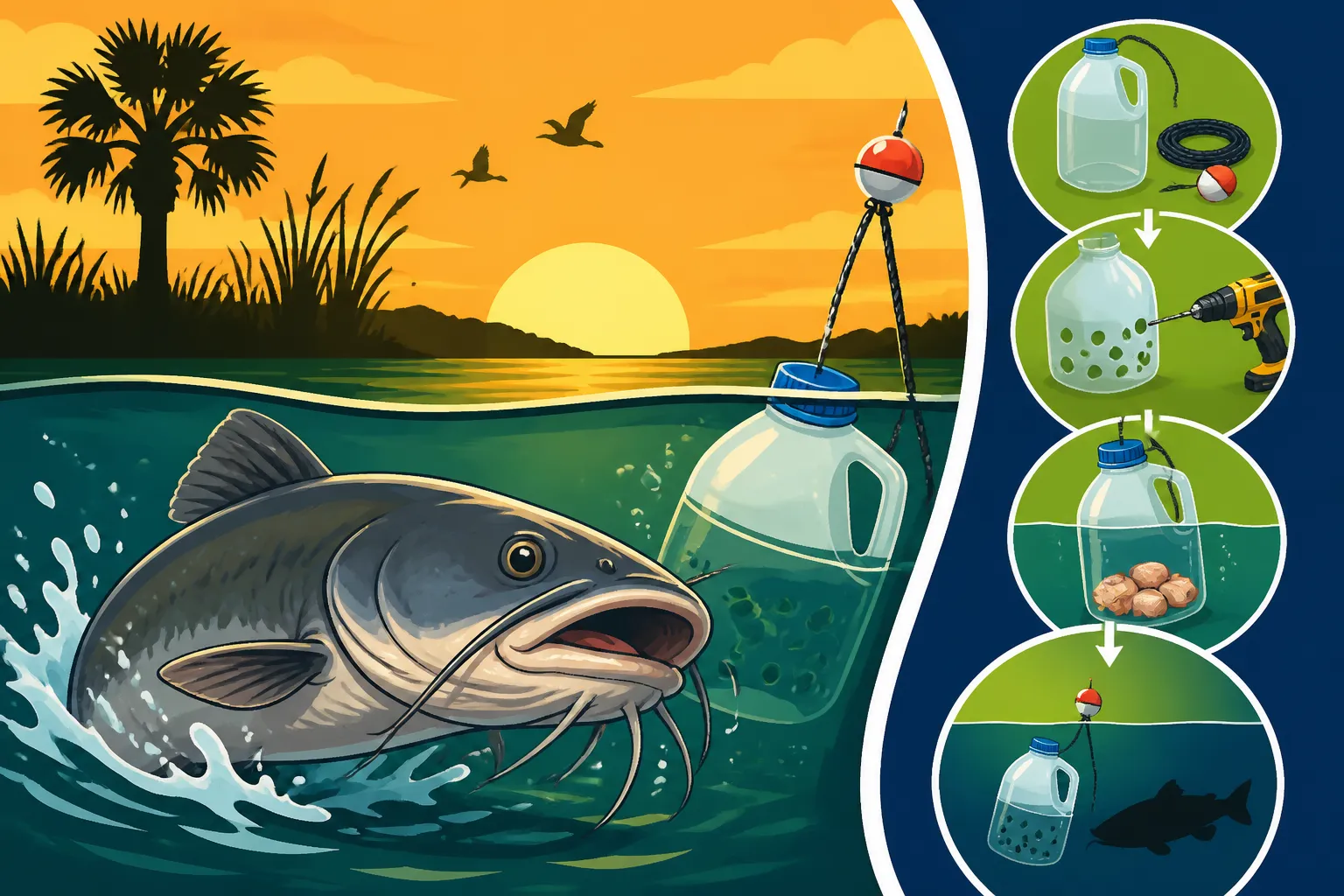
Jug fishing, at its core, is a passive yet highly effective method of targeting catfish. Instead of holding a rod and reel, anglers deploy multiple baited lines suspended from floating devices – the "jugs" – and let the fish come to them. This technique is popular in many Southern states, particularly in large lakes and slow-moving rivers, because it allows for covering a wider area and can be incredibly productive for anglers looking to stock up on fresh catfish fillets.
The Appeal of Jug Fishing
There's something undeniably appealing about jug fishing. For one, it's a social activity. You can set out your jugs with friends or family, then relax and enjoy the scenery while you wait for a jug to start dancing, signaling a bite. It removes the constant need for casting and reeling, allowing for conversations and camaraderie that might otherwise be interrupted. It's also remarkably efficient. With multiple lines in the water, your chances of hooking into a school of catfish dramatically increase. Imagine setting out a dozen jugs at dusk, then waking up to find several of them actively bouncing, indicating a night of successful angling. It truly feels like a treasure hunt when you're cruising the water, looking for those tell-tale movements.
Another significant draw is the potential for larger fish. Catfish, especially blues and flatheads, are notorious for their powerful fights. Jug fishing gear is typically robust, designed to withstand the thrashing of a big cat, and it allows the fish to tire itself out against the resistance of the jug and the water, making retrieval a bit easier. This method is particularly popular on sprawling waters like the Santee Cooper Lakes or Lake Murray, where catfish populations thrive and open water allows for extensive jug line deployment.
South Carolina's Stance on Jug Fishing
Before you get too excited about filling your cooler, it's crucial to understand that jug fishing is regulated, and the rules vary significantly from state to state. In South Carolina, jug fishing is generally permitted, but with specific stipulations designed to ensure fair chase, prevent overharvesting, and maintain safety on the waterways. You can't just throw out any old container with a line and call it a day; there are rules about the number of jugs, identification, and the type of waters where it's allowed.
For instance, South Carolina generally allows up to 50 jugs per person, which is quite generous compared to some other states. However, each jug must be clearly marked with the owner's name and address or a SCDNR customer ID number. This helps enforcement officers identify illegal sets and ensures accountability. The regulations also specify that jugs must be attended at all times, meaning you can't just leave them out overnight and come back the next morning. This "attended" rule often means anglers will stay on the water, patrolling their lines, or keeping them within sight from a nearby camp. Understanding these rules is critical, and you can always find the most current information by reviewing the official South Carolina's Freshwater Fishing Regulations published by the South Carolina Department of Natural Resources (SCDNR).
Essential Gear for a Successful Jug Fishing Trip
While jug fishing might seem simple in principle, having the right gear is paramount to success and safety. You'll need more than just an empty milk jug and some string. Investing in appropriate equipment will make your experience more enjoyable, efficient, and ultimately, more fruitful.
Choosing Your Jugs
The "jug" itself is the foundation of this fishing method. While traditionally, anglers used repurposed plastic milk jugs, bleach bottles, or foam pool noodles, there are now purpose-built jugs available that offer better performance and durability. When selecting or making your jugs, consider buoyancy, visibility, and durability.
A good jug needs to be buoyant enough to support a struggling catfish without sinking, even a large one. Pool noodles, cut into sections and weighted, are a popular choice due to their inherent buoyancy and high visibility. Many anglers also favor PVC pipe sections sealed at both ends, or specific commercial fishing floats designed for trotlines or crab pots. These commercial options often come in bright, fluorescent colors, which greatly enhances their visibility, especially from a distance or in low light conditions. Some even have reflective tape pre-applied. You can find excellent, durable jug materials and complete kits on platforms like Amazon, offering a convenient way to get started without much DIY effort.
Rigging Your Lines and Hooks
The business end of your jug line needs to be robust. You're not using ultralight tackle here; you're targeting fish that can easily break standard fishing line. Most experienced jug fishermen opt for heavy-duty monofilament or braided line, typically in the 80 to 150-pound test range. This ensures your line can handle the stress of a fighting fish and any potential snags. The length of your line will depend on the depth of the water you're fishing. A general rule of thumb is to have enough line to reach the bottom plus an additional 5-10 feet, allowing for varying depths and some slack.
For hooks, large, sturdy circle hooks are the preferred choice for jug fishing. Circle hooks are excellent because they are designed to hook fish in the corner of the mouth, which is less likely to be swallowed, increasing the chances of a healthy release if you choose to let the fish go. Sizes commonly range from 8/0 to 12/0, depending on the size of catfish you're hoping to catch. A heavy-duty swivel should connect your main line to a leader, and then another swivel to your hook, preventing line twist from a struggling fish. Weights, usually egg sinkers or bell sinkers, are placed above the hook or at the bottom of the line to keep the bait at the desired depth. Think about a setup similar to what you'd use for "Catfish Bottom Fishing Basics," but adapted for a free-floating application.
| Component | Recommended Type | Purpose |
|---|---|---|
| Jug | PVC pipe, large foam noodle sections, commercial floats | Provides buoyancy, visibility, and supports the fish |
| Line | 80-150 lb test monofilament or braided line | Main connection to the fish, needs strength and abrasion resistance |
| Hooks | 8/0 – 12/0 circle hooks | Securely hooks fish in the mouth, promotes healthy release |
| Swivels | Heavy-duty barrel or ball bearing swivels | Prevents line twist, allows for leader changes |
| Weights | 1-4 oz egg or bell sinkers | Keeps bait at desired depth, anchors the line |
| Identification | Permanent marker, tags, reflective tape | Required by law, enhances visibility in low light |
Baiting for Success
Catfish are opportunistic eaters, and they have a keen sense of smell, which makes bait choice crucial for jug fishing. You want something that will release a strong scent plume to attract them from a distance. Natural baits generally outperform artificial lures in this scenario.
Cut bait is a perennial favorite. Pieces of oily fish like shad, skipjack, or even smaller panfish (if legal to use as bait) work exceptionally well. The scent trail they leave in the water is irresistible to hungry catfish. Live bait, such as small sunfish, bream, or large shiners, can also be highly effective, especially for targeting larger flathead catfish. Flatheads often prefer live prey. For channel catfish, prepared stink baits or dough baits are excellent choices. Brands like Danny King's Catfish Bait or Sonny's Super Sticky Baits are well-known for their potent aromas. Even simple chicken livers, widely available and inexpensive, can be incredibly productive, though they tend to come off the hook more easily. Remember, the fresher and more pungent the bait, the better your chances. You might want to review Best Bait for Summer Catfish Fishing for more specific recommendations depending on the season and target species.
Setting Up Your Jug Lines Effectively
Once you have all your gear, the next step is preparation and strategic deployment. It’s not just about tossing jugs into the water; there’s a method to maximizing your catch and ensuring you adhere to regulations.
Pre-Trip Preparations
Preparation begins well before you launch your boat. First, make sure all your jugs are clearly marked with your name and SCDNR customer ID number. This is a non-negotiable legal requirement in South Carolina. It’s a good idea to mark them with waterproof permanent markers or attach durable tags that won’t fall off in the water. For night fishing, consider adding reflective tape or small, battery-operated LED lights to each jug for easy visibility. You can find these kinds of accessories easily on Amazon.
Next, pre-rig all your lines. Cut your fishing line to appropriate lengths for the waters you'll be targeting, tie on your hooks, swivels, and weights. Having them ready to go means you won't be fumbling with knots and rigging while out on the water, which can be inefficient and frustrating, especially if you're battling wind or current. Organize your jugs and lines in a dedicated container or cooler, keeping them tangle-free. This careful organization on land translates to a much smoother and more enjoyable deployment experience once you're on the water.
Strategic Deployment
Deploying your jugs strategically is key to success. Don't just scatter them randomly. Think about where catfish are likely to be feeding. Catfish often congregate around structure: submerged timber, brush piles, channel edges, humps, and drop-offs. Use your boat's sonar or a good depth finder to locate these features. When deploying, try to space your jugs out enough so they don't tangle but are still within a reasonable area for you to monitor.
A common strategy is to set a "line" of jugs along a channel break or across a flat where you suspect catfish are traveling. If there's a current, deploy your jugs upstream and let them drift naturally over promising areas. If you're fishing a large, open lake, consider deploying in a pattern that allows for systematic checking. Keep a mental note or even use a GPS to mark where you've put your jugs, especially if you're covering a large area or if visibility is low. This will make retrieving them much easier later on.
Anchoring vs. Drifting
Jug fishing offers two primary deployment methods: anchoring or drifting. Each has its advantages depending on the conditions and the type of water you're fishing.
Anchored Jugs: This method involves adding a heavier weight to the end of your line, sufficient to hold the jug in a specific location on the bottom. Anglers often use small anchors, bricks, or heavy rocks for this purpose. Anchoring is ideal when you've identified a specific hotspot – perhaps a submerged brush pile or a deep hole – where you know catfish are holding. It allows your bait to stay directly in that prime feeding zone for an extended period. The downside is that you are limited to a smaller search area, but it can be incredibly effective when you've pinpointed a productive spot. On a calm night on Lake Moultrie, for example, anchoring a string of jugs along a contour line near a drop-off can yield excellent results.
Drifting Jugs: This is perhaps the more common and often more productive method for covering wider areas. With drifting jugs, the weight used is only enough to keep the bait at the desired depth (off the bottom or suspended), but not so heavy as to anchor the jug. The jugs then drift freely with the wind and current, allowing your bait to cover a larger expanse of water. This is particularly effective in large lakes or wide rivers like the Congaree River where catfish might be scattered, or when you're trying to locate a school. You'll need to monitor your drifting jugs constantly, either from your boat or a nearby shore, to ensure they don't drift into hazards, private property, or out of your designated fishing area. Drifting requires a more active approach to monitoring but can lead to finding those elusive honey holes.
Optimal Conditions and Locations for Catfish
Just like any other type of fishing, understanding when and where to deploy your jugs significantly impacts your success. Catfish have predictable behaviors influenced by time of day, season, and the specific habitat they inhabit.
Best Time of Day and Season
Catfish are primarily nocturnal feeders, meaning they are most active from dusk until dawn. This makes night fishing with jugs incredibly effective. As the sun sets, catfish move from deeper, cooler waters into shallower feeding areas, or become more active in the depths. Setting your jugs out in the late afternoon or early evening and checking them throughout the night can yield impressive results. If you plan to go after dark, remember to use those illuminated or reflective jugs for easy spotting. Is Night Fishing Better for Catfish? explores this topic in more detail, confirming the general consensus among seasoned anglers.
While night fishing is prime, you can still catch catfish during the day, especially in stained or muddy water, or on overcast days when light penetration is reduced. During the day, they tend to hold in deeper holes, under cover, or along channel ledges to avoid bright sunlight. Seasonally, catfish activity generally peaks from late spring through early fall when water temperatures are consistently warm. This is when their metabolism is high, and they are actively feeding. Winter fishing can still be productive, but catfish tend to be slower and congregate in deeper, more stable temperature zones.
Prime Catfish Habitat
Catfish, regardless of species, are creatures of structure and current. When looking for prime locations to deploy your jugs, focus on areas that offer both food and cover.
- Rivers: In rivers like the Santee River, look for outside bends, deep holes, log jams, and areas where tributaries merge. These spots concentrate food and provide ambush points for catfish. Current seams where faster and slower water meet are also excellent because they deliver food without requiring the fish to expend too much energy. The Congaree River Catfish Fishing Spots Near Columbia guide highlights several areas that would be perfect for jug deployment.
- Lakes and Reservoirs: On large bodies of water like Lake Moultrie, focus on old river channels, submerged timber, humps, ledges, and deep points. Areas with abundant baitfish concentrations will also attract catfish. During spawning season (late spring to early summer), channel catfish will seek out cavities, holes, or undercut banks for nesting. Blue catfish often roam deeper, open waters, while flatheads prefer heavy cover. Look for areas with a soft, muddy bottom near harder structures. The Best Catfish Fishing Spots in South Carolina provides a great overview of these types of locations across the state.
- Ponds: While jug fishing is more commonly associated with larger bodies of water, it can be effective in larger private ponds with healthy catfish populations. Target the deepest sections, areas with submerged brush, or near any inflow/outflow points.
Weather Considerations
Weather plays a significant role in catfish behavior. Stable weather patterns, especially warm and humid conditions, are generally ideal. Catfish tend to be more active and feed aggressively during these times. A rising or stable barometer is often a good sign.
Conversely, sudden cold fronts can shut down the bite. After a cold front, catfish may move to deeper water and become less active. If you must fish after a front, target the deepest parts of your chosen area and be prepared for a slower bite. Rain can sometimes be a mixed bag. A light, steady rain can stimulate feeding as it washes nutrients and insects into the water. However, heavy downpours that muddy the water excessively or cause rapid temperature drops can temporarily disrupt feeding patterns. Always keep an eye on the weather forecast and adjust your strategies accordingly.
Monitoring and Hauling Your Catch
Once your jugs are deployed, the waiting game begins. But don't just sit there! Active monitoring and proper handling of your catch are crucial for a successful and ethical jug fishing experience.
Checking Your Lines
Remember, South Carolina regulations require jug lines to be "attended." This means you need to actively monitor them. If you're drifting, you'll be following your jugs in your boat, watching for any sign of a bite. A jug will typically start to bob, twitch, or even pull completely underwater when a fish is on. The more erratic the movement, the bigger the fish might be.
If your jugs are anchored, you'll still need to patrol them regularly. Many anglers will make rounds every 30 minutes to an hour, especially during peak feeding times (dusk, dawn, and through the night). This frequent checking serves multiple purposes: it prevents fish from being on the line for too long (reducing stress and mortality if you plan to release them), it helps you identify productive baits or locations, and it ensures your lines haven't snagged on anything. When approaching a jug, do so quietly to avoid spooking any fish that might be nearby or already on the line.
Safely Landing and Releasing Catfish
When you see a jug dancing, the excitement builds! Approach the jug slowly and carefully. When you reach it, grab the jug itself, not the line, to avoid getting tangled or cutting your hands. Pull the line in steadily, hand-over-hand, until you see the fish. For smaller catfish, you might be able to simply hoist them into the boat. However, for larger, feistier cats, a large landing net or a heavy-duty pair of fish grips can be invaluable. A gaff should generally be avoided if you intend to release the fish.
Once the fish is in the boat, decide whether to keep it or release it. If releasing, handle the fish as little as possible. Use needle-nose pliers or a hook remover to quickly and carefully remove the hook. For circle hooks, this is usually quite easy as they are often just in the lip. If the hook is deeply swallowed, it may be best to cut the line as close to the hook as possible. Support the fish horizontally and return it to the water quickly, allowing it to swim off on its own power. Always wet your hands before handling any fish you intend to release to protect its slime coat.
Storing Your Catch
If you're keeping your catfish, proper storage is essential to maintain the quality of the meat. The best way to store catfish on the water is in a cooler filled with ice. This keeps the fish cold and prevents spoilage. Many serious catfish anglers use large coolers specifically for this purpose. If you're on a long trip, consider having a separate cooler for your catch to minimize opening and closing, which keeps the ice lasting longer.
Once you're back on shore, clean your catfish as soon as possible. Filleting catfish is a straightforward process once you get the hang of it. You can find many online tutorials demonstrating different filleting techniques. After filleting, rinse the meat, pat it dry, and store it in airtight bags or vacuum-sealed packages in the refrigerator or freezer. Properly cared for, fresh catfish is absolutely delicious, offering a mild, flaky white meat that's excellent fried, grilled, or baked.
Regulations and Responsible Angling Practices
Fishing regulations exist for a reason: to conserve fish populations, ensure public safety, and maintain the integrity of the sport. As responsible anglers, it's our duty to know and follow these rules.
South Carolina's Specific Jug Fishing Laws
As mentioned earlier, South Carolina has clear regulations concerning jug fishing. Beyond the 50-jug limit and the identification requirement, there are other nuances to be aware of. For instance, specific lakes or rivers might have additional local rules, so always check the SCDNR's latest regulations guide for the particular body of water you intend to fish. These guides are updated annually and are your go-to resource. A quick search online for "South Carolina Fishing License Requirements in South Carolina" or "South Carolina's Freshwater Fishing Regulations" will lead you to the official resources.
Another critical point is that jug fishing typically requires a valid South Carolina fishing license. Unless you're fishing on one of the state's designated South Carolina Free Fishing Days in 2026, you'll need the appropriate freshwater license. Don't risk a hefty fine; penalties for fishing without a license can be severe, as detailed in articles like "Penalties for Fishing Without a License in South Carolina". Also, be mindful of any bag limits or size restrictions for the catfish species you are targeting. While catfish generally have liberal limits, knowing the rules helps manage the fishery sustainably. Always verify these details before heading out; regulations, like the South Carolina Redfish Slot Limit Rules, can change over time.
Ethical Angling and Conservation
Beyond simply following the law, ethical angling involves a broader commitment to conservation and respect for the environment and other users of the waterways.
- Leave No Trace: Always pack out everything you pack in. This includes bait containers, discarded line, and any other trash. Keeping our waterways clean is vital for both wildlife and fellow anglers.
- Respect Other Anglers and Boaters: Jug fishing occupies a lot of water. Be courteous and avoid deploying your jugs in areas where they might interfere with other boats, swimmers, or people casting from the bank. Give ample space to other fishermen and navigate slowly and carefully around your own jug lines, especially at night.
- Fish Responsibly: Don't keep more fish than you need or are legally allowed. Catch-and-release is a great practice, especially for larger breeding-size fish. Jug fishing is a very effective method, which means it's easy to overharvest if you're not mindful. Consider targeting only the fish you intend to eat and releasing the rest carefully.
- Prevent Invasive Species: Always clean, drain, and dry your boat and gear after each fishing trip. This helps prevent the spread of invasive aquatic species, which can devastate local ecosystems.
- Educate Others: Share your knowledge of ethical practices and regulations with fellow anglers, especially those new to jug fishing. By working together, we can ensure that South Carolina's waters remain healthy and productive for generations to come.
Jug fishing for catfish can be an incredibly rewarding and relaxing way to enjoy the great outdoors in South Carolina. With the right gear, a bit of strategy, and a commitment to responsible practices, you can enjoy the thrill of the catch and the delicious rewards of fresh catfish fillets.
Disclaimer
Please note that fishing regulations, including those pertaining to jug fishing, can change frequently. It is the responsibility of the angler to always check the most current regulations published by the South Carolina Department of Natural Resources (SCDNR) before engaging in any fishing activity. This guide provides general information and should not be considered a substitute for official legal guidelines.